Trees

The catalpas are blooming, really putting on a show this year–huge crowns full of white blossoms. I suppose the climate this year contributed to this show somehow, but my research says catalpa speciosa is drought resistant and requires little water compared to other tree species.

casp8062

catalpa in bloom

Eastern Pennsylvania has not had drought lately, and two wet springs in a row have meant burgeoning iris pseudacoris and particularly floriferous honeysuckle vines in my yard. The river birch seems happy with its feet all wet; the firs–though in a slightly less waterlogged area of the yard–are, by contrast, miserable.

~

I’ve been thinking about trees because I’m reading Peter Wohlleben’s 2016 book The Hidden Life of Trees. The text reads like a friendly forester inviting readers to learn what he loves about trees and their encounters with us, with the environment (soil, air, sun, water, pollutants, pests, fungi), and with one another. I have to say I remain somewhat skeptical about the scientific veracity of his source material, but I do enjoy his warm enthusiasm for his subjects and his reminders that we humans don’t know even the smallest fraction of what goes on in the planet’s interconnected and unplumbed depths.

Although some critics object to what they see as too much anthropomorphism in Wohllebehn’s book, his use of the analogy of the human and the tree “bodies” makes his information about how trees and forests work easy to grasp.

For science nerds, there are other texts. The Hidden Life of Trees is meant to make the less scientifically-inclined reader more aware of his or her environment, to convince the average human being to consider plant life more consciously.

~

I take many photos of trees; and they appear in my poems pretty regularly, not as main characters but in supporting roles–not symbolic, but actual. Wohllebehn’s book may influence my work somehow…possible inspiration? But then, the trees themselves, especially the oldest ones, are inspiration enough.

sycamore

This 200-year-old sycamore resides at Bartram’s Garden in Philadelphia


Collection

As I’ve previously mentioned–I have been putting together another manuscript of my poems–a collection. I had a few ideas on how to make the poems work as groups, but it turns out they are not happy together. I don’t think a poetry collection needs an “arc,” but I like to have the poems converse with one another in some way. Resonate with or inform one another. That’s what I am enjoying in Louis Simpson’s 1980 collection Caviare at the Funeral. I realized my aim in collecting my work was off when reading his book just recently…and now, I am reconsidering my manuscript approach. Again.

This may be one reason why, despite being a fairly prolific and reasonably well-published poet (in journals, etc.), I am so pokey at getting books into the world.

But I am considering what it means to be a collector, which is not the same as a curator. There is a difference between collecting one’s work and curating it into an experience for a reader (including oneself). Curating has never been my strength: I was the kind of child who collected things randomly, attempted to organize a doll or rock collection, but mostly just had little piles of stuff that interested me.

That’s poetry, too…little piles of stuff that interest me.


Cartography

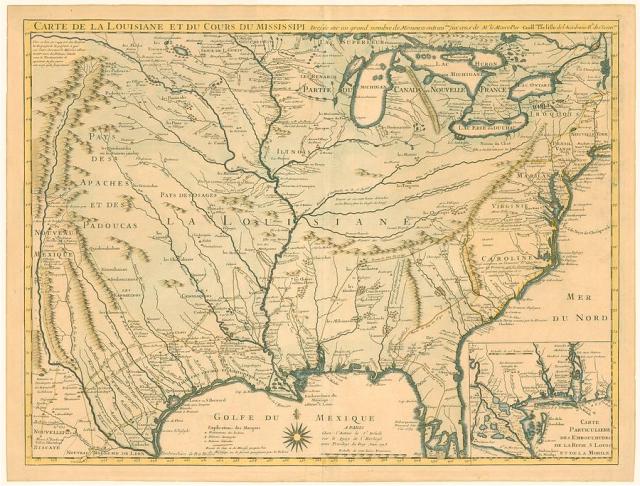
Reading Mark Monmonier’s 1995 book Drawing the Lines: Tales of Maps and Cartocontroversy got me thinking about names and boundaries.

Human beings name things so we can communicate with one another, and then we tell stories to remember the names, encoding them in the language of later generations. New occupants–and colonizers or conquerors–claim and rename to communicate to their followers.

This mountain is Mount McKinley (or is it Denali?), this one is Sagarmatha (or is it Everest?). Keep it in view to your left side and you will be progressing northward.

Big objects accrue many names. When you come to the river called Misi-Ziibi (or Yununu’a, or Báhat Sássin, or…), you must ferry across at the place just south of X. Furthermore, the big river moves, as Mark Twain* knew (see Life on the Mississippi); and as it moves it affects human-made boundary lines that we use to determine tax-base and property ownership and state borders.

Not to mention nationhood.

Monmonier rightly observes that most people assume that maps are factual representations of the physical and legal/abstract/imagined aspects of the “real” –and that assumption is incorrect. Maps can be manipulated. They can be propaganda. They can be drawn to reflect anything the people hiring the cartographer want to emphasize, or erase.

My husband has a German map from 1941. There is no Poland on it, no Austria, no Lithuania, no Ukraine…

~

When we built our house, I wanted to come up with a good name for it. Then I realized that the housing developments in our region all seemed to be named after things that weren’t there any more: Field Crest, Orchard Acres, Stony Meadows, Fox Stream…and the urge to name my house began to quiet down. Besides, all along I have recognized that the area around boundaries is more interesting to me than what is in the middle. Edges–the fringes, the spaces along and between–

And yet I’m trying to create boundaries around my garden to keep out the field voles, stands of cleome to discourage the deer, as another rainy spring keeps my shoes and gloves muddy and the weeds vigorous and tall. Paradoxes.

Reminds me that my favorite Whitman** quote when I was a teenager was: “Do I contradict myself? / Very well then I contradict myself.” At 16, however, I never thought to include his marvelous parenthetical line “(I am large, I contain multitudes.)”

(I am large, I am boundaryless).

~~


*Another example of name-changing that humans are so fond of.

** The 31st of this month is his bicentennial! I’m participating in a reading–see my Readings & Events page.

Repetition

Repetition, the foundation of rote teaching and memorization, is a style of learning at which I have never been particularly successful.

Nonetheless, repetition has been useful in my learning process. Close observation reveals small differences in repeated events and refrains of all kinds; what I learn through repeated experience is that each time I see or do “the same thing,” I notice something new. Repetition permits me to analyze, and that is how I learn best.

Here’s an example.

~

Plants, particularly flowering plants, fascinate me. Every year, I find myself heading out to the yard, my camera in hand, to take photographs as the flowers unfold and the insects arrive to pollinate them. Every year. Yet a closeup of a bumblebee in a redbud blossom from 2005 looks pretty much the same as a bumblebee in a redbud blossom in 2019. Or a monarch on a tithonia–one year similar to the next. Why bother? What urges me out when the dogwoods bloom to record yet another photograph of flowering dogwood? How redundant. How unnecessary.

Yet I have learned much, gleaned much, from the process of noticing the buds and blossoms and insects as the days lengthen and then shorten again; the cycle of life a repetition. Each routine event of spring seems new to me after the winter’s rest.

~

The only types of poems I have managed to have some recall for are poems with refrains, and some song lyrics (also with refrains). The ones I have memorized are the ones I have heard and sung along with most often, such as the calls and responses of church rituals and hymns, the record albums I listened to over and over when I was a teenager. Each time I listened, I felt something new happen inside me. It’s the same with my walks in the garden and the woods and hedgerows and the meadow: each year the same, each year new. That kind of teaching, while repetitive, is far removed from rote.


Etc. & refrains

Some years, I have devoted my National Poetry Month energies to attending readings, getting out in the world to listen to writers; some years, I’ve tried hard to submit at least 30 poems to magazines and journals; some years, I have read two poetry books a week for the month of April. This year, I wrote a poem draft a day. OK, now what?

When you love poetry, you do all of these things anyway. Having a month to celebrate the art merely acts as a public awareness campaign, though it has reminded me, year after year, to aim for a bit more discipline in my creative life.

~

I have also been reading, of course, bookish person that I am; this past month, a real standout–and a difficult book in a few ways–was An Orchestra of Minorities by Chigozie Obioma. The novel offers a way in to the cosmology of the Igbo people (Nigerian, mostly) while wrenchingly capturing the anxieties of modern life and the timeless agonies of lovers separated by class, race, status, religion (whatever gets in the way of lovers). Obioma successfully interchanges voices, languages, creoles, narrating from the point of view of a guiding spirit. Spoiler alert, the book ends with tragedy, and there are tragedies large and small throughout. The tension of human anxiety works really well, and all of our fears.

The guiding spirit, who has accompanied centuries of human hosts through their lives, has a refrain: “I have seen it many times.” I thought of Vonnegut’s “So it goes.”

Trying to imagine my own refrain…it might be something on the lines of: Life’s difficult, so we have art and poetry and love and one another to get us through.

alice-heart1 copy

art by my daughter at age 8


The takeaway

ampersand

so, I did what I set out to do: I exercised the necessary discipline to draft a poem a day during National Poetry Month, and I pushed against my “comfort zone” by publicly posting those drafts as they came to me. Usually I do not share my initial drafts with anyone other than fellow writers in my writer’s group or a few poets with whom I correspond. This was an interesting experiment on the personal level, therefore, a sort of forced extroversion as well as effort in productivity. I now have 30 new drafts to reflect upon, revise, or ignore.

It has been years since I came up with that much work in four weeks’ time. For the last decade or so, my average has been closer to six or seven poems a month. And I would not have posted any of them as they “hatched.” I would have waited until I spent some time with them and figured out how best to say what they seemed to want to say.

That’s not an unwise approach in general; I see nothing wrong with letting poems stew awhile. And quite a few would have ended up in the “dead poems” folder. Nevertheless, trying something innovative tends to prove valuable. The takeaway is that I am glad I finally managed the NaPoWriMo challenge. A few of the poem drafts you may have read here stand a chance of evolving into better poems. Maybe some will end up in a collection (years down the road). That result feels good.

The takeaway is also the realization that I no longer worry about how others judge my poems, the way I did when I was starting out and discouraged about having my stuff rejected by magazines. Not because there’s less at stake–indeed, I feel as invested in my writing as I ever was. The difference comes with the kind of investment, the ambition to write something meaningful or beautiful, and not viewing the poems as results waiting to be determined as valuable by someone more authoritative.

I’m 60 years old and well-educated in poetic craft, style, purpose, analysis. I’ve been writing poetry for over four decades. At this point in my life, that’s authority enough.

~

Self in the World

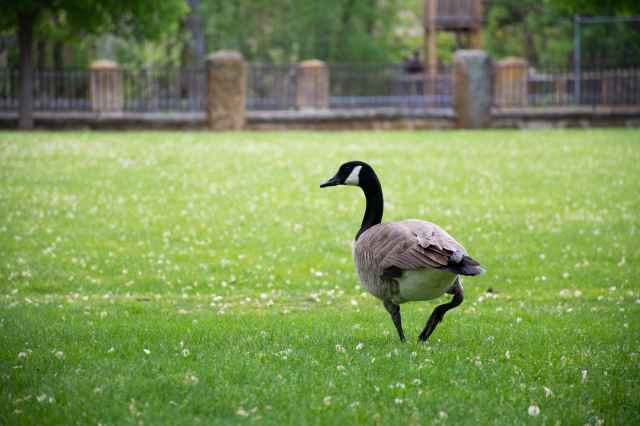
Goose stands sentry in the dew-strewn meadow.
Blackbird browses dry grasses woven along embankment,
emerges, slim stems clenched in its beak.

Under the footbridge, polliwogs gather,
backing into its shade–hawk overhead,
bluejay screaming territory! the crows respond–

Sun halos the water-strider’s shadow,
making a cluster of coronas on submerged stone
where wood frogs squeak and leap into stream current

surrounded by bedstraw, henbit, dandelion,
Amur honeysuckle, garlic mustard, stiltgrass,
invaders all. Except the frogs, who found the stream–

itself new to the landscape, gouged here in the 70s.
What do I notice, then? That some of the living adapt?
What do I make of myself in this world?

~

canadian goose on grass field

Photo by Brett Sayles on Pexels.com

~

Finally, to close the month of April, here is a lovely tribute to Mary Oliver by her friend and fellow poet, Lisa Starr.

Thank you for reading, and for the support of readers and poets this month.

Hyacinths & biscuits redux

hyacinth burpeeI wrote about synthesis in this post of 2017 while reading a series of complex books. Now I am thinking of how poems involve synthesis. Today’s rather quirky draft seems to have emerged from life experiences. Academics–you know who you are–will understand the irony. I’ll leave it at that.

~

This is the 29th day of my composing a poem a day for National Poetry Month! Tomorrow–perhaps a recap of the experience. Or maybe just a long exhalation.

~
Peer Review

In The Journal of Complete Sentences,
there are, as per Table 1.
And under review, a wide range of
studies that. Research may show,
for example. Admittedly,
gaps. Or the tapering off.
Speaking apparatus offers one method
demonstrating correlation of,
and relationship with.
These abstract concepts in no way
refute previous empirical
results that strongly imply.
Indeed, studies employing fMRI
techniques to track neurotransmissions
offer qualitative.
The many degrees of distance.
Past case studies. Analysis.
As Appendix D suggests.
No closer to an understanding.

~


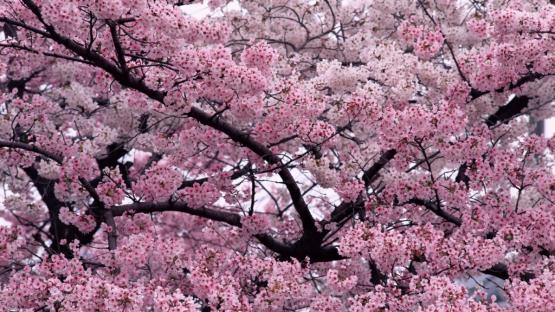
Tai chi

Beside cherry trees
friends practice tai chi
petals in their hair

~~~
DSC100109879


Normal

I was speaking with a friend about this poem over coffee this morning. I drafted it at 7 am, alone on my porch, under a cloudless sky but with a chilly wind blowing. This friend’s a person who happens to be all too well aware that the expectations instilled in us (by parents? by society? by the media? who can say?) concerning what a normal life entails are…let us say, less than accurate–and possibly harmfully untrue.

Also? She endures. We endure.
~

Argument against Living a Normal Life

First, we don’t know what it means, or if we do,
the meaning’s subjective; whereas the phrase implies
an average or agreed-upon measure beside which
every other life is measured–and second, each of us
comes up short by those standards, so it’s statistically
impossible to determine a mean. Then there remains
the case that this ideal is no ideal, as every life
contains elements of grief and injury. So how to average
out whose portions are the greater and whose the lesser,
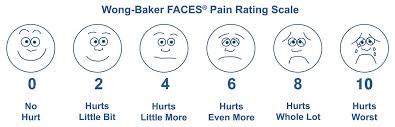
since pain cannot be measured except through comparison
with previous subjective experiences and the spectrum
from 1 to 10 or happy face to weepy face varies from
person to person? That is not a rhetorical question,
my friend. Do the research, read about the Buddha, ask
a thousand doctors. Normal life: it’s one of those tricks
we play on ourselves. Take the adjective away and live
what you have in this particular moment. Work your way
into your suffering and your anger because they are
unavoidable. Walk your dog. Take up oil painting. Travel
to France. Watch a flock of starlings cluster and abate
over the Cimetière de Verdun in autumn. What ever were
you thinking when you said you wanted only to live
a normal life?
~

images

Cimetière de Verdun. No starlings.

~

index

wongbaker.org

The woodpeckers

More of April itself appears in today’s National Poetry Month poem-a-day challenge, which I suppose is apropos.

I’m now aware that Lesley Wheeler has also been challenging herself to compose a poem a day this month, per this post on her blog. Quite a few poets have committed one way or another to adding poetry to the world each April! Those of us with full-time careers often need some kind of nudge to remind ourselves to take time to do what we love.

And those of us employed in academia are currently facing end-of-Spring-term grading, upcoming commencement ceremonies, graduation and award banquets, and other time-consuming responsibilities as the academic year draws to a close. So: keep writing, Self!

~

All the Little Aches

The small woodpecker’s repetitious tock tock tock
against an old mulberry tree, at dawn,
unlocks the little aches and bids them go
into the wakened body. If only, after sleep,

like the old mulberry tree at dawn,
the body would awaken into frantic buds
and not a weakened body only sleep
half-heals until it settles, somewhat twisted,

like a bough. Awake, the frantic buds
of April burst, unfurl. Tick of the bedside clock
as woodpecker’s repetitions–tock tock tock–
unlock the little aches and let them go.

~

IMG_0960

bird in hand