Interview & discussion

This TV interview was interesting to participate in, and I loved chatting with Marilyn Klimcho! She put me at ease, which is hard to do in front of cameras. I have watched the whole 20 minutes without hating myself or feeling too embarrassed. (Hooray?)

Is the show entertaining? Well…you have to be interested in poetry and poets, I suppose. Feel free to check it out. The link above should take you to the YouTube video.

~

National Poetry Month does, it turns out, raise the public’s awareness of poetry at least a little. Recently, I was invited to be a guest at a weekly online discussion of poetry and spirituality. The participants had been reading and discussing my poem “Deity’s Diary” and asked me whether I’d be available to read the poem and then discuss it with the group members at one of their meetings. They even sent me recordings of previous meetings’ discussions. I find it fascinating to learn how readers interpret my poems, what they get out of the work; so of course I obliged.

The group members asked intriguing, intelligent questions–clearly, they are accustomed to talking about poetry. That was refreshing, and it kept me on my toes. I learned that my poem (which is in four parts, so maybe it is poems) is doing the work I hoped it would do, at least with this group of careful and reflective readers. “Deity’s Diary” is intentionally paradoxical and questions many of western culture’s received ideas about god. It’s also pretty presumptuous, since I chose to write it in the persona of a deity…but, like all poems, it is decidedly a work of the imagination. (No, I do not consider myself a god!)

The discussion ranged from philosophical, scientific, and theological concerns to the nuts and bolts of writing and revising a poem, where I get my ideas, what the major influences on my work have been, and lots of other topics. Seldom do we lesser-known writers get to hear back from readers, especially in such detail–so this event felt like a real treat to me.

One participant said that reading these poems was like walking through an unfamiliar forest, not on a straight path, with possibilities of obstacles and turns in the track and the surprise of wildflowers, mosses, or lovely birds along the way.

That made my day.

Au revoir, institution

It was not a huge surprise–the proverbial writing has been on the metaphorical wall for some time–but the college I attended for graduate studies has announced that it is folding.

In January 2001, shortly after I won a grant in poetry from the PA Council on the Arts, I rallied myself and my work, packed a bag, and took the family car by myself to Vermont for two weeks. In a burst of confidence and enthusiasm post-grant, I’d applied to creative writing graduate programs. There were none nearby enough to commute to, and Goddard’s low-residency model seemed my only choice. Well, I could have abandoned my husband and young children and moved to another area, but that seemed untenable and unkind.

But Goddard was perfect. I met new people and made (so far) lifelong friends-in-writing and friends-in-feeling. The work challenged me; the reading was intense! When I look at the bibliography at the back of my thesis, I admit I wonder how I managed. Hard work, intellectually demanding work, constant revision. Well, I needed less sleep in those days. Many times I read and annotated while waiting for my kids while they took piano lessons or riding lessons or whatever they were doing in middle school.

Sometimes my parents or spouse spent a Saturday or Sunday with the children so Mama could study and write. It is kind of a blur, but the community of fellow students seemed so supportive at the time. It’s not that I was without supportive people in my life–but the folks at Goddard, students and faculty, deeply understood my passion for writing. I found I could spend hours talking about things that matter to writers (which is kind of everything, but also, WRITING), which wasn’t easy to do in other areas of my middle-aged, middle-class, mom-life existence.

The iconic Goddard College Clocktower

Goddard often has been termed an “experimental” college. That term covers a whole host of meanings in the world of education. No point in trying to define it, since one thing that experimental institutions tend to do is change and evolve. The program I attended in 2000-2003 differed from the programs of 1985 or 2015. Which is as it should be–education should not be a static set of activities even when some exploration of canonical texts is necessary. One reason I chose to pursue my education at experimental colleges (The New School, Thomas Jefferson College, Goddard) is that I am a slightly odd bird, an autodidact who did well enough in standard subjects but who got the most benefit from deep study of things I felt passionate about–literature, history, botany, poems, dance, philosophy, feminism, visual art. Experimental colleges offered mentors who could guide me in self-directed learning, recommend books and authors, feed my often-changing interests, offer personal, one-to-one advising and critique. I am 100% sure I would not have excelled in universities that followed more standard educational subjects and protocols, and I’m glad I received good guidance (usually) and a well-rounded, if eclectic, education.

Many of the poems in my book Water-Rites are from my time at Goddard, since Water-Rites in an earlier form was part of my graduate thesis. And a fair number of the poems in The Red Queen Hypothesis were first drafted during my years there, when I was experimenting with forms. So, having just learned for certain that Goddard will cease to function as an offbeat, transformative, self-directed institution of higher education–thus joining my undergraduate school, Thomas Jefferson College of Michigan, as defunct institutions–I will post a poem that I know for certain I drafted just before I graduated. It’s a response to the events of 9/11 and was not quite ready, nor suited, for inclusion in my first collection; it appears in The Red Queen Hypothesis and Other Poems.

~

Shreds
for Judith

We ran, leaves before a bitter wind,
& some ran headlong & some in circles,
we did not know what to do with ourselves,

& watched, pressed to our windows & could
do nothing: streets erupted with people
like clustered beetles wakened from dormancy.

We walked, in all directions but mostly north,
& we were silent and our mouths were dry.
Things like shoes and hats made us human.

We wept and it was not sufficient,
& swept, then, for months & recalled
mostly paper, the ways we occupy ourselves,
the mild wind carrying what lingered. Scraps.


(after “Exhibit 13,” Blue Man Group, 2002)


~

Toad night

Because April is National Poetry Month, here’s an April poem from my latest book:

~

Toad Night

Soft rain, or
humid fog—mild
and after sundown

when the driveway’s
puddled or
the blacktop’s slick
they emerge.

It must be warm
enough to stir
their dormant
blood, speed
the small hearts &
waken senses in
the porous skin.
In the headlights

they can be
mistaken for
last year’s leaves

tumbling over road
but there is
no breeze.
Their eyes gleam.

Give them time.

You do not need
to rush tonight

with the small
beings of the world
awakening
around you.


Reading by day

While I await the eventual drying-out of the garden soil so I can plant a few early veggies and herbs, it seems a good time to ready a few more poems. I’m revising, drafting, but not sending out work. That feels comfortable at the moment; anyway, I much prefer writing to submitting poems.

I’ve also reserved myself some quiet hours to read books of poetry and a novel or two. Jessica Cuello’s Yours, Creature just arrived in my mailbox, and I’m on an Isabel Allende kick at the moment, so I definitely need some time to devote to reading. My husband, who tends to do his reading in the evenings, recently forwarded a Washington Post column by Stephanie Shapiro about why so few people read for pleasure during the day. Its title is “Why Does Daylight Reading Feel So Wrong?” She writes, “Although I am retired, I find it hard to allow myself an afternoon with a book or a long magazine article. Just the thought of settling onto the sofa in daylight hours, especially on weekdays, smacks of laziness and stirs up guilt. If I must sit at all, it should be at a desk or a countertop to do something ‘useful’— answer an email, write a grocery list, look up a recipe, what have you.”

I’m sure this is a common feeling, but it isn’t one I acquired, probably because my dad was ALWAYS sitting around reading a book, newspaper, or magazine–day or night. Reading during the day seemed normal to me. It still does, I’m happy to say.

~ Here’s a poem from my chapbook Barefoot Girls.

Night Drawn

I drew the night
with a number 2 pencil
I'd sharpened with
a Girl Scout penknife.
It was 1969. Night
needed blurred edges
so I smudged at it
with two fingers of my
right hand. And then
night left its prints
on my thumbs and palms,
somehow, on the yellow
print blouse and blue
jeans I wore.

I sketched shadows
the way I saw them
under beds and outside
windows, how they
deepened the early hours
when Grandmother
wakened by gaslight
to start her chores--
in darkness
which I learned to draw
with a pencil and
which stayed on my skin
the whole day.

Abundance!

In all my born days, I’ve never had a Poetry Month start off with such an abundance of publications–and, as it will probably never happen again, I’m going to post the links here.

Siren for Somebody Else” offers a mother’s perspective on waiting, unable to get to sleep, for a child who is out late on his own. It appears in RockPaperPoem.

Interpreting the Conversation from Another Room” shows up in Stick Figure Poetry #13. The poem originated during the years our son lived with us and played online multiplayer games in his room, but it morphed into something a little more sinister.

Fevered” came almost out of nowhere but resonated with some early readers who contend with mental and emotional challenges. It’s also a poem about love and compassion, I suppose. The journal Philadelphia Stories published it in the latest issue.

Gyroscope Review is a print journal that also offers a Kindle and a PDF version, the last of which is free to download, though the paper book is lovely and only $12 on Amazon. My poem “Bach and Birdsong” starts the issue off…a meditation on springtime.

Whew! This post goes with my “Gratitude” post of last week!

~ The poem below appears in my chapbook Small Things Rise & Go, FootHills Publishing:

Nap in a Treehouse

Alone in my children's treehouse,
I read 300 poems from the Chinese.

Sunlight slants over the cornfield,
flies buzz, the afternoon is warm.

This first day of autumn,
insomnia's caught up with me.

After so many sleepless nights,
I doze with Li Po and Tu Fu.
~

Legacy vs the present

For National Poetry Month, I’ll be posting a poem here every few days…something from one of my books and chapbooks.

First, though, musings on why it matters to me that my poems get collected in book form. I’ve been asked about this by a few people recently, sparked by conversations about the changing technology of “print,” and also artistic purpose, and even the concept of legacy. If I were a visual artist–say, a painter–there would be objects my hands had produced. Even a mediocre painter creates something apparently lasting or worth something. You die, and your paintings go to family members or to flea markets where people can purchase them (for the frames if nothing else…). A ceramicist may make truly useful things such as bowls and mugs; those items can last and be used, even if they end up in thrift shops or post-apocalyptic archeological digs. Maybe the painter or potter isn’t remembered, but the product endures for awhile.

But poems? So many people leave behind sheaves of unread, unpublished, perhaps private writing, much of which won’t resonate with anyone. Even if it could, the chance that anyone would care enough to sort through before burning or recycling and uncover a heretofore unknown genius is vanishingly small. I, for one, am not writing for eternity or for the future. I write for the now. The main reason I want to get books in print is that the product (a book! I love books!) matters while I’m here. After I die, no one will want my pile of drafts, old journals, revisions, false starts–not even my children. And why should they? Will future society value archives of anyone, let alone very minor poets of the early 21st c? Maybe the demise of technologically-based societies is right around the corner. All the more reason to work in and for the present moment. If I garner a few readers today, I feel blessed.

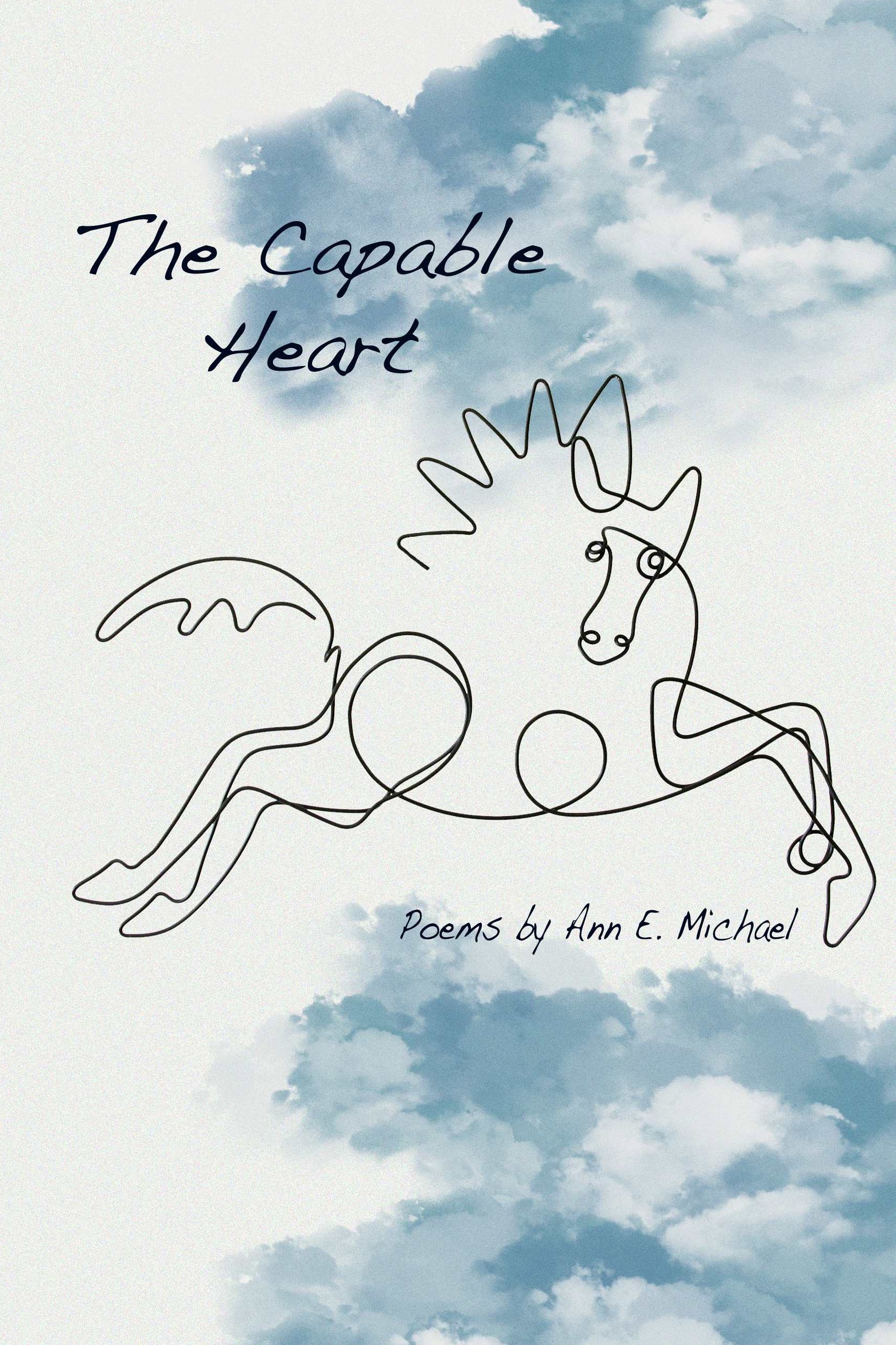
~ Today’s poem is from my 2011 FootHills Publishing chapbook The Capable Heart.

No Long Farewells

The weedy field.
On the rise beyond,
armies of brown corn,
ready to fall.
Willow looses streamers,
yellow kites
floundering in
tall grass.
I look at my hands,
fingers gold. We
walk past grapevines.

Later I think of this day
as a drafty barn,
sun on its walls,
clouds high beyond rafters:
roofless.
Nothing blocks our vision
for once. No blinders.

There is little time
for long farewells.
A light goes on.
Your bus is leaving now.
Moon follows you home.

Gratitude

Fountains of gratitude are flowing in my heart today despite the gray, humid weather that seems to set off every imaginable ache my body could have. ❤

Wow, that was a sentence of hyperbole and cliché, for which I apologize; let me begin again. I’m grateful for a number of reasons that I want to mention so I can give appropriate and public thanks to the people who have added to today’s happiness. The list starts with Dave Fry of Godfrey Daniels Coffeehouse & Listening Room in Bethlehem PA, who hosted an evening of poetry–with musical interludes and conversation–this past Wednesday evening. Two members of my long-time writers group and I read our poems and talked about a few poetic forms (haiku, waka/tanka, tanka prose, and short forms generally). Dave supplied some comments to encourage audience reflection and performed interludes on guitar. One observation he made is that the classic blues song follows a structure that has similarities to a short poem form: Line, Repeated line, Commentary line (often like a poem’s “turn”).

It was a lovely event and great to share the writerly camaraderie of a long & successful critique group onstage: Marilyn Hazelton and Susan Weaver are often the first readers of my own poems. I’m grateful for their support and for the way Dave gave us the opportunity showcase poems and maybe teach a few audience members new things about poetry. Another plus was that I sold a few books! Grateful to those folks, too. That’s one way to support the arts.

Thank you as well to my Best Beloved, who attended despite feeling a little lousy from allergies, and to those of my local friends who came out to hear us. The venue charges a cover, and not everyone’s willing to shell out for poetry. Therefore, I bow deeply to you all who do.

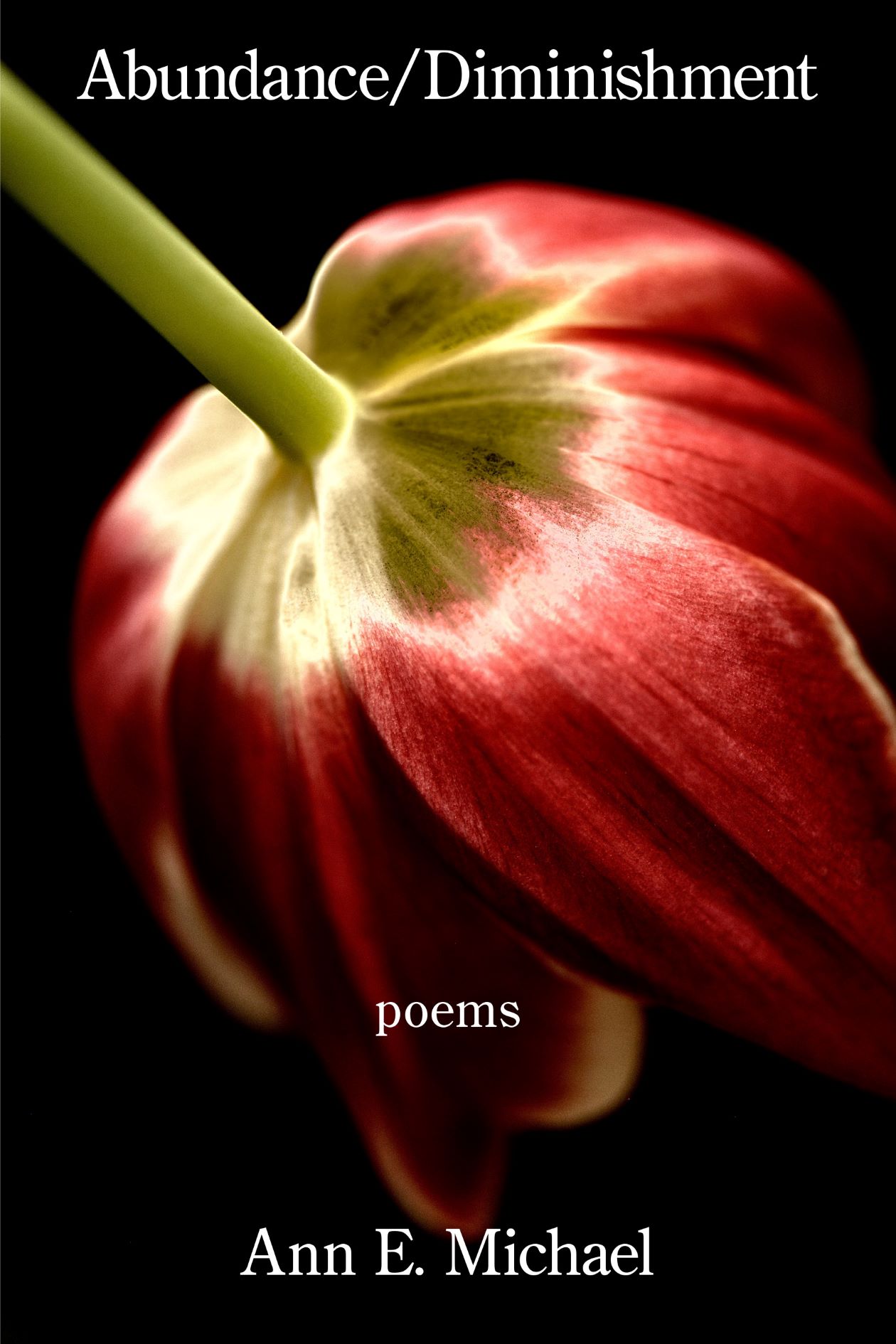
Today I also received a kind gesture from poet, scholar, educator, and blogger Lesley Wheeler. On her blog (which you really might want to follow), Lesley wrote a mini-review of my book The Red Queen Hypothesis and Other Poems, last summer. I’m thrilled that this week she included a mini-review of my brand-new book, Abundance/Diminishment (“ectoplasmic micro poetry reviews“). My book was in such good company! See the link above, between parentheses, for her comments on books by Diane Suess, January Gill O’Neill, Elizabeth Savage, and Jen Karetnick.

For promotional reasons, (ha!), I’ll close with what Lesley says about the collection:

“I have a similarly eerie sense of connection with a sympathetic mind reading Ann E. Michael’s Abundance/ Diminishment. This book tallies losses and bounties: it’s full of mathematical and scientific language, but what it counts and categorizes is deeply emotionally freighted. In ‘Filling Out Forms at the Gynecologist’s Office,’ she subtracts the number of her children from the number of times she’s been pregnant. In ‘Tongues,’ a child of six, mocked by classmates for the tongue sandwich in her lunchbox, prices out peanut butter–even as she loses her immigrant mother’s language. Also like Seuss’s book, this is poetry of maturity, from a time of life when a person has to begin giving it all away. I’m especially grateful, these days, for books from midlife and beyond. I learn what I need to know by reading them.”

I’m grateful, too, Lesley!

Equinoctal

Torrents. We had rain in torrents, and it went on for days from February into March and then on…and on. Constant alerts on the cell phones: “Flash flooding.” Doldrums set in. In an effort to accomplish anything at all, I even started to sort through and organize my attic.

Talk about desperation!

The attic project isn’t finished–the weather turned mild and clear two days ago, so I ran to the garden to get to work out there–but it turned out to be a more rewarding task than I expected. I started by tackling the Christmas stuff, then the books (SO many books), children’s toys (the kids are in their 30s and there are no grandchildren), and moved on to paper correspondence. Letters! Postal mail. Epistles. Why I have saved so much of my correspondence from 1975 to the present, I cannot explain. Maybe that’s a thing that people who love words just naturally do, the same reason I have kept so many books. I certainly don’t need all of it; but that was part of the task, sorting what I want to keep and agreeing to recycle the rest. I also found odd ephemera, such as photocopied posters for long-ago poetry readings, broadsides of poems, xerox-zines from the early 1980s, and ancient mixtapes on cassette.

~

There’s some sorrow with this project. So many of my former correspondents have died. I find my grandmother’s looping script, my dad’s distinctive handwriting, my dear friend David Dunn’s nearly-illegible scrawl. Reminders of times past. Maybe that is why we keep ephemera: to remember what we thought, at the time, was important.

Maybe it is, maybe it isn’t, by the time we reach our later decades–if we’re fortunate enough to reach them.

I keep gardens for different reasons. Not to remember the past but to see what the present can bring.

~speaking of the present~

My new book can now be ordered from the publisher, if you find Amazon problematic (and there are good reasons for that). The link is here.

House concert

I can only recall ever attending one house concert. It was during my college days–1977 or ’78–and took place at a large Victorian house in Ann Arbor, MI. We sat about on chairs, sofas, stairs, and the floor to listen to blues/folk singer and guitarist extraordinaire, David Bromberg. It was a pleasant environment in which to hear the musician–an intimate and attentive audience, a sense of camaraderie and shared appreciation, and quite comfortable. But I never managed to attend another house concert…usually, such events are fairly private and by invitation (as I think that one was), so you don’t hear about them until after they’re over.

I was therefore delighted when friends suggested that they hold a “house concert” or, in this case, a house reading, so that they could share my poems with some acquaintances. A new audience! A comfortable, non-intimidating space, terrific food, and the kindness of people willing to listen to a bit of poetry…what’s not to like about that? There were over a dozen folks in our friends’ pleasant home, and at the close of an evening of wine and food and conversation, I was asked to read and talk about my poems. And promote my new book (which is now available to order on Amazon).

My gratitude overflows, Don and Jeannie. You’re the best!

An unexpected aspect of the house concert event was that it was delightful to meet the “audience” first, before the reading–a reversal of the usual order, and very helpful in getting me to feel more comfortable not just in presenting my work but in deciding which poems to read. In addition, the cozy atmosphere meant listeners felt free to ask questions and continue the conversation to include thoughts on song lyrics, “private” poetry (that people write for themselves alone), favorite poets, and the context of the work of poetry in the world.

That was such a marvelous evening. And up ahead, somewhat similar in nature: on March 27, at 7 pm, I will be joining poets Marilyn Hazelton and Susan Weaver–two members of the writing group that I’ve been part of for decades–and folk singer, radio host, teaching artist, and community arts leader Dave Fry for one of Dave’s monthly “Dave’s Night Out” events at Godfrey Daniels, a listening room in Bethlehem PA. Dave has been generous enough to have hosted me with other poets on stage at the coffeehouse before, and the experience was terrific. His guitar accompaniment enhances the sonic delights of poetry. I’m looking forward to this one. Tickets are $15, I think, and they keep Godfrey’s running as a non-profit arts venue in our region.

I’m happy to see this book in the world. Copies can also be ordered from Kelsay Books.

~

Wet lion weather

Early March, but February’s doldrums appear to be hanging on with clouds and heavy rain in our weather (though it has been fairly mild) and my mood as well. If March comes in like a lion, it is this year a very damp panthera leo. Crocuses, yes; iris reticulata, yes; winter jasmine, yes; hellbore, yes. And the robins are chirping like mad every evening as dusk arrives–and it does arrive later each day.

I should feel merrier. There are some poetry-related things coming up this month, an informal reading at our friends’ house, a bit of recognition perhaps, a visit from a beloved before the month closes, and maybe even the new book. In addition, I have managed to collect and organize the first draft of yet another collection. (Don’t hold your breath–this one will be a long time coming.) My physiology has been annoyed by the rain and humidity, however, which keeps me out of the perennial beds where the winter weeds are having a party in the chilly mud. There’ll be hell to pay for this later if I can’t get out there pretty soon. But it would not be the first time–which is why I know there will be hell to pay!

I did take advantage of the many rainy, achy days by reading an amazing novel by (Nobel Prize winner) Olga Tokarczuk, The Books of Jacob. Dare I call something a masterwork? This marvelous historical novel is over 900 pages long, beautifully rendered in English by Jennifer Croft, and based upon 18th-c Polish history and the idiosyncratic Frankist religious movement. I’ve been thinking about it for days–reflecting on words, names, letters, philosophy, and even metaphysics. Several times I found myself setting the book down in admiration, wondering how on earth Tokarczuk manages to keep the thread of her numerous narratives together so beautifully.

When a book gives me that kind of joy and evokes so much wonder, I feel that being a writer might actually be a worthwhile occupation. And if the rain keeps up, I’ll be at the library looking for her other books soon.