AWP ahead

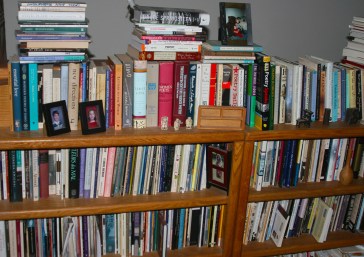
I have been looking at my bookshelves with a certain apprehensive dismay.

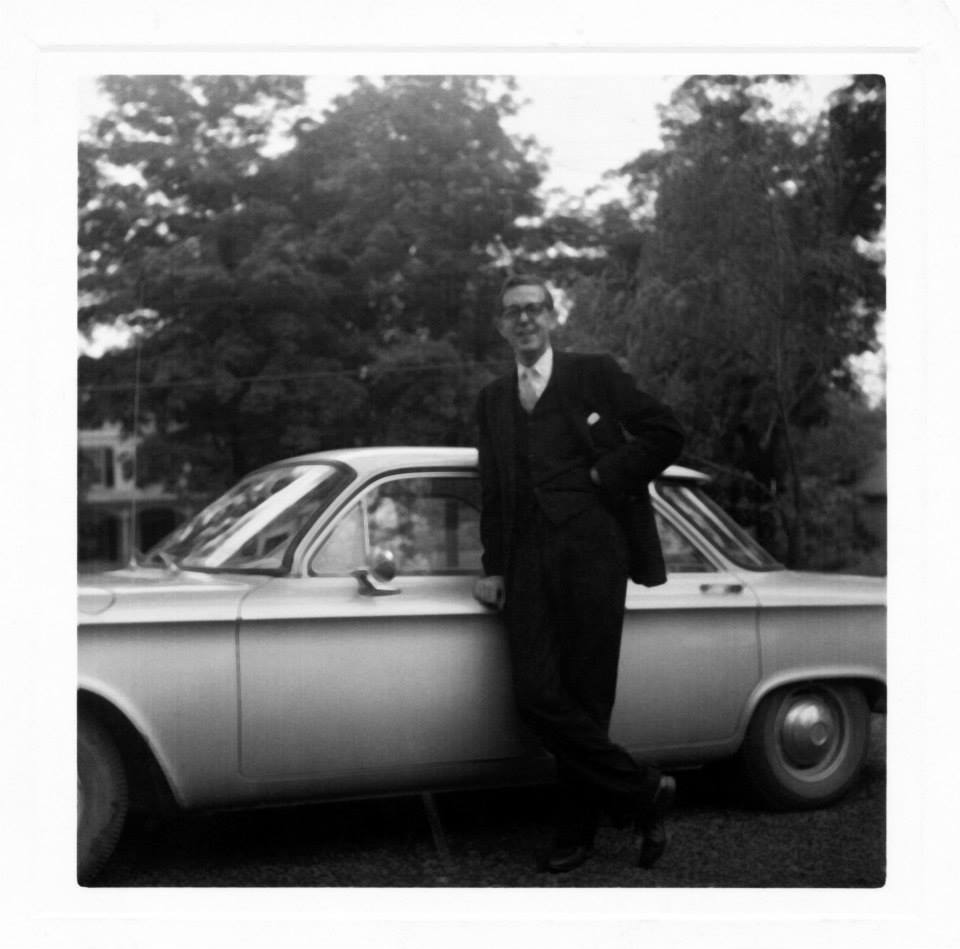
They are…overfull. Here’s part of the shelving where I keep poetry collections. I can’t fit any more in without some “weeding.”

books1

And then there are the other bookshelves, five or six of them, that are also becoming piled high with wonderful and interesting texts.

Now, this would not necessarily constitute a problem. I love books. I refer to many of them often, and I re-read some of them, and I lend some out to friends. A few of the books are even slightly valuable, as the majority of them are out of print.

books3

The reason I am thinking about the bookshelf issue is that in a month, I am heading to Washington, D.C. for the annual AWP Conference & Bookfair. I have missed the past few conferences because they were held in Los Angeles, Vancouver, and the like; I cannot take that much time off work nor easily pay for the airfare. But D.C. is not far away! I am not presenting this year, but I will be attending.

The Bookfair, though–it is a haven for book lovers who are fond of hard-to-find literature, small-press poetry and fiction, little journals and big anthologies, teaching texts, new authors. I know I will return home laden with books.

Where will I put them? Is it time to prepare for additions by donating a few of the current volumes? Should I just purchase more bookshelves? Well, I guess I will solve that problem later. For now, I eagerly await the conference.

Poetry reading

One week from today, I will be reading in Easton, PA with a few talented, feminist writers hosted by my colleague Marlana Eck. I have not given a reading in awhile, and this should be fun.

Here’s the poster:

~

with-lipstick

~

Crowds & Power

I am reading Elias Canetti’s Crowds and Power (1960 translated into English by Carol Stewart). About a quarter of the way into the book, I realized how oddly apropos this particular text is to this particular moment–the November 8 election here in the US.

The book I teach in my freshman composition class, Cass Sunstein’s Why Societies Need Dissent, synthesizes with the election season and with Canetti. Pack behavior, herd behavior, individuality and individuals, crowds, rituals, outliers and dissenting voices and the hero and the martyr…anthropologists, sociologists, political scientists, and philosophers who study group behavior note the paradox of wanting to be acknowledged as an individual and wanting to be comforted by the press of the accepting crowd.

I hate crowds, but they are indeed compelling. I experienced the crush and sway and direction and growing of crowds as a much younger person, in city life, on subways, at large demonstrations and, most frequently, at the phenomenon of the rock concert (for other people, it might be the phenomenon of the sports arena).

A crowd is equal. A crowd is dense. A crowd wants to grow and has direction. Yes, watch the behavior of the people in “the pit” at a Bruce Springsteen concert, for example, where the rock star becomes one with his fans, and equal, amid the density and the cheering and the hands-on excitement of the crowd. Aside from our religious rituals, we have other ways of expressing our need to be close together, we humans.

Here’s a crowd-surfing moment with Bruce Springsteen, Paris, 2016.

The power aspect–that is what relates to the presidential campaigning. But I feel too exhausted by the media mayhem to want to draw those parallels to Canetti at this time.

Believe me, though–they are there.

Here is Maria Popova (of Brainpickings) on Crowds and Power. A fine overview. Canetti’s insights also complement the work of such diverse scholars as René Girard and Daniel Kahneman. Much here to contemplate, as I contemplate the weirdness of the present moment.

Do we change? Can we?

I have blogged about the Myers-Briggs personality inventory–a tool that may or may not be useful to psychologists, depending on whom you talk to. Because my father used the inventory in his studies of people in groups, he “experimented” with his family, administering the inventory to the five of us. I was 17 years old the first time I took the survey; my type was INFP (introvert, intuitive, feeling, perceptive), heavy on the I and the F. Has that “type” changed over the years? The “brief” version of the test now shows me moving in the last category, still P but slightly more toward J (judgment). That makes sense, as I have had to learn how to keep myself more organized and ready for difficult decisions. After all, I am a grownup now.

The personality type does not indicate, however, what sort of thinker a person is. Certain types may tend to be more “logical” in their approach to problem-solving, and others tending toward the organized or the intuitive, but what do we mean by those terms? For starters, logical. Does that mean one employs rhetoric? That one thinks through every possibility, checking for fallacies or potential outcomes? Or does it mean a person simply has enough metacognition to wait half a second before making a decision?

Furthermore, if personality type can change over time (I’m not sure the evidence convinces me that it can), can a person’s thinking style change over time? Barring, I suppose, drastic challenges to the mind and brain such as stroke, multiple concussion damage, PTSD, chemical substance abuse, or dementia, are we so hard-wired or acculturated in our thinking that we cannot develop new patterns?

There are many studies on such hypotheses; the evidence, interpretations, and conclusions often conflict. Finally, we resort to anecdote. Our stories illustrate our thinking and describe which questions we feel the need to ask.

~ A Story ~

high school.jpg.CROP.rectangle3-large

This year, I did the previously-unthinkable: I attended a high school reunion.

We were the Class of 1976, and because our city was directly across the Delaware River from Philadelphia–the Cradle of Liberty! The home of the Liberty Bell and Independence Hall!–the bicentennial year made us somehow special.

Not much else made us special. Our town was a blue-collar suburb of Philadelphia, a place people drove through to get to the real city across the river, a place people drove through to get from Pennsylvania to the shore towns. Our athletics were strong, our school was integrated (about 10%  African-American), people had large families and few scholastic ambitions. Drug use was common among the student population, mostly pills and pot. There were almost 600 students in the class I graduated with, although I was not in attendance for the senior year–that is a different story.

But, my friend Sandy says, “We were scrappy.” She left town for college and medical school, became a doctor, loves her work in an urban area. “No one expected much of us, so we had to do for ourselves,” she adds, “And look where we are! The people here at the reunion made lives for themselves because they didn’t give up.”

It is true that our town did not offer us much in the way of privilege or entitlement, and yet many of us developed a philosophy that kept us at work in the world and alive to its challenges. The majority of the graduates stayed in the Delaware Valley region, but a large minority ventured further. Many of these folks did not head to college immediately, but pursued higher education later on in their lives; many entered military service and received college-level or specialized training education through the armed forces.

ann1975-76?

Does this young woman look logical to you?

I wandered far from the area mentally, emotionally, and physically; but then, I was always an outlier. One friend at the reunion told me that she considered me “a rebel,” a label that astonishes me. I thought of myself as a daydreamer and shy nonconformist, not as a rebel! Another friend thanked me for “always being the logical one” who kept her out of serious trouble. It surprises me to think of my teenage self as philosophical and logical. When one considers the challenges of being an adolescent girl in the USA, however, maybe I was more logical than most.

I find that difficult to believe, but I am willing to ponder it for awhile, adjusting my memories to what my long-ago friends recall and endeavoring a kind of synthesis between the two.

~

The story is inevitably partial, incomplete, possibly ambiguous. Has my thinking changed during the past 40 years? Have my values been challenged so deeply they have morphed significantly? Have I developed a different personality profile type? Are such radical changes even possible among human beings, despite the many transformation stories we read about and hear in our media and promote through our mythologies?

How would I evaluate such alterations even if they had occurred; and who else besides me could do a reasonable assessment of such intimate aspects of my personal, shall we say, consciousness? Friends who have not seen me in 40 years? A psychiatrist? My parents? A philosopher? It seems one would have to create one’s own personal mythology, which–no doubt–many of us do just to get by.

I have so many questions about the human experience. But now I am back in the classroom, visiting among the young for a semester…and who can tell where they will find themselves forty years from now? I hope they will make lives for themselves, and not give up.


Wasp redux & reading

Last year, I had my first encounter with a grass-carrying wasp.

Today, I noticed some waxy, crumbly, yellowish bits around the post in which last year’s wasp had built its nest. Then I saw an adult grass-carrying wasp hovering to and fro with a stem of grass grasped in its legs, which led me to this year’s nest–in a different hole in our post-and-beam porch. Who knew the wood had so many little holes in it? The wasps sure found them! Today’s wasp has built in a much harder place to photograph, a vertical spot, behind a post. So last year’s photo will have to suffice.

nest of the wasp

Isodontia: nest construction in progress

~

I am not quick at writing poems in response to events, personal or public; generally I need time to consider deeply, to process. I am glad to participate in an upcoming event, however, taking place in Bethlehem PA as a public response to the Orlando Pulse shooting. LGBT citizens of the region, and families, friends and supporters of compassion and awareness, are gathering for a memorial and celebration of support for everyday Americans, which includes–we must recognize, and it would be wise and sane to accept–people who are LGBT/gender fluid & who are just human beings notwithstanding, as are we all.

For those in the Lehigh Valley area of Pennsylvania, the poetry reading is at Sun Inn’s courtyard on Friday July 1. I may not have a poem of my own to read, but I have been reading through my library and have already located several poems by other writers that will serve well as responses to tragedy, personal or national, or which speak to the human-ness of all of us.

~

I am doing a little nesting of my own this week, retreating into a metaphorical burrow for a couple of days, I hope. And with any luck, I will emerge with some new drafts of poems.


Questioning

Next week, on May 5th, I’ll be the featured poet for the River Poets of Bloomsburg, PA (info here and here). Bloomsburg is situated along the Susquehanna River, and the region will be beautiful in early May.

Linda Dietrichson, the MC for this event, has posed a theme for the poet (me) to consider when choosing poems to read and to follow up in a Q&A with the audience. The theme is “Questioning.” At first, I read the word as questing–the mythic journey toward some remotely-attainable goal. But question’s etymology offers a varying perspective:

japanese maple

Quest (n): early 14c., “a search for something.”

This searching comes to Westerners mostly via chivalry’s poems and Arthurian legends, derived from “Old French queste ‘search, quest, chase, hunt, pursuit; inquest, inquiry’ (12c., Modern French quête), properly ‘the act of seeking,’ and directly from Medieval Latin questa ‘search, inquiry,'” according to the Online Etymology Dictionary.

Question, the noun, derives from “Latin quaestionem (nominative quaestio) ‘a seeking, a questioning, inquiry, examining, judicial investigation,’… early 13c., ‘philosophical or theological problem'” with even a suggestion of interrogation (or torture!).*

These definitions overlap in some areas; but the word-basis does differ in the Latin. The act of seeking tends to connote search for an object–a physical search for a physical something–whereas inquiry and examination (yes, even torture) suggest that the “question” has a rhetorical object: the abstract or metaphysical aim (never an answer!) that’s more contentious and usually more ambiguous.

Questioning offers interrogation toward the unknowable, and that is poetry’s territory.

So this is where I begin next Thursday evening’s reading: with the unknowable. Who knows where we’ll go from there?

~~


*(see the site Online Etymology Dictionary for further brief origins–or any OED).

Book launch & reading

Momegg.png

I am pleased to be among the many fine poets whose work appears in this issue of Mom Egg Review. The reading & launch takes place at an exciting venue–The Gallery at (le) Poisson Rouge in Greenwich Village, NY, NY. Tickets here.

Seeking

The semester has begun. I’ve been immersed in reading Marilynne Robinson (Absence of Mind) and Daniel Ariely (Predictably Irrational) while procrastinating on uploading materials to the software platform for my class and making tomato sauce at home.

Robinson detects, amid all of our human endeavors, a search for answers. That we have questions at all seems proof of sentience, if there can be such a thing as proof. Certainly the process, myth, and language of seeking surrounds most human developments: religion, art, philosophy, science, and others. It’s the classic quest narrative that runs through anthropologically vast distances, from Gilgamesh’s efforts to find eternal life to the Ramayana (with Sita as the prize, in Ravana’s clutches) to Rowling’s Harry Potter, who snags the role of “Seeker” in a game–a metaphor that continues through the series.

But are there answers to our questions? And a corollary: are we asking the “right” questions?

256px-Chaos_Monster_and_Sun_God~

Ariely, like Dan Kahneman, reminds us that we do not always–in fact, hardly ever–choose the most rational actions or answers to dilemmas. We fail to ask ourselves the better questions. We fail to act upon the better actions or decisions.

But we keep seeking. I find that intriguing.

~

Event Ahead:

On September 16, I’ll be taking part in an art-&-poetry event at a gallery in the “Christmas City” (Bethlehem, PA). Info on my Events page, here.


March, march

March has been a busy month for me. Instead of composing posts on my usual topics (poetry, nature, education, philosophy), I am going to refer my readers to other sites or other writers…a treasury of riches on the web.

To commemorate the 50th anniversary of the Voting Rights Act of 1965, I ask my readers to check out my father’s memoir of the Selma to Montgomery March, here, and to consider this heartbreaking poem by the late Jake Adam York:

~~

For Reverend James Reeb
     9 March 1965, Selma, Alabama

The ministers rise from empty plates like the steam
of chicken and greens and puff into coats, prayers,

and then the unlit streets, the night, ready
for tomorrow’s march or gathering or prayers,

and then the dark is beating Hey niggers
though only their coats are black and the night and everything

so they cannot see what’s coming, what hits them,
what clubs or pipes, what feet are kicking

at their ribs, who’s saying Now you know,
now you know what it’s like to be a real nigger.

No one can see what lands, what cracks Reeb’s skull.
No one can see the hairline fracture

or what’s nesting, what’s beating there,
what wings are gathering in his eyes.

      by Jake Adam York

from the Blackbird archives.

Biography of Reeb here.

Guest blogger: memoir

Today, I introduce a guest blogger dear to my heart, my 81-year-old father, Tom Michael.
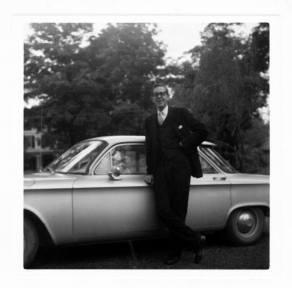
Tom Michael as a young minister in New York.

Tom Michael as a young minister in New York.

The March to Montgomery, 1965

by Tom Michael

A memorable experience I want to relate to you happened in 1965, when I was a 32-year-old co-pastor of a tall steeple church, First Westminster Presbyterian Church in Yonkers, New York. The United Presbyterian denomination was committed to the civil rights struggle, even though, as Martin Luther King said, the most segregated hour in the week was 11 o’clock on Sunday morning.

The call had come out from our denominational national committee on religion and race to ask clergy and laymen to participate in demonstrations throughout the South supporting voting rights for Black citizens. Small groups of ministers were asked to march around the courthouse in Philadelphia, Mississippi. My colleague and I flipped a coin and my colleague went down there. It was a potentially dangerous task, but he was able to return home safely.
First Presbyterian Church of Yonkers NY, 1964

First Westminster Presbyterian Church of Yonkers NY, 1964

After the first march from Selma was halted by police on the Pettus Bridge, they asked for volunteers to join the Freedom Marchers who had started out from Selma, Alabama on the way to the State capitol in Montgomery. It was my turn to go. So I had the rare privilege of participating in the March on Montgomery for voting rights. While I had very little influence on what happened there, it had an enormous influence on me. It was both an exciting and learning experience for me.

I first had to raise the money to go, so I asked members of the congregation to contribute to my trip. One member, a president of a savings and loan bank, disapproved and spent a long time on the telephone angrily telling Bonnie that I should not go. His wife quietly slipped me some money. That was something I learned about my congregation.

I carried along a change of underwear and some toiletries in an overnight case. That was the second thing I learned: don’t carry a suitcase on a civil rights march. This March I suspect that you will see newsreels of that event as we commemorate the fiftieth anniversary of the march. If you spot a skinny young man with big ears carrying a small suitcase, that will be me.

I don’t recall much of how I managed to get on an airplane, but soon I found myself on Delta Airlines. The stewardesses (remember when there were stewardesses in airplanes?) were lovely young women with southern accents. The pilot came on the intercom to tell us about the flight. He also had a southern accent. I thought, “Thank heavens, the pilot is in the plane.”

When we reached Montgomery we were taken to the campus of a school for colored girls on the East side of the city. There were, I’m told, twenty-five thousand of us milling about. Darkness came. There were two points of light: one, to my right, was a communications stand manned by Gary Collins, a movie actor who at that time was married to Lucille Ball. The other, directly in front, was a stage. We were entertained through the night by an all-star cast: Harry Belafonte, Tony Bennett, Frankie Laine (he sang “Mule Train,” “clippety clopping through the wind and rain,”), Sammy Davis, Jr., Joan Baez, Nina Simone; and we sang, with Peter, Paul, and Mary, “We shall overcome, we shall overcome, we shall overcome some day.”

Late at night we were assigned places to sleep. Mine was in the balcony of a one-room Baptist Church. At the other end of the pew was a man who snored all night long. In the morning I sat up and waited my turn to use the single bathroom. As I waited, I watched in fascination from my balcony perch as a coed with a Purdue University sweatshirt combed her blond hair into a beehive hairdo. That was the third thing I learned, though I don’t believe it has done me much good.

After breakfast we waited around the grounds for the march to begin. I happened to meet up with Dr. Gayraud Wilmore, whom I had met when he attended a Presbytery meeting to inform us of his work as executive secretary of the United Presbyterian Commission on Religion and Race. He was accompanied by the Rev. Metz Rollins, who was a field director for the United Presbyterian Board of Christian Education. As we were chatting, a white southerner walked up and was greeted by these two. They introduced me to him. His name was Myles Horton, founder of the Highlander Folk School in Tennessee. This school was responsible for training Rosa Parks, James Abernathy, John Lewis, Martin Luther King, Jr. and many others in the skills and tactics of non-violent resistance. While we were talking, a man joined us, and he was introduced to me as Charles Evers, brother of the slain civil rights worker Medgar Evers. As I shook his hand I said, “It is an honor to meet you.” He acted as if he didn’t believe he deserved that, and I learned later that he had spent time in Chicago engaging in criminal activities. Then a Union Theological Seminary classmate of mine, who was there from his home in Minneapolis, came by.
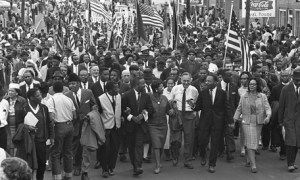
AP photo 1965

AP photo 1965

At long last the march began. We walked into the city on a main street that was lined with houses. Many of the locals were sitting on their front porches looking rather grim as thousands of us so-called outside agitators filed past. I caught the eye of one woman on her front porch and motioned to her to join us. I received a most hateful response.

My seminary classmate had offered to write dispatches for his local newspaper, so as we marched along we caught up with a slightly built older man. My friend decided to interview him. When he asked his name, he replied “Willard Uphaus.” Uphaus, a Methodist lay preacher, led a social action group with summer headquarters at Conway, NH. The New Hampshire Attorney General, empowered by the State Legislature to investigate subversive communists, demanded that he turn over the names of guests at the World Fellowship of Faiths. Dr. Uphaus freely testified about his own activities but refused to provide the names of others. In 1956, he was found in contempt by the Superior Court in Concord, NH. After the conviction was upheld by the United States Supreme Court in a 5-to-4 vote in 1959, Dr. Uphaus spent nearly a year in jail.

I began to think I was in Bunyan’s “Pilgrim’s Progress,” meeting up with stalwarts of the faith as we made our progress toward the Alabama State House. When we arrived there I took up a position in the center of the street in front of the statehouse. At the far end on the right side was an American flag. On the left side near us was the Confederate flag. I found myself resenting that flag. It was a slap in the face of all the descendents of slaves who had been oppressed and humiliated.

It was a hot day. I sat on my little suitcase. I had a headache. I thought “I am here. I am nowhere else.” There were several speeches, of course.

Then Martin Luther King gave the final speech, ending with the stirring words, “When will the radiant star of hope be plunged against the nocturnal bosom of this lonely night, plucked from weary souls with chains of fear and the manacles of death? How long will justice be crucified, and truth bear it?…I come to say to you this afternoon, however difficult the moment, however frustrating the hour, it will not be long, because ‘truth crushed to earth will rise again.’ How long? Not long, because no lie can live forever. How long? Not long, because ‘you shall reap what you sow.’ How long? Not long, because the arc of the moral universe is long, but it bends toward justice.”

Then we began the trek to return to our homes. We were told to go to what they called the colored section of the city, to the right of the statehouse. I was struck by the irony that I, a white man, should feel a sense of relief when I crossed into the ghetto. I found Gay Wilmore. He had rented a full sized Buick sedan and was planning to drive to the Atlanta airport with Metz Rollins. I figured that the airport in Montgomery would be chaotic, so I asked to ride with him. My seminary classmate joined us, and a young man from the Student Non Violent Coordinating Committee. He looked fierce with a black beard and dreadlocks, but he was in fact a most gentle young man.

So there we were, three Black men and two white men. We struck out on Interstate 85 toward Atlanta. After a while we needed to get gas and make a pit stop. Gay and Metz peered intently at each service station, asking, “Is that one?” This was another thing I learned. It is one thing to hear about segregated facilities in the South, and it was another to actually experience it. Here were two prominent, highly educated clergy reduced to the humiliation of having to bypass facilities that would refuse to serve them because of their race.

Finally, we found a station that would serve us. For my part, I was not able to tell the difference, but they had lived a lifetime of picking up the subtle clues about where they could be served. After we had finished, Gay Wilmore announced that he was sleepy, and would someone else drive. I was the only one who had my driver’s license, so I took the wheel. At that time the speed limit on highways was 55 miles an hour, and I was observing the speed limit. As I drove along, a string of cars passed us by traveling faster. Then an unmarked state trooper whizzed past and pulled over eight or ten speeders. I drove carefully on the outside lane at 55.

Gay Wilmore said to me, “OK, Tom, if a trooper pulls you over for speeding, just tell him ‘I’m just trying to get these (he used the N word) out of here as fast as I can.’” I guess it was a form of gallows humor. After we left the interstate we traveled in the darkness through small towns in Georgia.*

I carefully observed every speed limit sign, I came to full stops at stop signs, and if a traffic light even hinted that it was turning red, I stopped. Since that time I have observed speed limits and stop signs. You will never catch me traveling more than the speed limit anywhere.

At long last, late in the night, we saw the towers of Atlanta glowing in the distance. It reminded me of the experience when Dorothy and her friends first caught sight of the Emerald City of Oz.

At the airport we took our leave of one another as we boarded our airplanes. Gay Wilmore saluted me in the manner of a French general, kissing me on both cheeks. I boarded the plane and sat next to a man who looked very familiar. I believe he was Ralph Bunche, Nobel Peace Prize winner when he was assistant secretary general of the U.N. I did not ask him who he was, since I believe that famous people should be allowed some privacy; and besides, he immediately fell asleep.

When we arrived in New York I shared a taxicab with an editor of Time Magazine. The taxi driver, an African American, asked us where we had come from, and when we told him that we had been on the March on Montgomery, he said he had been watching it on TV. My companion gave the cabby an address on the upper West Side of Manhattan. I said that I wanted to go to Grand Central Station so I could wait there a couple of hours until a train could take me to Yonkers. The cabby said, “I could take you there.” “But,” I said, “I only have five dollars on me,” and I knew that the fare from midtown to Yonkers was at least three or four times that amount.

“Well,” he said, “You did something for me today, so I will do something for you.” And with that he took me all the way to my front door.

=

*Civil rights activist Viola Liuzzo was murdered by Klansmen the same day, also while driving African American protesters to the airport and bus stations.

~

For another story of the march and some pictures, see this lovely interview with photographer James Barker (on the Smithsonian’s website).