Protest (Selma)

The past 10 months have been especially notable for public protest here and abroad. As it happens, I’ve been trying to write a poem about my father’s participation in the voting-rights march (1965, Selma to Montgomery AL), a kind of occasional poem to commemorate the 50-year anniversary. Then the movie “Selma” was released, which I just saw at the cinema.

The film, like all “based on a true story” dramatizations, may have focused on perspectives of the protest that worked best for the scriptwriter, may have some historical inaccuracies, may raise some controversy. But as a child whose parents were, though marginally, connected with civil rights through the churches’ participation, the movie felt true in the big way: “capital T” True. Funny, the aspects of the film that engaged me: how I could immediately identify who the actors were portraying (Abernathy, Young, Lewis); the way so many important discussions took place in church basements and classrooms (as the child of a minister, I am intimately familiar with church basements and classrooms); the televising of Bloody Sunday.

And another True thing:  the familiar, biblical-style, preacher-cadence and allusions in King’s speech. People do not talk that way anymore. But they once did, and I recall it well. Rhythm and intonation and the use of allusions and analogies impress the sort of listeners who eventually become poets, I am sure of it.

Right now, I am struggling with my poem. I am not sure I will ever complete a draft that I feel pleased with–maybe it will end  up in my “dead poems” file. What I will do instead is to devote my next post to my father’s depiction of the Selma-to-Montgomery march, from his point of view, looking back 50 years.

Continuing the discussion

The semester is almost over, and my students and I have spent a few weeks doing writing that relates to Cass Sunstein’s book Why Societies Need Dissent. As it turns out, this semester coincides with considerable current-event attention on protest, conformity, stereotyping, and other issues Sunstein explores in that text. Social media pushes the herd mentality, the “troll” mentality, and the ease of using shortcuts in thinking: justification through bad analogies, irrational responses, barely-considered ideas, culturally-entrenched concepts, knee-jerk reactions.

In other words, the gamut of human social psychology in 140 characters or thereabouts, with links, memes, and dudgeon.

A case in point that appeared on social media last week is a photo of a black man holding a sign that reads, “No mother should have to fear for her son’s life every time he robs a store.”

That was a photoshopped “joke” in which someone altered the last line of the protester’s poster. The intent was to assert that Michael Brown had robbed a store before walking down the middle of a Ferguson street, and the intent was clearly meant to suggest that Brown deserved to be shot by police–or, at any rate, to suggest that he was not “innocent.” I agree with the poster even in its altered state because I propose that none of us are innocent, and that none of us deserves to be killed. A suspected robber should be tried by jury and should be considered innocent until proven guilty because that is the way US law reads.

I do not claim that “It’s that simple.” Indeed, the situation is far from simple, which is why it feels so fraught and inflames such exertions of logic, law, and character defamation, and so many conflicting opinions–not to mention Facebook “purges” and irate newspaper columns and public protests. These are reasons that discussion can be useful. We need to continue the discussion, even though it is awfully difficult to do so.

~

If only we could listen to other perspectives. If only we could engage in discussion. I listened to two of my male students talking about being stereotyped. One claimed he was seldom troubled by harassment and not really bothered when people tried to stereotype him. “You’re not black,” his friend responded, “You’re Latino, or whatever.” The first man held up his arm: “Hey, man, I’m darker than you. What makes you black and me not?”

“Neighborhood. Money.”

“Look at you, bro! You’re wearing $185 shoes and new jeans. Dollars to donuts your family has more money than mine.”

They continued in this fashion awhile, sometimes asking me what I thought. If it was history that made them different, couldn’t the black man put it behind him? And he didn’t even really know much about “his” history, it turns out. If it wasn’t skin color that made one man feel less sure of himself on the street, warier, even in a “good” neighborhood, to what could it be ascribed? Was it just a personal issue? A neurosis? Was the Latino man clueless, or oblivious? Or just lucky up to now? Are these issues of confidence, self-esteem, bravado, or fear? Social issues or private ones? All of the foregoing?

And how does all of this relate to how young people of any background, religion, or color comport themselves in the world, deal with society and its assumptions, codes, expectations?

~

I teach writing. My job consists in instructing students in the perhaps arcane code that clear, concise, informational, and persuasive writing requires if they are to succeed in writing for academia and, later, the world of business information. I tell them: “This is what you should expect others/authorities to expect of you. It’s your choice to follow the conventions or not to follow the conventions, but you need to at least know what the conventions are.”

Meanwhile, I hope they recognize that they should follow the conventions of the rule of law; and if they choose to oppose the law, they should do so with forethought and initially, at least, within the structure of the law. But bad laws do need to be changed, and bad protocols need to be changed, and unarmed people should not be killed for brooking authority; and stereotyping–a very natural and automatic human behavior though it is–should be consciously questioned, even though yes, that can make the discussion difficult.

Flow & dough

I have no doubt that, for some people, making pies is a flow experience. I’m reasonably certain that my grandmothers, and sometimes my mother, felt a sense of flow when pie-making: fully engaged in the process, challenged, immersed, and enjoying the fulfillment of a task as it evolves. Making pies can be intrinsically rewarding, but–alas–for me, it is a bit too much of a challenge and the purpose is generally extrinsic (though a good pie is surely worth the effort).

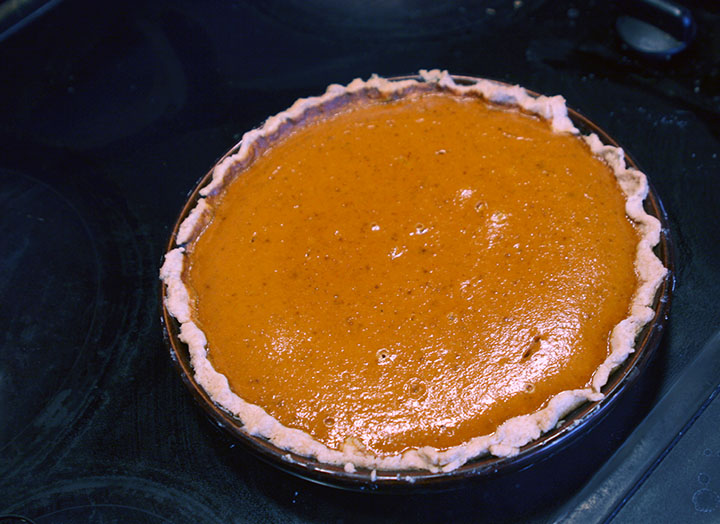
Today I made pie in preparation for the Thanksgiving feast we celebrate here in the USA. But I feel more of a sense of flow when I am cleaning up the mess I made in the kitchen and stopping occasionally to gaze out the window at the falling snow and the sweet little juncos hopping along the porch railing. The actual process of rolling a pie crust involves, in my case, swearing and cussing and patching torn dough. I am positive that my Methodist grandmother never resorted to salty language while pie-making, but I imagine she may have also enjoyed glancing up from her work and appreciating a view, a fellow-creature, something aesthetic or pleasant to behold in the midst of family life.

The activities that keep me actively entranced and purposeful do not include making pies. My re-reading of Mihaly Csikszentmihalyi’s book, however, has reminded me that feeling happy means making meaning in my life and continually seeking out challenges that offer me a sense of building a conscious self and a disciplined, mindful attitude toward life.

Even if I never get really expertly engaged with concocting desserts, I can find some sort of flow throughout my days through reading, art, gardening, writing, tai chi, interactions with friends and family members. And who knows what else? There is so much to learn; that is what I feel most thankful for today.

Not the prettiest pie.

Not the prettiest pie.

Here’s a TED talk by Csikszentmihalyi, if you want to hear more about flow & happiness.

Dave’s night out

10562470_10152820751072089_440768678543981394_o

Sunday, September 14, 2014
7:00 p.m. ~$10.50

Godfrey Daniels listening room
4th St. Bethlehem PA

Ann E. Michael with Danielle Notaro and musician/host Dave Fry
featured at Dave’s Night Out

“Tonight’s Dave’s Night Out explores the artistry of regional poets Ann E. Michael and Danielle Notaro. Both are established and published poets in our community. Tonight, we will explore the art of writing for a living, the world of creating and publishing verse in this modern world, idle chatter about the artist’s life and stimulating conversation with the audience. A very unique evening in the arts.”~~

Poetry Readings~September

Please check out my Events Page here, especially if you are not too far from Pennsylvania’s Lehigh Valley or Berks County. I will be participating in two quite different poetry events during the second week of September.

The first event presents the culmination of a years-long project of collaboration between educators/writers/photographers Hernán Pereira, Pamela Daza, and Lucia Ramos in Iquique, Chile and Dr. Karen Jogan of Albright College in Reading, Pennsylvania. There will be a gallery of photographs in the library at Albright and a celebration of the book’s publication the evening of September 11. Arturo Prat University and Albright College have been able to sponsor this project through a competitive teaching innovation project. The book’s title: So Far..So Close/Portada y Contraportada: Contemporary Writers of Tarapaca & Pennsylvania.

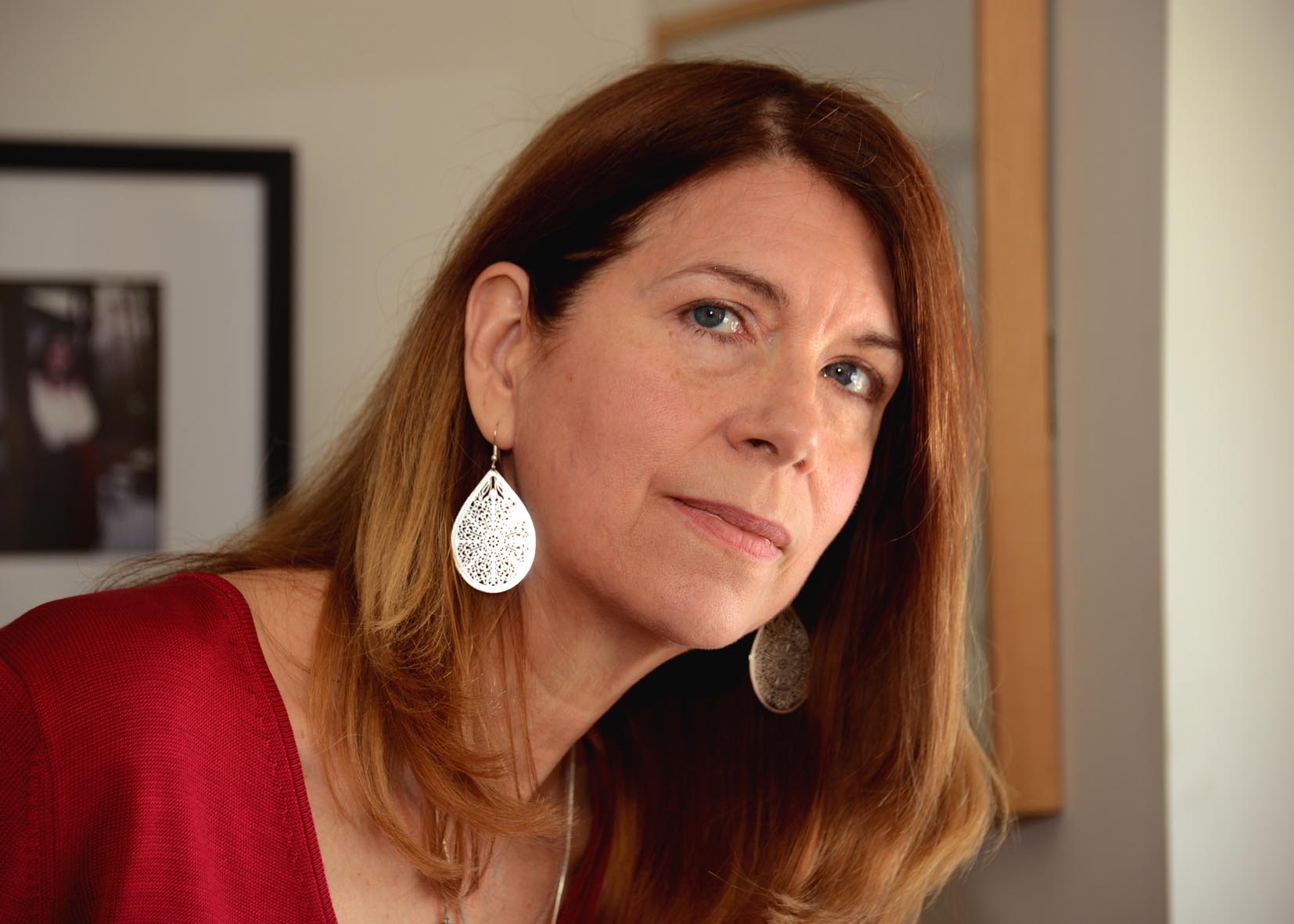
The anthology presents poets from both Chile’s Atacama Desert region (Tarapaca) and Pennsylvania’s eastern/northeastern counties. Interviews with the poets provide insightful mini-biographies and are accompanied by wonderful photographs. Here’s mine:

photo by H. Periera

photo by H. Periera

I have previewed the book, through the magic of .pdf files, and found it fascinating to read about the backgrounds of these writers, their writing processes, their creative influences.

The Pennsylvania writers include some colleagues I have known for awhile, yet the editors’/authors’ choice of inquiries and the settings of the photographs evoke aspects of these writers that inform and delight. It should be an interesting evening, and the public is invited.

~~

The second event takes place in Bethlehem, PA at Godfrey Daniels–a listening room/coffeehouse in the American Folk tradition. Dave Fry, folk troubadour extraordinaire, hosts a monthly “Dave’s Night Out” concert there at 7 pm on Sundays. Most of the time these events feature singers and musicians; but Dave branches out to storytellers and, on Sunday the 14th, to poets Daniel Notaro (author of Limn the Mask) and me.

602043_614706205212099_1317517254_n

We’ll be reading from our work and conversing with one another, with Dave, and with the audience. $10.50 at the door.


Parenthood & writing

My life, in my role as parent, has lately trumped my reading-&-writing time. This happens periodically and is one of the challenges–one might suggest hindrances–of being a writer who has children.

My children are grown, yet the occasional interferences continue. I rush to note that these interruptions can be marvelous; June has been pleasantly subsumed in the marriage festivities of my youngest. My blog plays a decided second fiddle to family. Or third fiddle. Or maybe just a fiddle that sits in the closet for months.

The recent New York Times Sunday Book Review offers two delightful essays on how parenthood affects writers: the columns by James Parker and Mohsin Hamid speak for me on how parenthood has informed these authors’ “writing life.” There is a difference, though it may be only one of small degree, between real life and the writing life. These men demonstrate the interaction, inspiration, and interference well, so I will let their words stand in for mine today. Please do click the link and read the essays.

Meanwhile, I observe with joy and a mixture of feelings (and a certain amount of preparation and planning and organizing) as one of my best beloveds chooses a lifetime partner and the two of them head off together into a shared life. I will be on the periphery. Which is as it should be, I suppose.

Many blessings, daughter.

Image


Love. Poem.

A beloved member of my family will be marrying in June, and I was asked to find a poem apropos to the celebrants and the occasion. I have written two epithalamiums (or epithalamia) and can testify to the difficulty of composing a good poem that is also a marriage poem. Anyway, in this instance, I wanted to find a suitable long-term-love-commitment poem by someone other than myself. Talk about abundance of choice!

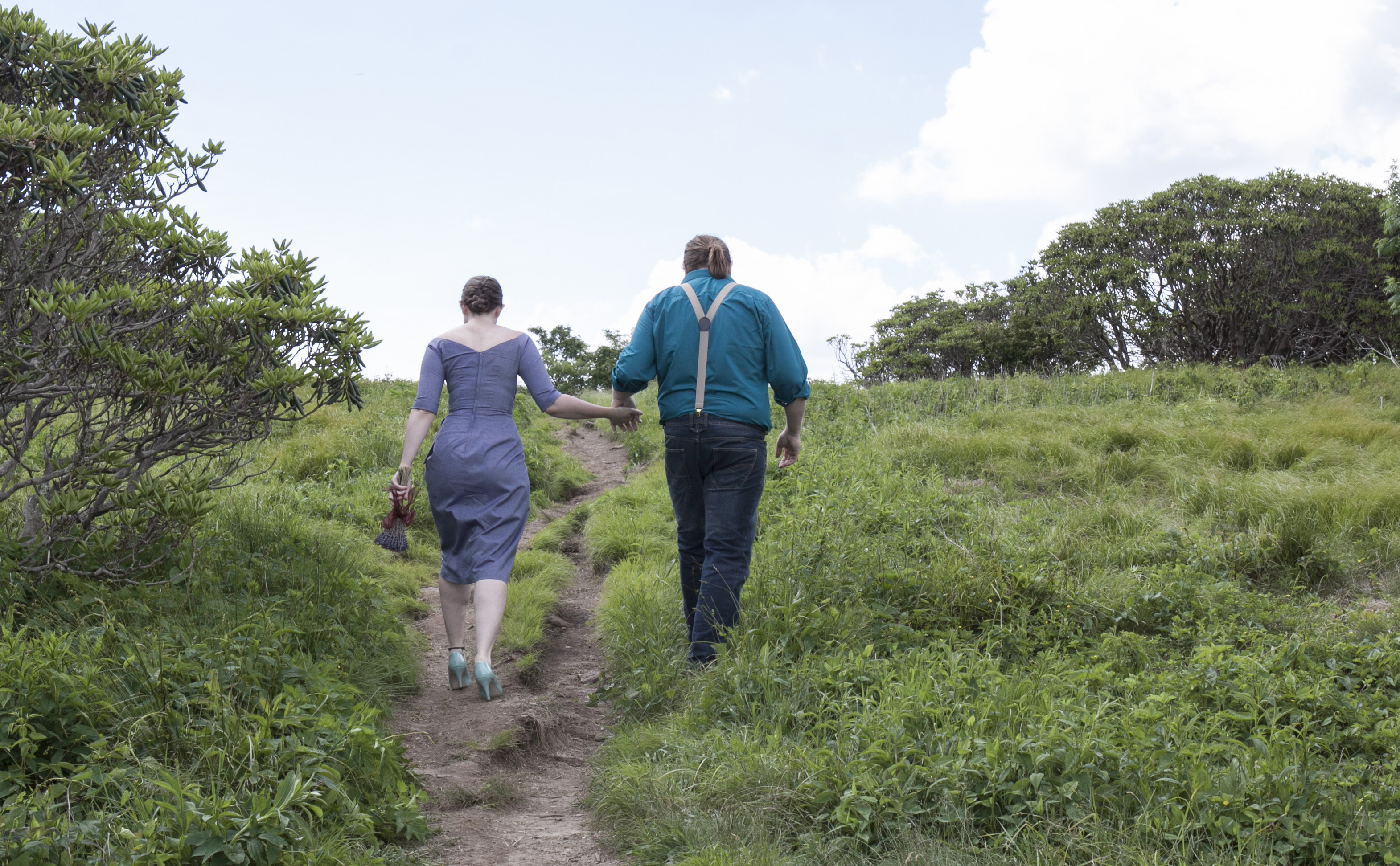
Knowing the celebrants’ interests and tastes narrowed things down a bit, and the poem had to be “short & sweet.” The ceremony will be out of doors on a trail in the Blue Ridge Mountains, which made me inclined to look for natural imagery in the poem–but nothing so dense as to distract from the place itself.

What a splendid task! I allowed myself the luxury of looking at poetry books randomly, paging slowly through anthologies, browsing handouts I’ve collected for and from classes over the years. Just flitting from poem to poem over the course of weeks, occasionally marking something that seemed particularly likely…no pressure…

When I came across the poem “Tree Heart/True Heart” by Kay Ryan, I was startled into admiration.

It doesn’t start off like a love poem. It offers little in the opening imagery to suggest romance, or life attachment, or promise.

It is breathtakingly brief, revolves around wordplay and connotations, sounds lovely when read aloud.

The last two lines clinch the “commitment” in the poem; and the three lines preceding that final, spare, achingly-sweet sentence made me gasp when I re-read the poem, trying to figure out how Ryan managed all this in 16 lines, not one of which contains more than five words.

Love is all you needOkay, now you want to read the poem, right?

It was published in The New Yorker on September 26, 2011 (p. 116), and I am certain that I will be violating some sort of copyright if I reproduce it on this blog.

I hope Ms. Ryan forgives me, though if The New Yorker or her publishers find out, I may have to take this post down. It seems likely to me that The New Yorker has bigger fish to try to catch, however, so here goes. And I am putting in a plug for Kay Ryan’s books. Go buy them, preferably not second-hand, because poets make hardly any money from book sales and no money whatsoever from second-hand sales.


Tree Heart/True Heart

by Kay Ryan

The hearts of trees
are serially displaced
pressed annually
outward to a ring.
They aren’t really
what we mean
by hearts, they so
easily acquiesce,
willing to thin and
stretch around some
upstart green. A
real heart does not
give way to spring.
A heart is true.
I say no more springs
without you.

~

My beloveds–who are an ocean apart at present and miserable about it, and who aim to make sure that each has “no more springs/without you” –agreed that this poem suited their intentions, their personalities, and the leafy stretches of the hiking trail.

Thank you, Kay Ryan. Thank you, human beings, whoever it was who invented the arts, and poetry.

Poetry readings ~ April

Eastern Pennsylvania Poetry Month events coming up next week.
Please join us!
~~

Wednesday, April 23, 2014

Barnes & Noble Local Authors’ Night
7-9 p.m.

Ann E. Michael and 30+ other Lehigh Valley authors will be signing their books at Barnes & Noble of Southmont Plaza
4445 Southmont Way
Easton, PA 18045
(Rte. 33 and Freemansburg Avenue)

~~
Saturday, April 26, 2014

Whole Heart Home: Poetry & Song from the Real World
7 p.m.

Poetry and song group event hosted by Lisa DeVuono
Ann E. Michael and many others performing at:
Charles Brown Ice House/Sand Island
56 River St.
Bethlehem, PA
~~

Sunday, April 27, 2014
2 pm [in the second floor gallery]

Ann E. Michael and Dan Maguire
Fox Chase Reading Series
Ryerss Museum and Library
7370 Central Ave.
Philadelphia PA

~~

Spotting the White Elephant: Ukraine on the Literary Map of the World

Here is a Fulbright-award-winning comparative lit scholar–Iryna Shuvalova–writing about Ukrainian poetry. I have been watching events in Ukraine (I have friends there); this essay includes some ways poetry and self-expression–and the lively poetry “scene” in Ukraine (not much translated into English)–connect with political events.

“One of the most touching videos from Ukraine’s “Euromaidan” events is the one, in which Serhiy Nigoyan, a member of Ukrainian Armenian community, recites the lines of Taras Shevchenko’s poem “Caucasus”. On January 22, Serhiy was killed by the members of the pro-government armed forces.”

Poetry can be dangerous.

poetryinternational's avatarPoetry International Online

Recently, among the riots in the streets of Kyiv and general unrest in the country, the current Ukrainian government has done two notable steps in recognition of the significance and weight Ukrainian poetry has in the affairs of the nation. The first step was to arrest a young poet together with his two friends and imprison them under alleged incrimination of “organizing mass riots”. The second step was to shoot the Secretary of the National Writers’ Union in the head: thankfully, with a rubber bullet. In light of these two accidents I could not help giving in to the urge of briefing the global community on the present state of literary affairs in the country, where the art of writing is obviously held in such great regard by the officials.

Spot the Question Mark

This country the size of France, squeezed between the European Union in the West and Russia’s…

View original post 1,558 more words

Michael and Maguire April 27th

An upcoming event. 🙂

information's avatarFox Chase Review

The Fox Chase Reading Series is pleased to present our Featured Poets/Writers Reading on April 27th with Poets Ann E. Michael and Dan Maguire at Ryerss Museum and Library, 7370 Central Avenue, Philadelphia, Pa. 19111. Host: Rodger Lowenthal.  The reading will begin @ 2pm in the second floor gallery of the museum. The features will be followed by an open reading

michael

Poet, essayist, librettist, and educator Ann E. Michael is Writing Coordinator at DeSales University. Her work has been published in many journals, including Poem, Natural Bridge, Ninth Letter, Runes, Diner, Sentence, Slant, ISLE, The Writer’s Chronicle, Schuylkill Valley Journal of the Arts and others, as well as in numerous literary anthologies. She is a past recipient of a Pennsylvania Council on the Arts Fellowship in Poetry. Her chapbooks include More than Shelter, The Minor Fauna, Small Things Rise & Go, and The Capable Heart. Her full-length collection, Water-Rites, is…

View original post 90 more words