Beatrix Potter, interdisciplinary artist

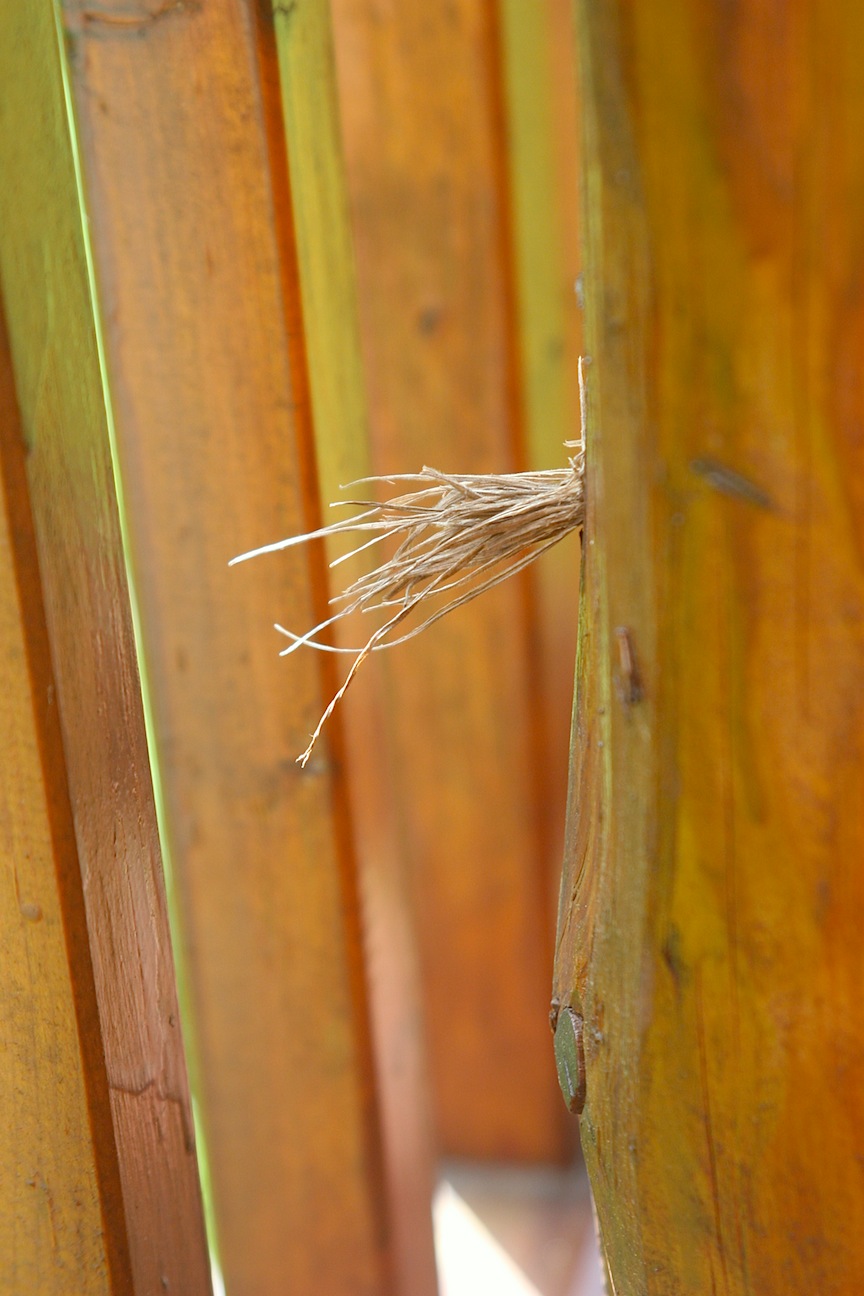
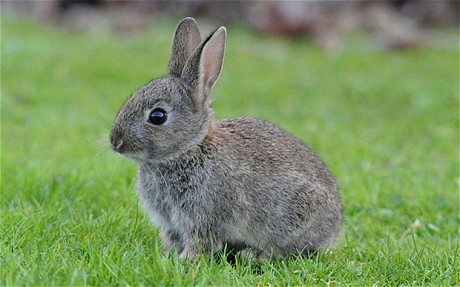
Beatrix Potter came to mind yesterday when I watched a young rabbit struggle into a fix as it tried to escape from me through the newly-reinforced fencing. It had gotten in at a spot we left open after some hours of work on a hot day yesterday, but it could not locate the open span when I cornered it among my beans.rabbit-014

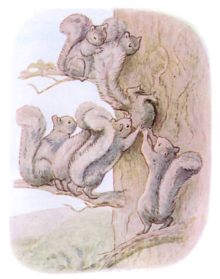
In “The Tale of Peter Rabbit,” Potter writes: “Peter was most dreadfully frightened; he rushed all over the garden, for he had forgotten the way back to the gate…he ran on four legs and went faster, so that I think he might have got away altogether if he had not unfortunately run into a gooseberry net…”

Very observant description of cornered-bunny behavior. I felt rather sorry for the bunny in my vegetable patch. It had squeezed itself between a gap and then found itself impressed against chicken wire, and for a few seconds there was a mash-up of fur, feet, and fencing in a whir of sheer panic. The rabbit freed itself, however, with an acrobatic twist through a gap, ran back into the garden; and after a few false tries, finally located an unreinforced section of the garden fence and escaped toward the hedgerow.

~

Potter was an admirable writer of engaging prose, a terrific watercolorist and an amateur mycologist whose careful observations of the plants and animals in her Lakes District farm environs still draw admirers to her work. I think of her as a kind of turn-of-the-century interdisciplinary artist, though I cannot imagine she would ever perceive of herself in that light. She might agree that she was an excellent observer of the world–a quality that benefits scientists, artists, writers, journalists, and farmers. If all you think of when you see her name is “children’s books,” go to the Beatrix Potter Society’s website and learn how much you did not know about her.


Wasp redux & reading

Last year, I had my first encounter with a grass-carrying wasp.

Today, I noticed some waxy, crumbly, yellowish bits around the post in which last year’s wasp had built its nest. Then I saw an adult grass-carrying wasp hovering to and fro with a stem of grass grasped in its legs, which led me to this year’s nest–in a different hole in our post-and-beam porch. Who knew the wood had so many little holes in it? The wasps sure found them! Today’s wasp has built in a much harder place to photograph, a vertical spot, behind a post. So last year’s photo will have to suffice.

nest of the wasp

Isodontia: nest construction in progress

~

I am not quick at writing poems in response to events, personal or public; generally I need time to consider deeply, to process. I am glad to participate in an upcoming event, however, taking place in Bethlehem PA as a public response to the Orlando Pulse shooting. LGBT citizens of the region, and families, friends and supporters of compassion and awareness, are gathering for a memorial and celebration of support for everyday Americans, which includes–we must recognize, and it would be wise and sane to accept–people who are LGBT/gender fluid & who are just human beings notwithstanding, as are we all.

For those in the Lehigh Valley area of Pennsylvania, the poetry reading is at Sun Inn’s courtyard on Friday July 1. I may not have a poem of my own to read, but I have been reading through my library and have already located several poems by other writers that will serve well as responses to tragedy, personal or national, or which speak to the human-ness of all of us.

~

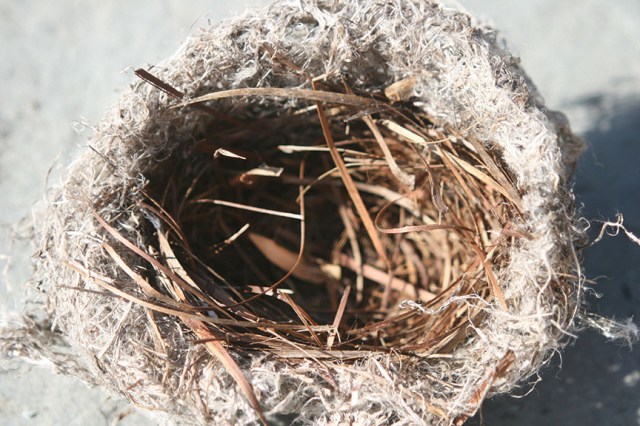
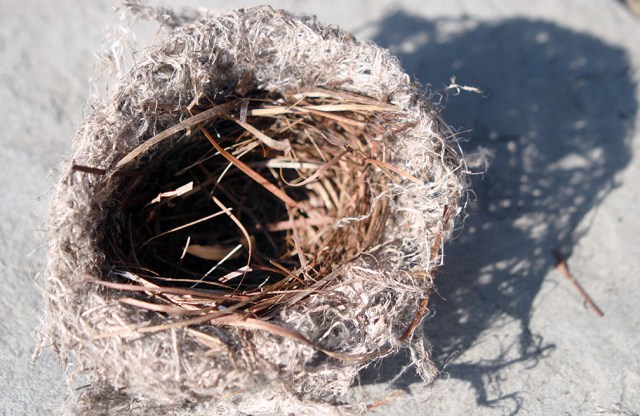
I am doing a little nesting of my own this week, retreating into a metaphorical burrow for a couple of days, I hope. And with any luck, I will emerge with some new drafts of poems.


Garden breach

Summer solstice. The robins are on their second brood; mulberries are ripening, and the bluebirds have arrived for the feast.

Fifteen years ago, we set up my garden to be as impregnable as possible from incursions by deer, groundhogs, and rabbits. We accomplished this by digging a narrow trench on the perimeter, lining the trench with wire mesh fabric, and filling the trench with gravel–after setting the steel posts and putting the steel wire fencing in place. The strategy even deterred weeds for about three years.

But rain and snow and air and therefore rust, along with ground heave and the occasional bump by lawnmowers, have had their way. While deer still ignore the plot, this year, bunnies have breached the fence. It’s time to find a new way to keep them from the edges.

rabbit-014

I have previously written about how fringes and perimeters can be boundaries or places of activity and fluidity, so it seems I am a hypocrite for keeping my rabbits at bay. Maybe I ought to find a balance? Living with their denuding of my carrot tops?

–No, they’ve plenty to eat in my lawn and in the meadow. The balance goes both ways.

Their persistence interests me. Their movements are both awkward and graceful. Their ears are translucent in the early morning sunshine. I don’t mind having them around as long as they stay out of my vegetable patch, and they feed the owls and hawks, whom I also enjoy.

All along the edges…

~

Curious information note of the day:

According to neuroscientific studies, less than 0.1% of the information carried in the optic nerve at any given moment passes through the visual attentional gateway (“bottleneck”) after the attentional gateway recognizes a cue; the cue evidently serves as a gating mechanism to regulate the flow of image data.*

What this implies (I think) is that the bunny I manage to spot under the leafy tomato plant in my garden gets processed as “bunny” once my saccadic eye movements, taking in the huge quantity of data from a day outdoors in summer, recognizes something in the shadows that signals “rabbit?” and then filters out other, distracting data from my view.

At which point, behavioral habit kicks in and, like Mr. McGregor, I dash after Peter with a hoe.

~

*partial quote/paraphrase from “Dynamic Routing Strategies in Sensory, Motor and Cognitive Processing,” Van Essen, Anderson, and Olshausen 1994 MIT Press Large-Scale Neuronal Theories of the Brain, ed Koch & Davis.


Devil-bush

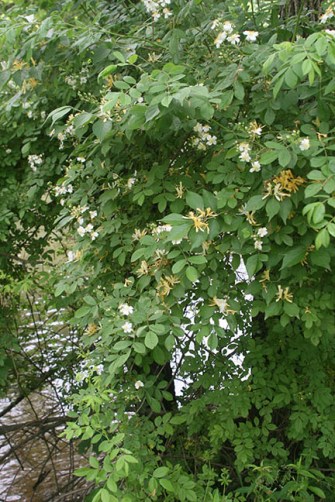
asian rose-amerMultiflora rose: Rosa multiflora Thunbergia ex Murr, is banned in 13 US states, including my own, where it thrives at the expense of native species of many kinds.

Here (at left) it mingles with another invader–Amur honeysuckle (lonicera maackii) along the Tulpehocken Creek in Berks County, Pennsylvania. Amur honeysuckle has not yet made the “illegal plant” list. Both shrubs spread easily because they do not mind disturbed soil and they have attractive berries that birds consume, thus sowing the bushes widely.

I do not know how a plant can be illegal if the birds are our planting culprits; but I do know how hard it is to eradicate multiflora rose, which flourishes in our hedgerow among the sassafras, tulip trees, green ash, white ash, honey locust, wild cherry, walnut, oaks, and maples.

The shrubs are wickedly hard to pull out, as they are stemmy and prickly and have deep roots. We’ve hacked them out of the rocks and pulled them out by chain with our tractor and weed-whacked them and used a machete in the thickets. We have often enlisted our son in our efforts to limit their number along our property line. He refers to the rose as “devil-bush,” having been scourged by its thorns numerous times while endeavoring to cut back or pull out the shrubs. I, too, have shed my blood over its white flowers–not to mention erupted in rashes, because poison ivy frequently entwines itself around the stems of multiflora rose.

Well. They are in bloom now (end of May). And so far, the roses are winning.

~~

The USDA has a page devoted to information on multiflora rose, a “noxious plant.”


Annelids

IMG_2106

This is my compost pile, early spring. See those redworms? Eisenia fetida: the squiggling workhorses of the compost heap. We used to call them red wigglers. They are earthworms that don’t actually live in the earth but on it; they ingest plant matter and the result is worm castings, which make for excellent garden compost. A pound of redworms can eat 3.5 pounds of food waste per week.

I have every reason to believe that the worms pictured above are descendants of an adventure in vermiculture dating back to 1996 or ’97, when I purchased one pound of redworms as a science project for my children (as well as a way to get my rather lethargic compost pile working more efficiently). Since I always “start” my next heap with the not-fully-composted remainder of the previous season’s detritus, I am reasonably sure that some of the redworm egg casings get in the mix.

My son was young enough in 1996 that he does not recall the redworm “farm” we kept in the house one late winter and transferred to the compost heap in spring. He doesn’t even remember where the pile was at our former residence. But he does, somewhat grudgingly, help me turn this year’s pile onto a big tarp and spread the finished stuff onto my vegetable patch. (He’s a bit squeamish. The worms don’t bother him, but the millipedes do.)

And he enjoys stopping by the garden fence and reaching for a ripe cherry tomato straight off the vine in summer.

For me, the turning of the heap in early spring is one of those rituals that signals the arrival of pleasanter weather and new fragrances.

I have not been writing much poetry lately; life has been distracting. The ideas are nevertheless mixing and stirring, I hope.


Landscape, personal place

I’ve been enjoying Rachel Solnit’s prose lately, most recently her book As Eve Said to the Serpent, some of which derives from art criticism but which is also the kind of multidisciplinary approach to observing the relationships between things that intrigues me. What she notices about the environment, about art that engages with or alters place/landscape, and about environmentalists themselves piques my own inquisitiveness and gets me asking questions I might not otherwise have come up with. Place, particularly the personal “environment” that shelters, inspires, or calms me, is something I consider frequently.

31281_1488041725309_1074892_n

[one of my happy places]

Perhaps that’s because I am by nature an introvert; perhaps it has to do with being a poet. The personal aesthetics of place–a room or a landscape–exert significant effects upon my frame of mind and mode of thinking.

Why is that?

Maybe there is an evolutionary reason for the need to find a favorite spot, a hide-away, a happy place. We may still possess that ancient urge for security, the cave or treehouse we can use to hide from predators or from the weather.

And landscape itself can be a secret place, or a sacred place. A wide expanse of openness means it is easier to observe predators prowling in the distance, giving the prey animal time to flee. Or to explore, to survey, to run embracing what is far away and only imaginable.

12841317_10209081894708815_1677238824119852160_o

Neolithic stone circle, Castlerigg, Cumbria, UK

~

C.D. Wright: “What landscape is: not a closed space, not in fact capable of closure. With each survey the corners shift. Distance is the goal; groping the means.”

Jargon

Having just spent some time in Scotland, encountering Scots accents and language, and having read Kathleen Jamie’s book Findings while on my trip, and having visited castles and a distillery (even though malt whisky is not something I drink), I find myself thinking again about words. In particular, specialized words–those used by the ancient crafts such as beer-making, by vintners and distillers, weavers, farmers, and builders of defenses, ships, and of cathedrals, architectural terms and words specific to a trade: jargon.

921168_10209085893448781_6452269178661505510_o

Barley. Glengoyne Distillery, not far from Glasgow.

Jargon, the word itself, comes from the French. As per the Online Etymology Dictionary:

jargon (n.) Look up jargon at Dictionary.commid-14c., “unintelligible talk, gibberish; chattering, jabbering,” from Old French jargon “a chattering” (of birds), also “language, speech,” especially “idle talk; thieves’ Latin” (12c.). Ultimately of echoic origin (compare Latin garrire “to chatter”).

From 1640s as “mixed speech, pigin;” 1650s as “phraseology peculiar to a sect or profession,” hence “mode of speech full of unfamiliar terms.” Middle English also had it as a verb, jargounen “to chatter” (late 14c.), from French.

One of the things I like best about taking tours of and reading books about distilleries or castles and the like is the chance to savor those unusual and often strangely lovely-sounding special terms. The lyne arm. The tun. The potstill, the draff, the spirit safe. Wort and wormtub.

And there’s the donjon, the voussoir, the queen-post, the feretory…in addition to all those buttresses and gargoyles and portcullises. Not to mention the terms, many of them archaic, associated with the making of tapestries and the cooking of meals and the husbandry of sheep or falcons or cattle.

905668_10209085939849941_7289218723455836950_o

Or the laying of stones for roads or masonry walls, for the engineering of moats and the design of crenellated defenses. So many words, and only highly specialized historians know them today; whereas once, the mostly illiterate men and women who did the work used the language of their trades.

It’s still true today–perhaps more than ever–that jargon is used among the people in a given industry, computer tech or realty or politics. I suppose those words will as surely fall out of use, or evolve in their meanings, and perhaps more rapidly than the jargon of yore.

Obscure terms, highly specialized in their function as means of communication. Sometimes, quite beautiful to know.


Siesta, lacuna, pause

I am preparing for travel, and then I will be away from my computer for about a fortnight; and then, I shall be recuperating from my travels! For the first time in quite awhile, I am taking a rest from blogging.

Though I fully intend to get back to these pages after my return. There is nothing like a journey to invigorate, to inspire reflection…the clichés about journeying and questing are well-earned. Another part of the journey that is less celebrated, however, is the need for pause and the space between journeying and being home (or at journey’s end–which may not be home).

One activity I’m sure I’ll be doing is walking, and some of that walking will be along the paths of Windermere. Perhaps I will even encounter “a host of golden daffodils”–it’s about the right season for that.daffodil photo Ann E. Michael

Maybe I’ll read Gloria Steinem’s latest book, My Life on the Road, as I travel. She’ll make me feel like quite the amateur.


How to start

My students often get confused at the beginning of their essays; a common complaint is “I don’t know how to start!”

I feel for them. Beginnings are difficult. Recently I was wondering why that is so.

~

Driving home during a blizzard–concentrating on seeing the road, staying off the shoulder, anticipating the curves, watching for oncoming vehicles. Tense, I’m trying not to clutch the steering wheel. Eight miles home seems long when the visibility is nearly zero and the back roads have not been plowed. And then a blur of activity to my right, a thunk against the passenger side window, and a sweeping shape looms in front of me, veers; a fan, dark stripes, pale breast-feathers, strikingly yellow claws. I’ve nearly hit a broad-winged hawk. And that thunk was a smaller bird that had been harrying it through the snow.

Broad-winged Hawk Flying

A startling incident, that experience heightened my awareness of where I am (in the world), in which environments (natural and human-made), and when (now!).

Sometimes, happenstances such as this evolve into, or figure in, poems that I will eventually write. The image, the occurrence, offers a way in.

~

Returning to my question about how to start: the blockade many people make for themselves is that they think they have to know what they want to say before they write anything. “What is it I am trying to say?” the writer asks. We have been instructed to keep in mind our aims when we write.

I suggest it may be a mistake, though, to figure out what one wants to say before trying to write. When my student writers are truly stuck at the start, I ask them to write what they notice, what they experience, what they hear. Just write it down, describe it: the soft thud of the sparrow (if it was a sparrow–allow for speculation), the sound of wind against the car body, the clearly-visible buteo in the windshield where before there had been near-whiteout. What is it I want to say about the drive, the shock, the tension, the world of natural things? I don’t yet know, but I am writing.

~

Thanks to Hawk Mountain Sanctuary and Raptor Preserve, Kempton PA.

Change

finches-fall1

Goldfinches in winter attire

Two kinds of chickadees (black-capped and Carolina). White-breasted nuthatches. A tufted titmouse, bluejays, goldfinches in their brown-ish phase. The winter birds have arrived; despite a strangely warm November, the birds molt into dull plumage or migrate on schedule. I try to remember that when I feel worried about climate change: some forms of life are adaptable, change is normal, anxiety accomplishes nothing, and right action is possible.

I do not mean that we ought to ignore changes, especially those for which we have been responsible. When human beings get concerned enough to act, there’s a great deal of harm we can undo.

In the late 1960s and early 1970s, people in the USA became anxious about pollution. I am old enough to recall when New York City’s famous skyline was obscured by a yellowish-gray haze almost every day. Days we could see the Empire State Building shining in sunlight without smog were rare.The problems Chinese cities today are having with polluted air were happening for the citizens of Los Angeles and New York fifty years ago, but we took action–surprisingly enough–and eventually state and federal regulations required that technology be implemented to ease the problems technology had created.

This process was not speedy or easy, but it worked. I visit New York fairly frequently, and the sky is almost always smog-free. My now-grown children have never seen the skyline hidden under layers of air pollution.

Things changed.

Can humans undo the damages we have wrought to our oceans, air, rain forests, mountains, deserts, rivers, planet and its climate? Probably not–not all of it, certainly–and I doubt there is much we can do to stave off the “sixth extinction.” We have to accept we are part of the change, for good or ill, and to find ways to do less harm in whatever time remains to us–to activate compassion.

~

Meanwhile, I await the juncos. They usually arrive around the first week of December.