Beauty & awe–briefly

I have been reading lately (currently Leonard Shlain’s Art & Physics and Donald Revell’s The Art of Attention: A Poet’s Eye), but not much inspired to write. Instead, I work in the garden or sit on the porch and listen to birdsong.

I muse upon beauty. Partly such musing falls under the pursuit of aesthetics: the world of my garden becomes especially beautiful in spring. The sounds birds make seem beautiful to my ears. Water droplets on emerging leaves appear beautiful in the morning light.
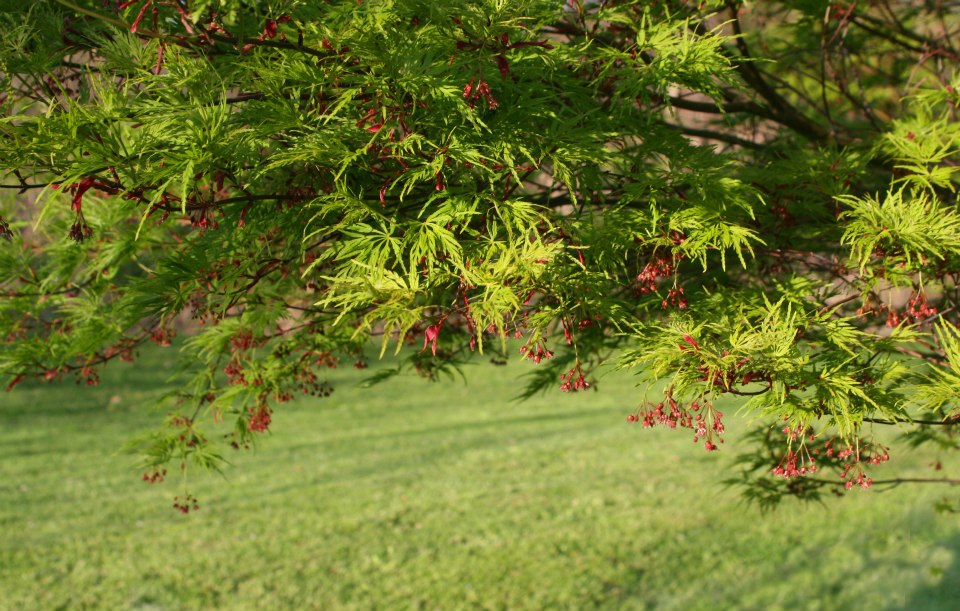
japanese mapleThese are phenomena. The world of things I can take in with my senses, process through my body and brain, and create–out of whatever “mind” may be–a concept of the beautiful. The phenomena are not physically affected by my categorization. It is I who am changed, I suppose, by virtue of my aesthetic appreciation of the beautiful.

I am reminded of Kierkegaard:

“Love does not alter the beloved, it alters itself.”

Aesthetic appreciation does not alter the thing-in-itself, it alters the person who finds beauty in the thing-in-itself. If this is so, I am altered by my love of what I deem beautiful.

~

While I was searching the web to find the quote above–I couldn’t quite recall it exactly–I found the Kierkegaard quote on the blog of pastor Jonathan Martin, whose theology I can’t completely get my mind around but whose words (below) reminded me of the Bhagavad Gita:

The most beautiful thing a person will ever see may well also be the most terrifying.

Is this not the nature of true beauty? To not just be soft and delicate, but to be so powerful, so overwhelming, so altogether other from ourselves as to threaten? Beauty does not intimidate, but it can overpower. Beauty is a coup to our senses. It holds an unruly power over us. Beauty can move us, haunt us, carry us, compel us. To feel ourselves beholden to the raw power of something beautiful is to be upended, not just inspired but assaulted.

On the lines of such thinking, we might find beauty in a tsunami, hurricane, earthquake, meteor strike the same way Arjuna feels paralyzed by the awesome beauty of the revealed godhead Krishna.

Perhaps that is why we often find ourselves fascinated by photos of natural disasters. Having lived for a couple of years along the northern end of Tornado Alley in the USA, I fear tornadoes. But they possess a kind of beauty in their awesomeness, if we can remove ourselves from the anguish we feel for people whose livelihoods, homes, and lives are destroyed by the big winds.

I wonder if human beings can ever bear that kind of awe; Martin says it transfigures us, Kierkegaard implies something similar, the Mahabharata and other sacred literature suggest that our bodies and our minds can withstand such revelation but cannot describe or truly comprehend it. It seems to me a kind of spiritual post-traumatic stress disorder! This is the “fear and trembling” of the psyche, whether the mind decides the experience is physical, mental, spiritual, or religious.

And that manner of beauty is not aesthetic.

Martin later writes, “Objectively speaking, the beauty of God is already present in our beloved, whether we recognize it or not. Rather, when we encounter beauty in another person, we are changed–we are transfigured…[those we love] do not become beautiful because we recognize their beauty; rather their beauty makes us beautiful.”

Is this experience awesome or aesthetic? Does the beauty of the azalea, the lilac, make me beautiful because I recognize it as such? Am I altered, fundamentally, in my admiration for an artist’s work, a poet’s words?

~
“The Visionaries” [a poem by a friend]

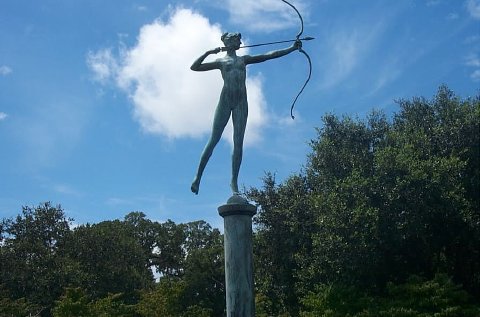
"Diana" by Augustus Saint-Gaudens; photo by Pete Finneran 2000. Image courtesy of Brookgreen Museum.  www.brookgreen.org

“Diana” by Augustus Saint-Gaudens; photo by Pete Finneran 2000. Image courtesy of Brookgreen Museum.
http://www.brookgreen.org

A poem by Beejay Grob © 2013

The Visionaries

We too had seen the gardens
sculpted by every season now.
A significant collective ‘we’–
myself, and practically anyone
I could target; one-by-one,
rain, autumn, winter night.

The family album holds each
posing sandwiched on a tailgate
flocked outside the aviary;
all standing straight as statues,
shot by the granite Pegasus.
Everyone except you, Muse.

Beneath a hospitality of waving
palmettos, feathering Carolina skies
from here to Charleston,
the stone-silent Visionaries
lean in from their perch,
reflecting in their secret oracle.

I took a stab at it when Orion
hung low over midnight oaks,
a carved moon enlightening Anna:
Why so many huntresses?
I determined her quivering gifts
sighted monumental occasions.

Walk among the springtime
blooms, the lubbers mating openly,
or in summer’s dead heat–
count the times she made a point
to cast herself as Diana,
the female Archer.

~ ~ ~

National Poetry Month, 2013. Many thanks to Beejay Grob, who wrote the poem and who introduced me to the beauty of Brookgreen Gardens in spring.

Brookgreen Plantation and Sculpture Gardens, Myrtle Beach SC

Endemophilia

This poem is sort of my version of endemophilia, describing (as Albrecht defines it) “the particular love of the locally and regionally distinctive in the people of that place. It is similar to what Relph … called “existential insideness” or the deep, satisfying feeling of being truly at home with one’s place and culture.” You might want to check out Glenn Albrecht’s site for more detailed definitions and philosophical/psychological reasons for inventing names for such concepts.

My long-poem in Water-Rites, “The Valley, the Whitetail: A History,” probably fits the term endemophilia more closely than the poem I’ve posted below–which may one day appear in print if I can find a publisher for my next manuscript. But the long-poem is a little too long for a blog post.

[I have an idea: buy a copy of Water-Rites from Brick Road Poetry Press, and read it there!]

~

Suburban Georgic

A mild day in February. Good chance
there’ll be more snow or ice. Walk slowly,

note the footprint of a hosta, dormant, or
the arrow-shaped deer hoof in hardened soil.

Look more closely for the ravages and burrows
of rodentia—woodchucks, voles and mice.

You may discover where squirrels have
hidden seeds or laid waste to crocus corms—

try to restrain your wrath. Decide
how best to counter such yearly looting;

strategy keeps the mind sharp. Grubs,
for instance, in your lawn—a different tack,

and this year you may succeed, and keep
the skunks from rooting through the grass.

Weigh, in your mind and pocketbook,
the relative costs of pesticide and herbicide.

It might be the year to go organic,
though there’s even odds the dandelions will thrive.

Ease your troubled breast from lawn woes.
Raise your eyes to forsythia, to witch-hazel,

observe critically the shrubs’ bare bones,
decide what needs the kindest cut,

find your saw and pruners, time to oil
and sharpen—your fingers itch—

but it’s a little soon. To assuage your
yearning, cut back the redtwig osier

so its new growth will flush crimson.
Consider forcing blooms indoors—

aren’t there soft, small swellings on
the slim wands of pussywillow?

When the next storm hits, dream of columbine
and narcissus. Get out your Horace, and wait.

ann e michael

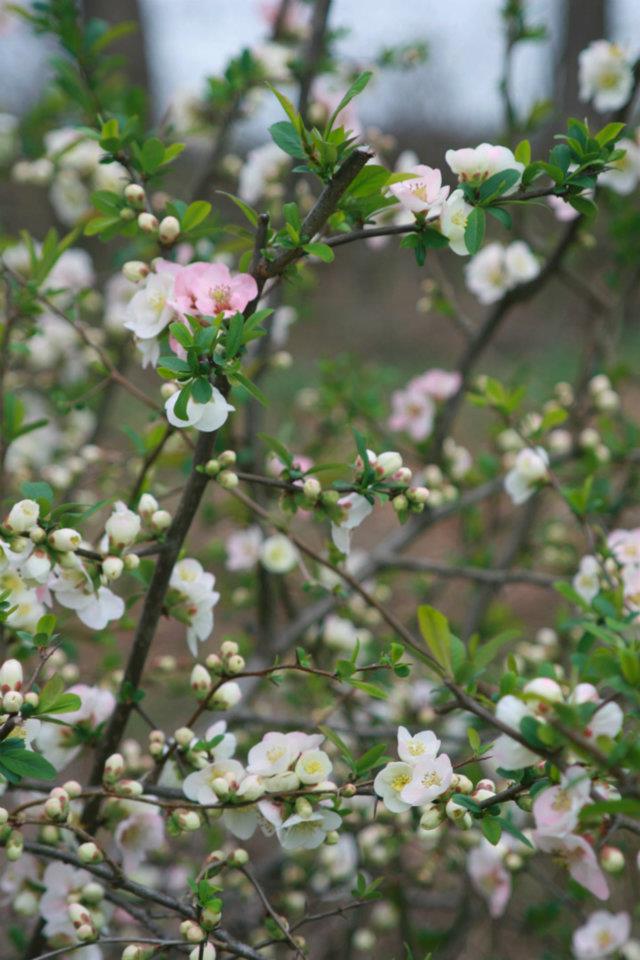
quince blossoms

~

© 2008 Ann E. Michael

~

Waiting, in the place I call home, for spring.

Toponesia and poem

Here is a poem by Virginia Hamilton Adair that demonstrates, perhaps, the idea of “toponesia”–loss of connection with place. The speaker recalls the beloved beach in its decay and in its beauty; she also recognizes that the tide erases all–talk about amnesia!

Buckroe, After the Season, 1942

Past the fourth cloverleaf, by dwindling roads
At last we came into the unleashed wind;
The Chesapeake rose to meet us at a dead end
Beyond the carnival wheels and gingerbread.
Forsaken by summer, the wharf. The oil-green waves
Flung yellow foam and sucked at disheveled sand.
Small fish stank in the sun, and nervous droves
Of cloud hastened their shadows over bay and land.
Beyond the NO DUMPING sign in its surf of cans
And the rotting boat with nettles to the rails,
The horse dung garlanded with jeweling flies
And papers blown like a fleet of shipless sails,
We pushed into an overworld of wind and light
Where sky unfettered ran wild from earth to noon,
And the tethered heart broke loose and rose like a kite
From sands that borrowed diamonds from the sun.
We were empty and pure as shells that air-drenched hour,
Heedless as waves that swell at the shore and fall,
Pliant as sea-grass, the rapt inheritors
Of a land without memory, where tide erases all.

from Ants on the Melon. Copyright © 1996 by Virginia Hamilton Adair

Homescape poems: Solastalgia

Note–The poems below are used only as illustrations and used by virtue of the Creative Commons theory; the copyrights belong to the authors or their executors.

~

I’m thinking about the nostalgic overtones of the “changed” homescape here, or the notion of solastalgia as coined by Glenn Albrecht (see earlier post). At first I planned to use a poem with overt environmental themes (as of the home that has been denuded, altered, destroyed–many good poems exist on that theme). Then I thought to look more obliquely at the idea of solastalgia as an emotional state, for home is deeply freighted with psyche.

One form of “solastalgia” is represented here, I think, in Philip Larkin’s “Home Is So Sad”:

Home Is So Sad

Home is so sad. It stays as it was left,
Shaped to the comfort of the last to go
As if to win them back. Instead, bereft
Of anyone to please, it withers so,
Having no heart to put aside the theft

And turns again to what it started as,
A joyous shot at how things ought to be,
Long fallen wide. You can see how it was:
Look at the pictures and the cutlery.
The music in the piano stool. That vase.

~

Another aspect of solastalgia, in this section of Gary Snyder’s “Four Poems for Robin,” relates to the homeplace in the form of a relationship, one bound up with the excitement of youth, college, the orchard with its tall dry grasses and love’s “grave, awed intensity.” Yase village is located near Kyoto; the speaker of the poem identifies where (and when: December) he resides while reflecting on an autumn day in his past.

December at Yase

You said, that October,
In the tall dry grass by the orchard
When you chose to be free,
“Again someday, maybe ten years.”

After college I saw you
One time. You were strange.
And I was obsessed with a plan.

Now ten years and more have
Gone by: I’ve always known

where you were–

I might have gone to you
Hoping to win your love back.
You still are single.

I didn’t.
I thought I must make it alone. I
Have done that.

Only in dream, like this dawn,
Does the grave, awed intensity
Of our young love
Return to my mind, to my flesh.

We had what the others
All crave and seek for;
We left it behind at nineteen.

I feel ancient, as though I had
Lived many lives.
And may never now know
If I am a fool
Or have done what my

karma demands.
~
I’d be interested in finding out which poems you consider solastalgic. Meanwhile, I am going to browse my collection for poems that are endomophilic…

Endemophilia, toponesia, psychoterric states

Thanks to poet Annie Finch, I came across a thoughtful essay in Aeon magazine–an exercise in synthesis and interdisciplinary thinking that connects with Naess and his notion of ecosophy; and with Bachelard and others whose work I have lately been reading and thinking about. Liam Heneghan combines ecology, botany and topography with Winnie-the-Pooh and explores transience and trans-placement from several viewpoints. He looks at how so many of us are transplants, foreign “invaders,” culturally and biologically, and asks us to think about how we feel about place–home-place, in particular.

Not all of us connect with the concept of a home-dwelling anymore; but if we do so, that place is generally closely associated with childhood, observes Heneghan. He cites environmental philosopher Glenn Albrecht and says:

…we do not yet have an adequate vocabulary to address our ‘psychoterric’ states — or how the state of the Earth relates to our states of mind. To balance the negative psychological state of ‘nostalgia’, a couple of years ago Albrecht proposed ‘endemophilia’ (the sense of being truly at home within one’s place and culture — or ‘homewellness’). To balance the term ‘topophilia’, a love of place, Albrecht opposes ‘solastalgia’ — the desolate feeling associated with the chronic decline of a homescape. Solastalgia names the emotions we have at the loss of species and habitats through climate change and other environmental changes. We should all expect a lot more of it.

I do know those feelings, and I feel happy to have terms for them! Yet I argue that we do have an adequate vocabulary for how the state of the Earth relates to our states of mind, and that vocabulary is artistic. I believe the finest expression of these kinds of emotional-memory sensations can be found mainly through art. My task for myself in the coming weeks is to gather a few examples of endemophilia, solastalgia, and other “psychoterric states” in poetry. I’ve already got a few in mind.

Please read Heneghan’s essay if ecopoetics or the notion of homescape appeals to you.

Exhaustion & bloom

Isak Dinesen: “I write a little every day, without hope and without despair.”

~

Some days, the little is…quite little. I am not exactly taking a break from reading and writing, but a great deal of my reading these days is student-written work; and the writing tends to be corrective.

There are also events in one’s life that tend to push back against the time needed to dwell on creative things.

Kurt Vonnegut: “So it goes.”

~

I’m re-reading Descartes. The best part of his philosophical writing, in my opinion, deals with his conscious desire to remove all prejudicial thinking from his mind. I have my doubts as to his success in that regard, but I love the splendidness of trying to attain the mental tabula rasa. Open-mindedness, a virtue more human beings should strive to embrace.

~

And there is also exhaustion, pure and simple. Some days, I need my rest.

February: awaiting the snowdrops’ blooms. (They’re nearing…the white tips are visible, enclosed in the deep green spathes.) Meanwhile, fragrant yellow winterhazel.

corylopsis

winter hazel

Enabling & stewardship

The season of seed catalogs is upon us, and I begin to fantasize about all of the vegetables and flowers I want to grow and how I will arrange my small garden area to accommodate them. I imagine having time to keep the rows cultivated and the foliage free of insect pests. Yes, I need to do some work on the fencing. And yes, some terracing might help where the garden’s taking a decidedly southeasterly dip. The asparagus patch finally played itself out, so it will need some restructuring and weeding; I’ll have an opportunity to use that area in a new way.

There’s snow on the garden now. All of this planning is purely speculative on my part. Yet–how clearly I can envision it, in my mind. One of my concerns is whether I’ll feel hale and hearty and energetic enough to get all of this work accomplished!

Ah, my garden-consciousness brings me to the mind-body problem, though perhaps in a more physical way than philosophers encounter it. My conscious mind imagines the garden that does not yet exist. Is that garden real or an illusion? What makes it possible for me to conjure it so vividly? Is it merely memory of past experience? If so, why does my imagination invent a slightly different garden–this year’s ideal? My animal self takes action, physical action (phenomenological action) in order to bring about fruition to feed the physical body that loves the taste of vine-ripe tomatoes and fresh beans and tender lettuces. Do my actions cause the plants to grow? No. I’m more of a steward or a guide. I help them get a better-than-average start.

This sort of thinking brings me around to a (2011?) post by biologist Stuart Kauffman, on the NPR philosophy blog.

Kauffman says:

We think we live in a web of cause and effect. We do. We also live in a web of enabling opportunities that may or may not be seized, and the living world, biosphere up, unfolds in a different way, creating ever new possibilities of becoming.

But these possibilities often can’t be stated ahead of time. No one foresaw Facebook when Alan Turing did his work in the first half of the 20th century. Nor can we foresee all the possibilities of the evolution of life.

Life is not a well-formulated, complex optimization problem to be solved. We do not know all the variables that may become relevant.

Science is my life, and it is wonderful. But science will not ultimately know everything.

In the world of modernity, our values have become badly deformed. Gordon Gekko’s “greed is good” has replaced “integrity, generosity, and courage” as our First World cultural ideal. Modernity does not serve our humanity well, although it does offer enhanced standards of living. We are reduced — to price tags, cogs in an economic system making often useless products in the name of forever GDP growth on a finite planet. The bankers corrupt themselves and our government. Our government does not yet realize that its better job is to enable, not command, to “garden,” to coach, to enable the creativity of its peoples, here and around the globe.

Yes, that’s it. I engage with my environment partly by enabling things to grow or flourish. The term enabling has garnered some negative connotation in recent years due to its use in psychology: we are warned not to enable alcoholics, manipulative people, or those who need to learn some grit and self-motivation. The idea of enabling is, however, essentially positive: to help, to nurture. In fact, I think I prefer to think of myself as one who enables the earth rather than as a steward–though both concepts suggest that we human beings must engage willfully with the world.

We have work to do here on earth. And I am well aware that I do not know, with my garden, “all the variables that may become relevant.” (Past complex variables have included drought, hail, flooding, and beetles.) My small part this year includes serving the land I temporarily inhabit as well as serving myself and my family our favorite foods.

31281_1488041725309_1074892_n

My favorite sources for seed include: Seeds of Change, Territorial Seed Co., Peaceful Valley Farm Supply, and–while less on the organic spectrum, the British firm of Thompson & Morgan for its amazing variety of herbs, vegetables, fruits, ornamentals and grasses from heirloom to the latest hybrids. For American gardeners interested in some truly historical strains, Thomas Jefferson’s Monticello offers quite a selection.

(Photo: a previous year’s garden in May)

Energy & stamina

I have been thinking about energy and stamina, and the difference between the two, and how they relate to creative practice. The word “energy” conjures up, for me, vigor and forcefulness, vitality, strength–a sort of bustling intensity, the kind my son exhibited when he was five years old, for example. I have never considered myself a particularly high-energy person.

Think of the cat. A cat is capable of intense bursts of energy but will also husband that energy until the moment it’s needed. The cat will also sleep most of the day, storing up energy for the necessary predatory expenditures of strength. The feline form of energy use does not suit me very well, though I am partial to naps.

Stamina, however–stamina I have possessed. Stamina is also strength, also energy, but it is of a different nature. Plodding sometimes, headlong other times, but steady in the main. The sort of focus and determination a person needs to get through the long haul strikes me as stamina. Stamina is the energy to endure.

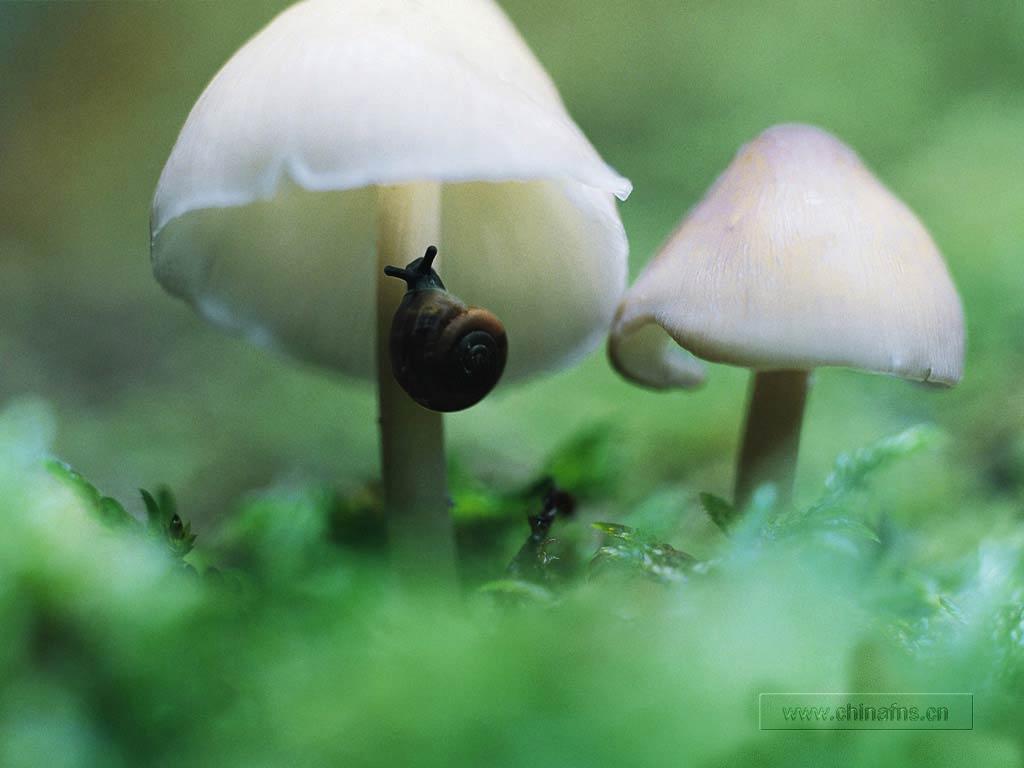
free kewlwallpaperWe have the mayfly and the bee, always buzzing actively, bursting with lively energy. Or the cat, conserving and then pulsing with strength and force. And we have the snail, constant and enduring, slowly edging its way toward its object.

My writing practice requires endurance, because I only occasionally get flashes of inspiration or insight and rarely feel surges of creative energy. Nonetheless, I have been told I am a “prolific” writer (by whose standards, I always wonder; compared to Georges Simenon and Alexandre Dumas, I am a piker). I think the reason is that I keep on. Everyone experiences setbacks, rejection, dry spells, discouragement, dull days. How we choose to deal with those situations becomes part of our practice of the discipline of art, and many approaches “work.” Whenever I read biographies of artists of any kind, or interviews with poets and writers and choreographers and composers, I recognize that (despite post-modernist critique) the life, in terms of personality and approach, does to some degree influence the art.

But the results are impossible to stereotype. A talkative, energetic artist may produce quiescent, meditative art. A dour personality can produce hopeful poetry, a still and soft-spoken person may create fierce, kinetic work.

A highly energetic person like Rimbaud can “burn out” on a major art form rapidly (though his busily-spinning, adventurous life kept going). And then there are the energetic sorts who just keep making work with boundless, apparently inexhaustible fire (see Simenon). One method or personality is not better nor more suited to art than another.

~

This is my minuscule revelation for the day: The one time I visited a shaman, I was told that my totem animal is the snail. The idea gave me a moment’s pause, but then seemed somehow very apt.

Except I was a little queasy about the slime trail.

~

I decided I can reframe the fact of slime once I recognize its purpose. It is not merely a lubricant, helping the gastropod to glide along, but also a glue that enables the creature to climb difficult surfaces, walls, and even ceilings. The layer of mucous also acts to protect the snail from dehydrating.

There must be a metaphor there somewhere. Poetry as…snail slime?

~

Time to keep plugging away, I  think.

The value of noise

Having posted several times on the value of silence, I feel I ought to balance things out by writing about the value of noise. These thoughts likewise stem from my recent reading: Kay Larson’s book about John Cage, creativity, and Buddhism.

This morning, there were a few hours of intermittent sunshine; the air, still nippy from a recent cold front and some high winds, had warmed up a few degrees. I felt inspired to prune some shrubs and start the rather significant task of removing fallen branches from the lawn. I did not realize how big a job this will be until I started the work because the grass is long and the leaves provide a bit of cover. Every few steps, though, I encountered clumps of twigs, broken branches, sticks of all sizes. We won’t want to run a lawnmower over this mass of debris, and it will get caught in our rakes when we try to remove the leaves. The best way to rid the lawn of storm-downed branches will be the old-fashioned way: human power, gathering one or two sticks at a time. The fresh air streamed into my lungs, the sun shone on my back. I pulled on my husband’s old sweater and my daughter’s old coat and my son’s gloves and my own boots and started to work.

What I noticed this morning was noise. John Cage, a man whose later compositions often engaged with silence, also loved noise. His percussion pieces were scored for tin cans, plates, pipes and modified pianos, and he was prescient about the incorporation of electronically-produced sounds into music. I love reading about his experiments with noise, and today I recognized the music in everyday sounds very clearly.

Today’s noises:

Leaf-crunch. The damp leaves produce difference tones from the dry ones. Leaves of different species vibrate in a range of tones depending upon their thickness, brittleness, serrated shapes, oiliness.

Vehicles. The roads are not terribly close to the house, but when the trees are bare we get a range of vehicle sounds from as far as the highway. Large trucks still growl, wheeze, squeal, rumble, and beep as neighbors get trees removed from their properties and department of transportation crews work at street clean up. Cars drive past.

Somewhere, a leaf-blower. Several chainsaws in the distance.

Mockingbird–not all of them have flown south just yet. The buzzy twittering of starlings and small flocks of sparrows. Woodpeckers drilling at trees.

My breathing.

The sound of the nippers and hedge clippers, the sound that pruned branches make as they whoosh and scratch and shimmy earthward and get tangled in the shrubs. The different noises of a cut made on dead wood and on live wood. The snap of twigs. The silken whisper of long grass underfoot.

Creak and groan of the walnut trees as a stiff breeze hits the woodlot. A dog, barking. The hens, chuck-chucking in their run.

The telephone from inside my house. An overhead jet.

And it isn’t cacophony; it’s a kind of music, certainly. The randomness and the patternedness work together. As do the silences.


Here’s one of Cage’s most melodic works, “In a Landscape,” very apropos … very lovely.

YouTube/John Cage “In a Landscape” Stephen Drury pianist