Enabling & stewardship

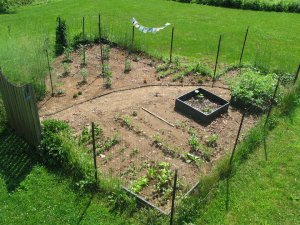
The season of seed catalogs is upon us, and I begin to fantasize about all of the vegetables and flowers I want to grow and how I will arrange my small garden area to accommodate them. I imagine having time to keep the rows cultivated and the foliage free of insect pests. Yes, I need to do some work on the fencing. And yes, some terracing might help where the garden’s taking a decidedly southeasterly dip. The asparagus patch finally played itself out, so it will need some restructuring and weeding; I’ll have an opportunity to use that area in a new way.

There’s snow on the garden now. All of this planning is purely speculative on my part. Yet–how clearly I can envision it, in my mind. One of my concerns is whether I’ll feel hale and hearty and energetic enough to get all of this work accomplished!

Ah, my garden-consciousness brings me to the mind-body problem, though perhaps in a more physical way than philosophers encounter it. My conscious mind imagines the garden that does not yet exist. Is that garden real or an illusion? What makes it possible for me to conjure it so vividly? Is it merely memory of past experience? If so, why does my imagination invent a slightly different garden–this year’s ideal? My animal self takes action, physical action (phenomenological action) in order to bring about fruition to feed the physical body that loves the taste of vine-ripe tomatoes and fresh beans and tender lettuces. Do my actions cause the plants to grow? No. I’m more of a steward or a guide. I help them get a better-than-average start.

This sort of thinking brings me around to a (2011?) post by biologist Stuart Kauffman, on the NPR philosophy blog.

Kauffman says:

We think we live in a web of cause and effect. We do. We also live in a web of enabling opportunities that may or may not be seized, and the living world, biosphere up, unfolds in a different way, creating ever new possibilities of becoming.

But these possibilities often can’t be stated ahead of time. No one foresaw Facebook when Alan Turing did his work in the first half of the 20th century. Nor can we foresee all the possibilities of the evolution of life.

Life is not a well-formulated, complex optimization problem to be solved. We do not know all the variables that may become relevant.

Science is my life, and it is wonderful. But science will not ultimately know everything.

In the world of modernity, our values have become badly deformed. Gordon Gekko’s “greed is good” has replaced “integrity, generosity, and courage” as our First World cultural ideal. Modernity does not serve our humanity well, although it does offer enhanced standards of living. We are reduced — to price tags, cogs in an economic system making often useless products in the name of forever GDP growth on a finite planet. The bankers corrupt themselves and our government. Our government does not yet realize that its better job is to enable, not command, to “garden,” to coach, to enable the creativity of its peoples, here and around the globe.

Yes, that’s it. I engage with my environment partly by enabling things to grow or flourish. The term enabling has garnered some negative connotation in recent years due to its use in psychology: we are warned not to enable alcoholics, manipulative people, or those who need to learn some grit and self-motivation. The idea of enabling is, however, essentially positive: to help, to nurture. In fact, I think I prefer to think of myself as one who enables the earth rather than as a steward–though both concepts suggest that we human beings must engage willfully with the world.

We have work to do here on earth. And I am well aware that I do not know, with my garden, “all the variables that may become relevant.” (Past complex variables have included drought, hail, flooding, and beetles.) My small part this year includes serving the land I temporarily inhabit as well as serving myself and my family our favorite foods.
31281_1488041725309_1074892_n

My favorite sources for seed include: Seeds of Change, Territorial Seed Co., Peaceful Valley Farm Supply, and–while less on the organic spectrum, the British firm of Thompson & Morgan for its amazing variety of herbs, vegetables, fruits, ornamentals and grasses from heirloom to the latest hybrids. For American gardeners interested in some truly historical strains, Thomas Jefferson’s Monticello offers quite a selection.

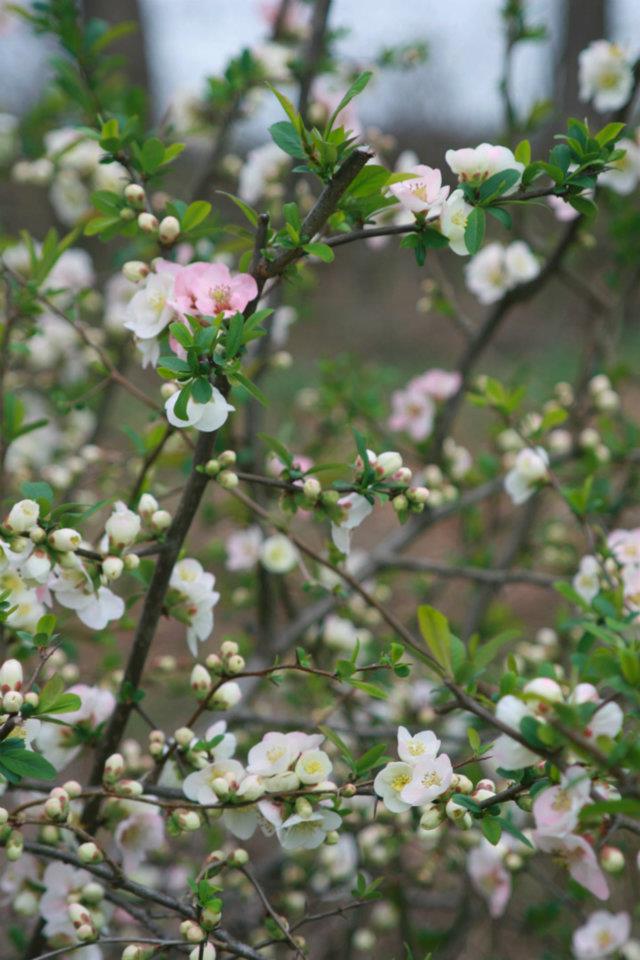
(Photo: a previous year’s garden in May)
Energy & stamina

I have been thinking about energy and stamina, and the difference between the two, and how they relate to creative practice. The word “energy” conjures up, for me, vigor and forcefulness, vitality, strength–a sort of bustling intensity, the kind my son exhibited when he was five years old, for example. I have never considered myself a particularly high-energy person.

Think of the cat. A cat is capable of intense bursts of energy but will also husband that energy until the moment it’s needed. The cat will also sleep most of the day, storing up energy for the necessary predatory expenditures of strength. The feline form of energy use does not suit me very well, though I am partial to naps.

Stamina, however–stamina I have possessed. Stamina is also strength, also energy, but it is of a different nature. Plodding sometimes, headlong other times, but steady in the main. The sort of focus and determination a person needs to get through the long haul strikes me as stamina. Stamina is the energy to endure.

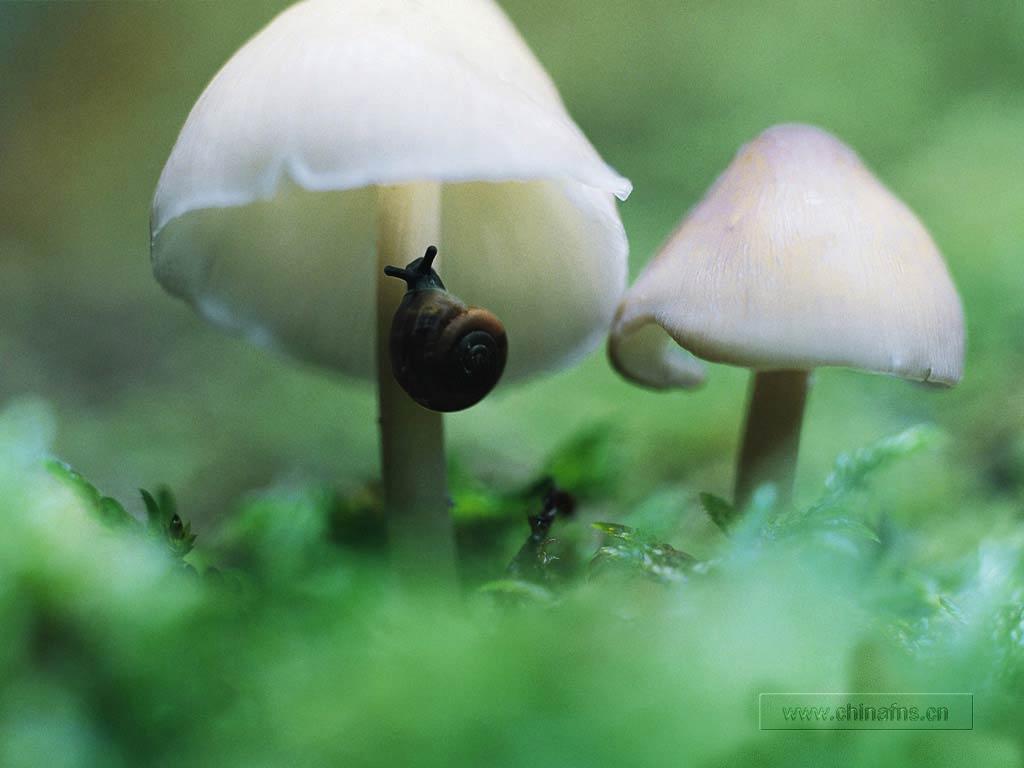
free kewlwallpaperWe have the mayfly and the bee, always buzzing actively, bursting with lively energy. Or the cat, conserving and then pulsing with strength and force. And we have the snail, constant and enduring, slowly edging its way toward its object.

My writing practice requires endurance, because I only occasionally get flashes of inspiration or insight and rarely feel surges of creative energy. Nonetheless, I have been told I am a “prolific” writer (by whose standards, I always wonder; compared to Georges Simenon and Alexandre Dumas, I am a piker). I think the reason is that I keep on. Everyone experiences setbacks, rejection, dry spells, discouragement, dull days. How we choose to deal with those situations becomes part of our practice of the discipline of art, and many approaches “work.” Whenever I read biographies of artists of any kind, or interviews with poets and writers and choreographers and composers, I recognize that (despite post-modernist critique) the life, in terms of personality and approach, does to some degree influence the art.

But the results are impossible to stereotype. A talkative, energetic artist may produce quiescent, meditative art. A dour personality can produce hopeful poetry, a still and soft-spoken person may create fierce, kinetic work.

A highly energetic person like Rimbaud can “burn out” on a major art form rapidly (though his busily-spinning, adventurous life kept going). And then there are the energetic sorts who just keep making work with boundless, apparently inexhaustible fire (see Simenon). One method or personality is not better nor more suited to art than another.

~

This is my minuscule revelation for the day: The one time I visited a shaman, I was told that my totem animal is the snail. The idea gave me a moment’s pause, but then seemed somehow very apt.

Except I was a little queasy about the slime trail.

~

I decided I can reframe the fact of slime once I recognize its purpose. It is not merely a lubricant, helping the gastropod to glide along, but also a glue that enables the creature to climb difficult surfaces, walls, and even ceilings. The layer of mucous also acts to protect the snail from dehydrating.

There must be a metaphor there somewhere. Poetry as…snail slime?

~

Time to keep plugging away, I  think.

The value of noise

Having posted several times on the value of silence, I feel I ought to balance things out by writing about the value of noise. These thoughts likewise stem from my recent reading: Kay Larson’s book about John Cage, creativity, and Buddhism.

This morning, there were a few hours of intermittent sunshine; the air, still nippy from a recent cold front and some high winds, had warmed up a few degrees. I felt inspired to prune some shrubs and start the rather significant task of removing fallen branches from the lawn. I did not realize how big a job this will be until I started the work because the grass is long and the leaves provide a bit of cover. Every few steps, though, I encountered clumps of twigs, broken branches, sticks of all sizes. We won’t want to run a lawnmower over this mass of debris, and it will get caught in our rakes when we try to remove the leaves. The best way to rid the lawn of storm-downed branches will be the old-fashioned way: human power, gathering one or two sticks at a time. The fresh air streamed into my lungs, the sun shone on my back. I pulled on my husband’s old sweater and my daughter’s old coat and my son’s gloves and my own boots and started to work.

What I noticed this morning was noise. John Cage, a man whose later compositions often engaged with silence, also loved noise. His percussion pieces were scored for tin cans, plates, pipes and modified pianos, and he was prescient about the incorporation of electronically-produced sounds into music. I love reading about his experiments with noise, and today I recognized the music in everyday sounds very clearly.

Today’s noises:

Leaf-crunch. The damp leaves produce difference tones from the dry ones. Leaves of different species vibrate in a range of tones depending upon their thickness, brittleness, serrated shapes, oiliness.

Vehicles. The roads are not terribly close to the house, but when the trees are bare we get a range of vehicle sounds from as far as the highway. Large trucks still growl, wheeze, squeal, rumble, and beep as neighbors get trees removed from their properties and department of transportation crews work at street clean up. Cars drive past.

Somewhere, a leaf-blower. Several chainsaws in the distance.

Mockingbird–not all of them have flown south just yet. The buzzy twittering of starlings and small flocks of sparrows. Woodpeckers drilling at trees.

My breathing.

The sound of the nippers and hedge clippers, the sound that pruned branches make as they whoosh and scratch and shimmy earthward and get tangled in the shrubs. The different noises of a cut made on dead wood and on live wood. The snap of twigs. The silken whisper of long grass underfoot.

Creak and groan of the walnut trees as a stiff breeze hits the woodlot. A dog, barking. The hens, chuck-chucking in their run.

The telephone from inside my house. An overhead jet.

And it isn’t cacophony; it’s a kind of music, certainly. The randomness and the patternedness work together. As do the silences.


Here’s one of Cage’s most melodic works, “In a Landscape,” very apropos … very lovely.

YouTube/John Cage “In a Landscape” Stephen Drury pianist


Lost trees

Image

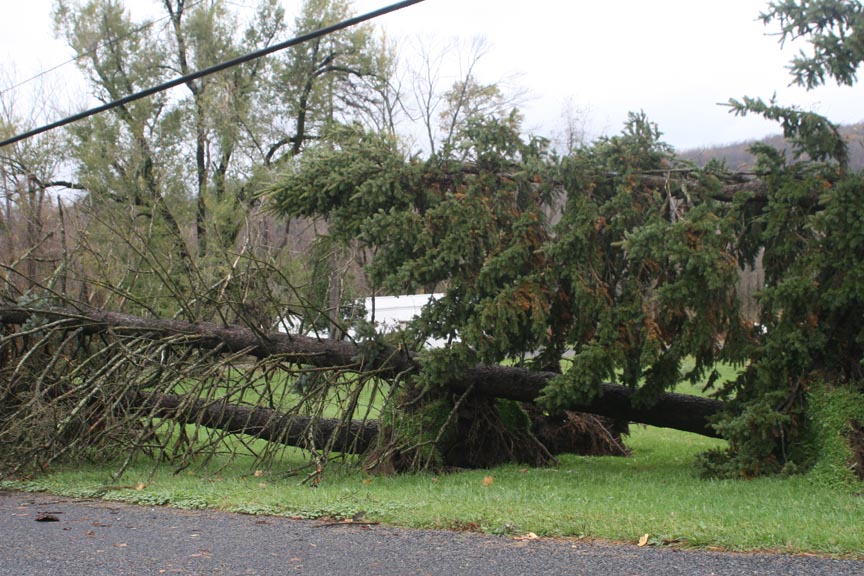
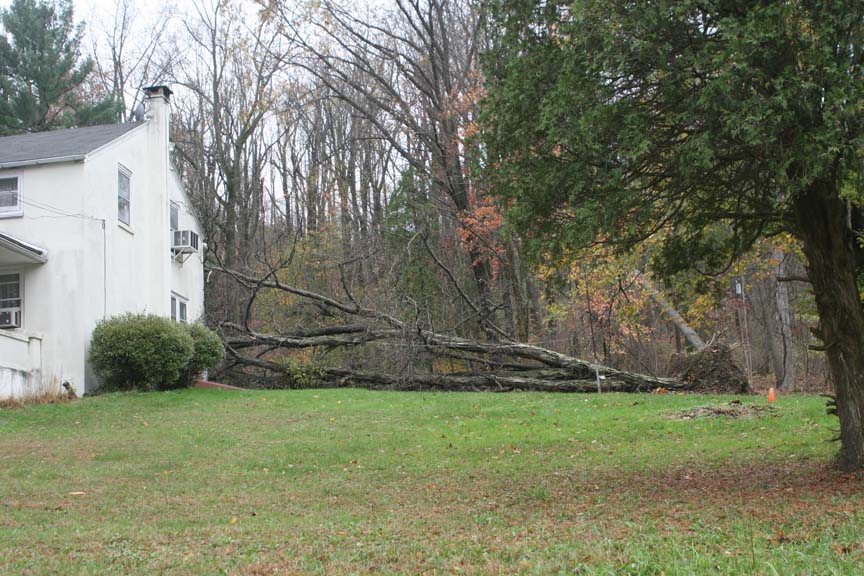
Herewith, some photos of neighboring tree damage. There is an environmental aspect to huge devastating storms…some of my neighbors’ houses have been standing for over 150 years. Some of the trees are 50-90 years old.

Image

Not old by, say, Asian or European standards. But pretty mature and historic for the USA.

Image

New Jersey and Staten and Long Islands were hit much worse, as they also got sea-water surges and flooding. Here, we mostly had tree-down damages. Wires snapped, pulling out transformers and knocking down utility poles and wires.

It was a different type of storm from the ones we experienced last year at around this time (see my post from 2011).

Things are gradually returning to normal. I wish to thank, whole-heartedly, the men (and a few women) who work on the utility and tree crews and who came from all over the USA to help out. Convoys of utility trucks have been greeted with joy by all of us in the mid-Atlantic states. May we never have to return the favor–may you and your loved ones remain safe, sound, and connected! But if you do need help at any time, I hope we can return the favor.

Hurricane & silences

Having been through some big hurricanes before, I was prepared as possible for the weather that hit along the MidAtlantic states of the USA (and west to Pittsburgh PA, and north to the New England states).

We are somewhat rural, and we do not have city water or sewer; so if the electricity fails, we lose those modern amenities along with lights and computers and a stove. In Europe, and in newer developments in the US, power lines are more often underground. A wise idea, but not in our current infrastructure at my home.

So weather events–as the news media terms them–are significant to us. They alter our relationship with our house, our land, the earth. That is not necessarily a bad thing. Sometimes, it is pleasant to wake at dawn and hear no humming, no sounds of modern appliances at work. We note, instead, the noise of owls or wind or starlings. The rustle of grasses.

We miss hot water the most. That the well pump isn’t working and the water heater’s not heating: that means our standards of cleanliness necessarily fall. We can get used to it, but we miss it. Cooking on charcoal or a camp stove takes longer but isn’t really a problem for us, however. We can sleep in the livingroom by the fireplace if the cold weather sets in before the electricity comes back on to make the furnace fans operate.

We lost power Monday evening, and since then the human-made sounds are those of vehicles, chainsaws, and generators. And a pleasanter noise: my windchimes.

~

When the winds were very high, I sensed the resolute structure of our house, which did not shudder, though the windows made some alarming sounds–a kind of whistle, a bit of rattling, the occasional thump.

~

Days without electricity take me back ten years when my family spent a week on an island off of Nova Scotia. Our host lived off the grid by necessity–no electricity or plumbing on the island even though it had been inhabited since the mid-1800s. Tides, sunrise and sunset were our time-keepers. The natural sounds were restful and healing.

~

So, too, the kinds of silence I experience when a large tree falls on the powerline, though the sense is less restful because of anxieties over family members, job, and the awareness that there are messes and expenses to deal with once we are reconnected to the 21st century. For a day or two, however, I feel my breath returning to a more animal pace and fullness. I watch things more closely. The line of water droplets beading irregularly under the porch handrail, the grass tassels’ subtle color variations as they move in a breeze, a toad’s progress across the patio slate, a few brilliantly yellow trees that kept their foliage despite the gale.

~

Weather like this is refreshing, my sister says, even if frightening, because people need to be reminded that technology cannot control everything. The hurricane interrupted cell phone use, communication systems, transport networks, traffic, electrical grids. We ended up wet and cold and we needed to take shelter with friends and to share supplies and stories, to wait awhile before we hurry on our way.

~

So here’s irony, that I am using technology to enter these words into a system that keeps them in an electronically-maintained, digitized data ‘cloud’ so people in the Netherlands or Norway, Seattle or Colorado, India or Britain can retrieve and read them…even though my theme is the joy of low-tech lifestyle (for awhile, at least). My power at home is still out, so I am posting these thoughts from a borrowed computer an hour from home; but I composed these thoughts at home, on paper, with a pen, by kerosene lamp. And I will be going back to that quiet, chilly environment later this evening to feed our pets and continue waiting for the valiant and hardworking utility crews to get to our backwater…

~

My reading material during this ‘weather event’ has been The Ecology of Wisdom by Arne Naess, an excellent philosophical companion for study by lamplight. I was struck by his essay “The Place of Joy in a World of Fact” which is so life-affirming. Not playful–Naess is serious about joy–but sensible. Environmentalists need to get out and find joy in the environment, he says, not just focus on the joyless losses. He urges all of us to give up the “cult of dissatisfaction” and promote good causes by example.

“One may say, somewhat loosely, that what we now lack in our technological age is repose in oneself. The conditions of modern life prevent the full development of the self-respect and self-esteem required to reach a stable, high degree of acquiescentia in se ipso [self-acceptance].”

~

What I feel when the power goes off is repose in myself. While it may not reside within me for long, the fact of its appearance–its existence–is gratifying, joyful, powerful. I do not require the fridge, the computer, the lights. I am an animal alive in an animate, changing, living world.

It’s good to be reminded, now and then.

Place

A family member has recently complained that she wants to move from her apartment because her feelings for the place have changed. It’s been on her mind so much that she seems obsessive about this urge to find a more suitable home, somewhere she feels she can “fit in.” My response, initially, was compassion; then, I began to feel irritated (other people’s obsessions often seem irritating). I’ve been reading essays by the Norwegian philosopher Arne Naess for the past few days, however, and his work has tempered my irritable response. Place matters.

Naess was an originator of the “deep ecology” movement, a follower of Gandhi’s non-violence philosophy, a mountaineer; his influences include Taoism and Spinoza. Deep ecology, as a movement, is fairly controversial and has been subject to some pointed criticism–but as a philosophical practice, its inquiry and premises have been valuable to subsequent thinking and critical problem solving as applied to the earth and its environmental limitations.

What appeals to me about Naess, though, is the personal aspect of his “ecosophy,” a term he coined to refer to earth-wisdom, to place-wisdom. He called his own place-wisdom Ecosophy T: the “T” stands for Tvergastein, a mountain he loved and sometimes chose to live on. Living above the timberline for weeks at a time, Naess observed tiny flowers, diverse lichen forms, changeable and severe weather systems, mice, foxes, herds of reindeer bedding down in front of his hut. He contemplated life’s interconnectedness, the concept of peace in all aspects of earth-dwelling, compassion for all sentient beings, respect for earth-forms from rock to plant to insect…


(saxifrage photo–http://torirotsstitches.blogspot.com)

As Buddhist studies say: “When one has great loving-kindness towards all sentient beings, there are limitless beneficial effects.” Naess seems to have believed this whole-heartedly. He loved the mountain, he loved the miniature saxifrages, he loved the view of the valleys and the lake. These things enlightened him about the inherent earth-wisdom of the place itself. All of his thinking seems to spring from the mountain’s earthy source, its seasons. A mountain seems unchanging to most of us, but Naess appreciated its transformations. Such acceptance can lead to an abiding sense of peace and peacefulness, and certainly to a comfortable feeling of belonging to place.

I understand that urge to belong to place. It’s one reason I have stayed in one region for so long: I do not live in an area of breathtaking natural beauty or harsh extremes, as Naess chose to do, but I respond to my surroundings deeply here in the valley. The temperate climate with its four distinct seasons, the plants I recognize, the familiar birds and mammals, insects and toads, salamanders, the gravel and the different soils, the creeks and meadows, the agricultural fields and–yes–the suburban sprawl and nearby highways all make up the place where I exist. It’s comfortable, and it is comforting, and it is always surprising in small ways as I push my observations and attempt to deepen my understanding of and connection with the place I call home.

There have been times I’ve had to leave places that felt like home, and there’ve been times I’ve felt uncomfortable in the place I dwelt. And I needed to move on when that discomfort became too nagging, to irritable to ignore.

So I’m back to my place of compassion again.

Here’s “Urge for Going.”

http://www.youtube.com/watch?v=Z3EofN3Flag

Not a dry spell

October arrived in a remarkably ordinary way, considering how inconsistent the weather in my valley has been during the past year. There were a few clear days of brilliant sky, some heavy breezes with leaves beginning to drift into the lawn, a couple of glorious autumn days–mild and crisp–followed by a spate of rain and humid air (and toadstools and mushrooms cropping up everywhere), a further yellowing and reddening of foliage, and then, chilly rain.

This is “normal” weather for our area in early- to mid-October. Although the heavy skies and damp chill are not always welcomed by residents, including me, the gardener in me feels relieved. We need the rain and the coming dormancy. The birds relish the late, large insects that frequent gutters and fields, ponds and puddles, providing proteins for a trip south or for winter ahead. Seeds need the watering-in and the cooling-down. Trees need reminders to store their nutrients deep inside when the cold air really sets in.

And pretty soon, I will have bulbs to plant. I want the soil to be moist enough to dig up and the ground temperature cool enough to keep the daffodils still and quiet for several months.

Some years, I write prolifically in autumn; it’s as though the change in season effects a kind of transition within me, and creativity abounds. Other years, not so much. I do notice that when I spend a good deal of time out in the garden, I write more. This fall has not been that kind of season. I have been busy with writing tasks that do not exercise the philosophical or metaphysical side of myself–though I have been writing, most of the work has been reviews, proposals, pedagogy.  I will be posting links to the reviews and essays on the sidebar to the right, adding to the list…

Should fortune–and the Muse–smile upon me, there may be a few new links to poems, as well, in the coming weeks. In November, I’ll be giving a few readings locally. In January, I’ll be teaching Introduction to Poetry again, and I’m eager to try new texts for my students.

Perhaps the post-equinox period will have a creative harvest after all.

A great din

My friend Ann sent me this link to an NPR story on cities (Adam Frank on “The City as Engine”).

Frank closes on a note similar to Mumford’s closing chapter: “We live at a moment when cities are poised to become the dominant mode of human habitation on the planet. But we don’t yet know if such a mode can be made sustainable for more than a century or two.”

An earlier observation of his got my attention, however. He says–

There is a word that applies to the sound of cities which almost never gets applied to nature: “Din.” The din of cities heard on the rooftop as a rising wall of noise is a testament to the true nature of cities as engines of organization and dynamos of disorder.

The first time I became aware of this din of acoustic entropy, I was sitting across from Manhattan on the cliffs of Weehawken, N.J. It was night and the great city was blazing from horizon to horizon. Its low rumble of noise flowed like a breeze blown at me from a mile away across the dark river.

The reason this stopped me is that just a fortnight ago, I heard the word “din” applied to nature.

One of my nephews had just arrived for a visit. He’s been living at Oxford, attending school for several years at that ancient and venerable British institution; and he grew up in England outside of London in the suburbs (Buckinghamshire). My husband retrieved Max at the airport in the evening, and they arrived at our place past dark. We live in a semi-rural area of eastern Pennsylvania where we are surrounded by fields, meadows, woodlots, state roads, and the inevitable housing development. And it is August, a lively time for insect life.

As we unloaded my nephew’s luggage from the car and walked him toward the door, he stopped and looked about curiously. “What is that great din?” he asked, “Is it birds, this time of night?”

Din?

He was referring to the cicadas and tree crickets (and probably a few tree frogs and the occasional flying squirrel). I suppose they do make quite a racket, though we are accustomed to the noise–the ‘dynamos of disorder,’ as Frank would say. When we explained, he remarked, “Oxford is quiet. But I do realize it is its own peculiar world.”

Nice to know there are pockets of organization somewhere: no acoustic entropy at Oxford.

Nonetheless, I treasure our noisy regional denizens and prefer their din to the roar of motorcycles, trucks, and  cars that speed past on the state road, although those noises have their own associations and dynamics and perhaps charm…the way I still find the sound of trains appealing because it reminds me of my childhood summers at my grandparents, I can imagine there are people who associate the rumble of vehicles and the great acoustic roar of cities with pleasant things.

Here is a photo of a cicada. A colleague says they are “the ugliest bugs in the world.” This one doesn’t look so awful to me.

Din, discord, or music. Ugly or appealing. To each his or her own.


Here’s a link to the tree cricket–one of several American varieties:

black horned tree cricket

Confident but not certain: the garden

Recently, I listened to a radio interview with Madeleine Albright, former Secretary of State, who is promoting her latest book. The interviewer asked her what quality she thought most crucial to a good leader. Albright has met many, many leaders; she is also a brilliant person. It was a good question to ask her, and she had an excellent and thought-provoking answer: A good leader should be confident, but not certain. (If you download the mp3 file in the link above, her explanation of this idea comes near the end of the program.) Powerful people who are both confident and certain of themselves, their aims, knowledge, and ideas, are too likely to veer into autocratic dictatorship. Those who are neither certain nor confident are too easily swayed by advisors with their own agendas or are unable to make decisive moves. A person who is open-minded–and therefore not certain–but who is confident in his or her ability to make a good decision once the facts are in, leads wisely and well even when mistakes occur due to faulty information or circumstances beyond anyone’s control.

We could all benefit from becoming more confident and less certain. It strikes me that Socrates might have possessed this pair of qualities. The philosopher continues to question and is therefore not certain; but the uncertainty isn’t of the waffling, inconclusive kind. Uncertainty in Albright’s use of the word means curious, inquisitive, searching. The confident person trusts his or her values (confidence, from fidere, “to trust”) but does not let dogma or single-perspective “certainties” obscure research, facts, other perspectives.

I will grant that this approach is difficult for us humans, and that is why so few leaders possess this pair of traits. While I have no interest in becoming a world leader, I plan to keep Albright’s phrase in mind and discover whether I can become more confident and less certain in my life.

This bust resides in the Louvre, and the image was found here: http://www.humanjourney.us/greece3.html

~
Gardening is one area that relates well to confidence and uncertainty, though in a slightly different form of practice. I’ve been a gardener for over 30 years, and one thing you learn when you garden is that there are no certainties. Planning takes mental and physical effort and preparation, and then there are the endless obstacles involved in planting and overcoming soil deficiencies, insects, fungi, and weather inconsistencies just to name a few. Am I a confident gardener? Yes. Years of research, experiment, study, practice, trial and error–and successes–have made me confident. But there are always new hybrids to try, new species to plant, and there are problems that never seem to go away (why can’t I get carrots to grow here, when I have grown carrots every other place I’ve lived? How to keep certain fungi at bay using organic means?).

And one never has any sort of surety or pledge (the etymology of “certainty”) that those tomatoes will ripen without blossom end rot or fusarium wilt, that the pigweed will not take over during the gardener’s five-day vacation (well, that’s almost a certainty!), or that hail will not wreck the whole summer’s worth of plantings.

Ann E. Michael

June, 2009–after the hailstorm

This year, my vegetable garden is producing well despite overbearing heat, hard brief rains, and far too many weeds. I feel annoyed with its overgrown appearance, but one thing about gardens is you get another chance as long as you can wait a couple of seasons.

Meanwhile, with a little more thought and research, I’m confident I can plan an even better garden next year.

Berries

My region, like many others, has been sweltering through a heat wave lately. The mild winter pushed bloom times and fruiting times a bit earlier than usual; blackberries started ripening ten days ago, and now we have blueberries before July.

But not much before July. In celebration of blueberries and other joys of summertime, here’s a poem from my collection Small Things Rise & Go.

The Blue of July

We pick the first blueberries
while lilies gape at us,
peering over their green fans.
Birds’ tirades scatter over wind
and into our ears,
buffeting us with scold and caw and
something not melody but song:

a song of fruit, of seeds and
mealybugs and inchworms,
the wild clack of bamboo
or maple branches.

Summer’s like a mulberry,
a blueberry, dark and vivid.
It stains the day sweaty,
leaves bright pollen on our noses
as we inhale the sun

on lilies, as white clover gathers
like clouds upon the grass
and, sweet in our mouths,
the day explodes—blue.

~

A note to anyone who has ordered or wishes to order Water-Rites: The order has gone to the printer. Possibly 2-3 weeks before my book is in your hands. Many thanks.