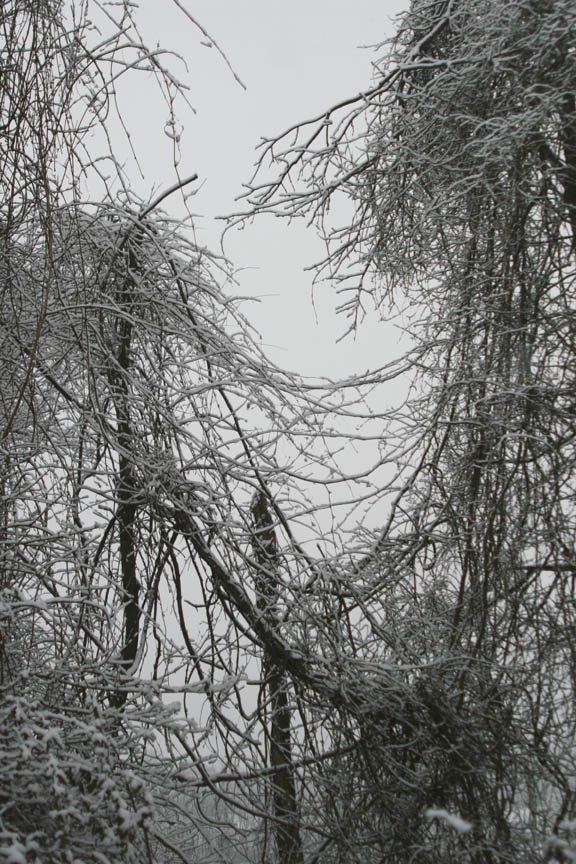
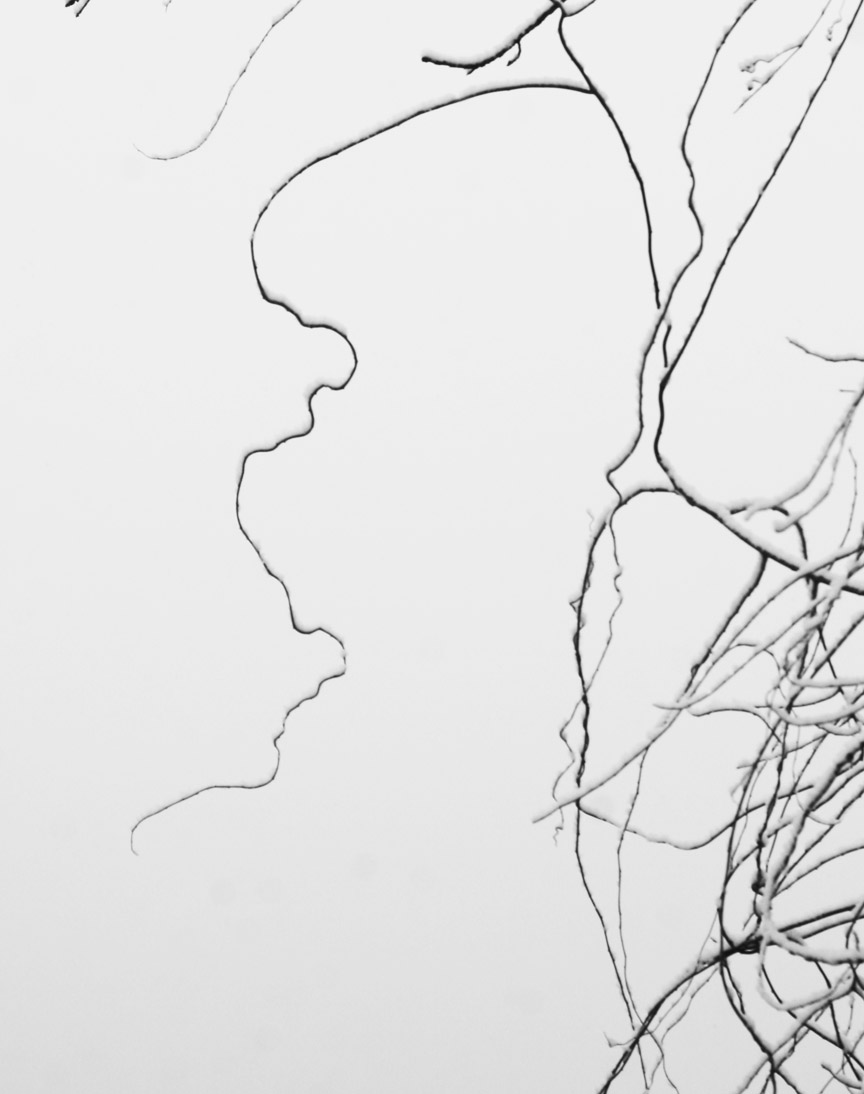
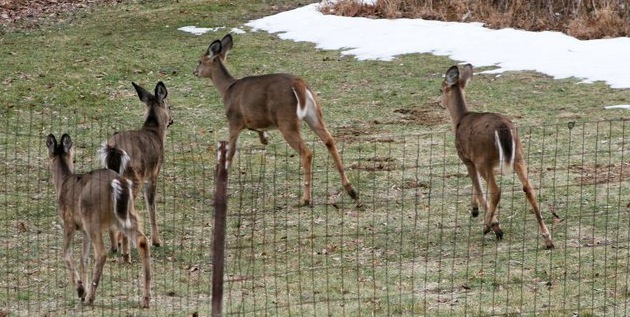
“Who has not sat, afraid, before his heart’s
curtain? It rose: the scenery of farewell.
Easy to recognize. The well-known garden…”
–Rainer Maria Rilke
~
Herewith, a recap of my side (much edited) of the ArtsAlive! conversation this past Sunday at Soft Machine Gallery. SØrina Higgins was also reading and being interviewed by Lehigh Valley Arts Council director Randall Forte, but I can’t adequately summarize her insightful comments. You can find her book here, however.
~
RF: What is your favorite poem in the collection Water-Rites?
AM: I hate to try to pin down a favorite poem, by my favorite writers or by myself. I once heard Billy Collins reply to that question by saying his favorite poem is always the one he is currently in the process of writing. That’s kind of cleverly evasive, but it’s also a little true. Though sometimes I hate the poem I’m currently working on…
I like the title poem, but I get a kick out of “Doxology” because it is so odd; and perhaps my favorite poem is “Tailfeathers” or “The Big Umbrella” or, for purely sentimental reasons—not because it is my best poem—“At Bull’s Head Pond.”
~
RF: What was the most difficult poem to write?
AM: The most difficult poem to complete was probably the long poem in the center of the collection, “The Valley, the Whitetail: A History.” That was difficult in terms of managing the length and the purpose of the poem; also, it required some research. Yes, occasionally poems take quite a bit of research—I have no desire to be inaccurate when I am writing about history or geology or botany (though I often am, inadvertently, despite my best efforts). Not all poetry is solely a work of the imagination.
There are other ways to be “difficult” however. A poem that was hard to complete was the elegy “I Shall Never Be Nearer,” which came quickly initially but took a long, long time to revise and to come to terms with. Not all of these poems—or any of the poems I write—are “about” me or my experiences, I mean, not as biographical as they may seem. But this poem does deal very specifically with the death of my close friend. It was the day after I learned of his passing, and, completely numbed and sleepless, I went with my family for a canoe trip on the lake. I titled this poem “Single Lines” for several years while I was revising it, because the images came to me in – well – single lines. Single images. I must have revised little tiny things in it oh, about 14 times. So I guess that means it was “hard to write.”
~
RF: So, the opposite question. Which poem was easiest to write?
AM: Some poems do come quickly and relatively easily. Not often, and sometimes those that come rapidly end up being sort of crappy poems. But “Lot’s Wife” only underwent about 2-3 drafts and mainly arrived, haiku-like, as a visual image that carried with it some cultural freight.
Another poem that arrived rather miraculously is “River by River.” That was the result of a car trip to Indiana with my kids and is kind of a list poem. It spooled out as a result of a kind of inadvertent prompt. Will Greenway and Elton Glaser were looking for poems about Ohio for an anthology. I read the call for work, went back to my notebook about the car trip, and recalled an incident with my son and a roadmap. The editors chose it as the opening poem in the main text of the book—immediately following the preface poem by James Wright. I felt completely graced and humbled.
~
RF: How did you choose the title of the collection?
AM: Early on, while I was working on my graduate thesis project, I chose the title for the book. I’d written the title poem but hadn’t really thought of it as the title poem until I recognized how many of the poems dealt with drought or with bodies of water or rain or artworks that portrayed water. And spelling the second word as “rites” as in ritual, rather than as an other interesting aspect of water—the “rights” to water that have caused so much conflict over the centuries—seemed fitting given that there are also rites associated with death. Funerary rites, religious rites. And rites in the form of chants and dances people have done to invoke rain during times of drought. So there’s a pun there, rights and rites, and I love literary puns.
I wanted to use Steve Tobin’s sculpture as the cover art, and Steve granted the rights for that photo (more rights, legal rights) and Keith at Brick Road approved of the image for the book cover. So I am gratified by all of that. The sculpture is an early work of Tobin’s, when he was making art using surgical glass piping. It’s environmental, site-specific art that really looks like a splashing creek. But it isn’t—it is glass.

~
RF: Tell us about your publishing history and about how and if poetry publishing has changed over the years.
AM: I had my first poem published in a tiny literary journal back in the days of Xerox-ed micro-magazines, 1981 or 82. I’ve been publishing pretty regularly since then, regularly but not ambitiously. Lots of individual poems and essays in individual journals. I had no academic reason to get a book out, and I had no real direction either. It didn’t seem to be on my to-do list when I was in my twenties. Then, at 30, I had my children. Most of my creativity went in the parenting direction, though I continued to write. I didn’t really work toward book publication until about 1999. Then I began to think about it—after David Dunn had died. In fact, I got a chapbook and a full-length collection of his work out after his death. This is hard to do—to convince a publisher to put out a book posthumously. After all, the poet cannot promote his work. That’s hard on small publishers. But I succeeded. So I thought, I guess I can get my own books published. Maybe. And my first collection was a chapbook Spire press published right after I graduated from Goddard, 22 poems about building a house, sort of ecologically-invested nature-type poems.
Things have changed in the world of poetry publishing, but it is still hard to get your work into actual print—ebooks and POD self- or partially-self-published options, as well as the web and blogs, have changed the spirit of the poetry world only marginally, though I do think these options have made it possible for more people to read and encounter poetry. The absence of critical, discerning, well-read editors & proofreaders is a loss, in my opinion; but poetry is finding other ways to deal with that. And those editors are still out there. Underpaid and overworked and cranky, but out there nonetheless. MFA programs, perhaps. Critique groups have maybe replaced salons and absinthe cafes. I don’t know.
~
RF: Any advice for aspiring poets who want to get published?
AM: I’d advise aspiring poets to be ambitious. But there are many ways to be ambitious. I’m a bit of a plodder, but I hang in there. I’m not great at networking or schmoozing or even being sort of normally assertive—I’m quite shy with strangers and hate to ask even small favors…like asking an editor to consider publishing my work. Or asking people to host readings. I mean, that goes with the job, but it’s taken me a long time to get good at doing that. I hate that stuff lots more than I hate being rejected. I don’t take the rejections hard at all. My weaknesses lie in other areas. So I can say, if you want to get published, you might not want to do what I did…anyway, if you are eager to see print soon, you might want to be more assertive and organized. On the other hand, I have been self-promoting rather badly for thirty years; and I’m okay with that because the poems are better after thirty years even if my publicity skills are not.
I’m kind of outside the box as far as the “po-biz” goes. I do my job at the college, which is only marginally poetry-related, and then only when I am teaching a section of intro-to-poetry. (Mostly I teach remedial comp and tutor students in English; I like to remind myself that Kay Ryan has the same kind of job!). I attend conferences when I can get away and when I can afford them; I have taken seminars and workshops over the years, but not religiously or frequently. The “big thing” I did for my so-called career was to get an MFA from Goddard College in 2003. This was after I had won a PA Council on the Arts Fellowship—back when the council was giving those out. Please lobby your congress people for an increase in federal and state arts funding. That was so crucial for me, earning that grant. A great confidence-builder.
Since then, I’ve earned my MFA and have four chapbooks and this full-length collection coming out and a job in academia that I probably wouldn’t have if it hadn’t been for my graduate studies and a certain amount of dogged persistence of a sort of quiet variety that I seem to possess in abundance. I still send out individual poems for publication in print and online, though not as often as I should if I were really eager to stay on the po-biz radar. I keep up a blog and a Facebook page for “promotional purposes” but don’t expect to see me on your Twitterfeed anytime soon. Technology takes me away from my reverie zone and is, generally, bad for my poetry. What’s good for my poetry are long walks, gardening, and genial loafing, visits to museums, viewing architecture and geological formations, long face-to-face chats with friends, and reading reading reading.
The quote that opens my book, the Rilke quote, kind of sums that up for me. It’s really the well-known garden that makes me recognize where the poems are coming from. The scenery of farewell, in this case, opened up the place this collection began, in loss and later in fullness.