Giving in secret

“All the poems I have written were written for love.” ~ W.H. Auden

But when you give to the poor, do not let your left hand know what your right hand is doing, so that your giving will be in secret…” Matthew 6:3-4

~

Acts of compassion, great or small, are good for us. I state this not because of ancient Greek philosophers’ concepts about the Good, nor out of any religious dogma, but because psycho-neurological studies almost definitively align with this aspect of received wisdom. Hanson writes, “Compassion draws on the anterior cingulate cortex (ACC) and insula,” which help us observe (or “read”) the reactions of others, an action critical to the survival of a social species. It turns out that when we pay attention to others, we are more likely to help them; that’s how the average human brain works.

Unfortunately, human beings often stop paying attention once we think we have ascertained another person’s intentions and have passed an internal judgment upon them. We tend not to attend past that initial observation. Thus, we may miss actual intentions. Usually this miscommunication of intent leads to problems, but not always. Some people desire to hide their deeper intentions, and not because those intentions are “evil” or even merely narcissistic.

Viz: W.H. Auden, as portrayed in this quietly-written, reflective essay by Edward Mendelson in The New York Review of Books (March 2014). Mendelson begins:

W.H. Auden had a secret life that his closest friends knew little or nothing about. Everything about it was generous and honorable. He kept it secret because he would have been ashamed to have been praised for it.

Auden was a Christian who had an often challenging relationship with his religion (being homosexual did not help with the dogmatic wrestling match). In this essay, Mendelson says that “Auden had many motives for portraying himself as rigid or uncaring when he was making unobtrusive gifts of time, money, and sympathy. In part he was reacting against his own early fame as the literary hero of the English left.” The author also looks at Auden’s era: Fascists, Nazis, dictators, and how they managed to sway so many potentially and otherwise “good folks” to bad causes, the use of “good/evil” in the literature and intellectualism of those times and the writers who used celebrity to lionize their causes–a posture Auden found distasteful.

Yet Auden was willing to make himself distasteful, socially awkward, arrogant, in the service of a hidden compassion. There’s no good word for this in English. “Modesty” does not suffice. “Humility” does not quite hit the mark, either.

~

It seems to me that Auden, and others like him (there are others, many undiscovered), chose to follow Jesus’ words in Matthew 6:3.

A contemporary person may ask why all the modesty. After all–a good deed is a good deed. Does keeping it “hidden” increase the inherent goodness? Are anonymous philanthropists somehow more authentic to the concept of compassionate giving than those who allow their names to grace buildings and organizations? Those people who benefit by good works and kind acts–surely they feel a desire to thank whoever is responsible, so why disguise the giver?

~

One possible answer: compassion does not need a specific object, though that is generally how we learn compassion in the first place.

The gratitude a human being feels when he or she is the receiver of a kind, anonymous act has no immediate object. We do not know whom to thank. Although the receiver’s response may initially be one of suspicion, in most cases the sense of gratitude will be directed more widely into society; the receiver of a kindness is more likely to be kind to others, to perceive others as potentially benefactors or at least to view other people with less suspicion and envy–because the secret donor is somewhere among all of us.

The secret gift works to spread compassion to all sentient beings.

~

It turns out that, as far as the brain is concerned, doing good sets up a kind of feedback loop. Doing good for others improves how good we feel in general. Not how good we feel about ourselves in an egotistical way but how good we feel mentally, emotionally, and even physically.

Love is all you need

Love is all you need

We not only write for love. We live for love.

~


Books, burning

“Every burned book or house enlightens the world; every suppressed or expunged word reverberates through the earth from side to side.” ~Ralph Waldo Emerson, “Compensation”

I have taken this quote out of context–Emerson wrote this sentence as part of his reflection on compensation: he was questioning the received doctrine of his era that evil-doers flourish on earth and the just do not, therefore Heaven is God’s compensation for the trials of being a Good human being. Emerson did not accept this doctrine out of hand and theorized that, through just laws, people could make compensatory actions operable on the earth. He recognized, too, that sometimes evil people fail to thrive and compassionate, just people manage quite well. The received wisdom was merely received, not wise. Nonetheless, I find “Compensation” essentially dualist. And it is, truly, a sermon.

In the paragraph that contains the above words, Emerson suggests that there is always compensation of some kind for any act, for good or ill, that suppression cannot be maintained–the volcano will surge eventually–that the martyr never dies in vain because from his or her action will arise, in time and through the flaws and the perfections of Nature, some form of (often surprising) compensation. Hmm. Sounds a bit similar to Karma.

~

And I am thinking, again, of books and what they offer. My students tend to consider books as information solely (I do not generally teach the kind of young person who reads novels or philosophy). This is, we have been reminded continually, the Information Age–so that approach to books seems well-founded. Then there are our other means of information-gathering, largely through technological devices. These phones and various screens are mighty distracting and designed to be so. Yes, Fahrenheit 451 was prescient. Does the book-burning in that novel begin a revolution? Not in the predicted ways.

~

More prescient writing (found, by the way, in books): Neil Postman, back in 1985, commenting on the prescience of Orwell’s 1984 and Huxley’s Brave New World in Postman’s must-read cultural criticism, Amusing Ourselves to Death. In his foreword, Postman writes

What Orwell feared were those who would ban books. What Huxley feared was that there would be no reason to ban a book, for there would be no one who wanted to read one. Orwell feared those who would deprive us of information. Huxley feared those who would give us so much that we would be reduced to passivity and egoism. Orwell feared that the truth would be concealed from us. Huxley feared the truth would be drowned in a sea of irrelevance. Orwell feared we would become a captive culture. Huxley feared we would become a trivial culture, preoccupied with some equivalent of the feelies, the orgy porgy, and the centrifugal bumblepuppy. As Huxley remarked in Brave New World Revisited, the civil libertarians and rationalists who are ever on the alert to oppose tyranny “failed to take into account man’s almost infinite appetite for distractions”. In 1984, Huxley added, people are controlled by inflicting pain. In Brave New World, they are controlled by inflicting pleasure. In short, Orwell feared that what we hate will ruin us. Huxley feared that what we love will ruin us.

~

Is there compensation for being drowned in a sea of irrelevance? What might that look like?

~

Perhaps these are a few of the reasons I often need to turn from information to poetry.burning


Dissent, controversy, & opinion

It may be obvious that, in this blog, the writer tends to shy away from highly controversial contemporary issues–with the possible exception of my occasional strong views on education–even though philosophical and critical arguments are part of my job and integral to my life interests. One possible explanation is that I am, as Charles Schultz memorably popularized, “wishy-washy.” (This strip is from 1952, © Charles Schultz):

Peanuts

And a little destructive criticism from 1959….

~~

Indeed, my students sometimes get annoyed with me because I do not take sides during class discussions of controversial topics. “Don’t you have an opinion?” they ask.

Why, yes, I do. It is not my job to share my opinions with students, however, as much as it is my job to make them think more than once about their own opinions. It is also my job to help them navigate the complexities of critical thought, weighing “both sides” (and pointing out that many controversies have many more than two sides), and learning that perspective can deepen understanding and sometimes even alter opinions. This approach is far from wishy-washy; it is courageous. It can be risky to analyze rationales and points of view that differ from your own, and risk takes courage.

~~

A good book that explores the courage it takes to analyze and, often, to dissent from the normative view is Cass Sunstein’s Why Societies Need Dissent. Sunstein argues that truly free societies need to permit dissenters room for expression and criticism; he provides evidence that without dissent, societies fail to thrive through change. Because growth is a change process, societies that resist change too rigidly fall apart.

This year, my class and I will be exploring Sunstein’s text in an effort to recognize the kind of thinking and evidence needed before one writes an essay. I hope they apply these ideas in their freshman Philosophy course.

I hope they apply these ideas in my course, for starters…

~~

Argument has a negative connotation in American English, so many critics substitute the word discourse. I have no problem with such a substitution: the term discourse seems to connote politeness and respect, behaviors necessary for useful dissent and analysis of alternative perspectives. The philosophical argument, whether taking place in philosophy class, conference hall, or koan, operates most productively and insightfully when predicated upon mutual respect for differences.

Dissent as discourse may not be the most natural behavior for human beings, but it is something we can demonstrate and coach in the university classroom.

With any luck, both students and teachers may be able to apply the techniques to other areas of our lives. Along that vein, here’s an easy-to-interpret Buddhist explanation from New Lotus on how to approach argument in the Buddhist way.

GFS2


Circle Game

Mandala: मण्डल

ann e michael

Sanskrit for circle. Symbolic of completeness, unifying principles. The container that holds the center. The cosmic center and the spiritual center, including the void (being able to recognize that the “self” is also a void, a construct).

This deep practice–the emptying of self and the entering into completeness and unity with everything (becoming One)–intrigues me but seems very far beyond my grasp. If consciousness can be envisioned as a set of experiential layerings that the mind braids into a narrating self, illusory but convincing, I can imagine feeling One with them. But that’s theory, not genuine practice.

“You and I are all as much continuous with the physical universe as a wave is continuous with the ocean.” ~Alan Watts

I am a physical being in the universe; this, too, I understand. Somehow, that doesn’t make meditation easier for me–even though I have always been a highly reflective person.

Trying too hard to empty the mind defeats the purpose, of course. The practice of compassion as meditation (see Thich Nhat Hanh and Pema Chödrön)  seems a more effective way for me to enter into a sense of oneness and completeness. I am definitely experiencing beginner’s mind, perhaps complicated by my interests in philosophy, psychology, neurology, and art.

So I turn, constantly, to nature for an immersion in something other than the human self: completion of the cycle evident in every plant and creature. See the mandala of the sunflower above. Contemplate the circle–what it contains, in this case, pollen, seeds, a tiny bee; what encircles the circle: the petals that fade so rapidly, the sun, the air.

And then I turn to my reading again. Hungry mind (appetite). But I found this wonderful column by Kate Murphy in the recent New York Times:No Time to Think.” Quite fitting, given these recent ruminations!

~

And thank you, Joni Mitchell, for the title and this song:

Pro+crastination

procrastination (n.) Look up procrastination at Dictionary.com
1540s, from Middle French procrastination and directly from Latin procrastinationem (nominative procrastinatio) “a putting off from day to day,” noun of action from past participle stem of procrastinare “put off till tomorrow, defer, delay,” from pro- “forward” (see pro-) + crastinus “belonging to tomorrow,” from cras “tomorrow,” of unknown origin.

This, thanks to OE, the Online Etymology dictionary, a favorite site of mine. What I was hoping to find is some aspect of “pro” as in Latin’s for, ie, the positive side of putting things off until tomorrow. Surely there are times when a bit of delay works toward the desired goals. The more leisurely approach to accomplishing a large task allows a person time to think things through and avoid some of the risks that the jumping-into-the-lake-all-at-once method contains.

At least, that’s my rationalization for putting off the next set of tasks I have set for myself regarding my writing.

~

Delay can be fruitful, if it’s the right sort of delay. Procrastination that arises from distraction, however, tends to be of the less productive sort. When putting things off because of distraction ends up being somehow beneficial, it’s usually just a lucky strike.

~

~

distraction (n.) Look up distraction at Dictionary.com
mid-15c., “the drawing away of the mind,” from Latin distractionem (nominative distractio) “a pulling apart, separating,” noun of action from past participle stem of distrahere (see distract). Meaning “mental disturbance” (in driven to distraction, etc.) is c.1600. Meaning “a thing or fact that distracts” is from 1610s.

The drawing away of the mind. What a perfect description. Just how it feels.

~
 
But the mind can be drawn into the tasks at hand, a Zen-like or Taoist middle-way approach. The steps to the goal neither hard nor easy. The delay can be a time of focus and serendipity, a way to establish equilibrium before proceeding on what appears, initially, to be a daunting project. What belongs to tomorrow is not here now–live the day.
 
My three-month project is to send out two manuscripts, revise and organize my current work, submit new poems for publication, compose an essay and a couple of reviews. But it turns out there are a number of other tasks I had to accomplish before heading into the larger project. It’s all part of the process, during which I have discovered some poetry drafts I had forgotten about and revised older work and found a cache of images and ideas I had filed away “for later.” And I realized I had not finished transferring my poem files into new digital folders… It all needs to be done, but it follows the same general path.
 
Not distracting, exactly. A different form of–positive– “mental disturbance.” The pro aspect of procrastination.


Mere philosophical speculation

I have been reading more of Daniel Dennett. One of his earlier books, Brainstorms, consists of essays and talks and thus, being available to read in short bursts, has served as my intellectual entertainment in between the busy social events of this particular June.

I liked three of his essays better than the others. The first one in the book describes, explains, and argues for “intentional systems;” the author also does a fairly good job of asserting that philosophers and psychologists ought to study computer models of intelligence as a means of leaning more about human intelligence. He does not make lots of mechanistic claims, however–he does not suggest human beings are mere soft machines, and he gives a good argument in Chapter 11 as to why we cannot make a computer that feels pain. But he does separate, by degrees, the differences between basic consciousness states and consciousness that exhibits intentionality, and he separates basic consciousness from simple instinct–something that confuses many people when they are posed difficult questions about non-human animal “minds”.

His essay “How to Change Your Mind” offers terrific, logical insights about human “feelings,” “intuitions,” and opinions. Dennett shifts the perspective on the psychological question of why it is so difficult for human beings to “change their minds” and to give genuinely rational (or mechanistic) reasons for doing so.

The book’s final chapter, “Where Am I?” is available as a PDF at this link, and here Dennett offers a much more entertaining and readable philosophical thought experiment on personhood (and consciousness/mind) than Derek Parfit posits in his book Reasons and Persons. Those readers who are interested in how a thought experiment can argue for the existence of a person-as-consciousness-state without embodiment-in-carbon-based-materiality, without the usually-required religious or spiritual crutch, but also without the dense counterarguments of Parfit’s approach, may wish to check out this chapter.

Granted, I understand that many people feel thought experiments are a monumental waste of time, tantamount to navel-gazing; others feel sure that teleportation out of fleshly bodies is the stuff of science fiction (emphasis on the fiction). But as our inventions permit us to test out theories that once were “mere philosophical speculation,” all kinds of surprises may await us. Quantum physics was an imagined idea, for example, that scientists have been able to revise and explore in a more machine-based way…Thomas Kuhn’s The Structure of Scientific Revolutions does, often, operate historically as he envisioned the process. The recent excitement over teleportation of coded data provides an example of mechanical testing of theories (here is a good basic article on the experiment for the layperson, with graphics and a Star Trek image, and here is the scientist-written article).

All of which is fascinating, yet none of which decreases my enjoyment of a run of perfect June summer days. Incarnate, I attempt meditation. There is honeysuckle on the breeze. Insects whir and buzz around me; sun warms my left shoulder. Time for consciousness. Time to be here, among the things of this world.


IMG_0787

Consciousness as multiple drafts

Daniel C. Dennett’s 1991 book, Consciousness Explained, has kept me entertained and interested for a couple of days now. How could I refuse a book with that title? And Dennett–whose conversational writing style appears to toss off one idea after another in quick succession–actually stays mostly true to classic philosophical reasoning in his arguments as he endeavors to make claims for what consciousness is. He begins with phenomenology as one way to initiate the concatenation of empirical science (physics, biology, neurological research) with logic. He dispenses with Husserl and the early Phenomenologists but invents his own form–hyperphenomenology–breaking phenomena into three divisions and exploring each until he arrives at a way to destroy the long-held concept of the mind, hence consciousness, as “Cartesian Theatre,” and replace that model with a construction more biologically sound.

The book is far too complex to summarize, but the concept he develops that most appeals to me is what he calls the multiple drafts theory of consciousness. Dennett draws upon neurological and psychological research as well as past and current philosophical thinking to propose that what we term consciousness may consist of multiple narratives created through physical input, memory processing, and other processes that result in fraction-of-a-second “revisions” in thinking. Narratives! Revisions! As a writer, I can certainly relate to this idea. The theory of multiple drafts consciousness would explain many phenomena, such as the unreliability of eyewitnesses, the repression and re-constructing of traumatic experiences, the embellishment of stories (as Dennett puts it, “What I should have said at the party becomes what I said at the party”)…and it has examples in the way we “tell” fiction, movies, and family stories.

Currently, I am engaged in the work of revising dozens and dozens of poems. Many drafts. Many narratives, many layers. Subtle shifts in perspective or story or language or style–which version is the real me? All of them, across a continuum.

Derek Parfit’s Reasons & Persons suggests some of the same conclusions through a more traditional philosophical approach (harder to read than Dennett’s often-humorous prose which is geared more toward the non-philosopher and which employs considerable neurological and psychological research as part of its rational evidence).

Although these texts intrigue, and are convincing, they remain speculative. For me, the science aspects of the inquiry remove none of the mystery or delight I experience in terms of my own consciousness. Nor do they negate my sense of myself as individual, unique as to perspective, or whole in myself and in the cosmos. I know that many people resist the idea that consciousness is not soul, who feel that scientific research somehow diminishes human beings into–what? Fancy hardware for intelligent software? Automatons with the illusion of free will? Purposeless life forms? Robotic zombies with no moral bearings?

continuum

A continuum version of tao

Apparently, we desire awe; but knowledge doesn’t have to kill awe.

I find myself fascinated with the ideas posed by Douglas Hofstadter wherein he theorizes consciousness-as-continuum (see this post). People love to default to a black & white way of analysis, thinking, and judging, but everything in nature contradicts that concept. No doubt our brains, wired to make quick decisions using the simplest shortcuts, sieve out a great deal of content and then justify later (Daniel Kahneman’s book Thinking Fast and Slow covers this process in fascinating depth). It’s simply easier to think of balance as tao, perfectly harmonious black and white, or to sort people or objects or ideas into yes-or-no categories. But the distinctions are seldom so clear–there’s a continuum that stretches from the black to the white, as in the spectrum, as in the fringes of a forest or a meadow, as in the so-called races of human beings, as in places where societies and cultures meet and often intermingle, as in the coastline of the sea or a riparian environment. And all of those things are awesome, even miraculous.

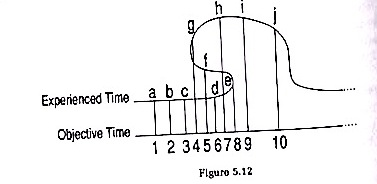
In Dennett’s Chapter Five, “Multiple Drafts vs. the Cartesian Theater,” he offers this diagram:

~

dennett003It’s a proposed version of what happens when we think.

You will have to read the book to decipher this illustration; but I recognize in it the way I tell a story, think about a story, remember an event, record an experience, and the narrative method of the many kinds of stories (many genres, many media) that I love.

One thing it is not is straightforward. We have all those revisions to make, to layer our experiences with, to explore along the fringes of, and to find deeply miraculously awesome. Wading among my drafts now, I feel revitalized. These reflections and revisions are part of my Self as a conscious being in a physical and wonderful world.


Mimesis

Mimesis: “Imitation, in particular. 1.1 Representation or imitation of the real world in art and literature”… “a figure of speech, whereby the words or actions of another are imitated” … “the deliberate imitation of the behavior of one group of people by another as a factor in social change” (OED).

“Nature creates similarities. One need only think of mimicry. The highest capacity for producing similarities, however, is man’s. His gift of seeing resemblances is nothing other than a rudiment of the powerful compulsion in former times to become and behave like something else. Perhaps there is none of his higher functions in which his mimetic faculty does not play a decisive role.” —Walter Benjamin (“On the Mimetic Faculty,” 1933)

~

From time to time, I mull over mimesis and its role in human learning. Research on animal behavior since Benjamin was writing has somewhat undermined his assertion that the “highest capacity for producing similarities” belongs to human beings, but the concept remains generally accurate. What I notice among my students, however, is the human ability to perceive differences. My students much prefer to focus on what makes things different than on what makes them similar, but perhaps the reason is that similarities seem so obvious (due to our capacity for “producing similarities”) that we take them for granted. I introduce poetry to my students as an ancient art derived from exactly what, no one is certain, but likely from invocation or ritual or song or the human desire for narrative–and I tell them that it has been carried along through history by, among other compelling things, mimesis–that mimetic faculty we possess that makes us want to repeat or copy, in order to learn, to love, to pass along, to entertain, to communicate, to enjoy. We can look in the mirror and see another human’s face, or our own faces slightly changed through the process of copying another.

The mimetic urge has a long history among those people who intellectualize. Theories of Media (Univ. of Chicago: W. J. T. Mitchell) glossary offers a concise but comprehensive “mimesis” entry authored by Michele Puetz–the article in which I found the Benjamin quote above. (By the way, the Theories of Media glossary project is a great resource!) As I looked through my go-to philosophy resources, though, I was left with the distinct impression that the concept of mimesis has moved from the realm of the philosophical–Plato and Aristotle are our main thinkers on mimesis in the philosophical arena, so that’s pretty far back–and into the realms of sciences, both social and biological. Mimetic response has been researched, and speculated upon, by psychologists, cultural anthropologists, and neurologists (see the initial excitement about “mirror neurons” in this 2006 New York Times article). The term has found considerable employment in the writings of Rene Girard, whose writings span cultural anthropology, literary criticism, psychology, theology, and philosophy.

Writes Gabriel Andrade, in the Internet Encyclopedia of Philosophy:

“Girard believes that the great modern novelists (such as Stendhal, Flaubert, Proust and Dostoevsky) have understood human psychology better than the modern field of Psychology does. And, as a complement of his literary criticism, he has developed a psychology in which the concept of ‘mimetic desire’ is central. Inasmuch as human beings constantly seek to imitate others, and most desires are in fact borrowed from other people, Girard believes that it is crucial to study how personality relates to others.”

Clearly, human psychology and biology cannot be simplified to mere reflection and copying, but it is equally clear that the metaphor of mirroring can be fruitful as we explore the complexities of mind and consciousness, culture and art. Sometimes I take on the role of educator; and when I do so, I recognize the need for student learners to imitate, to hear information repeated, and to attempt to create their own “similarities.” Sometimes I take on the role of poet; and when I do that, I am clothed in centuries of form, rhythms, sounds, similes, stylings and borrowings and references: copies and reflections, altered through time.

Mirrored Room by Lucas Samaras

Mirrored Room by Lucas Samaras Photo: © Albright-Knox Art Gallery/CORBIS

~
A brief aside: When I was eight or nine years old, I went with my parents to an art museum–it may have been the Chicago Art Institute–and there was an installation of Lucas Samaras’ piece “Mirrored Room.” [See the photo at left.] I was deeply impressed by the mirrored room, partly because it was inside this artwork that I finally understood, metaphorically, the concept of infinity. I was awed by the many diminishing selves I could see, the way a single “I” could change (in size), and by the tricks of light and how easily one could get lost in such a small space.

The mirrors copied me.

Mimesis implies something active, a borrowing, a taking–a kind of theft, on the one hand, and a kind of tribute or ritual motion on the other. It is also inherently continuous. The behavior does not stop at the first copy; it is carried on, perhaps through generations, like DNA.

Here is the brilliant Anne Carson:

“[It’s] what the ancients mean by imitation. When they talk about poetry, they talk about mimesis as the action that the poem has, in reality, on the reader. Some people think that means the poet takes a snapshot of an event and on the page you have a perfect record. But I don’t think that’s right; I think a poem, when it works, is an action of the mind captured on a page, and the reader, when he engages it, has to enter into that action. And so his mind repeats that action and travels again through the action, but it is a movement of yourself through a thought, through an activity of thinking, so by the time you get to the end you’re different than you were at the beginning and you feel that difference.”

~

Carson describes how I feel when I’ve read a poem or novel that moves me deeply. For that matter, it is how I feel when I find a work of visual art, or a play or dance, that seems to speak with immediacy to my own sense of experience, which arouses my passion, compassion, or emotion and alters my entire psyche for awhile– “by the time you get to the end you’re different than you were at the beginning and you feel that difference.”

Sometimes I even manage to compose a poem that gives me that sense of feeling different than I was at the beginning. On those rare times, I may look at myself in the mirror and see a changed face.


End of semester crunch

The university year here in the USA is almost over; at my college, today is the last day of classes, and next week is final exam week. As a result, I have little space in my mind for speculative musings and little time for reading–other than reading student papers.

This is also the time of year when my colleagues in academia, feeling stressed and slightly burned out, share stories from the trenches and sigh over perceived inadequacies of students in general, higher education in general, academic administrations in general, and life in general. I admit to occasionally joining the chorus, but this year I am making a concerted effort to refrain from generalities in order to cultivate a bit more mindfulness and compassion.

I have been thinking a great deal lately about stereotyping and how the short-cut of pigeonholing people by general traits, which demographics tends to bolster as sociologically “true,” can hinder the ways human beings interact and value one another. Most of us shy from outright stereotyping by race; and many of us are aware that there are ingrained stereotypes concerning sexual preferences, disabilities, and nationalities about which we ought to try to be sensitive. So I would like to remind my colleagues–who do have every reason to be exasperated as the academic year closes–that much as we want to generalize people by their generation or their status as students, each one of them is a human being, individual, unique, with his or her own burdens and inconsistencies, worthy of compassion.

Not necessarily worthy of a higher grade than they’ve earned…that would not be compassion so much as rescuing or caving to some sort of pressure. But when we must place an ‘F’ on the transcript, I hope we remember to do so with compassion rather than irritation, resentment, or triumph.

photo by Patrick Target

The “Black Madonna” –A view from the heights of the DeSales University Campus; photo by Patrick Target


There are other stereotypes we employ regularly, partly because language was invented to get information across to others rapidly, and generalities offer the expediency of compressed information. The culturally and perhaps evolutionarily ingrained “us vs. them” attitude of included, excluded, and outliers of community also lends itself to forgetting the individual. As a person who often takes such language- and thinking-related shortcuts in conversation (and in little angry rants), I am in no position to chide my fellow human beings about their shortcomings. I do, however, want to remind myself that it would be a good idea to recognize, in my heart, that general judgments of others occur all too easily–unconsciously–unmindfully.

Now, back to the pile of student papers. {crunch, crunch, crunch}


Symbiosis: Lichen, moss, John Donne

lichenslate~

Lichen on slate makes a kind of mandala, a small moon, or star, of mutualistic symbiosis–because lichens are amazing compound organisms: a fungus and an alga, although apparently there can even be three living, botanical parts to some lichens. I find this amazing. Unsurprisingly, “Reproduction can be tricky for a compound organism,” because which organism’s reproductive directive does a composite organism adopt? Some explanations can be found at this site, the homepage of THE book on lichens by Irwin Brodo and Sharon and Stephen Sharnoff.

It is spring. The rain brightens up the mosses, and photosythesizing organisms begin to turn green. Bryophytes lack a vascular system, so they cannot draw water up through capillary action via xylem cells. They have to absorb water instead, and that is why mosses generally need moist, shady places in order to thrive.

Mosses decay, adding more moist humus to keep the soil damp or to extend the reaches of creeks very gradually, which is good for the riparian ecology and for the moss. A more metaphorical symbiosis, but we could stretch the concept.

japanesemapleSymbiotic relationships fascinate me, partly because of the evolutionary brilliance–nature is so “wise”–and partly because symbiosis is richly metaphorical if one’s inclined to think that way (which I am). For example, my personal sense of the relationship between art and poetry feels symbiotic: the disciplines “need” one another, help one another out, in terms of how I imagine and structure my world.

I do not think the world needs me, but I need the world; that’s dependency, not symbiosis. But mutualism–human beings need that reliance on one another. We are community-building creatures for all our harping on being self-reliant and independent. “No man is an island.” That over-used phrase (along with the over-used phrase that closes the same poem) is worth revisiting in Donne’s original:

No man is an island,
Entire of itself,
Every man is a piece of the continent,
A part of the main.
If a clod be washed away by the sea,
Europe is the less.
As well as if a promontory were.
As well as if a manor of thy friend’s
Or of thine own were:
Any man’s death diminishes me,
Because I am involved in mankind,
And therefore never send to know for whom the bell tolls;
It tolls for thee.

~

“Any man’s death diminishes me/because I am involved in mankind.” Would that more of us would remember these lines, and consider how they inform the poem’s lovely and significant purpose.