Reverie

“The image can only be studied through the image, by dreaming images as they gather in reverie.” ~Gaston Bachelard

I’m immersed in Bachelard’s The Poetics of Reverie, which has a subtitle I adore:  “Childhood, Language, and the Cosmos.” In the book’s first section, however, I felt myself a bit bogged down because the reverie of words (language) he describes deals with word gender. That works for French, and for most languages [or so I understand], but not for English.

Initially, then, I found myself wondering why I was reading the text. But I like Bachelard’s style, enthusiastic and looping and always replete with inquiry upon inquiry; and I love his dedication to and defense of poetry. Not all philosophers have been so kind to poetry.

As I was driving to work one morning, however, I found myself dwelling upon the above chapter about the reveries words can inspire. I fell into a recollection of myself as a very young child, the way I loved to peruse the dictionary. Even before I could read, the heavy tome with its onion-skin pages and glossy color plates of the flags of the world or of gemstones appealed to me as a room in which to become lost, a forest of leaves in which to cover myself or to lie upon, a river of language in which to be immersed. When I was older and a more capable reader, I browsed the examples, the multiple meanings and uses, the parts of speech and the etymologies of the words.

Ann E. Michael

Bachelard, I realized, is correct. The contemplation of words themselves leads to reverie, to thinking about thinking, to making dreamlike concatenations that chug through the consciousness and lead to imagination. His example involves contemplations and imaginings about the genders of words and how they suggest all kinds of interweavings and reactions, but noun gender need not be the motivating inspiration. For me, etymology accomplishes the same ends.

Contemporary adult life offers few chances for reverie. My commute to work is often the only time during the week when I can daydream a bit. My best opportunities for reverie are during a walk outside or while gardening, but I don’t get to do those things every day. I agree that reverie or daydream leads, very often, to poetry or to philosophical innovation or understanding; and Bachelard’s initial chapter on the rambling, amusing, aimless process of reverie makes me wish to go back to my childhood days of less responsibility and more imagination. Of course, that is impossible, but of course, that is part of what the philosopher intends (there is a later chapter on childhood reverie…I will be reading that pretty soon).

Boredom invites reverie. Who, in these busy times, with the many entertainments we carry in our pockets, is ever bored? So many of us, when bored, simply turn off the iPhone or the TV and sleep.

“It is a poor reverie which invites a nap.” ~Gaston Bachelard

My upcoming musings on this book will probably include garden reveries. Or memoir. Or etymology. Who can tell?

Ambitious poetry

Recent discussions with a few colleagues brought up the question of what poetry “should” do. This question is seldom considered philosophical–it generally occurs among inquiries more aesthetic or educational in nature. Any time we have a “should,” though, we may be more clearly looking at an “ought.” Which brings us to philosophy. Or to poetics.

A friend stated that poetry should have aims, aims that relate to society. She prefers the poem that speaks to “all” to the poem that speaks to (or of) the individual. This is a rather grand and ambitious “ought” for poetry, but it strikes me as valid.

Another colleague defends what she calls the “quiet” poem, the one that circles in on itself with some kind of reminder that interior reflection is occurring in the poem. This sort of poem also has, it seems to me, an ambitious project (I hate that term, but I’ll go with it for now): getting the unknown reader to feel he or she is authentically inside that poem’s quiet, particular, individual world. Have you ever tried to convince another person to understand your perspective on anything? It is never an easy project. It can be accomplished sometimes. To accomplish it through a poem is, frankly, marvelous. So this poem is as ambitious as the poem that endeavors to speak to all.

Donald Hall has a significant essay on this topic, ambition and poetry, and edited an anthology of essays on various views of what poetry’s ambitions might be. I turned to it again last night when mulling over the topic of what poetry “ought” to be, or to do, or to say.

Hall begins, “I see no reason to spend your life writing poems unless your goal is to write great poems.” And that is certainly ambitious.  I do feel that is my goal; I don’t expect to attain it. Heck, if I produce even one poem that is great, I will be happy. Hall also writes, “We develop the notion of art from our reading.” Those texts are our models of what great, ambitious, lasting art (poetry) is.

So we develop the idea or aesthetics of what great art is through our enjoyment, study, acculturation, through the models we choose–or reject–ourselves.

Hall wanders into the controversy over writing workshops (the essay is from 1983). I’m not interested in that discussion for this post. But I constantly remind myself of this section from his essay:

Of most help is to remember that it is possible for people take hold of themselves and become better by thinking. It is also necessary, alas, to continue to take hold of ourselves—if we are to pursue the true ambition of poetry. Our disinterest must discover that last week’s nobility was really covert rottenness, etcetera. One is never free and clear; one must work continually to sustain, to recover. . . .

I’m prepared, on my best days, anyway, to accept that I will never be free and clear, that as a poet and as an amateur philosophe (is there any other kind?) I will always be working, continually taking hold of myself, trying again and again to become better by thinking. For me, this is what poetry ought to do.

5 good things

Daniel Kahneman, in his book Thinking, Fast and Slow, describes psychological research that strongly suggests human beings have stronger responses to negative events or stimuli than to positive ones. That makes sense; for survival reasons, it is “wise” to be able to recognize threats or aggression rapidly. Once humans understand this fact of our natures, however, we ought to be able to put its effects into rational perspective…if we are rational human beings.

Kahneman cites a study that looked at marriages and found that, in a marriage the spouses described as “happy,” each partner said or did five pleasant things for every one unpleasant comment or action. The five-to-one ratio turns out to be a steady one in other types of psychological research into mood, threat-response, and attitude assessments among employees, family members, and groups.

In other words, we have to do five nice things to outweigh the emotional effect of one unpleasant thing. Which is, by the way, irrational. A rational equation would be one-to-one for a neutral emotional grounding, and two nice events would (rationally) make up for one nasty remark. Philosophers would agree, but given that human nature is not as rational as we often like to believe, philosophers also readily understand the problem of what Stephen Covey has called “the emotional bank account.” That one negative situation taints our moods pretty severely, even though it should not. The emotional bank account draws down very rapidly if we consider that 5-to-1 ratio.

I propose that we learn from this research to practice five actions as we navigate the challenges of getting along with other people:

1) Try harder to do those so-called random acts of kindness. Smiling is a good start.

2) Repress at least a few of our negative markers (frowns, sarcastic remarks, resentful sighs).

3) Identify more good things people do so we realize that good things do occur.

4) Try to teach ourselves to be more rational when negative things happen.

5) Remember that others are recalling the one bad thing, just as we do, and let it go.

It’s harder than you’d think, but it isn’t impossible. Neither easy nor hard: the middle way.

Here are five good things I encountered today:

Pansies (viola × wittrockiana). Daffodils (narcissus). Chickadees (poecile atricapillus). Shakespeare’s Sonnet 55. Respighi’s Ancient Airs and Dances Suite No. 3 (1932).

daffodil photo Ann E. Michael

Kindred spirits

Kin=One’s family and relations. [Merriam-Webster]

My parents bred, bore, and raised me. That’s true for many of us human beings.

When I ask people about their parents, inevitably I learn that parents are people who are admired, influential, heroic, role models, (or sometimes, the opposite of these ‘ideals’).

My parents are, I have decided, kindred spirits. Kindred in the physical and specific sense, but also kindred in the more metaphorical, spiritual sense.

My dad’s my intellectual kindred spirit, my mother acts more as my artistic and intuitive kindred spirit. Not to put too dualistic a point on it…

The influence they’ve had is behind us now–many years have passed since I relied on them for sustenance and a roof over my head, for discipline and social or academic guidance, or for artistic or other taste.

I admire them for their qualities but have long ceased putting either of them on a pedestal; they are realistic in admitting their failings and flaws–and often accurate because they are wise and smart and reflective and aware. (And so am I, within my specific limits.)

As we age, I cannot help but think of these things more often: what the meaning if inheritance is, really, in terms of the physical (DNA), the cultural, spiritual, intellectual, psychological, and emotional realms. Not to mention the philosophical, which is where my dad comes in, though my mother has her own form of philosophy I will probably never be able to explain adequately.

Kindred. A lovely word rich with metaphorical possibilities. And spirit…well, that’s another day’s work to explore.

Hope & meaning

Hope. Meaning. Zen?

I have been thinking about hope lately for a number of reasons, due in part to a conversation with a person of my acquaintance who feels very strongly that humans have destroyed the planet irreparably, that civilization is past the tipping point, and that what many people term Armageddon or apocalypse is not merely inevitable but near. One might say she has no hope for the future.

This woman is generous, creative, happy; she is a lively activist who advocates for artistic and social justice causes–even though she has no hope for the future. Why does she bother? She might serve as a real-life example for a philosopher’s thought experiment or dilemma on the self-interest theory.

She seems quite sane. I think she illustrates how hope and meaning differ.

Hope leans inevitably toward the future. It signals a desire for a circumstance we do not have and may never attain. Even when stated in the present tense, it indicates a temporal shift, an implicit recognition of a future: “I hope things stay exactly as they are” implies there is a risk of change.

Hope is related to faith, unprovable yet deeply felt, something in which we believe (against all rational proofs).

Meaning, however, has more substance. We do not believe in meaning, we discover it. Meaning is a found thing which acts upon us by allowing us to take action…meaningful action. Meaning is temporal in the sense that it takes place in time as we understand it. It possesses an unusual characteristic in that it needs no outcome even as it operates in real time in our lives. Meaningful existence keeps us moving, and when we lose life-meaning we are likely to feel even more devastated than when we lose hope.

My acquaintance lives her life in a meaningful way, doing things that nurture a sense of meaning in her life even though she is fairly certain the outcome of her actions will be negligible. Her purpose is to share with or add meaning to the lives of others, knowing she cannot rescue everyone or steer the earth’s denizens toward utopia.

She is one of the more contented and least-anxious people I know.

After mulling these ideas over, I found myself returning to an overly-familiar Dickinson poem on this topic, the one in which she calls hope “the thing with feathers”:

Hope by Dickinson.

Consider her metaphor. Hope flies; it can escape us. I have held birds and know from experience they are not easy to catch nor to maintain a hold upon. Hope flies into its future without us even while it blesses us with its singing. What have we got then, earthbound beings that we are? A wordless tune, something that comforts without asking for anything in return–if we accept the tune as comfort enough (and we may not).

Perhaps what keeps us going, really, is not hope but the dailiness of our small but meaningful pursuits. Dickinson writing even when no one was reading. Each of us accomplishing whatever seems necessary, art or baking, advocacy or gardening, regardless of result.

Chop wood, carry water.


Non-sense

Let me pick up from my brief post of yesterday, which concerned in part the value of asking the nonsensical rather than (or in addition to) the rational question. What led me to that topic is the recent death, at age 101, of artist Dorothea Tanning, whose work–both visual and textual–is often considered surrealistic.

Surrealism goes in and out of fashion, and I am not planning to comment critically on its aesthetic value; but I will say that I have admired and been influenced by artists working in the surrealist oeuvre and that I enjoy the way “nonsense” and  “non-sense” can lead to juxtapositions of ideas and images that have proven fruitful for my own creative work process.

The nonsensical question may follow along the lines of:

How does the sunflower feel when a bird feeds on it?

Non-rational, because the sunflower does not–as far as we know, in the rational/sentient way–feel anything emotionally; the jury may be out on whether there are tactile receptors in a sunflower that can feel anything physically. To answer the nonsensical question in this case requires a kind of metaphor or animation of the inanimate. (We could also argue the inanimate status of a sunflower seed-head.)

Further nonsensical inquiry could lead us to “What does the goldfinch say to the sunflower?” or, more nonsensical still, “What would a sunflower say to an electric guitar?”

Non-rational prompts can provoke interesting results in the process of creative thinking.

Back to Tanning. Her life itself was a creative process. Check out the biographies of her that are popping up online in response to her death. While I am not a fan of all of her work in her various media, I love her vivid and exciting explorations. Here’s one of her early, less-experimental works that appeals to me because of its imagery. I identify with this painting.

“What would it feel like to wear a nest on one’s head?”
As a poet, she was strongest in the area of visual figures (no surprise there). I’m running out of time now, so I will close with an excerpt from one of Tanning’s poems:
There was a time
of middle distance, unforgettable,
a sort of lace-cut
flame-green filament
to ravish my
skin-tight eyes.
I take that back—
it was forgettable but not
entirely if you
consider my
heavenly bodies . . .
I loved them so.
Heaven’s motes sift
to salt-white—paint is ground
to silence; and I,
I am bound, unquiet,
a shade of blue
in the studio.
(The entire poem, “Sequestrienne,” is here.)
For another surrealist whose poetry is not always classically surreal, see my posts on Eluard .

Ratiocinatio

What ought I to be doing? Where do I really want to be? How shall I best spend my waking hours? Am I contributing to society? Do I want to? Does self-expression even matter? Is art important? If so, to whom, and why? What actions should I take? Can I ever justify my faith? Is there such a thing as hope? Is there a reason I’m not doing more with my time? Is there something valuable I am missing in my life? What do I want to do with myself from this moment on?

Is that all there is, my friend?

Discovering truths through a series of questions is supposed to be a rational, perhaps the most rational, way to approach the Big Questions. The rational truth-seeker ought not to stop at answers, even when the answers seem sufficient (logical).

The term for this method is, in rhetoric, ratiocinatio. Basically, it’s Socrates’ approach: keep asking. However, ratiocinatio as I understand the term does require more than just asking. It implies finding rational answers—or at least responses—to the questions. It also operates under the premise that the questions be rational…an idea against which the contrarian creative side of myself sometimes rebels. “Go ahead,” it urges, “Ask the nonsensical question!”

I invite you to ask the nonsensical question. It might be interesting to discover where this approach leads. Maybe even to…truth?

Texts

“Text” has taken on new meanings during the past 10 years or so, informally and formally. For one thing, in its techno-language sense, it has become a verb: “Text me later today.” It is a word that has likely undergone a huge uptick in frequency of usage in recent years.

Even in the realms of academe, “text” has for some time now been used to refer to things which are not, strictly speaking, texts: movies, advertisements, and art, for example. We can view archeological sites as texts, as palimpsests that layer one era upon another. Derrida offered us a method to using some of these concepts through deconstruction, “an effort to understand a text through its relationships to various contexts” (in a 1988 translation).

This post is not about deconstruction.

~

Context: it contains the word text (from the Latin texere, to weave; context, therefore: to join together, structure). When I tutor students in writing papers, I stress context. What are you writing about, what are your sources, what era, what place, which people or theories or machinations are involved? Give us a structure on which to layer your observations, research, or argument.

This post is not about composition or research papers, either. Well, not exactly.

~

What I want to write about—briefly, and perhaps more another time—is some old-fashioned texts recently unearthed from my parents’ house. My mother handed me a paper bag full of texts that includes letters I sent when I was a young adult living on my own for the first time, letters friends wrote to me and to my sister, high school transcripts, essays written my freshman year at college, poems composed in my junior year at college, as well as—amazingly enough—report cards not only from my childhood but from my parents’ elementary-school years and an essay my father wrote while he was a junior at Wabash College in, as near as I can calculate, 1953.

This last item fills me with a tenderness I find difficult to describe or explain. Typed on a manual typewriter I later used in my college years, on now-yellowed linen-content paper, stapled at the corner with four still-unrusted staples, “Luther’s Concept of Grace” is a 14-page essay for a class entitled Church History 340. The text on which his essay is based was Martin Luther’s A Commentary on Saint Paul’s Epistle to the Galatians from an anonymous translation into English dated 1575. The copy he read was published in London in 1830.

When my father composed this assignment, he was younger than my son is now. And my son seems so young to me as he wrestles with his own concerns about ethics and law and philosophical matters and moving on into adulthood. I imagine my young dad reading this 19th-century book, Bible beside him for reference (Gal. 2:19, etc.), wrestling with the theology Luther set forth in order to explain the complex relationship(s) Luther sees between faith and grace, or grace and law, or liberty and sin. My father wrote and revised by hand, taking notes, and—though he is an excellent typist—probably had to re-type several pages to be sure the final draft was error-free and that the end-of-page notes all fit. (Today’s students have no idea what a hassle formatting on a typewriter could be). He made one typing error, a stray “the” on page 7; Dr.  Pauck caught it, and also commented that though the paper is “well written and clearly organized…certain points are left ambiguous.”

I value my dad’s ambiguity on those points. Looking at the places in this text where his professor offered minor quibbles, I interpret that the writer was a young person who was eager to please but unwilling to accept doctrinal thinking without examination or, as may be, allowing some reasonable ambiguity. At one point, for example, my dad writes, “Luther has again come close to ascribing to grace a substantial status. But even though it must be felt, it is the feeling of an emotion…it is clear that relationships or states of being are meant, and not something substantial.” The professor faults him: “Is this the correct way of stating the matter?”

My father went on to pursue theology, pastoral care, psychology, and teaching; emotion mattered to him. At 21 years old, and in the context of an examination of Martin Luther, he didn’t know how to phrase the valuable emotional aspect of grace (substantial or not) he intuited as necessary. Perhaps Luther did not possess this characteristic—in fact, from my admittedly limited reading of his work, he seems not to have. My father does possess this trait.

I think what this text evokes in me is the awareness that he was who he is even when he was youthful and inexperienced and hadn’t read or learned a fraction of what he knows now. The context for this 60-year-old text matters to me personally in terms of its relationship to me and to the man who raised me, among other possible relationships tactile, historical, socio-cultural or otherwise, and—richly and often—ambiguous.

Defending the poetry major

Photo by Annie Abdalla

~

Pity the poor poetry major, long treated with snotty sarcasm as a head-in-the-clouds idealist. “What will you do with that degree?” people ask, shaking their heads at the scholar’s naivete.

Okay, few people dispute that the economy is tough right now. Tough for experienced employees, tough for many small business owners, tough for newly-minted college graduates. I know this first-hand, and I deal most often with the youngest age group I’ve mentioned—undergraduates.

There are hundreds of articles, blogs, and opinion pieces offering tips to students or bemoaning the price of a college degree (and I grant you, the cost is appalling) or telling undergraduates that they need to specialize in certain career areas. The New York Times, for example, ran this article, which warns students away from majoring in such coursework as history, philosophy, and poetry.

Another pop-journalism site suggests that graduates learn “to put your useless degree to use.” Although there are some reasonable, general ideas here, these brief tip-sheets operate under the unlikely premise that we can tell today’s 18-year-old what he or she will need to know in order to be securely employed in, say, 2045.

Mild contrarian that I am, I defend the poetry major. Students have to be diligent to achieve good grades in the poetry track, diligence being just as necessary there as in the so-called hard sciences, which also require analysis (they use more math but require similarly solid logic chops). Poetry is difficult to study; the subject requires keen reading comprehension skills, a good foundation in rhetoric, the ability to analyze, to communicate, and to connect diverse disciplines, cultures, and texts. The same goes for history and philosophy: these are truly challenging areas of study, not good choices for the slacker or the faint of heart.

The people who choose the humanities majors are often accused of living in ivory towers, but that’s a stereotype. Most of them don’t end up in academia. Some of them are entrepreneurs, some are lawyers, some are doctors. Poetry major Ross Martin became a Viacom executive; though that is probably not a terribly common career outcome for poetry folk, humanities majors in general end up in some form of management position 20% of the time, according to research by Georgetown University’s Center on Education and the Workforce.

For a look at the career outcomes, percent employed full-time or part-time, and job earnings for humanities majors, see:

(Link to GU’s CEW on Humanities degree earners)

Yes, it is true that in terms of earnings, the poetry major or history major is unlikely to outperform the person who has a Petroleum Engineering degree. I have to ask, however, given the limited supply of petroleum we’re told exists on earth, where those petroleum engineers will find work in 2045. And job satisfaction—earning enough to get by and feeling satisfied with one’s work and contributions to society—is, while less easily measurable, a byproduct of an excellent education that keeps minds sharp, hearts engaged, and communities intact over the long haul—including during tough times.

The world and technology move rapidly. I typed my undergraduate papers on a manual typewriter and, graduating during the hideous recession of 1979, got jobs that paid like menial labor but allowed me to sit at desks and utilize my spelling, vocabulary, and arts analysis skills, which led to jobs in typesetting that taught me computer skills back in…well, let’s just say “8-inch floppy disk” and leave it at that. Did I have any idea I would be blogging on the cloud using a PC in 2012? No. Have I been able to learn new things by using logic, persistence, research, and creative thinking? Why, yes. Thank you, humanities coursework.

Critics of many stripes claim colleges need to focus more on career development through the creation of specialist tracks. Careerism is a fine concept for a capitalist society, and I have no problem with offering better certification programs for specialists of all kinds; but careerism per se is not what a college education is “for.” A college education serves, when it is effective, to broaden a person’s experiences, deepen a person’s thoughts, and to develop in that person a versatile range of essential critical-thinking and problem-solving skills. Those skills are applicable to many jobs. An excellent gaming programmer I’m acquainted with says his two years of intensive philosophy and literature study helped him enormously when he switched to the technology track: it’s all logic and analysis, and creative thinking is what allows a programmer to excel beyond data-managing. Here’s an article that explains a bit more about the usefulness of the liberal arts education as it pertains to business.

When the job market is tight, we need problem solvers and creative, critical thinkers. It will not matter what these people majored in as undergraduates; what will matter is how flexible they are at responding to the changes around them…or at instituting changes themselves.

Poetry majors can do that for us.

Really.

Feminism

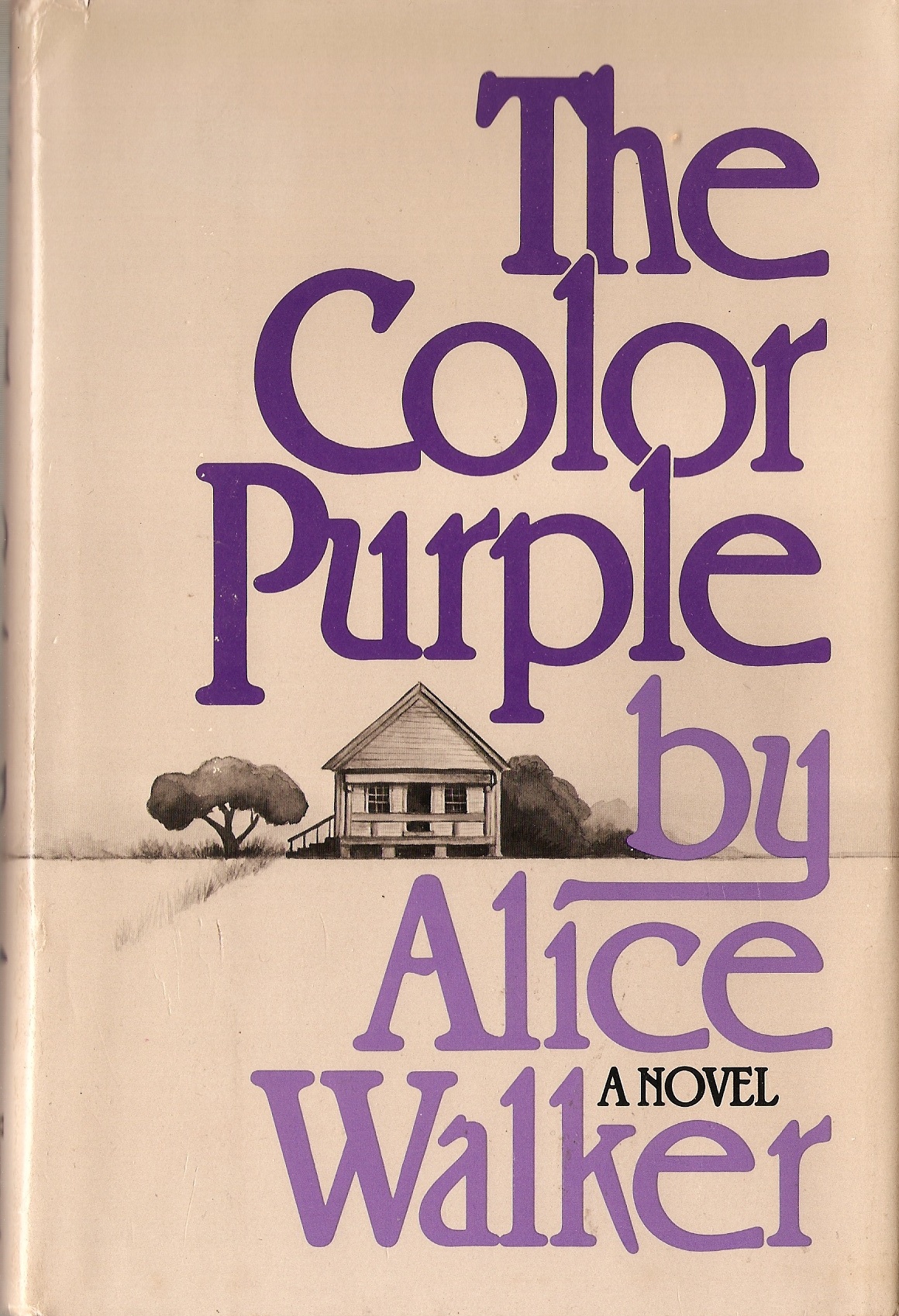
The Color Purple by Alice Walker

I’m thinking about a conversation I had recently with a 21-year-old male student I will call “B.”

B had enrolled in a senior-level humanities class, Contemporary Women’s Literature. He told me he was excited about the texts, which included some books he had wanted to read but hadn’t gotten around to yet, such as The Color Purple. After the first class, however, he felt wary. The reason? “The professor, I’m afraid she’s some kind of a feminist, so maybe I won’t feel comfortable sharing my opinions,” said B, “Like, she seems the kind who’d give me the stink-eye just because I’m a guy.”

“Did she give you the stink-eye in class today?” I asked. (I know the professor, and I know he was wrong about her.)

“No…but she talked about looking at feminism in ‘the most positive light’ as we read the books.”

“And do you have a problem with that?”

B shrugged. “I have four sisters,” he said, “I mean, I’m a guy who respects women so much, I always put the toilet seat down! But I don’t know about looking at books from a feminist perspective…”

I asked him if he could define what “a feminist perspective” means. The short answer is that he didn’t really know, but he hemmed and hawed about “not liking men” and “seeing all masculine stuff as basically bad.”

“So it seems to me your professor was acknowledging that many people have the impression that feminism is somehow a negative thing, and she wanted to make it clear she would be approaching it more positively in terms of social change and literature. Do you think you could be falling into the stereotyping fallacy, B?” I asked.

No, he assured me, he had no sense of male superiority and he felt women were equal to men, should be paid the same wages, could do the same jobs—“but that whole feminist thing,” he added, returning to his earlier vague objection, “I mean, you’re not a feminist, for example—”

Good thing I didn’t have my mouth full of coffee when he said that.

“B, I went to college in the 1970s! I went to liberal arts colleges and took courses in women’s studies in art and literature. How could I not be a feminist?”

He looked taken aback. “But,” he sputtered, “but, you’re reasonable about it…” (“it” being feminism, I gathered).

He was so well-meaning, I almost wanted to take that as a compliment, my being reasonable. How many middle-aged people get called reasonable by 21-year-olds? But, seizing the clichéd “teaching moment,” I asked him from where he might have received ideas of the feminist movement as a legion of self-righteous man-haters and whether this professor’s specific approach to the novels might be a kind of corrective to his or other students’ received notions. After all, I notice that today’s young women often evade being pegged as feminists, even when their values and achievements coincide perfectly with the movement’s aims. He thought about that. And then I had a meeting to attend.

He’s a lovely young man, and I think he will enjoy the class. It may be too much to hope that he felt a bit of perspective shift from our discussion, but one thing’s for sure:

He won’t forget that I’m a feminist! (If merely a reasonable one.)