The past few days, I have been in one of my happy places: the Sandia Mountains of New Mexico, where one of my Dear Ones lives. Cibola National Forest offers alpine grasslands and mostly-pine forests (juniper, pinyon, ponderosa, Douglas fir, white firs, aspen, oaks) and trails ranging from easy walks to steep climbs. Also horse trails. I stuck with the easier walks, but after just a couple days I adjusted to the altitude. Spring is just beginning up in the mountains, but lower down–at 5,500 feet–there were flowering trees and early “ephemerals” and even, in downtown Albuquerque, hollyhocks starting to bloom.
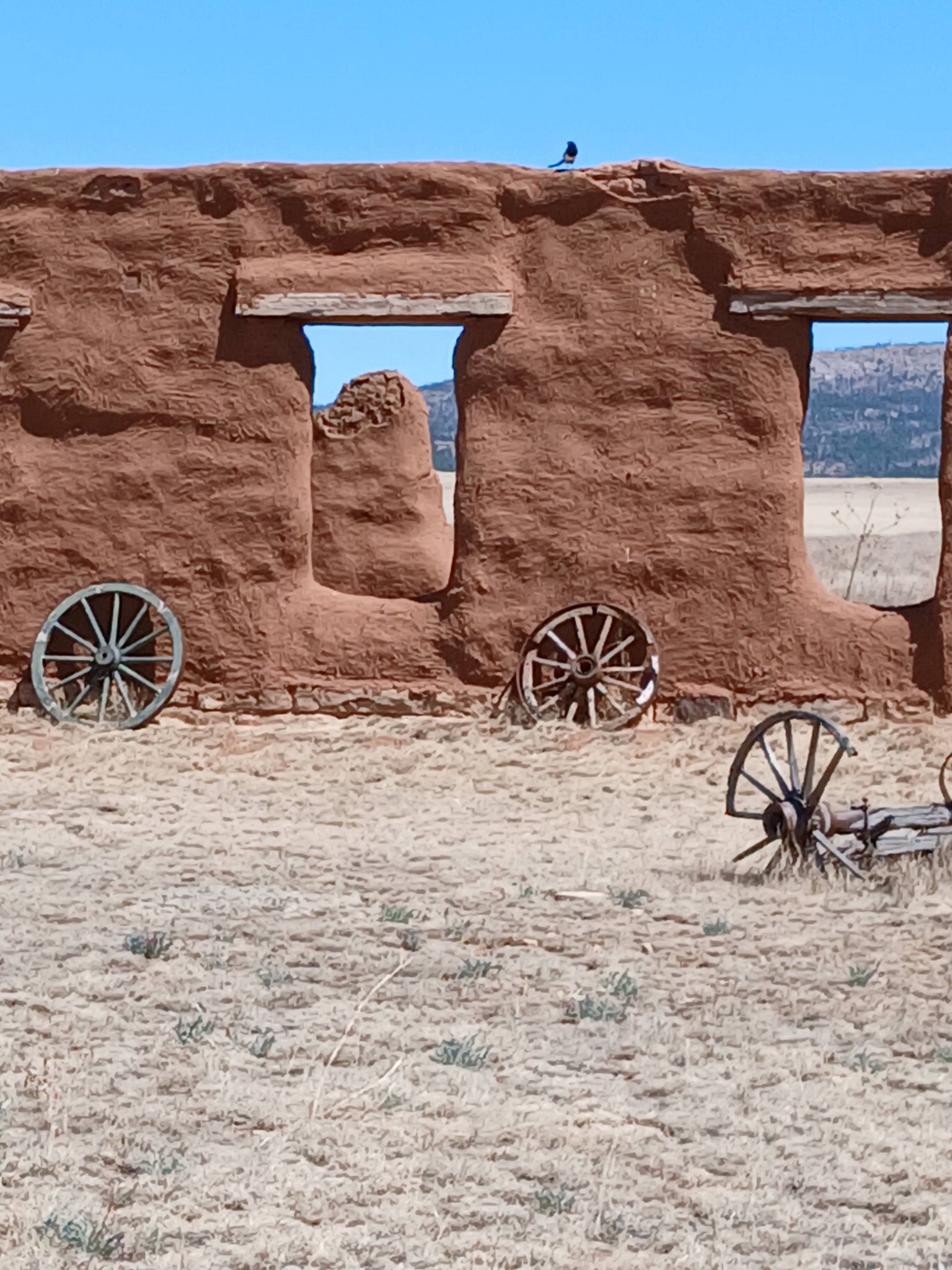
This trip, we flew in to Denver to see as many Colorado friends as we could fit into 4 days (such fun!), drove I25 south alongside the Rockies, and entered NM through the high grasslands, where we saw pronghorn antelopes and wagon-wheel ruts, still evident from the days when the Santa Fe trail led travelers to bustling Fort Union. Now the place is quite empty; it’s even a Dark Skies park, but we were there in the daylight hours. I spied a nesting pair of western meadowlarks and enjoyed listening to their songs. The mountains make their own weather, and the clouds were constantly shifting and remarkable to behold as we drove down the highway. We were lucky to have timed our departure so as to miss most of the truly awful Denver-area traffic. Indeed, our drive southward on Easter Saturday was almost zen-like in its big-sky peacefulness. It helped that we had decided not to listen to the news media…
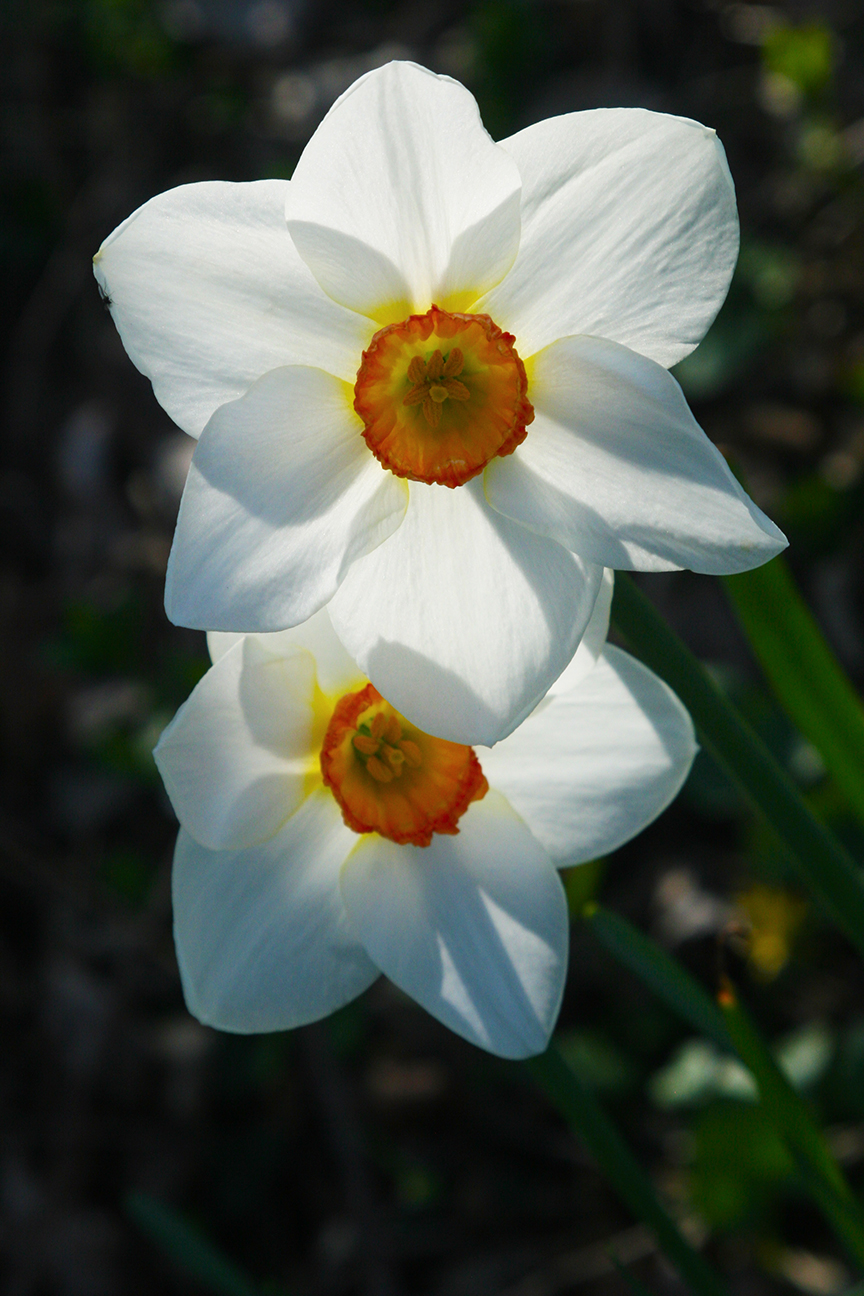
What is it about this high, dry region that has appealed to me from the first time I visited Abiquiu at age ten? As a child, it seemed the place possessed a soulful magic. I was fascinated by the mesas, hogans, adobe dwellings, twisting rivers, desert fauna. But as an adult, I’m a gardener–this is not an easy place to garden. The soft, rainy days of spring and autumn, the summer downpours I grew up with…these are not New Mexican phenomena. If I were to move to the Southwest, I’m sure I’d miss fog and mist and even drizzle, at least sometimes. I’d miss the deep, fertile soil I’ve enriched for 25 years in my truck patch (which I am currently sowing, slightly late, with spinach, lettuce, carrots, etc). Yet even though I have spent the past two days prepping and catching up on my garden, making bouquets of narcissus and hyacinth, and hearing the familiar birds of home, I recognize that this happy place is not my only happy place.
I thought recently of a letter I read written by, of all people, Martha Washington (to her friend Mercy Otis Warren), in which she says, “the greater part of our happiness or misery depends upon our dispositions, and not upon our circumstances. We carry the seeds of the one or the other about with us, in our minds, wherever we go.” She was leaving her Virginia plantation, where her grandchildren were, to go to the Capitol with her newly-elected husband.1
I don’t know that I necessarily have a cheerful disposition, but I appreciate her metaphor of the seeds we carry with us whatever our circumstances. It’s spring in eastern Pennsylvania, and there is much here to appreciate.
~
- Found in American Historical Curiosities, John Hay Smith, 1860 https://www.gutenberg.org/files/7912/7912-h/7912-h.htm


