Science & philosophy

The small, religiously-affiliated university at which I work graduates, percentage-wise, a large number of baccalaureates in the sciences although it offers a liberal arts-based core curriculum. How does that affect what coursework students must do? For starters, two Theology courses and one Philosophy course are required for graduation.

Three critical-thinking method, scholarly courses ought not to be more than a student in the sciences–or any other discipline–can handle; but I hear a bit of resentment among the undergrads. They question the necessity of abstract ethics classwork, wondering how such material will be applicable to a fast-paced, technologically-advanced, science-oriented career or life. Philosophy doesn’t seem to be a skill set to them.
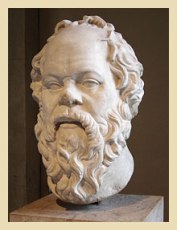
SocratesWhile I fundamentally disagree, I take their point. With so much new information coming at them, info-savvy young people might well feel skeptical about what they can gain from reading texts by Plato, Aristotle, Augustine, or Aquinas.

Philosophy has been around for millennia, though; empirical science as we know it–with electron microscopes, satellite-mounted telescopes, petri dishes and x-rays–is brand-spanking new by comparison. The techniques we use today seem concrete and tool-like rather than theoretical; yet as every real scientist knows, the only way developments occur is through hypothesis–theory–claim–assertion–question–pushing the envelope of the known.

Which is what philosophers have been doing for thousands of years.

The budding scientists and medical-studies researchers I encounter seldom realize that without philosophy, science would not exist. Philosophers asked the “why” questions, came up with theories and categories, tried to see into a future that might someday have the technology to confirm or refute the theories they came to solely through human observation and deduction. Problem-solving skills. They were the scientists of their day, and the methods of thinking they came up with are those that contemporary scientists in all disciplines continue to employ.
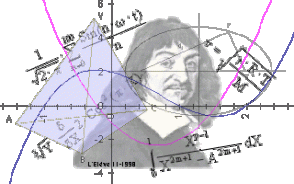
http://www.isys.ucl.ac.be/descartes/images/Descartes.gif Descartes

Descartes, 1640s

A wonderful book on the way philosophy developed into biology (to take just one of the scientific disciplines) is Marjorie Grene and David Depew’s The Philosophy of Biology: An Episodic History.

The authors–a philosophy professor and a rhetoric professor–provide a history lesson in science, taking us by steps and by leaps into the development of a scientific (empirical) skill set as derived from insightful cognitive understandings of those Dead White Guys on whose thinking Western philosophy is based.
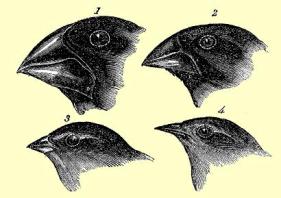
finch beaks

Darwin’s finches, 1840s

Now, I am not an advocate for a strict return to the Western Civ canon; I think university education should diversify into exploring (and questioning) other modes of cognition, culture, and philosophical approaches. Yet it seems to me imperative that students continue to study, and learn to value, the history of human thought. You can be a nurse without a thorough background in Aristotle’s categorical concepts; you can learn the drill about washing hands, donning gloves, and inserting catheters–all practical, concrete skills. You can understand the rationale for all of those skills; that’s true, and practical.
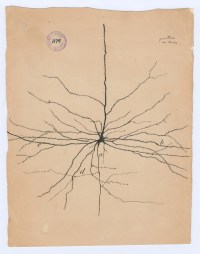
beautifulbrain01-1080x1373

Cajal’s drawing of a pyramidal neural cell, 1913

Nurses today, however, should have the thinking skills to solve unexpected problems rapidly and rationally, which is how things play out “in real life,” to deduce that something’s going wrong even when the readouts look stable, to recognize that the hurried intern added an extra zero to the number of milligrams of medicine prescribed. They need enough background in the history of medical care-giving to question a doctor or administrator when the ethics of a patient’s care seem to be at risk. These problem-solving skills are not only crucial, they are philosophically-based.

~


I will dismount from my high horse now. With all the disorienting information being bombarded at me these days, I need a poem to reorient myself. Here’s one by Mary Oliver.

Snowy Egret (by Mary Oliver)

A late summer night and the snowy egret
has come again to the shallows in front of my house

as he has for forty years.
Don’t think he is a casual part of my life,

that white stroke in the dark.

==

We shake with joy, we shake with grief.
What a time they have, these two
housed as they are in the same body.

 

Coincidence & synthesis

I adore random synthesis. I love how coincident information, ideas, and experiences connect to enrich my understanding or pique my interest.

Today, a friend sent me a link to a chapter from the Dalai Lama’s book and another friend sent me to New York Magazine‘s Science of Us blog to read Cody Delistraty’s piece on the neurology of poetry reading. Meanwhile, I have been cleaning my bookshelves and reading Jane Hirshfield’s Ten Windows.

books1Delistraty’s essay reports on a study (in Germany) conducted by Eugen Wassiliwizky, a researcher at the Max Planck Institute for Empirical Aesthetics, on what happens in the human brain when people read or hear poetry. The Institute has sponsored quite a few studies on the neurological responses to the arts, which offers researchers not just the findings from one area of aesthetics but the opportunity to compare responses across artistic disciplines.


For example:

…[Neurological] responses… seemed to be unique to poetry: Scans taken during the study showed that listening to the poems activated parts of participants’ brains that, as other studies have shown, are not activated when listening to music or watching films.

The authors also found evidence to support the idea of poetry’s pleasure as a slow-building experience, or what they called a “pre-chill”: While listening to poems they found particularly evocative, the listeners subconsciously anticipated the coming emotional arousal in a way that was neurologically similar to the reward anticipation one might get from, for instance, unwrapping a chocolate bar.

Delistraty notes that in this study, “the poetic lines that most emotionally stirred people were also most memorable for them later.”

Our brains ready themselves for surprise, delight, arousal, some emotional leap in the poem–even before the poem ends–anticipation. I know that feeling well. We are anticipating some kind of surprise or delight as the poem unfolds in our reading or listening real-time imaginations: a kind of freedom that we anticipate but cannot expect (the poem may surprise us in ways we had not anticipated; or it may disappoint our hopes).

Hirshfield writes:

On the one hand…poetic transformation occurs by what might be called the paradox of intimate distance. The freedom inherent in art to choose stance, attitude, approach, form, word, is in itself an act of emancipation. When distance increases…we often feel more, not less, because we are able to take in the whole.

What we “take in” as whole includes the phenomenon of reality, even though the poem operates in the imagination–another paradox. Reading a good poem, then, opens consciousness. bkmk-violet

I realize that in the years keeping this blog, I have never yet found a satisfactory understanding of what makes human beings conscious or from whence consciousness originates; but that’s one reason I keep reading and writing, Socratic gadfly that I am. And that brings me to the third random reading that, to my mind, synthesizes well with the essays I’ve mentioned. Here’s an excerpt from one of the Dalia Lama’s books that was posted on Lion’s Roar, a Buddhist-oriented website. In this chapter, His Holiness has been visiting with neurosurgeons and brain researchers at the cutting edge of medical science–people deeply, empirically engaged with the science of the human mind:

~

The Buddhist understanding of mind is primarily derived from empirical observations grounded in the phenomenology of experience, which includes the contemplative techniques of meditation…

The view that all mental processes are necessarily physical processes is a metaphysical assumption, not a scientific fact. I feel that, in the spirit of scientific inquiry, it is critical that we allow the question to remain open, and not conflate our assumptions with empirical fact…A crucial point about the study of consciousness, as opposed to the study of the physical world, relates to the personal perspective. In examining the physical world, leaving aside the problematic issue of quantum mechanics, we are dealing with phenomena that lend themselves well to the dominant scientific method of the objective, third-person method of inquiry… In the realm of subjective experiences, however, the story is completely different. *

~

Part of what makes poetry, or any art form, “work” is that appeal to the subjective. Subjectivity excludes the empirical; there’s always, somehow, more to art than science can explain–wonderful as science is. Delistraty writes, “poetry transcends…methodical scrutiny. It valorizes the unconscious, opening us up to new perspectives; it implies the possibility of unlimited pleasure.”

Hirshfield names that pleasure, that surprise, that alteration within the reader “hope” –a wonderful synthesis.

snowdrops

~

* The Universe in a Single Atom by His Holiness The Dalai Lama; full discussion on https://www.lionsroar.com/studying-mind-from-the-inside/

Aesthetic values

Today, the weather was beautiful; the trees, early-greening, and the gold tassels of oaks shimmering in the sun, and the cherry and dogwood blossoms: beautiful.

I think about how we value beauty. And maybe do not know what it is–or recognize its many forms–as it is, by its nature, subjective.Liz MZ

A friend I knew was physically beautiful. Or was that mostly her generosity and cheerfulness, her sparkling eyes? She had specific aesthetic tastes she followed with delight; but she remained practical, full of humor. Today, there was a poetry reading in commemoration of her life.

A beautiful day, a beautiful event, a beautiful friend.

~

The aged best-beloved who recently departed was also a person who had particular ideas about beauty. She cultivated flowers, liked certain artists, wanted her rooms decorated just so. She had an expectation that she could control her death, too–she wanted it, also, to be beautiful.

She was, I fear, thwarted in that desire.

~

My brother the amateur science historian has taken it upon himself to defend the reputation of Johann Friedrich Blumenbach, a late-Enlightenment scientist best known in the 20th century for coining the term “Caucasian” (though there is some dispute about the neologism). An overview can be found here, but my brother’s argument hinges upon the way the word “beauty” was defined in 18th-century Germany and the ways Blumenbach employed it in Latin in his 1795 masterwork, De generis humani varietate nativa (3rd ed).

BS_Fig2

What do we mean by beauty? Must the meaning hinge upon perspective and culture?

~

There are tumors in the body of the beloved. The surgeon, with his amazing equipment that can take photographs deep inside the tubes and organs of a human being and his unimaginably small and precise surgical tools, shows me “before and after” images.

spc-img0017__large

His enthusiasm enlivens his description of the surgery: Look at these tumors–unusual, hardly see these and I’ve been at this thirty years–but afterwards, very clean. Look here–no sign. Went very well. Beautiful!

Beautiful?

Does he mean the tumors, or his surgical work? In either case–would I define this as beautiful?

~

And a colleague who has had major surgery does a close reading of the (“rather horrifying”) fluoroscopes from the operation and in them finds something beautiful. Something she can create her own art from. Because what the surgeon accomplished was to her mind art; and art is beautiful, though often in a way that isn’t necessarily aesthetically pleasing as, say, a lilac in bloom is pleasing.

lilac

Does it matter–should it–that something is ‘beautiful’ ?

I am asking but I do not expect to find an answer, myself.


The study of–

Earth Day. March for Science. Global weirding. Polar ice caps. Phenology, biology, meteorology, chemistry, zoology, entomology, geology…all the ologies: “The study of.”

Ways we learn about who and where we are and how to live where we are and with those who have been there before us and on whom we–usually without realizing it–depend.

Scientists tend to justify their work by citing how factual it is. They believe it is necessary to have facts. But there are people who question these facts and who peg scientists as dry, heartless unbelievers. How wrong that concept is. Let’s look at scientists as people who study. Observers. Curious, inventive people. People who push the envelope of the “known” and who inquire into assumptions. Science evolved from philosophy, after all.

And there is so much at stake. We are all stakeholders in this environment, in this universe that extends–as far as we mortals know–infinitely. But scientists are working on that.


17498711_10158425599030261_5744494573695525358_n

March for Science–Philadelphia.


So many reasons why “the study of” matters.

The 4 Cs

white

Sometimes, when I am in reading-after-a-hard-day-at-work mode, I feel mentally unprepared to tackle difficult books. On such days it is better to settle on the sofa with a glass of chardonnay and a text that entertains as well as informs. I confess that Ruth Whippman’s America the Anxious: How Our Pursuit of Happiness Is Creating a Nation of Nervous Wrecks had me snorting my wine a few times; her wry British cynicism kept me giggling even when her observations strongly critique some serious aspects of the culture and nation to which I belong.

In her book, Whippman finds understandable fault with the commodification of happiness, but she also threatens an American sacred cow: the concept of individual happiness that arises from our foundation document concerning our rights to life, liberty, and the pursuit of happiness. Implied in her critique of the American “happiness industry” (including positive psychology, attachment parenting, yoga, mindfulness, Facebook…) is that maybe our nativist stance of rugged individualism and the freedom to make money on anything we can capitalize upon, thus pulling ourselves up by our own bootstraps, does not result in “happiness.” (Maybe Jefferson meant something else by that term. We cannot really know.) One reviewer mentioned that it is just Whippman’s “outsider” status as a person not raised in the USA that makes her book so useful. Changing one’s usual perspective, as I constantly reiterate to my freshman students, can hardly fail to be a valuable exercise in critical thinking and broadening one’s outlook.

Here is an observation of Whippman’s with which I heartily agree: “If happiness is community, then a psychologically healthy society takes collective responsibility for the well-being of its most vulnerable members.” I agree, however, because Whippman’s conclusion happens to coincide with my culture, upbringing, or perspective. Like her, I am willing to accept contentment–with occasional bouts of joy–rather than run relentlessly after happiness; and like her I find most contentment among human beings, though I may want them to shut up and just hang out quietly in the same room with me for awhile! Furthermore, it increases my happiness when I know that in my community (or nation), other people are cared for, not just me. In my point of view, happiness–including personal happiness–arises when I know that all human beings have their needs met.

But I recognize that not everyone will agree with Whippman’s, or my, conclusion that community is happiness; indeed, there is a good argument to be made for Sartre’s “Hell is other people,” too.

~

Recent discussions on diversity among fellow people employed in academia (what it appears to mean, what it might include) and reflections on mortality, consciousness, the notion of the self–and spirituality and religion–not to mention science writing on evolution, have pushed me into a deeply introspective mode. Yet I find I want to converse with other people about these ideas, not hole up in my own head; I seek, and have been happy to participate in, discourse with others.

In another word: community.

~

Here’s a paragraph from Daniel Dennett’s Breaking the Spell that I want to share with my students:

If you can approach the world’s complexities, both its glories and its horrors, with an attitude of humble curiosity, acknowledging that however deeply you have seen, you have only just scratched the surface, you will find worlds within worlds, beauties you could not heretofore imagine, and your own mundane preoccupations will shrink to proper size, not all that important in the greater scheme of things. Keeping that awestruck vision of the world ready to hand while dealing with the demands of daily living is no easy exercise, but it is definitely worth the effort, for if you can stay centered, and engaged, you will find the hard choices easier, the right words will come to you when you need them, and you will indeed be a better person. [italics Dennett’s]

Complexity, community, curiosity, contentment. The four Cs?

Oh, let’s add chardonnay. Make it five.  🙂

Problems of moral order

“Authority in the moral sphere is modeled on dominance in the physical sphere. The moral authority of the parent over the child is metaphorically modeled on the physical dominance of the parent over the young child…it is a metaphorical model in which the logic of moral authority makes use of the logic of physical dominance.”   –from Philosophy in the Flesh, George Lakoff & Mark Johnson (p. 301, my italics)

Here is a problem: “folk philosophy” assumes that the moral order is the natural order, a logic much used in the dogma of many Western religions; but Lakoff and Johnson point out how such suppositions lead to “a hierarchy of moral superiority and authority.” Because we are corporeal, physical phenomena in a physical world and our initial human relationships get established through the parent-child model, human beings have a hard time escaping the physical dependence-physical dominance-physical responsibility metaphors, which we incorporate into our languages and philosophies.

There is no reason to refute or escape such metaphors, fundamentally embodied as they are, as long as we are aware of them. For people who accept physical dominance as the natural order without recognizing it as evolutionary and metaphorical, however, the logic that [this metaphor]=Natural Law=Moral Order can be harmful.

And not just to them but to their families, their neighbors, and their societies.

Lakoff & Johnson write, “The consequences of the metaphor of Moral Order are sweeping, momentous, and, we believe, morally repugnant…the Moral Order metaphor gives us a better understanding of what fascism is: Fascism legitimatizes such a moral order and seeks to enforce it through the power of the state” (p. 304).

The authors later note that “the view of moral concepts as metaphoric profoundly calls into question the idea of ‘pure’ moral reason” (p. 330). In other words, pretty much all of Western philosophy since Aristotle. Which makes me contemplate whether that question also suggests there is no “pure” abstract consciousness–whether there is any me (I do not mean Ego here) without the body I inhabit.

content

Then again,  Dürr’s speculation that memories exist as data–a kind of cloud network, as an analogy–and somehow persist, merits some consideration. I find Lakoff persuasive, however. I know he has since added to, altered, and labored on the concepts laid out in this 1999 book.

The foundations and evolutionary development of our families, tribes, and languages create our philosophies; this much seems as certain to me as anything–and thus arrive in our collective consciousness as metaphors, stories, poems.


Spiritual quantum fields?


Herewith, an intriguing paragraph about physics, biology (the brain), and consciousness:

Wave-particle duality, a fundamental concept of quantum mechanics, proposes that elementary particles, such as photons and electrons, possess the properties of both particles and waves. These physicists claim that they can possibly extend this theory to the soul-body dichotomy. If there is a quantum code for all things, living and dead, then there is an existence after death (speaking in purely physical terms). Dr. Hans-Peter Dürr, former head of the Max Planck Institute for Physics in Munich, posits that, just as a particle “writes” all of its information on its wave function, the brain is the tangible “floppy disk” on which we save our data, and this data is then “uploaded” into the spiritual quantum field. Continuing with this analogy, when we die the body, or the physical disk, is gone, but our consciousness, or the data on the computer, lives on.

This comes from a brief article by Janey Tracey on Outerblogs. I spent a few minutes trying to find more on the physicists she quotes, among them Christian Hellwig, also of Max Planck Institute, and Robert Jahn of Princeton. But I have been too busy to follow up by reading papers and books–between semester mid-term and concerns about our Resident Nonagenarian, who is at present “declining” toward death, things have been…challenging. We are experiencing with our best-beloved the waiting period as the corporeal body shuts down organ by organ, bit by bit, consciousness becoming semi-conscious, then intermittent, and unresponsive, as the mind enters that realm none of us can understand.

Life closes in many ways–swiftly, at times, but more commonly in increments. This death is not the one our best-beloved would have chosen (in one of her recent moments of clarity: “This isn’t what I wanted,” she said). Alas. The slow, to all appearances agonizing, shutting-down toward death probably rates low on most people’s desires list.

The Rolling Stones warned us you can’t always get what you want [skip the ad, listen to the rock n roll]. I suppose that song has already been uploaded onto my spiritual quantum field. Not to mention the spiritual quantum fields of millions of humans. If Dr. Dürr’s speculations are correct, that may mean Mick Jagger, Keith Richards, et al are among the immortals already. And while I am mentioning this possibility with a sense of humor, I do ponder the interesting concept of a quantum code that encompasses human memory-processing, experience, and mind. It seems to be distinctly likely that consciousness is a tangled hierarchy.

Tangled hierarchy as in strange loop, or paradox, explained in Goedel’s Incompleteness Theorems. Douglas Hofstadter, trying to get his mind around the problem of consciousness, suggests that such a “flipping around of causality” appears to happen in minds possessing self-consciousness. The mind perceives itself as the cause of feelings, thoughts, etc. Our 20th-century scientific models posited that feelings and desires are caused solely by the interactions of neurons.

Though maybe quantum theory and biophysics and 21st-century neurological psychology studies will indicate we are still pretty far from the Whole Story.

Meanwhile, one story of one person draws nearer the close. No–that is not the case. The body will die. Her story–her many stories, told from many perspectives, her paradoxes, her own strange loopiness–91 years has only been the beginning.

300px-magrittepipe1928lacomuseumart

Rene Magritte “The Treachery of Images” 1928. Los Angeles County Museum of Art


Metaphor & mind

In a recent New Yorker article about the trial of Charleston church shooter Dylann Roof, Jelani Cobb reports that during the lead prosecutor’s presentation

Roof’s mother sank down on the bench as he delivered his opening statement, which contained details of the crime that had previously been withheld from the press. At a certain point, she slumped over. It seemed for a moment that she had fainted, but she was taken to a hospital, and it was later learned that she had suffered a heart attack. She survived, but did not return for the remainder of the trial.

In her situation, I might have had the same response. How metaphorical: the heart revolts from within–an embodied reaction. When I read about this incident, I thought of cognitive scientist/philosophers George Lakoff and Mark Johnson, who have been pioneering the concept that the mind and body evolved together and cannot be separated through the literal, analytical, categorical approaches of classic Western thought.

Languages the world over use body-based metaphors and gestures that reinforce how our  minds are integrated with and connected to our human bodies–we intuit from the gut; a situation makes our skin crawl; we place hands over hearts to demonstrate love, loyalty, compassion. Medical science confirms what people have long understood, in a “folk physiology” way, for years: emotional and intellectual stress has physical expressions and repercussions.

Lakoff and Johnson have been investigating such universal human phenomena since the 1970s. Their work has implications for a wide range of endeavors from artificial intelligence to brain trauma. In 1999, when Philosophy in the Flesh was published, they said Western philosophy needs to retool its thinking from the ground up, the ground being the body itself.

Reason, they assert, is as embodied as emotion; and their argument that intellectual functioning arises metaphorically through the physiological experiences of the (human) body is persuasive and extensively documented through research, particularly neurological research. Exactly where what we term “consciousness” arises may never be determined, but phenomenology, Taoism, and empirical science converge with what we are learning about synapses, cells, hormones, and the neural network to suggest there may be an answer as to how consciousness emerges; and that answer is likely to be biological.

brain

~

The brain, the heart, the entire bodily system under emotional, mental, psychological duress, the conflicting moods of love, grief, anger, fear, and a chasm of misunderstanding; the terrible awe of disbelief–an embodied self might well collapse, physically, literally, under the metaphorical strain.


Moment for beauty

Bill Lantry over at Peacock Journal has been endeavoring to continue our appreciation for the beautiful. I’m pleased that the editors chose three of my poems for the journal, which is a rotating online site, well-archived, and quite lovely.

dirk-van-noyhuys-scaled

Dirk Van Nouhuys–photo

Here are the poems:

Peacock Journal–Ann E. Michael poems

Please explore the site further. Yours, in beauty.

Knowing the mind

I am reading an unusual pairing of books…Joseph Fins’ Rights Come to Mind and George Lakoff & Mark Johnson’s Philosophy in the Flesh. One is about traumatic brain (and to some extent, spinal) injury and the differences between minimally conscious states and persistent vegetative states, and what we know–or mostly, don’t know–about the brain and its ability to recover or reorganize (see also Will Storr’s article from 2015 about some recent medical discoveries in neurology).

The other book is an inquiry into how Western philosophy may be seriously challenged by scientific, empirical findings about the embodiment of the conscious self. Then, after suggesting that neural pathways help us to create abstract reason–largely through metaphor–he asks whether we can adequately understand the world through science alone!

Fins’ book is not elegantly written, from a literary standpoint; but he raises hugely important questions about consciousness, healthcare decision-making, medical institutions’ and physicians’ difficulties dealing with how to measure consciousness and brain activity–to determine who may be “locked-in” or who is minimally conscious, or which patients will never recover any conscious neural activity again. Fins details the agony of family members making impossible decisions in a medical system that often views brain-trauma victims as medical failures when the patient does not recover quickly enough; he asks us: by what measure is quickly-enough? (Usually, as determined by a health care insurer…alas, my family has been snarling with too-general insurance categories lately, so I am sympathetic to Fins’ perspective).

These are tough areas to investigate, and his argument is that physicians and researchers have not spent enough time investigating them. He also asserts that this would not be a waste of money on irreparably-injured patients, because we can learn much about the brain’s capacity to heal through observation, therapy, and scans of such people. He takes pains to be certain his readers recognize how much remains unknown about the brain and human consciousness. (Here, I refer my own readers to Douglas Hofstadter’s book I Am a Strange Loop).

In the Storr article cited above, Greg Downey, co-author of the blog Neuroanthropology, cautions: “People are so excited about neuroplasticity they talk themselves into believing anything.” And it is true, there’s a chance of false hope and huge disappointment here. But the brain does exhibit an astonishing ability to rewire itself–in the body.

Which brings me to Lakoff & Johnson’s text. Lakoff calls himself a cognitive scientist, not a philosopher. He says, “In 1978, I discovered that metaphor was not a minor kind of trope used in poetry, but rather a fundamental mechanism of mind.” He and his colleagues have gone on to provide a body of evidence to support this claim that they’ve been working on since the late 90s.

fiber-topography-300x225

neural matrix fiber topography, Johns Hopkins University

~

As a poet interested in neurology and in philosophy, these claims interest me. As a person whose elderly best-beloveds are now beginning to show evidence of significant cognitive lacunae…or “decline”…I am interested in losses of neural plasticity, or perhaps a misfiring in the processes of rewiring. The evidence of such losses are, indeed, embodied. Gaps in the ability to recognize metaphor or analogy appear. On a recent visit, the nonagenarian said, “I can no longer seem to say any of the things I want to say, that I hear in my head, but can’t…can’t seem to…make. Make into the world. Do you know what I’m saying?”

~

A word is dead
When it is said,
Some say.
I say it just
Begins to live
That day.

~ Emily Dickinson