Anticipation

February’s coming to a close, and the forecast indicates a chance of snow soon–but the gardener feels stirrings of approaching spring.

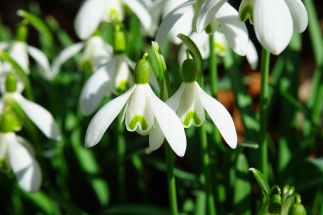
Time to buy seeds, order supplies, plan the garden. Time to mow the meadow before the ground-nesting birds get started on their spring dwellings. Last night the temperatures went well below freezing, but the winterhazel has bloomed. Snowdrops push up from leaf litter: a glimmer of white petals still held close to the stem. Waiting for a string of warm days to open up for the early pollinators.

flowers plant spring macro

Photo by Pixabay on Pexels.com 

Indeed, the days lengthen at last. Next week marks Spring Break for my college, and with a little more flexible time available, I hope to pin down my garden plans. Each year, I try to incorporate something innovative in the small patch of (mostly) vegetables. This year, I’m tempted to try short-season artichokes.

Thinking about the garden energizes me, gets my creative side jumping. It’s partly the anticipation–will this plant emerge, grow, thrive, fruit? Will voles and insects and viruses attack it? Will the weather cooperate? For example, I’m glad I did not plant potatoes last year–the weather was too wet. Should I take a chance on potatoes this year? (Oh, those tender new spuds lifted from the warm soil in August…)

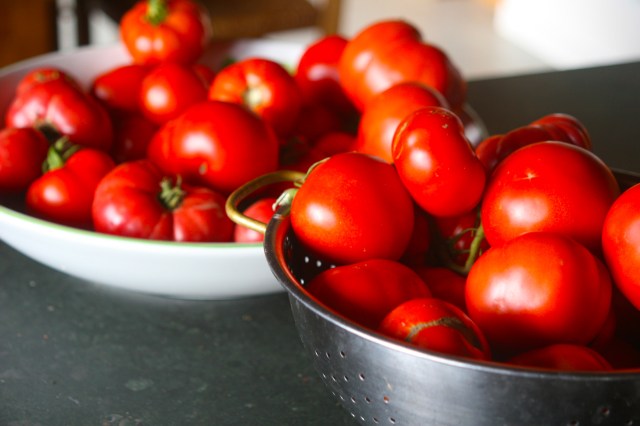
And tomatoes! So many varieties from which to choose.

IMG_1753

Bounty (our own, in 2015)


Anticipation feels different from expectation, though the two are related. For me, at least, the connotation of the first is more open-ended. Anything can happen, though let’s hope what happens is good. Expectation seems more results-oriented. I am not a results-oriented gardener; I like surprises, I appreciate the education I get even from failures.

Come to think of it, I could describe myself that way as a writer or poet, too: not results-oriented, more intrigued by the things I learn when I work at the writing.

Even when the results do not pan out, even when I finally must give up on a poem that is not working, I learn a great deal about where and why a particular approach fails. This is why writing requires practice, patience, and time to analyze and reflect on what those “results” tell the writer.

Do what works, then push the envelope.

Hmmmm…artichokes in Pennsylvania….

artichoke beautiful bloom blooming

artichoke in bloom : Pexels.com


On revision (again)

iceimageI am going to go out on  a limb here and make a blanket statement: Revision should be every writer’s middle name.

I tell this to my Comp-Rhet introduction to academic writing students all the time, but they have difficulty figuring out how to revise effectively. There are good tactics out there, but they do not work for everyone; how a person thinks and learns and processes information varies considerably. Lately, I have been using a strategy I teach to students writing essays to revise my poems. I ask myself: how is this poem organized? Is the structure working with or against the poem? Too predictable, or not predictable enough?

Just as in a well-wrought prose piece, a poem’s obvious and underlying structures matter a great deal in how well it “works” for a reader. It’s also an aspect of writing that people tend to overlook, so analysis of structure in the revision stage can be useful.

Another revision strategy I have been mulling over recently coincides closely with what Grant Clauser describes in this post, The Poem Is the Question. He writes:

I’ll scrounge around in the poem to try to find what it’s asking. If I figure out the question or the motivation in the poem, then I’m better equipped to solve its problems… Sometimes it helps to actually put a question in the poem–either as a crutch that you’ll eventually remove–or as a permanent part of the poem. A question is a pretty interesting part of speech in that it’s one of the few that almost always demands a response from the reader.

I have found myself going back to a draft and asking, “What got me going on this poem? Do I even recall? Is the impetus an interesting one? If not, can I change it?” Clauser suggests a more specific kind of investigation, and it’s one I have been employing today (snow and ice out there and the roads are lousy, so the campus is closed–hooray for a half day of unexpected free time).

Lesley Wheeler has also recently blogged about revising. She observes that the word revision, which places “emphasis on ‘looking anew’ doesn’t entirely capture” the process of late-project revision. She’s listening to her own words aloud as she revises…another approach that has worked for me.

Maybe the month of February calls to us as a quiet time of yin creativity, which is a way of looking at revision as an inwardly-focused energy–as opposed to marvelous bursts of creativity from inspiration or the much-vaunted Muse. The lunisolar calendar used for centuries in Asia calls February the first month of spring (立春  lìchūn)! I had better keep at the revising, therefore. Before I know it, yan energy will return with the start of the gardening season in eastern Pennsylvania.


Discomfort

It’s important, I think, to experience discomfort–it means I am facing a new task, a new perspective–that I’m learning something. I tell my students that if they are totally comfortable with the concepts in their coursework they are not learning anything yet. Education does not come without risk, whether the risks be physical, social, emotional, or intellectual. When we feel uneasy, it may mean we sense danger or sense the presence of someone manipulative, dishonest, or unkind. It may, however, mean we are simply “outside of our comfort zone.”

Tony Hoagland‘s poems offer examples of how we learn through leaving our familiar attitudes. Daisy Fried’s insightful 2011 commentary on his poem “The Change” notes the need for such uncomfortable moments. Poems Hoagland wrote as he headed toward his death from cancer at age 64 do not shy away from making the reader feel awkward, unhappy, or–in some cases–relieved, even glad. It can feel wrong to acknowledge relief as part of death. That recognition tends not to follow U.S. culture’s social norms.

I’m not claiming all good poems rile up discomfort; some poems offer joy or embrace a comforting openness; and, as readers bring their own differing experiences to the reading of a poem, the same poem that discomfits one person may appeal beautifully to another reader.

This post came about because I feel I have come to a period of discomfort in my work, and it troubles me but in a good way. I would rather feel discomfort with my writing than disengagement with it. Disengagement is writer’s block, which does not describe where I am at the moment. Instead, I feel rather as I did when I began to write and revise using formal patterns. My written expression up to that point had all been in free verse or prose, so adapting to villanelle or sonnet structure or sapphic meter seemed risky, difficult, “wrong.” Wrong for me, for the writer I believed I was, for the writing voice I had developed for 20 years.

And I was wrong about that, too! My initial discomfort aside, I learned so  much about poetry, including about my own style, through the practice of formal verse. The wonderful online journal Mezzo Cammin (formalist poetry by women writers, edited by the amazing Kim Bridgford) has published several of my poems in the past. Now, two more of them! Please click here.

~

9780399590344


Sarah Sentilles’ book Draw Your Weapons elicited discomfort in me but also marvelous connections (she and I have read many of the same authors). Her observations about art, violence, pain, and language weave in and through stories of a soldier-turned-artist and a WWII conscientious objector.

Between the development of these men’s stories, Sentilles cites research, philosophers, artists, and personal experiences and forces her reader to recognize how even the language we speak is complicit in accepting violence as a given rather than as something that human intention and action can change, if slowly.

I finished reading this book two weeks ago and am still mulling it over, returning to passages, marking some of her sources as “to-read” for myself.

It’s possible that Sentilles’ text in some way stirred up my discomfort with my own work.

And that would not be a bad thing. Getting out of the familiar is not only how learning happens; it’s how creativity happens.


Remembering joy, redux

This weekend, I am trying to concentrate on poetry-wrestling, herding poems, culling and grooming and all that. So–less time to reflect on writing my own blog posts.

However! I follow many poets and writers, and one or two philosophy and science blogs, would like to direct my readers to two writers who responded to Mary Oliver’s recent death--both of these poets commented on Oliver’s reputation as a nature writer and a poet of “joy.” Reputation isn’t the same as analysis.

Here is Grant Clauser, wondering whether it will be possible for him to write gladness into his observations (which are quite keen and worth reading).

And here is Catherine Pierce, a poet much younger than I who admits to her own prejudices when deciding which poets to read–which poets are “worth the effort” of reading (ie, which writers teach us most about life and about poetry-writing).

The death of a beloved animal companion some years ago took me to Oliver then. And in the sorrow, I recalled the gladness of having that dog in my life.

“Nature poets” can be fierce, asserting the need for stewardship of our blue planet; poets who write happiness well understand–and convey–that pain and sorrow remain our companions in life. That does not mean a focus-on-the-positive Pollyanna attitude. No–to compose poems that show us we have every reason to love what we encounter takes bravery, because we so often fear what the world offers. To do so takes deep acknowledgment of suffering, not just a glancing nod, but compassion. The poet may not “behave well” in his or her own life but has the practiced gift of observation and enough craft to show the reader difficult perspectives.

Sometimes, gladness and optimism and beauty get obscured by experience and griefs. Next time that happens, maybe turn to poems?

All things bright & beautiful

Observations

My brother, whose avocation is science historian and whose papers I often proofread, has acquainted me with the 18th-c. comparative anatomist Johann Friedrich Blumenbach. As often occurs when one becomes attuned to new knowledge or focus, I suddenly seem to find Blumenbach’s name or theories “everywhere.” Mostly in books, of course, but also in a natural history museum where I came face to face with a trilobite that bore his name. I have also been reading Andrea Wulf’s book on Alexander Humboldt, The Invention of Nature; Blumenbach was one of Humboldt’s professors and influencers.

calymene blumenbachii

Wulf’s book begins as a biography of Humboldt but closes with several chapters on others who were inspired by his work; she makes the claim that Humboldt’s ideas about the deep connectedness of everything on earth laid groundwork for environmentalists and the discipline of ecology. Indeed, Darwin, Thoreau, Marsh, Muir, and many others found his texts revelatory and transformative. His writing is supposedly poetic and emotional–he did not think the earth and its denizens deserved less than awe and appreciation. Even though his books are packed with measurements, comparisons, careful botanical descriptions, and minute observations of practically everything he encountered, he allows space for admiring the view. Or, so Wulf’s book says. Now, I suppose I shall have to do a bit of reading Humboldt!

~

Along these lines, the lines of the natural world’s connectedness and relationships–ourselves among these, despite our frequent destruction of them–I find myself thinking of the recent death of poet Mary Oliver. I so admire the work and the woman, or what little I knew of her from a few appearances and through friends who studied with her. My social media feed has been alive with tributes, postings of her poems, and some critique about her standing as an American poet, as if that would matter to her (I doubt it would).

I can just make note that her poems have encouraged me to continue to write about nature, even when I’ve been told nature poets are unfashionable, uninteresting, or unnecessary. Her work taught me how to observe closely, like Aristotle at the tidal pools or Haeckel peering at radiolaria. First notice, listen; then describe, then try to obtain more information, and all the while percolate what experience has created within the observer herself. Maybe nothing earth-shattering comes of the process, but sometimes  there’s a poem…

Here’s one of Oliver’s early poems (from Twelve Moons, 1979), one readers are less likely to find in all of the tributes to her but which offers a sense of how well-observed–for all their ‘simplicity’–her poems are.

Buck Moon–from the Field Guide to Insects

Eighty-eight thousand six-hundred different species

in North America. In the trees, the grasses

around us. Maybe more, maybe

several million on each acre of earth. This one

as well as any other. Where you are standing

at dusk. Where the moon

appears to be climbing the eastern sky. Where the wind

seems to be traveling through the trees, and the frogs

are content in their black ponds or else

why do they sing? Where you feel

a power that is not yours but flows

into you like a river. Where you lie down and breathe

the sweet honey of the grass and count

the stars; where you fall asleep listening

to the simple chords repeated, repeated.

Where, resting, you feel

the perfection, the rising, the happiness

of their dark wings.


Her poems are not metaphysical by any means, but Oliver is avowedly spiritual, which is not a fashionable thing. I am not spiritual, but I have always respected that in her. May she rest in the perfection and the happiness of those dark wings.


Creative publishing

Poetry and publishing: two topics that seem diametrically opposed, if you look at them under the perspective that’s the norm in the USA—that of business, capitalism, popular culture. Shake off that norm, however, and publishing can be re-imagined as aural/oral, visual, textual, cinematic, digital, interactive…who knows?

When a reader begins to deepen her understanding of creative literature, she will also find it necessary to widen the concept of publishing. Some folks say this is a new world. Or they’ll claim things were better in the old days. Curmudgeons and prejudices abound.

In my lifetime, I have observed and been part of significant and constant changes in what constitutes publishing, from Linotype to Huffpost. Recently, I participated on a panel of poets talking to students who have just begun an MFA program. The panel was a discussion, but it jogged reflections on the process of getting poetry to an audience. So here’s a compressed version of getting poems published, as I experienced it.

~~

I began to submit my work in the very early 1980s to the indie-publishing journals which were extant at the time: photocopied, stapled zines with print runs of 300, or maybe just 150. I was new at writing and aware that my work wasn’t ready for Ploughshares or Poetry and the so-called top-tier journals I purchased and read carefully and tried to learn from.

As a 20-year-old woman, I was not exactly full of self-esteem. Why did I submit at all, when I knew my poems were juvenilia? Well, I know that now…at the time, let’s say I knew they weren’t up to the work of Elizabeth Bishop or Audre Lorde.  The reason was mentorship. I had two good friends who encouraged me to send work out but to be realistic. To read the journal first and analyze my work in comparison to what appeared in the magazine. Good advice—and let me tell you how much harder that was in the years before the internet! As I lived in New York and Brooklyn and Philadelphia, however, and it was the 80s, there were good independent bookstores to browse, and good libraries. And there was Dustbooks.

So analysis was crucial, not just for deciding where to submit but to learn how to be a better writer. It was important to compare, to take apart, to hear meter, to recognize rhythm and consonance and the fabulous image and the fresh metaphor, to say how does that writer achieve what she does and can I learn it? Without slavish copying?

Damned difficult. But thanks to publishers, at least the materials were available. If we hadn’t had poetry publishers, it would have been even harder to learn the craft; and I’m not the sort of sui generis writer who just creates out of genius. I had to study, practice, revise, and learn the hard way. Alas.

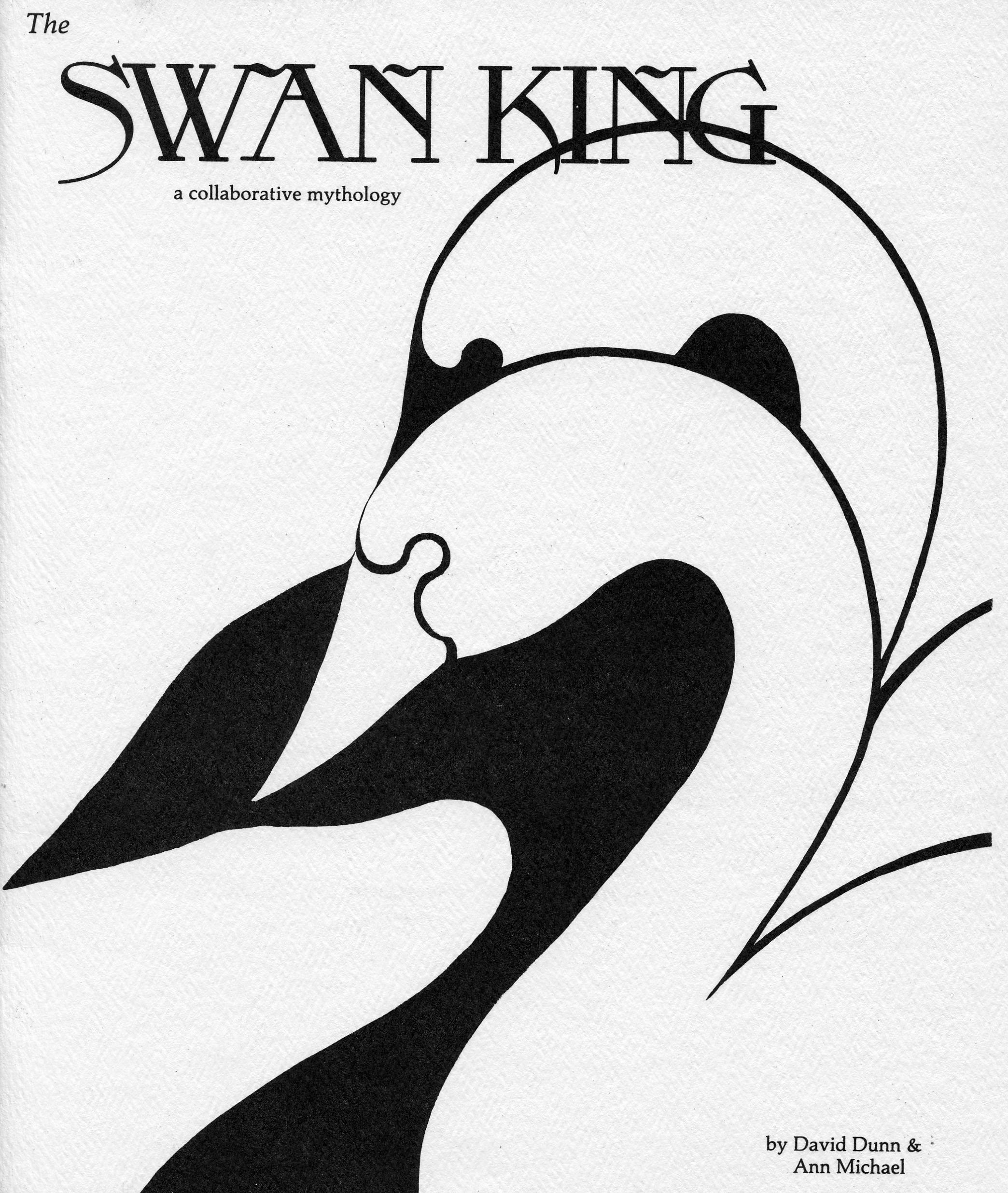
In the later 80s, I started doing some editing and publishing of other people’s work. My dear friend, David Dunn, and I had a small press that put out two broadsides and four chapbooks. Taught me a great deal. I helped to edit a Xerox-zine in Philadelphia in the 80s. Meanwhile, I kept getting work into small press journals nationwide, mostly these photocopied deals with tiny readerships; but the minor successes kept me going. After awhile I had enough hubris to try the better-recognized journals, with some success. This is how it works: persistence, but not bull-headed, blind persistence. One persists through the learning process; revises, practices, finds trustworthy people for feedback.

My sister, my spouse, and I all have worked in the publishing business-as-business, in how-to and B2B magazines; I was a typographer, proofreader, copyeditor, writer, indexer. All of that background was valuable in its way and never kept me from pursuing creative work. So I did eventually go for my MFA, in my 40s, and I got chapbooks and a collection published at long last in spite of—oh, you know—life.

Because I feel that poetry needs audience, I was early to jump on the online publishing wagon, despite colleagues who warned that it wasn’t really as acceptable a venue as academically-affiliated print journals. Nonetheless I’ve found myself enthralled by online journals, by audio-poems, moving-poems (video), podcasts, blogs. I’ve watched well-respected magazines migrate to the internet. And there are problems with online publishing. I know about them, wrestle with them, yeah—keeps life interesting.

My route has not been the academic route, although I work at a college today; I am more of an outlier. Poets and writers can be nurses, doctors, mechanics, or landscapers, grandparents, people with disabilities, insurance industry managers, post office workers, tutors. Each of us discovers her own process for writing and for getting the poems into the world. Mine is pokey and slow and frequently interrupted, and my next long collection won’t appear until 2021, nine years after Water-Rites, my first. But I feel satisfied with my publishing record, such as it is. People do read my work, which is kind of the entire point of writing, no?

When everything is easy and there’s no chance of failure, life is boring. Writing creatively means taking risks, creating tension. Publishing creatively requires the same things. Risks, imagination, persistence, curiosity, analysis and a willingness to be open-minded. Fun pursuits, but not always easy ones.

Breaking, breathing

For now, I will be taking a break, putting on the brakes, pausing for a breather. Briefly, though! Blogging has been not just a good discipline for writing practice but also for thinking practice. It has offered me a place to “bookmark” books that matter to me and to reflect on my teaching, my environment, my garden, and on The Big Stuff–consciousness, values, aesthetics, culture.

Urged along by other poetry bloggers (see Poetry Bloggers), I have posted 60 times in 2018. I felt quite disciplined about that feat until I looked at my WordPress statistics and learned that, for example, in 2014, I wrote 74 posts. This year I was no more or less active than usual (say the statistics). My average number of posts per year over the decade is pretty close to 60. Respectable enough–there are other things to do.

The college semester has closed. We are now “on break.” And I want to take advantage of the gap by making a break with our family tradition, just this once, and to relish the pause my job contains when the students are off campus. I’m especially happy to be breaking bread with Best Beloveds this holiday season. Before the year closes, I plan to enjoy long breaths in high altitudes and to look at the Milky Way.

May your breaks and breaths be of the best and most nourishing kinds.


Dave Leiker photo

Manuscripting redux

I have read reams of advice and guidance on how to choose poems for a collection, how to order them, whether to construct an arc in a poetry collection, and so on. I have also had the excellent personal input of good poets and mentors in the process, all of which leaves me deeply grateful and still stumbling when I once again begin the process.

One challenge is excess. I have put off revising for collection for a few too many years, and now I need serious critique and culling; thus, I didn’t know where to begin (as I mentioned in an earlier post). Given a problem, however, creative people tend to develop a method. I chose the simplest one I could come up with: start by pulling all the published work that is not in my previous collections, and see what happens.

What I will discover–in fact, in the early process, already have noticed–is that not all work accepted for publication in a poetry journal reflects my judgment of my strongest poems. Then, too, down the road I will pull some good poems from the evolving manuscript because they do not play well with the others…that is, in terms of tone or subject. As I add things up, I’ll begin to see what might be missing or needed, or I’ll be reminded of an unpublished piece that ought to be included.

This work is exciting. And it takes weeks or months. It will change; my feelings about what I want the collection to say will change.

And then the reading will begin. I will read and re-read the book-as-it-exists and ask generous friends to read and critique the whole.

If I were a more ambitious and organized person, I might approach the manuscript process differently–certainly sooner, and possibly with more of a projected arc in mind from the start. I know that putting together another manuscript will be yet another learning experience, different from chapbook-writing, different from the past books I have composed. The poems differ, too–of course! My perspective, my physiology, my experiences, even my environment, though I have lived in the same house for 20 years.

At this stage, a month or so into the process, a coherence begins to occur. Yes, a book exists in the piles of poems. Probably two books, in fact–but let me begin with abundance (or perhaps, with diminishment) and proceed from there.


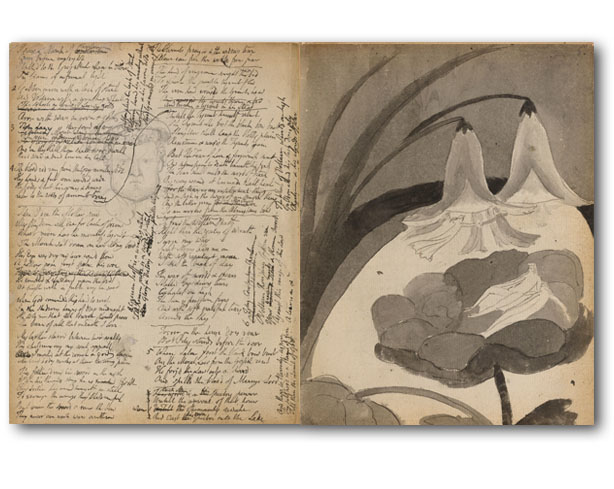
http://www.ebooktreasures.org/william-blakes-notebook/
[Not my manuscript…William Blake’s]

Epistle as writing practice

I am often asked by my peers why “young people” do not come to college with exemplary writing skills. Because I feel protective of my students, I wish to defend them–not always an easy task. My first response is that they have not had enough practice in writing to develop adequate fluency, and I generally follow that by admitting that many of my students have never really read books for leisure or out of passionate interest and that they are quite adept at other forms of communication (social media, looking at you!). Last year, I decided to spend one class period on epistolary writing. I recognized that one way I developed confidence in expressive writing was by writing letters. Lots of them. Every week to my parents, almost as often to my sister, to my best friends, to sweethearts, grandparents, anyone I cared about. Probably 30 years of letters, which later morphed into lengthy emails as the technology developed. Letters. Who writes them any more? Certainly not today’s college freshmen, if my students offer any objective measurement of their generation. The epistolary mode offers students a chance to exercise the use of second-person as a governing pronoun, a style that formal academic writing shies away from except in certain forms of persuasive writing–the opinion column, for example. Teaching my students NOT to employ “you” is such a constant effort that I thought letting them write letters would give them a much-needed break from prescribed academic conventions and allow them to loosen up their sentences a bit. Before I assigned in-class letter-writing, I asked whether any of them ever writes letters. Not one hand went up. I withdrew from my tote bag a clutch of old correspondence (yes, of course I would be that person who keeps the letters people write to me). After flourishing an envelope–with a 29-cent stamp–I disclosed the contents, a ten-page, handwritten letter from a dear friend. The students audibly gasped. “How long did that take to write?” “Did you read all of that?” Sure! When long-distance phone calls were expensive, letters were social media. We couldn’t just snapchat a photo of ourselves standing on a pile of snow and caption it “Snow!” We’d have to send a photo. Or we’d have to describe without the visual–and this is a practice my students have almost never had to employ. Lack of informal writing practice translates into lack of writing practice, period. I even read passages from three letters aloud, and the students were impressed with the vivid writing…writing by “non-writers.” “You could write like this, too,” I told them. “You just haven’t needed to do it, and therefore you think you can’t do it.” Then I asked them to think of a person, a specific person, and come up with a reason or purpose to write to that person, and then just write. The response was amazing. Some of these students wrote more in 15 minutes than they ever have for an in-class assignment. Most of them enjoyed it! One student even said that “this old style of long form texting intrigues me” and plans to start writing letters to a sibling once a week. Success! ~ Letter Writers Alliance is an informal site promoting the hand-written, postal-mail delivered epistolary correspondence. Members can sign up to find a pen pal or just browse the site for stationery, pens, letter-writing tips, etc.

Keeping the minutes on violence, with Lucille Clifton

Wow. I found this post by Lesley Wheeler worth re-blogging. It hurts my heart that she found so many of her students had experienced this kind of fear and violence in their schools. But it makes me pleased to be a writer if I can be in the company of people like Lesley and her students, facing what is horrible and difficult and discussing and writing about it. And reading, too–reading poems that face the “dark” in human beings can be as liberating and enlightening as reading poems that offer “hope” or balance. The heart does need rest now and then; thoughtful reflection offers more rest than many folks realize. Thank you, Lesley, for being a teacher.

Lesley Wheeler's avatarLESLEY WHEELER

For a workshop on Tuesday, Election Day, one of my undergraduates submitted a poem based on the day he hid in a closet during a middle school shooting. A different student said there had been a shooting in her school, too; another described an active shooter just last week in the high school her sister attended; a fourth said a friend had died in the Parkland massacre. Stunned, I responded with something like, “Are you telling me that four out of the fifteen of you have had a near miss with a school shooting?” Then two more raised their hands. Six.

Gun violence in the US is insanely, horrifyingly prevalent; every new mass shooting refreshes the horror and also increases the number of Americans directly affected. A good friend’s father’s retirement center was recently in lockdown because of an active shooter. And when I described the workshop discussion to a…

View original post 696 more words