Two reams

As regards my recent long weekend assessing and organizing my work, the most startling revelation has been its sheer volume. I keep my printed poem drafts in an old-fashioned cardboard letterhead/correspondence box which holds two reams of paper–1,000 pages–and the box was full. Among poets who experience writer’s block this abundance may seem a problem worth having, but keep in mind two things:

1) This output represents over 15 years of uncompleted, unrevised drafts and

2) Most of the poems are crappy, or mediocre at best.

Apparently I have taken to heart William Stafford‘s advice that if one has trouble with writing, “perhaps you should lower your standards.” *

Abundance is a fine thing, but anyone who has ever cleaned a barn stall or an attic knows that sheer volume does not count for much. And one cannot spin bad drafts into gold without considerable help from supernatural guides or wily trolls, neither of which accompanied me to the cabin.

Rumpelstiltskin-Crane1886

Thus, I had to toil on my own, critique my poems, evaluate which ones have most “promise,” and try to keep myself from throwing absolutely everything into the woodstove. The work required solitude, discernment, frequent breaks for walks, tea, exercise, reading work other than my own, and (eventually) wine.

Also the occasional nap. My brain gets sleepy after awhile.

The outcome? I winnowed, though possibly not enough.  I have begun the disciplined, for now, revision process of the “active” stack of work. It is entirely possible that there’s a collection or two in there, though I will not know that for some time.

It will not be gold, but it will be a vast improvement over the accumulated dross..


IMG_6501

Part of the process…

*In an interview with Bill Moyers, and widely quoted elsewhere
(Dis)order & (dis)comfort

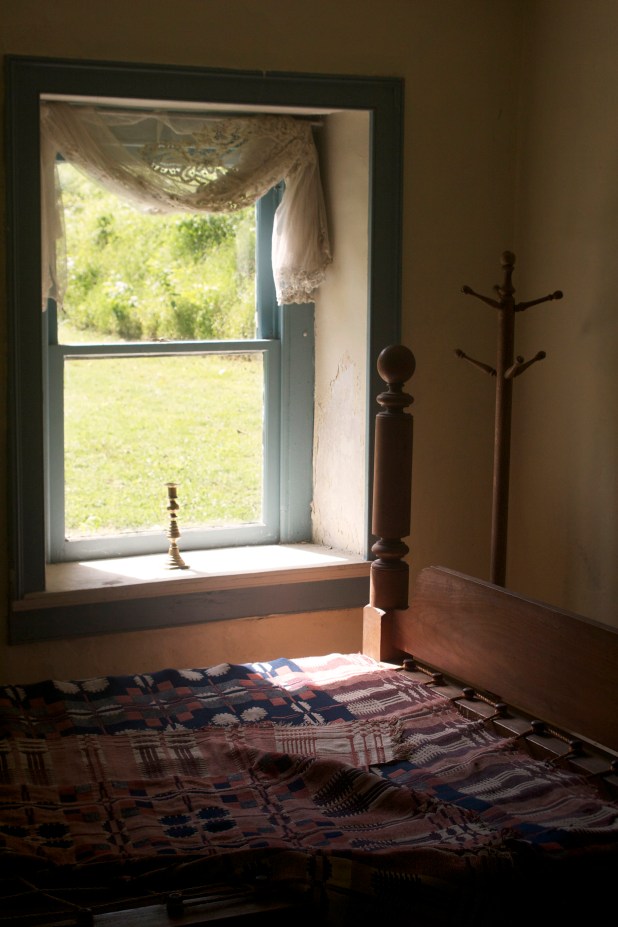
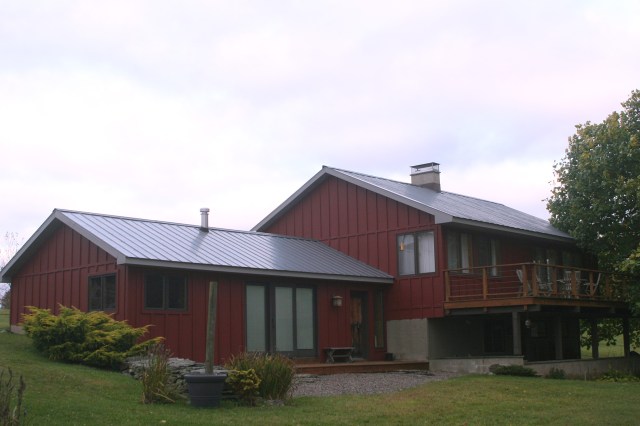
The university takes a long weekend in October; I thought it a propitious time to snare some solitude for writing and revising and thus betook myself and a mountain of my work to a semi-secluded cabin. Designed and largely built by Jack Fisher, the place offers light, comfort, memories, art, nature and spaciousness of environment. While I had no particular plan in mind–in retrospect, possibly a mistake–I imagined these days would act as a mini-writing retreat.

I love the cabin, the memories, the aesthetics of the house and generally I love solitude as long as it does not extend for too many days. The circumstance I discovered once I opened up my pile of poetry drafts, however, led me to one conclusion: I was going to have to organize, read, evaluate, consider, and cull before even getting to the “fun” part of revising. This level of work tends to discomfit me, feels tedious and draining and sometimes fruitless–which is why I have pretty much put it off since…oh…graduate school. Almost two decades.

But I made myself time to be alone and undisturbed, so let my work disturb me as it must. If a writer never allows herself to experience discomfort, she is unlikely to move her work forward in any meaningful or craft-related way.

I do not mind a little disorder in life, but the state of my drafts long ago sailed past disorder and into chaos and redundancy. It helps me to make an analogy to the garden: time to weed, time to save seeds (and label them!) and make notes on what thrived under which conditions and to note where the voles and rabbits are breaching the fence. A realtor might substitute the analogy of “deferred maintenance.” [Yikes!]

If this long weekend turned out to be less full of new work, or of fruitful revisiting of poems to make them stronger–if it has tested my comfort level with my own writing and forced me to face the mediocrity of most of it–that’s fine. The edges are where the interest lies, at the tension between the expected and the challenging. Sometimes we need a little less comfort and order to test the mettle of our creative acts and of ourselves. The days at the cabin were peaceful and full of solitude. I believe they will have yielded, for me, a clearer view of where my work–and I–are headed.

IMG_6484

Silence & solitude

Sara Maitland’s A Book of Silence. James Ragan’s Too Long a Solitude. Jane Brox’s Silence: A Social History. Thomas Merton’s Thoughts in Solitude

Is it just a coincidence, or did I subconsciously start reading books dealing with silence and solitude in the weeks before I planned to spend a few days alone in a friend’s rural cabin? And will the relative silence make my somewhat maladaptiveness to busy environs even worse? For I freely admit that living for thirty years in an area that borders on the rural, and spending so much of my time in the garden, has made me less inured to excess, human-made noise.

Sara Maitland writes, after spending some years outside of London ensconced in a quiet town, that “going to cities, to large parties, or to any place where there are a significant number of loud, overlapping but different sounds remains stressful and tiring at best.” This reaction is not mere “introversion”–indeed, for most of her life, Maitland appears to have been an exceedingly social and sociable person, quick with a retort, response, or witty reply and often in the company of boisterous, talkative people. She definitely cares deeply about relationships and communication, both between close friends or family members and between reader and writer/author. Like her, though more of a shy person in my younger years than she was, I value communicative aspects of conversation and togetherness while finding it harder than ever to live in the midst of noise pollution.

IMG_1997a

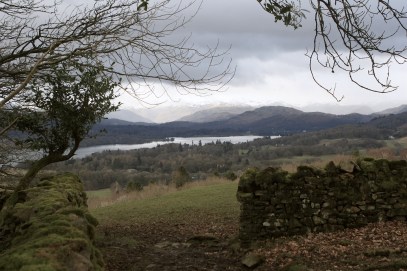
Near Windemere, where Wordsworth trod…

Of course, writing is a communicative act, a form of creating relationships between reader and writer, and therefore may not always or necessarily thrive amid silence, or in solitude, though that Romantic notion remains intact in most people’s minds. When I consider my own work, I recognize the lyric “you” (implying an Other), the narrative action (requiring the behavior of living beings dwelling in the world with Others), and various interactions among the lines that set up relationships that are not only abstract or metaphorical but concrete and physical, even when the poem skates along the reflective mode (how can there be a consideration of  a Myself without an Other?).

So although part of my brief upcoming “retreat” is, in fact, for solitude’s sake–a few days to be alone with my own writing process and make some creative decisions–the solitude’s less urgent than the silence. I’m not an ascetic nor a spiritual seeker, just a writer who wants a few days unplugged (and not entirely so) to mull through ideas and revise some poems. This process seems easier to me when I do not have to deal with anyone’s society, even the companionship of those I love. It’s been quite awhile since I last made this kind of silent time for myself, and I’m curious as to what will result.

Maybe just some naps and daydreaming, which might not be an entirely fruitless harvest.


IMG_6423.jpg


Prose poem, memoir

The prose poem seems a fraught and contradictory thing to its critics, a formless form, different in some way from flash fiction–more lyrical? More imageric? Lacking plot? Years ago, I went through a period of writing them, usually taking on a persona. Lately I find I am writing them again. Sometimes I think I’m writing a haibun, yet there’s no accompanying haiku. But mine do tend toward the lyric impulse.

And here’s a prelude to a prose poem draft, which follows (if you can be patient).

~

Perhaps it was not the most sensible thing to do, given my sore foot, but I had planned a trip to Poets House for a Finishing Line Press-sponsored reading by James Ragan and did not want to forego my visit. Ragan’s poems are lovely and often deep, and he offers a reading in the spirit of a raconteur. All the places I needed to stop were within three blocks of the A train, and therefore the main concern was going up and down subway stairs. It seemed do-able, and it was; though I am physically “paying” for my journey today, it was worth it.

The bus ride to New York and back takes about two hours, during which I read, nap, or daydream. We take the Lincoln Tunnel into town, a route familiar to me for decades, this time evoking memories that have been tucked away for ages.

Of course, some of this draft is invented–when I start writing, I often have no idea where I will end up. This one surprised me.

~

We were children in the years of Sunday drives, burning fossil fuels to tour the countryside and leave the city’s skyline, obscured in puce-yellow, lead-bearing smog, for tree-lined back roads and a picnic lunch. Sometimes over bridge, sometimes under the Hudson. Each crossing tested our bravery: fear of heights, of darkness. We had a song for the bridge which we sang while watching cables’ span. We were too small to see out the windows down to sailboats and barge traffic. The tunnel had no song. We hunched in the back seat, held hands, squeezed shut our eyes, expecting to drown. On the curved ascent in New Jersey my sister chose the house she wanted to live in—many-dormered, stone, with a round tower, it jutted over Weehawken. Once we’d learned to read, we realized it was the town library, which suited her imagined lifestyle. She would choose that even today, retire to live in a library and work part-time in a bookshop. She imagines I will join her there, perhaps I might.

~

Memory to prose memoir to prose poem. Founded on rocky physicality.


weehawkenlib

The Weehawken Free Public Library

Forward

Lately, less gardening and more writing; we have experienced the region’s not-uncommon August/September drought period. My vegetable garden has given me about all it can at this point, so what remains to do is clean up. That’s a job that will have to wait, because I’m processing new poems instead of pears.

I tell my students that writing is a process, but the processing I’m doing now is more akin to the verb form of process, in the sense of “to treat raw materials in order to change or preserve them” (Merriam Webster). That could be another metaphor for the revision process…

Also applicable is the etymology of the word process {from pro “forward” (from PIE root *per- (1) “forward”) + cedere “to go”}.

So, forward I go. More drafts, more changing the raw materials of poems (what would those be? words? ideas? emotions? observations?). More going forward into the whole process. “Without hope and without despair.” (That’s Dinesen by way of Carver.)


index.jpg


Agency

It’s a bad idea to get into gardening if one happens to be someone who requires complete control of things. Nature’s behavior, it turns out, manages seldom to be controllable by human beings. One reason I enjoy gardening is the chance to keep trying a new approach, a new variety, a new method; if I cannot control the environment, I may at least find an adaptation that works for awhile.

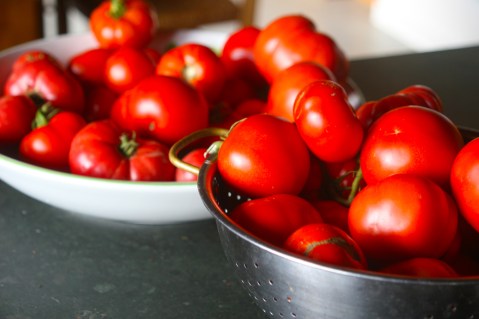
This year, it’s a short-season, baseball-sized melon I’m experimenting with, and potatoes grown in a bag, and hard beans in addition to haricorts vert, and a different set of heirloom tomatoes. The method I developed some years ago to deal with insect-borne and moisture-spread viruses on zucchini no longer works for me, alas. Next year I will try something else–because I do love grilled zucchini.

~

IMG_1753

Bounty

There’s a difference between control and agency, and I’ve been pondering this since the illness and recent death of a long-time friend and fellow writer. Agency, as it has come to be used in psycho-social circles, means having the freedom and the ability to make decisions. It’s not quite the same as controlling–it hasn’t the same aims behind it. Also, agency implies responsibility. Controlling people are more apt to place blame, whereas a person with agency makes choices and accepts the responsibility of those choices.

That’s the sort of person Bill was: gentle, quirky, humorous, exceptionally smart, persistent, and devoted to the people he loved and the causes for which he advocated. He decided what mattered to him, chose the sort of life he wanted to live, and took responsibility for those decisions even when other people might have wanted him to do otherwise. He made, and kept alive, connections and relationships. He worked on being a better self and a better citizen of the world.

When it became clear that two weeks of hospital treatment had made no difference in his illness, he chose to go home under hospice care. I wrote to a fellow member of our writers group that I was a little bit in shock but also unsurprised at his decision. She said that yes, Bill has always believed in agency.

~

Agency is one of those terms, like mindfulness and intentionality, that can be overused by pop psychology and self-help best-sellers until it is nothing but a cliché.  The etymology tells us much, however:

agency (n.)

1650s, “active operation;” 1670s, “a mode of exerting power or producing effect,” from Medieval Latin agentia, abstract noun from Latin agentem (nominative agens) “effective, powerful,” present participle of agere “to set in motion, drive forward; to do, perform,” figuratively “incite to action; keep in movement” (from PIE root *ag- “to drive, draw out or forth, move”).  [Thanks to Etymology Online]


That would be my friend and critic Bill, drawing forth and setting in motion; effective, powerful, someone who could do and incite to action, and make wise and purposeful choices in his life.

Altered perspectives

One of the arguments Arthur W. Frank makes in his book The Wounded Storyteller–and in his subsequent books about “illness narrative”–is that there’s a compelling ethics for medical diagnosticians and caregivers involved in just listening to the other person’s story. The difficulty emerges when the storyteller cannot put his or her story into words or lacks enough objective distance from the illness to narrate the kind of story that others are expecting.

When people’s circumstances push into the chaos realm, they’re in the midst, overwhelmed; few of them can construct a cogent and concise narrative. In their pain, in their grief, everything seems equal–no beginning, no end, all middle.

The listener expects: a beginning. a middle. an end.

The listener expects: chronology. a goal. a desired outcome.

If the listener’s job means determining a course of healing, the listener requires history, onset, comparisons. Truly good diagnosticians therefore need more than sleuthing skills, experience, and education. They need to listen well in the midst of the storyteller’s chaos; Frank calls this listening with.

That often means taking a deep breath and endeavoring to change perspective.

~

[Which, by the way, is excellent practice for poets.]

Tibet-Mountains-Everest-Kailas-Tibet-tours-Tibet-travel-Tibet-trekking-Tibet-hiking-3-of-8-1024x676

Himalayas: view from a high lake plateau (Snow Lion tours)

natural_fractals_tibet

Himalayas from satellite: a fractal view

~
We cannot climb into an airplane and get an overview of a human being’s situation. Nor can we get into another person’s thought processes to determine what’s going on. Listening without rushing the person, without offering advice, without finishing the sentences with what we expect to hear–that’s a hard task.

In a previous post, I tried to replicate what it was I could hear when someone I cared for experienced cognitive damage.

It was very, very difficult to listen. For me, heart-breaking because of my previous understanding of who the person was. It was only in her final days that I started to realize I’d needed to change in my relationship with her in order to get some idea of what she wanted to say. And it was too late, really.

~

As another Best Beloved is now experiencing significant cognitive changes, I want to do better. I need to acknowledge the chaos narrative, the interruptions, the lacunae in the person’s story. It’s important that I develop a new perspective on what a conversation entails, too; my expectations surrounding a conversation no longer hold, and both of us will get frustrated if we stick to former habits.

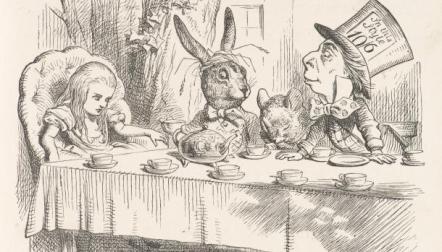
If sometimes a visit feels a bit like the Mad Hatter’s tea party, so be it. There’s a story in that, after all, thanks to Charles Lutwidge Dodgson.

mad hatter tea party tenniel

Tenniel’s sketch for Alice’s Adventures in Wonderland

And, just as an aerial view of the Himalayas alters the perspective of what the mountains are and how they appear, an altered perspective of a loved one keeps the person, as a human being still in the world (no matter how changed), in view. True, perhaps with changed patterns and unexpected gaps that we who love them may grieve the loss of. The conversations may be interrupted and chaotic, or full of long pauses and grasping for words and concepts. It is just a different kind of human communication.

Not what I expect, but what I am given. I’m trying to listen with, before it is too late.

Listen better

Arthur W. Frank’s The Wounded Storyteller, which I’m currently reading, deals with medical ethics, personal narrative, illness, and the community (all of us, really) who may need care, give care, and/or who realize there is a socio-emotional impact when friends, coworkers, and family members become ill and thus require care. A sociologist by training, Frank examines illness stories as testimonies that point to a social ethic and asks all of us both to tell more when we experience pain and to listen better when others are telling us about their experiences of illness.

“Tell me about your despair, yours, and I will tell you mine.”

Mary Oliver, from “Wild Geese

At first this idea sounds unpleasant–one thinks of the stereotype of tedious conversations among the elderly about various surgeries and too-intimate revelations about prostates, livers, stomachs, and bowels (my dad calls these monologues “organ recitals”). That response–evasion, withdrawal, revulsion–is exactly what Frank seeks to change.

But then I consider the way I have heard stories of illness experience from hospice patients. How varied they can be. Some fragmented, some specific, some pious, some stoic, some anxious. And some that are beautiful. These stories aren’t just for (about) the person who has undergone the suffering. They are also for me, the listener. “When any person recovers his voice,” says Frank, “many people begin to speak through that story.”

He later writes:

One of our most difficult duties as human beings is to listen to the voices of those who suffer. The voices of the ill are easy to ignore, because these voices are often faltering in tone and mixed in message, particularly in their spoken form before some editor has rendered them fit for reading by the healthy. These voices bespeak conditions of embodiment that most of us would rather forget our own vulnerability to. Listening is hard, but it is a fundamental moral act…in listening for the other, we listen for ourselves. The moment of witness in the story crystallizes a mutuality of need, when each is for the other.

He would like to see an ethics among medical people and caregivers that dictates not just a compassion for the lot of the ill person but a perspective that the person, as a person, is not diminished by the fact of illness–not made into data, case study, or even into patient or client, any of which reduces the person to a body containing disease or disability. He argues for a full embodiment of pain in narrative as well as in physiology, for only with and through storytelling can we begin to experience the perspective of the other.

I am not very far into the book yet, but I’m finding the concepts relevant to my current life circumstances. I know how deeply I treasure a good listener. So working on listening better, myself, offers more people the chance to recover their voices, to speak through story.

Not a perfectionist

My late mother-in-law, may her memory be for a blessing, spent much of her last decades gardening. I learned a great deal about flower gardens from her, and we discussed cultivars and shade-loving plants and pest control with the sort of enthusiasm that avid gardeners well know. She enjoyed landscaping her place with colors and textures, carefully tracing expected bloom times as well as plant heights and spreads so that the beds produced an ever-changing canvas to delight the eye.

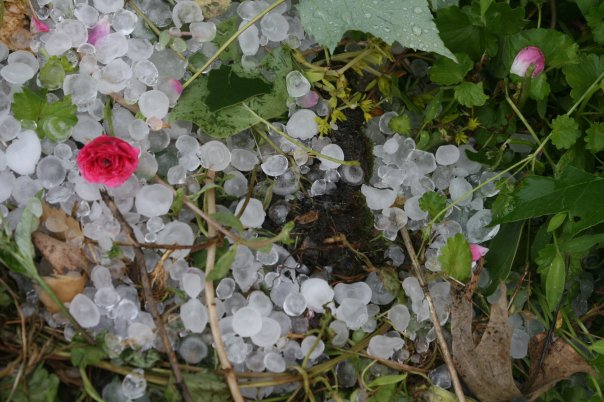
hail and roses

Hail: One of Nature’s curveballs

Except: Nature is always throwing curve balls. My mother-in-law’s gardens were beautiful, but she always eyed them critically. It is true that most gardeners notice what isn’t thriving, where the weeds are, or what has not grown out or bloomed as hoped. That comes with the territory. But the process of gardening is so much more enjoyable, even soothing, when one is not a perfectionist.

Not being a perfectionist myself, I find that time in the garden acts as a meditative oasis. It is part mindless physical labor, part problem-solving, part mindful awareness of the environment. This year, I’m making it even easier by planting fewer vegetables and fruits and more blooms to attract pollinators; I’ve a smaller variety of produce but am experimenting with some new (to me) seeds–a melon from the Caucasus, a few heirloom tomatoes, black beans as well as green ones.

I learn as I go–as I cull and thin, inspect insect damage, note responses to growing conditions. It occurs to me that this activity bears a resemblance to the writing process, particularly when putting together a collection for a chapbook or longer manuscript. In that undertaking, I’m also not a perfectionist; and I should not be quite so quick to gainsay the need for the perfectionist attitude when creating one’s art (as long as it does not lead to fruitless caviling).

But I’m just not constitutionally ordered towards that sort of purist idealism. The best I can do with my poems is similar to the best I can do with my gardens: devote mindful attentiveness to the “product” and try not to worry about eventual outcomes.

“Write a little each day, without hope, without despair.”  —Isak Dinesen [Karen Blixen]

See what grows.

IMG_1547

By July–who knows?


Repetition

Repetition, the foundation of rote teaching and memorization, is a style of learning at which I have never been particularly successful.

Nonetheless, repetition has been useful in my learning process. Close observation reveals small differences in repeated events and refrains of all kinds; what I learn through repeated experience is that each time I see or do “the same thing,” I notice something new. Repetition permits me to analyze, and that is how I learn best.

Here’s an example.

~

Plants, particularly flowering plants, fascinate me. Every year, I find myself heading out to the yard, my camera in hand, to take photographs as the flowers unfold and the insects arrive to pollinate them. Every year. Yet a closeup of a bumblebee in a redbud blossom from 2005 looks pretty much the same as a bumblebee in a redbud blossom in 2019. Or a monarch on a tithonia–one year similar to the next. Why bother? What urges me out when the dogwoods bloom to record yet another photograph of flowering dogwood? How redundant. How unnecessary.

Yet I have learned much, gleaned much, from the process of noticing the buds and blossoms and insects as the days lengthen and then shorten again; the cycle of life a repetition. Each routine event of spring seems new to me after the winter’s rest.

~

The only types of poems I have managed to have some recall for are poems with refrains, and some song lyrics (also with refrains). The ones I have memorized are the ones I have heard and sung along with most often, such as the calls and responses of church rituals and hymns, the record albums I listened to over and over when I was a teenager. Each time I listened, I felt something new happen inside me. It’s the same with my walks in the garden and the woods and hedgerows and the meadow: each year the same, each year new. That kind of teaching, while repetitive, is far removed from rote.