The takeaway

ampersand

so, I did what I set out to do: I exercised the necessary discipline to draft a poem a day during National Poetry Month, and I pushed against my “comfort zone” by publicly posting those drafts as they came to me. Usually I do not share my initial drafts with anyone other than fellow writers in my writer’s group or a few poets with whom I correspond. This was an interesting experiment on the personal level, therefore, a sort of forced extroversion as well as effort in productivity. I now have 30 new drafts to reflect upon, revise, or ignore.

It has been years since I came up with that much work in four weeks’ time. For the last decade or so, my average has been closer to six or seven poems a month. And I would not have posted any of them as they “hatched.” I would have waited until I spent some time with them and figured out how best to say what they seemed to want to say.

That’s not an unwise approach in general; I see nothing wrong with letting poems stew awhile. And quite a few would have ended up in the “dead poems” folder. Nevertheless, trying something innovative tends to prove valuable. The takeaway is that I am glad I finally managed the NaPoWriMo challenge. A few of the poem drafts you may have read here stand a chance of evolving into better poems. Maybe some will end up in a collection (years down the road). That result feels good.

The takeaway is also the realization that I no longer worry about how others judge my poems, the way I did when I was starting out and discouraged about having my stuff rejected by magazines. Not because there’s less at stake–indeed, I feel as invested in my writing as I ever was. The difference comes with the kind of investment, the ambition to write something meaningful or beautiful, and not viewing the poems as results waiting to be determined as valuable by someone more authoritative.

I’m 60 years old and well-educated in poetic craft, style, purpose, analysis. I’ve been writing poetry for over four decades. At this point in my life, that’s authority enough.

~

Self in the World

Goose stands sentry in the dew-strewn meadow.
Blackbird browses dry grasses woven along embankment,
emerges, slim stems clenched in its beak.

Under the footbridge, polliwogs gather,
backing into its shade–hawk overhead,
bluejay screaming territory! the crows respond–

Sun halos the water-strider’s shadow,
making a cluster of coronas on submerged stone
where wood frogs squeak and leap into stream current

surrounded by bedstraw, henbit, dandelion,
Amur honeysuckle, garlic mustard, stiltgrass,
invaders all. Except the frogs, who found the stream–

itself new to the landscape, gouged here in the 70s.
What do I notice, then? That some of the living adapt?
What do I make of myself in this world?

~
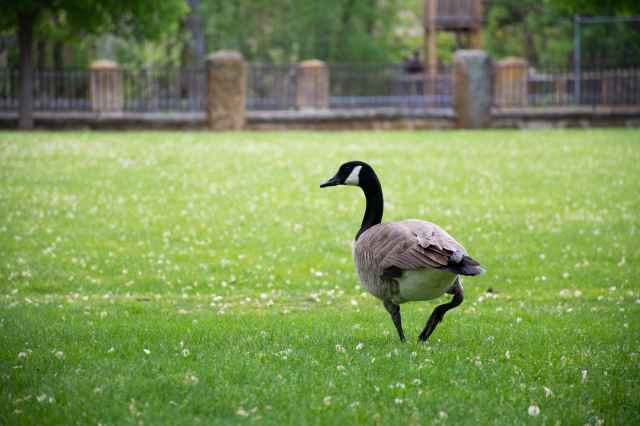
canadian goose on grass field

Photo by Brett Sayles on Pexels.com

~

Finally, to close the month of April, here is a lovely tribute to Mary Oliver by her friend and fellow poet, Lisa Starr.

Thank you for reading, and for the support of readers and poets this month.

Hyacinths & biscuits redux

hyacinth burpeeI wrote about synthesis in this post of 2017 while reading a series of complex books. Now I am thinking of how poems involve synthesis. Today’s rather quirky draft seems to have emerged from life experiences. Academics–you know who you are–will understand the irony. I’ll leave it at that.

~

This is the 29th day of my composing a poem a day for National Poetry Month! Tomorrow–perhaps a recap of the experience. Or maybe just a long exhalation.

~
Peer Review

In The Journal of Complete Sentences,
there are, as per Table 1.
And under review, a wide range of
studies that. Research may show,
for example. Admittedly,
gaps. Or the tapering off.
Speaking apparatus offers one method
demonstrating correlation of,
and relationship with.
These abstract concepts in no way
refute previous empirical
results that strongly imply.
Indeed, studies employing fMRI
techniques to track neurotransmissions
offer qualitative.
The many degrees of distance.
Past case studies. Analysis.
As Appendix D suggests.
No closer to an understanding.

~


Normal

I was speaking with a friend about this poem over coffee this morning. I drafted it at 7 am, alone on my porch, under a cloudless sky but with a chilly wind blowing. This friend’s a person who happens to be all too well aware that the expectations instilled in us (by parents? by society? by the media? who can say?) concerning what a normal life entails are…let us say, less than accurate–and possibly harmfully untrue.

Also? She endures. We endure.
~

Argument against Living a Normal Life

First, we don’t know what it means, or if we do,
the meaning’s subjective; whereas the phrase implies
an average or agreed-upon measure beside which
every other life is measured–and second, each of us
comes up short by those standards, so it’s statistically
impossible to determine a mean. Then there remains
the case that this ideal is no ideal, as every life
contains elements of grief and injury. So how to average
out whose portions are the greater and whose the lesser,
since pain cannot be measured except through comparison
with previous subjective experiences and the spectrum
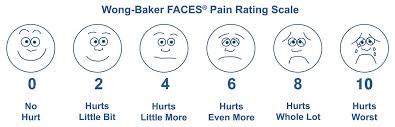
from 1 to 10 or happy face to weepy face varies from
person to person? That is not a rhetorical question,
my friend. Do the research, read about the Buddha, ask
a thousand doctors. Normal life: it’s one of those tricks
we play on ourselves. Take the adjective away and live
what you have in this particular moment. Work your way
into your suffering and your anger because they are
unavoidable. Walk your dog. Take up oil painting. Travel
to France. Watch a flock of starlings cluster and abate
over the Cimetière de Verdun in autumn. What ever were
you thinking when you said you wanted only to live
a normal life?
~

images

Cimetière de Verdun. No starlings.

~

index

wongbaker.org

How-to

What prompts a poem, really? Probably differs from writer to writer to such a degree that discussing inspiration can be an intriguing discourse among fellow poets but not a method to instruct anyone “how to.” A poem, or any work of art, can be interpreted or reconstructed through analysis, but simply following someone else’s instructions is unlikely to lead to meaningful results.

Among my Best Beloveds are a few people who are excellent how-to writers. They can write about how to build a boat, debug a software program, light a face for photographic portraits, construct a Windsor chair, use a beading pattern to make a bracelet. This sort of work is surprisingly challenging to write well–think of how many times you’ve been frustrated by a poorly-written manual for one of your digital or mechanical devices. Good, clear, concise how-to writing requires intelligence, accuracy, awareness of the reader’s skill level, critical analysis, and a clarity of style the unpracticed writer lacks. And by unpracticed writer, I mean most of us!

After 25 days of writing poetry drafts, I cannot suggest to anyone how to write a poem. Perhaps someone with more experience in the process (such as Luisa Igloria) can weigh in on how to write a poem (she teaches creative writing, after all, at Old Dominion). At the end of this month, I will resort back to my usual process of intermittent drafts; though it’s possible that this month of discipline will stick–maybe I will be more productive for awhile. Mostly what I will need to do is to REVISE! Because with 30 drafts to work on, I can stay busy tweaking and reworking (and giving up, occasionally) on poems for months to come.

~
Lilacs

Because I had early morning errands,
because I had to change my route,
because creek’s tributaries are still swollen,
the brief commute
took an ambit unexpected
through small towns, over the rutted bridge,
delayed by schoolbus signal flashers, waiting
for foot-dragging kids.
Pollen drifted on the windshield
because it’s that time of year,
because two days of rain and spells of warmth
have settled here.
Because I decided not to worry,
because no one would mind if I were late,
because I opened the car window, I saw lilacs blooming
beside the cemetery gate.
~


lilac


Punctuation

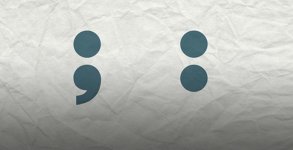
Semicolons-and-Colons-2_720x370…or lack thereof!

One thing I notice about my draft poems is that I often ignore punctuation. Sometimes that lack remains in the final draft, if I think that the ambiguously run-on approach works for the poem or that line breaks alone serve the purpose; but more often, punctuation is something I work into the revision process. Billy Collins tells an anecdote attributed to Oscar Wilde about proofreading a poem, and how he spent all morning deciding to remove a comma, and then spent the afternoon deciding to put it back in.

I do not devote quite that much time to commas. I do think that punctuation matters as an aspect of poetic craft and can convey more than we realize. The draft below, if I decide it is salvageable, will probably require some punctuation.

~
Down Will Come Cradle

She rocked you to soothing in her
warm young arms
do not forget how young she was
you so new
to the world you felt safe unquestioning
but look back
from yourself as you are now and
think of her
embracing your small body with her fears
and with love
she barely understood herself saying to you
what she’d heard
from her mother until she could confirm
in herself
secure against her novice worries as she
rocked you both
warm and soft and young in the
darkened room
where you now attend to her no longer
young neither
you nor she young but the mutual
comforting
continues the lifetime of strain and slack
you so new
to the process of soothing her how
easily
you rock beside her holding her hands in
your warm hands

~

Idea or memory

Revising a draft, for me, means returning to the poem from several perspectives. I might change the speaker from first person to second or third person, or change the poem so that there is not a clear speaker at all–no longer “lyric.” I may alter specifics, such as place names or seasonal references. Or fictionalize with invented crises, persons, time periods, or events. Take on a persona, for example. Add or delete dialogue. These are interpretive and point-of-view considerations: How can I broaden the poem’s reach?

I might then revise for stanza patterns. Or find a vague meter going on in the piece which I will decide is worth pursuing, if it will enhance the poem; sometimes it does not work that way.  If an image intrigues me, or puzzles or frustrates me, I’ll devote some revision effort to that. Play with alliteration or assonance, rhyme or off-rhyme, line lengths. Those are craft considerations, mostly.

When I work on a draft, my approach is that craft should hone perspective, and should be a silent partner in the poem. Early drafts, if promising, possess something inherently interesting. Otherwise, there’s nothing to work on or work with–the poem never really happens. Maybe all it manages to be is an idea, or a memory.

~

Sarasota

During the recession
laid off and without
even an old car
I lived in Sarasota
red tide gulf waters
slew of small fishes
dead on the beaches
where I went shell
hunting for lack of
other purpose.

Lizards on my walls
everything that mattered
blotted in moist air
novels and notebooks
drew mildew my hair
haywire the boy I loved
brown eyes & panic
sea at sunset gulls
and palmettos.

Once weekly I’d bike
to Unemployment
and wait in line to prove
I couldn’t get a job
but that I’d tried
& after my humbling
before government
agencies I’d stop at a
coffee shop on Fruitville
Road and order two
eggs over easy home fries
brown toast coffee &
blueberry pie.

There was something
so filling about that
meal I still think of it
silky blueberries in my
mouth the tip I left
the blond waitress who
kept my coffee cup full
and always called me
Darlin’.

~

blueberry-pie-horiz-a-180011

Prompts

Teachers of creative writing have mixed views about the use of prompts (a prompt is an image, phrase, visual, question, or anything else meant to get a poet started in lieu of–or in addition to–“inspiration”). I have found them useful for practice; in my experience, occasionally a random prompt does result in a serviceable, or even good, poem. But I do not tend to use them regularly.

During this month of writing and posting a poem draft each and every day, I haven’t turned to prompts. I notice, though, that the drafts are perhaps more personal than I expected them to be.

This one doesn’t have a title yet:

~

Today there’s pain
opening with every blossom,
the pain of others
far from you, and also
those nearby. Even yours.
You see the world
as it is, how each bloom
attracts tiny ants
and the industrious bee,
later transforming
into hard green fruit.

Today you suffer the way
all things suffer
although you breathe
sweet air, although you
see the constant sun
now and then appearing
between dense, mobile clouds–
joy, flickering, brief,
but always possible.
Isn’t that also how
the world is? The cat’s
fur, soft beneath your
stroking thumb. Thrushes
uttering melodies for
anyone who will hear.

IMG_5953

Lustratio*

Another day, another draft!

This challenge has not gotten easier yet. Sometimes, disciplined practice leads to a certain ease or confidence–that’s always the hope, anyway, that I might find amid the drafts something wonderful. My model here would be someone like William Stafford, who sat down every morning to draft at least one poem (and sometimes they were wonderful). The Poetry Foundation’s site says:

Stafford reports that he sits alone in the early morning and writes down whatever occurs to him, following his impulses. “It is like fishing,” he says, and he must be receptive and “willing to fail. If I am to keep writing, I cannot bother to insist on high standards…. I am following a process that leads so wildly and originally into new territory that no judgment can at the moment be made about values, significance, and so on…. I am headlong to discover.”

At the end of this National Poetry Month, I will give myself a reckoning as to whether the NaPoWriMo process has been at all helpful to me as a poet. It may be it proves beneficial in some other way…

~

Lustratio

Her friends died young when she herself
was young and unbaptized in the realm of dying

Yet you would think her better prepared–for there were
car crashes, suicides, fires, the blood plague taking
its long and steady toll

There were the risk-takers certain of their immortality
who drowned or fell from cliffs or grace
through the needle or the drug or drink and those
whose hearts took upon themselves
a need to hurry beyond the body’s balance and
whose breastbones could not contain them

You would think her ready for the news that someone
loved or once loved or otherwise connected
(Milgram’s six degrees of separation theory)
had died however people do when they are young–
embolism, cancer, accident, murder

Slow or sudden–it’s not as if the difference
though there is one, matters
because you’d think, by now, when she is no longer young
the facts of gone and after and remembering
the evidence of dying and grief’s enormous cosmos
would have carved for her a familiar space

A kind of purifying trauma–as if the bulla and procession
could protect her or her community from harm
when harm is what the world offers now and then
and we must bid it enter even if we are young

Even when it is unwelcome.

~

NOTE:

* Lustratio was an ancient Greek purification and protection ritual for children or for cities, farms, and other precious items; in the case of a male child, sometimes it was a naming ceremony at which the baby would receive a small, gold bulla (charm in the shape of a bull’s head) as a blessing or for protection. Ancient historians describe it in several ways, but most frequently mention a procession and animal sacrifice.

Rhyme

Rhyme comes easily to some people. For me, rhyme presents no problem as far as lighter verse, parodies, ditties–which have their place in literature and in culture. In more introspective or reflective verse, though, rhyme tends to elude me and often seems not to mesh with the poem’s mood. Revising toward rhyme often succeeds in assisting the metaphors, imagery, or tone, however. Usually assisted by some sort of metrical strategy.

Today my poem-draft-a-day offers evidence of how rhyme can appear spontaneously in a poem’s first version.

If you are interested, here’s an excellent book on rhyme in poetry: Rhyme’s Reason, by John Hollander & Richard Wilbur–welcome authorities on the subject.

Quite long ago now, I dwelt in cities for a few years. The contrast to my current environment startles me now and then, makes me remember those years.

~

Outmoded

His back aches. It hurts to move.
How did he ever get so old?
The work it takes to walk a block
to buy a paper! Then he’s told
the news is found online, where he
can read it on a mobile phone.

He hates the sound of that idea–
the text so small–and, when alone,
he likes the paper’s rustling noise.
It’s domestic. One of life’s joys.
The work and pain are thus worthwhile.
That, and the newsstand vendor’s smile.

~

man sitting reading newspaper

Photo by Daria Obymaha on Pexels.com

Drafty

I have to keep reminding myself that these poems are drafts and just get over their weakness and rough spots and recall that the drafting aspect is part of my April experiment–pushing the envelope, as the saying goes, and allowing the imperfections to go public. Then readers will perhaps recognize that every poem has to start somewhere, and it is not always from inspiration or native talent.

Any of the poems I draft this month that I consider worth keeping around for further work will move into my revision-worthy pile. For me, the revision process engages creativity in a form very different from the initial draft. Just as an example, few of my drafts use rhyme; sometimes I employ a basic metrical strategy (but not always)–and stanza structure almost always occurs during my revision process. Yet my finished poems often contain such components.

This one’s a less-plausible lyrical narrative, and I have no idea why I drafted it.

http://www.thisisnotacraft.com/

“Observatory Box,” Joseph Cornell

~

Experience of the Disembodied

What happened was a bounce
or peak in the field,
a shiver in the multiverse
tearing through cosmic shift

although maybe that is not
what happened because I was
not observing the rift,

I was entering into it with my
physical body per se

although I could not call the action
“flying” yet I did feel earth’s
gravity, that weakest of forces,
loosening until church spires
and pine trees, tall city buildings
shrank beneath me–

and my skin emptied,
a frosty altitude, a gutted sensation,
numbed spine and brain: Where am I?

In this supra-cosmos no light
of the sort my eyes can translate.
Energy vibrating. Loss of myself
while I watch myself,

fascinated, undone. Waiting
for the next shoe to drop.

~~

Re: National Poetry Month –here’s a thoughtful blog post on continuing the conversation through millennia.