Tanka

The second day of my daily poem challenge won’t give me much time to compose. A tanka poem may be in order.

These 5-line poems pose considerable constraints on the writer and, in my experience trying to write them, require frequent revision to get the moment vivid enough. So this one will be a rough draft. An experienced tanka poet may be able to compose tanka rapidly; my attempts usually need eight or ten revisions…well, here goes.

~
Past midnight, silence
4 am, flying squirrels chirp–
maple buds redden at dawn

how sleep eludes
those who mourn

~


Other poets working on daily-writing include Michael Czarnecki of FootHills Publishing, who posts a daily poem (usually haiku) on his Facebook page here.

paintdaub copy


April experiment

It is National Poetry Month once again. I usually do not take part in poetry month writing challenges, but I thought this year I might try something out of my comfort zone.

My plan: post a poem draft a day for this month. I have never blogged daily before, and I have never tried to compose a poem a day as Luisa Igloria has been doing on the via negativa blog for, I think, more than three years!!

This concept–er, this practice–will be super-challenging for me and scary on several levels, mostly on the level of posting unrevised, often unfinished or awkward material publicly. But I have just about 3,000 followers and only a minuscule percentage of them read my blog regularly, so I have to think of this as reading to a small room.

I can deal with that. At least–I think I can.

We’ll have to see how the month goes. Meanwhile, welcome to my month-long experiment in immediacy.

~

Tom’s Green Field

In your landscape
light exists as waves, not particles

active, roiling
over the placid horizontal planes: sky, treeline,

cropland in wind.
For there must be currents of air, speedy thrill

storm can assume
chopping at clouds miles distant, changing hue

illuminating
the dense grove’s surface so it shines

and no rain’s fallen
and perhaps no rain will dampen the field today–

only luminescence
pigment trapped in layers of oil, bouncing

cobalt, cadmium
iron oxide through your swirling glaze

that gazed once
on energy in patterns, an hour’s moment, waving green.

~

agriculture clouds countryside crop

Photo by Pixabay on Pexels.com

Book review, mind review

My book group chose to read Michael Pollan’s latest: How To Change Your Mind. The subtitle says a lot: What the New Science of Psychedelics Teaches Us About Consciousness, Dying, Addiction, Depression, and Transcendence. That’s a bundle of complicated concepts Pollan takes on, but he recognizes his task looms large and that he can only make forays into the many overlapping arenas the book explores.

His approach–he uses this in his other books and articles, too–is a mix of serious research and journalism (interviews, mostly) and personal inquiry and experiences. If you have read Second Nature or The Omnivore’s Dilemma, you might find this one to be a more “difficult book.” It is heavily documented and features neuroscience (brain pathways and structure, mostly), psychology, pharmacology, and chemistry (tryptamine-related molecules). Not to mention mushroom biology and mushroom hunting, and serum produced by plants, toads, and ergot.

What attracted my book group members to this text is its chapters on dying; as a hospice volunteer myself, and having read articles on the potential value of psychedelics among people with terminal illnesses, this part certainly interested me.

Pollan writes: “The uncanny authority of the psychedelic experience might help explain why so many cancer patients in the trials reported that their fear of death had lifted or at least abated: they had stared directly at death and come to know something about it, in a kind of dress rehearsal.”

These outcomes seem significant enough that we ought to find ways to employ them in our palliative care work. In my own, somewhat limited, experience with dying people, those who are less fearful of death–for whatever reason that may be–stay alert longer, respond better to palliative efforts (pain medicine, massage, positioning, and so on), and are more likely to comfort their loved ones. They die more “easily,” if dying can ever be called “easy.”

~

Yet I found the parts of Pollan’s book which deal with the huge question of what consciousness is and where it resides most relevant to my own interests. Yes–that difficult neurobiology stuff. Pollan suggests, with the healthy pragmatism of the skeptic, that empirical approaches to consciousness based on the idea that “the brain is meat” (viz, medical science) are unlikely ever to explain consciousness fully or to anyone’s satisfaction. In other words, consciousness may possess a component one might name “spiritual.” Here is how he frames this concept:

“…it seems to me very likely that losing or shrinking the self would make anyone feel more ‘spiritual,’ however you choose to define the word, and that this is apt to make one feel better. The usual antonym for the word ‘spiritual’ is ‘material.’ That … is what I believed when I began this inquiry—that the whole issue with spirituality turned on a question of metaphysics. Now I’m inclined to think a much better and certainly more useful antonym for spiritual might be ‘egotistical.’ Self and Spirit define the opposite ends of a spectrum, but that spectrum needn’t reach clear to the heavens to have meaning for us. It can stay right here on earth. When the ego dissolves, so does a bounded conception not only of our self but of our self-interest. What emerges in its place is invariably a broader, more openhearted and altruistic—that is, more spiritual—idea of what matters in life. One in which a new sense of connection, or love…seems to figure prominently.”

~~

When I was much younger, I considered myself “spiritual.” I stopped using the term once I began a more serious exploration of my life and began to study philosophy, psychology, aesthetics, phenomenology, and consciousness more intentionally. But the crucial components–connection, relation to and with others (sentient and not), and love–those I have always understood as necessary. Even though my ego has never “dissolved” quite the way Pollan describes.

So maybe I can go back to considering myself somewhat spiritual. At this moment in life, Nature and Others matter more than accomplishments and outcomes.

Welcome Spring, welcome Spirit. Namaste, Amen.

iris reticulata

iris reticulata

Deer metaphor

I think the best poem about a car-struck deer is Stafford’s “Traveling through the Dark.

Like Hayden Carruth’s “Mother,” (see my last post) Stafford’s poem is, for me, a kind of zenith–something to which I might aspire, but look, it’s already been done. So why pen my versions of the experience? Especially when I am not the writer Stafford was.

And might a reader accuse me of hijacking Stafford’s imagery when I write about similar incidents? I suppose I do run that risk. Nonetheless, the whitetails occur often in my poems from the past 20 years because I live in eastern Pennsylvania. Pennsylvania has an estimated 1.5 million deer—about 30 deer per square mile–and I suspect that in the suburban-rural zones such as the region where I reside, the number is higher. ann e michael

As a writer, my inclination has pretty much ever been to write about environment and place and to supply anecdote or lyrical narrative. Deer abound in my environment and in my work; and deer get killed on the roads here. The imagery lodges in my consciousness. After so many years observing them, deer have become both subject and metaphor. I may swerve, but I cannot always avoid them.

The following poem is from my collection Water-Rites, and here it is the speaker’s husband who pushes the doe’s body off to the side of the road. The presence of children changes the perspective considerably, despite other similarities to the Stafford poem. Maybe that is all I can offer: a slightly changed perspective, a different closure. I cannot un-moor myself from the images and places that inhabit me.

~

Yellow Forsythia

We glimpsed the doe
trying to rise, and failing,
in the roadside darkness.

“Stay here,” my husband said—
and a moment later,
“She’s hit.” I nodded. I’d seen
skidmarks on macadam.

The doe lay on her side and thrashed
while our engine idled,
thrashed, shuddered;
my husband placed his hand
on her neck.

In the car, our son stared
at the darkness. Our daughter wept:
“He’s frightened the deer.
She’s kicking to get away.”

The doe jerked, paused. “No,”
I said, “Your father is touching it.
Soothing it, so it will not die alone.”

He knelt by the quieting body.
Blood ran from the muzzle.
One ear twitched, I could see it
in the headlights. Death
closed in, a gentle exhalation.

My husband eased the carcass
off the road shoulder. He said,
“She must have suffered awhile.”

“Stupid cars,” my daughter muttered.
Her outrage engulfed our station wagon.

My son watched the white-
throated body, the yellow
forsythia lit by car lights.
He said, “Close the windows, please.”

~~

Poet and blogger Molly Spencer recently posted a lively consideration about recurring and repeating images here: https://mollyspencer.wordpress.com/2019/03/07/the-spider-why-the-spider-or-a-defense-of-recurring-images/

Worth a read, and worth discussion, too.

Come let us sing

I have been reading Hayden Carruth’s poems, admiring the breadth of his experiments in styles from sonnets to jazzy free verse to prose poems and extremely short poems–even haiku. One thing becomes clear after awhile: his appreciation of song, of the poem as song, of the need to create song as an expression of life and against the things one wishes to resist, even when (especially when) it is impossible to resist.

His poem “Mother” says all of the things I wanted to write about my mother-in-law’s death, and more. It is achingly honest and achingly sad and deeply loving.

After reading it, I thought to myself, “You do not need to write those poems; Carruth has achieved what you are trying to accomplish.” But we compose poems under individual circumstances and for personal reasons, and I suspect that reading “Mother” will help me to revise my own poems in probing ways.

This is why we read other poets’ work. One reason why, anyway.

I am in mourning at present, shocked by the death of a Beloved Friend’s adult son. I thought of a poem I had recently read in Carruth’s Contra Mortem.  I searched through the book to locate it–it is, in fact, (appropriately) the last poem in the collection. Here is Carruth in a spiritual and almost elegiac mode, as the singer he always is in his work, exhorting us to give to one another our small songs, no matter how they fail, for whatever they are worth. I love the line “the was the is the willbe out of nothing” for the way the simplest verbs, forcibly combined, guide the reader to face a fundamental truth: “and thus we are.”

~

The Wheel of Being II

Such figures if they succeed are beautiful
because for a moment we brighten in a blaze of rhymes
and yet they always fail and must fail
and give way to other poems
in the endless approximations of what we feel
Hopeless it is hopeless       Only the wheel
endures      It spins and spins winding
the was the is the willbe out of nothing
and thus we are      Thus on the wheel we touch
each to each a part
of the great determining reality    How much
we give to one another        Perhaps our art
succeeds after all our small song done in the faith
of lovers who endlessly change heart for heart
as the gift of being    Come let us sing against death.

~Hayden Carruth

~~


Perspectives

Snow lies on the grass and the fields, freezes, shoved into huge piles graying with macadam and gravel, trash and mud. Winter abides but only just; even with the cold snap, I sense a kind of anticipatory nudge toward warmer hours and longer days. It gets me thinking about my perspective on seasons. The lunisolar calendar I mentioned in a previous post seems more appropriate to my experience than the Gregorian, and perhaps the reason is that NongLi originated as, and essentially remains, an agricultural calendar.

The Things of This World

The things of this world that matter
are of a personal nature: redpolls
and ovenbirds, tidal waters, the sounds
of freight trains hurtling heavily on rails,
horns wailing; rattle-clap thunder;
patterns lace leaves when pressed
against the inner thigh; and justice.

The things that matter always matter
mostly from one perspective
which varies from yours to mine,
solid to liquid, season, valley, treetop,
galaxy, gorge, gray matter, anti-
matter, energy. The things of this world
depend on the heuristics what and how:

how we define this world, how define
what matters and what makes things yours
or mine: my mushrooms, my macaroons,
my highway, spring light, continental
shelf, hummingbird, suspension bridge,
my mountain, my miracle, mine

~~

scoot window

Human beings can hardly avoid seeing things from a human perspective, though human perspectives can differ vastly. But we do have the knee-jerk tendency to view other beings as “ours.” The Judeo-Christian biblical approach basically states that God gave us everything, and it’s ours to eat and to command; some interpretations temper that statement as stewardship rather than ownership, but just read Genesis 1:28-30 in the King James version–


…and God said unto them, Be fruitful, and multiply, and replenish the earth, and subdue it: and have dominion over the fish of the sea, and over the fowl of the air, and over every living thing that moveth upon the earth.

29 And God said, Behold, I have given you every herb bearing seed, which is upon the face of all the earth, and every tree, in the which is the fruit of a tree yielding seed; to you it shall be for meat.

30 And to every beast of the earth, and to every fowl of the air, and to every thing that creepeth upon the earth, wherein there is life, I have given every green herb for meat: and it was so.

Which perspective I’m illustrating in the poem above. The poem’s speaker aggregates everything into the personal construct of ownership: what is owned is what matters. Implications of greed, of personal views on justice, of personal definitions (how points of view get tainted as they run through human beings’ individual filters)–those abstract ideas the poem tries to convey through the concrete images of animals, sounds, foodstuffs, geology.

The first-person possessive pronoun permits English speakers to colonize the cosmos. Often, I catch myself in claiming “mine.” My house, my meadow, my cat, my children! As if I could actually own any of them (although I possess a piece of paper that asserts that I own my house, sometimes I have my doubts). I did not intend, when I started writing this poem, to remind myself not to go about “making it all about me.” But it does serve as a reminder. And I think a few of us human beings ought to be more aware that our tendency to hoard and claim may not serve us, or the world, all that well.
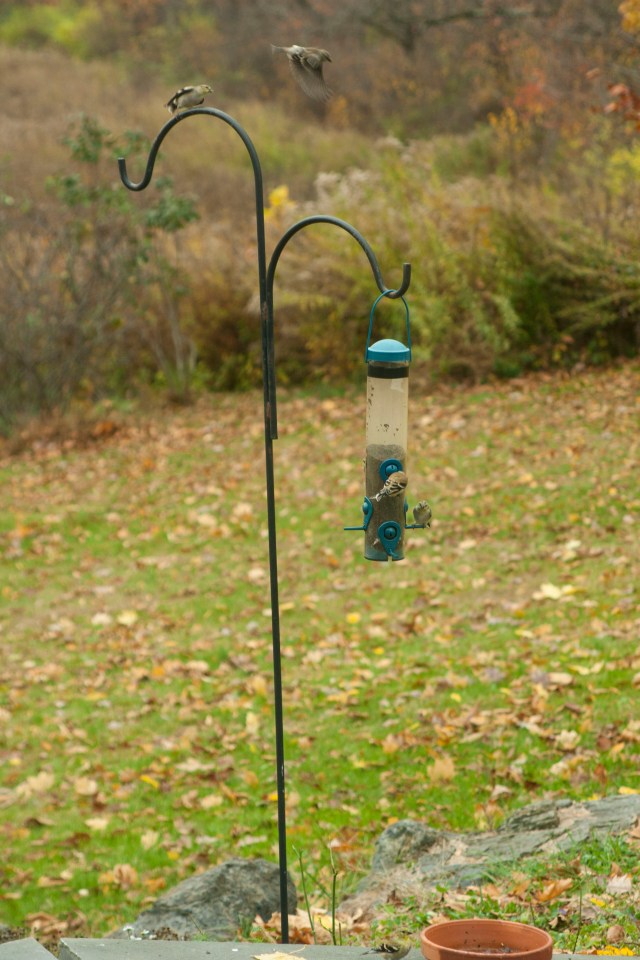
finches-fall1

Goldfinches in winter attire


Anticipation

February’s coming to a close, and the forecast indicates a chance of snow soon–but the gardener feels stirrings of approaching spring.

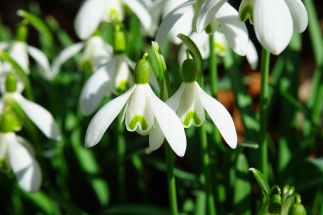
Time to buy seeds, order supplies, plan the garden. Time to mow the meadow before the ground-nesting birds get started on their spring dwellings. Last night the temperatures went well below freezing, but the winterhazel has bloomed. Snowdrops push up from leaf litter: a glimmer of white petals still held close to the stem. Waiting for a string of warm days to open up for the early pollinators.

flowers plant spring macro

Photo by Pixabay on Pexels.com 

Indeed, the days lengthen at last. Next week marks Spring Break for my college, and with a little more flexible time available, I hope to pin down my garden plans. Each year, I try to incorporate something innovative in the small patch of (mostly) vegetables. This year, I’m tempted to try short-season artichokes.

Thinking about the garden energizes me, gets my creative side jumping. It’s partly the anticipation–will this plant emerge, grow, thrive, fruit? Will voles and insects and viruses attack it? Will the weather cooperate? For example, I’m glad I did not plant potatoes last year–the weather was too wet. Should I take a chance on potatoes this year? (Oh, those tender new spuds lifted from the warm soil in August…)

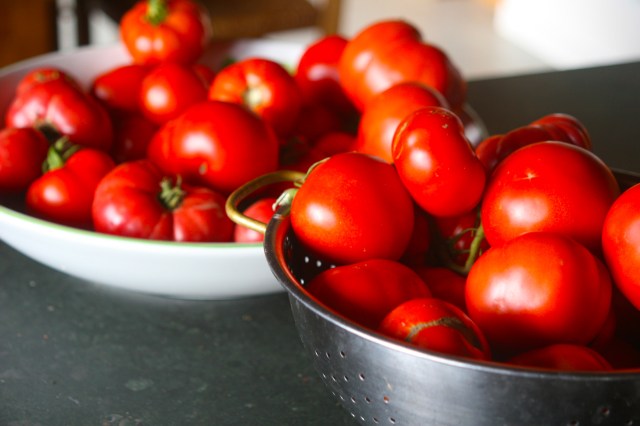
And tomatoes! So many varieties from which to choose.

IMG_1753

Bounty (our own, in 2015)


Anticipation feels different from expectation, though the two are related. For me, at least, the connotation of the first is more open-ended. Anything can happen, though let’s hope what happens is good. Expectation seems more results-oriented. I am not a results-oriented gardener; I like surprises, I appreciate the education I get even from failures.

Come to think of it, I could describe myself that way as a writer or poet, too: not results-oriented, more intrigued by the things I learn when I work at the writing.

Even when the results do not pan out, even when I finally must give up on a poem that is not working, I learn a great deal about where and why a particular approach fails. This is why writing requires practice, patience, and time to analyze and reflect on what those “results” tell the writer.

Do what works, then push the envelope.

Hmmmm…artichokes in Pennsylvania….

artichoke beautiful bloom blooming

artichoke in bloom : Pexels.com


On revision (again)

iceimageI am going to go out on  a limb here and make a blanket statement: Revision should be every writer’s middle name.

I tell this to my Comp-Rhet introduction to academic writing students all the time, but they have difficulty figuring out how to revise effectively. There are good tactics out there, but they do not work for everyone; how a person thinks and learns and processes information varies considerably. Lately, I have been using a strategy I teach to students writing essays to revise my poems. I ask myself: how is this poem organized? Is the structure working with or against the poem? Too predictable, or not predictable enough?

Just as in a well-wrought prose piece, a poem’s obvious and underlying structures matter a great deal in how well it “works” for a reader. It’s also an aspect of writing that people tend to overlook, so analysis of structure in the revision stage can be useful.

Another revision strategy I have been mulling over recently coincides closely with what Grant Clauser describes in this post, The Poem Is the Question. He writes:

I’ll scrounge around in the poem to try to find what it’s asking. If I figure out the question or the motivation in the poem, then I’m better equipped to solve its problems… Sometimes it helps to actually put a question in the poem–either as a crutch that you’ll eventually remove–or as a permanent part of the poem. A question is a pretty interesting part of speech in that it’s one of the few that almost always demands a response from the reader.

I have found myself going back to a draft and asking, “What got me going on this poem? Do I even recall? Is the impetus an interesting one? If not, can I change it?” Clauser suggests a more specific kind of investigation, and it’s one I have been employing today (snow and ice out there and the roads are lousy, so the campus is closed–hooray for a half day of unexpected free time).

Lesley Wheeler has also recently blogged about revising. She observes that the word revision, which places “emphasis on ‘looking anew’ doesn’t entirely capture” the process of late-project revision. She’s listening to her own words aloud as she revises…another approach that has worked for me.

Maybe the month of February calls to us as a quiet time of yin creativity, which is a way of looking at revision as an inwardly-focused energy–as opposed to marvelous bursts of creativity from inspiration or the much-vaunted Muse. The lunisolar calendar used for centuries in Asia calls February the first month of spring (立春  lìchūn)! I had better keep at the revising, therefore. Before I know it, yan energy will return with the start of the gardening season in eastern Pennsylvania.


Discomfort

It’s important, I think, to experience discomfort–it means I am facing a new task, a new perspective–that I’m learning something. I tell my students that if they are totally comfortable with the concepts in their coursework they are not learning anything yet. Education does not come without risk, whether the risks be physical, social, emotional, or intellectual. When we feel uneasy, it may mean we sense danger or sense the presence of someone manipulative, dishonest, or unkind. It may, however, mean we are simply “outside of our comfort zone.”

Tony Hoagland‘s poems offer examples of how we learn through leaving our familiar attitudes. Daisy Fried’s insightful 2011 commentary on his poem “The Change” notes the need for such uncomfortable moments. Poems Hoagland wrote as he headed toward his death from cancer at age 64 do not shy away from making the reader feel awkward, unhappy, or–in some cases–relieved, even glad. It can feel wrong to acknowledge relief as part of death. That recognition tends not to follow U.S. culture’s social norms.

I’m not claiming all good poems rile up discomfort; some poems offer joy or embrace a comforting openness; and, as readers bring their own differing experiences to the reading of a poem, the same poem that discomfits one person may appeal beautifully to another reader.

This post came about because I feel I have come to a period of discomfort in my work, and it troubles me but in a good way. I would rather feel discomfort with my writing than disengagement with it. Disengagement is writer’s block, which does not describe where I am at the moment. Instead, I feel rather as I did when I began to write and revise using formal patterns. My written expression up to that point had all been in free verse or prose, so adapting to villanelle or sonnet structure or sapphic meter seemed risky, difficult, “wrong.” Wrong for me, for the writer I believed I was, for the writing voice I had developed for 20 years.

And I was wrong about that, too! My initial discomfort aside, I learned so  much about poetry, including about my own style, through the practice of formal verse. The wonderful online journal Mezzo Cammin (formalist poetry by women writers, edited by the amazing Kim Bridgford) has published several of my poems in the past. Now, two more of them! Please click here.

~

9780399590344


Sarah Sentilles’ book Draw Your Weapons elicited discomfort in me but also marvelous connections (she and I have read many of the same authors). Her observations about art, violence, pain, and language weave in and through stories of a soldier-turned-artist and a WWII conscientious objector.

Between the development of these men’s stories, Sentilles cites research, philosophers, artists, and personal experiences and forces her reader to recognize how even the language we speak is complicit in accepting violence as a given rather than as something that human intention and action can change, if slowly.

I finished reading this book two weeks ago and am still mulling it over, returning to passages, marking some of her sources as “to-read” for myself.

It’s possible that Sentilles’ text in some way stirred up my discomfort with my own work.

And that would not be a bad thing. Getting out of the familiar is not only how learning happens; it’s how creativity happens.


Hear me out

It’s not a social norm–real listening. Despite the recognition that human beings are social animals that require communication, despite the recognition that “talk therapy” (which at its foundation employs active listening) and writing therapy can heal broken psyches,  even though many studies over decades have demonstrated how relationships rely upon partners’ openness to listening–listening stays a bit unconventional.

So many people think listening is passive. No, it is an active verb. Bombarded with information from numerous sources, the processes of discerning what one should listen to get tattered and confused. Our brains want to chunk information, to ignore, to elide, to suppress and glean and separate the various threads so the mind can prioritize.

Listening is difficult.

~

solomonseal

Not asphodel but Solomon’s seal, also a greeny flower

William Carlos Williams famously claims it’s difficult to get the news from poetry–and, in the same poem, he asks us (by way of Flossie, his wife) to listen:

…Hear me out.
Do not turn away.
I have learned much in my life
from books
and out of them
about love.
Death
is not the end of it.
There is a hierarchy
which can be attained,
I think,
in its service.

the mind
that must be cured
short of death’s
intervention,
and the will becomes again
a garden. The poem
is complex and the place made
in our lives
for the poem.

[I am not html-savvy enough to code the spacing of this poem on my blog, but you can find it here (p. 20) or here; the excerpts are from “Asphodel, That Greeny Flower.”]

~

Poetry :  “A way of happening, a mouth.” It survives, says Auden, in his poem on the death of Yeats.

The mouth expresses the mind and also what we call the heart, the soul. To make a poem is an intentional act.

Is listening a subversive act? is compassion?