Transitions & ambition

letter I
have maintained this blog pretty regularly, for years now, writing about books and poems and gardens and teaching, examining the concept of consciousness and trying to plumb–from a novice’s perspective–the brain’s wiring and functions. I suppose I am seeking a kind of “interdisciplinary” approach in these posts and in life: a philosophy of values that considers the arts, aesthetics, evolution, biology, social structures, neurology, consciousness, physics, etymology, pedagogy, ecology, and compassion (have I forgotten anything?) in a distinct but expansive method of living in which I can situate myself and which might guide my behavior as I make my life-long way through the world. If, by some chance, my words influence a reader–so much the better; this is, after all, a public space (WordPress.com).

Like many people who use social media platforms for their writing, though, I have a mixed view of its suitability as a medium and of its perceived necessity for contemporary writers. My purpose, originally, was to practice writing prose and to promote the arts and the natural environment as necessary complements to and instruction for the development of empathy (compassion) and metacognition in human beings.

The blog has been reasonably suitable for practice; it gets me writing what is basically a brief essay on a more-or-less weekly basis. It has several thousand “followers,” but only a handful of readers. [I can discern this through the statistics page on WordPress, though I don’t check often.] In general, I use this platform mostly as a way of “seeing what I think,” and it serves that purpose, too.
IMG_0127

I have come to some conclusions about the problem of consciousness (and about whether it actually is a problem) through the reading and experiences of the past ten years or so. Those conclusions are, however, private ones. While the process of discovery and inquisitiveness works in a public forum, the takeaway remains, for this blogger, a thing carried within.

But.

~~

But other blogger-writers have influenced my thinking about what a public forum such as blogging or Facebook can do for the writing process. Dave Bonta and Luisa Igloria, as well as Michael Czarnecki and Lou Faber–among others–promote by example the option, and value, of publishing new or unedited, unfinished, partially-revised work. Granted, not all of them have thousands of readers who weigh in on criticism or encouragement; but the very process of making public the work-in-progress seems to me to be courageous. This may be because I am a wimp, or it may be because the social aspects of the vaunted “po-biz” have dampened my willingness to show a kind of transparency in my writing methods.

I am not on the tenure track and will not be teaching in an MFA program, however, so why would it matter?

Therefore: be prepared, oh limited but blesséd audience. I may begin to foist upon you the recent sad, sad poems I’ve been writing–in draft form. Or I may begin to reveal the poems from my seven-years’-unpublished manuscript online. Or I may, like Luisa and Michael, begin to blog “a poem a day” (unlikely, but…). It seems to me that a transition is in order here. And that stands as my writing ambition for the moment, as autumn makes its way toward the solstice and I face another stack of student essays to grade.


Remontancy (iris redux)

During a mild late September two years back, I discovered the botanical term remontant–it applies to an iris that graces my perennial bed. The plant reblooms–not every autumn; only when the frost is late and the air and soil stay warm.

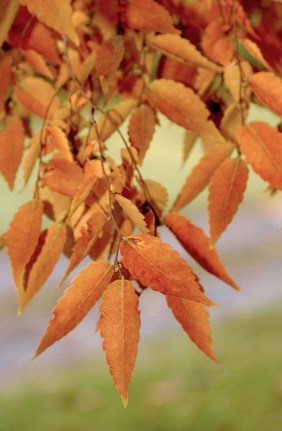
October 14th is pretty late for irises, though, even for remontant varieties. Indeed, the weather has been warm, and the leaf color seems to be coming on very slowly and without its usual vividness. Seasons not following their usual chronology. Summer hangs on. I feel a sense of discomfort, though I should be grateful, perhaps–for a longer show of blossoms, for monarch butterflies in October, for lower heating bills and no need to don a heavy coat (or any coat at all).

autumn iris

I live in a house, work in a building, get around mostly by vehicle; much as I want to be earthbound and of earth, much as I value the environment, I inhabit it often more through longing and imagination than in fact.

One way to ponder that paradox or imbalance is through poetry. Sometimes a poem reblooms for me, remontant, in surprise and renewal…I find something in the text or mood that was heretofore unnoticed. I’m thinking now of Sandra Meek’s poem “Biogeography” (in her book by the same name). Here are the last few lines:

~

In geologic scope, what the ground we’re mesmerized to won’t

let us forget, these mountains are a single
inflorescence, a half-life not more than one
exhalation of stars. This is the ice

we skate, clarity
which brings us down; genesis
of binomials–second naming of all the transitory’s

incarnations, flora to fauna–the craving for return
to the earliest garden, as if again what was left to us
was world enough, and time.

~


Equinox, different

ann e. michael poet

Autumn

Translated by Renata Gorczynski


Autumn is always too early.
The peonies are still blooming, bees
are still working out ideal states,
and the cold bayonets of autumn
suddenly glint in the fields and the wind
rages.

What is its origin? Why should it destroy
dreams, arbors, memories?
The alien enters the hushed woods,
anger advancing, insinuating plague;
woodsmoke, the raucous howls
of Tatars.

Autumn rips away leaves, names,
fruit, it covers the borders and paths,
extinguishes lamps and tapers; young
autumn, lips purpled, embraces
mortal creatures, stealing
their existence.

Sap flows, sacrificed blood,
wine, oil, wild rivers,
yellow rivers swollen with corpses,
the curse flowing on: mud, lava, avalanche,
gush.

Breathless autumn, racing, blue
knives glinting in her glance.
She scythes names like herbs with her keen
sickle, merciless in her blaze
and her breath. Anonymous letter, terror,
Red Army.

~~

If the autumn of 2017 seems a bit more menacing than usual to some of us, there is reason for it. In Zagajewski’s poem, the season rips, extinguishes, and is merciless, personified as a raging “she,” hoisting bayonets, who embraces creatures and steals away their very breath. The imagery in this piece hurts–that penultimate stanza–and the anonymity of the letter, terror, that closes the poem leaves me rattled and uneasy.

Just for the record, I do not usually think of Fall in this way. I like the season’s inconsistent path toward Winter, its occasional tarrying, its rain, its oddly warm days, its early-morning frosts. Into every lifetime there come little eras of discomfort and fear, however; and it has been a challenge to see this autumn in quite the diffused and orange-tinted light of certain delightful autumns past. Today, I went searching for a poem to recognize the season, perhaps to comfort myself. I found this one, and despite its harrowing tone (or perhaps because of its attitude), I felt spoken to.

Much has been claimed about the healing power of poetry. Not all poems are healing sorts, however. Sometimes what speaks to the reader is not a small miracle of personal spiritual healing but a set of words and images that embody an internal understanding of an entirely different kind–a poem that acknowledges the fears we have, or that captures our rage, or our sorrow–a poem that says to the reader: “You, too, are human, and this may be a shared feeling between us, strangers that we are.”

In my little valley, Fall 2017 has not been early in the meteorological sense; the days have been summer-hot and often humid. Even the nights have been warm. Despite the lack of cold glancing scythes, I do find myself asking questions not unlike those the poet poses in his second stanza. Why should it, or we, or one among us, destroy and scatter and spread metaphorical or actual plague?

I do not have an answer, nor does Zagajewski. But I have this poem, which touches me with its humanity, its recognition that crying children everywhere ask “why?” And I know the poem is not “about” autumn, despite the title.

~~

IMG_0127

Also for the record, this poem can be found here and also in Zagajewski’s book, Without End: New and Selected Poems. [Copyright © 2002 by Adam Zagajewski. Used by permission of Farrar, Straus & Giroux, LLC, http://us.macmillan.com/fsg. All rights reserved.]

Evolution of the neuron

I have just read, albeit slowly, Werner R. Loewenstein’s Physics in Mind: A Quantum View of the Brain. Having finished the book, I can attest I understand his argument even though my grasp of the physics involved is decidedly at the novice level. The last three chapters of the book were what drew me to reading it in the first place–those chapters cap the text with his model of how Evolution (he anthropomorphizes the theory) “chose to design”–in its exemplary, concise way–complex systems that led not just to life but to sentience.

Loewenstein compares neuro/biological processes with computers in terms of their being processors of information from the environments. He seems enthusiastic about computers in general, but he argues that artificial intelligence remains far away from evolving into sentience because consciousness requires many kinds of parallel processing that intersect and interact and filter out information. That complexity, he claims, will be difficult to engineer; yet over eons, the process of evolution accomplished it through a combination of physics, chemistry, and biology.braintrust-small

Loewenstein prioritizes the physics aspect: how electrical pulses in neurons parallel electrical pulses (attraction and repulsion) in atoms, how these behaviors can combine to create compounds or release energy; he uses analogies and spends several chapters on the eye, its neurons and dendrites and cones and rods, to demonstrate how a system of information reception and filtering can occur that relays information to the brain and then back to other information receptors and actors in the body of a worm, bird, or human being. Get enough relay systems going, and sight + touch + smell + hearing + taste evolve into the living animal. At some point, the multiple parallel information systems develop into consciousness (Loewenstein does not speculate where that point occurs–it is still “a mystery,” he admits).

~

Douglas Fox, writing in Aeon, quotes neuroscientist Leonid Moroz as saying, “There is more than one way to make a neuron, more than one way to make a brain.” In this fascinating article, Fox follows Moroz’s lengthy study of ctenophores, jellyfish-like creatures about which little is understood–though Moroz and his team of researchers are changing that. At the same time, their work suggests that our previous understanding of brain development is not necessarily the only model out there for how neurons and synapses can get information processed and acted upon to sustain a life. If that life is lived under very different environmental circumstances, maybe evolution might “choose” different paths of systematic information processing (ie, “thinking”).

…when he failed to find common neurotransmitters in ctenophore nerves back in 1995, it wasn’t simply that his tests weren’t working; rather, it was because the animal wasn’t using them in any way. This, says Moroz, was ‘a big surprise’.

‘We all use neurotransmitters,’ he says. ‘From jellyfish to worms, to molluscs, to humans, to sea urchins, you will see a very consistent set of signalling molecules.’ But, somehow, the ctenophore had evolved a nervous system in which these roles were filled by a different, as-yet unknown set of molecules.

Fox poses the researchers’ questions this way: “how divergent can nervous systems be? Do we truly understand how life senses its surroundings and behaves?” Science has generally, post-Darwin, followed a straight-line approach to evolution; but good scientists recognize that sometimes the road less traveled by has made all the difference.


Although the very idea of “sentient jellyfish” might appall many people, I wonder what sort of consciousness ctenophores would develop.  🙂

A little honey, a little sun

Today, something to soothe the collective psyche, to ward off anxiety and remind us that we cannot move through this life totally fearlessly, but we can move through this life.

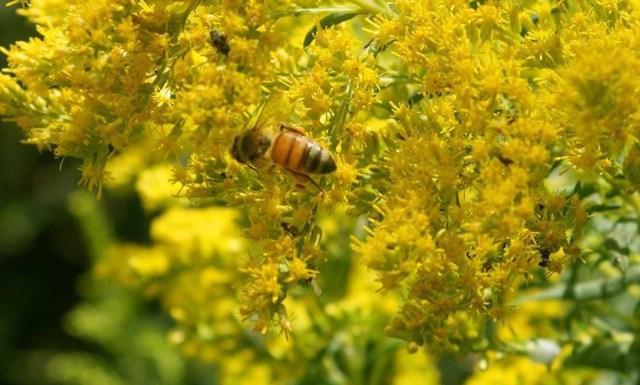
Ann E. Michael honeybee

~

Take from my palm, to soothe your heart
a little honey, a little sun,
in obedience to Persephone’s bees.

You can’t untie a boat that was never moored,
nor hear a shadow in its furs,
nor move through thick life without fear.

Osip Mandelstam, tr. Clarence Brown & W.S. Merwin

There’s more to this poem–three further stanzas–and I am re-reading it today, over and over, as if to memorize its quietly unfolding lines:

For us, all that’s left is kisses
tattered as the little bees


The poignancy of that image nearly kills me. Yet, soon enough in the poem (and elsewhere), Mandelstam’s bees die; but they also hum in the night, in the woods, “in the mint and lungwort of the past.” They make a sun out of honey. They warm the chill of winter’s approach; like kisses, they can soothe our hearts.

~

I have read some severe criticism of translations of Mandelstam’s poetry. Brodsky’s work, Merwin’s…Russian speakers suggest no translation adheres at all closely to the original. Rose Styron and Olga Carlyle’s version is here in Paris Review. And here’s a version (tr. uncredited) in The Atlantic. A bilingual version resides here, if you happen to know Russian and can weigh in on the translation controversy (Mandelstam himself reportedly hated reading verse in translation).

But here is why I am holding this poem close to myself today:

The poem acknowledges the fear that resides in all of us.

The poem reminds us that we have much to share. That we can soothe one another’s hearts.

Namaste.


The color orange

bouquet

Late summer bouquet five days past its first blush…

~
The crickets are raising their “voices” each night; the darkness lasts a little longer, and the color orange emerges from the green of midsummer to remind us of all that is beautiful in the world, despite __________________________ [insert your list of unpleasant, tragic, disheartening things].

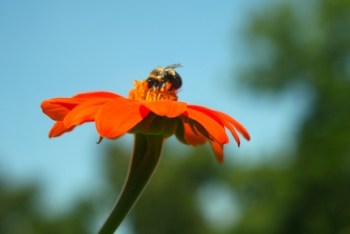
Here is my encomium to the Mexican sunflower, tithonia rotundifolia, a favorite of bees and monarch butterflies and also a favorite of my daughter’s, so it has special aesthetic-emotional appeal for me. The poem I’d like to write to the sunflower has not yet materialized, so praise in prose will have to do for now.

mexican sunflower, bee by Ann E Michael

Autumn approaches. I like autumn, though some of my dear ones do not–but one thing universally salvages the early weeks of the season, no matter how a person feels about the encroaching cooler weather: orange. Even people who don’t care for the color in clothing or decor admit that, in nature, the color orange attracts the eye, enlivens a scene, brightens the dullest corner.

Nasturtiums, zinnias, the last hurrah of daylilies, butterflyweed, and early-turning foliage such as sumac and sassafras sport the color well. There are also pumpkins and squashes warming up fields; and in some areas, there are butterflies wearing the hue: monarchs, viceroys, fritillaries.

But nothing delights in a bright red-orange so well as the Mexican sunflower, which evokes the warm climate of its designation and likely origin (I haven’t done a great deal of research on the plant. I know that tithonia diversifolia is native to the region of Central Mexico and am merely guessing that the rotundifolia variety has its roots there, too–excuse the pun).

monarch.ann e michael

It sports well with one of its showiest pollinators, the gorgeous, orange, monarch butterfly.

Tithonia likes full sun and does not mind a bit of drought–all reasons it managed well in Mexico. It’s also ridiculously happy in the American Northeast, at least in the Mid-Atlantic region where I garden. The plants grow 6-9 feet tall and are veritable fountains of pleasing, brilliant points in the late-summer garden. They attract bees, butterflies, hummingbirds, and small songbirds and have few pests. Deer dislike their “hairy” leaves, and slugs and beetles seem also unimpressed with their food qualities.

Or perhaps the “pests” appreciate the blooms’ aesthetic value, as I do. [Okay, too much anthropomorphism there, I admit.] tithonia.2sm

Furthermore, as long as I get out to the garden and dead-head the plants regularly, they bloom right up until the first hard frost.

And they cut well for bouquets (see the not-excellent photo above).

When there is so much sorrow going on in the world, it may seem odd that a flowering plant can offer respite–a moment or two of awe, of joy, the discovery of a bumblebee with its legs pollen-yellow or a monarch’s slim proboscis coiled just above brilliantly golden stamens amid a red-hot orange daisy-shaped blossom…and maybe, above, an autumn-blue sky.

Not art, but nature. Both valuable to human creatures.


Mind & gray matter

After an interlude of fiction-reading and the start of the semester, during which there is little time for personal reading, I have returned to some of the topics of neurology, consciousness, and the evolution of the story-telling mind that have so often diverted me from–yet influenced my thinking on–poetry.

Just a brief overview of my “difficult books” of the past four or five years…I have a background in philosophy and, to a much lesser extent, theology. Both disciplines endeavored over thousands of years to explain why we think the way we do and why or how we reason, make decisions, and make clearly unreasonable decisions.

The Free Will paradox, the Mind-Body Problem, ethics, tribalism, the body politic, you name it.

My thinking tends to sway slightly Eastern in terms of intention, mindful behavior, and non-theistic compassion despite my being raised pretty much Western Protestant with Enlightenment ethics and values (also compassion, as based upon the teachings of Jesus).

Throw in a bit of psychology built upon philosophical foundations, Freud, William James, Darwin, Thoreau, and my constant searching for what makes a being conscious, and I end up with an eclectic but not unreasonable reading list.

Also poetry. But I digress.

Here’s the barest outline of my more recent forays into understanding the probably not-understandable: I read Stuart Kauffman’s book At Home in the Universe to obtain a grasp of a chemistry-and-statistically-based (Boolean) thinking concerning how consciousness may have arisen in the universe and whether we Earthly human beings may not be entirely alone as conscious beings in a huge and expanding cosmos. Frances Crick’s The Astonishing Hypothesis offers a biologist’s view of how we ought to go about trying to study consciousness and its evolution based upon biological science. Douglas Hofstadter’s I am a Strange Loop, a deeply engaging look at an interdisciplinary concept of consciousness, examines evolution, biology, neurology, and a bit of physics and philosophy; Dennett & Lakoff’s Philosophy in the Flesh grounds philosophy in neurological underpinnings. Just to be sure the physicists are not overlooked in my overview of consciousness, I’m now reading Werner Lowenstein’s Physics in Mind: A Quantum View of the Brain.

Referenced in almost all of these books are Patricia Churchland, the D’Amasios, Thomas Nagel, Thomas Kuhn, Charles Darwin, Descartes, and Kant.

To name a few.

brad-hammonds-flikr-books

~

What good has this reading done me, in terms of understanding what constitutes consciousness, from what it is derived, and how it evolved? Do I know any more than I did about human beings? I certainly know more about the human body, especially the brain, than I did. I know more about the cellular level of information processing and more about theories people have posited during the past centuries–and what aspects of those theories seem to have had either intuitive, reasonable influence or scientific (empirical) value.

That last paragraph appears to be question-dodging, doesn’t it?

~~

I love to read. I love human beings. I love the phenomena of the visible and experiential world. I love the urgent fuel of creativity. Can that be enough, for now?

In time, maybe I will come to accept the fraying of the consciousness, the decay of memory and the intimate Beloveds as they fade into senility or pass out of the tactile world.


Hunger for words, words for hunger

When I was very young, our church became involved in the War on Poverty outlined by the Johnson administration (1964). My father attended events and marches to raise awareness about the fact that many people in this wealthy nation, the USA, were struggling–even starving. It seemed, probably idealistically, that a country as prosperous as the US was in ’64 would find a way to insure that all its citizens could have enough to eat and a roof over their heads. (This was Johnson’s “Great Society”)

A memory:

My sister, my mother, and I are seated at the table in our little apartment kitchen in Yonkers, NY. My father is away on pastoral business, but the previous evening, he’d told us that we were going to fast the next day in solidarity with poor people who never had enough food to eat. The reason for fasting was to let us feel how they must feel.

My little sister thought that was unfair. She was, in her defense, only four years old.

Of course it was unfair. That was the point. Why should some people have plenty of food while others went hungry? That is unfair. (This logic she understood, though I don’t think either of us made more of the connection at that time.)

“You kids won’t fast the whole day,” my folks said–just suppertime.

Now it is suppertime. We are at the table, and the table is bare. We each have a glass of water, not milk. And we are hungry. Our mother has fasted the whole day. Isn’t she hungry? Yes, she says. She’s hungry. It isn’t a good feeling, and we whine awhile, hungry and in addition, bored.

“Okay,” she says, “you can each have a piece of bread. One piece.”

It is something, but it doesn’t fill the stomach.

bread

bread

Another memory:

I’m in my thirties, with young children of my own now, and talking with my mother about her past–a past she has kept from us, and from herself, and is slowly learning to accept. A past that included growing up during the Depression with five siblings. How her father refused, out of pride, any kind of government relief. How hard her mother worked to keep the family from going hungry.

I think, then, that my mother knows what it means to be hungry.

~~

Many decades later, the term for hunger has become, in legislature and grant proposals, “food insecurity.” The jargon, the euphemism, distances us from the facts. People without enough good nutritious food are not insecure. They hunger.

I don’t want words to operate that way, moving the reader away from understanding. I want words to bring us close, to open up the mundane and horrible real and the fervently imagined possible. Language that sears and mends, the interpretation of which also can sear and mend, words that do not act as misprision but as multi-faceted revelation. Those are the words for which I am hungry.

Something that fills the stomach: embodied, flavorful, wonderful words. That’s one of the reasons I love poetry so much, that hunger for the non-distancing. The relationship that brings us truth. The truth that is often unspeakable.

Poems can take us there:

One Kind of Hunger

The Seneca carry stories in satchels.
They are made of  pounded corn and a grandmother’s throat.

The right boy will approach the dampness of a forest with a sling, a modest twining

wreath for the bodies of  birds. A liquid eye.

When ruffed from leaves, the breath of  flight is dissolute.
What else, the moment of  weightlessness before a great plunge?
In a lost place, a stone will find the boy.
Give me your birds, she will say, and I will tell you a story.
A stone, too, admits hunger.
The boy is willing. Loses all his beaks.
What necklace will his grandmother make now.
The sun has given the stone a mouth. With it, she sings of what has been lost.
She sings and sings and sings.
The boy listens, forgets, remembers. Becomes distracted.
The necklace will be heavy, impossible to wear.
~

Lehua M. Taitano

Backstory, continued

What brought the idea of backstory to mind was a poem of mine that recently appeared in Peacock Journal’s  print anthology. The poem appeared last year in the journal’s online site. (See: “Imagined Painting of Mary Magdalene Bathing.”)

A friend read the piece and responded to the poem by saying, “This is a beautiful poem. It’s so visual–also, different the second time you read it. And I know how interested you’ve always been in saints and iconography and art, but where did you come up with the idea of imagined paintings? What’s that about?”

This is the best kind of question, as far as I’m concerned. It is a question about ideas, not inspiration or meaning or even craft–though I love questions about craft. It does beg the writer to reveal, however, a bit of the story-behind-the-story/poem/narrative, etc.

“Backstory” may seem self-explanatory. It’s a term used more frequently in drama, particularly screenwriting. Poetry critics are less inclined to employ the concept because–see last post–it is too easy to fall into explaining the poem, which is generally considered a no-no. My friend, however, is a reader and not a poetry critic. I felt free, therefore, to address the question on a personal level.

As my good friend knows, I have been intrigued since adolescence by the art and iconography, the symbolism and the stories of the saints, despite my Protestant upbringing. I love art, aesthetics, and the divinely natural (empirical, phenomenal) World and feel an ambiguous but compelling relationship with myth, religion, history and a culture I cannot escape. And I have imagination.

I began writing about a saints in less-than saintly pursuits. The idea interested me. Surely the saints could be imagined as real human beings, not only as intercessionaries between the human realm and Heaven. I wrote about St. Sebastian purchasing a tunic, Saint Agnes braiding her mother’s hair, and St. Anthony fetching a pail of water. Saints as human beings (rather than as symbols, icons, and religious items) led me to the depictions of saints in art as other-worldly, pure, suffering, or in all ways saintly; and I entertained thoughts of paintings I had never seen but would like to see–theoretically-possible paintings. In the case of St. Mary Magdalene bathing–would Da Vinci have painted it? Rubens? I can only imagine. The poems are a kind of ekphrasis.

I wanted to be a painter when I was a child. This imagining may be as close as I ever get to realizing my youthful ideals.

~

There is not much more backstory than that. None of it leads to meaning or interpretation, although the story above may cement some allusion or confirm referents in the reader’s mind. I hope, however, that the backstory here might interest one or two readers enough that they pick up a book on Renaissance or medieval art, on hagiography or history. Or perhaps someone will go to Amazon.com and purchase the anthology at the link above.

Thank you, friends in literature and imagination.


Poetry & backstory

My primary interests on this site are consciousness, nature, philosophy, the arts, and poetry in particular. Recently, poetry has been taking a backseat to other concerns; but poetry has a way of constantly asserting itself into my consciousness–of whatever that may consist (see previous posts for wrestling with that concept).

I have been reading poetry but not writing about it much and not composing at a productive clip, though I am not feeling “writer’s block.” I have, instead, allowed other events in my life to take over space formerly reserved for writing poems. This is neither bad nor good–it is just the state of affairs at present. Recently, a discussion with a friend brought up an aspect of poetry-writing that I have not spent much time thinking about; and the reason I haven’t is probably because I was warned away from the practice long ago when I first began to write verse.

The practice is “explaining the poem.” Of course, in theory the poem should do its own explaining, and if it requires too much prose telling, then it ought to be fiction or memoir or history or something other than a poem. That’s what my mentors and teachers imparted to me about poetry (all hail received wisdom!), and I do not disagree with this tenet–but having taught classes that introduce people to poetry, let me add a few cautions and qualifiers.

See, there’s explaining, and there’s explaining. One version of explaining the poem is to tell what inspired you, how you started to write it, what you were aiming for in terms of purpose, what you intended to “do” in the poem, and what each of the references means as relates to your life, the nation, culture, religion, or a love affair. If that is what the poet does before reading the poem aloud or presenting it upon the page, then the poet is doing all of the poem’s work for it. Too much information.

If the audience does not understand or appreciate the poem without this sort of explanation, then you have either a failed poem or a failed audience.

Then there are forms of interpretation and analysis by critics, reviewers, or fans; these texts or discussions can be immensely interesting and fruitful but do not involve the poet him or herself, so they do not really qualify as “explanations.” This process is what we try to teach students to do in university literary analysis coursework. Sometimes we encounter lackluster or lazy audiences in the classroom: people who want the professor or the textbook to do all the work of understanding poems for them. Poems are complex, like polymer molecules or neurological wiring. Not easy to explain.

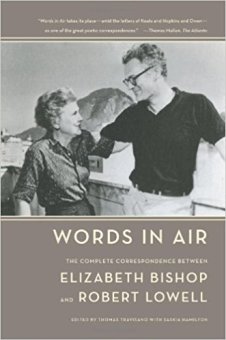
But there are explanations of a kind that can be valuable, even if they are fabishop lowell ltrsr from necessary when one encounters a really terrific poem. There are reasons to learn the backstory of a poem, if such a thing exists for that particular poem (not all poems have one). Anyway, it may be worth asking the poet about it, if she is still living and can answer or if the answer may be deduced from archival materials. We have learned the backstories of a few Elizabeth Bishop poems, just taking one well-known poet as an example (see Words in Air); the stories–in this case, letters–do not necessarily help readers interpret a poem or even understand it any better, but the stories remind us that the poem was initially embodied in the brain of another human being who was undergoing and observing experiences–or leaping into realms of imagination.

More about why that’s a good thing, and more about the embodiment of the human brain, in later posts.