Humanities high horse

runninghorse2It is the Year of the Horse, and I’m on my high horse again about the value of the humanities and the liberal arts education.

A recent article in the Chronicle of Higher Education reports on studies concerning what preparation a liberal arts degree offers to students once they enter the workforce and suggests that the long-term outcomes (in terms of career and steady employment) bode very well. As I embark on another semester of trying to persuade sophomores that the study of poetry can offer some value to their lives, it helps me to know there is at least some evidence that I’m not just making this up!

~

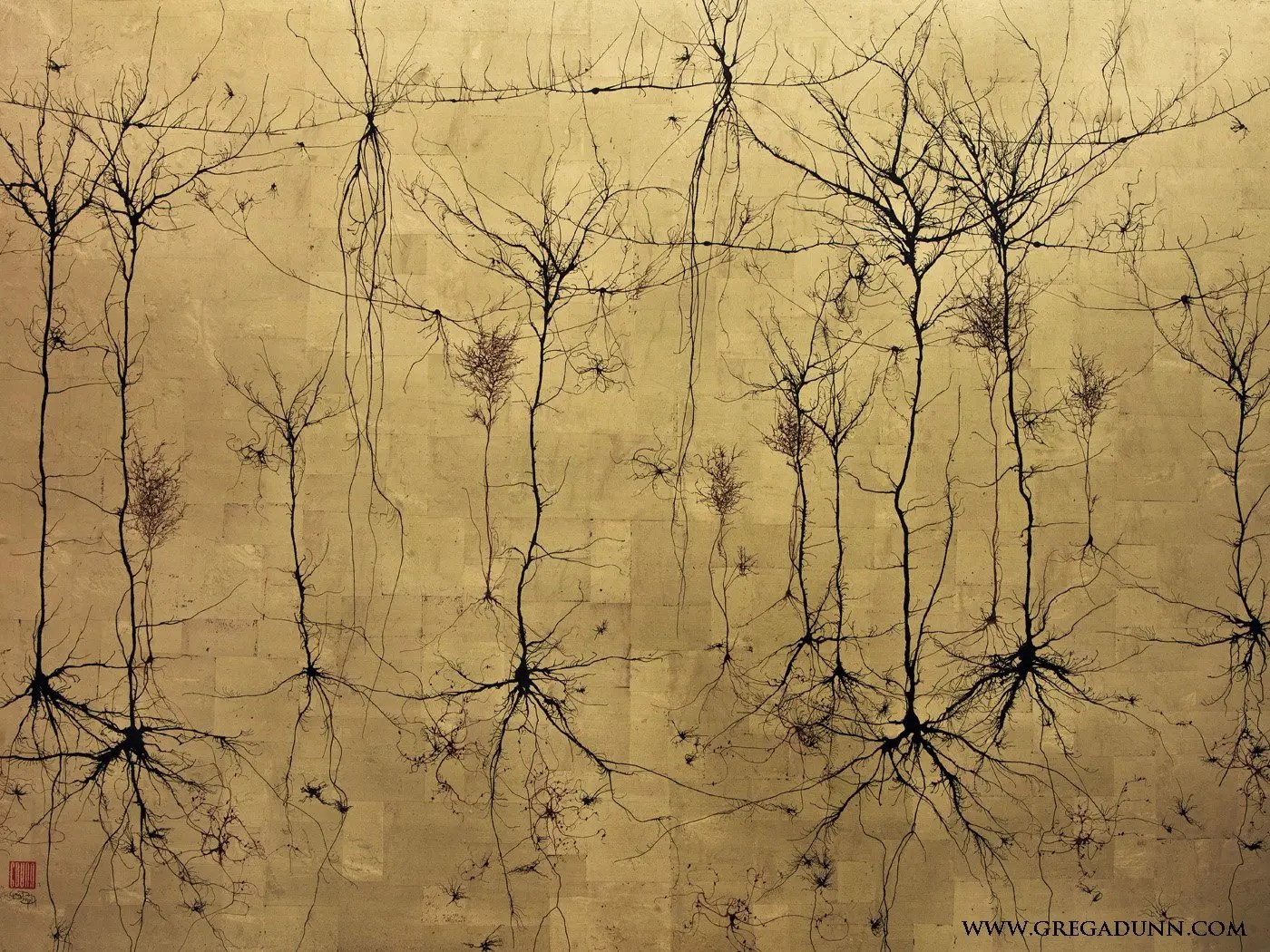
Artwork source: Steve Lohman of LineArt Gallery; lineartgallery@gmail.com

Lyric time

I’m currently savoring–as slowly as possible, as it is a short book–Mark Doty’s “World into Word” essays in The Art of Description. The text has been gently pushing my thoughts back toward matters of poetry.

I always think of Doty’s style, in prose and poetry, as precise and almost studied, though the studied-ness doesn’t feel overbearing but reflective; a naturalness remains that keeps the poems “hospitable” (as he puts it).

In his essay on Bishop, “The Tremendous Fish,” Doty examines the various forms of observation and focus or perspective that contribute to any work of art, although here he is of course honing in on the lyric state of mind. These passages seem to me to hearken to Bachelard (see here and here) on the temporal:

What is memory but a story about how we have lived? …there is another sort of temporality, too, which is timelessness. In this lyric time we cease to be aware of forward movement…it represents instead a slipping out of story and into something still more fluid, less linear: the interior landscape of reveries. This sense of time originates in childhood, before the conception of causality…

Self-forgetful concentration is precisely what happens in the artistic process–an absorption in the moment, a pouring of the self into the now. We are, as Dickinson days, ‘without the date, like Consciousness or Immortality.’ That is what artistic work and child’s play have in common; both, at their fullest, are experiences of being lost in the present, entirely occupied.

fest7~

This is, in addition to relating to Bachelard’s concepts on reverie, a form of mindfulness that would not be out of place in Zen and would be recognizable to any artist familiar with the creative “zone.”

I’m reminded of a popular colloquialism of the 1970s: “zoning out.” Generally, the phrase signified not paying attention, being slightly stoned, out of touch: negative connotations. Yet there were people who used the term in a more positive way to mean “in the zone”–an acceptable, if “flaky,” zinging of the mind into a calm or creative space.

A space where poets might wander in “self-forgetful concentration.”

~

Let’s go…

Clear skies

buddhaedited

(A friend traveling through Thailand took this photo.)

Given that these are the coldest, darkest days of the year, I have felt the need for clarity quite keenly. Today, we had clear skies. When I walked outside this afternoon, I felt as though a note from a singing bowl was vibrating through my body.

{Wake up!}

Poet’s truth

Hilary Mantel writes her protagonist’s view of 16th-C. poet Thomas Wyatt in Bring Up the Bodies:

~

…you trap him and say, Wyatt, did you really do what you describe in this verse? He smiles and tells you, it is the story of some imaginary gentleman, no one we know; or he will say, it is not my story I write, it is yours, though you do not know it. He will say, this woman I describe here, the brunette, she is really a woman with fair hair, in disguise. He will declare, you must believe everything and nothing of what you read… You tax him, what about this line, is this true? He says, it is poet’s truth.

When Wyatt writes, his lines fledge feathers, and unfolding this plumage they dive below their meaning and skim above it. They tell us the rules of power and the rules of war are the same, the art is to deceive; and you will deceive, and be deceived in your turn, whether you are an ambassador or a suitor. Now, if a man’s subject is deception, you are deceived if you think you grasp his meaning. You close your hand as it flies away. A statute is written to entrap meaning, a poem to escape it. A quill, sharpened, can stir and rustle like the pinions of angels.

~

There’s inspiration for you. Now to locate my sharpened quill.

Ignore more?

One of my brothers-in-law has been visiting from Berlin during the holidays. His young adult children all live in the U.K., and it is enjoyable to hear what they are doing and how they navigate the world as they grow–having children of their own, pursuing academic degrees or careers in the arts–and finding parallels between their lives and their American cousins’ lives. My brother-in-law (Lee, a jazz musician, listen here on YouTube) told me he recently asked his older son what the most valuable skill for the next couple of decades was likely to be. The answer surprised him:

“The skill of learning what to ignore,” his son said.

When Lee pressed a bit further for clarification, his son explained that “information overload” and real-time social and other media, along with television and Google Glass and smart phones and whatever next gets developed, overwhelm the human brain to such an extent that people tend to lose the ability to sort or to prioritize. When we get distracted, we become less efficient; several recent studies suggest that there are costs to trying to do everything at once.

So, according to my nephew (who is studying neurology at Oxford), those of us who learn to shut out unnecessary information are likely to be more successful in a highly-communicative, highly-technological social landscape. The difficulty is knowing what kind of information is unimportant. Another difficulty is that our brains are wired to sense everything. In fact, our brains are already highly developed to screen out “useless” information. Managing an even more intentional focus will not necessarily be as automatic. It may be something we have to learn: i.e., a skill.

I think I need to re-develop my ability to ignore things. It seems likely that a lack of intentional focus and time away from technology would get me working on my poetry more than I have been. One way to regain this skill might be to recharge my mindfulness/meditation practice. The intentionality of the practice, and its conscious use of both awareness and screening or letting go, seems valuable enough over all that it would be well worth the time away from multitasking.

One possible “New Year’s Resolution,” then?

Ignore more.

QAL

Studio. Space.

Contemporary artist and blogger Deborah Barlow writes: “A studio, like a womb, is a vesseled space, a geolocation from which one’s work, intentionally free of its context, can emerge.” http://www.slowmuse.com/2013/11/25/up-stairs-in-sight/

In another recent post, she talks about artists’ decisions about whether or not to offer studio tours, and art critics’ decisions about whether or not to visit studios. The critics she mentions (Saltz and Smith) prefer not to see the studios of artists whose work they are reviewing. The sense I get is that the critic needs more objectivity–a disinterestedness–and that a working artist’s studio is a personal space, one through which perhaps the critic might learn too much (context? biography? vulnerability? …one wonders).

I wrote my graduate thesis on how time works in poems, and for a long time I considered writing a followup on space in the poem, particularly the kind of vesseled, nested, interior space to which Barlow alludes (and Bachelard, in The Poetics of Space).

What spaces are conducive to the creative process? Such variety! I have friends who love to write in diner booths or cafes, and others who need complete silence, no distraction (Annie Dillard wrote in a closet; Robert Frost in a shed). One writer I know must be in bed to write. Another must be outdoors. The place matters to many people–but not to all of them.

Writing’s different from painting, sculpting–arts that require at least a few tools at hand.

But some of my writing friends need a computer, or a candle; a pencil and a legal pad, or a fountain pen and a spiral notebook; a bookshelf; darkness; classical music, or the blues.

I don’t really have a studio these days. Maybe it is time I lent my mind to carving out a creative space? –Somewhere nestled, vesseled, interior: (A Room of Her Own).

Below: A location…space, intentionally free of context.  :)

IMG_0252

Depression & the creative process

I was recently chatting with a psychiatrist about the creative process, specifically among poets. He admitted that he doesn’t know much about poetry, but I was nevertheless surprised to learn that he believed the stereotype of the poet who works most creatively when depressed.

“You deal with depressed people all the time,” I said. “Do they strike you as particularly motivated to do anything creative?”

He admitted that one hallmark of depression is loss of motivation–to do anything, let alone create expressive art of any kind. So it would follow, I suggested, that a period in which a person is seriously working at what he or she loves would be unlikely to coincide with a full-blown depressive episode.

“What about those poets who write about, say, staring out a window and sadness,” he asked, “They seem to write about being depressed, to express the feelings of depression.”

True, some poets experience depression (some commit suicide, too); and some express those feelings in verse. Yet none of the working writers I know who struggle with forms of depression write while in the midst of the “black mood.” They can only write well when the mood has not seized them fully; and while they may try to convey those feelings of the ‘inexpressible,’ they write and especially, revise, the work during more productive hours when melancholia has tapered a bit.

Melencolia_I_(Durero)

Drurer’s Melencolia I (wiki images)

It takes concentration, creativity, and analysis to craft a poem that adequately means what depression feels like. You cannot access such things when you are truly depressed. Some writers want to portray the experience; others want to explain it; still others prefer to write about the desire to escape, or even to embrace, the melancholy; others simply relate what they observe. Trying to pigeonhole all writers who address despair defies reason and suggests that all writers undergo the same feelings and experiences. Excuse me, we are individuals–diversely, wildly, enthusiastically unique.

That said, I cannot make the claim that no one has ever created a great work of art or poem while in the midst of a clinical depression; I merely posit that it’s likely that poetry composed while the author is gripped by existential melancholy will not meet the poet’s own standards.

Lewis Wolpert, a biologist and author, says, “I claim that if you can truly describe what it is like, then you have not had a true depression. It’s an illusion, and completely unlike anything else. When you are immersed in it, you enter a world without reference points, so once you recover it is very hard to relate how you felt.”

A world without reference points–that is the attraction depression might hold for a writer: the creative summons to relate an experience that is essentially beyond description. But most writers are not able to answer that summons while in the depths themselves.

And many writers are not troubled by depression at all. [See this 2012 article from the UK’s Mental Health Foundation for essential insight and clarification of an earlier study–that abstract is here.] The studies do suggest that writers are more likely than the general population to have bipolar disorder, which makes a kind of sense to me: after the sinkhole of a depressive period, the active “manic” phase might permit a writer to accomplish a great deal, including possibly a description of the void. Or it might not.

At any rate, I hope that people–psychiatrists, for example!–eventually recognize that we should not stereotype artists and poets any more than we should stereotype people who have mental illnesses, different accents, or skin color that is dissimilar to our own. What makes artists “different from other people” remains a mystery despite years of research and speculation, and my gut feeling is that the difference has more to do with other aspects of the creative process than it does with depression of any stripe.

Story of an object

In a previous post, I quoted Edmund de Waal about the stories that objects can “tell” us. In his book, those objects were things made by human beings; the story of the netsuke was not separate from the stories of the people who acquired them. His book did not examine the stories of the people who sculpted the netsuke, as there was no way to trace them that would not have required years of research. A fiction writer or poet might speculate on the possibilities of the lives of the ‘makers,’ however. That is part of what creative writers do.

There are also those “natural” objects that surround us and which can tell stories–or inspire human beings to imagine and tell their stories. For example, every origin myth contains some aspect of telling the story of the earth or sun, stars or mountains, seas, skies, moon.

After some online discussion with artist and writer Deborah Barlow, I considered the story of an object as having tactile and temporal aspects in some cases, and the object as “residue” of an event–or life. Ephemera, correspondence, tokens…many potential stories.

And, of course, works of art. If you follow this blog at all regularly, or check the archives or the Art[s] tab/page, you can tell I think often about art, its stories, artists, and their stories.

For example, a journal or notebook that an artist or writer uses can be a tool, repository, memory-jogger, inspiration-minder, sketchbook, Rolodex

It occurred to me that my poetry journals, which I’ve been keeping for decades, contain potential stories/poems but are also objects with their own stories to tell–which may or may not be “my” stories, though they necessarily intersect with whatever my story is.

objects, stories

objects, stories

~
Some examples. Tactile, visual, textual.
Inspiration, possibly.

Images captured in several ways.

Necessary–yes. For me.

~

Where do your stories reside? What object or objects seem to require the act of story-making? By which I mean, which objects fire that urge in you?

Entitlement, humility, & self-esteem

Among my academic colleagues in the USA, I hear a refrain of grousing about so-called millennial students who, it is averred, perceive themselves as entitled to good grades, exceptions to rules such as number of absences, timeliness, and response to communication, and other “special treatment.” The general criticism goes along the lines of Kenrick Thompson’s letter to the editors of the Chronicle of Higher Education:

… I grew increasingly weary of all the whining, crying, excuse-making, and general lack of attention to responsibility that appear to characterize most of today’s college and university students. I began to sense a growing atmosphere of entitlement among a majority of my students, who apparently believe that society owes them an education. I even endured several instances of students’ insisting they should pass my course simply because they had paid their fees and purchased the required textual materials.

Thompson lays some of the blame for such behavior at the door of college administrators who care more about admission and retention numbers than about the whole package of education, which includes less-measurable outcomes such as personal responsibility and mature problem-solving. The Chronicle has published other essays on related topics, among them these by Elayne Clift and Frank Donohue.

Other critics have blamed Baby Boomer parents for overdoing positive reinforcement so that their offspring do not have to suffer from low self-esteem. These critics suggest the everybody-gets-a-prize approach has watered down the go-get-’em competitiveness formerly considered a hallmark of the individualist American.

The word “entitlement” pops up in a blog post by Toby Woodlief back in 2007, and certainly appeared in conversations I had with colleagues long before that; but there has been much general buzzing that this sense of entitlement is “a Millennial thing.”

What does entitlement really mean? Webster’s has three main entries, the third of which is: “belief that one is deserving of … certain privileges.”

I can therefore say that I believe I am entitled to something, and I can accuse others of feeling that way; but because the word is based upon the subjective sense (“feeling or believing” that one is “deserving of”), can I say for certain that other persons “believe that society owes them an education”? [Note, Thompson does qualify with “apparently”.] No one can independently ascertain what another person believes or feels. My students do not tell me they feel entitled to things.

Could this be just a problem of perception or point of view, as so much inter-generational sniping is? Certainly my generation received criticism for its youthful irresponsibility, though it was of a slightly different kind (drop out of the rat race, turn on, be free). Did we feel entitled to ignore the paths our parents took?

I wonder if the real reason older people feel so annoyed with Millenials is the perception that there’s so little humility among the young. Many people my age were raised with the Protestant ethic formula that one should be humble, and humility has long been valued by the Catholic church, as well. Humility is closely allied with shame, however–and even guilt, to some degree (original sin and all that)–giving us neuroses along with our humility. It depends, once again, on your sociological and personal outlook; I am not suggesting that humility is bad or good, nor that entitlement is bad or good. These are just extensions of feelings people have, of personal and subjective perceptions.

Blaming the young people, or blaming their parents, or blaming the culture, for that matter…none of it helps us to understand or to respect one another. And as fellow travelers on the planet, are we not entitled to at least an initial moment of respect?

A balance might be nice.

~

I work with 18-year-olds every day, and I enjoy them. This is not to say that I don’t occasionally wish to wring their necks or boot them out of their warm beds in the morning or remind them that I am not here to make them feel good about themselves for no reason other than their uniqueness. It does not dissuade me from doling out Fs when Fs are deserved (or, shall we say, earned) or reminding them, now and again, that most of their annoyances qualify as first-world inconveniences undeserving of hysterical rants.

I try to keep in mind that they are still learning about the world of other human beings.

In time, if they are mindful and observant and lucky, they should discover that the participation trophy for life is life itself–

IMHO   ;)

~

Sublime beauty

In his book Survival of the Beautiful, David Rothenberg says perhaps it was the evolution of an abstract aesthetics in art (abstract work as beautiful) that enabled human beings to begin to see natural things as beautiful in themselves–as opposed to the Romantic view that human yearning and elevated sensibility could best be encountered while experiencing Nature or Classicist ideas that found natural things corrupt and irregular, in need of perfection into better-proportioned objectification. In History of Beauty, Eco allows the Romantics their view of the sublime but says that in the late 17th c “the Sublime established itself in an entirely original way, because it concerns the way we feel about nature, and not art.” His text offers the paintings of Caspar David Friedrich as an excellent example, paintings that depict people as observers of the Sublime:

The people are portrayed from behind, in such a way that we must not look at them, but through them, putting ourselves in their place, seeing what they see and sharing their feeling of being negligible elements in the great spectacle of nature…more than portraying nature in a moment of sublimity, the painter has tried to portray (with our collaboration) what we feel on experiencing the Sublime.

I love the idea Eco parenthetically notes here: with the viewer’s collaboration. These paintings permit us to enter into the experience as the great preponderance of the artistic canon did not. Some critics suggest the environmental “movement” (in the USA, at least) owes its lineage to Leopold via Thoreau through Darwin, Wordsworth, and the German Romantics.

Friedrich’s work tends a bit over the top for my personal tastes, but I do think some of his best work (notably The Wanderer above the Mists, Woman on the Beach of Rugen, Moonrise by the Sea) does exemplify a sense I have experienced myself in natural surroundings when I feel myself a “negligible element” amid the remarkable scope of the cosmos and the world.

In the USA, at about the same time as the German Romantics, the paintings of the Hudson River school evoke some of the same sense of nature-as-sublime. (Frankly, I prefer Thomas Cole to Friedrich.)

~

This, too:

“The sense of the Sublime is a mixed emotion. It is composed of a sense of sorrow whose extreme expression is manifested as a shudder, and a feeling of joy that can mount to rapturous enthusiasm…while it is not actually pleasure…”   Friedrich von Schiller, On the Sublime (tr. Alastair McEwen)

~

“Poetry might be defined as the clear expression of mixed feelings.” I am pretty sure W.H. Auden said that. Which, by the way, gets us into the territory of the Sublime as described by Schiller.

~

In Japan, in the 17th century, Matsuo Basho composed haiku, some of which demonstrate the sense of the Sublime (without being Romantic at all)–i.e. that sense of rapture tinged with the shudder of grief or the feeling of awareness of one’s negligibility:

A wild sea-
in the distance over Sado
the Milky Way.

~

paintdaub
I stand on my back porch; I am small and negligible, the sky is large and Sublime.