Mud & connections

My region’s been unusually low on rainfall the past 18 months, but this year April showers seem almost to be compensating…my veg patch is mud. Weeding and more sowing will just have to wait. I walk around the neighborhood and my yard and the woods, squelching through muck and stopping now and again to upend a rock or rotten log and see who’s active now. Lots of worms and arthropods, the occasional spider, many ants.

In such moist circumstances, we get fungi; I’ve been enjoying Lesley Wheeler’s new book, Mycocosmic, which I’ve read twice now–once for content and sound, once to learn more from the poems’ craft structures, all the while fascinated by the science of fungus, which she incorporates into many of these poems. It’s a richly rewarding book, sometimes sorrowful, always intelligent, full of insightful poetry. The collection includes some poems that feel like spells, chants, divinations that suggest there are always imaginative methods for coping with anger, unfairness, and loss. Exploring the vein of how interconnected the natural world is, and the human world (with other humans and with the Earth) feels so vital to me, and Wheeler’s book pivots on this vitality. Look at the way Harry Humes threaded through my life, for example, in small but meaningful ways. The same goes for Lesley and for so many other people with whom I’ve shared intersections, interweavings, and connections over the years. That butterfly effect of influence. (Now that I think of it–Harry Humes has a book with that title: The Butterfly Effect). Or are those networks mycelial, as Lesley Wheeler suggests?

~

More connections: grad school was long ago now, but I’ve maintained a few colleagues from those days and will always treasure the fact that earning an MFA led to meeting fascinating people. For example, the recent issue of The Bookends Review features an interview my fellow Goddard alum Ian Haight conducted with me last summer. He asked me about teaching humanities, about higher ed in these fraught times, about AI and creative work, about my residency at Joya, and about poetry in general…https://thebookendsreview.com/2025/04/09/poetry-the-humanities-and-aesthetics-an-interview-with-ann-e-michael/. Some thought-provoking questions–thanks, Ian! And thanks to The Bookends Review for curating the interview into the journal.

Unexpected directions

What gets a poem started?

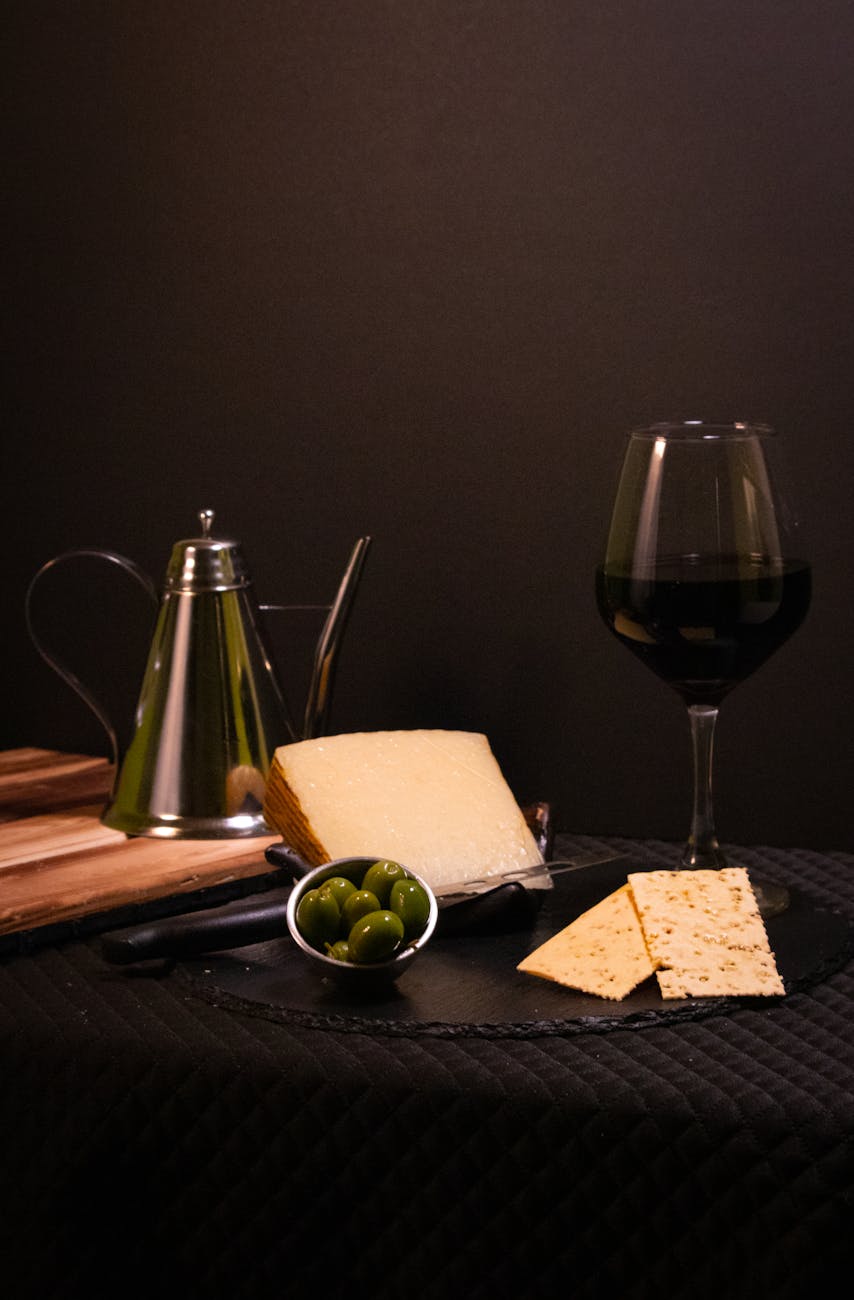
Sometimes, it is a prompt; I depend on those when I am feeling a bit “dry” creatively. Most of the time, though, the prompting comes from some unexpected quarter. The poem below was prompted by something a colleague said–that she’d consider belonging to any religion that permitted red wine and brie cheese. She was joking around, but the idea stayed in my mind. When I elaborated on it in a draft, the poem needed to be in first-person. And then it took off in an unexpected direction. Kind of a world-weary, sardonic direction, a commentary on our society perhaps. No: certainly. The poem changed tone from something rather amusing to something more reflective and serious. I had not seen that coming when I sat down to draft it!

I like that unexpected directions happen when reading, and writing, poems. One thing I have noticed when I see so-called poems “written” by an artificial intelligence program is that they deliver no such surprises. An algorithm’s surprise is called a bug; it occurs when something goes screwy in the code string. But AI isn’t human enough to understand surprise. Not yet, anyway.

~

Luxuries

A five-year-old chianti reserva, recompense enough
for a day of malingering and, yes, loneliness—
as though that were reason to drink, as though drinking
requires reason when, for most of the last few
centuries, wine’s been safer to drink than water,
and I’ve no right to complain.

Aphorisms tell us we choose our own ways
(paths, journeys, lives); anthropologists say we are
society’s children, which limits our choices.
Religions narrow the decisions further, although I’d
choose one that permits wine, Camembert, and almonds—
I admit a taste for luxury.

In my milieu, chianti and Camembert are luxuries and
I haven’t had my house bombed, my family sundered, the water
turned to poison in the reservoir, not yet, though sixty years
may not be an entire lifetime. And no quantity of wine erases
the wrenching violence done in the name of my society,
of keeping me secure

and those like me. As though we deserve to be kept, and not
others, so we can purchase a more than palatable wine
and French cheese and almonds, to ensure the economy’s
robust, and money—that expression of magical thinking—
can continue to pour itself into the stock market’s statistics,
somehow to save us all.


~~
Photo by Josu00e9 Antonio Rivera Vallejo on Pexels.com

Paper files

Frankly, I have never been much of a fan of organization. I don’t mind planning, in brief and purposeful bursts, but getting things in shape after the fact–once the mess exists–well. I know people who truly enjoy pitching in and re-organizing, but I am not one of them. Besides, I’m also facing similar tasks in my household, rooting through the kids’ rooms (they left years ago) and our attic and basement to cull, straighten up, and organize. The tasks are mutually distracting. And often tedious. I’m working on my attitude, though, trying to find some method of making these chores, er, “creative” in some way. (File under “Lying to Self”).

Call me old-fashioned, I’ll readily admit to it; but lately I have decided that the most efficient way for me to keep track of my own writing is by using a physical filing system. I have experimented with various spreadsheets (I have no patience with Excel, however and alas) and computer folders. I do use the latter for a year-by-year archive of my work, but I cannot easily extract what I am looking for that way. Now that I’ve retired from my 40-hour work week, I have wanted to manage my creative work better and keep track of what needs revision, what seems finished, what has been submitted, what’s been published. That strikes me as a necessary part of tending to myself as a writer. The past year has been a time of working through options, with accompanying irritation and tedium.

Photo by Anete Lusina on Pexels.com

After years of endeavoring to use electronic files, it came to me that there’s nothing wrong with old-fashioned paper systems, organized alphabetically by title, with the computer-file names and draft number at the bottom of each poem. This is how I think about the poems when I want to work on them or submit them, so it feels natural to me. Why operate against one’s own operating system?

I suspect one reason (oh, there are many, but let’s start with one) I am so angry about Elon Musk’s “DOGE” initiatives is that efficiency is never all it is cracked up to be and is also not the be-all and end-all of any society’s best organization. Of course those who push AI believe that algorithmic calculations can make the world run smoothly, but said people are egregiously uninformed about human nature and the myriad forms of individual thought processes. We are non-standard. Averages account for almost nothing, really. We do not think the same thinks. (And yes, I meant thinks not things, autocorrect). Diversity is what keeps evolution going. There is no change without it; and without change, we die.

So: I’m inefficient, to a degree, when it comes to keeping my creative work in order. However, the paper filing system, with a notebook and index cards and files on my hard drive, assisted by my still-useful memory (a human brain!!), have so far been working pretty well. It has taken me several weeks to put my stuff together, but now it’s far easier to fetch what I want to work on, send out, or collate, which I need to do to prepare for upcoming reading [I have two online readings coming up–one on Feb. 18 and one on May 2]. I’m also grateful that the task kept me busy while I was anxious and worried and grieving over recent not-so-terrific experiences in my (physical, real) life. Real life, which is not averaged. Seldom predictable. Inefficient. And something to celebrate for all its strangeness.

Automatic writing*

A few posts back, I mentioned I would weigh in on artificial intelligence prose generators–“bots”–specifically the much-reported-upon ChatGPT. The media coverage has included everything: hand-wringing, speculations on the extinction of critical thought, predictions about the death of the high school essay or the re-institutions of oral and handwritten exams, not to mention worries about spurious content and job loss among educated citizens, as well as wild enthusiasm for automating tedious writing tasks and excitement about where tech is taking us.

It’s not as new as most people think. AI has been providing customer-service responses and generating basic summary content for news-related websites for awhile; but OpenAI’s open-source platform, which is currently free and for use by anyone (not to mention educating itself as each user inputs prompts and questions) has so rapidly gained “tech adopters” that those of us who teach writing cannot ignore it completely. And we shouldn’t ignore it, but neither should we throw our hands up in surrender and predict the end of the art of writing as we know it.

A recent New York Times article reflects the kind of discourse taking place at the institution where I work. It’s fascinating to me to see how quickly the conversations have evolved in the usually slow-moving environment of academia. I find that at my college, my years of laboring with students who lack strong backgrounds in written expression or confidence in their writing have suddenly attracted the attention of full-time faculty members–they want to know how they can tell if students are using AI assistance to write essays (when said profs have no pedagogical experience in writing) and how to change the wording of their assignments to “fool” the programmed generators, among other pressing questions. These inquiries tend to come tinged with a sense of slippery-slope fallacy: does this mean academia will go to hell in a handbasket?

I refuse to send out a firm forecast, though my intuition says no; instead, academia, and society, will change.

And despite the daily-proven, scientifically-accurate, anecdotally-obvious FACT that change is normal and indeed necessary, most people (and their societies and institutions) fear change. Hence, the media and institutional brou-ha-ha.

Let’s face it, writing can be hard. There will always be people who do not want to do the work of writing from the soul, brain, heart, emotion, experience, dread, you-name-it. Painting is hard, too. But people who don’t want to practice and experiment with visual art can use paint by numbers, clip art, or AI. There will always be a few folks who learn to play an instrument for the joy of it and for the challenge of continually learning new approaches to the process of music making; the rest of us can be audiences, if we like. People who write because they can’t not write? They won’t use bots unless they want to experiment with them: make perverse use of the programs, play with them to see what the human’s skills can do in concert with algorithms, bits, bytes, and data. I know artists who are already collaging with AI-generated art to create new, human-mediated visuals.

I recognize the fear factor here, but I don’t buy into it because I am so curious about what will happen next. I’m interested to see how changes will occur, which changes will make a difference and which ones will just vanish, and whether pedagogy will develop toward, away from, or parallel to AI developments in numerous spheres–to name just three of numerous possibilities. Change is exciting, but it’s also hard. I can’t say I am as excited about adapting my fall semester syllabus to reflect whatever the university decides to do in light of ChatGPT, but since I’ll have to adapt to a new “learning management system” anyway, I may as well accept that “a change is gonna come.”

~

*For the definition of automatic writing, Wikipedia has a fairly complete page.

Photo by Startup Stock Photos on Pexels.com