NoPoMonth, but…

April is National Poetry Month; but this year, I am in hibernation mode.

I’m not going to readings or writing a poem a day for 30 days, not posting much of my or other people’s poems or poetry books on social media, and not doing much poetry writing or any submitting. What’s gotten into me? Some kind of malaise? Or just a sense of being overwhelmed by, you know, life and aging and perhaps too much reflection. Plus there’s garden catch-up to tend to, since I was away for the early part of the season opener. And we’ve had a heat wave with a dry spell and lots of wind, so I’ve had to pace myself with the heavy stuff. Thankfully, Best Beloved can pitch in with much of that. Yet I am reading poetry, and if that ever stops I’ll know I’m in trouble.
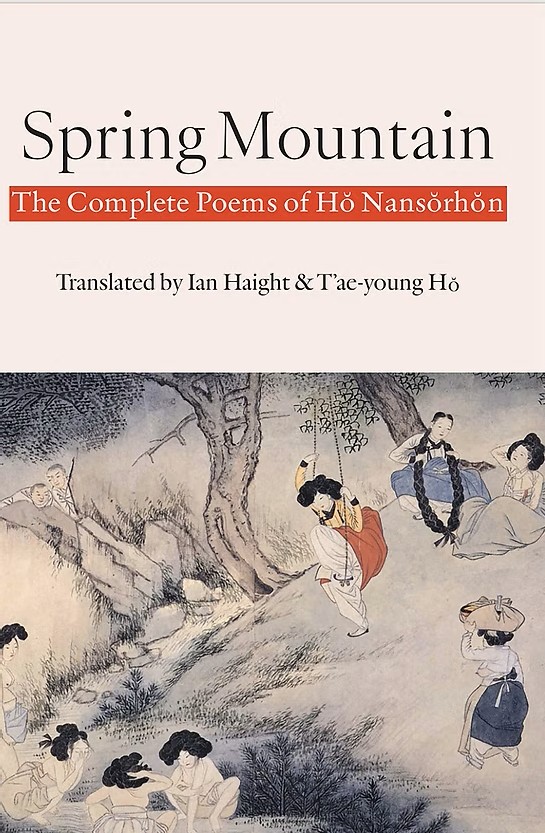
So–back from traveling westward-ho. While in Fort Collins, Colorado, some dear friends introduced me to Wolverine Publick House, Cafe, and Bookshop, where there’s a lovely poetry book room in which I found my colleague Ian Haight’s book, Spring Mountain: The Complete Poems of Nansŏrhŏn. Also lots of other fabulous poetry that I had to restrain myself from purchasing, lest I overload my carry-on luggage weight. I read many of the Nansŏrhŏn translations in earlier versions that Ian emailed to me, and it is wonderful to find the book in print (from White Pine).

While in Boulder, CO, another friend suggested Devon Price’s book Unmasking Autism, which has given me much room for reflection. For many years, I helped students write college-level papers and realized that a number of these young people had varying aspects of “autism spectrum disorder”…that I, as a writing tutor/teacher, was wholly untrained to deal with. To help them, I made it up as I went along, student by student. It turns out that most of what we know about supporting autistic people to navigate contemporary social structures has been pieced together by people making it up as they went along. It helped me that one of my dearest friends has a now-adult child with autism–I’ve known him since before his birth, and I think of him as an intriguing person who has much to offer to a society that essentially ignores or shuns people like him. He needs more support services than the students I saw at the university, but he is quite his own person, and always has been. It saddens me that people like him are not more celebrated (not merely tolerated) in our society. We would all be much richer for the experience. Devon Price makes an excellent case for how acceptance of neurodiverse people can enrich the world; however, that would mean dismantling much of the capitalist, work-ethic, individualistic social systems we have, not to mention changing how the US health insurance and health care industries operate. So–not too likely any time soon. If ever. But I believe we need more social space for people whose “peculiarities” are not harming others, even if they seem a bit “weird.”

That would be good for me, for one. Speaking as a perpetual outlier and occasionally rogue thinker, it’d be nice to feel my ideas and modes of thinking aren’t weird, just different; they can be acceptable in their own way. I do not fall under the category of adult autistic but, like most of us, I have some traits that I share with the people Price writes about. Recognizing that we share traits is a way to get to know people who seem “unlike us.” And to feel less afraid of, or uncomfortable with, having them in our lives.

~

Finally, I want to shout out to Bob Mee, whose blog I read (thanks to Dave Bonta’s Poetry Blog Digest.) Mee’s recent post questioning whether the brain, as we age, changes the way we write poetry really got me thinking. I’m getting longer in the tooth myself and, as I’ve been writing poems since I was 20, his post got me curious about my own changes in style, approach, form, content, topic, influence over the years. I will probably be mulling over this idea for some time, and it may even get me to dredge up some really old poems to see whether how I write poetry has changed. Mee says: “when I sit to write the process is different. My brain is still capable of energetic concentration but I look at some of the ‘old’ poems from twenty years ago and know I cannot write like that any more.” Hmm. I’m not sure this is as true for me as it is for him, but I think it is worth examining.

Mud & connections

My region’s been unusually low on rainfall the past 18 months, but this year April showers seem almost to be compensating…my veg patch is mud. Weeding and more sowing will just have to wait. I walk around the neighborhood and my yard and the woods, squelching through muck and stopping now and again to upend a rock or rotten log and see who’s active now. Lots of worms and arthropods, the occasional spider, many ants.

In such moist circumstances, we get fungi; I’ve been enjoying Lesley Wheeler’s new book, Mycocosmic, which I’ve read twice now–once for content and sound, once to learn more from the poems’ craft structures, all the while fascinated by the science of fungus, which she incorporates into many of these poems. It’s a richly rewarding book, sometimes sorrowful, always intelligent, full of insightful poetry. The collection includes some poems that feel like spells, chants, divinations that suggest there are always imaginative methods for coping with anger, unfairness, and loss. Exploring the vein of how interconnected the natural world is, and the human world (with other humans and with the Earth) feels so vital to me, and Wheeler’s book pivots on this vitality. Look at the way Harry Humes threaded through my life, for example, in small but meaningful ways. The same goes for Lesley and for so many other people with whom I’ve shared intersections, interweavings, and connections over the years. That butterfly effect of influence. (Now that I think of it–Harry Humes has a book with that title: The Butterfly Effect). Or are those networks mycelial, as Lesley Wheeler suggests?

~

More connections: grad school was long ago now, but I’ve maintained a few colleagues from those days and will always treasure the fact that earning an MFA led to meeting fascinating people. For example, the recent issue of The Bookends Review features an interview my fellow Goddard alum Ian Haight conducted with me last summer. He asked me about teaching humanities, about higher ed in these fraught times, about AI and creative work, about my residency at Joya, and about poetry in general…https://thebookendsreview.com/2025/04/09/poetry-the-humanities-and-aesthetics-an-interview-with-ann-e-michael/. Some thought-provoking questions–thanks, Ian! And thanks to The Bookends Review for curating the interview into the journal.

Reading poetry

I find I’m drafting poems again, though most of them fall on the melancholy side of tonality. It’s odd because I’m not feeling exceptionally melancholy myself. Granted, the news cycle’s enough to make anyone feel a bit low; but my internal weather isn’t so bad, and the end of February has arrived with peculiar mildness this year. Last year, we were still covered in snow at Valentine’s Day. Could still happen–but the snowdrops and the crocuses are open, as are the iris reticulata.

~

Spending time reading contemporary poetry books may be a contributing factor to my flurry of new drafts. In the past two weeks or so, I’ve enjoyed perusals of books by Ocean Vuong, Lynn Levin, Jaan Kaplinski, Cleveland Wall, Kim Addonizio. I’m also reading Ian Haight’s newer (unpublished) translations of some Nansorhon poems, a process accompanied by research into the precepts of Taoism and its heavenly denizens and hierarchies. I need some context if I’m going to get as much out of her Taoist poems as I’d like. Thanks to Ian’s research and translations, I did some study of this poet and her work ten years ago; but I focused more on her family situation and constraints and did not examine the most religiously-influenced poems.

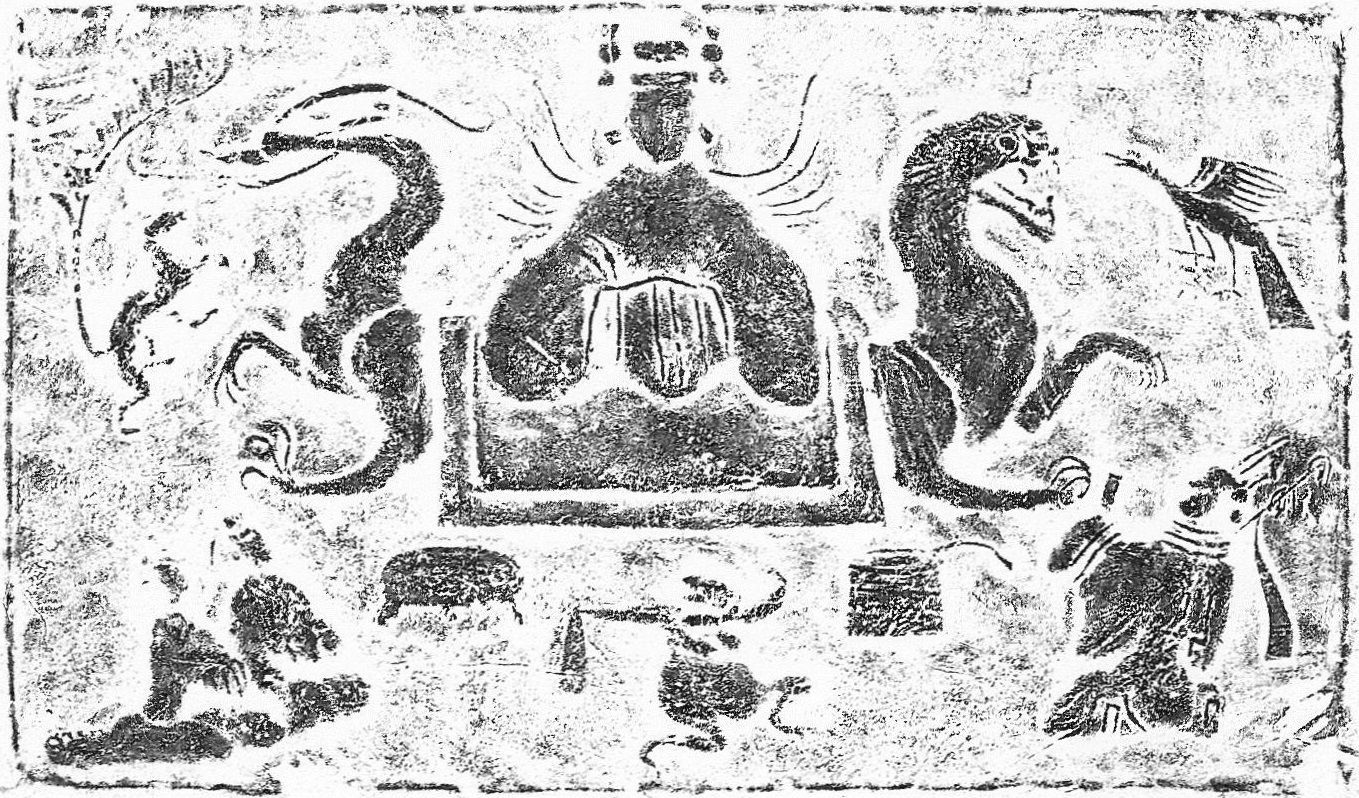
One Taoist goddess whose realms and attributes intrigue me is the Queen of the West, also called Queen Mother of the West, or Xiwangmu 西王母. She’s the mythical source of the peach of immortality and was likely important to Nansorhon as a powerful, much-worshiped female deity. Indeed, she’s invoked in several of the Nansorhon poems.

“Rubbing of a brick relief from the Han period, showing the Queen Mother sitting on her throne. To her right hand, a nine-tailed fox (jiuwei hu 九尾狐) and a dragon are facing each other, and to her left, a three-legged crow (sanzu wu 三足烏) and a tiger are facing each other. Just in front of the Queen Mother, a toad is dancing.” See http://www.chinaknowledge.de/Literature/Religion/personsxiwangmu.html (caption text by Ulrich Theobald, 2010).

~

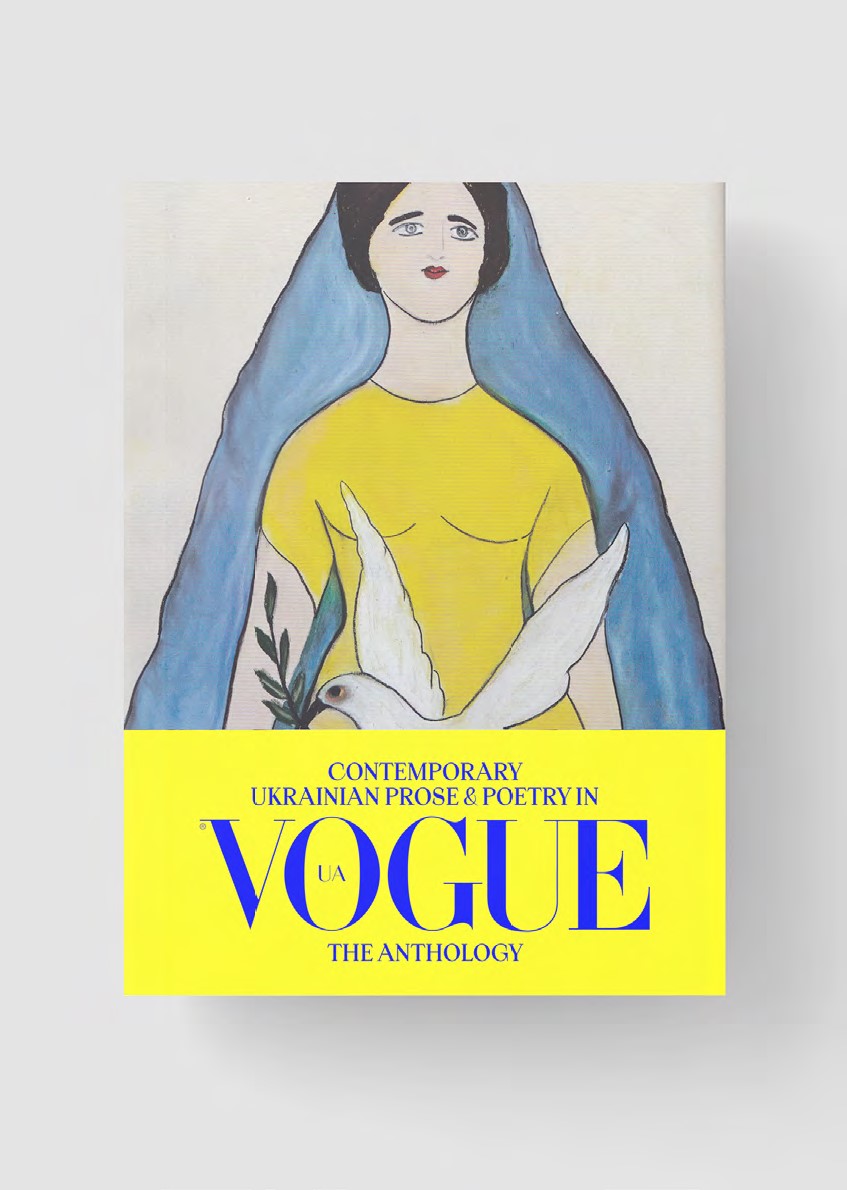
Other translations I’m reading are from Ukrainian. One of my husband’s colleagues is working in exile on Vogue Ukraine, and the magazine plans to publish a print anthology of contemporary Ukrainian writers–as early as next month!–marking the one-year anniversary of the start of the Russian hostilities aimed at Kyiv. She sent me a few selections of the poems and prose that will appear in the book, and I’m impressed by the writing and the breadth and depth of the literature. And also heartbroken.

Vogue UA had been planning its 10-year anniversary celebration when Russia invaded. The magazine rapidly pivoted to online-only, and its editorial team decided to publish a commemorative print book titled, rather significantly, 9 1/2 Years of Vogue Ukraine (and if you are curious, you can purchase it here). Yes, it’s a high-end fashion magazine–not my usual jam. Proceeds support various Ukrainian cultural organizations (museums, libraries) and female veterans.

The forthcoming book, featuring contemporary Ukrainian prose and poetry, will appear on the Vogue UA site in March or April. I’ll keep my readers apprised…from what I have seen so far, the anthology will be well worth reading.