Post-exertion malaise

This year, my holiday plans are less busy than usual. I don’t have to cook a large meal, wrap a lot of gifts, travel much (or far), or attend a bunch of parties or festivities. There is a quiet joy in this low-key schedule, though it means the season possesses a slightly different character. I thought that the lack of holiday stress would mean I had more time to write, revise, maybe even to submit work to literary journals. The rain and chilly humidity have enervated me more than I expected, though, and some days even an hour of serious concentration seems to wipe me out.

I believe this weird exhaustion for no apparent reason is a kind of post-exertion malaise.

Post-exertion malaise (PEM) is not uncommon among people with chronic conditions such as chronic fatigue syndrome, Epstein-Barr, long covid, fibromyalgia and the like. Its key features are that the fatigue seems far out of proportion to the exercise or other exertion that preceded it, and that it is delayed–the exhaustion may set in two hours or even two days after the experience. I have had PEM, for example, after spending a lovely and high-energy day of hiking or wandering for hours around a city or museum and suddenly, without warning, “crashing” into bone weariness two hours later, or a day later (I have fibromyalgia). I’ve learned to manage the physical aspects of PEM, however. It does not happen all the time, and often I can plan for it.

Post-exertion malaise: it sounds like the title of a contemporary novel.

I’ve read studies that speculate PEM results from a sort of communications snafu among the many complex body systems: nerves, synapses, gut microbes, spine, brain, and probably processes science has yet to discover. What I wasn’t aware of until recently is that PEM can appear after mental or social “exertions” as well. Mental exertion such as submitting to journals; social exertion such as attending poetry readings, parties, family gatherings. It explains why I had to lie down for a nap at 5 pm every day the last few years I was working full-time, even though my job was a desk job. And why shopping has become such a tiring task for me.

Shopping, when you think about it, involves: 1) being in a public or social space; 2) attention to details; 3) frequent decision-making; 4) stress about finances, parking, and whether said decisions were the right ones; 5) unexpected stuff like long lines, a credit card that refuses to work, bad weather, and not finding what you were shopping for. Even if you shop online, some of these processes are involved. Yes, our brains are bombarded; and our brains are designed to filter and make efficient work of the bombarding, but perhaps that’s part of what goes awry with long covid and chronic fatigue. The filter may clog, so to speak. Brain fog and fatigue.

Similar micro-decisions go on when I send out poems to journals. Should this poem be sent to that publication? Do I like the other poems in this magazine, the editorial bent? Is this poem finished, and is it any good? Do they require a fee? Do I want to pay the fee? Are they okay with simultaneous submissions? Do they use Submittable, email, or some other method? Such analysis goes on constantly, as well as lots of even smaller decisions. I have to read the submissions guidelines carefully and, sometimes, re-format my work to suit. And then there’s the cover letter if required, and the bio–though I have a “boilerplate bio,” often it seems wrong for the journal; if they’ve asked for a personal touch or want me to stress place or background, I have to tweak the bio…and on and on. The task was never my favorite, but it didn’t exhaust me.

Because my PEM is intermittent, often I can send out a good deal of work in one sitting with no fallout, just as sometimes I can hike or walk for hours without pain or fatigue. I had almost no trouble when I was in Spain earlier this year. But this week in drizzly-snowy eastern Pennsylvania, I’m having to take too many rests after doing what seems like almost no real work. Frankly, it’s disheartening. So I’ve decided not to expect to get much done during the next two weeks and to appreciate the time I can spend reading a novel, decorating the tree, sitting by the fire, talking to loved ones by phone. No need to be disheartened.

Chastened & learning

The temperature got wintry this past week, and now I feel inclined to make chili or giambatta, or savory stews with ingredients such as butternut squash, potatoes, beets, eggplant, cannellini beans. Or polenta, maybe–anything that takes awhile to cook, sending up steam and warming the kitchen so it feels toasty when I come in from a walk. I admit to being a wimp about walking in cold weather. I do it; I know walking in any weather is good for me and I bundle up, but my walks are decidedly shorter. Even on sunny days.

Today was not a sunny day.

And to my dismay, the downy woodpeckers are back again, hammering at the wood on our house. The one on the left banged into a window, but generally they cling to the boards. I wish they would drill at the many dead trees along our property line; they’d have more luck, too, if they’re seeking food. By the way, this photo is 10 years old. Now I would know not to handle a wild bird with bare hands because the oils on human skin are not good for feathers. (Three decades of educating myself about my own environment have chastened me–there’s so much I don’t know.)

I also don’t know which of my own poems are any good, or which ones to send to which journals, or whether I should care. It’s oddly heartening–and honestly, NOT schadenfreude! (because I get no pleasure from it, merely a sense of community)–to read in my colleagues’ social media posts that “rejection season” is here. I am not the only one whose poems have returned lately. Lesley Wheeler writes: “Magazine rejections have been trickling in, too, although mostly the please-try-us-again kind, and I know enough about editing now to really appreciate those.” I have had a number of those, too. And I’ve been an editor, so I get it, and I am appreciative. But I am mystified nonetheless–after 40 years, why am I so clueless at this sort of critical analysis? When I sit myself down to submit poems, I tend to find all my work lousy or, looking at the poems I think may be good, realize I lack any idea of where to send them–even though I am a frequent and avid reader of online and print literary journals. You’d think I’d have gleaned something about poetry the way I have learned about my geological region, its seasons, critters, viruses, predators, bloom times, pruning times, sowing/planting times and such.

Equally chastened by poetry’s landscape, I guess!

Other forms of gleaning

Of the many tasks that lie before me as I work toward restructuring my routine, the past drafts pile must be the most engaging long-term project. Other kinds of odd jobs can be done in brief segments; it doesn’t take more than half an hour to clean out a drawer or closet, throw laundry in the washing machine, or cut back the ornamental grass for the season. Even a big job, like uncluttering the attic, can be done bit by bit once we get the motivation. Those tasks don’t require much critical thinking, no analysis beyond “Do I need this anymore? Can I get rid of it? Can I consolidate it with other items of its kind? What will take this stain off?”

While I can’t say I love organizing and clearing out stuff, it is not really taxing work. Just tedious.

Sorting through the drafts pile isn’t tedious, but it’s monumental and a bit intimidating. The pile of poems dates back as far as 2001 and is made up of probably two reams of paper. It includes hundreds of fairly terrible poems and, if I am lucky, maybe 80-100 poems that have the potential to be meaningful, beautiful, or at least not embarrassingly bad. This pile’s the result of 20 years of procrastination, lack of time, lack of motivation, and generalized disorganization. I admit it! Now I must roll up the proverbial shirtsleeves and get to work: work which requires analysis, criticism, revision, sorting, culling, and–that precious commodity–time. I find I’m unable to accomplish much if I attempt the work in small bits, (though I do break it up into sections, more or less). If I don’t spend at least two hours at a go, I get distracted and indecisive. I read each draft carefully, several times, to assess.

So we’re looking at weeks and weeks here. Maybe months and months, though I hope not.

The way I choose to understand the process is as a type of gleaning and sifting. I’ve got the harvest in–a big pile of poem drafts, maybe ur-poems, maybe seeds of poems, maybe crap. My efforts help me to decide which ideas are interesting, even if the poems themselves are not pulling the weight of an intriguing possibility; which lines and images are worthwhile, even if they don’t operate too well in their current context; which pieces suffer from thoughtless lineation, weird syntax, clunky form, form that doesn’t suit the content, and the like; which poems are far too wordy or else missing vital words for clarity; and which poems are basically not worth putting any effort into because: Boring! Obscure! Derivative! Sentimental! Awkward! Meh! What was I thinking?!

And then, every once in awhile, I find a poem I like and had forgotten about, one that only needs a bit of appropriate tweaking. Eureka moments while wading through my own creative work.

Yes, I should have been doing this sort of gleaning and sifting all along, the way I did when I was first starting out as a poet, 45 years ago. It probably would have made things easier. I notice myself noticing myself, though…noticing my changes as a writer, my little obsessions and my past enthusiasms glimmering in the work, noticing the different ways I have approached Big Themes and smaller ones. There may be something useful in that offshoot of my major poetry drafts excavation. Who can tell?

~

The Gleaners, Jean-François Millet, 1857; image, Los Angeles County Museum of Art

Repetition

Repetition, the foundation of rote teaching and memorization, is a style of learning at which I have never been particularly successful.

Nonetheless, repetition has been useful in my learning process. Close observation reveals small differences in repeated events and refrains of all kinds; what I learn through repeated experience is that each time I see or do “the same thing,” I notice something new. Repetition permits me to analyze, and that is how I learn best.

Here’s an example.

~

Plants, particularly flowering plants, fascinate me. Every year, I find myself heading out to the yard, my camera in hand, to take photographs as the flowers unfold and the insects arrive to pollinate them. Every year. Yet a closeup of a bumblebee in a redbud blossom from 2005 looks pretty much the same as a bumblebee in a redbud blossom in 2019. Or a monarch on a tithonia–one year similar to the next. Why bother? What urges me out when the dogwoods bloom to record yet another photograph of flowering dogwood? How redundant. How unnecessary.

Yet I have learned much, gleaned much, from the process of noticing the buds and blossoms and insects as the days lengthen and then shorten again; the cycle of life a repetition. Each routine event of spring seems new to me after the winter’s rest.

~

The only types of poems I have managed to have some recall for are poems with refrains, and some song lyrics (also with refrains). The ones I have memorized are the ones I have heard and sung along with most often, such as the calls and responses of church rituals and hymns, the record albums I listened to over and over when I was a teenager. Each time I listened, I felt something new happen inside me. It’s the same with my walks in the garden and the woods and hedgerows and the meadow: each year the same, each year new. That kind of teaching, while repetitive, is far removed from rote.


How-to

What prompts a poem, really? Probably differs from writer to writer to such a degree that discussing inspiration can be an intriguing discourse among fellow poets but not a method to instruct anyone “how to.” A poem, or any work of art, can be interpreted or reconstructed through analysis, but simply following someone else’s instructions is unlikely to lead to meaningful results.

Among my Best Beloveds are a few people who are excellent how-to writers. They can write about how to build a boat, debug a software program, light a face for photographic portraits, construct a Windsor chair, use a beading pattern to make a bracelet. This sort of work is surprisingly challenging to write well–think of how many times you’ve been frustrated by a poorly-written manual for one of your digital or mechanical devices. Good, clear, concise how-to writing requires intelligence, accuracy, awareness of the reader’s skill level, critical analysis, and a clarity of style the unpracticed writer lacks. And by unpracticed writer, I mean most of us!

After 25 days of writing poetry drafts, I cannot suggest to anyone how to write a poem. Perhaps someone with more experience in the process (such as Luisa Igloria) can weigh in on how to write a poem (she teaches creative writing, after all, at Old Dominion). At the end of this month, I will resort back to my usual process of intermittent drafts; though it’s possible that this month of discipline will stick–maybe I will be more productive for awhile. Mostly what I will need to do is to REVISE! Because with 30 drafts to work on, I can stay busy tweaking and reworking (and giving up, occasionally) on poems for months to come.

~
Lilacs

Because I had early morning errands,
because I had to change my route,
because creek’s tributaries are still swollen,
the brief commute
took an ambit unexpected
through small towns, over the rutted bridge,
delayed by schoolbus signal flashers, waiting
for foot-dragging kids.
Pollen drifted on the windshield
because it’s that time of year,
because two days of rain and spells of warmth
have settled here.
Because I decided not to worry,
because no one would mind if I were late,
because I opened the car window, I saw lilacs blooming
beside the cemetery gate.
~


lilac


Poetry & backstory

My primary interests on this site are consciousness, nature, philosophy, the arts, and poetry in particular. Recently, poetry has been taking a backseat to other concerns; but poetry has a way of constantly asserting itself into my consciousness–of whatever that may consist (see previous posts for wrestling with that concept).

I have been reading poetry but not writing about it much and not composing at a productive clip, though I am not feeling “writer’s block.” I have, instead, allowed other events in my life to take over space formerly reserved for writing poems. This is neither bad nor good–it is just the state of affairs at present. Recently, a discussion with a friend brought up an aspect of poetry-writing that I have not spent much time thinking about; and the reason I haven’t is probably because I was warned away from the practice long ago when I first began to write verse.

The practice is “explaining the poem.” Of course, in theory the poem should do its own explaining, and if it requires too much prose telling, then it ought to be fiction or memoir or history or something other than a poem. That’s what my mentors and teachers imparted to me about poetry (all hail received wisdom!), and I do not disagree with this tenet–but having taught classes that introduce people to poetry, let me add a few cautions and qualifiers.

See, there’s explaining, and there’s explaining. One version of explaining the poem is to tell what inspired you, how you started to write it, what you were aiming for in terms of purpose, what you intended to “do” in the poem, and what each of the references means as relates to your life, the nation, culture, religion, or a love affair. If that is what the poet does before reading the poem aloud or presenting it upon the page, then the poet is doing all of the poem’s work for it. Too much information.

If the audience does not understand or appreciate the poem without this sort of explanation, then you have either a failed poem or a failed audience.

Then there are forms of interpretation and analysis by critics, reviewers, or fans; these texts or discussions can be immensely interesting and fruitful but do not involve the poet him or herself, so they do not really qualify as “explanations.” This process is what we try to teach students to do in university literary analysis coursework. Sometimes we encounter lackluster or lazy audiences in the classroom: people who want the professor or the textbook to do all the work of understanding poems for them. Poems are complex, like polymer molecules or neurological wiring. Not easy to explain.

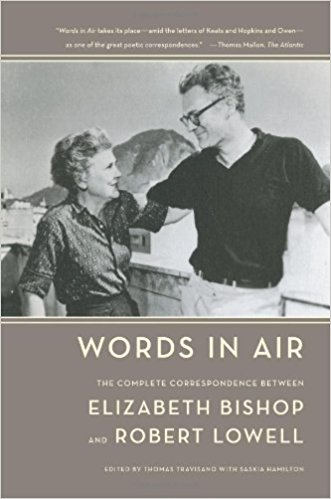
But there are explanations of a kind that can be valuable, even if they are fabishop lowell ltrsr from necessary when one encounters a really terrific poem. There are reasons to learn the backstory of a poem, if such a thing exists for that particular poem (not all poems have one). Anyway, it may be worth asking the poet about it, if she is still living and can answer or if the answer may be deduced from archival materials. We have learned the backstories of a few Elizabeth Bishop poems, just taking one well-known poet as an example (see Words in Air); the stories–in this case, letters–do not necessarily help readers interpret a poem or even understand it any better, but the stories remind us that the poem was initially embodied in the brain of another human being who was undergoing and observing experiences–or leaping into realms of imagination.

More about why that’s a good thing, and more about the embodiment of the human brain, in later posts.


Rational & connected

When I instruct freshman college classes in essay-writing, it’s clear to me that few students (usually around 18 years old) have any understanding of what it means to be “rational.” They often believe they are rational thinkers because they are good at math or interested in a scientific discipline or eager to study law, medicine, or economics–all factual and rational pursuits, in their minds, though they tend to think based on gut instinct and social upbringing. I have spent considerable time pondering this reality, which affects my pedagogical approach. In the presidential election cycle years the situation seems especially obvious…and problematic.

169px-Botón_Me_gusta.svg

I wonder how much of the gut/emotion-responses’ validation, retroactively, by “rational thinking” evolves from psychology or human nature, and how much from culture. Culture is due to connectedness influences: we want to be identified as part of, or differentiated from, the community of human beings around us. Psychology overlaps with culture; I may be a bit out-of-date, but it seems that the study of psychology tends a little more toward the individual’s nature, even accounting for the “nurture” aspect of individuality, which is culture-based. And people who are US citizens have by and large been raised in a capitalist culture, a form of capitalism spurred to dazzling speed and pushed into far-reaching areas of culture/nurture by our for-profit media system.

The resulting culture flowered into persuasion-based, desire-based “needs.” My students and I are acculturated into seeing and judging, seeing and desiring, and confusing want with need. That approach works for businesses that need to make a profit; they have to make their audiences yearn for products. Gut-based persuasion works better than rational persuasion; ask any marketing campaign designer. Connecting one person’s “need” with the community’s perceived “need” also works.

These urges are not rational approaches to purchasing, budgeting, prioritizing, or voting. If, however, one’s job is to analyze buying trends, examination of the efficacy of such approaches is rational indeed. Thus analysis, any form of analysis, should be scientific and rational and based upon a genuine understanding of human beings–our natures, our connections, our influences. Call it interdisciplinary, or synergistic.

How can analysts learn about the gut instincts and unreliability and cultural natures of their fellow humans? An excellent way is through studying the arts.

Of course, I would end up here.

Sciences, if we consider them rational pursuits not entirely independent of one another–granted, that is another conversation–likewise should not be independent of the arts and humanities. The visual and kinetic arts produce sensations that feel emotional yet which can be critically analyzed, rationally pursued and discussed. Novels inform readers of the vagaries and irrational motivations of the human heart; they tell us about character and culture and urgency. Poems tell us, in ways that science never has been able to elucidate, what feels most true. (See Fiona Sampson’s article in The New Humanist, though I admit she provides a biased view, as she is editor of that journal).

This semester, my students and I will be examining what it means to be rational in an academic argument. Perhaps we will go further than that, but I do not expect to change their hearts.

alice-heart1 copy

Critique: an anecdote

A group of friends gathers once a month to read and share and critique one another’s poems. They know one another well enough that they can be empathic, honest, and helpful; also, they are trusting enough to bring poems that really aren’t “working.” The critique’s the best way to get some understanding of why a poem is not working.

Recently, one member shared a poem that was somewhat philosophical in its overtones. The rhetoric of the poem was shifting, getting away from her, and she knew it. But she couldn’t figure out why, or how to correct the problem.

The talk moved away from critique and into values–for awhile. So the group was no longer exactly discussing the poem, or poetry, at all.

And yet, through the conversation, the writer recognized where at least part of the poem’s problem lay…which was in image and in structure (as illuminated, perhaps, by value and by rhetoric).

Reason can lead to beauty.

Discourse: talking about poetry

This post is a response to Fox Chase Review‘s post which can be found here: Poetry in Decline?

“G” asked for responses to the need for a revolution in (USA) poetry, stemming from Diane Sahms-Guarnieri’s comments. Her ideas were excerpted, so I may be missing some of her assertions or evidence. In one way, she echoes Dana Gioia’s famous “Can Poetry Matter?” essay and book (1992): that is, in terms of questioning the isolated, academic support of poetry, poetry study, MFAs, and university publishers as elitist and as dampening a wider audience for poetry. While Gioia tends to support the literary canon in general, he stresses in his early essay that poetry has its own specialized, “frenzied” little circle of literary lights but that the art itself no longer exerts much influence on life, culture, and thinking in the USA.

From Gioia’s introduction:

The situation has become a paradox, a Zen riddle of cultural sociology. Over the past half century, as American poetry’s specialist audience has steadily expanded, its general readership has declined. Moreover, the engines that have driven poetry’s institutional success—the explosion of academic writing programs, the proliferation of subsidized magazines and presses, the emergence of a creative-writing career track, and the migration of American literary culture to the university—have unwittingly contributed to its disappearance from public view.

Sahms-Guarnieri further suggests that isolated, academic styles of poetry are partially to blame for poetry’s “decline” among US readers and calls for a return to realism.

I’m not sure “realism” is the answer, because many infusions of style, energy, or revolution that have done poetry good as a whole have not exactly fallen into that category (was Lorca a realist? just as one example). I embrace the idea of the narrative-lyric mode, which may be considered a kind of realism; but I also love many, many other styles of poetry, some of which are “difficult” and not easily accessible to the general reader. The main means through which I learned the diverse structures and approaches to poetry is through reading on my own, autodidact that I am. Yet formal study and literary criticism increased and deepened my passion for this art. I teeter on the fringe of academia though I am a poet who writes outside of the classic academic framework.

I feel compelled to defend the teaching of poetry, though I admit the process is often done badly. Still, one of the things academia does best is to examine the work, and I feel readers who examine what they love more closely will benefit from doing so (rather than taking the “I know what I like” stance). Academics have, since the 1970s, begun seriously to read beyond “the canon,” and that is all to the good. Academia doesn’t produce the best art, however. Knowing how things work in theory does not equal expertise. I know how a bicycle works, but I am pretty sure I couldn’t build one from scratch.

~

The poems that remain timeless are seldom elitist. The problem with the elite is that it eventually falls from grace. When that occurs, the allusions and puns and, often, the entire foundation of the piece get lost. This issue can be equally true of poems that are “realistic.” If the poem offers no recognizable aesthetic, purpose, or sensation, it ceases to be valuable to future readers. Many of today’s poems will suffer this fate–mine among them–and that’s not a bad thing. We don’t get to judge which art is revolutionary, prescient, timeless; later generations make those judgments.

And that is one reason many writers resent academia and university presses: it seems as though these institutions are “at the top of the mountain” and trying to keep their situations exclusive; in other words, they are acting as cultural, literary judges. So they are…in their time. They cannot enshrine themselves for the future. Art doesn’t work that way.

~

Contemporary Poetry Review claims it is there to resuscitate contemporary poetry, which implies poetry’s suffering a near-death experience. I do not think poetry is dying. I think it is changing, which it has always done, because art is responsive to and entangled with culture and therefore defies stasis.

Poetry, like most art, tends to exist on the cultural fringe, where it hangs out with curious, inventive people who bother to seek for it. Some of them look on the mountain top, and some of them look online, or in pubs that host open mics, or at independent bookstores, long may they thrive. With luck, and maybe some encouragement, those people might buy a book or two–including POD-published or self-published books (why not? –and while you’re at it, Water-Rites is still available!). This last point coincides somewhat with Larry Robins’ perspective in the Fox Chase Review piece.

If you really do know what you like, regardless of how you make that judgment, buy a copy of the book. And don’t get it second-hand from Amazon if you can help it–buy from the small press or the author or an indie book shop if you can find one in your area. Read it again and again, and figure out why you like it. Tell someone else. Discuss what you love.

That’s what keeps poetry alive.

water-rites_cover

Learning the literary analysis

It’s end-of-semester time when I meet with students to coach them through revisions of their final papers. A fair number of those assignments are literary analysis papers, and the students I tutor tend to view these essays with dread stemming from confusion. I have learned a few methods of deconstructing and demystifying the literary analysis, but I understand these students’ frustrations. I felt them myself many years ago, as I learned literary analysis the hard way, under the tutelage of a formidable and exacting professor.

Actually, I had not thought much about learning literary analysis until a few days ago, when I had the chance to read some of my own early essays. In the bag of ephemera that contained my father’s essay on Martin Luther (see this post), there are also a few of my letters and college papers that my mother saved for some reason. How revealing it was to read my early forays into fiction analysis–and to see the comments my professor made on my work. Very astute, critical comments that confronted me, a naive 17-year-old who was accustomed to getting high grades on English papers, with all that I was assuming, leaving out, or asserting with faulty logic or lack of evidence.

It’s interesting that I rose to the challenge. I was shy and easily intimidated, and very young. The reason I did not feel utterly crushed by the professor’s comments is that this was a seminar class, discussion-based, with a great deal of face-to-face conversation among teacher and students. My professor was the most assertive, self-confident, and supremely logical woman I had ever encountered; I was intrigued by her. How on earth had she gotten that way? Was she born into it? Had her family encouraged her to be so direct, forthright, critically observant? Her vocabulary was precise. Her expectations were high; yet she insisted we teenagers had ideas that we were capable of expressing verbally and on paper.

Many students disliked her intensely, considered her too blunt, wounding, hypercritical. I respected her acuity and her breadth of knowledge. I didn’t want to emulate her, but I wanted to read what she had read and understand it as intently as she did.

I don’t think she would mind my revealing her identity, as she’s well-known for her passionate learnedness and her controversial ideas about education. You can find her on a TEDtalk on YouTube: Liz Coleman, long-time president of Bennington College. When I was a freshman at the experimental Freshman Year Program at The New School for Social Research, she was the program dean and my Art of Fiction teacher.

The title page of a much-lacking freshman attempt.

The title page of a much-lacking freshman attempt.

She did not coach us on thesis statements or methods of breaking the analysis into chunks of ideas supported by evidence from the text. Instead, she quarreled with our assertions, asked probing questions of our thin but possibly promising claims, and confronted us with the obvious. I was astounded by this approach to education, 180 degrees different from what I had encountered in high school. After Liz made her comments on my One Flew over the Cuckoo’s Nest essay, I picked up the book and immediately read it again–something I had never done before.

I had drawn parallels to the Christ narrative, a rather obvious way for a beginner to explore Kesey’s novel, but had completely failed to recognize that if you’re going to draw such parallels there comes a point where you need to recognize what the novelist does with the idea of “sacrifice”–what is gained (if anything) by it, and what purposeful and ironic twists the writer does to that narrative, and to what end(s). I was onto something when I wrote about the ‘earthly’ aspects of the characters but lost that thread in my allegorical pursuit.

My professor pointed out that I had “seriously limited the impact” of my paper’s argument–at that time, I had no idea that a literary analysis actually a form of argument–by transforming the novel into something it wasn’t, ie, a retelling of the Christ narrative. I love what she next wrote:

“That’s just not adequate to one’s experience of a novel in which earthly pleasures (the more earthly the better, it seems) are so unequivocally celebrated…[Kesey’s] vision of triumph has very much to do with being alive–his communion is with the juices of life.”

The communion with the juices of life! She wrote that to a 17-year-old. I’m not sure I got the full impact then, but I sure learned a great deal from her feedback both on the page and in class. And I did begin to write better, more argumentative, more logical papers. It wasn’t the simplest way to learn how to do a close read; but then, a close read of classic literature should reveal complex insights. I had to fight my way through my own assumptions and bad logic. I had to learn to read again, and at first I felt that analysis would destroy the joy I took in reading; but that’s only true if you are unlucky enough to have a professor who insists that the students’ interpretations align with the teacher’s opinions.paper002

Dr. Coleman has strong opinions about literature–and education, and political engagement, and many many other subjects. Yet I never felt she was pushing her interpretations onto us students; it seemed to me she was pushing me to do better work, to think more clearly, to read with more enthusiasm, with an alert mind. My engagement with literature, art, and much more owes a lot to her…I had always loved to read but had been in many ways a lazy reader.

I’m pretty much cured of that now!