With color

I’m taking a break from the garden and from the news cycle and indulging in a different form of work: “Making Poems, Making Books,” a 4-day workshop with poets Anita Skeen and Cindy Hunter Morgan at Ghost Ranch in Abiquiu, NM. Yes, I’ll be making my own book–a small accordion book. There are about a dozen of us in the workshop, which is centered around the idea of color. Autumn in northern New Mexico offers a range of hues somewhat different from the post-equinox colors of eastern Pennsylvania. Perhaps that will inspire me. The last time I took a workshop here was in 1993, and I learned how to draw/paint in chalk pastels. A long time ago–and yet, walking around the dusty alfalfa field in the center of the Ranch’s office and dorm buildings, I felt completely at home. As if I’d been here just last year.

This week differs from the artist residency I attended at Joya-AiR in May because I’m part of a class getting instruction in how to make a hand-made book and also participating in feedback on our writing. Nonetheless, every afternoon there’s a nice stretch of time to work on solo projects, hike, drive to some nearby sites of interest, or nap. I will admit I have been doing more napping than I had hoped. The high altitude, dry air, walking more than usual (on rocky trails) and the emotional energy it takes to learn a new skill and meet new people have conspired to creep up on me some afternoons.

That’s fine with me, though, because I’m banking many images, quotes, anecdotes, ideas, prompts–all the things memory can do.

And I am drafting some new work, so there’s that as well.

~

Enjoying the session and the people, third best thing about this trip. Being back at Ghost Ranch, second best thing, though it is perfectly wonderful. Best thing? Getting some time in the Albuquerque area to visit with my daughter and her partner. And their dog. And their cat, guinea pigs, and beehives. According to her, bees kept in hives (apiculture) are considered considered agricultural animals.

Who knew?

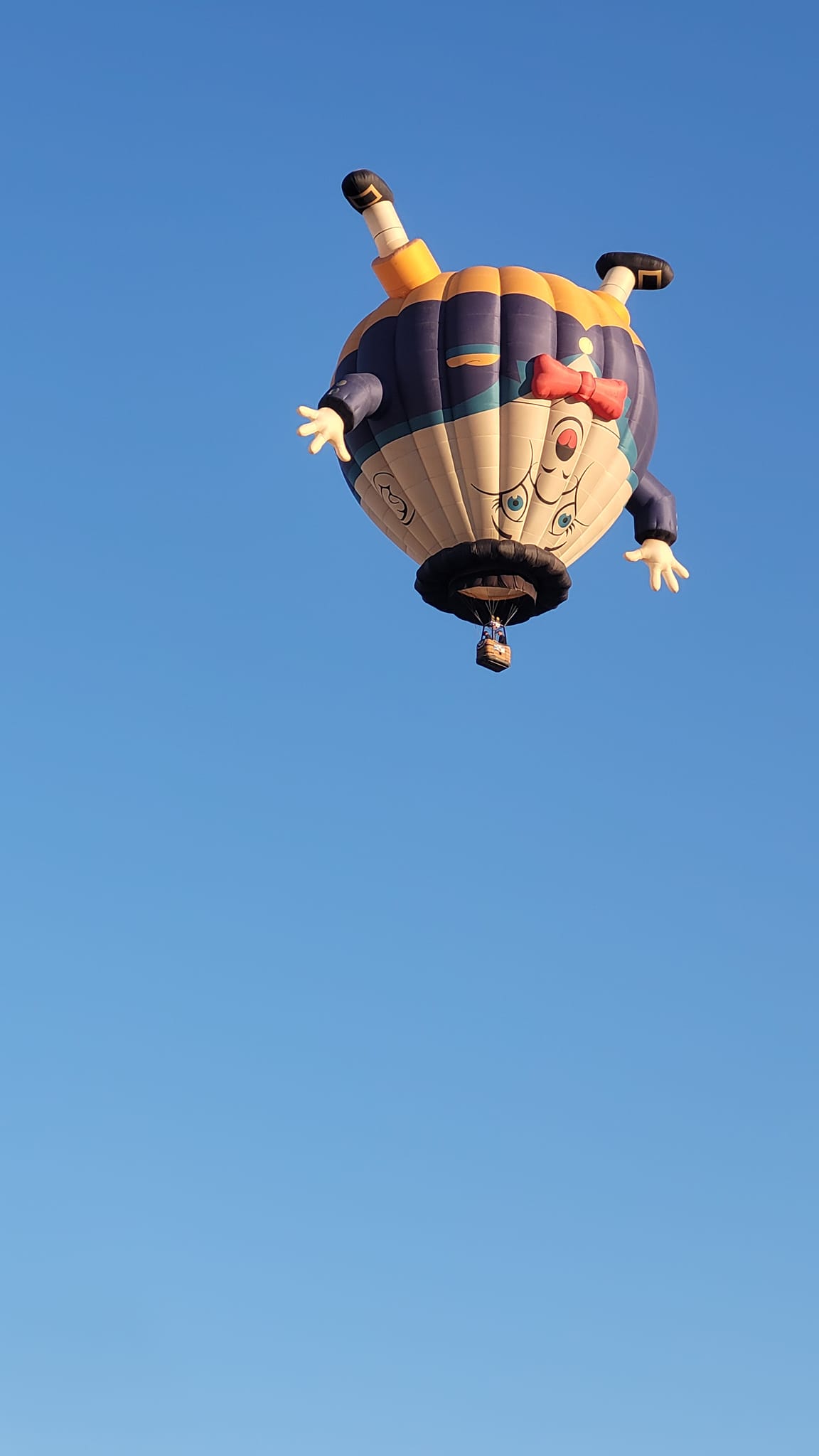
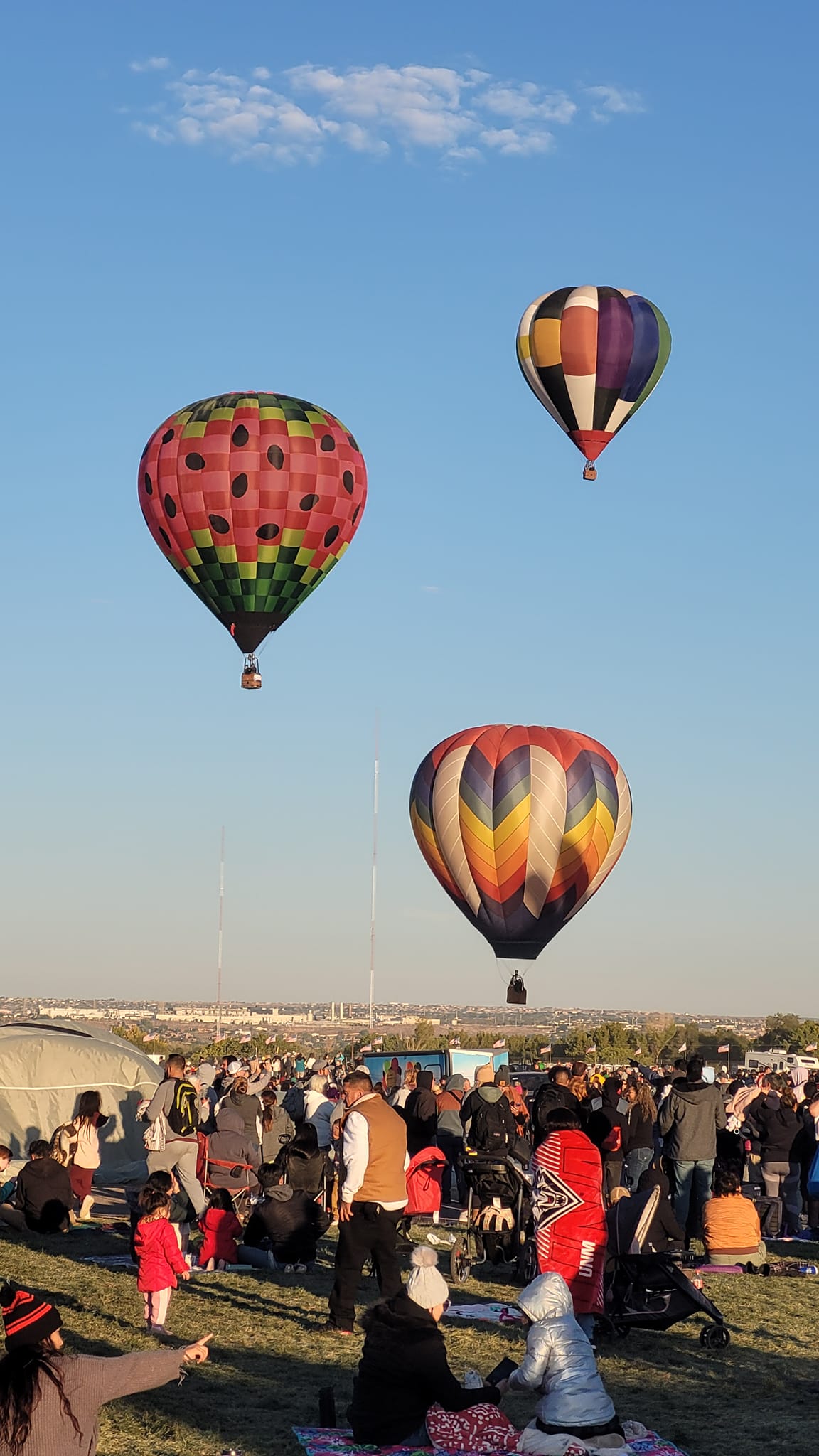
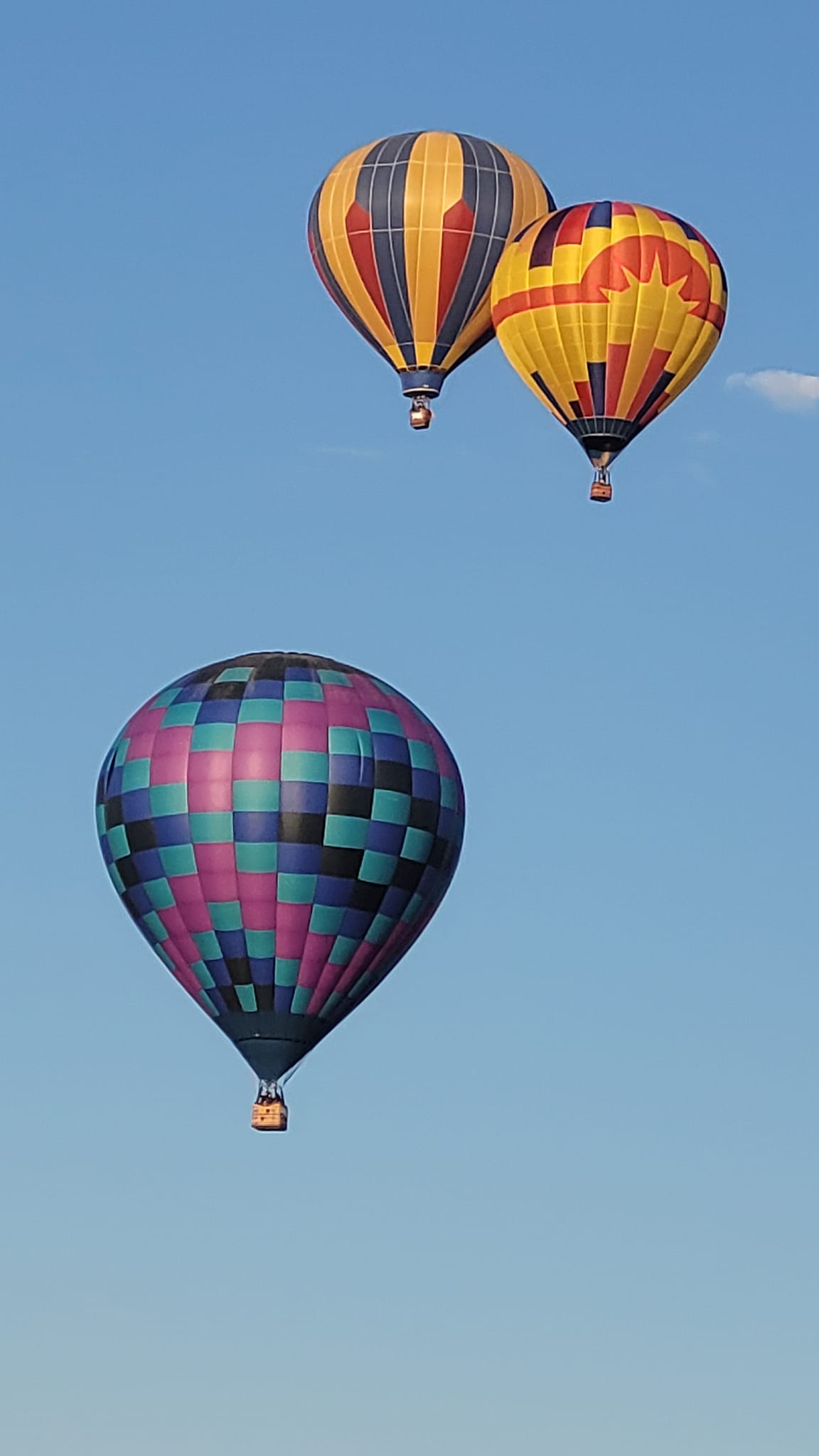
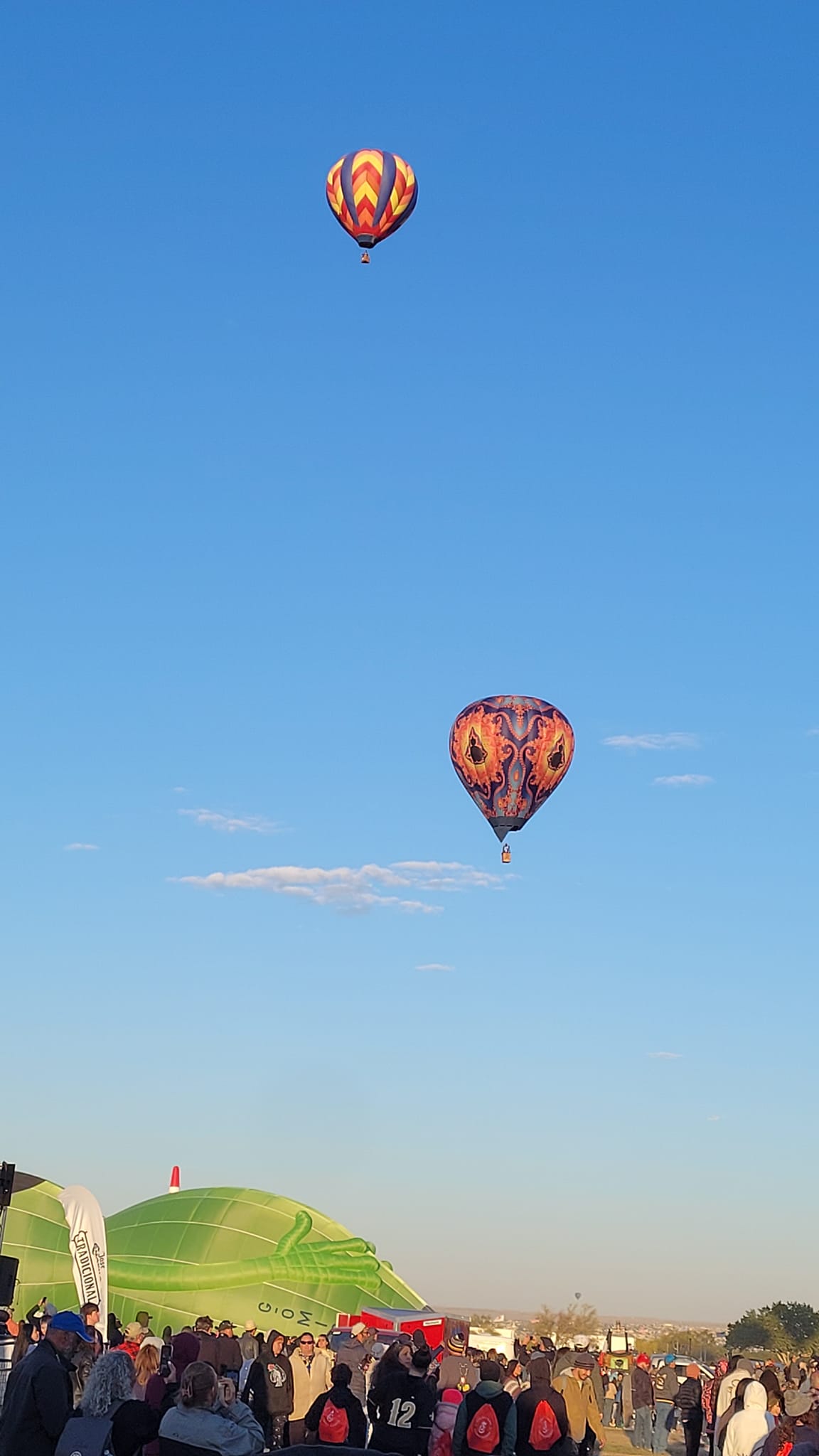
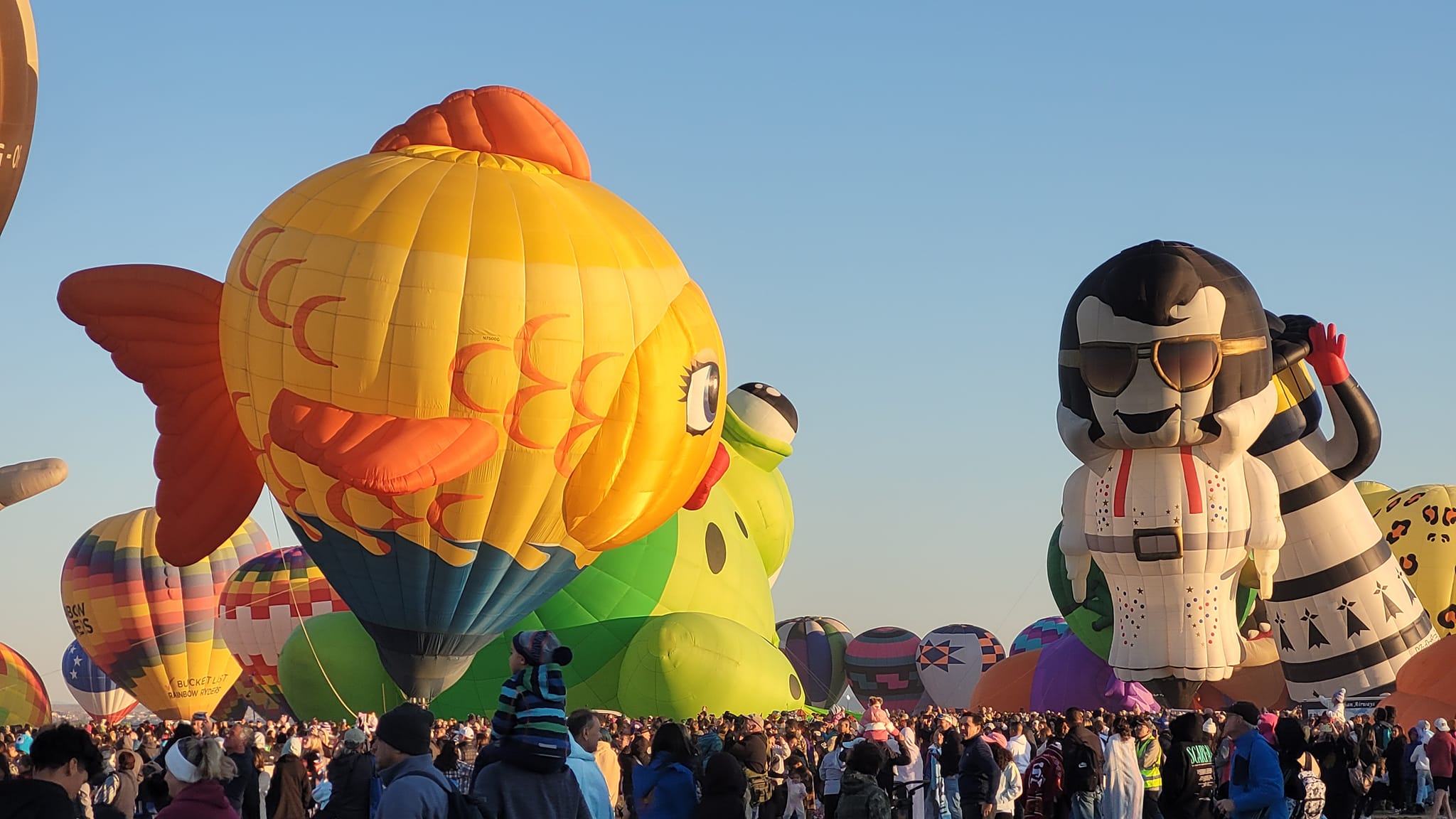
It’s time for my nap, I think. But I have wanted to post about this workshop/retreat before I get home again, just to remind myself of how grateful I am to be here, to be writing, to be seeing my child, to be–yes–escaping from the media frenzy as the presidential election looms. If that seems like something you need, as well, all I can do is send a few cheerful photos I took at the Albuquerque Balloon Fiesta.
~
Close of the cruelest month

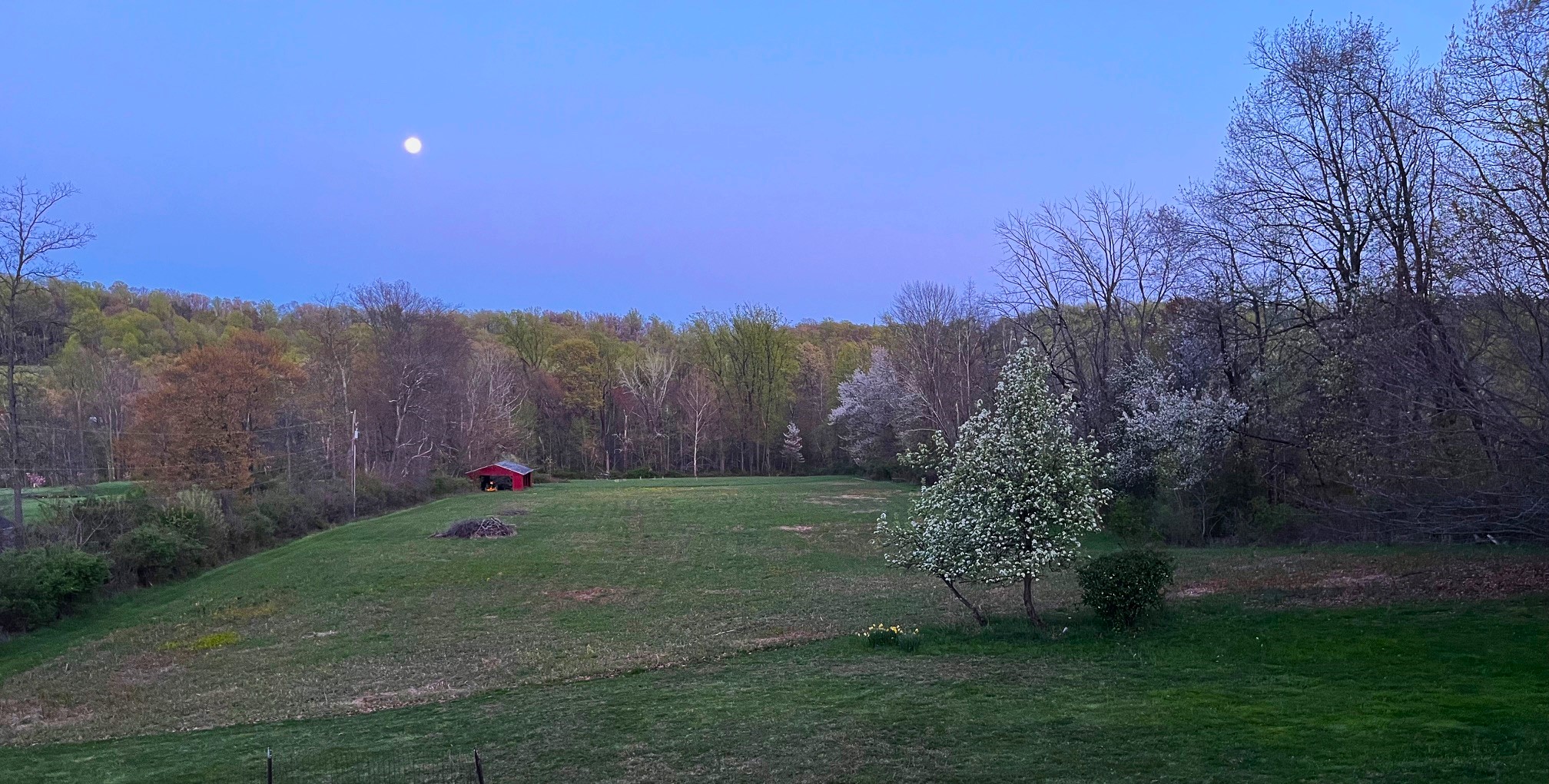
Full moon began the week as April reaches its closing days–when the redbuds and ornamental cherries are at their peak and the apple trees bloom. Soon the lilacs will open, and oak catkins will send chartreuse pollen all over the deck. Then there will be peonies and irises. I love the first weeks of May but this year will be missing some of those days. I’ll be traveling.

Because I have to prepare for my trip, attend a friend’s memorial, and prep the garden for my absence, this is my last post for National Poetry Month. I’ve chosen a poem from my book Water-Rites, a quiet poem that has always felt near to my heart. Maybe because I romanticize childhood, who knows. At any rate, I hope your poetry month was beautiful and that you continue to read and enjoy poetry. Thanks for reading mine this month.

~

On Having Lost the Confidence of Birds

Once, I was very small,
prone to long silences
and spells of aimless drifting
in the world's embrace,
staring at ants in their
grainy colonies, patterns
of activity, the slender
waists and legs,
frantic antennae waving
at me so I seemed,
for an hour, large.
Once, I could skip and sing
until dinner time, but chose
to lie front down among
dandelions, decided to watch
the skip and sing of bees,
their several kinds inducing me
to wonder about categories--
What Will or Will Not Sting--
and marvel at the dark swift birds
that lived in the martin house
and found bees edible.
In those long days I was
no threat, a quiet object
natural in the grass and breathing
at the meadow's pace.
I had not lost, yet,
the birds' confidence
nor learned how not to trust
my own body
in the world's embrace.
~

Conventional

It’s been a long time since I attended a convention, concert, or any large event. Thanks to covid, longer than usual. This year, I’m braving the Association of Writers & Writing Programs’ annual conference–in person, next week–since it’s being held near me, in Philadelphia, this time. Never one for large crowds or rooms full of strangers, given my natural inclination to internalize or curl up in a corner with a book, I have nevertheless attended AWP in the past and have found it supplies me with creative energy in the form of writers I need to read, intellectual ideas I want to explore, and reasons to keep writing.

~

The conference provides a good place to meet up with fellow writers I know mostly “virtually” via social media or email, and to see folks who live far from me; it also features well-known writers in readings, panels, and conversation–always an excellent experience. I’ve blogged about past conferences (if you’re interested, type “AWP” in the Search form on this page, and a bunch of posts will come up). Attendees do not have to be academics or involved in creative writing programs to attend. I’m excited!

Meanwhile, the month of March does its typical lunge and feint, volt, and passe arriere as it heads toward springtime…I never know what to expect, weather-wise. Today: mild and almost 70 F. I’m hoping we get a string of 50-degree days that permit some garden preparation. But then again, that’s always what I hope for in March.

New in the outdoor garden this week: the first bumblebees have emerged. There’s one in this photo, amid the iris reticulata–

bumblebee, just left of center; iris reticulata

~

My tomato seeds have sprouted in their little seed-starting pots by the sunny window. Gardeners must be optimists. I guess I learned that from my dad.

Repetition

Repetition, the foundation of rote teaching and memorization, is a style of learning at which I have never been particularly successful.

Nonetheless, repetition has been useful in my learning process. Close observation reveals small differences in repeated events and refrains of all kinds; what I learn through repeated experience is that each time I see or do “the same thing,” I notice something new. Repetition permits me to analyze, and that is how I learn best.

Here’s an example.

~

Plants, particularly flowering plants, fascinate me. Every year, I find myself heading out to the yard, my camera in hand, to take photographs as the flowers unfold and the insects arrive to pollinate them. Every year. Yet a closeup of a bumblebee in a redbud blossom from 2005 looks pretty much the same as a bumblebee in a redbud blossom in 2019. Or a monarch on a tithonia–one year similar to the next. Why bother? What urges me out when the dogwoods bloom to record yet another photograph of flowering dogwood? How redundant. How unnecessary.

Yet I have learned much, gleaned much, from the process of noticing the buds and blossoms and insects as the days lengthen and then shorten again; the cycle of life a repetition. Each routine event of spring seems new to me after the winter’s rest.

~

The only types of poems I have managed to have some recall for are poems with refrains, and some song lyrics (also with refrains). The ones I have memorized are the ones I have heard and sung along with most often, such as the calls and responses of church rituals and hymns, the record albums I listened to over and over when I was a teenager. Each time I listened, I felt something new happen inside me. It’s the same with my walks in the garden and the woods and hedgerows and the meadow: each year the same, each year new. That kind of teaching, while repetitive, is far removed from rote.


April blossoms

Easter and Passover are late in April this year, which rather complicates the semester breaks of the university; the weather remains unsettled, and at present (6:30 pm, Eastern Time), I look out my north-facing window at bright evening light, lengthening shadows, and the narcissus and shadblow trees in bloom.

I have some visiting to do and may not be posting for a day or so–but will manage to do so if I can; and I will endeavor to at least compose one (I can at best promise one) poem per day even if I don’t get to this blog to post it.

[Note: This is more a reminder to myself than to my readers, who I’m sure have more  significant things to do than to keep track of whether I am holding to my discipline for National Poetry Month.]

IMG_6022

Aesthetic Potential

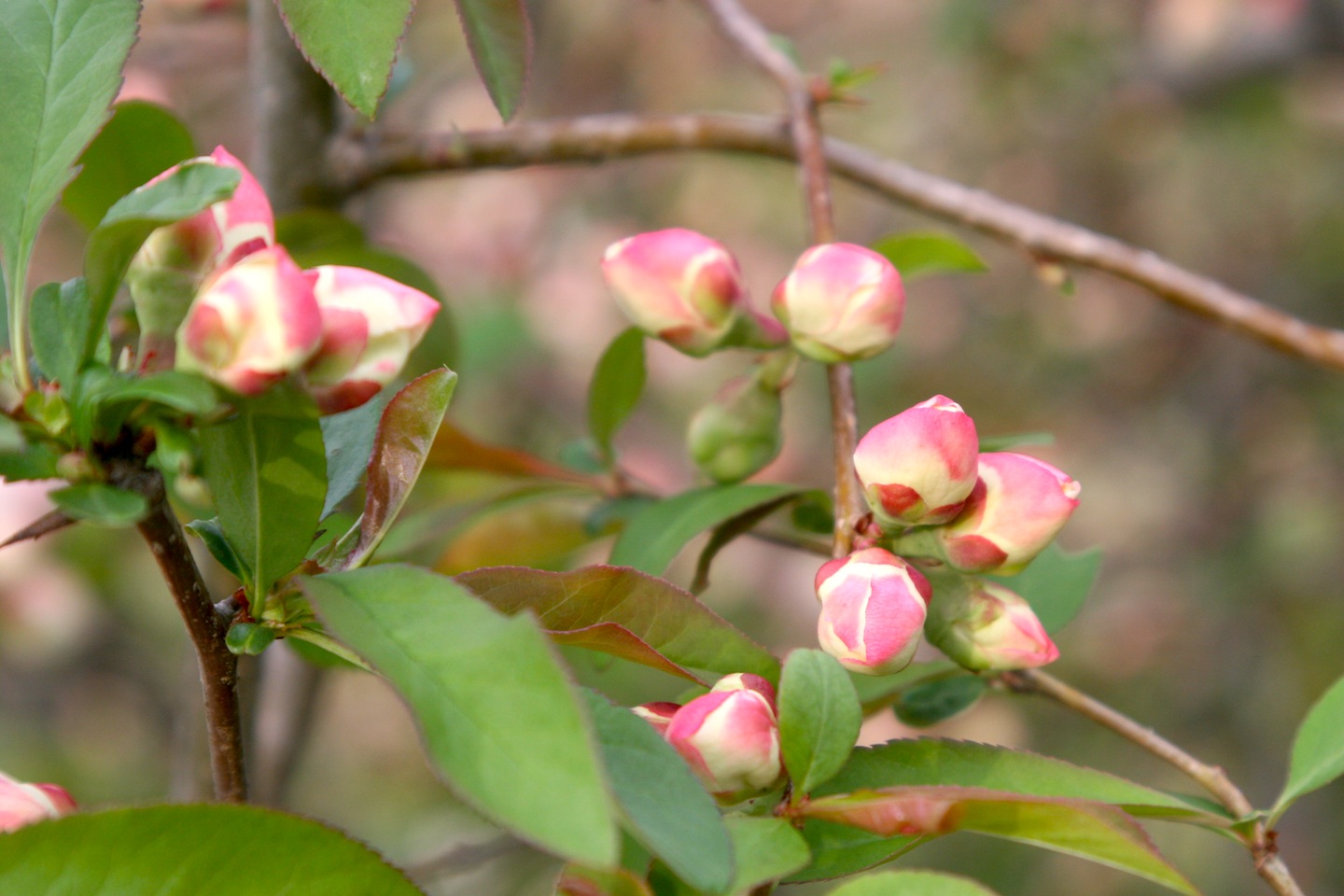
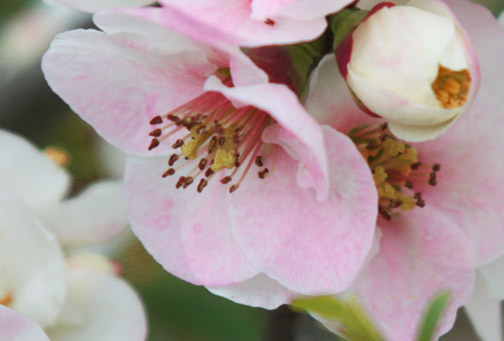
In her yard stood a large quince
which was her favorite flower, she said
though she admitted the bushes
ill-shaped and far too thorny,
the blossoms, though early, unscented
and often sparse or inward-facing,
simple in form, not good for cutting.
The fruits sour, useful only in jelly
which she never bothers putting up
anymore, the branches susceptible to rust.
It looks both forlorn and nasty all winter.
I like its tenacity, she told me, but also
its tenderness. For no other shrub
bears buds with such multi-colored
promise, that might open into anything—
sweet, complex, showy. Though it
doesn’t deliver, April’s bees indulge.

photo by Ann E. Michael

Kisses & Bees

Today, I have opted to use an Osip Mandelstam poem as a prompt. I apologize in advance to his memory and to his lovely poem, translations of which are here, here, and here.

In a blog post some time ago, I discussed this poem and the problems of translation.

~

Kisses Tattered as Bees
-after Osip Mandelstam

Your claim asserts that kisses
can be tattered
and bees emerge from
floral tussles or hive dances
in a disordered raggedness
so the two are as like
simile disperses into breeze:
loose petals and torn wings
fail to impress upon your lips
any tactile memory.

But oh, there were kisses once
so fevered they evaporated
on meeting your cool skin
while you traversed the woods
beguiled by honey’s scent–
and kisses that stung,
leaving a trail of the dead,
soft, gold-and-black bodies
in each of your footprints,
beads strung along your path.

~

be-quince

~

Three days, three poems, one tenth of National Poetry Month having passed; I can do this, right? NaPoWriMo has a site that includes daily poetry prompts, if you happen to be interested. It is worth trying even if you do not plan to write a poem a day.


Wordless

The landscape’s brought colors and pollinators and all the juiciness of reproduction cycles into the season’s height. Time to take walks and breathe.

And say nothing.

And let the words subside for awhile, and percolate the way the rains percolate through the wet, warm soil and into the waiting earth.

~

azurea


A little honey, a little sun

Today, something to soothe the collective psyche, to ward off anxiety and remind us that we cannot move through this life totally fearlessly, but we can move through this life.

Ann E. Michael honeybee

~

Take from my palm, to soothe your heart
a little honey, a little sun,
in obedience to Persephone’s bees.

You can’t untie a boat that was never moored,
nor hear a shadow in its furs,
nor move through thick life without fear.

Osip Mandelstam, tr. Clarence Brown & W.S. Merwin

There’s more to this poem–three further stanzas–and I am re-reading it today, over and over, as if to memorize its quietly unfolding lines:

For us, all that’s left is kisses
tattered as the little bees


The poignancy of that image nearly kills me. Yet, soon enough in the poem (and elsewhere), Mandelstam’s bees die; but they also hum in the night, in the woods, “in the mint and lungwort of the past.” They make a sun out of honey. They warm the chill of winter’s approach; like kisses, they can soothe our hearts.

~

I have read some severe criticism of translations of Mandelstam’s poetry. Brodsky’s work, Merwin’s…Russian speakers suggest no translation adheres at all closely to the original. Rose Styron and Olga Carlyle’s version is here in Paris Review. And here’s a version (tr. uncredited) in The Atlantic. A bilingual version resides here, if you happen to know Russian and can weigh in on the translation controversy (Mandelstam himself reportedly hated reading verse in translation).

But here is why I am holding this poem close to myself today:

The poem acknowledges the fear that resides in all of us.

The poem reminds us that we have much to share. That we can soothe one another’s hearts.

Namaste.


Growing, watching

Garden update: my valley experiences, once again, a bit of drought.

And I have scored a victory–possibly temporary–against the bunnies, thanks to some very hard, hot work by a pair of my best beloveds and lots of chicken wire. Now, as the weather gets into long spates of heat and humidity, I watch and wait while the garden does its growing.

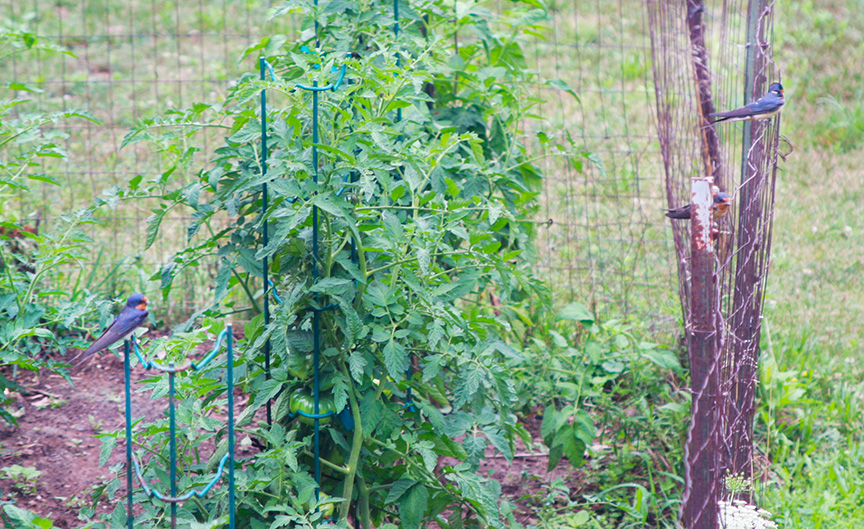
I watch the tomatoes ripen. I watch the birds:

IMG_2310

Three swallows among the tomatoes

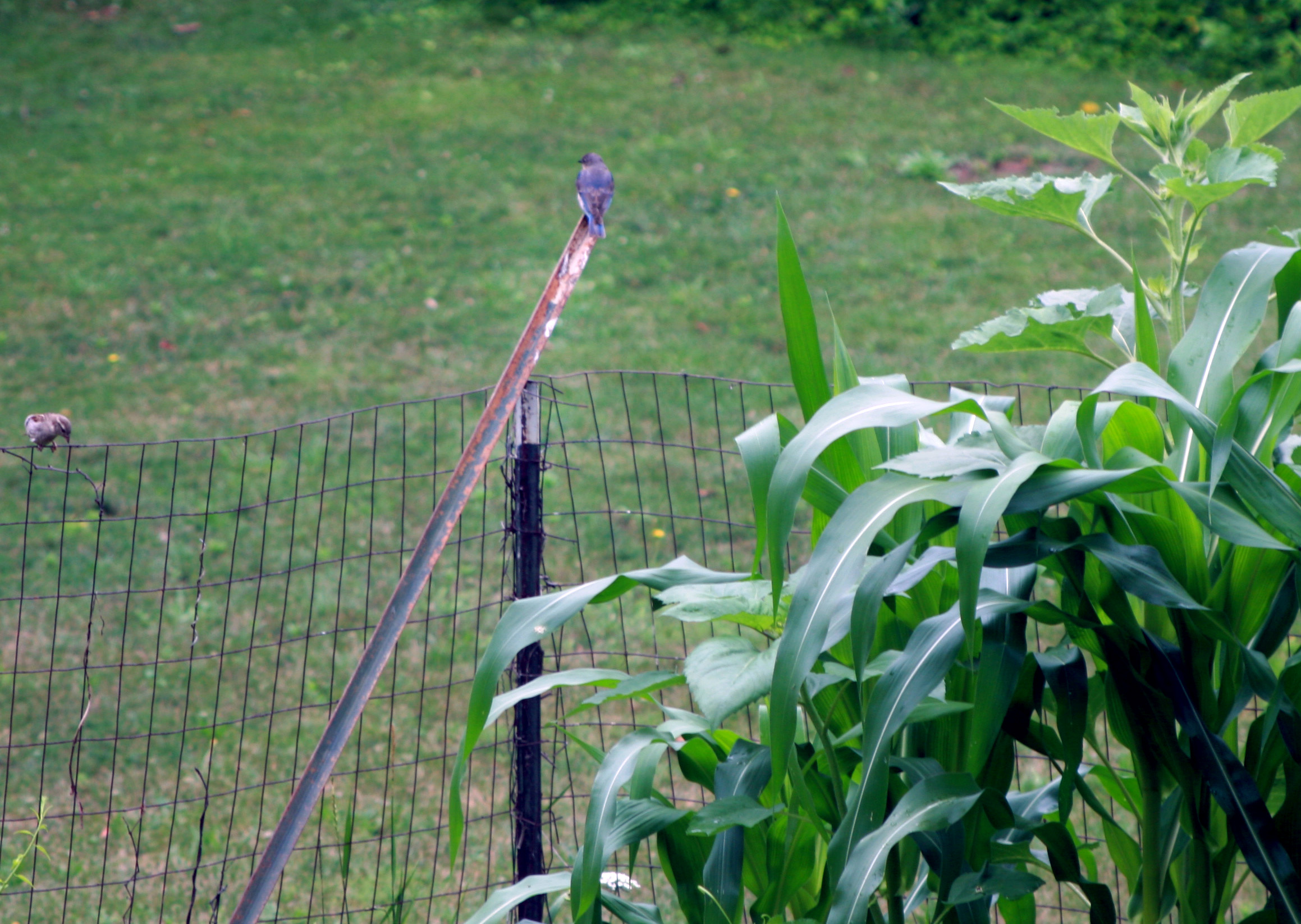
The bluebirds enjoy perching on the fenceposts. This one doesn’t look too blue, but I promise it is a bluebird.

IMG_2312

I guess I need a longer lens.

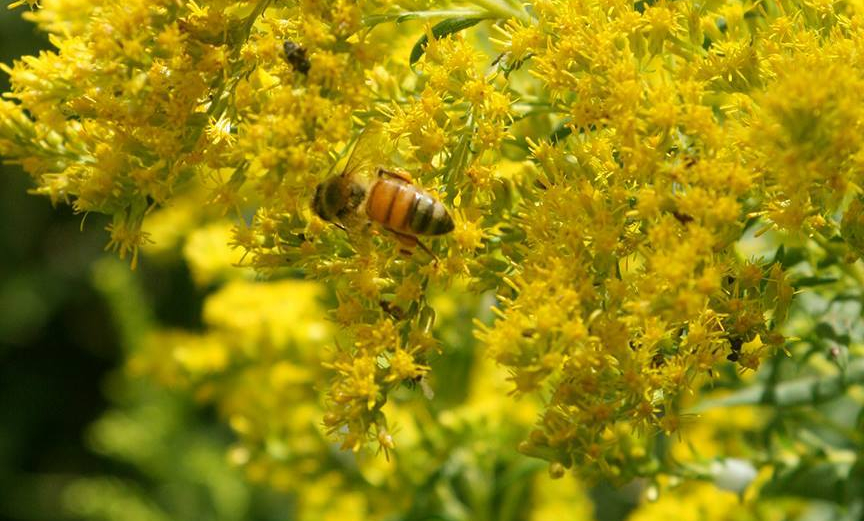
I watch the herbs and vegetables flower. The cilantro and dill flowers bring all kinds of pollinators to the garden. I found a new kind of very tiny bee this morning, but my camera doesn’t have the best close-up lens. It was a cute bee, very small, grey, and fuzzy.

IMG_2309

The borage gets a bit thuggish but attracts pollinators; cilantro and dill manage to sow themselves among the onion rows.

The beans rows are missing, because the rabbits ate them all.

~

Speaking of bees and pollinators in general, I have found some lovely blogs by entomologists online, full of close-up photos, environmental information, and fascinating tidbits about bugs and their interactions with the flora and fauna that surrounds them. I am continually struck by the amazing interconnectedness of life when I read these posts. In addition, something about the sort of scientists who observe insects at close range and study their anatomy and life cycles seems to inspire a kind of geeky humor as they follow their biology passion into the field. Or maybe that quality exists only among the sort of entomologists who also blog!

Here’s one I like, Standing Out in My Field, the nature of a punny field biologist.

Possibly I should have followed my own third-grade dream of becoming “a scientist.” My tendency to watch things, especially as they grow–to be an observer–would have served me well in a scientific field discipline. Though it isn’t a bad quality for a writer to possess, either.