Not a brisk pace

Recently, a physician I see (for fibromyalgia and related conditions) suggested that I need to walk more often because “walking is the best exercise for you and will give you more energy in the long run.” The advice surprised me a little; I love to walk and, except when the weather is very cold or super wet, I walk most days. It turns out that what she meant is that I should be walking for 40 minutes or so “at a brisk pace.” When I asked her to define what she considered a brisk pace, she said two or three miles an hour.

This poses a slight problem for me because while I am happy to walk around my yard, woods, and neighborhood for 30-40 minutes almost daily, I can’t say I do it at a brisk pace. I get distracted and stop to look at things. Bugs. Worms. Toads. Birds. Flowers. New leaves. Nests. Spiderwebs…I loaf along, as Whitman claimed to do. Some days I start out with good intentions to keep up a lively pace, maybe even to the point where I can feel my heart rate going up. And then–was that a redtail hawk overhead? Did I hear an ovenbird? Oooh, the Solomon’s-seal is in bloom!

Today–the walk was very wet, as we’ve just had about 3″ of rain–musing on my not-exactly-exercise ambulations, I thought of this Mary Oliver poem.

Walking to Oak-Head Pond and Thinking of the Ponds I Will Visit in the Next Days and Weeks

by Mary Oliver

What is so utterly invisible
as tomorrow?
Not love,
not the wind,
not the inside of a stone.
Not anything.
And yet, how often I’m fooled–
I’m wading along
in the sunlight–
and I’m sure I can see the fields and the ponds shining
days ahead–
I can see the light spilling
like a shower of meteors
into next week’s trees,
and I plan to be there soon–
and, so far, I am
just that lucky,
my legs splashing
over the edge of darkness,
my heart on fire.
I don’t know where
such certainty comes from–
the brave flesh
or the theater of the mind–
but if I had to guess
I would say that only
what the soul is supposed to be
could send us forth
with such cheer
as even the leaf must wear
as it unfurls
its fragrant body, and shines
against the hard possibility of stoppage–
which, day after day,
before such brisk, corpuscular belief,
shudders, and gives way.

~

At my place, it’s feeder creeks I hear and think I may visit, not ponds, but I identify with the mood of this poem. Walks offer me that joy, that unfurling of leaves, ferns, everything…time to reflect and feel gratitude. If I don’t do quite as well by my heart and muscles as I ought to, maybe my psyche or soul will compensate. If I loaf, it’s a purposeful, sweet loafing, the kind of activity that poets tend to do; it gives me energy of a non-physical sort. (And I think Mr. Whitman would concur.)

Walt Whitman in mid-life, probably a bit younger than I am now.

Mid-March

Tulip poplars begin to plump out their winter bud scales, where they will leaf out later in spring.

A marsh hawk zips overhead, winging above the treeline and vanishing over the northern hill.

Early ornamentals bloom: crocus, snowdrop, aconite, i. reticulata.

Red-winged blackbirds make the mornings noisy–they have so many different songs and calls that three or four of them sound like multitudes, almost drowning out our year-round singers, the song sparrows. Early migrant passerines have returned, but it’s still winter here. Some bugs have gotten active and are emerging from hibernation or incubation. No bees as yet. When I turn over rotting logs, I find amphibians’ eggs and lots of different varieties of soil centipedes.

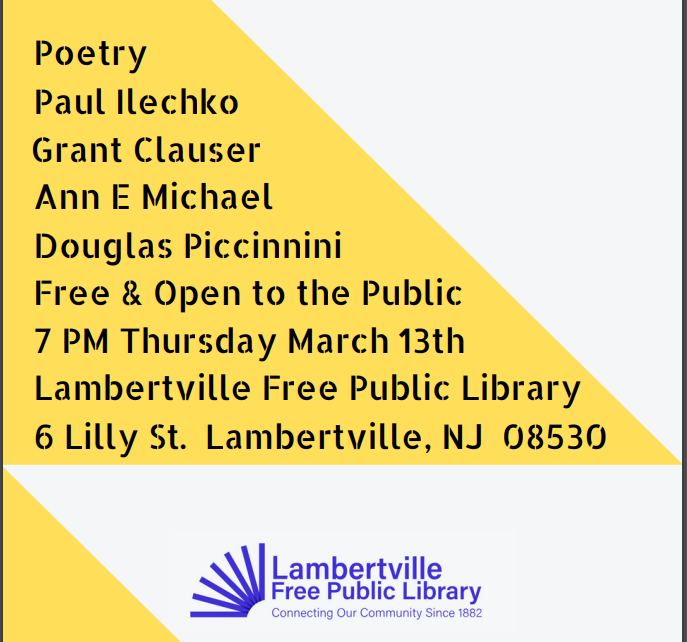
And, of course, worms. March’s moon is sometimes called the Worm Moon, and tonight there’s a total lunar eclipse around midnight here in PA. Is that auspicious? It’s also when I will be reading at the Lambertville Free Public Library in Lambertville, NJ. I’m excited to participate in an on-site, in-person reading again…I’ve been hibernating a bit from poetry events, but it is time to get stirring.

At the end of the month, I’m packing up for a brief trip to Los Angeles, where I will be attending one day only of the annual AWP Conference (Saturday’s Book Fair!) and spending the rest of the visit with my son. The conference always offers a terrific infusion of writerly companionship, community, and inspiration. Whereas time with my son offers love, cool places to see and eat and hike, a host of things I didn’t know I wanted to learn, and many moments of hilarity and conversation. It’s hard that he’s so far away–hard for me; I don’t think he minds, he is busy and having fun, which is as it should be.

Also, yes, the whole situation here in the USA is something I never could have imagined as a younger person, when I somehow had an unquestioning faith the US Constitution could actually be workable as an enduring rule of law. That careless people who value money over community could indeed disrupt that 1787 document was always a possibility (the moneyed property owners and slaveholders had their way with the original, after all), but most of us didn’t see this coming–naive, I suppose. Busy with our own concerns. I get it, and maybe we deserve what’s coming, but [ugh]. A concerned European friend recently asked me how I was faring under the stress of these first three months, and I told him that since making art (poetry) has generally been an unconventional act/behavior/response even under the patronage system, my response is to keep making art. Granted, it isn’t much, nothing earth-shattering, not gonna change society that way; but it keeps us observant little non-conformers on our toes, creative, and flourishing in the face of weirdness and oppression.

Which is something we can do. Like early bloomers in the cold days of late winter.

winter witch hazel blooming in snow

Year-end with raven

Last day of the year. Though when the year ends or begins is an arbitrary thing, calendars being a human invention so far as we know, this is my culture’s end date for the approximately 365-day cycle Earth makes around the sun–so I may as well stick with it. Here’s what the close of the year has brought me so far:

A sunny and mild morning post-frost, not uncommon at this time of year.

A Cooper’s hawk calling, hassling the songbirds, as they do. This one’s been hanging about our yard for a week now, sometimes perching right next to the leafless shrubs–it is amazing to watch how they can maneuver through the branches to grab at a finch or sparrow. A lithe and handsome raptor.

A solo Northern mockingbird, boldly eying me as I stood watching it (six feet away) while it gobbled up oriental bittersweet berries.

This surprised-looking tree, framed by horizontal branches–

Mutual disturbance among me and the mourning doves huddled on the ground amid the hedgerow’s vines and leaf-rot. Their sudden flurry startled me as much as I startled them.

Walking along with my Merlin Bird App turned to “sound identification,” I expected to hear the usual characters this time of year: finches, song sparrow, field sparrow, mourning doves, bluejays, crows, starlings, nuthatches, chickadees. Then I heard what sounded like…a raven? Indeed! The app noted “Common Raven,” with the little icon that indicates the bird is a vagrant or may be misidentified. I watched it fly north, over the house. Solo, (whereas early in my walk there was an entire “murder” of crows and they tend to hang about in groups this time of year). This bird was also very large, but too far off to see its beak or the color of its eyes. However, it sounded exactly like the third call recording here. I’m gonna call it a raven.

I found some collages the environment made on its own, much more lively and well-composed than any collage I might try to make.

~

The inner environment today has been focused on yet more revision. I much prefer it to sending poems to journals. It’s playful and creative, if occasionally irritating when a poem refuses my attempted improvements. At present I’m wrestling with a sonnet. Not a bad way to end the year, I reckon.

Many amazements

Subscribe to continue reading

Subscribe to get access to the rest of this post and other subscriber-only content.

Close of the cruelest month

Full moon began the week as April reaches its closing days–when the redbuds and ornamental cherries are at their peak and the apple trees bloom. Soon the lilacs will open, and oak catkins will send chartreuse pollen all over the deck. Then there will be peonies and irises. I love the first weeks of May but this year will be missing some of those days. I’ll be traveling.

Because I have to prepare for my trip, attend a friend’s memorial, and prep the garden for my absence, this is my last post for National Poetry Month. I’ve chosen a poem from my book Water-Rites, a quiet poem that has always felt near to my heart. Maybe because I romanticize childhood, who knows. At any rate, I hope your poetry month was beautiful and that you continue to read and enjoy poetry. Thanks for reading mine this month.

~

On Having Lost the Confidence of Birds

Once, I was very small,
prone to long silences
and spells of aimless drifting
in the world's embrace,
staring at ants in their
grainy colonies, patterns
of activity, the slender
waists and legs,
frantic antennae waving
at me so I seemed,
for an hour, large.
Once, I could skip and sing
until dinner time, but chose
to lie front down among
dandelions, decided to watch
the skip and sing of bees,
their several kinds inducing me
to wonder about categories--
What Will or Will Not Sting--
and marvel at the dark swift birds
that lived in the martin house
and found bees edible.
In those long days I was
no threat, a quiet object
natural in the grass and breathing
at the meadow's pace.
I had not lost, yet,
the birds' confidence
nor learned how not to trust
my own body
in the world's embrace.
~

Headlines

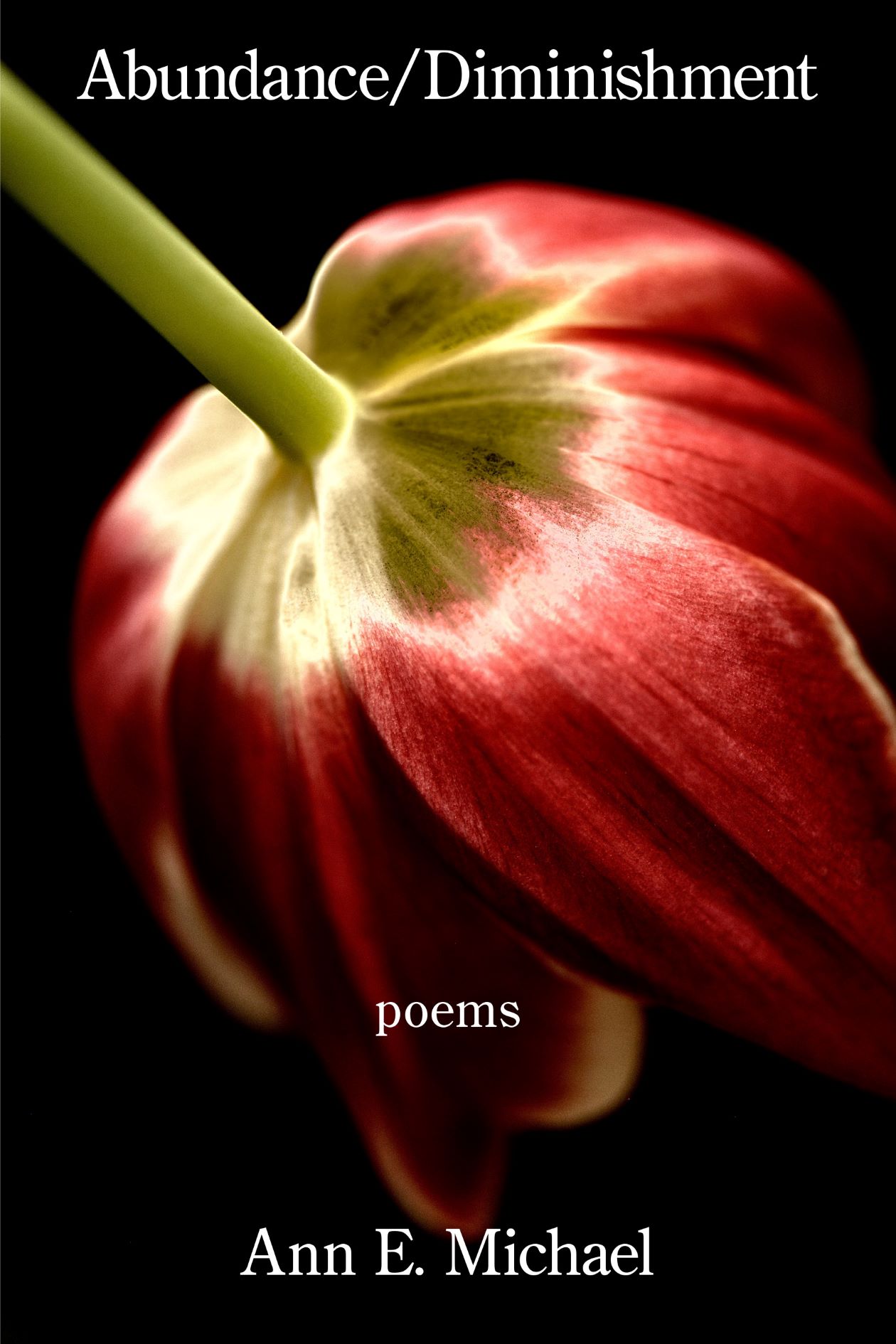
Headlines. They make us so worried, so anxious, so scared. That was true when I was a child, in 1968; it’s true today. The poem below, which appears in Abundance/Diminishment, is one I wrote eight years ago. It remains relevant. And it is an April poem.

~

At a Birdfeeder

Woodpecker works at sunflower seeds
intent on his hunger
deaf to blackbirds’ territorial ambitions,
wooing robins, chickadee’s agitated perch & dip
at feeder’s edge.
Woodpecker makes of his head
a bright gimlet, his claws anchored on an eyebolt.

I watch a redwing drift
on the last morning breeze of April,
a spider’s line trimming the porch rail.
Woodpecker revels in the easy meal
we’ve provided, doesn’t know
about the sack of seed in our garage,
the price of bulk feed, acres of sunflowers
blooming in Iowa, Kansas, Mexico
chaff at the processing plants
allusions to van Gogh, pollen-packed bees
in their yellow jodhpurs.

That’s human knowledge: mine,
yet I’d rather dwell on turkey calls
vibrating the nearby woods, the labor
of wild cherry petals landing on dew,
grass, and feeder where the woodpecker—
still famished—writes the morning news
in bold headlines amid hickories,
that being all the news that matters
in this moment.

~

Lists

There can be beauty in a list: its specificity, also the rhythm and sound–which order does the poet choose for each word? That matters. Chronology perhaps; category, like the scientist; or else sound, such as alliteration; or possibly by the thread of some concatenation that gradually creates associations. The logic of a list poem differs from other forms of lists.

I always think of Whitman as an early and consummate “list poet,” though a great many of his poems do not rely on the strategy. There are list poems that employ anaphora and those that build through phrases. Others rely on modifiers that escalate or change tone to surprise the reader. In my own process it has been useful to begin drafting poems through listing, though often I abandon the list when I revise.

Also, I teach myself about the world and its people, environs, and ideas through lists.

For example, having strayed temporarily from my home region, I’m getting acquainted with a “new” place by making lists of birds, trees, flowers–yeah, the naming-things approach so basic to human beings, like when my children were just learning to talk and conversation with them consisted largely of naming objects or actions.

This is not a poem:

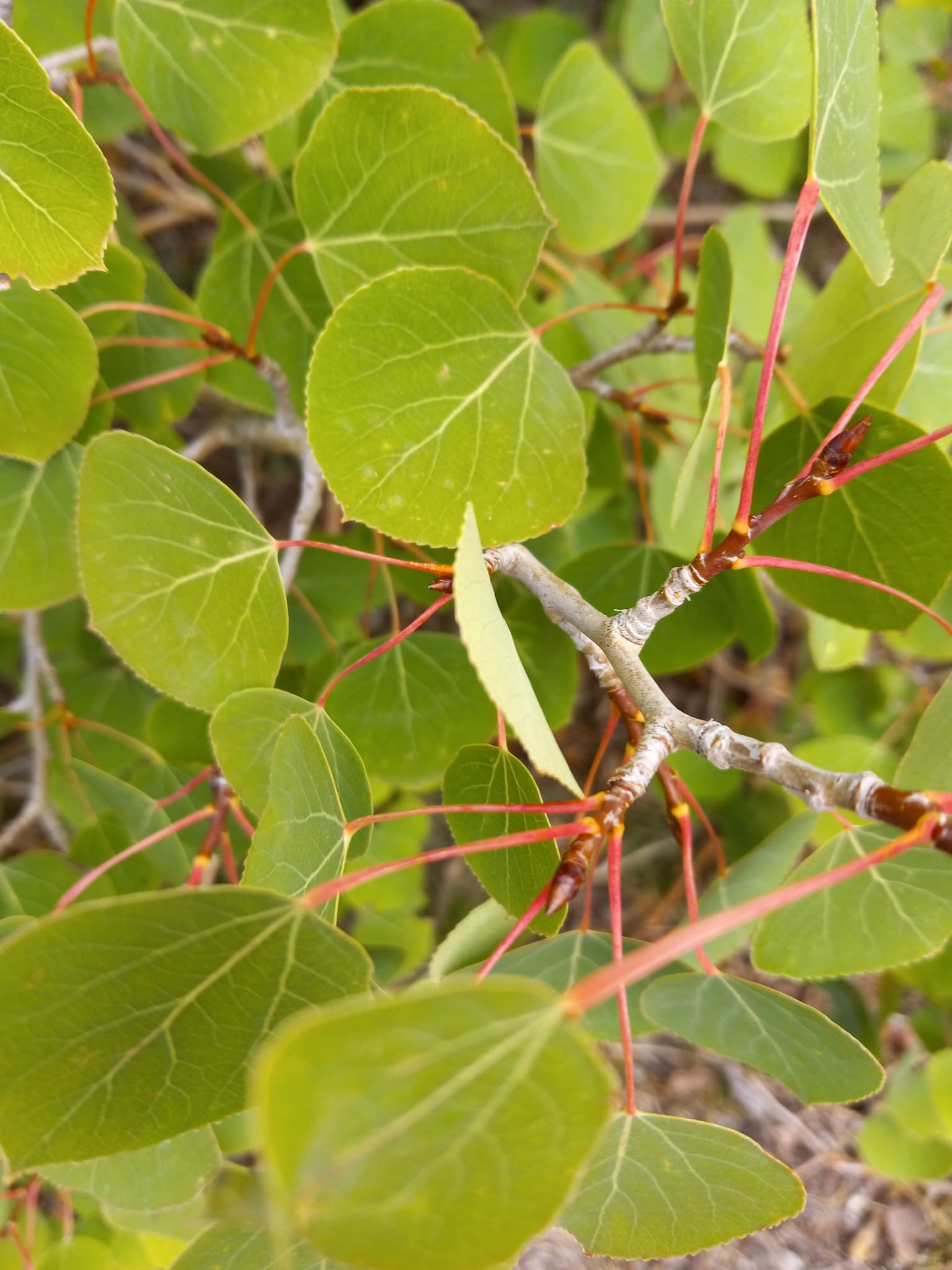
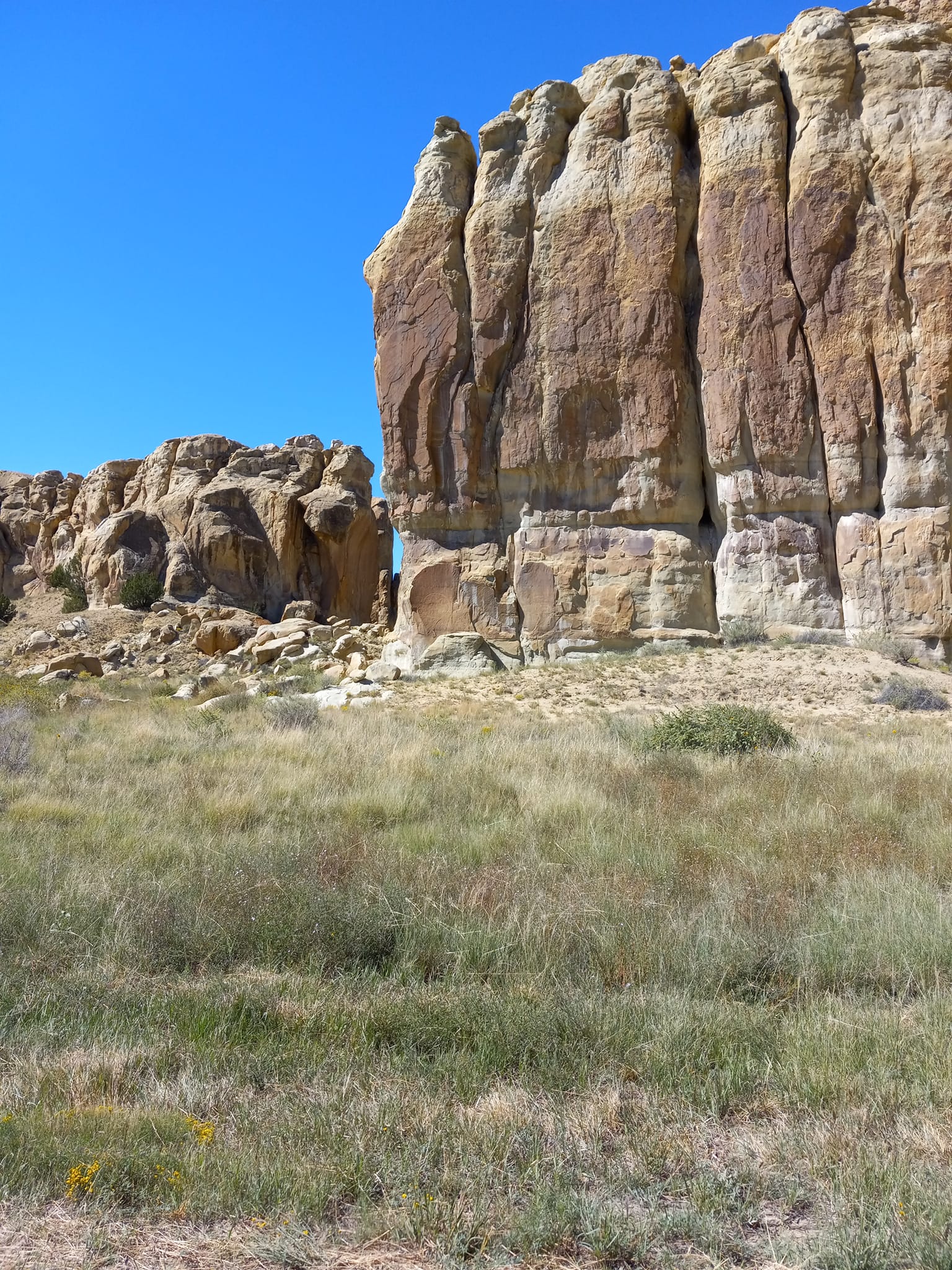
Pygmy nuthatch, juniper titmouse, pinyon jay. Gambel oak, Abert’s squirrel, pinacate stink beetle, skink. Quaking aspen, limber pine. Common raven, Woodhouse’s scrub-jay, fireweed, globemallow, bear corn, oak gall, crow. Pinyon, cholla, Ponderosa pine, alligator juniper, Apache plume, sandwort, groundsel. Gneiss, granite, gray oak, spotted towhee, rabbitbrush, bajada, arroyo, muttongrass, mesa, schist.

~

However, these words now evoke images, sounds, memories, senses that–who knows?–may end up in poems eventually. Because poetry is about and in the world.

Acclimating

A few weeks back, a black and white cat appeared in our yard and took up residence behind the garage, near the compost pile. He’s neutered and acclimated to human beings, friendly, not feral by any means–but a hunter. I didn’t mind having him there to keep mice and voles out of the compost, but let’s face it: outdoor cats are a menace to wildlife. And we live in a semi-rural area of former fields and old barns, which certain unethical folks deem “good places” to drop off unwanted kitties.

We have kept cats as family companions for years, but over time have altered our feelings about cats being outside; our current pair stay indoors. Our previous cats have killed bats, birds, snakes, toads, cicadas, voles (okay, I have mixed feelings about the voles). This interloper has already killed a small garden snake and is harassing the wrens and a pair of nesting catbirds. After hearing a series of alarm calls from the catbirds, I caught him in the burning bush where they reside and gave him a dousing with the hose; but now he knows where they are and that he can climb up and reach them. I don’t see this ending well for the birds. We have several options here, one of which is to catch him–once he trusts us enough–and take him to a cat rescue center, though in our region the no-kill places are filled to the max already. Or we can catch him and adopt him, which means vet bills and the challenging period of introducing him to our cats, and then acclimating him to staying inside. Other options are less humane.

Cats are cats, and he merely does what cats do. I can’t blame him (though I want to!). The real problem, as usual, comes down to humans altering the environment and being careless about spay/neuter. Plus we could be more responsible cat owners: I have a friend who keeps her cats indoors during nesting season, for example. That’s a good start. It means becoming more “mindful”–by which I mean not doing so many things without even thinking first–and recognizing that even fairly small changes in habits can, cumulatively, make a difference.

Two simple examples. A second or two of thinking first, and caring a little, would have stopped dozens of cigarette-, firework-, and campfire-caused wildfires over the past decades. Would have meant fewer people killed or injured by humans driving while intoxicated. We have brains and can acclimate ourselves to using them by developing less harmful habits.

I hear many birds making their alarm cries this time of year when I take walks. Today, I saw a doe and heard her alarm noise, which sounds very like a person sneezing (she probably had a fawn hiding nearby). These creatures don’t believe my assurances that I am not a threat; I’m human. Inherently threatening.

Morning birds

Every year, late March, starting at dawn, the cardinal thumps against our basement window, reminding me of a bored bear I saw long ago in a too-small cage–that repetitious sway and stomp–poor thing. But the bird’s unfettered and the window’s behind a large bush, a spindle tree we planted too close to the house–what’s driving that bird? Territoriality? We think perhaps it sees its reflection, so we’ve tried bird scare tape, opening the window, curtaining. Some years there are nests in that bush, but it’s never been cardinals nesting there. Thunk! Thunk!

My son used to stay up playing League of Legends until 3 am in that room, only to be awakened at 5:45 with irritating regularity by “Morning Bird.” He has left the nest, but the bird or its genetically programmed-to-thunk offspring returns annually. So it must be Spring.

Finally we got some good rain, about 3″, but the feeder stream behind our property lies pretty low and swampy after a mostly snowless winter and a dry autumn. Times have been when that stream flowed four feet deeper, rushing to meet Saucon Creek and head to the Lehigh River basin. I walked there this morning looking for frog eggs and salamanders, found two of the latter in a vernal pool where the skunk cabbage drills up from the swamp. Skunk cabbage doesn’t have much of a reputation for beauty but looks lovely with the sun behind its unfurling leaves.

I’m not a birder and can only identify about 25 birds by sight, fewer by sound. I noted mourning doves, mockingbirds and turkey buzzards, robins and redwings as I headed toward the creek. I have loaded Cornell’s “Merlin” bird app on my phone, though, and spent some quiet time sitting back on my heels in the sunshine while recording birdsong. The field sparrows weren’t in the field as yet, but other sparrows were calling: white-throated, song, and house sparrows (the house sparrows love to hide in the thick English ivy bush near the back of our house). Cardinals, of course, house finches, American crow, bluejay, red-bellied woodpecker, hairy woodpecker, tufted titmouse. Deeper in the woods, the white-breasted nuthatch got noisy, and an Eastern phoebe scolded me quite insistently from a beech tree. I was scouting around the largest beeches to see if I could find any dry beechdrop stems, but likely these trees aren’t quite old enough for beechdrops. I was happy to find some partridge-berry leaves, though; ten days ago, when my husband mowed the meadow, he saw a bobwhite–and left some cover standing for it.

I heard the Carolina wren as “Merlin” identified it, and was interested to note the bird app also recorded the presence of black-capped chickadee, bluebird, and Eastern towhee. It’s a bit early for towhees, but I’ve seen them here in past years, usually in April. And just before this recent rainstorm, I spied a killdeer in the meadow. I feel like an amateur naturalist! Anyway, forsythia are blooming. Even if we get more cold spells, I call Spring as having sprung.

~

By 10 am I was assessing the vegetable patch, where I moved a couple of perennial herbs and tore out as much shotweed as I could find. Some winter weeds can stay in the soil for later season removal, but shotweed flowers early, bolts fast, and sends out thousands of seeds so effectively that winter weeding is essential. I can’t keep it out of my lawn, but I can keep it under control in the garden. Redwings, robins, and woodpeckers kept up their calling while I worked. Good to get sun on my hair and dirt under my nails–feels like the first real spring day.

The Birdcatcher*

So many “heat bubbles” world-wide this summer. We happen to be in one of them–high temperatures, even at night, and barely any rain in the past three weeks. No rain in the forecast for days ahead. Drought. Temperatures in the 90s. It’s not even as humid here as it usually is in summer. But humid enough. I dislike air conditioning as a rule, but boy am I grateful for it and privileged to have it.

The sunflowers in my garden grew taller than average this year yet are now drooping from high temperatures and lack of water. Young deer show up outside of their usual territories while trying to find forage that isn’t crispy. They (and the birds) gobbled up the wild berries so quickly that I managed to pick only a pint or so of wineberries. The drought hit after blackberry season, though, so we did get a nice harvest of those.

Curled petals of a very dry sunflower.

It’s not just the deer behaving differently because of the weather. I notice that squirrels and some birds have altered their usual patterns as well. This evening, I got a panicked call from a friend who lives in a nearby city–a bird had found its way into her son’s attic room through a poorly-installed window air conditioner, and all the windows up there were stuck shut due to the humidity. The poor bird was fluttering crazily, and she had no idea how to free it. I’m guessing the bird (it appeared to be a juvenile catbird) was seeking shade and shelter, and saw the gap between the wall and the unit as a safe space as the sun began to go down.

I have not had a lot of experience rescuing caught birds, but this is the second time in a week I was summoned to assist a frightened avian. On Monday, one of our summer library assistants asked for help with a fledgling robin that was unable to clear the brick wall of our entry ramp in order to join its parents, who were chirping from a nearby shrub. That task was easier than rescuing an attic-trapped bird, but I succeeded in both cases.

I shall rename myself Papagena!

Meanwhile, we have finally taken steps to remove house sparrow nests from our damaged cedar siding, an eviction over which we have no regrets. The layers of nesting material in former woodpecker holes (which the house sparrows enlarged and populated) make an interesting study in avian biology; they also make a mess. More about the problematic house sparrow at this post. Suffice it to say, there’s a ton of work involved, including lift boom rental, that we must manage under lousy-hot conditions.

Bird-catcher, bird-rescuer, and bird-evictor. Here I am, keeping things in balance.

~

*The Birdcatcher is the title of a wonderful collection of poems by Marie Ponsot. I recommend finding a copy and reveling in her work.