Alien

Last week I attended a local book festival that offered a day of independent and small press books (Easton Book Festival) and came away with Lanternfly August by Robin Gow. The poems fascinate me on a number of levels, especially as I love poetry that interconnects with science–biology in particular–and with the diverse experiences that make up a human life.

But first, some context or references. Gow hails from eastern PA, from a rural area north of me, and now lives in Allentown. This region of Pennsylvania was port-of-entry for the spotted lanternfly, a recent scourge for gardeners and landscapers, that made its way from Asia–where it feeds on Ailanthus altissima (tree of heaven). Well, in fact, it did not “make its way” here; it was brought here, inadvertently I assume, through global trade and human intervention. It isn’t the lanternfly’s fault that it is an invasive species. It is human beings’ fault. What if we were to view the lanternfly from other perspectives? What metaphors might it offer us, particularly about being alien, the Other? This is one way to read Gow’s collection.

Gow, who is not yet 30, identifies as an “autistic bisexual genderqueer person” but says they didn’t come out until college. Life in rural Pennsylvania as a person with autism and a sense of being different in terms of mind and gender? There have to be feelings of alienation, or of feeling like an alien. Gow also writes for YA readers, where compassionate understanding of how it feels to be part of, or left out of, peer groups matters; in the lanternfly poems, readers get a sense of empathy even for this damaging leafhopper. That amazes me, and I appreciate it deeply.

When the bugs first appeared, I read as much as I could about how to discourage them from our trees, how to trap them and what their various stages (egg masses, instars) looked like. Mostly I was bent on eradication, with a bit of resignation in the mix–see this post from 2018. After we got them reasonably under control here, they began to move north and west, just as the brown marmorated stinkbugs did shortly after their arrival in 1998. Both insects feed on sap or fruit. They are foreign to our shores but find much to suck upon here and have damaged fruit crops and trees. Although some people find them beautiful–they are much prettier in flight than at rest, brightly translucent red with the sun behind their wings, and their second instar stage resembles ladybugs–they have gained the reputation of being a Bad Bug. Gow writes:

When I called you “host” I meant,
“I love you in a ruinous way.”

That’s from the poem “Third Instar.” In the poem “First Instar,” the speaker wonders how long before “this becomes wreckage? I don’t even know yet what I am.” The creature could be some type of cryptid, developing into something no one can explain or understand. Society offers solutions that don’t necessarily work–ways to eradicate the insect demonstrated on TikTok, laid out on government websites, posted on Pennsylvania Department of Agriculture’s pages. Also the inquiry, in “Home Remedies,” of totally re-imagining one’s body: “Have you tried becoming a different species? Have you really given mammals a try yet?” Wry humor, of a bleak but wildly intelligent sort, pervades many of these pieces. In “Stop the Spread” (pandemic/plague allusion definitely intended):

...I cannot stop myself
from lanterflying: verb meaning to exist ardently
despite not belonging. How did I become so contagious?
Spores, like fireworks, floated from my gills.

I’m not really writing a review here, just sharing my enthusiasm; otherwise I’d have written about the varieties of form/text/layout Gow employs and the structure of the collection, and much more. Anyway, this is the reason I love going to conferences, seminars, readings, small press, and literary events–always something new to me to explore and learn from. Gow’s poems have helped me to develop a kind of compassion for “alien invasives.” The parallels to how society treats its Others–those aliens and distraught foreigners (not colonizers) arrive almost inescapably from the collection. That those who do not fit in nonetheless have value and need appreciation and respect comes through as given. There’s deep heart in these poems.

A bit of awe from me to this poet. (I happen to be reading about awe right now, which may figure in my next post). To find out more about Robin Gow: They have a website with a daily poetry blog at https://robingow.com/dailypoetry/, definitely worth checking out, and their books are listed there.

Language power

In advance of my reading this weekend, Jennifer Dotson of Highland Park Poetry asked a few questions and created the flyer below. I especially like the last question and have more to say about it below.

~

The graffiti on the NJ and NY Palisades sent a thrill through my childish mind and body. I first recall seeing words spray-painted on the cliffs when I was under age five and barely cognizant of letter forms. The view puzzled and frightened me, partly because of the heights (I was acrophobic from a very early age) and partly because I had no idea what those huge, high-up letters signified. When I got to kindergarten and began deciphering letters, the graffiti confused me because it contained signs that weren’t in the alphabet I was learning at school: Ω, Φ, the scary-looking Ψ; θ, Δ, and Σ, which resembled a capital E but clearly wasn’t. Once I could read and still could not understand them, I asked my father what those letters were and why they were up there on the rocks. They reminded me of the embroidered on some of the altar cloths in church, but I didn’t know what that stood for, either.

Frat boys from the colleges painted their Greek symbols on the rocks long before spray paint was invented, my dad said, possibly as part of hazing rituals. By the time I was a child, the 50s-era “greasers” had begun announcing their love for Nancy or Tina through daring feats of rock and bridge painting; then the graffiti era came into full swing after the mid-sixties, and the process got colorful–the Greek symbols vanished, replaced by “tags.” All of which just reinforces the importance of words in the world.

I will never climb up high to write or declaim my own words, as heights continue to terrify me. But I continue to push ideas, words, arguments, pleas, elegies, and gratitude into the world. Writing is the only way I know how to do that. It’ll have to be enough.

Aloft at last

My second full-length poetry collection is finally available. Whew! It took a good bit of patience, some frustration, and considerable persistence to get here, but I believed that this was a manuscript worth plugging away on. And thank you to Highland Park Poetry and to judge Cynthia Gallaher for choosing RQH as a prizewinner.

Persistence doesn’t always pay off, but when it does, we tend to focus on how important it is to keep on keeping on. However, I’m not sure I wholly believe in the process of sticking-to-it no matter what; there are times when you do need to let go of an unattainable goal or the pursuit of a not-terrific idea, and just–well, fail. I have let go of quite a few goals, plans, and previous manuscripts when I honestly evaluated my feelings about them and their possibilities for becoming realized. It’s okay to fail. You learn more from failure than from success. I have gained quite an education that way myself.

But I wanted this book to get into print. I like the poems in it. I like the things I learned as I played with meter and form and (mostly slant) rhyme. It was fun to find a range of topics that managed, one way or another, to work together. Mostly, I wanted an audience, to find out whether readers find it thought-provoking or entertaining or interesting. Also, I was starting to sense that it was getting in the way of my next manuscript. Yes, of course I have the next manuscript…

Do I wish the book had come out four or five years ago? Yes. My first collection, Water-Rites, came out way back in 2012; RQH was supposed to have followed more rapidly on that book’s appearance. Am I glad it has appeared at last? Also yes, very glad!

I am grateful to so many people for this book. And I will be grateful to anyone who buys it, reads it, and doesn’t find it a complete waste of time. Meanwhile, I’m working on getting some readings lined up. I know I will appear at the book launch September 9, 2023 in Highland Park, IL! I’d love to read at other venues, so if you know of one let me know.

And if you have a manuscript you really believe in–keep trying.

Astronomy

As a freshman in college, seeking to expand my limited science knowledge, I enrolled in a Physical Astronomy course, an introductory seminar class that taught students how physicists study the cosmos. At any rate, it introduced us to how that was done in the early 1970s. Thanks to computer tech and so many rapid changes in the field (we were using slide rules!!), the discipline has changed in some respects. I was terrible at the math, never having gotten beyond Algebra II in high school, but I had a terrific professor and loved the material. As may be obvious to readers of this blog, the cosmos and all that is in it provides me with endless opportunities for learning, speculation, and reflection.

Rebecca Elson, whose book A Responsibility to Awe I just finished reading, keenly reminds me of how fascinating the study of the universe can be and how little we know of it. Each decade the science and the theories take immense leaps in measurement and exploration, and each leap reveals how many more questions we have yet to ask, let alone answer. Not just inquiries into the galaxies, but also biological and ecological worlds to explore: salmon, eels, oceans, mountains, our own histories and our own mortality. Elson’s area of study centered on galaxy formation–the chemical evolution of stars, and globular clusters. But she started out collecting rocks with her geologist father who was doing fieldwork in Canada, then studied biology. It wasn’t easy to be a young woman studying the sciences in the 1970s, and she felt she was drifting a bit; writing, however, she felt more sure of. In the essay that ends this collection, she states that the atmosphere at Princeton during her post-doctoral study was “a stronghold not just of men, but of theoreticians” who looked down on work which involved “mere” observation, which is what she had painstakingly been doing in her research in Australia and Cambridge. At Princeton, though, she met a group of poets who encouraged her work and who made her stay at the university more comfortable. Good observation skills make a terrific foundation for poets.

~

If the ocean is like the universe
Then waves are stars.

If space is like the ocean
Then matter is the waves
Dictating the rise and fall
of floating things...
  --from "Some Thoughts about the Ocean and the Universe"

She was diagnosed with non-Hodgkins lymphoma when she was 29, died ten years later, and this book is the only example I’ve been able to find of her poetry. But it is revelatory what Elson does with simple language and deep, theoretical concepts as metaphor, topic, or theme. Some of the poems are so brief, yet I find myself thinking about them again and again. Like good haiku, they are not aphoristic–but they linger. Her sense of awe is palpable in these poems; I think that’s what I like most about her poetry.

Evolution

We are survivors of immeasurable events,
Flung upon some reach of land,
Small, wet miracles without instructions,
Only the imperative of change.

~
Salmon Running

Who isn't driven
Up the estuaries
Of another's flesh,
Up rivers of blood,
To spawn close to the heart?

~

A poem titled “OncoMouse, Kitchen Mouse” thanks the laboratory mice whose lives led to the cancer treatments that, for a time, prolonged her life; “Antidotes to Fear of Death” finds her eating the stars, or stirring herself into a young universe. While one late poem is bleak (“There is no poetry to cancer/To the body betraying itself”), another–the last entry in her notebook–observes the flourishing of spring. Much to learn here. Enough admiration that I wish, selfishly, she’d had more time on earth so I could enjoy more of her poems.

~

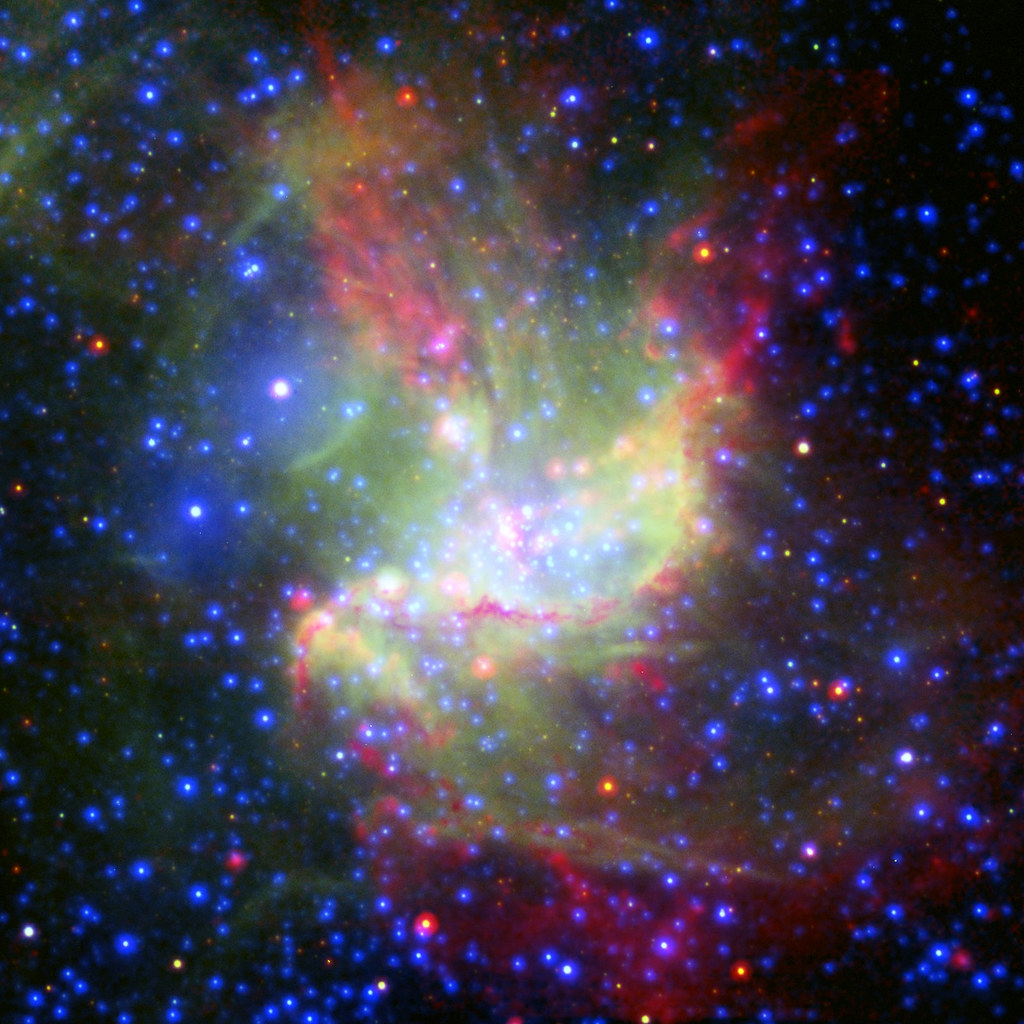
Fledgling Stars in Stellar Nursery by NASA Goddard Photo and Video is licensed under CC-BY 2.0

Admiration

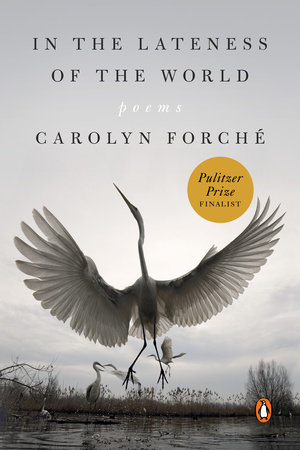
Carolyn Forché has a new collection of her own poetry, which is always cause for joy. She has compiled anthologies and written memoir and essays, but her poetry collections don’t appear frequently–five collections since 1975, averaging one poetry collection a decade. This is not a prolific output in terms of poetry collections compared with some of her peers, but her books are worth waiting for. I suspect that her poems, crafted with such memorable pacing and imagery, which unspool so purposefully–even mindfully, though that term is overused–must take time to consider, revise, or compose. I have to slow my breath just to take them in.

In the Lateness of the World lies on the book pile beside my bed at the moment, and I read about three to four poems at a time. Savoring them, thinking about their implications; despair and concern and grief, and deep love for the world we inhabit and the people who labor through the days. Forché, because of her “poetry of witness,” often gets called a political poet, mostly because she never shies away from confronting, and writing about, the injustices and damages inflicted on people and on the planet–and implicating the perpetrators. But she also avoids ideology. The perpetrators are not easily pegged in her work: all of us can be implicated, and all of us are affected, a network no single person or nation can untangle or resolve. Forché’s poems resonate with a complicated love and a recognition of how much work we must be willing to do.

~

Imagining Forché writing, I ponder my thoughts on revision and why I love doing it but simultaneously procrastinate on getting to it; good revision, in my case, requires a dedicated mindfulness and singular devotion that seems to require large blocks of time. I can compose drafts rapidly–jottings, notes, even entire pieces (unfinished but on track). Revision doesn’t work that way for me. It requires critical thinking. Analysis. Concentration. Mulling. Bouncing the work off others. Re-entering the mind of the moment. Waiting things out. Reading other poets. For example, reading the poems of a writer who seems to take her time on each piece, yet manages to keep the immediacy and gorgeous imagery in each of her poems intact.

How does a poet do that? Talent helps, but talent alone doesn’t get a writer to the fine observations and imaginative layers really good poems possess. That may require mediation, play, solitude, practice, revision, a community of writers, long gestation for some poems, mentorship, nature walks, travel… It’s likely I have not been dedicating enough mental and creative energies to my drafts. Or that I need some new methods.

My excuse is I don’t have time. But enough excuses. This is stuff I love, that I enjoy doing. Why shy from what I love?

Volunteers

This evening, a steady rain at last, one I hope continues for hours. It is too late to save my vegetable garden but will help trees, shrubs, flowers as they set seeds, birds as they migrate.

Earlier today, I harvested a few remaining veggies. I cut some zinnias for bouquets and watched as a newly-emerged monarch butterfly unfurled its antennae and proboscis and dried its new wings. As often happens in the late-summer weeks, I pondered what to do for the next year’s garden. A surprising thought took shape: letting the garden go fallow for a year. After all, the patch has been working hard for over two decades now–shouldn’t it get a break?

My thought process then admonished me about weeds. The majority of the weeds that would crop up in a fallow patch well-composted over the years will be non-native plants. Those are what mostly come up in our meadow, though we do have many natives as well. But the meadow isn’t rich soil like the garden is. True, I have nurtured some natives even in the vegetable garden. I grow three varieties of milkweed as well as native asters, rudbeckia, and goldenrod (not to mention the native vine poison ivy, despite my best efforts to eradicate it). The milkweed was, this year, much appreciated and eagerly consumed by monarch caterpillars. Still, if I do nothing in spring but let the patch go fallow, I’m likely to find it has been claimed by white clover, dandelion, purslane, Canadian thistle, mugwort, garlic mustard, Japanese knotweed, Amur honeysuckle, and other common weeds that originated in Europe, the Caucasus, or Asia.

Okay, but I’m a champion at weeding in the springtime. I could pull out many of the invaders just as they are getting started. What if, however, I allowed some sprouts to grow? The volunteers, as gardeners call them, that come up on their own after wintering as seeds in the ground or in the compost–I could let them stay wherever they popped up. In this way, the garden would design itself, instead of me being the designer. It would be a year of surprises! I like that idea. I love a good experiment…why not find out what my garden wants to do, after 25 years of me trying to tell it what to do?

Hasn’t yet taken its first flight!

I can make some good guesses as to what I might find: morning glories, zinnias, some variety of squash, tomatoes of mixed parentage, nicotiana, sunflowers. Basil, possibly; chives and cilantro and dill, almost certainly.

Anything else really would be surprising, but this year I had a cantaloupe volunteer, and its fruit was quite tasty. It gets below freezing here for months in winter, and I have never had lettuce volunteer; however, I haven’t let it go to seed, either. It might survive, as the radishes seem to do.

The more I mull it over, the more I like the idea. I like the experimental aspect of it, and the speculation and the surprise. It means that instead of preparing the soil in spring, all I’ll do is spread the compost out as usual–but not dig it in. I’ll water if the spring is dry, but mostly pay attention to the things that sprout and determine as early as possible whether those are edible or ornamental, or just weedy. The downside is that I’ll get all those marvelous seed catalogs and…will I be able to resist? Also, my spouse will complain. He likes a well-laid-out, well-delineated garden so he knows where he can step and where he shouldn’t, what to water, and what to pull out. He may also object initially to the aesthetics of an unplanned truck patch. But around mid-June, I will be admiring my volunteers. It will be beautiful.

~

Always I find metaphors and analogies between the gardening process and the writing process. The way I put my recent chapbook (Strange Ladies) together was similar to the theory of an all-volunteer garden. I drafted those poems at different times over many years and let them sprout even though they did not seem to fit in with my other writing projects or plans. After awhile, I realized they made their own kind of peculiar and surprising design.

I recognize that experimentation is a big part of my writing process. I love just playing around with words and ideas; when I first started writing more purposefully, my poems were often a bit surreal and strange. Over the decades, I’ve experimented with craft, prompts, natural world imagery, poetic form, philosophical and speculative concepts, and memory. It’s hard for me to say where my style or genre of poetry fits. I experiment, but most of my poems are not “experimental.” Much of my work uses observations of the natural world as major image and motivation, but I am not quite a “nature poet.” It doesn’t really matter how or whether my poetry fits an identifiable description. I weed as I go along, and I let anything that looks interesting (or familiar) show me its stuff.

That’s a natural process that reflects the way I think, the way I experience the world, and the various ways I find to express myself to readers. [Crafting and revising–that’s less spontaneous, though it can have outcomes just as surprising.]

As with my garden idea…wait and see.

Adaptable

The squirrels have begun an assault on my vegetable garden, drawn by a stunning and unplanned stand of sunflowers starting to go to seed. I can’t say I blame them, and I don’t mind that they eat the sunflowers–the birds can grab plenty. It’s the intelligence of squirrels that rallies the assault: they find a food source, tell their friends, and then explore further into the garden. That’s where I get annoyed with them. In this dry, hot weather they seek out the juicy tomato fruits and, while there, sample everything else they can find.

But their appearance is due to human circumstance and intervention. The development of a suburban cul de sac next door instead of the cornfield of past years, for example, and the pressure that has led to fewer predators in our little environment. More deer in smaller acreage, and deer eat oak saplings, so we have fewer oak trees maturing along the woodlot. With less mast available, why not turn to sunflower seeds, tomatoes, pears, even squash? Squirrels will take advantage of those changes. Very adaptable creatures.

Adaptability is admirable, and required if beings are to stay alive, let alone evolve. When I visit my beloved, aphasic, widowed mother, I marvel that she can nevertheless, under enormous changes, navigate the world. Granted–she has assistance. But not all human beings with assistance manage to maintain a benign and compassionate sense of self as their bodies fall apart with age.

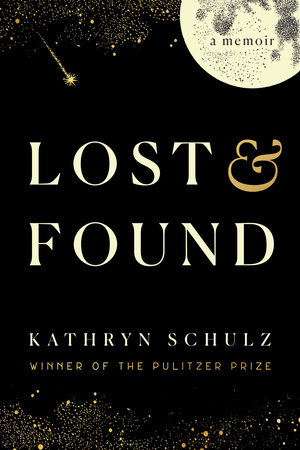
Which brings me to Lost and Found, a Memoir, by Kathryn Schulz. My book group read this one recently, and I started reading it without doing any research about the book or the author–too busy with other things, and sometimes I like to be surprised by a text. By page 60, I was teary-eyed, because the story Schulz tells resonates with me. This month marks the second anniversary of my dad’s death, and the book begins with the death of Schulz’s beloved, curious, intellectual, chatty father.

This is the “Lost” of Lost and Found. Schulz writes beautifully, and writes beautifully of how complex and fraught the impending death of a loved one can be–the decisions, the fears, memories, even the forms that must be filled out and submitted so that the insurance and medical bills get properly taken care of. Meanwhile, we grieve and remember and numbly try to keep on in our suddenly bereaved “normal lives.” Schulz describes the environment of grief accurately and poignantly.

The “Found” section of the book describes love: new love, romantic love, the thumping of the heart and surprise at finding a person who’s the person. Here, Schulz’s experience differs considerably from mine, yet her writing took me back to days of feeling the heady excitement of getting to know someone deeply, intimately. The memoir, though it begins in sorrow, ends with the vulnerable opening into the shared territory of long-term relationships, whether those are among families, friends, or spouses.

As wretched as the world often is, we–and the rodents, insects, plants, etc.–find ways to adapt for far longer than seems likely. In the face of war and climate catastrophe and the loss of what we love, some of us manage to change and stay resilient, teaching new skills to those who come after us. We do so through art, literature, dance, music, community, love. It isn’t easy and it isn’t certain. But it’s all we’ve got.

Parallels

I’m reading Margaret Renkl’s book of brief essays, Late Migrations, which evokes in me a revival of memories not too dissimilar from hers. We are near in age, and though she writes from Tennessee and Alabama, her unsupervised childhood running barefooted through peanut fields and along creek banks at her grandparents’ house feels parallel to my unsupervised childhood running barefoot along creek banks surrounded by small towns and cornfields. I too slept on the screen porch at my great-grandmother’s house, fan running, insects humming, heat lightning brightening the humid summer nights.

Renkl writes about watching Walter Cronkite on television and seeing the Viet Nam War, vivid to us in spite of the screen’s small size and black and white images. As teenagers in the mid-1970s, Renkl and I benefited from fairly liberal sex education classes in high school. I also benefited from a brief era of integrated junior highs and high schools, however; not the case in Birmingham, Alabama. Like hers, my parents scraped by in suburbs close to the city in houses with cement stoops and no porch. Though they eventually made their way into the solid middle class, my folks attained financial stability long after I had left home.

The essays note the change in climate, both cultural and natural, that has occurred over the past six decades. Renkl observes the increasing brevity of Southern winters and wonders how the temperature will affect the migratory birds–will they wait too long to head south? Will their food sources also change, or will the migrants find less to eat to sustain them, especially on the return trip north when they need to power up their bodies for mating and nesting? How will the birds navigate an increasingly human-altered globe-scape, a world of all-night lights and glass towers, wind turbines and redirected rivers? And will native birds survive the aggression or overpopulation of invading species?

I see that last concern in my Pennsylvania back yard, where the number of European house sparrows has probably quadrupled in the past three or four years. A passionate birder friend of mine has told me, flatly, “Kill them.” That seems harsh; in Renkl’s book, she gets the same advice about squirrels in her attic! There are, however, compelling reasons to find a way to discourage these aggressive and noisy little birds (see Todd Holden’s article here). My spouse and I have not yet gotten the heart to destroy birds, though they are enlarging woodpecker holes made in our cedar siding corner-boards and then nesting in the openings. We have had no bluebirds, except the occasional one just passing through, for four or five years. A coincidence? I think not!

The memoir aspects of Late Migrations resonate with me, and so do the essays in which she reflects on what we are losing (on earth and among our Beloveds). The author decides to let the chipmunks continue to reside in tunnels under her house and to leave the squirrels in her attic in peace. I’ve come to terms with our hungry, marauding whitetail deer population, our groundhogs, and the Asian stinkbugs, among other creatures. The house sparrows, though, are as bad as the mugwort, knotweed, and wintercreeper in our perennial gardens and hedgerows. I may have to take more meticulous precautionary steps before next spring arrives.

Meanwhile, I use Cornell University’s Merlin app early in the morning and late in the evening (when the house wrens are less vocal) in an effort to determine which birds are hanging out in our little ecosystem–the birds I can’t see, or that I can’t identify by sight (like the blackpoll warbler). Two evenings ago: a bluebird.

But it was just passing through.

Passer domesticus, male. Image from https://www.rspb.org.uk

Memoir-ish

When a poem uses a lyric approach, readers tend to assume initially that the poet is the speaker of the poem; in this respect, a reader might think of the poem as a personal revelation or–if the circumstances of the poem seem to warrant it–as a kind of memoir. People who have more experience with reading poetry (or who have been assigned to write a literary criticism of the work) may change their assumptions once they read more closely. That’s one of the reasons I enjoy poetry. It challenges my assumptions, surprises me, informs me of new facts and perspectives.

Prose memoirs, most of us assume, are less metaphorical and more “truthful,” at least from the writer’s perspective. Though there’s room for the unreliable narrator in memoirs, readers tend to feel betrayed if they determine the memoir writer hasn’t been honest with them (then we end up with controversies like James Frey’s). I find the blurring of genres rather fascinating, but generally, the folks I know who read memoirs want a mostly-unvarnished truth.

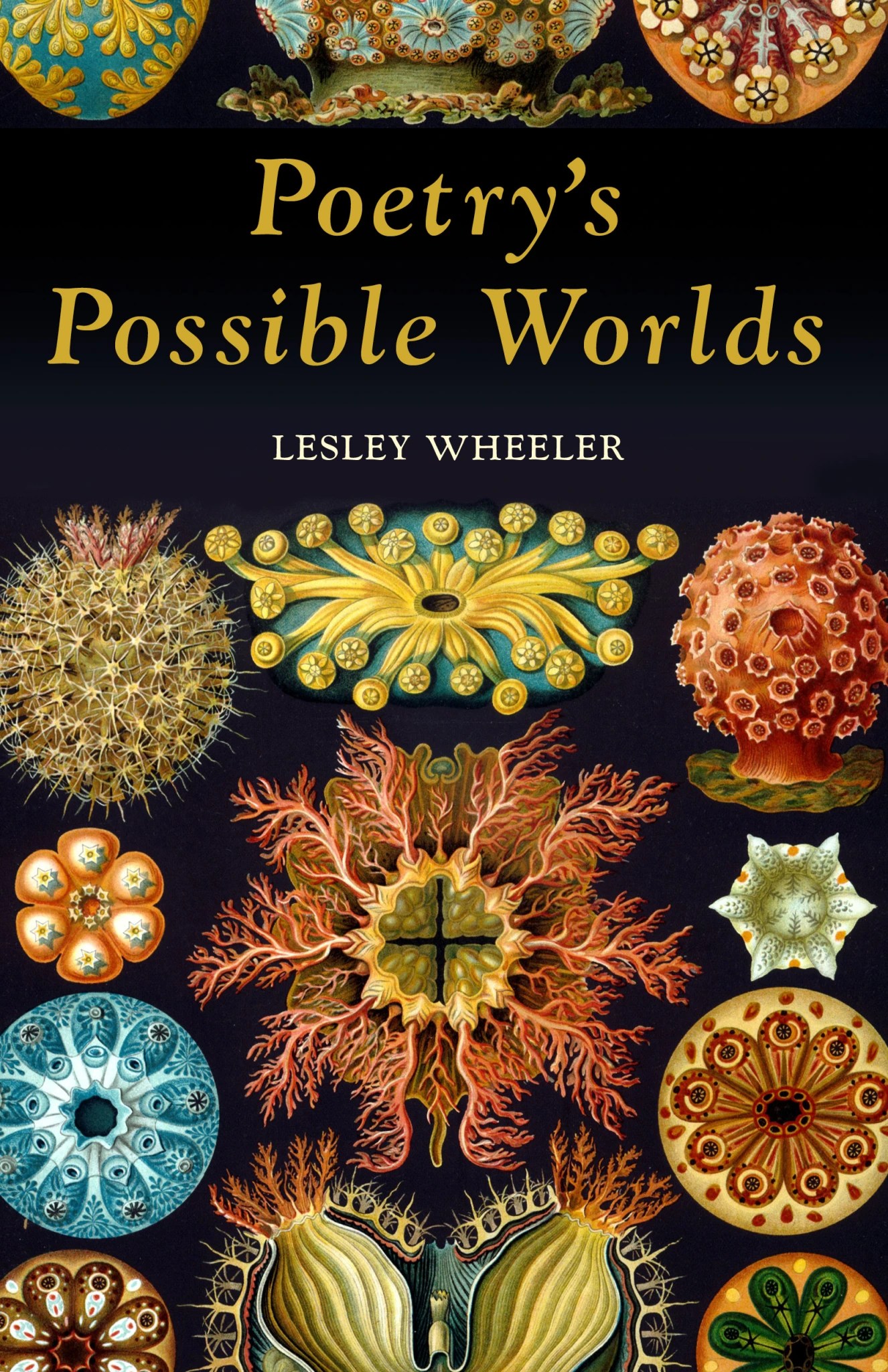
What about taking the memoir in a different direction: instead of blending or blurring toward fiction, into poetry? There are poetic memoirs in print, but they tend to be writers’ experiences expressed in poetry they’ve written themselves. Lesley Wheeler has opted for something different in her book Poetry’s Possible Worlds. Here, she uses the idea of “literary transportation” as a reader of poems, demonstrating how close reading can evolve into a form of reflection on, well, everything. She chooses 12 poems to examine, works that were not only resonant for her but that drew her into some understanding of why and how poetry manages to infect our gut feelings, exert its magic on the reader’s mind. She makes an interesting decision, too, in presenting 12 contemporary poems and avoiding the classic canonical works, a choice that focuses the reader on the newness of the text rather than on its famous backgrounding. It’s fascinating to me how this approach shook up my expectations. In this way, too, she does the readers and the poets whose work she’s curated a great favor: we get introduced to one another through a sensitive, penetrating interlocutor: Lesley Wheeler.

But the book does more than critique 12 poems; if anything, that’s the least part of Wheeler’s purpose. The book “qualifies” as memoir, in its genre-mixing way, because Wheeler explores her response to the poems through the lens of a difficult few years in her own life–here’s the memoir part. But instead of a prose memoir in chapters, each section acts as an independent essay centered around the poem she is reading and, as she revels in and puzzles through each poem, we learn about the challenges in her life. In this book, those challenges come largely from her unreliable, difficult father, whose betrayal(s) of the family snowball into messy misfortune. For Wheeler, poetry offered–still offers–transportation through the grief and anger and ways to navigate the gaps that all lives contain. I couldn’t agree more, and this book reminds me once again of poetry’s necessity.

In which she is briefly a curmudgeon

When I was about 12 years old, I found John Christopher’s YA Tripods books in the library. In this series, the humans on Earth have reverted to an agricultural, village-based society dominated by aliens who stalk the planet as giant “tripods,” three-legged metal vehicles in which the domineering hierarchy scans the population to make certain there are no outliers plotting to overthrow them. The aliens use technology to place a “cap” hard-wired into people’s heads when they are 12 or 13, and there’s a ritual ceremony surrounding it. The cap keeps humans docile and obedient to the overlords and contains a tracking technology so the aliens can locate where people are going, making sure there are no gatherings that might lead to revolution.

I found this idea terrifying. Somebody is in my brain, tracking my movement, forming my opinions, making my decisions, removing my imagination. It seemed like the worst thing that could happen to a 12-year-old.

I loved the books but had nightmares for years. And now, as one often feels when reading an older apocalyptic-fiction or sci-fi tale, I recognize a prescience in Christopher’s ideas. Instead of aliens implanting tech into our brains, we humans have found ways to implant ideas and sway the populace through entertainment and communication device use without wiring up the gray matter. Clearly, people can influence other people, “change their minds,” without actually entering the brain itself…though earbuds get awfully close to that vital organ. The cell phone/smartphone/tablet/watch (Google glasses, anyone?) seems a voluntary purchase to its users, but I’m old enough and observant enough to recognize a societal game-changer when I see one, and this has been coming for decades. The smart phone with its millions of possible apps has also become more necessary over the years, less of an entertainment purchase and more of a social need. I found this out when traveling by plane last week. I also discovered how pathetic my app-IQ is and that I barely know how to use my phone for anything but pictures, calls, and text messages. And yet it can follow me around, track my interests and movements, show me consumer items to tempt me to part with my money. Yo! Get outta my head!

Sometimes I do resent the way things have changed. Change, though, keeps us going. How can you have life without change? What is experience but change? I don’t see a need to waste my energy grousing about it, even if I have trouble embracing all of the changes I see or using the new tools. I still possess the “old” tools: I know how to cook from scratch, garden, build a fire, type on a keyboard, write in script, change a tire, wrap a sprain, navigate using a map, use a paper dictionary, read a book, preserve fruits and vegetables, bake bread. I can sleep without a sleep app, meditate without a meditation app, make a meal without a recipe app…I think independently. That hasn’t changed much since I was 12.

Here’s my curmudgeonly moment: We are not hard-wired into our technology, yet. It would be useful if we remembered that, however, while technology still has an off switch.

~

[I’ll be back to blogging about poetry matters soon…next post. Whenever that may be!]