Magnificent

Qesra Îshaq Paşa or Ishak Pasha Palace, Ağrı Province, Turkey, Ottoman Empire, 17th c.

For a recent poem draft, I looked up the etymology of the word “magnificent” even though I was fairly sure I knew it. Like many words, its meaning has altered a bit over the centuries, but in this case less so than most: from the old French, from Latin, the root words for “great” and “make,” it formerly referred to great-mindedness, courage, nobility [per the Online Etymology Dictionary] and later gained the additional meaning of splendor or costliness; “Meaning ‘greatness of appearance or character, grandeur, glory’ in English is from late 14c.,” whereas later uses of the word carry connotations of architecture, expensive taste, grand works of a more human variety.

The draft I was working on was about Melville and whales, but of course thanks to stopping to look something up, I went down a research rabbit hole and ended up deciding that the magnificence whales possess would be more of the greatness of appearance sort and perhaps was not quite the way I want to describe whales. But the word did put me in mind of some of the monumental temples, mosaics, palaces, castles, and sculptures I saw in Turkey last month. Many of those are “magnificent,” but they act as reminders of how fleeting human magnificence is, in comparison to whales. Whales evolved into their modern form about 4 million years ago, long before humans were modern humans, let alone building palaces or temples to please the gods, intimidate their enemies or their subjects, or glorify and deify their kings.

The photo below is of the temple and perhaps the tomb of Antiochus I of Commagene (because archaeologists have so far discovered no actual tomb, the existence of said tomb is speculative, though the site is considered to be a hierothesion). The top of the hill is not natural but is a gravel tumulus. Human-made. Gravel hauled up the mountain to increase the size of the mountain and deter potential grave-robbers. Who else would do that work but slaves?

I know the theme’s been written into poetry before, but in these times it seems to bear repeating. Here’s an early draft I’ve been working on, in loose blank verse, in which I invoke a famous poet whose poem on the theme has lasted a mere two centuries. But that’s longer than many an empire has endured.

~

Hierothesion (Nemrut Dağ)

Tomb or temple, likely both, one king’s
angling for a pantheon he’d crafted
on his own, as kings will do when empire
hardens in their veins. They turn to stone.
Minions, memorize my name! (like
Ozymandias, as Shelley can attest).

Tourists scale the tumulus and find,
at sunrise, eagles, lions, and Apollo,
gods of brokenness, unhumbled despite
centuries of disregard. Extinct.

We know him not. And what has made us pause
speaks not of his glory but of our dismay:
how much purely human work, slaves’ toil and toll,
it took, interring him this way, high up
and rubble-laid, to raise him above all.

Where are those workers’ bones? We walk on them.
This we know without a temple or a tomb.


Zeugma

Zeugma, an ancient city in what is now Türkiye’s Gaziantep Province, is near where we began our tour of a 2000-km section of the Silk Road trade route. The city’s name comes from the ancient Greek word for “bridge,” (it means to join or yoke together); the city was located on the Euphrates, where there was likely a floating bridge, like a barge or pontoon bridge, that enabled people, largely traders, to cross. Most of the ancient city is now left to underwater archeologists to examine, alas, since it lies beneath the new Biricek Dam.

Photo [Euphrates] by Fu0131rat Gedikou011flu on Pexels.com

Turkey itself is, and has ever been, a bridge–for trade, cultures, conquests, languages, religions: a place of shifting allegiances and changing empires. Arab traders brought Islam from the south, while Seljuk Turks brought their version of Islam from the northeast (Kyrgyzstan and the Turkic Khaganate, a region of Medieval-era Muslim nomadic groups with substantial dynasties and a loose empire that spanned into what is now China, hence the Uyghurs of today’s China). Earlier, the Christian gospel had arrived along the Mediterranean shores from Jerusalem and then probably through Syria to Ephesus, a Hellenic city south of Istanbul. St. Jude the Apostle/St. Thaddeus supposedly got as far as Şanlıurfa, then known as Edessa, where an early Armenian king converted to Christianity before 100 AD. So they say.

~~~

Our tour guide was excited when I told him that the word zeugma is used in poetry terminology. It’s a figure of speech in which words or images in a phrase are connected, often for humorous or ironic effect, as in a sentence such as: He lost his heart and his wallet at the stage door cafe. The word “lost” joins both heart and wallet. It acts as the bridge. It’s an intriguing little literary device that’s seldom the first thing I notice in a poem, but when I do identify it, I appreciate it. I like knowing the etymology, and I like knowing that I’ve been where the city was.

Joining and breaking apart and rejoining in new ways, Turkey spans cities, rivers, and eons.

What are we doing here?

What is a self-directed, multi-disciplinary, eco/environmental artists’ residency? Why are we here? Or, since I can only truly speak for myself, why did I choose to participate in this experience, off the grid in the only true desert in Europe, with people I had never met? Several of my friends have been asking me these questions. I couldn’t really answer in advance because I had no data! I chose to come here partly to get some time alone, partly to visit the land where Lorca lived, and partly because everything would seem new to me.

Not everything seems new to me, as it turns out. Which is also something I expected. For example, my college experiences, both undergrad and graduate, were largely self-directed and multi-disciplinary; what’s changed is that now art disciplines include things like 3-D imaging, computer videos, podcasts, software-as-medium, and the like. Even blogging (here I am, composing creative work for humans to read through a computer screen). For example number two, the artists here are not so different from artists I have met in many circumstances and places over the years: they are curious, intelligent, creative, willing to take risks, and often quite mindful. Another example of things not so new is that, having spent a bit of time in the Albuquerque NM region recently, the lay of the land here and its exceptional flora, fauna, and aridity are not completely alien to my sensibilities.

I’m seeing a number of ideas about xeriscaping, creating fire-breaks, and about stopping erosion and saving water–such as environmental water systems that include basins, ponds, and plants as filters–in process or already in use here at the cortijo. We watered seedlings using water from an in-progress swimming pool near a small natural pond (one of only a very few up in this region) where the natterjack toads were croaking contentedly. The orchard is not producing much, as the trees are still small; but in a few years the farm should be able to get much of its fruit on site.

I’ve learned about the environmental history of this region, too, and how it has changed as the ecological ravages of humans have both worsened it and tried to revive it over centuries. In the Neolithic era, there was more rain. Bison roamed here, and people set up hunting camps in caves. Millenniums later, the Moors settled in the 11th c, built fortresses and small castles up in the hills. The close of the 15th century signaled the rise of noblemen, haciendas, bustling towns and small farms (cortijos)…and major deforestation. During the 19th c, the imperial government instituted a plan to reforest areas of what is now the park, and the economy grew, with more small farmholders; then the economy and population shrank in the 1950s and 60s when the climate became harder to deal with and infrastructure available elsewhere (electricity, paved roads, etc.) hadn’t gotten up to the mountains. People left for the cities. There are many abandoned houses/farm structures here.

Joya-Air explores and promotes sustainability, through mindful conservation and technology that uses fewer resources, along with creativity: art and ecology. The organization is “an advocacy association for ecosystem restoration / rural culture and residency for international contemporary artists and writers.” Simon Beckman is the curator/founder.

People volunteer at and attend or participate in these sorts of residencies and experiences for a host of reasons. For me, it’s a chance to switch perspective, view things from a place far from home, compose poems in a quiet space meant for just that–creative thinking and reflection. To inhabit, however briefly, a place intended to coexist with the flora and fauna, to find out what “off the grid” is like. And to learn new things, all of which contribute to the art of poetry.

How it’s done

The annual Goschenhoppen Folk Life Festival happens this week–Friday and Saturday–and for the first time ever, neither of our now-grown children can participate. Nonetheless, my husband and I will be at our respective craft demonstrations, showing visitors how people a century or two ago solved the requirements of living in the region before there were highways, diesel shipping lanes, power grids, electric appliances, and cars–but after Europeans displaced indigenous people and started sawing down the forests. We had a taste of pre-power grid life ourselves early this week when a fast-moving storm made us lose electricity for 24 hours.

Visitors to the festival often marvel that they “never knew that’s how it was done.” They buy pickles or jam in a jar in the supermarket and figure it’s all made in a factory somewhere (which is true, today); meat comes packaged, and who thinks about how rope is made, or flour, or candles? One part of the festival demonstration includes butchering. I won’t post a photo (though there is one here), since some people get uncomfortable about it, but if you eat meat it might be worth remembering where it originated. In the late 1990s, I wrote the following poem about it. I may as well post it today! But the image I am adding is instead a nostalgic one of my daughter and me at the potato candy stand in 2016.

~

Hog Butchering Demonstration, or Deconstructing Breakfast
 
Cleaving bone and muscle 
beneath tough hide,
the man with the knife starts his
slow disassembly,
describes cuts of meat,
holds out intestines, uncoiled:
“used for sausage casings”—
removes the bladder
to rinse and inflate—
children’s game, an old-time balloon.
 
The carcass resembles nothing
the audience usually sees
whose meat arrives in cellophane
processed—slices, nuggets.
The children, especially,
have never watched the studious
and useful taking-apart 
of a body, never witnessed
anything dead
but the flattened,
nearly unrecognizable bodies 
of road-killed opossums.
 
No comparison, this 600-pound hog, 
hooked and dangling, its interior 
opened with jigsaw precision.
The man with the knife 
is a revelation.
They stare fascinated
at the butcher’s truth
carving an exact history of
their breakfast bacon.
 
~

Received assumptions

Every once in awhile a book comes along that makes me totally rethink my received or assumed knowledge by shaking up the usual perceptions. The most recent book to have wrought such a rethinking on my part is The Dawn of Everything: A New History of Humanity, by David Graeber and David Wengrow. The effusive blurbs–and there are many–on the MacMillan page the preceding link takes you to strike me as accurate; on every page or two I find myself saying, “I have to look that up! I never heard about that! I need to read that book/author/article!”

Beyond the illuminating information, though, what excites me most about this book is how revelatory it is concerning human possibilities. These authors (unfortunately Graeber died in 2020) are drily funny and unrepentantly anarchists among the scholars of so-called pre-history. The research they gather and present, and their theories based upon what we now know about ancient peoples, upend the evolution of human society that I was taught and that seemed so logical I never thought to question–the foragers/hunter-gatherers/agriculturalists/city-makers “development” of human societies and cultures that Rousseau’s philosophical state-of-nature idea essentially founded. I was aware that archeological discoveries have been found that challenge the narrative, but I wasn’t aware of how many of these are being examined and the amazing data they reveal. I was aware that views of indigenous peoples, past and present, are most often through a lens of “Western civilization” and tainted by the assumptions of researchers but was not alert to my own blind spots and received assumptions.

Which makes me pretty much a human being, right? We do tend to short-cut to our beliefs and accept the “logical information” we learn from parents, teachers, and other authorities. Then, we use that framework to test out the logic of other assumptions. Sometimes that framework is not as strong, correct, or universal as we thought. And it feels marvelously disruptive, sometimes, to buck the system, make art, behave differently–illogically–and find that new ways of thinking about the world can be fun.

This is a very long book, and you really want to stop and read the footnotes, which are excellent and super-informative. I am a fast reader but am taking my time with this one, savoring each surprise and thrilled at the ingenuity of human beings. From a political and from an earth-stewardship perspective, Graeber and Wegrow say the societies of the past teach that the current structure of most cultures (greed- and power-based hierarchies that require property rights and that leave vast numbers of people starving) is not the only and inevitable outcome of human communities. We are not inherently in Hobbes’ world, but neither are we in Locke’s. Mills’, or Rousseau’s.

I love the commonsense approach that says human beings are adaptable, curious, inventive, and complicated–so it is unlikely that we spent most of 30,000 years “doing nothing” until suddenly: agriculture, writing, cities, technology, beer! (Not necessarily in that order.) Graeber and Wengrow find human beings endlessly fascinating, and their enthusiasm is contagious.

During cold days and long nights, when the world seems not entirely right and I wonder whether we have the motivation to make things better, this book has shown me many ways people can find solutions, get along together, find time to sing and play and maybe even live without money, boss men, and kings most of the time. We can be free to do what we want and still help others out, free to hang out and enjoy each other’s company, or get together and build a monument…it’s what people have been doing for thousands of years. Right now we’re kind of stuck in capitalism and oligarchies and warfare and pollution and climate change, and that won’t change in my lifetime. But it is good to know that this sort of thinking is not the peak of human development in a real sense. That gives me an odd sense of hope.

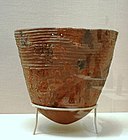
Also, books like this one provide so many stories and ideas and new concepts and terrific words that I am sure it’ll filter into my creative writing endeavors one way or another. Poems on the Jōmon sites or Mesolithic kelp-belt people? One never knows what will creep into my subconscious mind.

Jomon pottery, between 11000 and 7000 BC. Hinamiyama site, Japan.

In awe

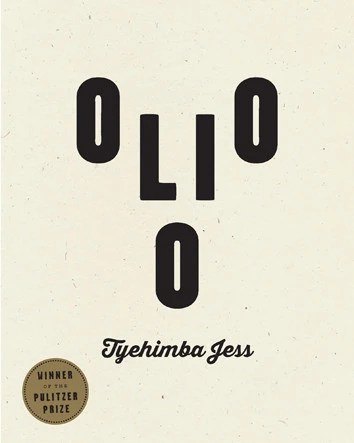
I know I’m late giving accolades to this Pulitzer-prize-winning book, but I finished reading Tyehimba Jess’ Olio recently and: wow! This 2016 collection goes on my must-keep-&-read-again shelf (okay, that’s not a real shelf in my house, but it should be).

How to describe the experience of reading this book? The poems are mostly lyrical, largely persona pieces, yet the scope of the book as a whole is encompassingly narrative. It takes readers from the mid-19th century through the late 20th century through poems that imagine the voices of slaves, ex-slaves, singers, composers, musicians, performers: all of them real people. It’s part history, part fiction, interspersed with dynamic prose that suggests interviews and letters and song lyrics; furthermore, the sureness of Jess’ use of classic and experimental poetic craft astonishes.

Plus, the stories are just so compelling. Inspirational? Sometimes. Sad? Often. Entertaining? That, too. The title comes from the term that means an amalgam, a mish-mash, and which was used to describe the various acts of minstrel shows. Yet Jess’ book does not feel like that sort of random “show.” It holds together like a carefully-sawn jigsaw puzzle or a masterful collage.

In the midst of the “entertainers” who voice the poems in Olio, there is the unavoidable pain of Black lives in the United States. It’s depicted clearly in the words of the speakers of these poems, and sometimes more subtly, as in the litany of Black churches burned, bombed, or shot up that appears under the choir poems.

Most awe-inspiring for this reader is the section about the conjoined twin girls Millie and Christine McKoy. What Jess does here, besides a spectacular imagining of the characters of the twins (born into slavery and exhibited in “freak shows,” they sang duets!), is to create sonnets that are twinned, star-shaped on the page, syncopated in meter, rhymed and off-rhymed, and–here’s the kicker–that can be read across each line or on each side, (columns or linearly). How did he come up with that form? It’s so suitable to the lyrical aspect of the pieces, which are interwoven into a kind of unexpected crown of sonnets.

If this is hard to imagine, here’s a reading and article that may explain better than I can. Also, if you can locate a copy of the book, you’ll see that the publisher went out of the way to accommodate Jess’ unusual approach: there are fold-outs, illustrations, changes in typeface, and the book’s size is larger than the standard trade book or poetry collection.

Olio doesn’t fit on a shelf as easily as some poetry books; it’s going to stand out. As it should.

~~

Reading poetry can be uncomfortable; some of Jess’ poems are deeply discomfiting and sad. Nonetheless poetry helps me put the world into perspective, perhaps especially when it forces me out of my personal point of view. So I value it immensely. Times like lately, when I am writing only a little and not submitting my work at all, reading the work of fellow writers reminds me of why we bother to create.

A whilom history major

In an effort to get myself to sleep during a recent spate of insomnia and to enrich my understanding of ancient Roman history after reading Beard’s SPQR earlier this year, I have been reading a 1904 anthology of historians writing on various topics pertaining to the early Roman republic. History writing has changed a great deal in the past century; perhaps the historians of yesteryear were entertaining and concise by the standards of the time, but perhaps there is a reason history has a reputation for being dry. It is an undeserved reputation, in my opinion, yet I admit to finding a few of these fin de siècle commentaries soporific.

These historians toss names around as though we readers could be expected to know one 3rd-century BC general from another and assume we are already well-versed in the Punic Wars. Admittedly, it is likely the average educated reader in 1904 had more Western Civ background than the educated reader has today. I have heard of the Punic Wars, but I was rather hoping the historians could frame them for me in a way a modern reader might understand. So far, no luck with this anthology.

Perhaps that is not possible anyway–a modern reader really cannot fathom what life was like so long ago, or what constituted “civilization;” although current re-creation attempts offer a sort of immersion, no one can know how accurate they are (see: experimental archaeology). Contemporary historians, however, seem more willing to do a bit of cultural speculation, relying on archeology and artifacts as much as–or more than–upon the ancient texts listing wars, generals, leaders and enemies. One reason I decided not to pursue a history major in college long ago is that the discipline required so much task-reading of names, dates, and places before the student could move into the interesting materials of everyday life, food, culture, livelihoods, skills, crafts, religion, the arts…the kinds of things that interest me. I lacked discipline.

~

But words interest me. Another reason the 1904 book is so helpful at bedtime is the general pacing of the prose, but the word choices are fascinating. I do not just refer here to archaic history jargon but to vocabulary in general. It’s what one of my colleagues among the English instructors terms “ornamental.” Ornamental prose has its place, and there are times I relish its languid character, but it tends to drag for the reader more accustomed to contemporary American-English conciseness. So I get sleepy.

There are charming rewards to this stuff. Last week, the word whilom kept me from slumber. I had to find out what it meant before going to sleep and was about to throw off the blankets and get my dictionary. My kind spouse had the smartphone on the bedstand, however, and dictionary.com identified it as “archaic; erstwhile.” Here’s a little bio of the word from worldwidewords. Reading a compendium such as this one offers me insights not only into ancient Rome but into the world of scholars of 100 years ago–quite a different culture from today.

~

Ann E. Michael is a whilom history student and umquhile psychology major who turned to philosophy and English and then earned a graduate degree in Creative Writing. She recommends The Historians’ History of the World Volume 5 (ed. Henry Smith Williams) as both educational and snooze-inducing.     🙂

Protest (Selma)

The past 10 months have been especially notable for public protest here and abroad. As it happens, I’ve been trying to write a poem about my father’s participation in the voting-rights march (1965, Selma to Montgomery AL), a kind of occasional poem to commemorate the 50-year anniversary. Then the movie “Selma” was released, which I just saw at the cinema.

The film, like all “based on a true story” dramatizations, may have focused on perspectives of the protest that worked best for the scriptwriter, may have some historical inaccuracies, may raise some controversy. But as a child whose parents were, though marginally, connected with civil rights through the churches’ participation, the movie felt true in the big way: “capital T” True. Funny, the aspects of the film that engaged me: how I could immediately identify who the actors were portraying (Abernathy, Young, Lewis); the way so many important discussions took place in church basements and classrooms (as the child of a minister, I am intimately familiar with church basements and classrooms); the televising of Bloody Sunday.

And another True thing:  the familiar, biblical-style, preacher-cadence and allusions in King’s speech. People do not talk that way anymore. But they once did, and I recall it well. Rhythm and intonation and the use of allusions and analogies impress the sort of listeners who eventually become poets, I am sure of it.

Right now, I am struggling with my poem. I am not sure I will ever complete a draft that I feel pleased with–maybe it will end  up in my “dead poems” file. What I will do instead is to devote my next post to my father’s depiction of the Selma-to-Montgomery march, from his point of view, looking back 50 years.

Trees & tombs

On a brisk and clear autumn day, I visited Brooklyn’s magnificent and park-like Green-Wood Cemetery. Established in 1838, the burial grounds were planned as a gently-rolling landscape of hills, winding paths, ponds, and specimen trees in what was then rural Long Island. The “History” tab of the National Historic Site’s webpage says:

By 1860, Green-Wood was attracting 500,000 visitors a year, rivaling Niagara Falls as the country’s greatest tourist attraction. Crowds flocked to Green-Wood to enjoy family outings, carriage rides and sculpture viewing in the finest of first generation American landscapes. Green-Wood’s popularity helped inspire the creation of public parks, including New York City’s Central and Prospect Parks.

These days, US citizens feel far less connected to death, and the concept of picnicking among gravesites may seem creepy. The organization devoted to keeping up the cemetery as a historic site (it is, by the way, still an active cemetery) offers tours: visitors can tour the catacombs, visit graves of famous people, take an architectural monument & mausoleum tour, and see the sculptural highlights of the cemetery.

The sculptures are largely figural pieces and tend toward the Gothic sentimentality of the late 19th century: draped urns, weeping maidens wearing Greek chitons, triumphant angels, busts and full-length portraiture, columns and more columns (Corinthian being far and away the favorite). If such monuments appeal to you, Green-Wood is decidedly worth a visit; it is also a favorite among history buffs. A Revolutionary battle was fought on those grounds, and there are some early graves from the Dutch pre-Revolutionary era, not to mention the inherent historical interest of a major city mortuary established in the 1830s.

Here’s a flickr site devoted to images of Green-Wood.

~

While history and art interest me a great deal, what most arrested my attention at Green-Wood were the trees. Seldom do I get to see dozens of 170-year-old oaks, 100-year-old weeping beeches draping their boughs over paths and tombstones, large female gingko trees that drop their smelly orange fruits on the ground, old elms that survived Dutch elm disease, enormous cedars and firs of every description, majestic walnut trees (the woodlot at my house sports only some weedy black walnuts). Three tall, long-armed people embraced the circumference of one of these old oaks…

GreenwoodTree2-26Oct2013

Loving up the trees at Green-Wood.

~

There are hundreds of species of trees at Green-Wood, aptly named; and in fall the colors are handsome. I can imagine the pastel colors of the flowering trees there in spring!

So I think of the place of the dead as a fantastic terrarium of living things encased in city streets, a bubble of micro-environment–470+ acres–wherein thrive trees, a wide variety of birds, ornamental grasses and flowers, shrubs (too many hydrangeas, perhaps), squirrels and, judging by the dug-up divots evident in grassy areas, skunks, opossums, and possibly raccoons.

And yes, I recognize that cemeteries have a reputation for good soil because the plants are “fertilized” by human remains–undeserved reputation in modern times due to sanitation requirements and at Green-Wood, where many of the interred are not even in the ground. Even if and when human decay complements the soil nutrients, the idea doesn’t bother me. I am enough of a scientist, and enough of a Buddhist, to appreciate the biocycle.

Philosophy of cities

I’m going to let the late Lewis Mumford speak for himself in a couple of excerpts from The City in History. Even though I love history and have perused many a book on the subject(s), I learned a great deal about Western history from this book. What intrigues me most as I’ve read, though, is Mumford’s roles as historian-as-sociocultural-critic and historian-as-philosopher. When writing a book of this scope, no matter how founded on data, archeological and textual records, it’s hard for this writer to avoid thoughtful forays into philosophy. Mumford looks forward, too, speculating on city life in the future–and he takes rather a dim view of where megalopolises were heading in 1961. He was prescient indeed. While today’s citizens may argue that his judgments are overly negative, it is difficult to refute the accuracy of his speculations, particularly when he foretells the modern city’s environmental impact on society and on earth’s resources.

So much of the book is a warning: cities have a tendency to collapse, and there are reasons for that. Such reasons have to do with greed, power, poorly-applied technology, lack of foresight, overcrowding, ignorance of the need for balance in any system–governmental, agricultural, environmental, social, economic, etc. He sounds like a Cassandra at times, and we all know that aphorism about being doomed to repeat history, as does Mumford. But ultimately, he makes a passionate call to creativity and human life, warning us not to let our burgeoning technology reduce human activity to the level of the hive. He revels in the arts, in the conscious purpose of human living, in the genuine communication among persons, and in the joys available to those who understand an organic system must be balanced.

[He refers to men and mankind using the typical non-gender-neutral language of the era, which I am not going to alter in these excerpts.]

green

A bit of green…

Here he is discussing the “Green Matrix.” Remember, he’s writing in 1961!

~

“The maintenance of the regional setting, the green matrix, is essential for the culture of cities. Where this setting has been defaced, despoiled, or obliterated, the deterioration of the city must follow, for the relationship is symbiotic. The difficulty of maintaining this balance has been temporarily increased, not merely by the incontinent spread of low-grade urban tissue everywhere, dribbling off into endless roadside stands, motels, garages, motor sales agencies, and building lots, but by the rapid industrialization of farming itself, which has turned it from a way of life into a mechanical processing business no different in content or aim or outlook from any other metropolitan occupation…”

~

Following Mumford’s observation that overpopulation is often a result of privation, rather than the expected other way around, and leads to the “bursting” of the city as a healthy, organic system, he notes (with clear reference to his much earlier chapters on the decline of Rome):

“No profit-oriented, pleasure-dominated economy can cope with such demands: no power-dominated society can permanently suppress them. Should the same attitude spread toward the organs of education, art, and culture–man’s super-biological means of reproduction–it would alter the entire human prospect, for public service would take precedence over private profit, and public funds would be available for the building and rebuilding of villages, neighborhoods, cities, and regions on more generous lines than the aristocracies of the past were ever able to afford for themselves. Such a change would restore the discipline and the delight of the garden to every aspect of life; and it might do more to balance the birthrate, by its concern with the quality of life, than any other collective measure….significant improvements come only through applying art and thought to the city’s central concerns, with a fresh dedication to the cosmic and ecological processes that enfold all being…the best economy of cities is the care and culture of men.”

The care and culture of “men” meaning, “human beings”: that’s a lovely purpose for a city–or a nation–a noble one, and one too many people tend to forget as we occupy ourselves with the busy-ness of our own isolated lives.

~

Of note: The USA’s 50 “greenest” cities…which does not mean they are good cities by Mumford’s definition, but which is probably a good start. Click here.