Learning & yearning

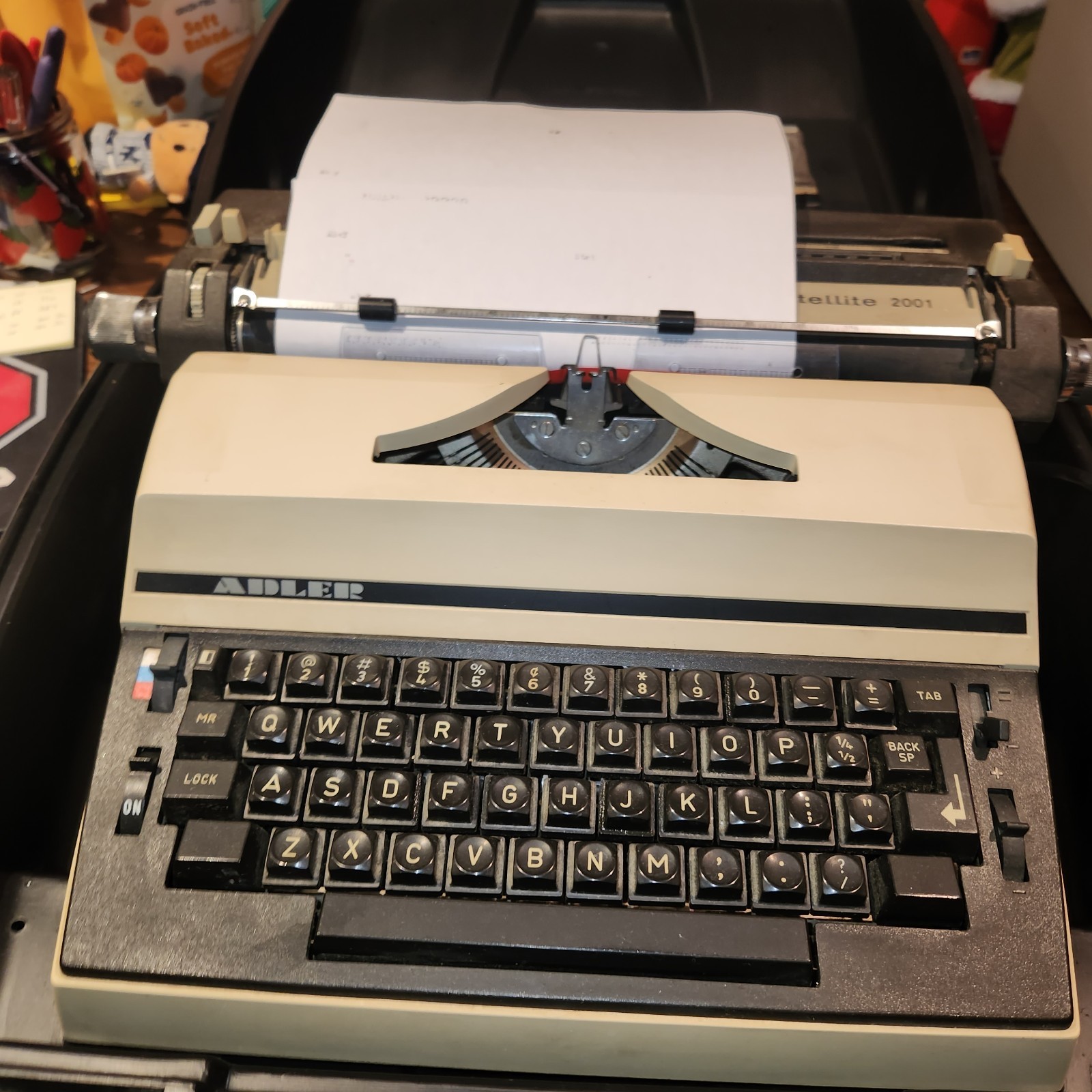
photo from ebay, asking $199.00…

During bouts of outdoor work, when I’m mindlessly weeding, pruning, or doing soil prep, I’ve been mulling over whether–and if so, how–I’ve changed as to writing poetry (see closing paragraph of last week’s post). There are vague recollections of getting really on a roll and drafting new work into late hours of the night when I was 20 or 21 years old. But how I went about it, what approach I took to writing back then? I barely recall. It’d require research into my old journals to figure that out; there, I dare not go! And what happened to all the poems I typed up on my heavy, electric typewriter (an early 1970s Adler, if I recall aright)? They’ve mostly vanished, though a few reside in my attic in several boxes of old literary magazines which chose to publish my efforts.

Though I can’t clearly remember the “how,” I can say my topics and perhaps instincts and inspirations have definitely changed as the decades accrue. I wrote fewer poems during the years I was raising very young children, for obvious reasons, and my main topic at the time was mothering. The poems tended to be short. Mothering did affect my approach to poetry: brevity and swift sketches of imagery were all I had time for. It was necessary to be more concise compared to my earlier narrative lyricism fused with imagism and surrealism. As the children got older, I started reading a bit more widely into less-contemporary poetry and attempted a few formal approaches, such as sonnets, blank verse quatrains, and haiku. I wasn’t terribly good at it and needed some instruction, so I started attending short workshops when I could arrange childcare. The West Chester Poetry programs were helpful to me in the mid-90s and piqued my interest in going back to college for my MFA.

My advisors at Goddard observed that no matter my topic or method, environmental/natural images populated my work. I’d known this was the case but wasn’t aware of how prevalent the garden, fields, animals, and woods were…basically, always present. Even in some pieces I wrote when I was 19 and living in a city, there are sparrows and pigeons, dogwoods blossoming, spring rain. Some things don’t change.

~

Other aspects of the writing life morph, however, as circumstances alter and we get older and more experienced in dealing with said circumstances. Mothering continues even though the children have grown up–I still love and miss my kids, think of them often, and worry now and then, not that they need anyone to worry about them. I’m much smarter about how to grow things in the garden as well as more knowledgeable about the flora, fauna, and weather in my region. I’ve read reams of poems by excellent writers, studied what they do and how they do it, and felt excited by new work. I don’t miss being young, though I miss the stronger physical self I once took for granted. These experiences change the topics and the emotive aspects of what I write, I suppose.

It’s hard to explain what that means, though, so here’s an example. I’ve just finished reading poems by the 16th c. Korean poet Hŏ Nansŏrhŏn, a brilliant person who started writing before age 8 and died at 27. A young person all her life, by our standards, and a prodigy. A frequent theme of hers is yearning for a husband or lover who is far away, a trope as common in Asian poetry as in European poetry. The lover has gone to war, or been exiled, or is in another region on work for the king/emperor/church, or is at sea. Nansŏrhŏn frequently wrote in the style of the Chinese poets who penned this sort of yearning poem; in fact, her husband was often distant, trying to work his way into a higher-status position, while she was left at his home with her in-laws. Her desire may not even have been so much sexual longing as just plain loneliness. Her work, even when it is not more romantic in subject, is suffused with an overall sorrowful yearning.

I recall having that feeling when I was in my teens and early twenties. Often, I wasn’t even sure what it was I yearned for or desired specifically. I just felt the sense that something was missing in my life, and I suspect that many of my earliest poems aimed to describe vague heartbreak about a kind of emptiness. (I assure you, my work was terrible–no comparison to Nansŏrhŏn can be made here.) However, when I read her poems, that’s what resonates with me.

Later, when I actually loved a person who lived further from me that either of us liked, I’d listen to Mary Black, who was then with Planxty, as she sang the plaintive and beautiful tune “I Live Not Where I Love.” The ballad seemed accurate. Ah, young love.

The point of all this (and no, I haven’t been concise, sorry), is that while I recognize and appreciate the sentiment that accompanies yearning, my work has not been animated or inspired by that particular kind of longing for awhile now. It’s not that I lack desires, but the tenor of the feeling is different. Romantic love or an unrealized self? Not so much. The longing is for new places, further questions, better solutions, comfortable nearness, safe space, peace. I find much to learn every day, much to love, to admire. In spite of everything.

[[]] ~ [[]] Here’s a poem of mine that appeared 44 years ago in Painted Bride Quarterly #20. (Autumn 1983). I can see some structural things I would revise if I were writing this now. But let it stand as is:

House with a Red Roof

The house with the red roof makes a beacon
in the hills. We watch it constantly; it
tricks our eyes.

The storm is bold behind it, an unsettled
feud of red and blue; heaven has its slate-
colored roof, its Chinese fire. It mounts
hills, and before it, the house stands out,
a ruby in a charm.

The roof gems back summer sun, red hot, ablaze
and searing white siding: when we look away,
a yellow house with purple about it blurs our vision.

Autumn, red roof flanked by trees which hold
their color against it, slanting westward,
northward, ever lower.

A shadow bends the hill. The red roof hangs
on winter sky, the only bright for miles.
~
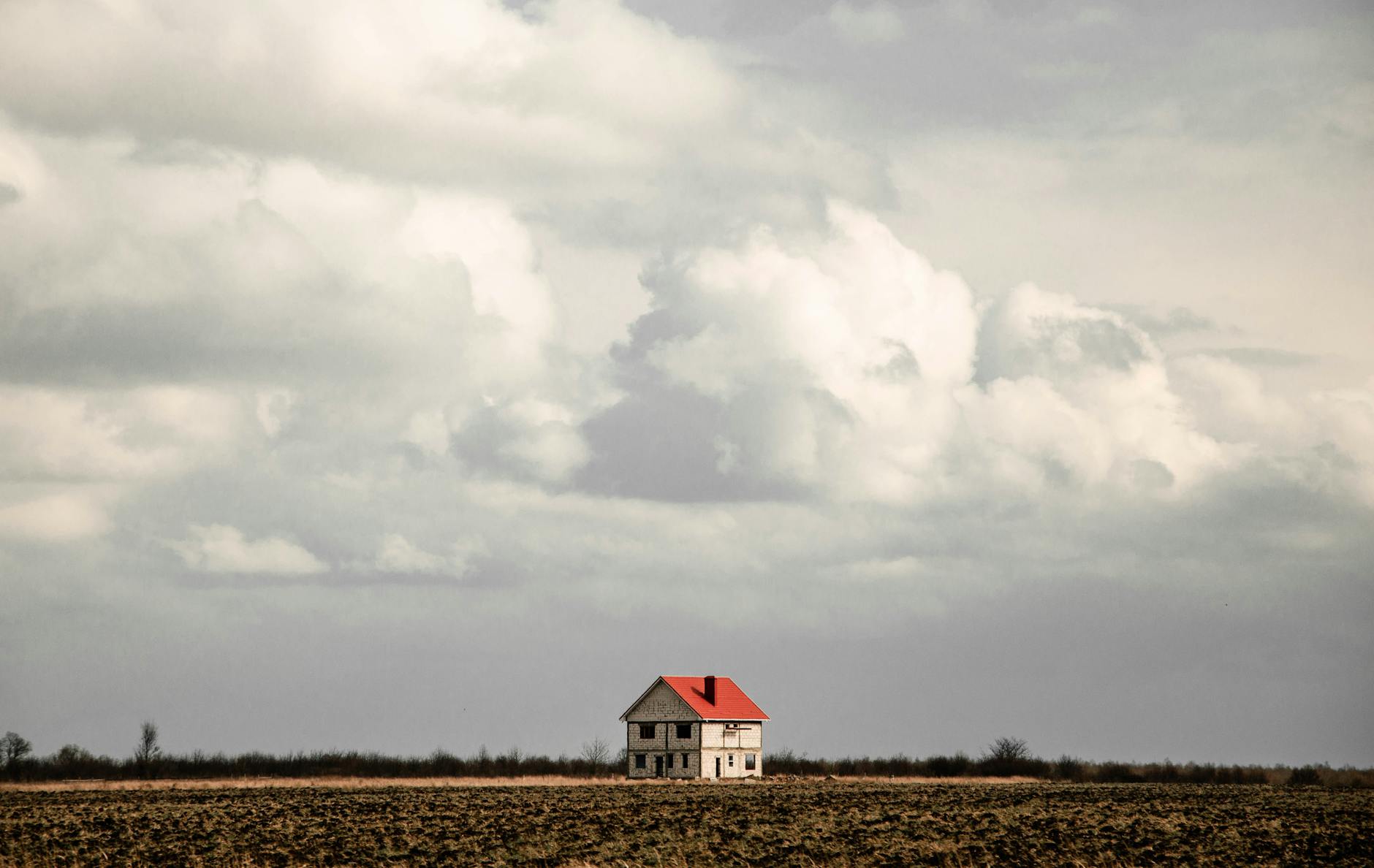
Photo by Nikita Parev on Pexels.com

Magnificent

Qesra Îshaq Paşa or Ishak Pasha Palace, Ağrı Province, Turkey, Ottoman Empire, 17th c.

For a recent poem draft, I looked up the etymology of the word “magnificent” even though I was fairly sure I knew it. Like many words, its meaning has altered a bit over the centuries, but in this case less so than most: from the old French, from Latin, the root words for “great” and “make,” it formerly referred to great-mindedness, courage, nobility [per the Online Etymology Dictionary] and later gained the additional meaning of splendor or costliness; “Meaning ‘greatness of appearance or character, grandeur, glory’ in English is from late 14c.,” whereas later uses of the word carry connotations of architecture, expensive taste, grand works of a more human variety.

The draft I was working on was about Melville and whales, but of course thanks to stopping to look something up, I went down a research rabbit hole and ended up deciding that the magnificence whales possess would be more of the greatness of appearance sort and perhaps was not quite the way I want to describe whales. But the word did put me in mind of some of the monumental temples, mosaics, palaces, castles, and sculptures I saw in Turkey last month. Many of those are “magnificent,” but they act as reminders of how fleeting human magnificence is, in comparison to whales. Whales evolved into their modern form about 4 million years ago, long before humans were modern humans, let alone building palaces or temples to please the gods, intimidate their enemies or their subjects, or glorify and deify their kings.

The photo below is of the temple and perhaps the tomb of Antiochus I of Commagene (because archaeologists have so far discovered no actual tomb, the existence of said tomb is speculative, though the site is considered to be a hierothesion). The top of the hill is not natural but is a gravel tumulus. Human-made. Gravel hauled up the mountain to increase the size of the mountain and deter potential grave-robbers. Who else would do that work but slaves?

I know the theme’s been written into poetry before, but in these times it seems to bear repeating. Here’s an early draft I’ve been working on, in loose blank verse, in which I invoke a famous poet whose poem on the theme has lasted a mere two centuries. But that’s longer than many an empire has endured.

~

Hierothesion (Nemrut Dağ)

Tomb or temple, likely both, one king’s
angling for a pantheon he’d crafted
on his own, as kings will do when empire
hardens in their veins. They turn to stone.
Minions, memorize my name! (like
Ozymandias, as Shelley can attest).

Tourists scale the tumulus and find,
at sunrise, eagles, lions, and Apollo,
gods of brokenness, unhumbled despite
centuries of disregard. Extinct.

We know him not. And what has made us pause
speaks not of his glory but of our dismay:
how much purely human work, slaves’ toil and toll,
it took, interring him this way, high up
and rubble-laid, to raise him above all.

Where are those workers’ bones? We walk on them.
This we know without a temple or a tomb.


Helpless

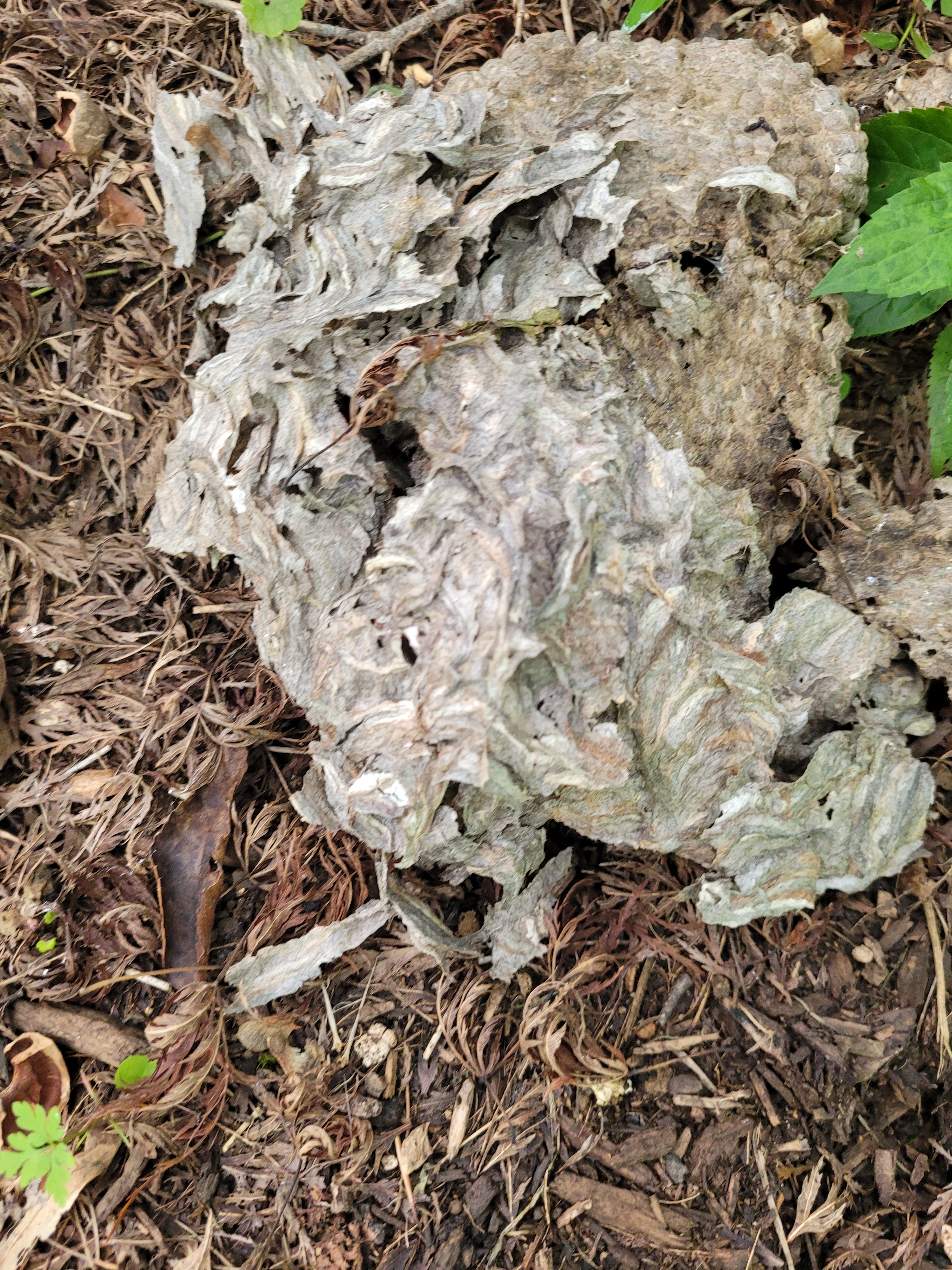
The weeding continues apace. I no longer do a clean rake-up of the gardens in autumn, because I now know that bees and other creatures overwinter in foliage debris; but it is imperative that I get the worst of the vines and perennial invasives out of the beds. We had a bit of rain recently, so I went out to claw and pull. Underneath the spreading Japanese maple, I found this:

~

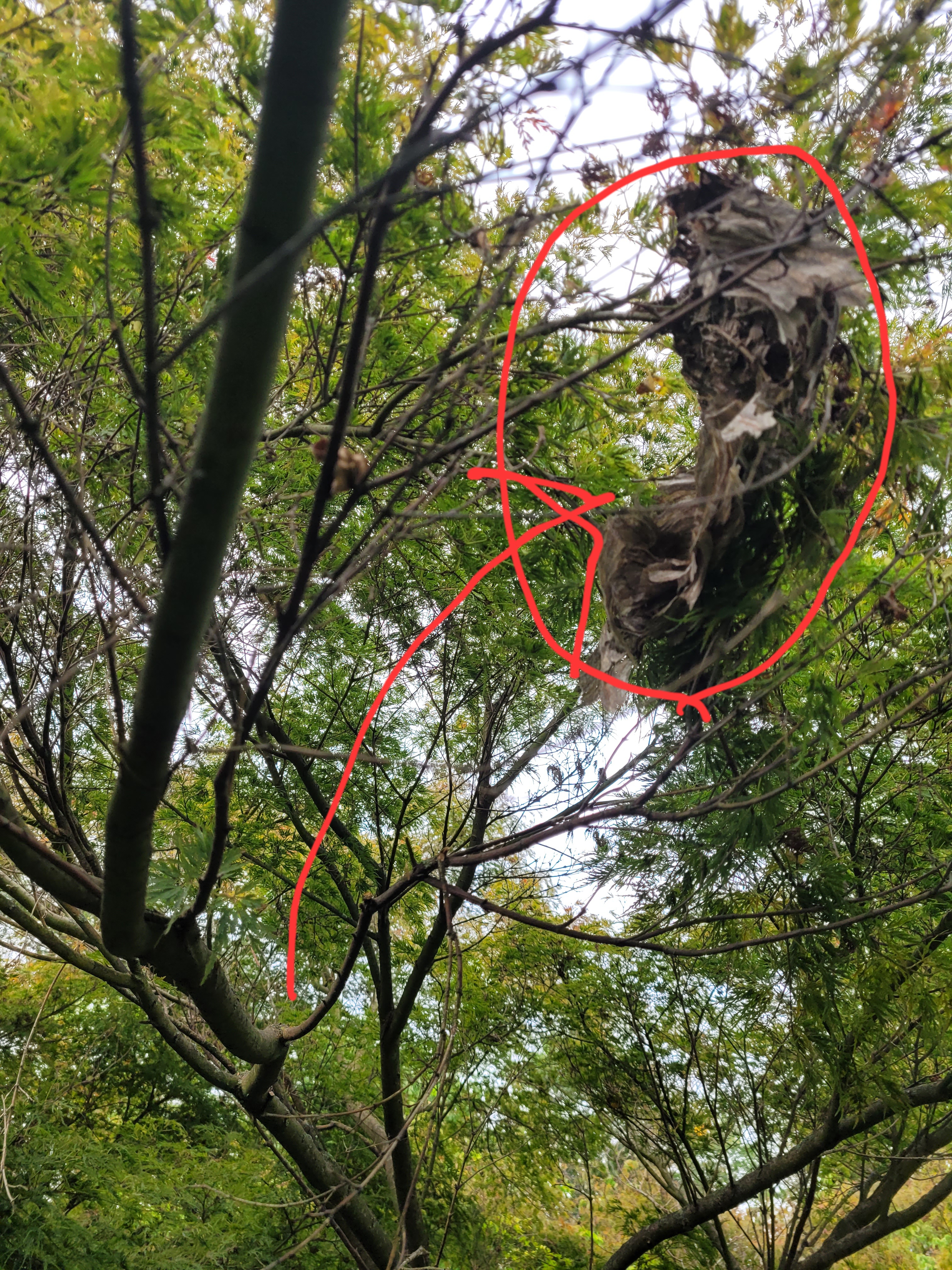
At first, I thought I’d found a fungus. Upon poking, I realized it appeared to be sections of a paper wasp nest. Hmmm. It took some craning of my neck and crawling much further beneath the tree, but there it was–the remains of a paper wasp hive dangling above me. Certainly it looked unoccupied, but I crept out from under the boughs just in case.

Under the tree, and twined throughout the flowerbed, I found quite a few sumac seedlings and plenty of poison ivy vines. Sumac and poison ivy are native plants, not invasive species like loosestrife and wintercreeper, but I don’t fancy having them in my perennial gardens. More yanking will be required soon.

~

At least I am doing something that, while rather disheartening–the weeds will always come back, weeding’s as endless as housework–keeps me moving and outdoors and occupied so that my mind whirs around less. It appears I’m weeding as a coping strategy while my mother continues to spiral toward whatever is next for her. Hospice care. Death. The inevitable, with the unknown “when”.

What bothers me most about her situation is how helpless she has become. My mom endured some childhood traumas, times when she truly was helpless. She learned to find and deal with her anger, with trouble and conflict, with physical pain, but she hates feeling helpless. And over the years, her inherent pragmatism and stubbornness, as well as her patience and a little emotional counseling, have served her well. I can only recall once when I saw her feeling helpless (and only briefly). It rattled me, but I was also impressed by how quickly she regained emotional equilibrium and took a small action toward…well, toward not being helpless.

And now, she is. Helpless, I mean. She cannot speak, feed herself, walk, or even sit up unassisted in bed. The prognosis for her recovery is so-so. She may manage to regain a little self-sufficiency. Or not. After all, she’s 91 years old.

The paper wasp hive seems like an analogy to me. When it has served its purpose, for all that it sheltered its denizens so well, it rattles apart, breaks down bit by bit, no longer resembles itself. Helpless in the wake of another winter coming on.

~

My father never cared for Neil Young, didn’t like his vocal delivery. But my mom heard the Déjà Vu album over and over in our house when we were teens, and she liked it.

~