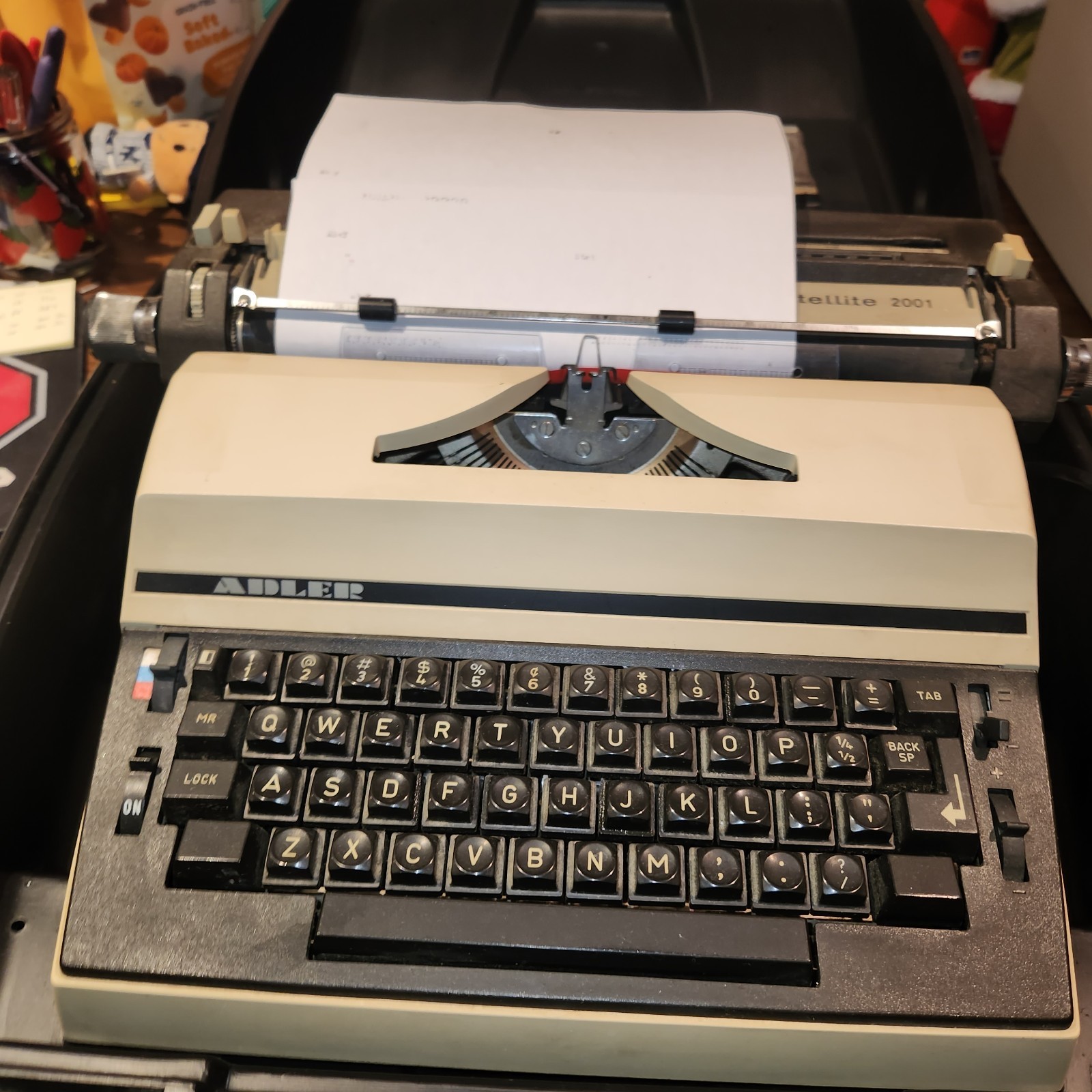
During bouts of outdoor work, when I’m mindlessly weeding, pruning, or doing soil prep, I’ve been mulling over whether–and if so, how–I’ve changed as to writing poetry (see closing paragraph of last week’s post). There are vague recollections of getting really on a roll and drafting new work into late hours of the night when I was 20 or 21 years old. But how I went about it, what approach I took to writing back then? I barely recall. It’d require research into my old journals to figure that out; there, I dare not go! And what happened to all the poems I typed up on my heavy, electric typewriter (an early 1970s Adler, if I recall aright)? They’ve mostly vanished, though a few reside in my attic in several boxes of old literary magazines which chose to publish my efforts.
Though I can’t clearly remember the “how,” I can say my topics and perhaps instincts and inspirations have definitely changed as the decades accrue. I wrote fewer poems during the years I was raising very young children, for obvious reasons, and my main topic at the time was mothering. The poems tended to be short. Mothering did affect my approach to poetry: brevity and swift sketches of imagery were all I had time for. It was necessary to be more concise compared to my earlier narrative lyricism fused with imagism and surrealism. As the children got older, I started reading a bit more widely into less-contemporary poetry and attempted a few formal approaches, such as sonnets, blank verse quatrains, and haiku. I wasn’t terribly good at it and needed some instruction, so I started attending short workshops when I could arrange childcare. The West Chester Poetry programs were helpful to me in the mid-90s and piqued my interest in going back to college for my MFA.
My advisors at Goddard observed that no matter my topic or method, environmental/natural images populated my work. I’d known this was the case but wasn’t aware of how prevalent the garden, fields, animals, and woods were…basically, always present. Even in some pieces I wrote when I was 19 and living in a city, there are sparrows and pigeons, dogwoods blossoming, spring rain. Some things don’t change.
~
Other aspects of the writing life morph, however, as circumstances alter and we get older and more experienced in dealing with said circumstances. Mothering continues even though the children have grown up–I still love and miss my kids, think of them often, and worry now and then, not that they need anyone to worry about them. I’m much smarter about how to grow things in the garden as well as more knowledgeable about the flora, fauna, and weather in my region. I’ve read reams of poems by excellent writers, studied what they do and how they do it, and felt excited by new work. I don’t miss being young, though I miss the stronger physical self I once took for granted. These experiences change the topics and the emotive aspects of what I write, I suppose.
It’s hard to explain what that means, though, so here’s an example. I’ve just finished reading poems by the 16th c. Korean poet Hŏ Nansŏrhŏn, a brilliant person who started writing before age 8 and died at 27. A young person all her life, by our standards, and a prodigy. A frequent theme of hers is yearning for a husband or lover who is far away, a trope as common in Asian poetry as in European poetry. The lover has gone to war, or been exiled, or is in another region on work for the king/emperor/church, or is at sea. Nansŏrhŏn frequently wrote in the style of the Chinese poets who penned this sort of yearning poem; in fact, her husband was often distant, trying to work his way into a higher-status position, while she was left at his home with her in-laws. Her desire may not even have been so much sexual longing as just plain loneliness. Her work, even when it is not more romantic in subject, is suffused with an overall sorrowful yearning.
I recall having that feeling when I was in my teens and early twenties. Often, I wasn’t even sure what it was I yearned for or desired specifically. I just felt the sense that something was missing in my life, and I suspect that many of my earliest poems aimed to describe vague heartbreak about a kind of emptiness. (I assure you, my work was terrible–no comparison to Nansŏrhŏn can be made here.) However, when I read her poems, that’s what resonates with me.
Later, when I actually loved a person who lived further from me that either of us liked, I’d listen to Mary Black, who was then with Planxty, as she sang the plaintive and beautiful tune “I Live Not Where I Love.” The ballad seemed accurate. Ah, young love.
The point of all this (and no, I haven’t been concise, sorry), is that while I recognize and appreciate the sentiment that accompanies yearning, my work has not been animated or inspired by that particular kind of longing for awhile now. It’s not that I lack desires, but the tenor of the feeling is different. Romantic love or an unrealized self? Not so much. The longing is for new places, further questions, better solutions, comfortable nearness, safe space, peace. I find much to learn every day, much to love, to admire. In spite of everything.
[[]] ~ [[]] Here’s a poem of mine that appeared 44 years ago in Painted Bride Quarterly #20. (Autumn 1983). I can see some structural things I would revise if I were writing this now. But let it stand as is:
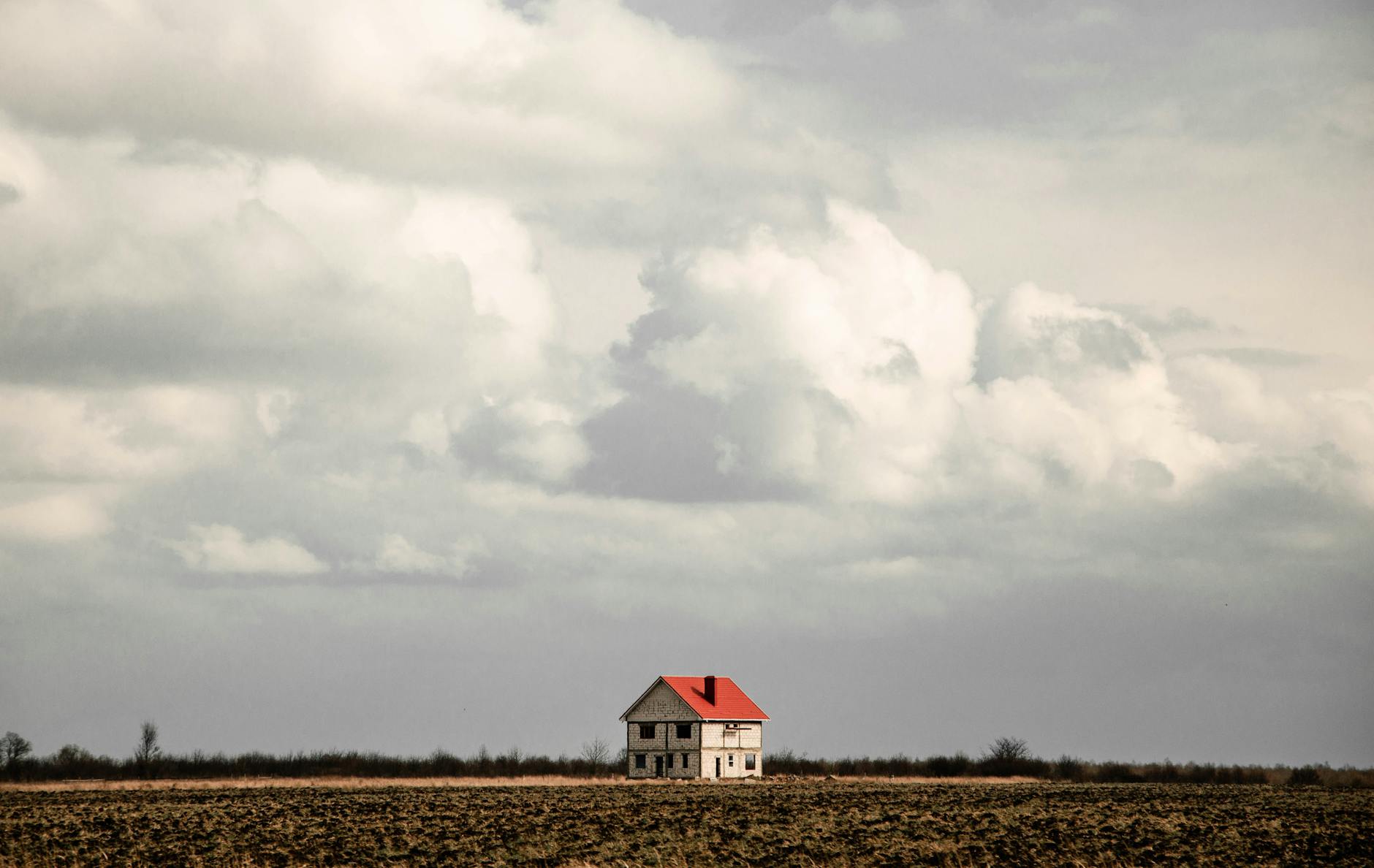
House with a Red Roof

The house with the red roof makes a beacon
in the hills. We watch it constantly; it
tricks our eyes.

The storm is bold behind it, an unsettled
feud of red and blue; heaven has its slate-
colored roof, its Chinese fire. It mounts
hills, and before it, the house stands out,
a ruby in a charm.

The roof gems back summer sun, red hot, ablaze
and searing white siding: when we look away,
a yellow house with purple about it blurs our vision.

Autumn, red roof flanked by trees which hold
their color against it, slanting westward,
northward, ever lower.

A shadow bends the hill. The red roof hangs
on winter sky, the only bright for miles.
~