Mud & connections

My region’s been unusually low on rainfall the past 18 months, but this year April showers seem almost to be compensating…my veg patch is mud. Weeding and more sowing will just have to wait. I walk around the neighborhood and my yard and the woods, squelching through muck and stopping now and again to upend a rock or rotten log and see who’s active now. Lots of worms and arthropods, the occasional spider, many ants.

In such moist circumstances, we get fungi; I’ve been enjoying Lesley Wheeler’s new book, Mycocosmic, which I’ve read twice now–once for content and sound, once to learn more from the poems’ craft structures, all the while fascinated by the science of fungus, which she incorporates into many of these poems. It’s a richly rewarding book, sometimes sorrowful, always intelligent, full of insightful poetry. The collection includes some poems that feel like spells, chants, divinations that suggest there are always imaginative methods for coping with anger, unfairness, and loss. Exploring the vein of how interconnected the natural world is, and the human world (with other humans and with the Earth) feels so vital to me, and Wheeler’s book pivots on this vitality. Look at the way Harry Humes threaded through my life, for example, in small but meaningful ways. The same goes for Lesley and for so many other people with whom I’ve shared intersections, interweavings, and connections over the years. That butterfly effect of influence. (Now that I think of it–Harry Humes has a book with that title: The Butterfly Effect). Or are those networks mycelial, as Lesley Wheeler suggests?

~

More connections: grad school was long ago now, but I’ve maintained a few colleagues from those days and will always treasure the fact that earning an MFA led to meeting fascinating people. For example, the recent issue of The Bookends Review features an interview my fellow Goddard alum Ian Haight conducted with me last summer. He asked me about teaching humanities, about higher ed in these fraught times, about AI and creative work, about my residency at Joya, and about poetry in general…https://thebookendsreview.com/2025/04/09/poetry-the-humanities-and-aesthetics-an-interview-with-ann-e-michael/. Some thought-provoking questions–thanks, Ian! And thanks to The Bookends Review for curating the interview into the journal.

With color

I’m taking a break from the garden and from the news cycle and indulging in a different form of work: “Making Poems, Making Books,” a 4-day workshop with poets Anita Skeen and Cindy Hunter Morgan at Ghost Ranch in Abiquiu, NM. Yes, I’ll be making my own book–a small accordion book. There are about a dozen of us in the workshop, which is centered around the idea of color. Autumn in northern New Mexico offers a range of hues somewhat different from the post-equinox colors of eastern Pennsylvania. Perhaps that will inspire me. The last time I took a workshop here was in 1993, and I learned how to draw/paint in chalk pastels. A long time ago–and yet, walking around the dusty alfalfa field in the center of the Ranch’s office and dorm buildings, I felt completely at home. As if I’d been here just last year.

This week differs from the artist residency I attended at Joya-AiR in May because I’m part of a class getting instruction in how to make a hand-made book and also participating in feedback on our writing. Nonetheless, every afternoon there’s a nice stretch of time to work on solo projects, hike, drive to some nearby sites of interest, or nap. I will admit I have been doing more napping than I had hoped. The high altitude, dry air, walking more than usual (on rocky trails) and the emotional energy it takes to learn a new skill and meet new people have conspired to creep up on me some afternoons.

That’s fine with me, though, because I’m banking many images, quotes, anecdotes, ideas, prompts–all the things memory can do.

And I am drafting some new work, so there’s that as well.

~

Enjoying the session and the people, third best thing about this trip. Being back at Ghost Ranch, second best thing, though it is perfectly wonderful. Best thing? Getting some time in the Albuquerque area to visit with my daughter and her partner. And their dog. And their cat, guinea pigs, and beehives. According to her, bees kept in hives (apiculture) are considered considered agricultural animals.

Who knew?

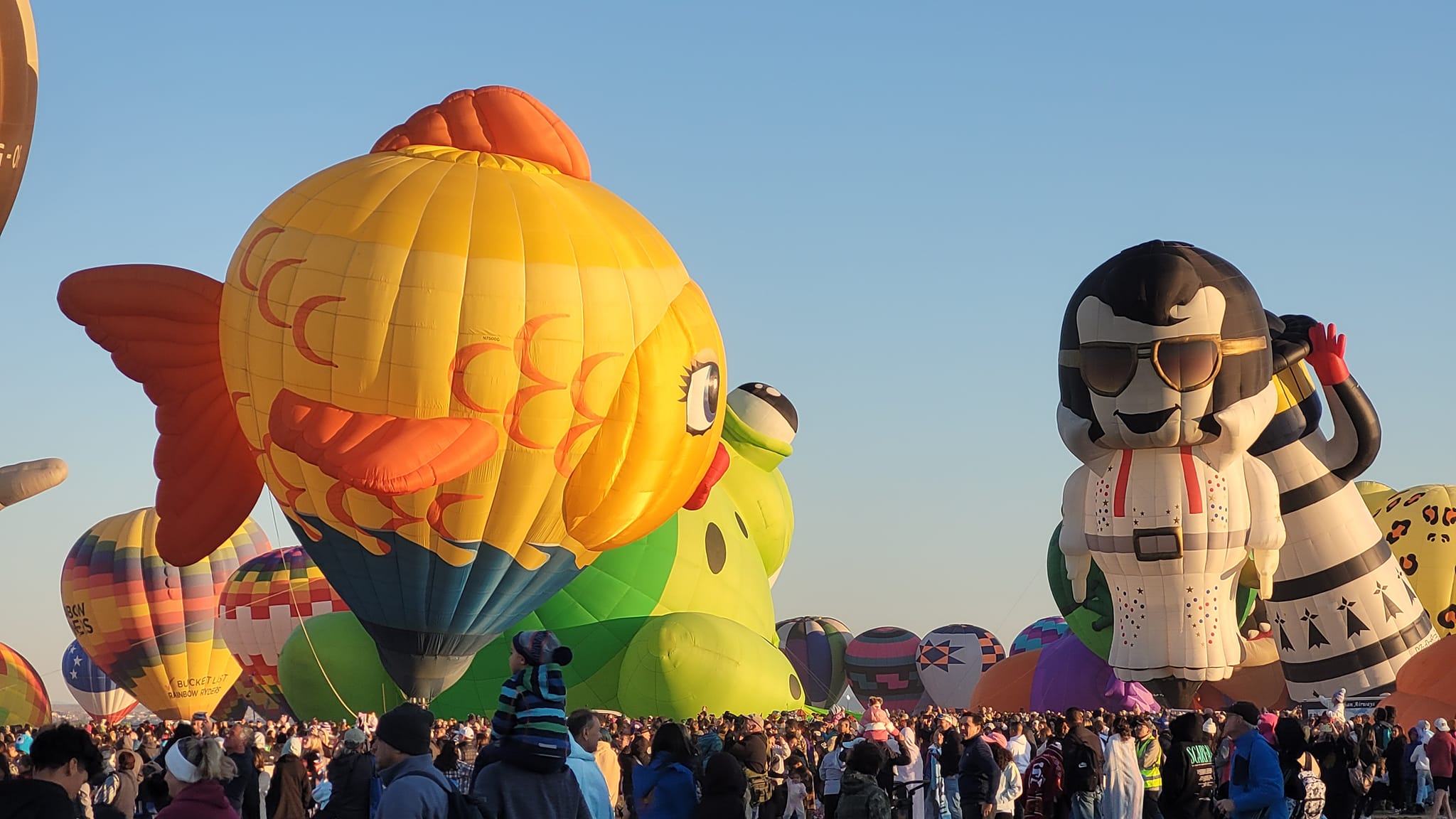
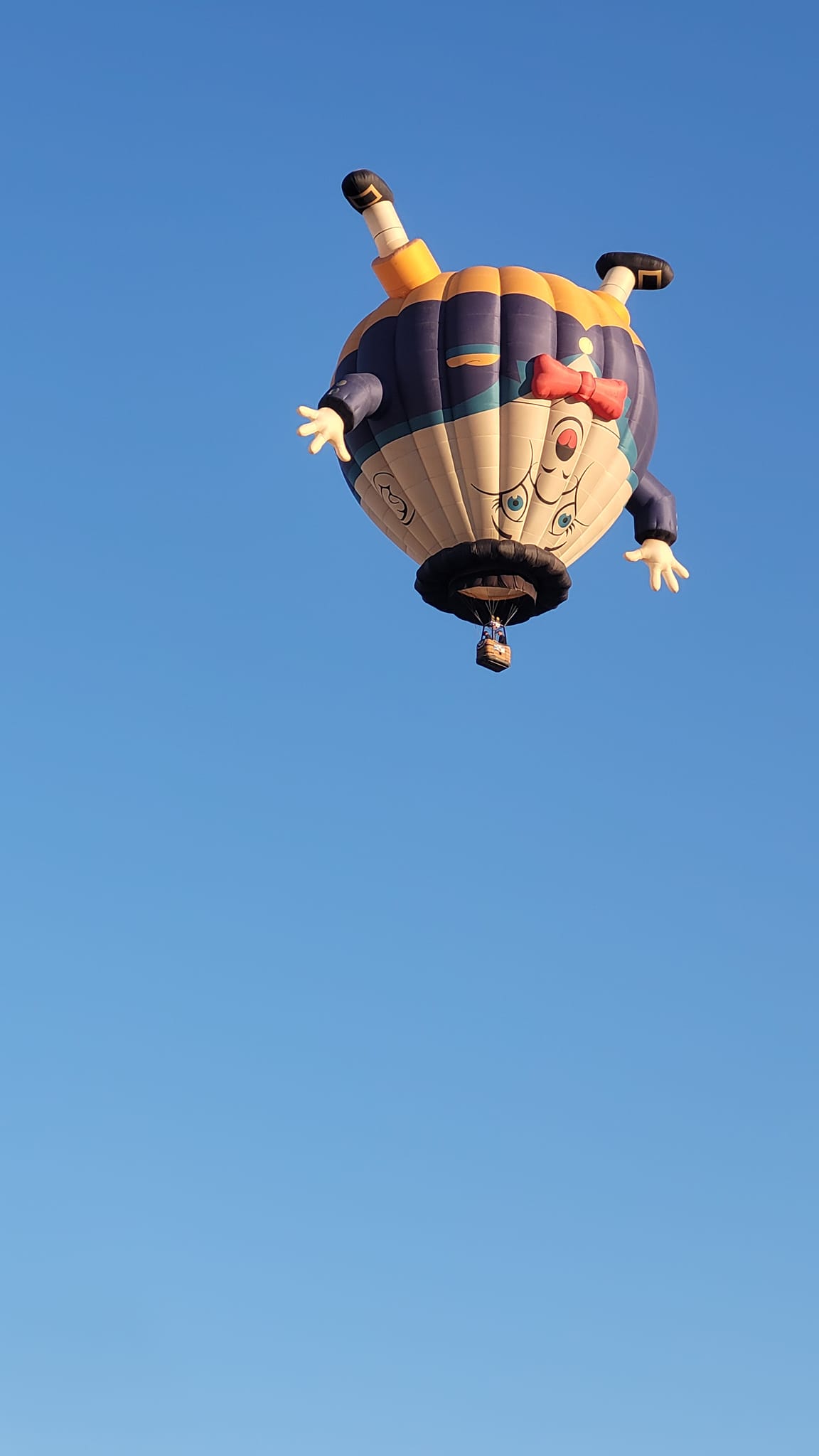
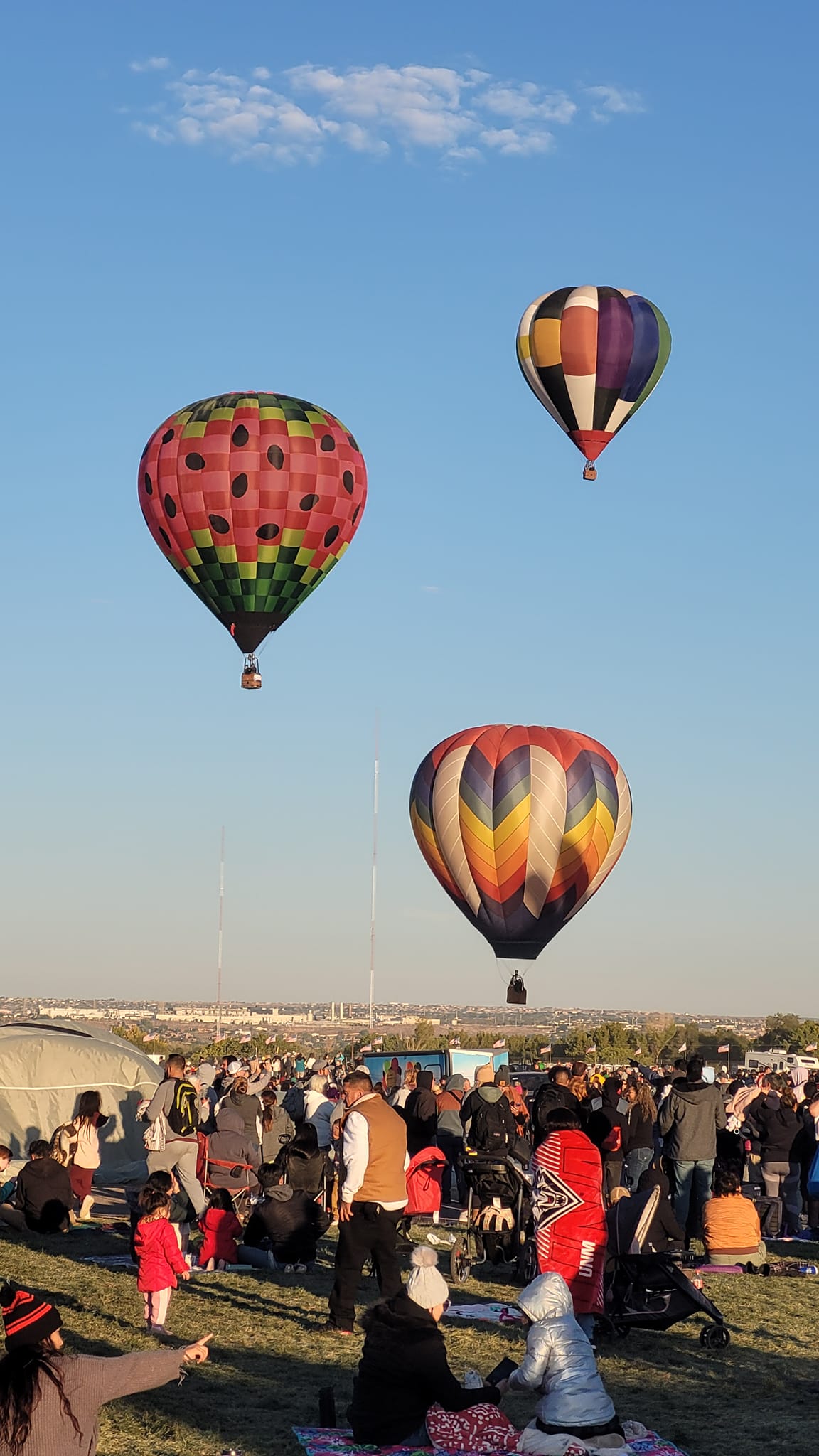
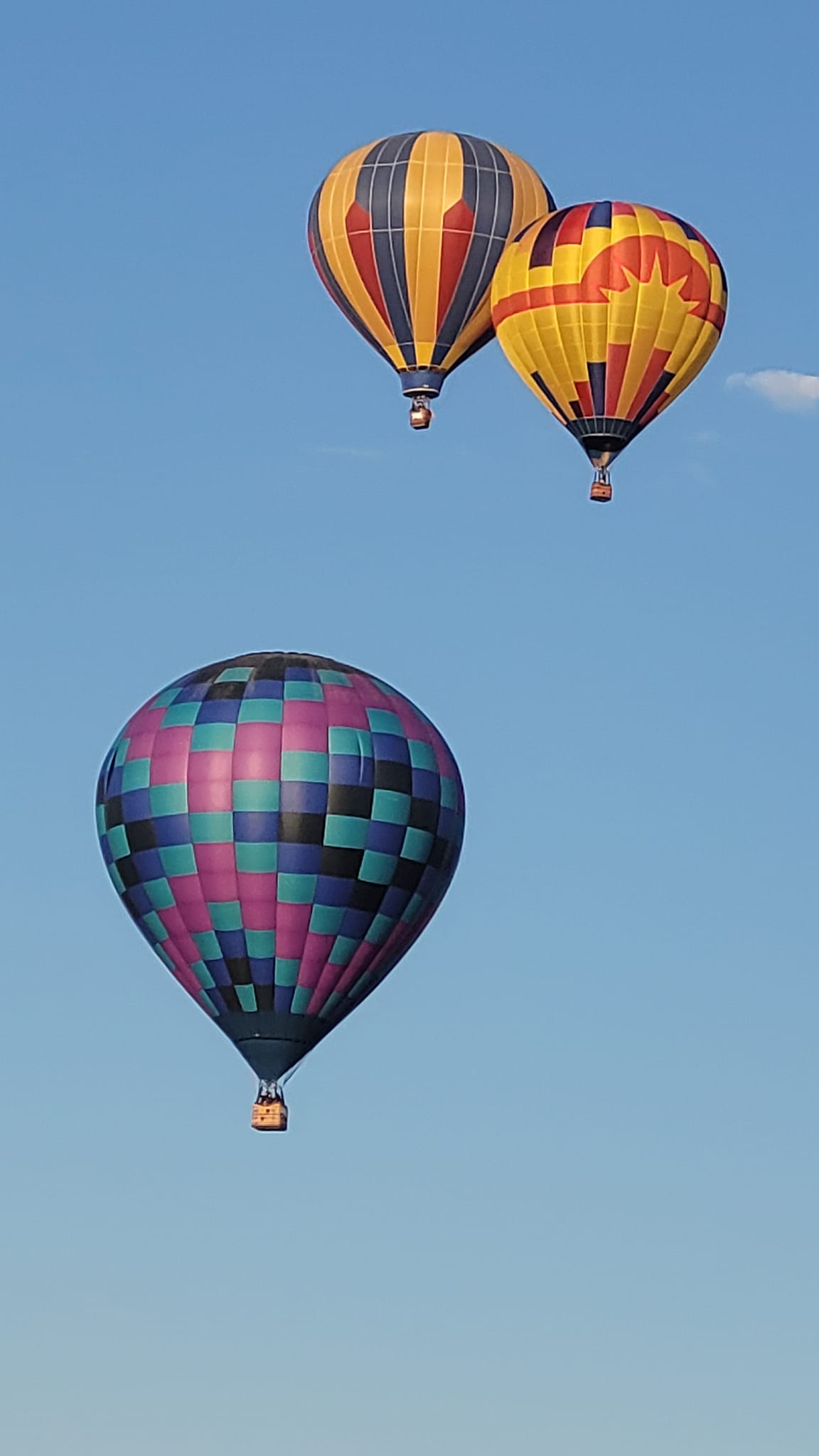
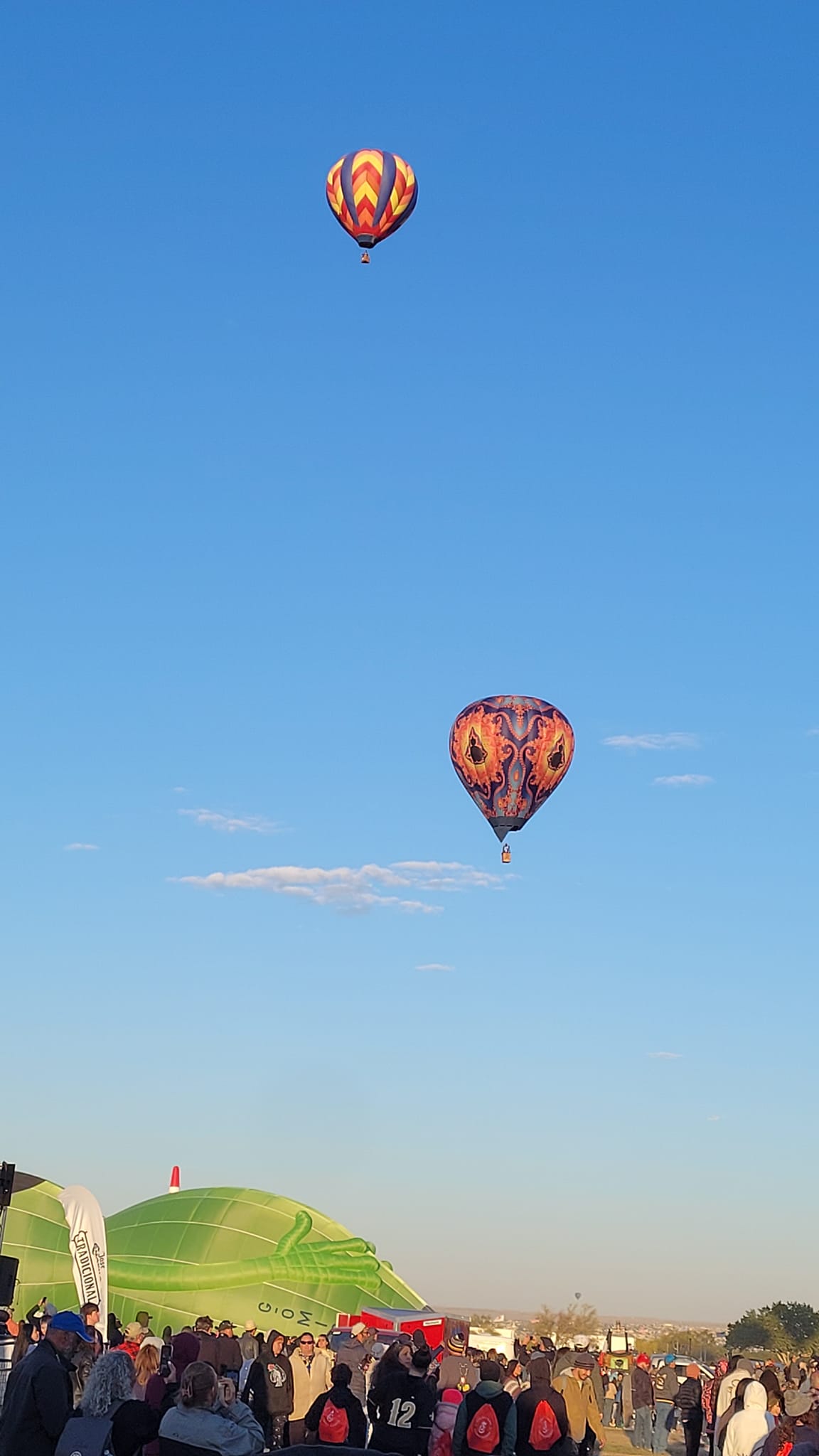
It’s time for my nap, I think. But I have wanted to post about this workshop/retreat before I get home again, just to remind myself of how grateful I am to be here, to be writing, to be seeing my child, to be–yes–escaping from the media frenzy as the presidential election looms. If that seems like something you need, as well, all I can do is send a few cheerful photos I took at the Albuquerque Balloon Fiesta.

~

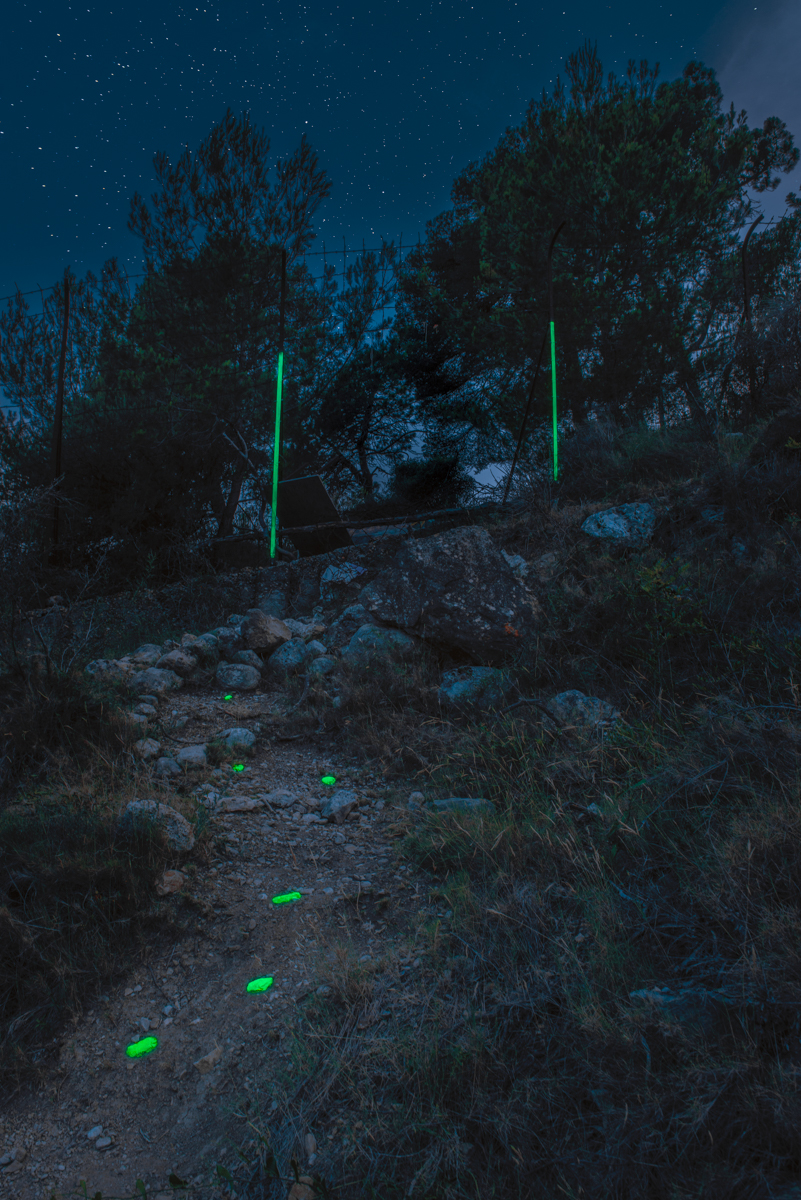
Northern stars

Northern Stars (2023) Celestino Marco Cavalli

~

A phosphorescent path
connecting Italy and France
through glowing stones
that look like stars.
A poetic and political action.

~

https://www.celestinomarcocavalli.xyz/work.html

The installation shown here was created by one of the artists I met while at Joya, Celestino Marco Cavalli. The link above will take you to a description of his project. In brief, it is a series of fluorescent-painted stones that follow a trail refugees travel on their way from the Mediterranean, through Italy, and into France. The website does not include the many photographs Celestino took during his 5-month visit there to document the conditions under which emigrants travel–the trash they leave as they abandon belongings, the graffiti and the notes to others they leave in caves and hollows, the prayers they write, the places they shelter from the sun or rain or cold weather. Do the refugees litter the mountain paths? Yes. Do they do so out of desperation? Also yes.

This installation is innovative, compassionate, and political–also problematic; as always, borders between nations are fraught with concerns about each country’s boundaries, laws, rules and regulations. These days, most immigrants taking this trail (through Italy) have come from the global south, where the climate damage wrought by industrial nations has made living in poverty even harder and fostered political unrest. And the immigrants take huge risks–with no guarantees that they won’t be deported, or preyed upon by criminals who exploit their vulnerable status.

I’ve never been a refugee, an exile, an immigrant. I have met quite a few, though–often very young people, students I encountered at the college where I worked, students from Haiti, Dominican Republic, Turkey, Syria, Lebanon, Mexico, Venezuela, Pakistan, Eritrea, Viet Nam, Kenya…and my husband’s stepmother, who arrived at Ellis Island from Austria between the wars. And a colleague who was stranded at college in the USA when the Ayatollah took power in Iran, and a fellow employee from Cambodia, who lost her entire family except for one brother to the Khmer Rouge. Whenever I hear about the politics of immigration (which is often), I think of them: how hard they work, what they sacrificed to get here, how hopeful they are, how challenging their lives have been and continue to be. And their grief.

The following is a persona poem--"A persona poem is a poem in which the poet speaks through an assumed voice" (Academy of American Poets). Celestino's Northern Stars is my "prompt."

~

Refugees

Because we must hide by day
and travel at night, darkness hinders.
The narrow stony trail offers options:
turned ankles, torn skin, or a precipice
that takes us sliding down the mountain,
an avalanche of self, death’s prospect.
No one arrives eager for exile;
we’re just trying to save ourselves,
our families, a few belongings
we used to think were precious.

The way we take may be steep—
everyone knows that metaphor—
what we never expect is how much
it is an unburdening of all
we thought was necessary,
an education in physical need.
Shoes, for instance, more critical
than underwear. Ancestors emigrated
on callused feet without watches
or water bottles. The least cut could
go septic, a child’s wail could betray us
to predators or enemies. Still true.

One by one we let things go, abandoned
in shallow caves with other people’s
remnants, plastic bags and t-shirts,
books, candlesticks, so much trash after all—
even our skins can barely hold what
we need anymore. We arrive shriven,
numb as feldspar, having walked so long.
May we have water? May we rest, with our
children in our laps, and sing the songs
our parents taught us not so long ago.

Jewel

Joya’s curator/founder Simon Beckman requests an artist’s statement from the residents, and mine is below. Compared to many of the resident artist statements, mine seems quite brief–artists often have complex conceptual ideas to describe and rely more on images, so their statements (words!) are often lengthier. I’m a writer, but I’m a poet; concise use of words ought to be my metier.

La jolla, and la joya, mean “the jewel” but also–especially the latter spelling–refer (geologically) to a bowl-like valley. The description is both physically and metaphorically apt, and provides context for the poem below my statement.

~~

In wild places, some part of me that’s not domestic surfaces. I experience a rise in my level of awareness regarding my surroundings, an apprehension in the etymological sense of “a seizing upon, laying hold of; understanding” (Etymology Online). In canyons, caverns, riverbeds, forests—yes, in the desert, too—I respond wholly differently from the way I encounter unfamiliar human-made spaces. While at Joya-AiR, I encountered both: new environments that I’m integrating into my inner ecology. New forms of art. That process of integration, an exciting one, will continue long after my residency here has ended.

It has been such a pleasure to interact with artists whose mediums vary from my own. I was the only poet in this group, and the opportunities I’ve had to learn more about the visual arts have been amazing and useful. My first loves were sketching and painting, and although my longtime practice has been writing, imagery has ever been vital to my creative work. I thank them for their generosity of spirit. What artists can offer to one another is an aspect of themselves through their perspectives as well as their mediums and works. This kind of giving and exchange strikes me as quite personal and enriching. It is something we can do for the world, too.

The extensive work that Simon and Donna have been doing here to make the place both welcoming and ecologically sustainable impresses me and confirms my conviction that with creativity, open minds, and persistence, humans can manage to live more cooperatively with the planet and damage it less—even, perhaps, help it to heal itself.

I will keep the images of Cortijada Los Gázquez with me for a long time.

~~

Jewel

…implies what is small, exquisite, bright.
At even higher altitudes, glassy glacial pools
shine at the caldera’s ridges.
Here, the hills’ aridity offers nothing
but shallow canyons where once
a river coursed, twisting around a cavity
anchored by holm oak and Aleppo pines.
The pinsapos sway in late afternoon,
their cones studded with hardy seeds.

Almond and olive trees dot pale clay soil.
No desert is ever gentle—what survives
must be temperamentally suited to the climate—
but what’s cradled in these ancient mountains
seems gentler than most. Night’s stars,
exquisite. Evenings of ruby, amber, amethyst.
Days that define bright. And when rain descends,
however briefly: everything gleams.


[Cortijada Los Gázquez, Vélez Blanco, Spain]


Depth perception

In second grade, I could not see the blackboard from my desk. My teacher noticed; I went to the optometrist, and thereafter began my worsening nearsightedness. New specs annually for many years, broken frames, ugly frames, though–unlike many of my friends–I never lost my glasses because I could not see at all without them. Somewhere along the way, astigmatism kicked in. In high school, I blamed my ineptness at any sport involving a ball on my astigmatism (contact lenses corrected my nearsightedness but weren’t as effective on the misshapen cornea). But my ineptness was largely due to lack of interest in sports.

And now, encroaching cataract formations mean that I’m getting surgical procedures for the removal of those thickened “cascades” that make it hard to drive at night, read street signs, or discern a cat from a fox in the back meadow. I had my left eye operated on this past week, with the insertion of a medium-length lens that gives me 20/40 vision in that eye: a miracle to me after so many years of blur. I have to wait two weeks before the surgeon does the right eye, and in the meantime I’m discovering the true challenges of poor depth perception. My brain hasn’t adjusted to the changes in my eye, and simple things like walking downstairs or pouring tea into a cup pose unexpected difficulties.

Topping things off, I’ve contracted covid for the first time ever. So I am being extra careful as I walk through my house and into my yard–taking a fall due to bad depth perception would be one more problem I just don’t need.

So I have been considering vision lately, and what it means to perceive, to have differences in perspective, focus, framing. Or different cultural and social “lenses,” as we refer to them when we are teaching students to write compositions in college. It is as easy to trip oneself up metaphorically as physically if one pays no attention to such perceptions.

Today, I feel to ill to spend much time pondering. But I have enjoyed looking at the photos–taken from different vantage points and times of day–of the lovely tree on the other side of the riverbed from Joya. Very healing, as trees can be.

Many amazements

Subscribe to continue reading

Subscribe to get access to the rest of this post and other subscriber-only content.

In residence

It’s been some time since I was away at a residency with other artists and writers. Conferences, yes, but residencies are different–more intimate in scope, less social-life activity, more one-to-one conversations, and a great many overlaps in interests, inspirations, and approaches. The intensity doesn’t feel at all like the intensity of a large conference such as AWP, where I often feel I must cram my schedule with panels, meet-ups, and attendance at presentations and where the exchanges, while often intellectual, generally require the context of careers and situational details. At a residency, we certainly don’t avoid topics like families and day jobs; but such getting-to-know-you chats are secondary to conversations about art, artists, reading, technical methods, responses to environment, discussions about intent and audience, aesthetic and artistic philosophy.

A residency also offers that key component of creativity: unstructured time (or, time one gets to structure to one’s own liking). I cannot stress enough the value of reflection, contemplation, and woolgathering; the residency I attended in Spain offered this to a degree I haven’t had in quite some time, and I relished it. I took along Olga Tokarczuk’s book Flights, perfect reading for a plane-bus-train trip, and Mark Doty’s Deep Lane, contemplative and fearless poems that urged me to spend the necessary time with my thoughts and my environment.

~

It was interesting to hear about the methods and processes of other participants who were there the week I was. While all of them write in some form, their creative work is visual: Photography, film, digital art (animation, 3D, comics), performance/performative art, painting, multimedia. At first, I felt a bit out of step since what I “produce” is…well, abstract, I guess? And the means a person uses to create poems is mostly invisible; it’s not as though you can see us at work. A person at a desk, sitting on a rock, or lying under a tree doesn’t appear to be in the process of making anything and, except when the written work appears in print/online, the “artwork” isn’t something one can show to others. As I began to converse more with the visual artists, however, once again I experienced the joy of discourse with fellow creatives, no matter their discipline. I certainly have friends who are sculptors, painters, photographers, ceramicists, dancers, musicians, actors, & craftspeople of all stripes–and I don’t feel out of step when talking with them. I suppose it is my initial hesitation around “strangers” that kicks in. Shortly into the residency, we were no longer strangers.

The word la joya is Spanish for “jewel,” and it can also refer to a geographic hollow–a bowl-like area, which is fitting since the cortijo is situated in a sort of high valley surrounded by the mountains of the Parque Nacional de Sierra Nevada. On my last day at Joya-AiR, we held an artist talk to inform one another of our creative work and processes, influences, and possible future directions we imagine our work going in. Some of the other participants will be working there for another week or two! Which would be lovely, but I could not extend my stay at this time. Nonetheless, the residency has been very useful and productive for me. I feel so grateful to the people at Joya and to my Best Beloved for encouraging me to attend.

What are we doing here?

What is a self-directed, multi-disciplinary, eco/environmental artists’ residency? Why are we here? Or, since I can only truly speak for myself, why did I choose to participate in this experience, off the grid in the only true desert in Europe, with people I had never met? Several of my friends have been asking me these questions. I couldn’t really answer in advance because I had no data! I chose to come here partly to get some time alone, partly to visit the land where Lorca lived, and partly because everything would seem new to me.

Not everything seems new to me, as it turns out. Which is also something I expected. For example, my college experiences, both undergrad and graduate, were largely self-directed and multi-disciplinary; what’s changed is that now art disciplines include things like 3-D imaging, computer videos, podcasts, software-as-medium, and the like. Even blogging (here I am, composing creative work for humans to read through a computer screen). For example number two, the artists here are not so different from artists I have met in many circumstances and places over the years: they are curious, intelligent, creative, willing to take risks, and often quite mindful. Another example of things not so new is that, having spent a bit of time in the Albuquerque NM region recently, the lay of the land here and its exceptional flora, fauna, and aridity are not completely alien to my sensibilities.

I’m seeing a number of ideas about xeriscaping, creating fire-breaks, and about stopping erosion and saving water–such as environmental water systems that include basins, ponds, and plants as filters–in process or already in use here at the cortijo. We watered seedlings using water from an in-progress swimming pool near a small natural pond (one of only a very few up in this region) where the natterjack toads were croaking contentedly. The orchard is not producing much, as the trees are still small; but in a few years the farm should be able to get much of its fruit on site.

I’ve learned about the environmental history of this region, too, and how it has changed as the ecological ravages of humans have both worsened it and tried to revive it over centuries. In the Neolithic era, there was more rain. Bison roamed here, and people set up hunting camps in caves. Millenniums later, the Moors settled in the 11th c, built fortresses and small castles up in the hills. The close of the 15th century signaled the rise of noblemen, haciendas, bustling towns and small farms (cortijos)…and major deforestation. During the 19th c, the imperial government instituted a plan to reforest areas of what is now the park, and the economy grew, with more small farmholders; then the economy and population shrank in the 1950s and 60s when the climate became harder to deal with and infrastructure available elsewhere (electricity, paved roads, etc.) hadn’t gotten up to the mountains. People left for the cities. There are many abandoned houses/farm structures here.

Joya-Air explores and promotes sustainability, through mindful conservation and technology that uses fewer resources, along with creativity: art and ecology. The organization is “an advocacy association for ecosystem restoration / rural culture and residency for international contemporary artists and writers.” Simon Beckman is the curator/founder.

People volunteer at and attend or participate in these sorts of residencies and experiences for a host of reasons. For me, it’s a chance to switch perspective, view things from a place far from home, compose poems in a quiet space meant for just that–creative thinking and reflection. To inhabit, however briefly, a place intended to coexist with the flora and fauna, to find out what “off the grid” is like. And to learn new things, all of which contribute to the art of poetry.

Change of scene

Land of Lorca: Andalucia, Spain. I haven’t traveled out of the USA in 7 years, and the travel-abroad process has changed a great deal in response to covid and the use of the ubiquitous cellphone and its hosts of apps, so this trip has already been quite the adventure. No problems, however–despite my primitive Spanish language skills, people have been kind and helpful. The cellphone plan we thought we had acquired did not turn out to work in Spain for reasons I can’t explain, so I have been traveling old-school using maps instead of Google and without access to handy translation software.

You know what? That is how it used to be, and we managed somehow. I am learning a lot and viewing everything as adventure. Even the occasional snafu.

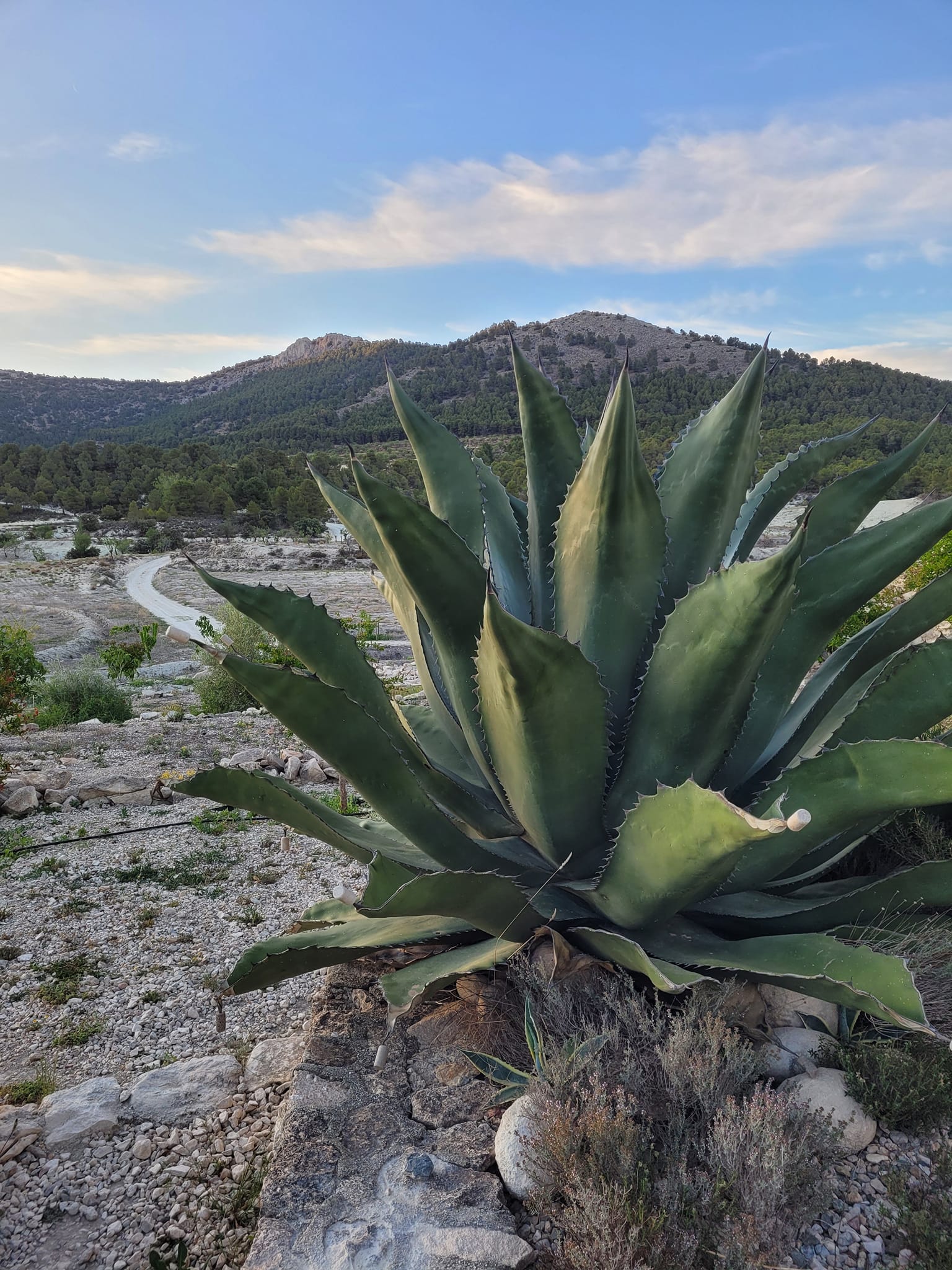
But here I am. A couple of miles from this:

Almond trees and La Muela in Almería Province in southern Spain, at an artist residency hosted by Joya-AiR. They are also on Instagram, if you are interested.

~

I guess I’m the resident poet this go-round; among us there are a photographer, a graphic artist, and two multi-media artists and they hail from UK, Canada, Italy, and USA. I have been here half a day and am already full of ideas and have had interesting conversations and have enjoyed meeting a dog named after Frida Kahlo and a goat named Fou-Fou.

This post is just a say-hi and to share my enthusiasm for this beautiful rugged place and the people who want to get into their artist-zone here. More later.

The courtyard patio of Cortijada Los Gazques, Velez Blanco