Gopnik enters the English major fray

The New Yorker‘s columnist Adam Gopnik contributes his views about why the English major does or doesn’t matter in the blog accompanying a recent issue. He says, in response to apologists (like me) who contend that English, literature, and the humanities generally contribute to a person’s life experience in subtle, long-term ways:

Well, a humanities major may make an obvious contribution to everyone’s welfare. But the truth is that for every broadly humane, technological-minded guy who contributed one new gadget to our prosperity there are six narrow, on-the-spectrum techno-obsessives who contributed twenty.

Then he points out:

Nor do humanities specialists, let alone English majors, seem to be particularly humane or thoughtful or open-minded people, as the alternative better-people defense insists. No one was better read than the English upper classes who, a hundred years ago, blundered into the catastrophe of the Great War. (They wrote good poetry about it, the ones who survived anyway.) Victorian factory owners read Dickens, but it didn’t make Victorian factories nicer. (What made them nicer was people who read Dickens and Mill and then petitioned Parliament.)

Okay, he’s a bit broad and snarky there–but that’s his style. And nonetheless, Gopnik argues for space in society–if not necessarily in the academy–for the study and discussion and obsession with books and literature. He claims that “the best answer I have ever heard from a literature professor for studying literature came from a wise post-structuralist critic” who said the reason he was a literature professor was because he had “an obsessive relationship with texts.”

I would agree with that reasoning, though I am not a post-structuralist, so far as I know.

I believe that education ought to allow us to follow our passions to whatever logical or surprising ends appear. In light of the huge expense of a university education in the USA, however, perhaps the best question to ask is how to motivate citizens to pursue education individually (see my post on autodidacts). Gopnik calls the estimable Dr. Johnson “the greatest English professor who ever lived,” though he never taught in a university and though his title of “doctor” was honorary, and reminds us that other antecedent writers-on-literature, such as Hazlitt and Sydney Smith, “had to make their living doing something else narrowly related.” Colleges at least offer some employment and a modicum of respect to the humanist interpreters and researchers among us, but we need not be employed by the academy to exercise our obsession with books. That can be done on our own.

Dr. Johnson

Gopnik adds this lovely, wise sentence near the close of his column, and I wish I could convey the value of his idea to every college student I advise: “You choose a major, or a life, not because you see its purpose, which tends to shimmer out of sight like an oasis, but because you like its objects.”

Poems, stories, paintings, sculpture, dance, philosophy, books, books, books…I don’t know my life’s purpose, but I know the “objects” that entrance me.

Here’s something lovely

…from Maria Popova at the Brainpickings site: book loving and writing and art and literacy and library connect to produce this event/display at the New York Public Library. I was in the city just last week–rats, I missed this. (But I did see Ken Price at the Metropolitan Museum of Art and spent part of a lovely afternoon at Untermyer Park again).

~ Please click on the links! (I know they’re kind of hard to see on this theme)~

MEANWHILE…

I’m on blogging hiatus again while I get accustomed to my work week and while we prepare for the Goschenhoppen Folk Festival (or on Facebook here) this coming Friday and Saturday. Not a time to get much writing done, nor much reading.

A festival participant prepares apples for drying

A festival participant (19th c) prepares apples for drying

Young apprentices (18th c) at work

Young apprentices (18th c) at work

Spinning & flashing

While traveling, I finished Octavio Paz’s The Bow and the Lyre and also Dave Hickey’s The Invisible Dragon, two very different books that I’m still churning around in my mind as they intersect on the subject of beauty in the arts.

Hickey’s work has been much more controversial than has Paz’s; but then, he addresses a completely different audience in his book (most specifically art world critics, a contentious bunch to begin with). Both writers spend some time on the idea of rebellion in art, and there’s much to consider on just that topic alone. But I feel as though I need to re-read both books and jot down my thinking because–well, they cover so much that relates to my interests. I cannot keep all of this information, and all of these concepts and revelations, in my mind at once.

My brain’s spinning.

Which is a good thing. To spin is to draw and twist into a thread, to gyrate, whirl, “to evolve, express, or fabricate by processes of mind or imagination” [Merriam-Webster], to twirl, roll and yaw, speed along, etc. When the brain does these things, neurons are firing happily. The brain also needs meditative rest, true, but the whirling of intriguing thoughts is a better activity than the grating stir of anxieties or the dull repetition of too-familiar routines.

About Paz. All of the essays in The Bow and the Lyre are good, but some are better than others–and some just appeal to my interests more than others. The glib aphorisms I complained of earlier turn out to be forerunners of quite thorough explorations into the “what” of poetry and of being. I came away amazed at the breadth of the author’s knowledge, the depth of his close reading, his philosophical forays and his artistic analysis and his creative intuition. We should be glad our Nobel laureates are of this caliber.

Furthermore, coincidentally of course, Paz (writing in the late 1950s and early 1960s) cites Heidegger, who was alive at the time; proto-phenomenologist Husserl; and Deleuze–a philosopher who’s on my to-read list. Also many others, some of whom are Mexican or Spanish poets or dramatists with whom I have little or just passing familiarity, and most of whom are poets and philosophers I’ve read (whew, so I didn’t get too lost in his examples).

My favorite chapter is the one on Image in the poem, but I admire his thinking in so many of these essays. Paz discusses the much-acknowledged need for tension in the poem, a topic I thought I’d already read enough about, but his approach strikes me as particularly clear and apt. Robert Bly has written about the “leap” in a poem (see his small gem Leaping Poetry) and the suggestion of the twist or surprise in a poem is not new. Paz considers the poem as a kind of rebellion because the poem is always outside of the expected cultural norm, because the poem is slippery and cannot easily be pinned down–else it fails. There is also a startling-ness to the good poem–his translator employs the word “fulgurant,” an obscure but specific word meaning amazing in an impressive way–suggestive of a flash of lightning.

The tension need not be so flashy. It can be subtle, but the poem has to have earned its ‘turn.’ How does that happen? Paz says that tension is created in tandem with the reader: the reader is an integral part of the poem. What occurs in the poem (in terms of form, imagery, metaphor, meaning, rhythm, wordplay, etc.) will be unexpected even though the reader anticipates it. In fact, the reader desires the surprise, wants the unpredictable, and the poem will be weaker for the lack of it. It’s like watching a fireworks display. You anticipate the noise, “chrysanthemums” and “fountains,” but you’re never quite sure when exactly the rocket will spew forth its light or what form the explosion will take.

The reader expects change and transformation from the poem, expects puns, twists, leaps, juxtapositions, and all the rest. The reader feels that thrill from a poem when the expectation is justified but the delivery of the surprise nevertheless startles. Paz would say that is a revelation.

And this is only one tiny aspect of this deep and intriguing book. No wonder my head spins, and I feel transformed!

Favorite poems

In my last post, when writing about reading poems of grief, I mentioned Robert Pinsky–former US Poet Laureate. When Pinsky was Laureate, he promoted the program now called “The Favorite Poem Project.” The concept was to demonstrate that poetry appeals to a diverse audience; there are so many styles and types of poetry, on so many topics, that anyone can find a poem that appeals. Teachers, plumbers, teenagers, soldiers, business executives, mail carriers, truckers, grandparents, schoolchildren–anyone who had a poem that had special meaning was invited to say a bit about why or how that poem meant so much and then to read the poem aloud to an audience. Pinsky’s project included favorite poem reading events, and videorecordings of such events, now archived at the site…and a book.

This year–this past Tuesday, to be quite exact–I took part in a favorite poem reading at the college where I work. I find these readings rejuvenating. Sometimes the stories that surround the poem choice are heartwarming, sad, or funny. Some readers tell an anecdote about a favorite teacher, relative, friend, or book; it’s wonderful how those stories “work” with the chosen poem. The director of information technology related the story of how, when her mother was in labor with her, her mother was taken to the hospital by hearse because taxis in the south did not serve her “black neighborhood.” A dance professor offered the romantic story of his long-distance courtship with his (now) wife via letters and poems…and Neruda. An instructor spoke of his fascination with attics and his father’s estrangement from the family and then read Stanley Kunitz‘s amazing poem “The Portrait.”

The poem I read was also a Kunitz poem, “The Snakes of September,” one of his later works. I am not sure this is my favorite poem–indeed, I would be hard pressed to come up with one only, and I might choose Ben Johnson’s “On My First Son” or Mary Oliver’s “Wild Geese” or Li-Young Lee’s “The Gift” or…well, there are dozens. I just chose one I thought would suit the evening, a poem with a garden in it, and an allusion to Eden, and the lovely phrase “the wild/braid of creation/trembles.” It speaks to me.

Look for poems that speak to  you. Keep them near  you, on the fridge or by your desk, in a notebook by your bed, or in your heart. Share them if you feel the urge; you will be doing good.

Blessings for National Poetry Month and always.

“The difference between Despair/And Fear”

~

Events such as the tsunamis in Indonesia and Japan, devastating earthquakes or hurricanes that result in high death tolls, industrial accidents that destroy communities—these seem impossible to control and blame is hard to place, even in the latter case. News coverage in such situations tends to focus on damage and recovery efforts, then shifts to the next drama. Tragedies wrought by specific human perpetrators, however, become media spectacles here in the USA. The same few seconds of terrible footage repeatedly fill television and computer screens; viewers feel drawn into the activities of SWAT teams and reporters and the compelling speculations of forensic psychologists, terrorism experts, social commentators, politicians, witnesses. There are heated exchanges on social media forums.

~

I’m beginning to believe societies get the popular culture they want or, alas, deserve (late Rome’s “bread and circuses,” anyone?). The circuses give us what society’s members, apparently, want to consume. Art, however, offers what they need, whether or not they want it. During times of media frenzy, when the culture in which I live seems numbed by “infotainment” and nonstop visual and audio coverage of tragic events, I find myself turning to art—usually poetry—for grounding, for solace, for affirmation of the human spirit and for a way to confront human truths.

~

I do not suggest that poetry necessarily comforts. Often, it wears me ragged, forces me to wrestle with ambiguities, to question my values. Sometimes, art brings me to tears.

I do not consider these results to be negative results. These reactions are human reactions; I am reminded of my humanity through my engagement with art.

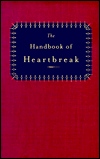
A good little anthology for times of grief is The Handbook of Heartbreak, edited by Robert Pinsky. Pinsky’s selections cover the human spectrum of sorrows: broken romances, dead pets, war, disaster, family and social losses and the desolate emptiness of depression, sorrow that is concrete and existential, spiritual and personal and cultural.

~

Speculation is something inquisitive minds do well, but it is easy to believe our speculations, to forget they are merely imaginings that may or may not be valid. When a crime becomes a widely-broadcast web of information blips, the suspect is forejudged in the court of public opinion; I feel concerned about our nation’s commitment to the concept of innocent until proven guilty in a court of law (how on earth will that be possible?). What irks me most about media coverage of the Newtown, Virginia Tech, Aurora, Tucson, Boston Marathon, Columbine and other killings is the retreat into a kind of contorted deductive reasoning based on imaginative constructions of human intent and purpose—the search for motivation that drives the forensic end of these crimes becomes a news story led by experts who imply they can get to the truth. But can we ever know the truth? Each human being is unique and ultimately unexplainable, and often the way we are best reminded of that fact is through art: fiction, theater, paintings, poetry. On his New Yorker blog, Adam Gopnik notes:

Experts tell us the meaning of what they haven’t seen; poets and novelists tell us the meaning of what they haven’t seen, either, but have somehow managed to fully imagine. Maybe the literature of terrorism, from Conrad to Updike (and let us not forget Tolstoy, fascinated by the Chechens) can now throw a little light on how apparently likable kids become cold-hearted killers. Acts of imagination are different from acts of projection: one kind terrifies; the other clarifies.

~

We need clarity.

~

I might add that in my day job, I work with young people between the ages of 17 and 24, day in, day out. These young adults experience varying levels of frustration, confusion, numbness, fear, anxiety, excitement, need for risk, need for security, withdrawal, social discomfort, and inner turmoil. I cannot look at the perpetrators of recent civilian massacres without thinking of my students. I do not mean that I am wary or that I think one of my students might snap; what I mean is that I feel compassion for the conflictedness each human being is capable of feeling and that I understand all too well that not all of us are capable of contending with that conflict.

Some of us can accomplish through acts of imagination the confrontation with what terrifies or numbs us. These people include our artists. Those who cannot express or embrace the confrontation are at risk of projecting the inner conflict, fear, or insecurity elsewhere, as Gopnik makes clear.

Can art make us safe? We live in the world: not an inherently safe place. I think if we embrace what art offers us we will not be in retreat from the truths of the human experience but will learn to confront truths, even those that are uncomfortable. Art gives us insight, a step toward understanding. Can art grant us clarity? I think so.

Therefore, Emily Dickinson (305):

The difference between Despair
And Fear—is like the One
Between the instant of a Wreck—
And when the Wreck has been—

The Mind is smooth—no Motion—
Contented as the Eye
Upon the Forehead of a Bust—
That knows—it cannot see—

~


AWP follow-up

photo Ann E. Michael

winterhazel

Snow fell on Boston. Not a big snow, however, and rather typical for a late-winter storm: damp, swirling but not biting, swift-melting once the sun appeared two days later. Early Friday morning, I trudged with a friend over the as-yet unshoveled sidewalks to breakfast on Newbury Street at Steve’s. We met with conference buddies who are all members of the WOM-PO [women’s poetry] listserv. It is lovely to meet face-to-face people who have been virtual colleagues and splendid to discuss poetry over a good breakfast.

~

It is also a relief to realize that I have finally learned how to manage conference-going. It is all a matter of pacing and, I suppose, of taking poet William Stafford’s advice and lowering one’s expectations. The hardest challenge is making the choice between blowing the budget on terrific food (in a big city, wonderful restaurants abound) or on books, because the bookfair at the Associated Writing Programs’ annual conference is enough to inspire swooning among literary bibliophiles.

In three huge exhibit rooms, small presses and literary and university presses displayed chapbooks, literary journals, and books that range from minuscule to tabloid-sized, books that are handmade, letter-pressed, offset, print-on-demand, stapled, ribbon-sewn, die-cut, fancy-boxed, reprinted, spare, florid, illustrated, edgy, deckle-edged, marbled, second-hand, one-of-a-kind, limited-edition, mass produced, commercial, educational…in all genres including mixed-genre, collaborative, collage, anthology, with an emphasis more on the literary than the commercial text. These books can be devilishly hard to locate, even with the existence of Amazon and online sellers; and holding them in your hands is a far more convincing sell than seeing a picture file on your computer screen.

Heaven for poetry-readers, there are also wonderful creative non-fiction books, collections of short stories, novels, books on prosody and poetics, the craft of writing, on creativity and inspiration and toil and revision and on the complex and controversial topic of teaching writing. Oh, and there are people, too. Most of the attendees are writers of one stripe or another who are congenial and curious or else walking about with the glazed expression of the overwhelmed.

Or some combination of the two.

~

I exercised considerable restraint and managed not to load my bedside table with two months or more of reading material (see a related post here). And I got some terrific ideas for teaching writing to college students and found some wonderful poets whose work I want to study. The last night of the conference, I listened to the mesmerizing Anne Carson read an indescribable take-down of the fifth book of Proust’s À la recherche du temps perdu, the section titled The Captive (Albertine). It’s been years since I read Proust, which I did almost out of stubbornness in my junior year of college, but the book came back vividly enhanced by Carson’s peculiar approach to pacing, language, scholarship, whimsy and satire. I like what the Poetry Foundation’s biography says about her after the release of her text The Autobiography of Red:

According to John D’Agata in the Boston Review, the book “first stunned the classics community as a work of Greek scholarship; then it stunned the nonfiction community as an inspired return to the lyrically based essays once produced by Seneca, Montaigne, and Emerson; and then, and only then, deep into the 1990s, reissued as “literature”and redesigned for an entirely new audience, it finally stunned the poets.” D’Agata sees Carson’s earlier work as an essayist everywhere in her poetry, along with her deep absorption in Classical languages. Carson’s work, D’Agata alleges, asks one to consider “how prosaic, rhetorical, or argumentative can a poem be before it becomes something else altogether, before it reverts to prose, to essay?”

~

Altogether, Boston provided nourishment of many kinds: gustatory, intellectual, emotional, poetical…food for thought.

Memoir & the lyrical narrative

I have decided to devote two class periods to exploring the lyrical narrative with my students. The reason evolved from, not exactly a revelation, but a dawning awareness that this particular mode of poetry connects more easily with students than other modes.

Popular music, of course, sets the contextual stage here. American country music fills the nation’s highways and airwaves with lyrical narratives and modern-day ballads. The story-song appears in a wide range of musical genres from rock to rap, born from simple blues narratives and Appalachian ballads and from John Henry and Casey Jones to glam-rock “epic rock ballads,” new wave, Motown, British invasion (think “A Day in the Life”) and quirky indie lyrics–not to mention huge hits like “Lying Eyes” and “The Devil Went Down to Georgia” or oft-played 70s narrative songs like “Cat’s in the Cradle” or Bruce Springsteen’s “Thunder Road.” These tunes are all before my students’ time, but they have their own lyrical narrative popular songs; they “get it.”

Bruce Springsteen: lyricsThunder Road

Bruce Springsteen: lyrics
Thunder Road

Narrative lyrical poems hook readers who might not otherwise spend much time closely reading a poem because of those critically important pronouns “I” and “you” and because there’s a human impulse to stick with a story. We want to know how it ends; and we want to figure it out in our own subjective ways, to put the speaker/writer’s experience into our own (or vice versa) and interpret the narrative on our own terms. We also like to be a little surprised.

Why?

I’ve touched on the topic of the cognitive need for narrative in a previous post, and on Boyd’s story-telling impulse research (here), and now–in light of reading the lyrical narrative poem–I want to offer an excerpt from Oliver Sacks. In an excerpt from Speak, Memory, Sacks writes:

“There is no way by which the events of the world can be directly transmitted or recorded in our brains; they are experienced and constructed in a highly subjective way, which is different in every individual to begin with, and differently reinterpreted or reexperienced whenever they are recollected…Frequently, our only truth is narrative truth, the stories we tell each other, and ourselves… Such subjectivity is built into the very nature of memory, and follows from its basis and mechanisms in the human brain. The wonder is that aberrations of a gross sort are relatively rare, and that, for the most part, our memories are relatively solid and reliable. We, as human beings, are landed with memory systems that have fallibilities, frailties, and imperfections—but also great flexibility and creativity.”

How can we honestly interpret a poem without acknowledging immediately that our brains are highly subjective processing organs that inherently interpret and experience input differently? Our personal narratives, our memories and recollections, limit, expand upon, and influence our interpretations. That is why I insist that my students accept all “expert interpretations” of famous works with a grain of salt. Every human brain re-creates based upon subjective, unique processing; the fact need not keep us from admitting of rational thinking, but it must affect human interpretations of phenomena. Especially subjective phenomena such as art.

This is also the reason I warn my students not to assume that the speaker of the poem is the poet himself or herself. Poets invent, and they can invent personas. Furthermore, in their efforts to write truths–emotional truths, lasting truths–they may alter physical, actual, memory-based “truth.” In other words, maybe the story happened just that way. Or didn’t. Though “for the most part our memories are relatively stable and solid,” the paradox of art is that altering the facts can lead to deeper truths. Sometimes the facts seem altered from one perspective but not from another. Other times…well, I confess, I myself have changed some facts in poems in order to make the poem better. In such cases, craft supersedes the need for stony factuality. I guarantee I am not the only writer who employs this strategy.

Whose life is it anyway? And whose art? Sacks reminds us of the loosey-goosey aspects of recollection: “The neuroscientist Gerald M. Edelman often speaks of perceiving as ‘creating,’ and remembering as ‘recreating’ or ‘recategorizing.’” Thus, the lyrical narrative is a form of memoir, created through individual perception and recreated through the process of memory itself. Which, all of us being human and therefore fallible or otherwise liable to err, and subconsciously quite able to lie to ourselves, means that the lyrical narrative could end up as mythical as the stories of Mount Olympus.

And just as compelling to generations of human listeners or readers.

A voyeur’s fascination that the reader may be witness to the human-talking-to-human in the framework of a storyline is a significant part of what engages audiences. This poem might be memoir! It may be true. It may be genuine experience, something to which I can relate. There’s emotional frisson, or thrilling curiosity, or the dread of knowing it will all end badly. But I must know; and I want to believe it might be true. Tell me sweet lies, oh troubadour!

~

*Note: the image above is not Bruce Springsteen’s handwriting. He prints. An example of his actual lyric drafts is here.

Associating with allusions

Human beings use the power of association to create art; indeed, without association, it would be difficult to create or even to learn anything at all. Paolo Friere observed that all true learning is based on previous experiences and associations; Pavlov, in a different field, established the same thing while experimenting with instinctual responses. In literature, in the poem especially, the art of the work depends upon associations. The writer makes cultural, historical, linguistic and personal references and allusions, establishing imagery based upon place, time, art, experience, event. How would metaphor, or simile, operate without prior knowledge and associative power? Allusion’s a crucial tool for poets.

In his textbook/anthology To Read a Poem, Donald Hall notes that allusions can, however, be problematic in poems and may “act as a barrier to understanding.” Indeed, a common criticism in poetry workshops is that an image, word, or allusion is obscure. Such critiques often center around an indirect reference that readers “don’t get.” A poem no one can understand or appreciate is certainly a failed poem, but what if the failure is the fault of the reader’s lack of experience or education? Is the poet to blame for being elitist, or is the reader to blame for his or her innocence? What if the allusion is based on something integral to the author’s perception of life and is meant to further the understanding of the piece, not to build barriers? How is a writer to judge whether or not an allusion is working in the poem?

Let’s back up a bit and start with a definition: an allusion is simply an indirect, but meaningful, reference. It is not the same as writing a poem based on a quote or news article; not the same as direct referencing in a line, stanza or epigraph. It is not a symbol—it does not stand in for anything, merely points indirectly at an experience. Because of its indirectness, allusion operates on a more complex level than does other imagery; and because of that complexity, allusions deepen meaning. A good allusion works on several levels, dependently and independently.

But an allusion is also meant to be understood. Robert K. Miller, in his textbook The Informed Argument, defines allusion as “an unexplained reference that members of an audience are expected to understand because of their education or the culture in which they live.” That expectation—and the assumptions that go with it regarding culture and education—has the potential to make an allusion into a sandpit of obscurity. Yet great poems avoid getting mired. Great poems work even when history has intervened and allusions have been lost: one can read The Inferno with notes and explanations about politics in the city-states of medieval Italy and Biblical references; or one can read it naively uninitiated and still find it to be a fabulous, weird narrative, a guided anti-quest. The uninformed reader has lost some aspects of the poem (perhaps its irony, its parodies of important men, etc.). The uninformed reader has not lost everything in the text, however. He or she does not return impoverished from a reading of Dante by any means. The art is still in the poem, the narrative, the craft, the intention. In a good poem, the poet’s point of view and range of experience can transform the reader’s experience.

il_fullxfull.369385736_ddho

What if the contemporary writer’s experience includes a love of Ovid, a familiarity with Hindu cosmology, or twenty years as a coroner? Educated readers of a century ago would have caught allusions to Greek and Roman classics, but that’s less true today (a fact that has not stopped Billy Collins or Anthony Hecht from employing classical allusions or references, however). I’ve recently had students who were not able to recognize allusions that referenced Shakespeare, Wordsworth or the Bible. While this is dismaying to me as a teacher, it has not interfered with these students’ ability to enjoy—and understand—poems by such writers as Collins, Glück, Pastan and others: poems containing allusions to literature, history, art, and experiences beyond these readers’ ken. A good poem alluding to a coroner’s working knowledge of the body and its various means of demise (without directly referencing or explaining this knowledge) would certainly pique my curiosity, and that of my students. Maybe it is difficult to get the news from poems, but through poetry we can expand in other ways.

Besides, people read to learn, and each unfamiliar reference or allusion offers the chance to further that learning. Why bother to tell people what they already know? In my own experience, poems have led to the dictionary, the encyclopedia, to libraries, art museums, philosophers, scientific theories, and to other poems. Granted, I am the sort of reader willing to do that extra work; and this points out that deciding whether or not to use an allusion entails a couple of decisions. Who makes up the audience for a poet or poem? That’s the issue Miller addresses in his definition of allusion—who’s reading, and what experiences and education these people have access to. The recent interpretations of Wordsworth’s language of the “common man” have on the one hand encouraged accessibility in contemporary poetry but have also led to some ridiculous directives in poetry seminars. (Example: A student of mine was told by a conference instructor never to use the word “vermillion” in a poem because “people won’t know what it means.” While there are poems in which “red” is a better choice than “vermillion,” there are certain styles and subjects in poetry that benefit by the use of the “more obscure” word). The second question a writer must ask is: does the poem work even if the reader misses the allusion?

The first question is intellectual and is less important than the second one—but it can help the writer decide whether to keep the allusive image/phrase or to direct-reference, clarify, footnote, or delete it. In a culture as overwhelmed with media as our own, even contemporary allusions can be missed (what if your readers don’t watch commercial television? or keep up with CNN? or know what blogging is?), let alone well-considered indirect references to, say, American life in the 1950s, composers other than Beethoven and Mozart, or most writers once considered essential to the “classic canon.” So it does help to know who your audience is. This is as true for allusion as it is for vocabulary choice in the poem.

The second question is absolutely necessary for the poet to ask, for allusion often arises spontaneously if it is deeply grounded in a writer’s experience. Because the poet’s experience drives the poem, a writer who is dissuaded from, or afraid to harness and use her experience, risks losing her investment in the work. While obscurity is also a risk, too much concern over being democratically accessible may result in what one of my students called “the dumbing-down of the poem” (a phrase which is itself a contemporary, political allusion). The condensed complexity of poetry is possible thanks in large part to the associative powers of allusion. Strange and surprising associations and metaphors and multiple, list-built associations evoke fresh responses from the reader through transformative acts within the poem. If no one “gets” the allusion, but readers still “get” the poem—if they do not stumble over the language or the images, do not lose the narrative or miss the overall meaning of the piece—the poem has surely succeeded: some kind of transforming language, some synthesized meaning that leaps out of and past the accepted denotations of words, has occurred.

If a reader comes along who does catch the allusion, that reader will have an enriched perception of the poem, a deeper insight into the writer’s inspiration and purpose. That’s how a reader can tell the chosen allusion works. And that’s how the poet can tell, too.

Learning the literary analysis

It’s end-of-semester time when I meet with students to coach them through revisions of their final papers. A fair number of those assignments are literary analysis papers, and the students I tutor tend to view these essays with dread stemming from confusion. I have learned a few methods of deconstructing and demystifying the literary analysis, but I understand these students’ frustrations. I felt them myself many years ago, as I learned literary analysis the hard way, under the tutelage of a formidable and exacting professor.

Actually, I had not thought much about learning literary analysis until a few days ago, when I had the chance to read some of my own early essays. In the bag of ephemera that contained my father’s essay on Martin Luther (see this post), there are also a few of my letters and college papers that my mother saved for some reason. How revealing it was to read my early forays into fiction analysis–and to see the comments my professor made on my work. Very astute, critical comments that confronted me, a naive 17-year-old who was accustomed to getting high grades on English papers, with all that I was assuming, leaving out, or asserting with faulty logic or lack of evidence.

It’s interesting that I rose to the challenge. I was shy and easily intimidated, and very young. The reason I did not feel utterly crushed by the professor’s comments is that this was a seminar class, discussion-based, with a great deal of face-to-face conversation among teacher and students. My professor was the most assertive, self-confident, and supremely logical woman I had ever encountered; I was intrigued by her. How on earth had she gotten that way? Was she born into it? Had her family encouraged her to be so direct, forthright, critically observant? Her vocabulary was precise. Her expectations were high; yet she insisted we teenagers had ideas that we were capable of expressing verbally and on paper.

Many students disliked her intensely, considered her too blunt, wounding, hypercritical. I respected her acuity and her breadth of knowledge. I didn’t want to emulate her, but I wanted to read what she had read and understand it as intently as she did.

I don’t think she would mind my revealing her identity, as she’s well-known for her passionate learnedness and her controversial ideas about education. You can find her on a TEDtalk on YouTube: Liz Coleman, long-time president of Bennington College. When I was a freshman at the experimental Freshman Year Program at The New School for Social Research, she was the program dean and my Art of Fiction teacher.

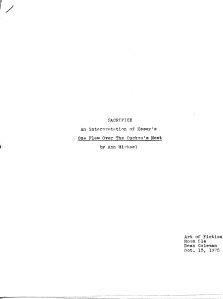
The title page of a much-lacking freshman attempt.

The title page of a much-lacking freshman attempt.

She did not coach us on thesis statements or methods of breaking the analysis into chunks of ideas supported by evidence from the text. Instead, she quarreled with our assertions, asked probing questions of our thin but possibly promising claims, and confronted us with the obvious. I was astounded by this approach to education, 180 degrees different from what I had encountered in high school. After Liz made her comments on my One Flew over the Cuckoo’s Nest essay, I picked up the book and immediately read it again–something I had never done before.

I had drawn parallels to the Christ narrative, a rather obvious way for a beginner to explore Kesey’s novel, but had completely failed to recognize that if you’re going to draw such parallels there comes a point where you need to recognize what the novelist does with the idea of “sacrifice”–what is gained (if anything) by it, and what purposeful and ironic twists the writer does to that narrative, and to what end(s). I was onto something when I wrote about the ‘earthly’ aspects of the characters but lost that thread in my allegorical pursuit.

My professor pointed out that I had “seriously limited the impact” of my paper’s argument–at that time, I had no idea that a literary analysis actually a form of argument–by transforming the novel into something it wasn’t, ie, a retelling of the Christ narrative. I love what she next wrote:

“That’s just not adequate to one’s experience of a novel in which earthly pleasures (the more earthly the better, it seems) are so unequivocally celebrated…[Kesey’s] vision of triumph has very much to do with being alive–his communion is with the juices of life.”

The communion with the juices of life! She wrote that to a 17-year-old. I’m not sure I got the full impact then, but I sure learned a great deal from her feedback both on the page and in class. And I did begin to write better, more argumentative, more logical papers. It wasn’t the simplest way to learn how to do a close read; but then, a close read of classic literature should reveal complex insights. I had to fight my way through my own assumptions and bad logic. I had to learn to read again, and at first I felt that analysis would destroy the joy I took in reading; but that’s only true if you are unlucky enough to have a professor who insists that the students’ interpretations align with the teacher’s opinions.paper002

Dr. Coleman has strong opinions about literature–and education, and political engagement, and many many other subjects. Yet I never felt she was pushing her interpretations onto us students; it seemed to me she was pushing me to do better work, to think more clearly, to read with more enthusiasm, with an alert mind. My engagement with literature, art, and much more owes a lot to her…I had always loved to read but had been in many ways a lazy reader.

I’m pretty much cured of that now!

Art and “human intelligence”

I’ve gotten almost to the end of Brian Boyd’s intriguing and well-argued book On the Origin of Stories, which makes fairly large claims about sociality, cognition, theory of mind, art, and storytelling (ie, fiction) given an evolutionary perspective (art as adaptation). The first 200 pages lay the foundation for his claims; he provides evidence from the “hard” sciences, most often biology and neurology, and from archeology, anthropology, and psychology, to back up his theory that art is an evolutionary adaptation humans developed in order to live as social animals. And that art is necessary for human cognition in terms of further developing intelligence and the ability to communicate among our peers: it is cognitive play, practice and skill strengthening for mind and muscle.

Big claims, and occasionally hard to “prove” from the hard sciences. I believe he does a good job with that set of proofs, but I’m not a scientist. His claims based on social sciences—anthropology, sociology, psychology—are very convincing; but many people have arguments with those fields because they are so apparently subjective. Most exciting to me is the way Boyd synthesizes neurological findings with evolutionary developments.

Actually, most exciting to me are his chapters on the Odyssey, but that may be because I am a literature geek. He essentially writes a literary analysis of the Odyssey based upon the inferences and findings in the first half of this book (evolution) rather than the customary literary analysis grounded in, say, context or culture of style or theme, ad infinitum. The resulting analysis is, for me, a truly exciting way to look at Homer’s work and why it matters now, as well as why it mattered then.

Boyd comes close to making the assertion that Homer made Socrates possible, and hence all of Western civilization’s philosophy and social intelligence. Of course, he is careful not to go that far in his argument—he steers as far as he can from logical fallacies— but the thought certainly feels planted in the reader’s mind. His argument does suggest that metacognition in human beings is the definer that makes us human, and art as more-than-play separates human from not-human. He also demonstrates that the Odyssey offers great leaps beyond older epics and posits that the author(s) composed the epic for contemporary audiences that were capable of intelligent, sophisticated, “modern” thought processes; the piece is therefore not primitive literature, as some critics claim.

Boyd’s work has also turned my thoughts to how the attributes of attention, perspective and foreknowledge, overturned expectations, audience-sociality, false belief, cooperation and competition work in the poem as well as in narrative. Granted, many poems have a narrative framework, however thinly sketched, but not all of them do. When there is no narrative frame, these other aspects of storytelling (audience expectations in particular) take precedence and can be employed in almost infinite ways, bounded only by imagination and the willingness of the reader to pay attention as the writer earns that attention through a host of innovative or traditional skills.

A last thought…I spent the long weekend visiting octogenarian friends, both of whom are wonderful tellers of stories. The value of such people to human society is priceless:

“Story by its nature invites us to shift from our own perspective to that of another, and perhaps another and another.”  ~Brian Boyd