Reading in shade

It’s the time of year when, according to the lunisolar calendar, we move from 小暑 xiǎoshǔ–when the heat begins to get unbearable–to 大暑 dàshǔ, the hottest time of the year. It may also be the greenest time: my garden suddenly plumps out huge squash leaves, giant sunflowers, masses of beans, zinnias, basil. The tomatoes are finally burgeoning after a late start. It’s too hot to spend much time weeding and pruning: I harvest what I can and retreat to the shade as soon as possible, where I can read.

A friend recently lent me a book of short stories, Human Sacrifices, by María Fernando Ampuero, an Ecuadoran writer. It’s been ably translated by Frances Riddle, and the stories are startling and harrowing. Not something to check out for a light summer read on the beach, but memorable and thought-provoking. One critic says Ampuero’s work is South American gothic. I don’t agree–and I think it’s kind of a cheesy shortcut in a review–but perhaps that phrase does convey the flavor of some of her stories. Anyway, it’s always a treat to find a writer whose work I’m unfamiliar with and whose work is admirable.

I’ve been taking a break from reading poetry, though that wasn’t planned on my part. July brought a wedding, a death, and some travel; and now, in the intense summer doldrums, I prefer to read for entertainment or information, or just to pass the time. Poetry takes more brain and heart space for me, more “intentionality” or concentration, than most non-fiction books or novels do. This is not to say any other genre is less demanding in and of itself. It’s a personal quirk: I am more attentive when reading poetry than I am when I read other forms of literature, probably because I’m unconsciously (or consciously) endeavoring to learn something of the craft and style and context of poems by other poets. It’s a method of processing how to write poems. But as I have no plans to write fiction or non-fiction, I read such genres for entirely different reasons.

Usually I try to read outside on the porch, in the hammock, on the garden swing. Some days it is just too damned hot and humid, though, and I resort to the air-conditioning indoors. The indoor climate has no flies or gnats but also no bird songs, cicada hums, cricket calls, breezes, scents of summer. Indoors is less than ideal (except in the teeth of winter!).

Recently I’ve added a shade garden where the chicken run was in decades past, under the umbrella of our largest white oak. I haven’t yet added a bench, but a lawn chair suffices for now. Alas, it is a bit buggy, but so is the hammock. The pleasure of summer reading in shade outweighs the inconvenience of the minor fauna…most of the time.

báilù

白露 báilù is the section of the lunisolar calendar that refers to the two weeks before the autumnal equinox; the translation is “white dew.” Misty mornings here and there, damp grass, dew spangling the tent spider webs in the meadow, draping the grasses and goldenrod with white gauze. Brown crickets sing, but the cicadas have left off. Nuthatches return. Squirrels knock walnuts off the branches daily, so there’s a regular thump-thump sound along the treeline. My summer-loving acquaintances bemoan the cooler days and insist summer’s not over until the 21st. My fall-loving acquaintances are picking apples and celebrating the return of pumpkin-spice flavoring to their favorite beverages.

I like the in-between times, the verging of seasons, aspects of change. Change means life, even though the onset of autumn traditionally signals the dying of the year. On my walk this morning, I took photos and made a mental list of changes that are flags of the coming season: acorns on the bough; morning glory still open at noon (in Japanese literature, the morning glory is a signal of autumn’s approach); burning bush shrub going pink; pennants of yellow walnut leaves; ripe wild grapes–deep navy blue, quite sour, and full of seeds; sweet autumn clematis (terniflora) in its whirly seed state, swarming over the hedges; oak leaves, five-leaf vines, and sassafras starting to color; winterberries already red; acorn detritus on the tractor path; pin oak galls (probably thanks to the wasp Callirhytis furva) on a leaf. All of these are mid-September features in eastern PA.

If I were feeling more poetically creative, I might try writing haiku using each of these as the image word. But my current state is fretful. Pulling weeds and taking walks ease my mind a bit. Sitting down to write, not so much. However, reader, I encourage you to try the exercise.

~

lìchūn

As is not uncommon in our region, we have a warm and sunny spate of days that evoke thoughts of spring…often thoughts that are dashed by late-arriving snow and ice storms. The days are an hour longer than they were at the December solstice, and some plants bloom or start to bloom: witch hazel, snowdrops, hellebores, skunk cabbage, winter aconite.

In the Chinese lunar-solar calendar, these weeks mark the start of spring: 立春 lìchūn. (Hence the new year commences, celebrated this year on February 10.)

I love the emergence of new growth in springtime and enjoy looking for buds and leaf-tips, but winter’s crucial to this environment. It plays its role by enforcing dormancy and restful, unperceived rejuvenation. Nonetheless, sometimes I resent the way it teases–knowing that the freezing will return and that mid-March snows are not uncommon here. That has made me think to post my poem “Spring Lies,” which appears in The Red Queen Hypothesis.
~~

Spring Lies

Sun through fog. The leaves of beech trees gleam
low under the tall expressive line of ash and poplar
whose topmost reaches, feathered by the mist,
wait budded but un-leafed. The starlings stop, are
tethered to their twigs for brief collective
breaths and urgent calls that rally all
to action once again—a whir, black-speckled sky,
the poplars barren after the birds’ brawl
moves off. An hour goes by. The meadow’s damp
expanse reveals patches and threads of green.
Here, mud seems harmless: winter has decamped.

Meanwhile, a small town near a river bank
sighs beneath a dank slide, silenced, loses
all but longitude and latitude.

People want to feel the home they choose is
safe but, at best, they stake a compromise—
fire, flood, crime rate, mud. Spring’s temperate. Spring lies.

~

Minor snow

We had a mild autumn that seemed to stretch longer than usual. Today, a dusting of snow and temperatures not much above freezing, gray sky, a meadow in beige-brown hues and the trees mostly leafless. According to the Chinese lunisolar calendar, the next few weeks are 小雪 xiǎoxuě, or “minor snow;” it is already winter. The jiéqì seasons follow the agriculture of northern China’s plains, and it’s striking to me how closely they resemble the agricultural seasons here in eastern Pennsylvania.

Lately, I feel the seasonal transitions physically. My body responds to the changing weather–not always a good thing, but not necessarily a bad thing, either. It connects me with the environment, reminds me of my necessary relationship with the world and its many beings and aspects: seasons, weather, water, plants, insects, bacteria, trees, other humans…

More than ever, I recognize the value in those relationships and treasure how varied they are. And I am just another part of the things I love and experience.

I also recognize my humanness as being “part of the problem” here. I use energy systems, I drive a gas-powered car, my house pumps water from the aquifer, I cleanse my house with disinfectants, my trash goes to a landfill, my income’s derived from an elite system of higher-education institutions. All that stuff that has materially altered the Earth for the worse and been unequally distributed among people? Responsible for my part in it. Trying to make changes.

I went out, wearing my robe and slippers, to the porch this morning to appreciate the barely-frosted landscape and breathe in the scent of minor snow. Sparrows and finches flitted through the bare shrubs, alive with activity. Tonight is the dark of the moon and soon the solstice will arrive. Times of transition. What will they bring?

Cycles & theories

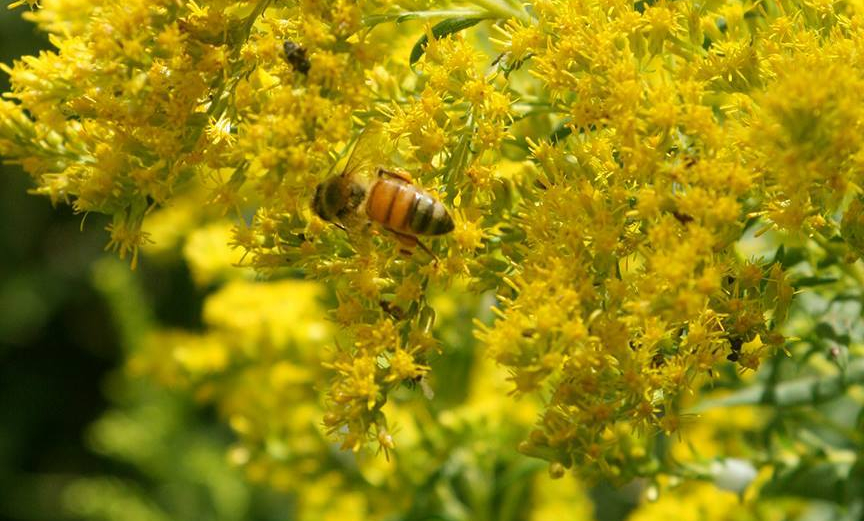
The Chinese lunisolar calendar puts us between 立秋 lìqiū, or start of autumn, and 處暑 chùshǔ, or limit of heat. Certainly the heat here lately has felt limiting, but the term more likely refers to the end of the hottest days of the year. My backyard world fills with haiku imagery for waning summer and impending autumn: katydid and annual cicada calls, birds starting to flock, morning glory and goldenrod, ripe pears, apples beginning to redden, hosts of butterflies. I watch as a hummingbird visits sunflowers, cannas, buddleia, corn tassels, and zinnias. Ripe tomatoes and zucchini weigh heavily on their vines.

Yesterday, a doe nibbled pears while her late-born twin fawns wove between her legs and the Queen Anne’s lace beneath the tree. The air hangs so humid, even the monarch butterfly’s wings seem to droop. A sense of waiting.

And I prepare for the fall semester. Cycles continue: that’s a good thing, isn’t it?

~

Therefore, to engage my intellect when my expressive ability with words seems sparse, I’m reading about theory. Specifically, the theory of the lyric in Western poetics, which turns out to be abstract and scholarly (no surprise, really–theory tends to be scholarly). My guide for this outing is Jonathan Culler’s book Theory of the Lyric. This text manages to be relatively readable despite its terminology; and as the terminology for the lyrical poem encompasses a long history of definitions, rhetoric, explanations, subgenres, and antiquated jargon, the going occasionally gets tough. I’m learning a great deal, however, about poetic experimentation over the centuries.

I now recognize that I have subsumed the idea of lyricism as it came down to American writers through Romanticism (see Hegel). It’s just that the concept of subjectivity in the lyric, and inward-turning emotion and the poet as speaker, has been so pervasive in Western poetics and pedagogy that it seemed a basic premise. Yet it was not always thus, and certainly other cultures employ lyricism differently and view it differently. It’s never an easy task to view from outside what is inherent in one’s own culture, but that’s where books like this one enlighten and challenge.

Besides the theory and historicity of poetry and the task of poetics, however esoteric and abstract, theory texts often elicit from me the urge to move to something more concrete, more creative.

I can only hope.

Perspectives

Snow lies on the grass and the fields, freezes, shoved into huge piles graying with macadam and gravel, trash and mud. Winter abides but only just; even with the cold snap, I sense a kind of anticipatory nudge toward warmer hours and longer days. It gets me thinking about my perspective on seasons. The lunisolar calendar I mentioned in a previous post seems more appropriate to my experience than the Gregorian, and perhaps the reason is that NongLi originated as, and essentially remains, an agricultural calendar.

The Things of This World

The things of this world that matter
are of a personal nature: redpolls
and ovenbirds, tidal waters, the sounds
of freight trains hurtling heavily on rails,
horns wailing; rattle-clap thunder;
patterns lace leaves when pressed
against the inner thigh; and justice.

The things that matter always matter
mostly from one perspective
which varies from yours to mine,
solid to liquid, season, valley, treetop,
galaxy, gorge, gray matter, anti-
matter, energy. The things of this world
depend on the heuristics what and how:

how we define this world, how define
what matters and what makes things yours
or mine: my mushrooms, my macaroons,
my highway, spring light, continental
shelf, hummingbird, suspension bridge,
my mountain, my miracle, mine

~~

scoot window

Human beings can hardly avoid seeing things from a human perspective, though human perspectives can differ vastly. But we do have the knee-jerk tendency to view other beings as “ours.” The Judeo-Christian biblical approach basically states that God gave us everything, and it’s ours to eat and to command; some interpretations temper that statement as stewardship rather than ownership, but just read Genesis 1:28-30 in the King James version–


…and God said unto them, Be fruitful, and multiply, and replenish the earth, and subdue it: and have dominion over the fish of the sea, and over the fowl of the air, and over every living thing that moveth upon the earth.

29 And God said, Behold, I have given you every herb bearing seed, which is upon the face of all the earth, and every tree, in the which is the fruit of a tree yielding seed; to you it shall be for meat.

30 And to every beast of the earth, and to every fowl of the air, and to every thing that creepeth upon the earth, wherein there is life, I have given every green herb for meat: and it was so.

Which perspective I’m illustrating in the poem above. The poem’s speaker aggregates everything into the personal construct of ownership: what is owned is what matters. Implications of greed, of personal views on justice, of personal definitions (how points of view get tainted as they run through human beings’ individual filters)–those abstract ideas the poem tries to convey through the concrete images of animals, sounds, foodstuffs, geology.

The first-person possessive pronoun permits English speakers to colonize the cosmos. Often, I catch myself in claiming “mine.” My house, my meadow, my cat, my children! As if I could actually own any of them (although I possess a piece of paper that asserts that I own my house, sometimes I have my doubts). I did not intend, when I started writing this poem, to remind myself not to go about “making it all about me.” But it does serve as a reminder. And I think a few of us human beings ought to be more aware that our tendency to hoard and claim may not serve us, or the world, all that well.

finches-fall1

Goldfinches in winter attire