Plan B (reading)

While I was traveling the high-altitude desert regions, my home valley got its much-needed rain. And the rain continues. And continues. My plan was to get to work on my gardens as soon as I came back, to weed and plant out seedlings. Well, it’s a bit too wet for that. Also chilly and humid and sea-level, and therefore my physical adjustment has been a bit …bumpy. So, Plan B.

The Plan B default for me usually entails spending “down time” reading, writing, or housekeeping, though visiting the library and meeting friends for coffee fall under Plan B, too. Today, since I feel lousy and have a spate of brain fog, reading has been the choice. I still have a few books on the bedside pile that I haven’t gotten to–mostly poetry collections I bought at AWP at the end of March. But also there is Ocean Vuong‘s heartbreaking and beautiful novel-that-reads-like-memoir, On Earth We’re Briefly Gorgeous, that I finally got around to reading, and a back issue of Rattle Poetry a friend gave me–one that was largely devoted to haiku and related forms–that featured a fascinating interview with Richard Gilbert (thank you, Lesley S!). On the poetry-only book list, I read January Gill O’Neil’s Glitter Road, Julie Kane’s Naked Ladies, and Ross Gay’s first collection, Against Which. All quite useful to me in times when I feel bleak and physically frail–there’s humor, sorrow, and bravery in all of these writers’ poems. Though I’m too foggy-headed to write mini-reviews at the moment, I encourage my readers to check these poets out.

Perhaps my next post will be about the lovely time my friend and I had in northern New Mexico, visiting my daughter and Santa Fe, including my opportunity to see Bandelier National Monument again and ponder its environments and history. A trip like that takes some time for me to “digest.” But it was wondrous. And so is a day at home to recuperate in my favorite way: reading.

Practice

I have been reading novels, which affects my state of mind, makes me dreamy and distracted, foggy-headed, and full of the conflicts in their plots. Or maybe the weather is what does it–too much lovely late autumn sun and not enough rain, which feels “off” for our region; and once the rain finally arrives, it is a dour and chilly dousing I have to convince myself to feel grateful for. Likely the news cycle has not helped my mood. My nine-year-old self emerges from a distant past, crying, “People are so mean!” My parents can no longer sit down beside me and offer comfort.

Time to switch to the poets. I’m finally getting around to reading Ocean Vuong’s Time Is a Mother, a collection that’s been on my to-read list for far too long. The very first poem, “The Bull,” startled me into reading it twice. “I reached–not the bull–/but the depths. Not an answer but/an entrance the shape of/an animal. Like me.” Enough to jolt me out of my fiction-induced haze, especially on a day like this one when I feel the anxious dreamy child in me more than I wish. The prose poems later in the book intrigue me, as well: a very different prose than is found in most novels.

~

“People are so mean!” –I said that often when I was a child. People were mean to me and mean to each other. The news was full of warfare and protest. Grownups were mean, kids were mean, teachers were mean. I had a few complaints, but I also possessed the clueless narcissism of a child. Needless to say, I was not one of those precocious, old-soul children I sometimes read about in books. My siblings could have pointed out a few examples of my own meanness. And I was too much of a coward to stand up for others who bore even more teasing than I did, or to advocate forcefully to right wrongs. As a result, I always feared that my life has been rife with sins of omission.

I wrote the following poem two years ago. I must have been in a similar frame of mind.

~

In Which I Give Myself a Scolding Concerning Compassion

While pruning the quince with its
	twisted thorny syntax of greenwood
	I reflect on errors, mine,
	in the arena of compassion—
the quality and behavior I value most
	and in which I am deficient.

Empathy I’ve got, but compassion requires
	motivating force toward good
	and needs, in my case, practice.
I haven’t practiced enough. I feel the prick
	of quince or conscience through
	my gloves damp from autumn drizzle, 
disentangle stems’ inventive turns, toss cuttings
	on the ground. I disappoint myself.

Perhaps meditation would avail, yet
	I’m incompetent at meditation
	though my friend in her monastery
	by the frigid bay once told me
everyone is bad at meditation for the first
	ten years or so.

Lopping off twigs and branches I imagine
	her sitting on her cushion while
	icebergs converge in saltwater cove
	a wash of pale gray during the short-day
months while she practices one kind of compassion.

My friend who always stops to help a stranger
	change a tire or rescues a loose dog
	from the side of a highway practices 
another form of compassion.

I lack it—that immediate impulse of outreaching,
	kindness. It strikes me as a flaw, the log
	in my own eye it took me years to see.
	So when the late-season mosquito
lands on my forearm to sup perhaps its last
	nourishment, I refrain from flattening it—

a microscopic act of compassion in a world so needy,
	but perhaps a start.
~


Poetry mentors

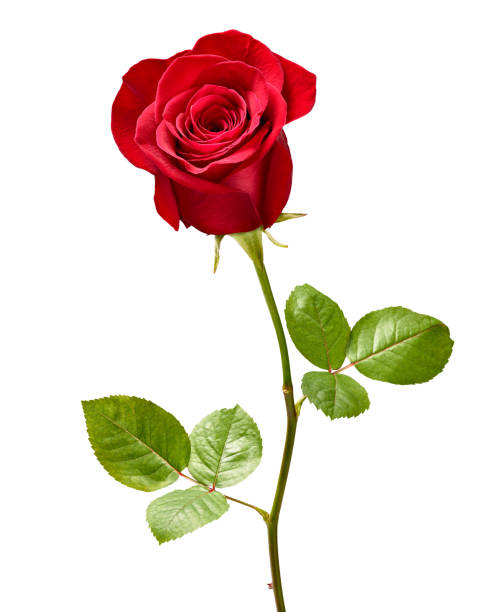
Rosemary loved red roses

I learned, this week, that Rosemary Cappello has died. She was among the first people to encourage my writing and was an advocate for poetry and the arts in Philadelphia, where she lived for most of her life. I would not call her a mentor of mine; but she has been mentor to many other people as well as instrumental in setting up poetry reading series, poetry events, and other gatherings. All while also editing and publishing Philadelphia Poets Journal, a literary magazine that started as an 8-page photocopied zine and became a 100+ page annual journal…what energy, what devotion! And such kindness–when I first met her in the early 1980s, we saw each other often at poetry readings and open mikes. Then I moved away, first to Connecticut and then to the Lehigh Valley. Yet whenever I returned to Philadelphia for a poetry event, it seemed Rosemary was there. She always remembered me, too! In recent years, I’ve encountered her on Zoom readings and events. And I knew she had health struggles and trouble with mobility, but she never flagged in her enthusiasm for the arts.

~

If Rosemary, bless her heart, was not one of my poetry mentors, helpful and kind as she was, who were my mentors–and what exactly is a mentor? A teacher, a guide, a supportive expert in one’s field? Someone who advises, offers a network, feeds the soul, provides a model? Yes–but more than that, perhaps.

At my university, there are several programs or projects that purport to offer mentorship, but I get different answers when I ask people who qualifies as a mentor. It has made me think about my own mentors, most of whom have been in the creative writing field. I mean, I could count my dad or mother, but parents generally aren’t considered mentors—they’re doing another job, that of parenting.

This concept came up recently not only from my workplace, where we are launching programs to have our students be mentors to incoming freshmen, but also from a recent interview with Ocean Vuong that has been making the writing-related social media rounds. [link is here]

This video kind of floored me. I am aware that Vuong is young—but 33? He’s my son’s age! Much as I love my intelligent and funny son, he doesn’t possess the insightful earnestness that comes through in Vuong’s presentations, interviews, and writing. Not to mention his teaching! I am not so sure, at twice Vuong’s age, that I possess those qualities, either; yet I know I have been a mentor to some friends and students, mostly by accident. What defines mentorship?

I have not formulated a definition for poetry mentor or life mentor yet, but considering the possibilities may help me recognize what mentorship is and what it means. Therefore, I think I will devote the next few blog posts to beloved and talented friends and colleagues whom I consider to be my mentors. Alas, some of them have departed this earth, but that doesn’t mean their influence has vanished. I hope that writing and posting about them will keep the memory of them alive in that way that human beings have of recalling and integrating the compassionate and useful persons we’ve known and loved into the present moment.

Next time I post, I’ll have things to say about Ariel Dawson, to whose memory my most recent chapbook collection is dedicated.

Revisiting

Read more poems, I advised myself. At first, I thought I might scout around for some writers whose work I am unfamiliar with–writers new (say, Ocean Vuong) and less new (say, Alberta Turner). I have the week off from university work, however, and am lazing about at home…no trips to the library.

I do have my own library, though, much of which consists of poetry collections and much of which I have not read in some time. I chose Audre Lorde off the shelf–her 1986 book Our Dead behind Us. Lorde’s work was pivotal to my early interest in writing poems; I encountered her in a Women’s Literature Studies class in 1978 and was deeply moved by her poems of rage and political awareness, the sensuousness of her imagery.

I chose to re-read some late Plath and one of Adam Zagajewski‘s books, Canvas. What I’m hoping is that some of these re-reads will connect me to areas in poetry I have not explored much recently. Also, I will expand into the works of writers whose poetry I’m less familiar with.

Not to mention the recent work of friends-in-poetry, whom I have let down by not buying their books (yet…I will get to it). So many excellent and thought-provoking writers out there, many of whom I know personally or have at very least met in person and connected via social media platforms. I hope to purchase some of those books at this year’s AWP Conference in Washington, D.C., and thus to keep to my commitment to read more poetry.

Meanwhile, I turn the pages and rediscover “old friends” and their voices, stories, moods. That is a pleasant task, and a fruitful and useful one.

~

brad-hammonds-flikr-books