Writers, letters

26 January 1983

AnN aNn ann ANN!!

…it seems like all i do is work…i’m feeling abit friendless of late. working weekends didn’t help my social life either. anyway there are still some bugs in the system.i’ve got to get used to working again and i’ve got to learn how to right again, right. i mean write. i’ve been away from my muse too long or at least not on speaking terms with her.

things to do

  1. make friends (with others and with myself)
  2. write!
  3. work.
  4. get out of here!!!
  5. write some more

(aside:)

i don’t think that i ever knew how to write…it was (is) something that i just did (do) akin to breathing or my heart beating

been away so long i hardly knew the place.

number 6 from the things to do list

6. get back into shape!!!

ddunn1983002


anyway ANYWAY anyWay anyWAY aNYWay anYway ANyway anyway–

here’s to you my dear. (this is a toast…i’m drinking apple juice) for sticking by me.

and here’s to SWAN KING

and here’s to poetry and learning how to walk again. and here’s to jazz and here’s to you again and here’s to life and here’s to love and here’s to all that we hold dear and here’s to everything else and here’s to me: my return to the ball game.

much love. david.

~~


L’enigma

“What is especially needed is great sensitivity: to look upon everything in the world as enigma….To live in the world as in an immense museum of strange things.”

This quote is attributed to Giorgio de Chirico, favorite artist of my poetry mentor & best pal, the late David Dunn. I like the way this idea is phrased (it may be the translator, it may be de Chirico): to live as in a museum; for a museum’s purpose–behind its collection, curation, and presentation–is simply to offer up items for the community to observe.

Paolo Baldacci makes an argument for de Chirico as “the first conceptual artist” that I find intriguing if ultimately unconvincing. There is merit, however, in considering the artist’s “surrealist era” paintings as conceptual in the sense that experiencing the work unsettles the viewer, distorts her sense of the real and requires her to enter the world of the painting with its enigmatic strangeness. And to observe without knowing, exactly, what it is she can see.

Artist Deborah Barlow, on her blog Slow Muse, has some words worth reading on the subject of “not knowing” that visitors to museums and galleries, and those who can view the world as an immense museum of strange things, may recognize. Barlow suggests that there may be an “essential incomprehensibility” in the acts of art-making and path-making as the human being moves from the known to the not-known. The enigma, as de Chirico terms it. The ambiguous and uncertain, the experiment, the unanswered question.

David Dunn often wrote letters to me in which he expressed his occasional discomfort with words, with sentences and language; he wished he could paint or play a musical instrument–felt that jazz might have enabled him to enter the enigma more fearlessly, as his jazz heroes did when they jammed and improvised.

WEB_sized_De_Chirico_-_LEnigma_dell_Ora_1910_HR-p

“L’enigma della Oro” (1910)

We wrote about writing, often. Poetry–and the problem of saying the unsayable. Lately, I feel almost ready to retrieve his letters from the box where I’ve kept them for 20 years. My personal museum, those old letters. My immense museum, this strange, strange world.

A poem that offers entrance into a potentially uncomfortable world–by Luisa Igloria on Dave Bonta’s via negativa site: click here.


Drafting

Sun on snow. I turn off the radio during my drive to work, concentrate on the slippery road conditions, try not to get too distracted by the pines’ elegant white drapery or the bird silhouetted above–hawk? Crow?

This activity acts as a form of drafting poems.

Walk to the mailbox on a Saturday morning. Watch clouds. Listen to the sounds of vehicles in the distance. Observe shadows. (Also drafting.)

Lunch break walk, also drafting. Sitting indoors with a cup of tea–drafting, but only if I’m alone and watching the birds at the feeder outside.

Drafting takes more time than any other part of the poetry-writing process.

200px-Cirrus_clouds2

Poetry on chilly days

The region in which I live has been experiencing a lengthy spate of below-freezing weather, many a chilly day. When I do not feel like concentrating too much, I browse seed catalogues. But I am also reading poetry.

Today, I’ve begun reading a 2011 collection of poems by Rachel Hadas, The Golden Road, poems that are dense and beautiful and often elegiac in tone. I took a workshop with Hadas quite a few years ago and had enjoyed her work since long before the class; it was a pleasure to have her as a reader/instructor. And it is, so far, an excellent book. I’ve been keeping her poem “The Study” in my mind for hours now.

Good news, though–I have commenced the year with new poems of my own. I have three drafts as of January 7, which is a good start.

But for today–yet another chilly day–I’m posting this little verse by William Carlos Williams.

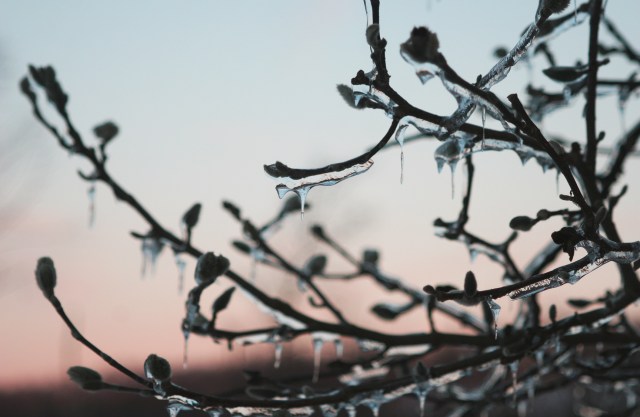
Winter Trees

All the complicated details
of the attiring and
the disattiring are completed!
A liquid moon
moves gently among
the long branches.
Thus having prepared their buds
against a sure winter
the wise trees
stand sleeping in the cold.
                              –William Carlos Williams
~
IMG_0516
~~
~~

Poetry & paradox

~
“Language is a profoundly mysterious technology, so constitutive of the human mind that we can only get glimpses, from inside the fishbowl of consciousness, of how it works.”
sea inside Charnine

 The Sea Inside. Charnine.com features information on surrealist artist Charnine and Surrealism – copyright © 1994 – 2011 Samy Charnine – All rights reserved

~
How do we get from language to poetry? However we do that, consciously or not, it must be as fluid and natural as it is damned difficult! I sometimes wonder whether paradox may be the basis of art. At least, if there exists a “something” that inspires me to compose a poem, paradox–and the way it requires effort to explore contradictions and ambiguities–could stand in as my motivating flame.
~

Paradox, randomness, juxtapositions and contradictions evoke imagery, dream, the realms beyond the rational consciousness we humans claim to possess. Poet and fellow poetry blogger Susan Rich recently posted about the surrealist painter Remedios Varo, an artist whose name and art I had never before encountered; and I felt an urgent pull to introduce her work to my friend David Dunn–he loved surrealism and appreciated it more than I ever have, and such paintings (particularly early de Chirico) exerted a large influence on his poems.

David, however, died in 1999. I share my memory of him here, by writing it on a blog, the same as I share the names of Varo and de Chirico and of the many poets and philosophers I have mentioned during my years of posting to this forum. It’s a form of immortality, if only a temporary immortality (another paradox…)
~
Here is Menand again, who wrote poetry in his youth but moved into journalism and critical reviews in prose later on: “… I got the same painful pleasure out of writing prose that I did out of writing poetry—the pleasure of trying to put the right words in the right order.” Painful pleasure. That mysterious technology, language, rises to the occasion of inherent contradiction.


“And I took away from my experience with poetry something else. I understood that the reason people write poems is the reason people write. They have something to say.”
~
Do you know what you have to say before you write a poem? Or does what you have to say appear in the process of writing? Or after the poem seems complete? Or once someone else has read it and decided what it is you had to say?

Poetry as a value

If individual consciousness exists among human beings, and I believe it does, it is however the collective consciousness that has the longest-ranging impact. We are social mammals. We crave some object or objective with which we can connect and form relationships around in order to create community. Humans cannot survive without communities.

Those communities can be centered around almost anything as long as the focus keeps social members busy with the process of group-forming, skill-sharing, skill-teaching, communication and, ultimately, the development of a shared history. Hence family, tribe, language, or religion–among many other social magnets–keep us cohesive. Until we bicker and subdivide. Society works in ways analogous to the brain and body: through complex systems and nearly-random relationships and long, twisty networks.

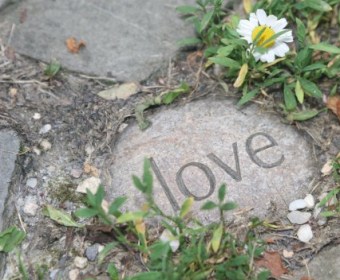
I’ve been thinking about the things we “worship”–things we value and therefore believe are inherent among good human beings–and how such perspectives affect the consciousness of entire civilizations. Simon A. May, in Love: A History, suggests that in the early 21st century, “Western” societies have been elevating the idea of love to that socializing focus. An interesting premise, and I suppose there are worse rallying concepts than love, though May points out ways in which even love can be transformed into an ideology rather than an emotion.ann e. michael

In a large society are many sub-societies, each with its own locus of organizing a human collective; these may often overlap or coexist with the vast variety of human interests. Reflecting on this, I consider myself as part of the society of educators, and of book-readers and book-learners, and of art lovers; and also a member of those people who feel that poetry assists in the lifelong endeavor to engage meaningfully and attentively to life.

Here is a list of people like me who subscribe to the necessity of poetry and who write about it on their blogs. Donna Vorreyer has compiled a listing of poetry-related blogs to follow. I will be following some of them, too.

https://djvorreyer.wordpress.com/2017/12/26/it-feels-just-like-starting-over/

Whittling

Recently, as I was on the road through the suburban edge of a small city, I noticed something unusual. Sitting on the grass, under a large pine tree, a child of about nine or ten was whittling. Absorbed in his task, he ignored the traffic going by; he had no cell phone or mobile device, no electronic game. He simply remained intent upon the knife and the stick in his hands, shaving off layers of wood.

Seeing him brought back memories of my own childhood. I loved to whittle. I had a Girl Scout pocket knife, and there were plenty of twigs littered around the yard, streets, and sidewalks where I lived. Whittling occupied minutes of boredom, when no friends were around to play with, when I did not feel like reading or had run out of books for the time being (we didn’t always get to the library soon enough for me!). On camping trips with the Scouts or with my family, I whittled for a sort of purpose: pointy sticks on which to spear hot dogs or marshmallows. I attempted to fish as the native people did, with spears–an endeavor that never brought success. Several times, I tried to whittle fishing hooks.

Most of the time, however, whittling served no particular purpose. I shaved away at a stick until it was too slender to remove any more wood safely. I whittled to see how slim a stick I could make. I whittled to pass the time until something more interesting occurred.

While whittling, I imagined things. Told myself stories, remembered books and characters, wondered what would happen if…thought up inventions that might be useful or fun, dreamed up games to play with friends, pictured far away or fantasy places and how I would explore them. Probably I looked as intent and absorbed as that boy under his pine tree.

I noticed him because he wasn’t engaged with an electronic device. I noticed him because he did not notice me, or any of the vehicles zipping past his front yard. I noticed him because I identified with his busy hands and intent mind. There is a kind of Zen experience that can come through the process of whittling: busy hands busy mind; followed by busy hands, imaginative mind; followed by busy hands, quiet mind.

It has been awhile since I have done any whittling. But I have a few nice, sharp pocket knives in the house. Maybe I’ll try it again soon.

~IMG_5050.JPG

Transitions & ambition

letter I
have maintained this blog pretty regularly, for years now, writing about books and poems and gardens and teaching, examining the concept of consciousness and trying to plumb–from a novice’s perspective–the brain’s wiring and functions. I suppose I am seeking a kind of “interdisciplinary” approach in these posts and in life: a philosophy of values that considers the arts, aesthetics, evolution, biology, social structures, neurology, consciousness, physics, etymology, pedagogy, ecology, and compassion (have I forgotten anything?) in a distinct but expansive method of living in which I can situate myself and which might guide my behavior as I make my life-long way through the world. If, by some chance, my words influence a reader–so much the better; this is, after all, a public space (WordPress.com).

Like many people who use social media platforms for their writing, though, I have a mixed view of its suitability as a medium and of its perceived necessity for contemporary writers. My purpose, originally, was to practice writing prose and to promote the arts and the natural environment as necessary complements to and instruction for the development of empathy (compassion) and metacognition in human beings.

The blog has been reasonably suitable for practice; it gets me writing what is basically a brief essay on a more-or-less weekly basis. It has several thousand “followers,” but only a handful of readers. [I can discern this through the statistics page on WordPress, though I don’t check often.] In general, I use this platform mostly as a way of “seeing what I think,” and it serves that purpose, too.
IMG_0127

I have come to some conclusions about the problem of consciousness (and about whether it actually is a problem) through the reading and experiences of the past ten years or so. Those conclusions are, however, private ones. While the process of discovery and inquisitiveness works in a public forum, the takeaway remains, for this blogger, a thing carried within.

But.

~~

But other blogger-writers have influenced my thinking about what a public forum such as blogging or Facebook can do for the writing process. Dave Bonta and Luisa Igloria, as well as Michael Czarnecki and Lou Faber–among others–promote by example the option, and value, of publishing new or unedited, unfinished, partially-revised work. Granted, not all of them have thousands of readers who weigh in on criticism or encouragement; but the very process of making public the work-in-progress seems to me to be courageous. This may be because I am a wimp, or it may be because the social aspects of the vaunted “po-biz” have dampened my willingness to show a kind of transparency in my writing methods.

I am not on the tenure track and will not be teaching in an MFA program, however, so why would it matter?

Therefore: be prepared, oh limited but blesséd audience. I may begin to foist upon you the recent sad, sad poems I’ve been writing–in draft form. Or I may begin to reveal the poems from my seven-years’-unpublished manuscript online. Or I may, like Luisa and Michael, begin to blog “a poem a day” (unlikely, but…). It seems to me that a transition is in order here. And that stands as my writing ambition for the moment, as autumn makes its way toward the solstice and I face another stack of student essays to grade.


Remontancy (iris redux)

During a mild late September two years back, I discovered the botanical term remontant–it applies to an iris that graces my perennial bed. The plant reblooms–not every autumn; only when the frost is late and the air and soil stay warm.

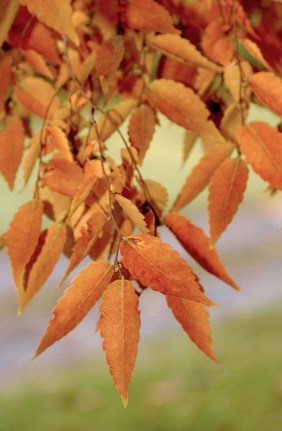
October 14th is pretty late for irises, though, even for remontant varieties. Indeed, the weather has been warm, and the leaf color seems to be coming on very slowly and without its usual vividness. Seasons not following their usual chronology. Summer hangs on. I feel a sense of discomfort, though I should be grateful, perhaps–for a longer show of blossoms, for monarch butterflies in October, for lower heating bills and no need to don a heavy coat (or any coat at all).

autumn iris

I live in a house, work in a building, get around mostly by vehicle; much as I want to be earthbound and of earth, much as I value the environment, I inhabit it often more through longing and imagination than in fact.

One way to ponder that paradox or imbalance is through poetry. Sometimes a poem reblooms for me, remontant, in surprise and renewal…I find something in the text or mood that was heretofore unnoticed. I’m thinking now of Sandra Meek’s poem “Biogeography” (in her book by the same name). Here are the last few lines:

~

In geologic scope, what the ground we’re mesmerized to won’t

let us forget, these mountains are a single
inflorescence, a half-life not more than one
exhalation of stars. This is the ice

we skate, clarity
which brings us down; genesis
of binomials–second naming of all the transitory’s

incarnations, flora to fauna–the craving for return
to the earliest garden, as if again what was left to us
was world enough, and time.

~


A little honey, a little sun

Today, something to soothe the collective psyche, to ward off anxiety and remind us that we cannot move through this life totally fearlessly, but we can move through this life.

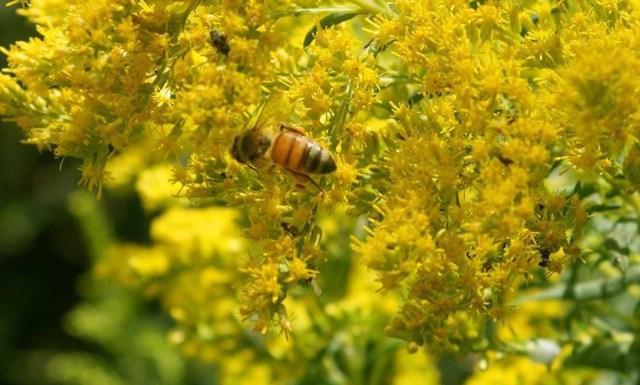
Ann E. Michael honeybee

~

Take from my palm, to soothe your heart
a little honey, a little sun,
in obedience to Persephone’s bees.

You can’t untie a boat that was never moored,
nor hear a shadow in its furs,
nor move through thick life without fear.

Osip Mandelstam, tr. Clarence Brown & W.S. Merwin

There’s more to this poem–three further stanzas–and I am re-reading it today, over and over, as if to memorize its quietly unfolding lines:

For us, all that’s left is kisses
tattered as the little bees


The poignancy of that image nearly kills me. Yet, soon enough in the poem (and elsewhere), Mandelstam’s bees die; but they also hum in the night, in the woods, “in the mint and lungwort of the past.” They make a sun out of honey. They warm the chill of winter’s approach; like kisses, they can soothe our hearts.

~

I have read some severe criticism of translations of Mandelstam’s poetry. Brodsky’s work, Merwin’s…Russian speakers suggest no translation adheres at all closely to the original. Rose Styron and Olga Carlyle’s version is here in Paris Review. And here’s a version (tr. uncredited) in The Atlantic. A bilingual version resides here, if you happen to know Russian and can weigh in on the translation controversy (Mandelstam himself reportedly hated reading verse in translation).

But here is why I am holding this poem close to myself today:

The poem acknowledges the fear that resides in all of us.

The poem reminds us that we have much to share. That we can soothe one another’s hearts.

Namaste.