Spaces

Ah, the traditional New Year’s blog post! 🙂 I have spent time away from the computer to tend to other things, among them, my own “space” for being less busy. Finding that space has not been easy, but it is the sort of discipline we human beings ought to practice in this Age of Information. Without a little inner space, it is far too easy to become anxious and overwhelmed.

So I think of Bachelard’s quiet exhortation to cultivate the creative or childhood space, which I contemplated in 2013 at about this time of year (in this post). And I think of Jon Kabat-Zinn and other writers–often classed as spiritual self-help authors but whose writings need not be considered spiritual at all (Kabat-Zinn, in particular, avoids using the term)–who remind us to be attentive, aware, mindful, compassionate even to ourselves, and willing to take ourselves away to inner stillness now and again.

I am particularly drawn to the notion that contemporary human beings can come to mindfulness through actions rather than through withdrawal from the body and the world. Really, we hardly have any other choice. Although I enjoy solitude more than most people do, I am ill-constituted to be a hermit or a renunciate. My temperament precludes noisy advocacy against injustice or for specific good causes; but I could certainly do more helping, more of the kind gesture, more listening, and more giving of the type that lets not my left hand know what my right hand doeth (Matt. 6:3).

There were difficulties this past year, and aggravations, and sufferings both personal and social. So be it; we can learn from failure and adversity. The best way to learn to problem-solve is by being faced with problems!

In his 2000 book about aging and dying, Ram Dass wrote: “My guru once said to a visitor complaining about her suffering, ‘I love suffering. It brings me so close to God.’” Well, that is another way of looking at things; and perspective matters. Creative thinking involves full analysis (even when the analysis seems intuitive, immediate) and often employs a total restructuring of the problem at hand–a widening or narrowing of scope, a different point of view, a new set of tools or skills for puzzle-solving, or quiet cogitation while the thinker digests the whole situation…which may be, for some folks, prayer.

Or poetry. When I am not writing poetry, I am always reading it. Other writers’ words open me to a sense of communal understanding, a sense that we are not alone, not a single one of us, who can hear or read or remember a poem or a word of love or praise. Even when those poems depict sorrow or suffering, for then we know we are not the only ones who feel troubled.

“And our problems will crumble apart, the soul
blow through like a wind, and here where we live
will all be clean again, with fresh bread on the table.”

― Pablo Neruda, 100 Love Sonnets

Let the wind make space for fresh bread on your table in 2015 and always.


bread

bread

Some endings

On a bleak wet day: thinking about revising my poems. The pile of “needs work” drafts appears daunting; I have put off for too long the required work of rethinking, the hard, conscientious effort–and unstructured time–necessary to the craft. I have always enjoyed the task of revision because it offers a chance to revisit the initial urges of the poem and to refine and reconsider my ideas, but lately my motivation has abandoned me.

I notice, above, all of the words that begin with “re.”

Latin: “in the matter of” or, (res), “thing.” But as a prefix: “again,” likewise, to indicate a backwards or repetitive motion.

revise   §    require      §      revisit     §    refine   §

    rethink    §     reconsider

Maybe I am eager to move forward instead of always going back. Nevertheless, one method of moving on is to complete what one is working on so as to create a sense of closure. Sometimes, all a poem needs is a better ending.

When I think of revision under that perspective, as a means of completing an unfinished job in order to prepare for the next, new task, the pile seems slightly less unmanageable.

And by way of re-envisioning the endings…Molly Spencer’s blog The Stanza offers a good list of closure options here.

sunset1~The ending of a day~


A good start. Possibly.

My most recent reading material is The Feeling of What Happens: Body and Emotion in the Making of Consciousness, by Antonio Damasio. Damasio is convincingly on the neurological/evolutionary trail to recognizing how consciousness operates and why we have developed it, though he allows for mysteries we do not yet and may never understand.

Damasio is clearly not a dualist who thinks the consciousness can exist separately from the body (one of his previous books is aptly titled Descartes’ Error). He doesn’t address the “soul” in The Feeling of What Happens, but argues that reason requires feeling in order to operate effectively, that feeling is a more “conscious” form of emotion, which is “unknowing” in the sense we call consciousness and is founded upon core consciousness, which is reliant upon the physical organism…a vastly complex array of cells, nerves, you name it, generally self-regulating and not by nature in particular need of a conscious mind.

So next time someone tries to explain why a situation happened and just says, “It’s complicated,” maybe you ought to accept that. Because, apparently, it’s really really really complicated!

http://www.isys.ucl.ac.be/descartes/images/Descartes.gifThat does not keep people like Damasio from trying to track down what goes on in the minds of sentient beings.

Having just read Flow, I immediately thought of what Csikszentmihalyi says about the way true flow experiences depend upon deepening levels of complexity–that’s how we keep from becoming bored by routinization of a task. Dennett suggests that consciousness consists of layers: “multiple drafts,” and Damasio calls the human brain, and the brain-body unit, a series of “systems within systems.” But there is no little self, no metaphorical or actual homunculus, at the very bottom of the system, or at the very top. There are only more and varied connections, he asserts–with profound respect and amazement at what biology has wrought.

I also thought about Csikszentmihalyi’s idea of a life project. Some years ago, I began a journal devoted to exploring my poetic project and learned that I do not really think about my writing as a project per se, at least not in the formal sense of poetics. [Here’s Dorothea Lasky harping on the whole concept of a poetic project, in a bit of refutation aimed at poetry critic David Orr.]

What I think I was doing, in fact, was trying to figure out my life project, in the way Csikszentmihalyi defines that concept. What is my life’s philosophy in terms of guiding tasks, principles, goals, projects, challenges? Is teaching part of the package? Motherhood? Gardening? Writing? Human relationships? Learning? Speaking of human consciousness, do I have a conscious path or goal?

Maybe my goal is to keep on amid the complexity and to relish it as much as possible, since it is unavoidable. And perhaps by accepting the complications, I will find my life becomes simpler. That could be a possible outcome–right?

I think of Reineke writing on Marcel Proust’s narrator and his struggle with status, jealousy, conformity, and desire. I read the Proust novel(s) when I was in my early 20s and found his narrator frustratingly neurotic but also a little too familiar, as my life experiences in many ways mirrored his. Eventually, he learns that the way to cure the pain of desire is to discipline himself to let go of desire itself; (and no, neither Proust nor his narrator were Buddhist).

And what happens when he gains this recognition is that he can write the novel. He develops flow, and a life project.

I am past 50, a good time to establish more consciously what my life project is. I know it involves relentlessly and joyously learning new things. I think it will include poetry in some way. And discipline of some kind, conscious effort. For now, those things constitute a good start.


Synthesis & coincidence

&&001“and per se and”

Ah, synthesis! The conjoining and combining of objects, ideas, theories, values and systems, arts, media, experiments, research, disciplines, metaphors, symbols, rhythms, patterns, DNA, et (“&”) cetera.

Synthesis can be planned, hypothesized, purposeful–and it can be spontaneous, unexpected, coincidental. There are times when I feel as though the overlapping and intertwining of experiences seems to have been somehow “planned by the cosmos” (or some higher power); but coincidences occur more often than we think, especially when our consciousness is primed to make connections.

I have primed my own brain, recently, to synthesize thinking about aesthetics, neuroscience, the arts, philosophy and consciousness. So it should not surprise me–though it does!–that the books I have recently been reading connect many threads of my thought, including other recent readings. For example, Martha Reineke’s Intimate Domain: Desire, Trauma, and Mimetic Theory is an exploration of family “romance” in psychoanalytic theory that draws on Freud and Girard; but because Reineke uses Girard’s early writings as her basis, she cites Merleau-Ponty and phenomenology quite often. Furthermore, mirror neurons and the place and operations of consciousness appear in her claims and explorations in this (difficult) text. Mirrors and mimesis, minds and spirits…Gabrielle Starr’s Feeling Beauty, which I’ve mentioned in recent posts, examines the art-body-mind connections in neurological domains and mentions, more than in passing, the phenomenological aspects of the experience we term “art.” Arthur Danto’s The Transfiguration of the Commonplace: A Philosophy of Art (1983, though I read it last month) also wove itself into my thinking as I read Starr’s more current book. In addition (oh, there’s always an “in addition” with synthesis), I am re-reading Csikszentmihalyi’s classic, Flow: The Psychology of Optimal Experience. The states humans experience when we work hard at challenges we enjoy, such as art-making, are deeply connected to our brains and also rooted in our bodies.

So there is a coming-together, a process not unlike chemical bonding, that all of these texts and ideas produce in my mind. This post is one outcome, I suppose. But there will be others.

~

From Carl Sandburg’s “Tentative (First Model) Definitions of Poetry” (1928): “Poetry is the achievement of the synthesis of hyacinths and biscuits.”

387236_10201085579685937_1062169370_n


Change the mind

“The only job of the poet is to destabilize and expand language. This is how poetry changes the world—not by grand ambition or the lauding of critics. It takes the plodding, unending effort of many to alter line by line, phrase by phrase, word by word the way we describe ourselves and everything around us. This is how we change perception. This is how we change the mind.”  —Jaswinder Bolina (in Poetry Foundation: “The Writing Class”  )

Words to mull over. How do we change perception? Is the change of mind correlated with a change in mind–potential alterations of the brain’s structure or synaptic system? If we destabilize language, do we necessarily alter perception?

Although the book is not an easy read, Starr’s Feeling Beauty: The Neuroscience of Aesthetic Experience offers interdisciplinary research into how the brain may be altered by powerful aesthetic experience, or at any rate, how the brain responds to these experiences in ways that lead some researchers to believe the brain can be changed by art. Not just by those who create art, but by those who encounter it.

I encountered Bolina’s essay (see link above) a week or so after I completed reading Starr’s book, and the consilience–to borrow a scientific term–seemed powerful. The ideas have not yet cohered in my own mind, but perhaps in time I will have more to say on this topic.

Meanwhile, I revel in the juicy possibilities of changing mind through art.


Inconvenience

When people need to make decisions about tools or skills or behaviors, they tend to “default” to one of several modes: do what society and/or their peers are doing, do what’s most familiar, or do what’s most convenient. Sometimes the decision modes all point to the same conclusion.

Then there are those of us who are a bit unconventional, or even contrarian.

When I decide not to follow the crowd, I make certain I have a logical reason for bucking the cascade. Herewith, the reason I do not possess a “smart phone.”

~

First, an aside on what initiated this post–the reactions I get from colleagues, students, and friends when they see my cell phone. Said reactions range from astonishment to hilarity to well-meaning advice.

Yes, it is a “clamshell” model. Yes, it has a phone-style dial pad.

No, it is not connected to the internet. It has a camera, but why bother? The jpg files are minuscule, and there is no scrolling function.

This outmoded tool seems inconvenient. Why do I not update my phone?

~

I am a creative writer, even though my everyday life is not particularly structured to enable full concentration on my “art.” Because I already have so many responsibilities to my family, my job, my home, and my community, my responsibility to writing poetry feels squeezed. The way I see it, a mobile device that I carry with me constantly and that I can use to tap into the internet, my email, my Facebook page, or my blog is just one more means of keeping those responsibilities and distractions with me at all times.

Writers such as Gary Shteyngart notwithstanding, that is not generally a method of existing that feels conducive to the writing process (though perhaps the writing process will change as society changes?).

No distractions. (photo credit, click on image)

~

To think, to imagine, to reflect and mull and ruminate, I need time to unplug, disconnect, and disengage from my duties to others. Walking out-of-doors with no beeping or ringing or buzzing in my pocket lets me take in the immediate environment. The birds and the wind offer noises more random and are less insistent reminders of whatever-it-is-that-wants-to-be-urgent.

Indeed, I find it useful to inconvenience myself in this way. When I am not at a web-ready device, I have to turn to a book if I want to find the answer to a question. A dictionary, an encyclopedia, a reference text not only can answer my initial inquiry but may invite me to explore the topic more deeply. I may “get distracted” by another, unexpected entry in the book, read a chapter I hadn’t planned to read, or learn a new word or the etymology of a word that leads to…

…further imaginative exploration and thought (poems!).

Thus, inconveniencing myself is a worthy pursuit.

To be sure, the fact that I turn off my cell device or leave it at home may occasionally inconvenience others–people who expect me to pick up the phone and answer a call or text, on their time. Oh, my beloveds! I do value you and I respect your time; but your time and my time do not always need to coincide. [Truly, the decision on which ice cream to purchase can wait, or be accomplished without my input.]

Why tempt myself into further distraction? My clamshell model’s only good for one or two purposes, so it is easy to forget about it, to turn it off. One less nag. A chance to listen to something else. The last cricket of autumn. The rustle of a buck in the undergrowth. Hens murmuring in the chicken run.

~

Eventually, I may have no choice but to upgrade; but I hope that by that time, my habit of turning off the social networking tool will be firmly in place and my desire to inconvenience myself will trump the advantages of immediate availability a smart phone can offer. This kind of reasoning works for me.

Online workshops

For the month of October, I participated in an online poetry workshop with Daisy Fried (see this post). I enjoyed the workshop and gained a great deal from it; I wish I had had a little more time to put into the writing, however. As is often the case, “life intervened” and I did not find quite as much creative writing time in the month as I had hoped.

Then again, all writers have to juggle. Life intervenes, always. How dedicated are we to making art? We have to ask ourselves that now and then. If distractions too readily remove us from the genuine work, maybe we’re dilettantes. On the other hand, not all of us choose to devote 100% of ourselves to the work. That does not make us less serious about the hours it takes to compose art.

One thing I learned from the online workshop experience is that, with the right participants (our group seemed well-chosen), you can get to know one anothers’ work and topic concerns fairly quickly, and even glean things about personality, cultural background, and literary influences of the people in the group. This may be more true for writers than for other artists, perhaps, as writers are experienced at…well, writing…which is how the critique and feedback exchanges operate on these forums (via comments). The exchanges were interesting and useful because the perspectives varied greatly; and instead of talking together in a room real-time, and perhaps feeling inhibited by face-to-face shyness or fear of interrupting one another, the participants had time to write our thoughts and think a bit before posting feedback.

The downside of an online workshop, for me, mostly entails the quantity of on-screen reading necessary for full participation. I suppose I could have printed the lectures and comments, but that seemed a waste of paper and was not simple because of the Blogger-framework, the format of which does not play well with my printer defaults. Ah, technology! How I love and hate it! And the beauty of a face-to-face workshop is the beauty of human beings, faces, flesh, vocal tones, body language, gesture–subtleties lost in a virtual forum. When I was enrolled in my MFA program at Goddard, the intensity of the low-residency on-campus workshops and lectures were crucial (and irreplaceable).

Nonetheless, I found the workshop online this past month to be a valuable learning experience that expanded my thinking about poems and narrative, about revision and experimentation, and about the various modes of teaching or critiquing. I recognized, for example, how much preparation Daisy had to do to organize a one-month online workshop, how much organization, and how much thought as to purpose and guidance and feedback, let alone figuring out which low-cost method to employ to deliver the lecture, set the context, and permit easy and rapid feedback on the part of both teacher and students. Not an easy task, and she did a yeoman’s job of it. One thing I deeply appreciated was Fried’s devotion to the value of deep revision rather than just to tweaking the draft. I had forgotten how I used to wildly and almost randomly revise drafts “just to see” what might happen if I made radical changes. Often I would return to the earlier draft with renewed focus, and sometimes the radical revision took the poems to much more interesting places. These days, when I have less time to mull and experiment, I tend to stay on the safe side and take fewer risks with revision. Risk is worth it, though. I need to get back to that approach.

All in all, a positive workshop experience, and one which yielded a couple of poems worth revising and some poetry colleagues whose work I like and whose feedback I value and may tap in future (who knows?). Without leaving home.

home-window

The knot of contrariety

~
Sometimes, human beings feel contrary: irritable, grumpy, stubborn. It does not matter that we may be well-versed in rational critical thinking, or aware that a Zen approach can offer balance, or that an understanding of the psyche, or studies of consciousness, or even immersion in some sort of spiritual practice might help us to clear whatever baggage happens at this moment to burden us.
We’re just cranky, and for the moment, we feel justified in our contrariety. Here’s Walt Whitman:
I too knitted the old knot of contrariety,
Blabb’d, blush’d, resented, lied, stole, grudg’d,
Had guile, anger, lust, hot wishes I dared not speak,
Was wayward, vain, greedy, shallow, sly, cowardly, malignant;
The wolf, the snake, the hog, not wanting in me,
The cheating look, the frivolous word, the adulterous wish, not wanting,
Refusals, hates, postponements, meanness, laziness, none of these wanting…

~

What appeals to me in the passage above is not so much Whitman’s confession–any of us might admit to others our foibles and our sins–but the extravagant and beautiful mode of his expression: lists, near-synonyms, expansions on meanings, metaphors following the verbs, nouns, and adjectives, “none of these wanting.”

128-2848_IMG

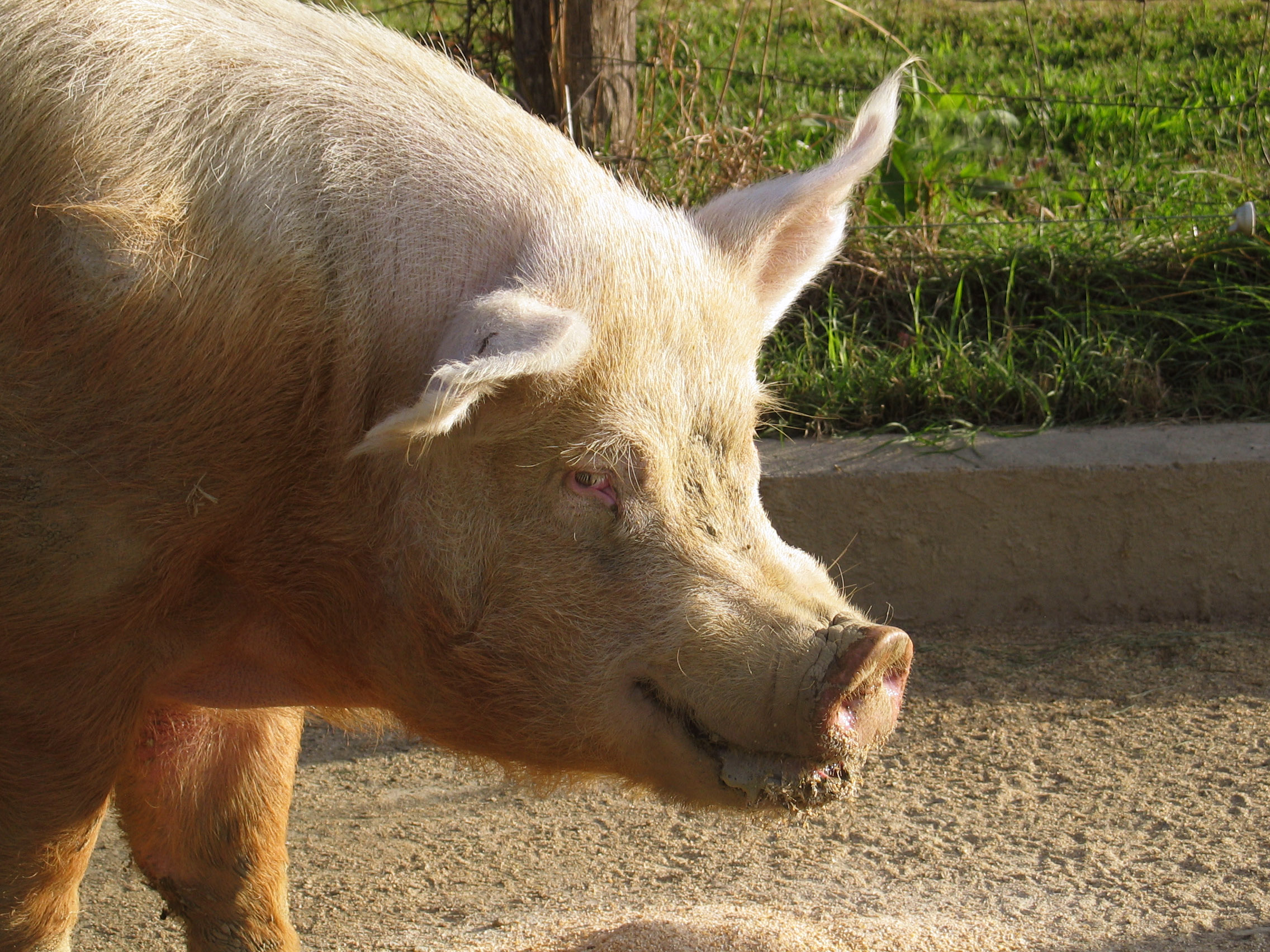
Hog… [His name is not Walt]

What appeals to me, really, is the way these lines make the litany of our petty evils so beautiful to behold. Perhaps that indicates that the aesthetics of a poem move the purpose beyond mere description and into the realm of art. I will be reading more about this in the coming week as I make my way through the book Feeling Beauty: The Neuroscience of Aesthetic Experience by G. Gabrielle Starr.

~

Meanwhile, I am threading my way through the thorny knottiness of everyday life, trying to shed my contrariety as I proceed.

Knotted vines

Knotted vines

Local vs. National

Election season is upon us, and this being a non-presidential voting year, US citizens tend to avoid the polls in droves. I’ve been talking with my students about herd mentality, informational cascades, and the pros and cons of non-conformity recently; local elections make a good example of the theory that people tend to do what they think others are doing (see this post for more on conformity and dissent). Which may include not doing what others are not doing, such as going to the polls.

This train of thought got me thinking about poetry, oddly enough. Years ago, when I was more ambitious for myself, I spent considerable time and effort trying to get my work published in national journals. There was, for me, a sense that the cachet of publication in certain “top tier” magazines would somehow confer legitimacy on my work (vocation or avocation, depending upon how one defines being a poet in the USA). But I am not strongly suited to the organization, persistence, and promotional oomph required to get my work into the limelight; also, I may have lacked the required talents as a poet. At any rate, during that time in my writing life, I was advised to avoid ‘local venues’ of publication because these were not top-tier and might devalue my work.

To which I now say: humbug!

Annshumbug1

Humbug by Steve Barr, cartoonist

~

Local voting is crucial to a democratic society. Local politicians and local legislative changes affect a voter’s life more immediately than national elections do.

By the same token, local arts potentially have more impact than nationally-known artists and art events; yet citizens are often rather clueless, and often woefully unsupportive, of regional arts and artists. (To visit Steve Barr’s website, click on the humbug.)

I am no longer a young, ambitious poet who aspires to national prominence. My ambition revolves more around becoming the best poet I can be given my abilities, education, and circumstances. Furthermore, I now firmly believe that local is a crucial step in global: the two can no longer be separated, as parts of the environment, the social and economic and cthonic ecosystems that are intricately dependent upon connections and relationships.

I am happy to report, therefore, that I am one of three regional, if virtual, “resident poets” for the autumn season of the online e-zine Lehigh Valley Vanguard–a local journal devoted to the “subversive arts.” Several of my poems will appear among its posts over the next three months. Please check occasionally for poetry postings! The first of these is “Post-Exodus,” although an earlier poem, “Regional Conflicts,” appears here.

~

My ambitions for my own poetry center, these days, on what I want the words and the work to accomplish regardless of status or publication. My aesthetics have perhaps changed along with my assumptions…and my evaluations of the value of local and national and global recognition.

Local is where I live. Local’s good. Check out the Vanguard, and take a little time to find out what’s happening wherever it is you reside.

~

Here’s another bug. 🙂

More on poetry & the brain

I remain pretty busy with the October poetry workshop and mid-term evaluations, so I’m going to cheat a bit by adding a link to Poet’s Quarterly, which is featuring in this issue one of my brief essays.

Click on this sentence to take you there. (Probably there is a way to embed the post, but I have not quite figured that out and lack the time today to look into it.)