Defending the poetry major

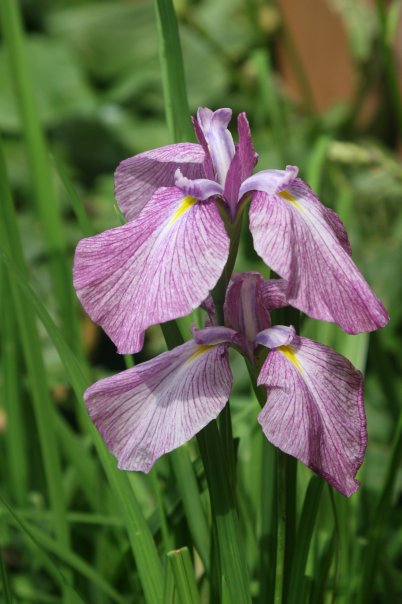
Photo by Annie Abdalla

~

Pity the poor poetry major, long treated with snotty sarcasm as a head-in-the-clouds idealist. “What will you do with that degree?” people ask, shaking their heads at the scholar’s naivete.

Okay, few people dispute that the economy is tough right now. Tough for experienced employees, tough for many small business owners, tough for newly-minted college graduates. I know this first-hand, and I deal most often with the youngest age group I’ve mentioned—undergraduates.

There are hundreds of articles, blogs, and opinion pieces offering tips to students or bemoaning the price of a college degree (and I grant you, the cost is appalling) or telling undergraduates that they need to specialize in certain career areas. The New York Times, for example, ran this article, which warns students away from majoring in such coursework as history, philosophy, and poetry.

Another pop-journalism site suggests that graduates learn “to put your useless degree to use.” Although there are some reasonable, general ideas here, these brief tip-sheets operate under the unlikely premise that we can tell today’s 18-year-old what he or she will need to know in order to be securely employed in, say, 2045.

Mild contrarian that I am, I defend the poetry major. Students have to be diligent to achieve good grades in the poetry track, diligence being just as necessary there as in the so-called hard sciences, which also require analysis (they use more math but require similarly solid logic chops). Poetry is difficult to study; the subject requires keen reading comprehension skills, a good foundation in rhetoric, the ability to analyze, to communicate, and to connect diverse disciplines, cultures, and texts. The same goes for history and philosophy: these are truly challenging areas of study, not good choices for the slacker or the faint of heart.

The people who choose the humanities majors are often accused of living in ivory towers, but that’s a stereotype. Most of them don’t end up in academia. Some of them are entrepreneurs, some are lawyers, some are doctors. Poetry major Ross Martin became a Viacom executive; though that is probably not a terribly common career outcome for poetry folk, humanities majors in general end up in some form of management position 20% of the time, according to research by Georgetown University’s Center on Education and the Workforce.

For a look at the career outcomes, percent employed full-time or part-time, and job earnings for humanities majors, see:

(Link to GU’s CEW on Humanities degree earners)

Yes, it is true that in terms of earnings, the poetry major or history major is unlikely to outperform the person who has a Petroleum Engineering degree. I have to ask, however, given the limited supply of petroleum we’re told exists on earth, where those petroleum engineers will find work in 2045. And job satisfaction—earning enough to get by and feeling satisfied with one’s work and contributions to society—is, while less easily measurable, a byproduct of an excellent education that keeps minds sharp, hearts engaged, and communities intact over the long haul—including during tough times.

The world and technology move rapidly. I typed my undergraduate papers on a manual typewriter and, graduating during the hideous recession of 1979, got jobs that paid like menial labor but allowed me to sit at desks and utilize my spelling, vocabulary, and arts analysis skills, which led to jobs in typesetting that taught me computer skills back in…well, let’s just say “8-inch floppy disk” and leave it at that. Did I have any idea I would be blogging on the cloud using a PC in 2012? No. Have I been able to learn new things by using logic, persistence, research, and creative thinking? Why, yes. Thank you, humanities coursework.

Critics of many stripes claim colleges need to focus more on career development through the creation of specialist tracks. Careerism is a fine concept for a capitalist society, and I have no problem with offering better certification programs for specialists of all kinds; but careerism per se is not what a college education is “for.” A college education serves, when it is effective, to broaden a person’s experiences, deepen a person’s thoughts, and to develop in that person a versatile range of essential critical-thinking and problem-solving skills. Those skills are applicable to many jobs. An excellent gaming programmer I’m acquainted with says his two years of intensive philosophy and literature study helped him enormously when he switched to the technology track: it’s all logic and analysis, and creative thinking is what allows a programmer to excel beyond data-managing. Here’s an article that explains a bit more about the usefulness of the liberal arts education as it pertains to business.

When the job market is tight, we need problem solvers and creative, critical thinkers. It will not matter what these people majored in as undergraduates; what will matter is how flexible they are at responding to the changes around them…or at instituting changes themselves.

Poetry majors can do that for us.

Really.

On Tolerance

Tolerance, as defined in the OED, means endurance, as of pain or treatments; it is also the tiny allowance of imperfection in coining or machinery, the acceptable out-of-round. But the term has become popular recently under its third definition, “freedom of bigotry or undue judgment upon the actions or behaviors of others.” It has indirectly become the target of people who complain about over-use of “politically-correct language.”

Tolerance is not one of the Virtues, but it tends to have a slightly virtuous connotation, sometimes with an irritating hint of self-righteousness. An acquaintance of mine said once, “Quakers! They’re so damned tolerant,” as if it were an attribute to be avoided by sparkling, sexy people who are analytical and quick to judge. I have known some mightily opinionated Quakers in my time and will attest that tolerant folks can hold strong opinions. The connotation of tolerance to mean somehow wishy-washy or evasive is an unfortunate one. And it’s wrong.

My parents taught tolerance. This was a necessary trait in a family full of passionate, witty, highly-opinionated and creative people. I learned that I could disagree with my sister completely and still love her and accept her point of view, even if I could never in a million years adopt her perspective. My father marched on Birmingham and Washington in the 1960s, and we learned that people who do not look like us are no less like us than our neighbors—and we learned to be polite to our neighbors, some of whose values and opinions we didn’t particularly care for, but whom we tolerated as members of the community. Tolerance is a component of empathy in two directions: empathy inspires in us the ability to practice tolerance of others, and the practice of tolerance itself enables us to feel empathy with others.

Without empathy, no altruism; without altruism, no society. Tolerance has an important place in human nature. The simplistic slogan “Teach tolerance” has value only if we can remove the negative slap-dash judgment of tolerance as some sort of liberal-PC value rather than as what it is, a practical behavior necessary for social interaction. Good manners, for one thing. And yes, that means that sometimes we must endure the psychic pain of listening to a person we desperately want to judge negatively, or bear with the person who is slightly “out of round.”

Practicing tolerance doesn’t mean giving up our own values, it merely forces us to withhold judgment a little longer than usual and to endeavor to discern, and acknowledge, another person’s perspective. Can we argue? Can we disagree? Certainly. Will we respect that perspective? Maybe not. But we can learn a great deal from the exercise.

Here is a poem from my collection The Capable Heart. Tolerance and an attempt to understand another perspective are not just for human beings. This poem looks at my daughter’s point of view, my own, and the horse’s. More broadly, the piece is about all of the things I’ve mentioned in this post—if that’s how my reader would like to interpret it. (Of course, I am ready to acknowledge other interpretations and perspectives!)

WAYS WE ARE ALIKE

I wanted a way to embrace
my daughter’s fascination.

To overcome my own fear, with carrots,
with a lead rope and a soft brush.

I touched the withers and the
warm, broad chest;

I held the lead. Let pulsing lips
explore my hands, my jacket.

The narrow nose stretched
under my fingers and

I rubbed the strong, shallow bone
above curious, sensing nostrils.

My daughter tells me the many ways
horses and I are alike.

They are beautiful, and
they understand fear.

Orri. Photo by Ann E. Michael

Why I read poetry

A few months ago, I posted a light-hearted look at mondegreens and malchichés. Clichés are useful to some extent because we believe we know what those phrases mean, and they serve the purpose of general communication. To confess “I’m feeling blue” can elicit compassion from a good friend, or help us to state a mood so that we might, possibly, move on from it. Popular song lyrics employ such figures of speech often, and often to good effect.

But clichés also leave something to be desired, don’t give a full enough account of the human situation. In the poem “Madame la Fleurie,” Wallace Stevens describes a man who looks into a mirror and believes what he sees depicts his actual life. But it is only a reflection; the image is “a page he found in the handbook of heartbreak.” A page in the handbook of heartbreak: that begins to express a more complex and specific feeling.

Poems can express every subtle shade of blue a person might feel. There is Emily Dickinson’s Hour of Lead and Elizabeth Bishop’s art of losing, Langston Hughes’ Weary Blues and Theodore Roethke’s desolation in immaculate places.  For thousands of years, poets have understood, and been able to convey, the vivid and expansive range of human emotions that our lively and energetic brains and souls experience—from unbearable grief to listless ennui, from a moment of surprising cheerfulness to the uplifting embrace of romantic or spiritual love. How poets accomplish this subtle connection between people, this empathy, amazes me. Especially as this mutual exchange of feelings takes place through the abstract medium of words.

This is why I read poetry. When a friend’s child died, I consoled myself with Ben Jonson’s words, “farewell, thou child of my right hand, and joy” and nothing else seemed as apropos, even though the poem was composed almost 400 years ago. When life gets tough, Andrew Marvel’s lines about how feeble hope has tinsel wings in the face of magnanimous Despair just about sum up my feelings. Such poems may offer little cheer, yet they can comfort. Through gorgeous language and imagery that is honest if sometimes fanciful, good poems remind us that we are not alone in our circumstances.

Poems identify feelings, places, situations, and allusions to which another human being—perhaps hundreds of years or thousands of miles away—can relate. That relationship has a wonderful effect, for poetry offers a way to connect the rich and complicated scope of our humanity with the lives and sympathies of others, especially during troubled times. I know that my own heart begins rebounding from stress and gloom when I read Neruda’s lines: “through me, freedom and the sea/will bring solace to my downcast heart.” As we navigate through political and economic and personal hassles, we might want to open a poetry anthology now and then, or call up a website such as A Poem a Day or Verse Daily for a fix of shared humanity in an increasingly virtual world. After all, “What the heart longs for,” says Gregory Orr, “the poem accomplishes.”

One person who has taken this poetry inspiration into the wider world is Nicelle Davis. Check out her year-long poetry project at The Bees Knees.

The seed of disorder

“I am the seed of disorder.” –Paul Eluard

From an essay by Ezra Pound (published in The Exile):
“The principle of good is enunciated by Confucius. It consists in establishing order within oneself. This order or harmony spreads by a sort of contagion without specific effort.”

As Lewis Hyde, who excerpts the above passage in The Gift notes, Pound offers an implicit paradox here that he apparently could neither acknowledge nor accept. If “good” is order, how can it spread by “a sort of contagion”—surely a chaotic method of disseminating something supposedly well-structured?

Hmm. I turn now to Wallace Stevens—or rather, to Helen Vendler on Wallace Stevens—to examine further this “idea of order.” Vendler’s interpretation of the order in Stevens’ “The Idea of Order at Key West” includes several approaches. There is order as in organization: the singer in Stevens’ poem creates and hence organizes her physical world. There is order as in command: she orders her world into being by singing, by language. Then there is order as magnitude: “The two Wordsworthian orders of mind and world…exquisitely fitted and yet subtly uneasy with each other,” notes Vendler. The tension Hyde finds and explicates in Pound’s Cantos also exists in Vendler’s examination of Stevens.

Eluard, a poet completely different in style, sensibility, and background from Pound and Stevens, identifies in his poem the workings of that tension, the DNA carrier, the seed of disorder which, it can be plausibly speculated, might well spread its own form of harmony without specific effort, traveling as seeds do through a myriad of dispersal mechanisms such as wind, burrs, digestion and expulsion, burial by mammals, flotation, and the like. (As a gardener, I am constantly amazed at these marvelous mechanisms.)

Well-fitted but uneasy together, disorder through its contagion moves harmony and order to grounds on which what inheres in the seed can survive, even thrive, as it organizes itself into maturity. The seed “follows orders” nature has imposed through genetics. Mind and world, order and self, establish themselves as “good.”

Without that seed of disorder, all is stasis. No art, nor mind nor world, can be produced unless the rebellious seed slips from stem, twig, womb, sac, or lamellae to sing its own idea of order into the world.

For some fabulous photographs of lamellae, see:

Hive Mind on FlickR

Affirmation

larch cones by Ann E. Michael

I am almost finished reading Parfit’s Reasons and Persons, and I think his conclusions about the self (person) in society and as individual are valid; I have long questioned the self-interest theory of philosophy but only on an intuitive basis as I am no philosopher, merely a student of the discipline.

What strikes me after having read this lengthy and rationally-argued book is that there are so many ways philosophical reasoning does actually intersect with that “most irrational” of impulses, art.

Here is a lovely excerpt from poet David Ignatow, from an essay he wrote in 1971:
“There is no contravening another person’s sense of himself and his world. We must accept it on his terms, though we need not accept it for ourselves…men and women have discovered themselves as individuals, and that this sense of individuality is something among them…In affirming themselves, they affirm all others.”

He later adds that poetry “is formed by the terms with which the person sees himself.”

It seems to me that Ignatow possessed an excellent understanding of the psychological and emotional as well as the rhetorical aspects of poetry–indeed, of any art.

Lewis, Buber, Dickinson

“Meeting with God does not come to man in order that he may concern himself with God, but in order that he may confirm that there is meaning in the world. All revelation is summons and sending.”   –Martin Buber, I and Thou

I suppose I ought to know this, but I cannot recall reading about whether C.S. Lewis was influenced by Martin Buber’s work, specifically I and Thou. Some of Lewis’ writing seems to suggest that he agrees with the concept of relation: as Buber describes it, the stepping out to meet Thou as Thou, and the insistence that “Man’s [sic] desire to possess God” keeps said man from true relation with God (a point described in The Great Divorce through the allegorical character of the Episcopal Ghost). God has become an “It” rather than a Thou for the Bishop, though he feels he is a true believer, an error made in lesser ways by other characters such as the Big Man.

Many of the students I tutor are writing their final papers for a Theology class that uses Lewis’ texts as a foundation for the course, which is why I’m feeling a bit conversant with Lewis lately, many long years after reading his fiction and his theological writings. And a random quote (above) that I read on a colleague’s email put me in mind of Buber, whose I and Thou reads, often, like poetry….which got me thinking about Emily Dickinson.

How’s that for a train of thought? Perhaps I need to examine the concatenation step by step.

1) Buber, I and Thou, a work deeply influenced by the author’s immersion in non-Western and Cabbalistic “mysteries” (the idea of the radii and the Centre closely parallels the Hindi conceptualization of Indra’s Net, just to name one example). Buber returns to the Western religious traditions throughout, though he mentions the way of Buddha and others as he examines the ever-present confrontation with the Thou of relational experience.

2) Lewis, The Great Divorce. Students interpret this work as one in which the author outlines his agreements and differences with, among other things, ideas about free will stemming from Socratic/Platonic through Augustinian and more modern concepts of Heaven/Hell. They tend to miss the concepts of what makes union/relation significant in the choice to unite with God, but they “get” the gist of the allegory.

3) Emily Dickinson, who more informally and more frequently uses “you” and “I” to explore these depths, but whose contrarian views on soul and spirituality knit the religious with the genuine in complex and exciting ways through the art of language.

An example, in which she does employ the King James Bible diction:

725

Where Thou art—that—is Home—
Cashmere—or Calvary—the same—
Degree—or Shame—
I scarce esteem Location’s Name—
So I may Come—

What Thou dost—is Delight—
Bondage as Play—be sweet—
Imprisonment—Content—
And Sentence—Sacrament—
Just We two—meet—

Where Thou art not—is Woe—
Tho’ Bands of Spices—row—
What Thou dost not—Despair—
Tho’ Gabriel—praise me—Sire—

How similar to Buber, those lines “And Sentence—Sacrament—/Just We two—meet—”

and the idea that “Where Thou art not—is Woe—”

Poetry precedes philosophy more often than not, though philosophy may object.

Lawn vs. meadow, and a doe

I was outdoors this morning, raking leaves and silently cussing the grass. Spouse and I hold different viewpoints about the necessity and maintenance of a lawn, and while I gave into his desire for a lawn many years ago, my argument has proven correct over time: we live in a meadow, and lawn-grass is not happy here. Now, as I rake leaves from the spotty, weedy, too-long ryegrass, I get exhilarated by the exercise and the crisp autumn air but steamed at the need to rake at all.

We don’t rake the meadow; it takes care of itself. This is what “low-maintenance lawn” means, that nature takes care of things without human intervention.

Besides, I have never harbored a yen for the classic British lawn—acres of clipped greensward don’t appeal to me. I always feel the great lawn is missing something: trees, a bed of flowers, a crescent of blooming shrubbery. Great lawns’ main appeal for me is that there are edges all along them. Edges are interesting. Large, plain, even swaths work mostly to draw my eye elsewhere. While our meadow acts like an open space, it is ever-changing and often full of movement. Lawns, by contrast, are static. We mow the meadow once a year; the lawn requires considerably more time and gasoline consumption to stay in bounds because it is meant to be more-or-less unchanging.

Except that we live in a meadow. The expensive grass seed loses out to plantain and dandelion, chickweed, henbit, ivies, wild onion, queen-anne’s-lace, cinquefoil and other invaders that thrive on acidic soils that go dry in summer and turn to mud for months, circumstances that the thin-rooted, superficial, stoloniferous lawn-grasses cannot abide for long. I don’t relish the fight against nature, and my suggestion is to “naturalize” our lawn, even though—of course—the majority of these weeds are non-native species. But then, so are the lawn grasses.

I should mention the grazers, as well. Rabbits. Mice and voles that tear  up the root systems of lawn grasses. Deer:

A digression on the subject of deer—

This morning, I was startled by the sight of a large doe skirting the frost-covered goldenrod stalks quite close to the house. It’s deer-hunting season here, and there’s often an increase in the herd activity around our property as individuals and small herds lie low or avoid areas where there are hunters. This is one individual with whom I have long been familiar, a three-legged doe whose territory has included our yard for at least five years.

(In the photo, she is third from the left, the largest one; her right foreleg is missing)

She has borne a fawn every year but this past spring (the year before, she had twins—a male and a female). Some years back, I watched as she delivered her offspring in the meadow, which elicited a poem. In fact, she’s inspired several of my poems, so I owe her a debt of gratitude.

She was back-lighted by the early sun and, as usual, a bit graceless as she ascended the hill on her three good legs. The sun behind her outlined her in white, just as the  dry weeds were also rimmed with white, and she didn’t seem to mind that I had joined her. She just kept going until she vanished into the woodlot. I walked to the bottom of the hill and looked for her tracks in the soft lawn, followed them along the edge of the meadow, three hoof prints instead of four, one a bit deeper in the soil.

Well, we make our compromises, we do what we can with what we have, we choose our battles. My spouse has his lawn, I have my meadow, the doe treads her uneven path through survival at the edge of the suburbs.

I may as well pick up my rake and stop cussing the grass.

Mondegreens and malclichés

According to Merriam-Webster, a mondegreen is:
a word or phrase that results from a mishearing of something said or sung [“very close veins” is a mondegreen for “varicose veins”]

A similar slip of the ear resulting in a mishap of the pen (or, more likely, keyboard) has been called “malcliché.” My teaching experience leads me to ascribe the uptick in these peculiar forms of malapropism to AutoCorrect and to a more aurally-based society. We have moved from ancient oral communication to text and back again to what we hear/see rather than what we read. As our media becomes a place where diversity abounds, the conventional structures of English–idioms and phrasings in particular–fall apart a bit as we speak with different speeds, different accents, and under different cultural, regional, rhetorical, and other authorities.

I have been collecting a few from student papers and from conversations I overhear. Yes, I eavesdrop–I’m a writer!

I supply a few here for your amusement and puzzlement, and as inspiration. A few of these phrases are potentially rich in imagery that’s strangely appropriate, such as “burning your britches,” “poor self of steam,” “rake him into the coals,” and “beg to defer.” I have successfully used mondegreens as poem prompts. I do not recommend using them in English comp papers, however, as they result in coffee spills produced by professorial giggles and rampant use of the red pen admonishing “sp” and “clarify!”

armed to the feet
above bored
stuck to me like a leash
all intensive purposes
board to death
buy the same token
queen of the crop
caught me on guard
don’t count your eggs before they hatch
a fool and his money are soon apart
give it a swirl
dead wait
leaving like flies
go out on a tree
grin and bare it
taking his name in vein
one fell sweep
in the nickel of time
hair-brained
last ditch effect
pearls before swans
unnecessary evil
no holds bard
on a role
past the buck
the past of least resistance
sharp as attack
he got just his desserts
what goes around must come down
on tender hooks
preaching to the chair
no ifs, ands, or butts
free rain

York (not New York)

I gave a reading Sunday in York, Pennsylvania, one of many small Keystone State cities that hasn’t quite overcome the series of economic and social body-slams it’s experienced in the last several decades. Reading, Pa, which I wrote about in September, made news as “poorest” city; York has to contend with a recent moniker of “murder capitol” of the state. I know a bit about the depressing state of small, dying cities–I live near Allentown, PA and grew up near Camden, NJ. Just to name two…

But back to York.

YorkArts hosts a reading series twice monthly on Sundays at 3 pm. The gallery has a small footprint but big heart, and there was a pleasant crowd of attentive listeners and open-mic participants who respected the time limits and chose good work to share. Many thanks to Jeff, who keeps the space going (and creates art in several forms) and to Barbara DeCesare, a poet and friend who is eight-ways-of-awesome, and this is an understatement. See her website: Barbara DeCesare.

I’m still mulling over my multiple responses to yesterday’s event: depressing town, gorgeous autumn day, connections with old friends and newer friends, thoughts about the poems I heard and the poems I read and the artwork I saw, the daydreaming I did on the long trip there (94 miles) and back, the music I listened to. The apple Carol gave me. The homeless-looking man dragging his cart along Philadelphia Street.

Places like York and Reading and Allentown need the arts desperately, though most of the citizens, business-people, and politicians don’t realize it.

YorkArts on Beaver Street manages to make of itself a beacon for the arts in York. The gallery shows are genuinely fine, and the place sponsors poetry readings. Send them money! Or support a similar organization wherever you’re located. Especially if you’re located in or near a small city that’s fallen on hard times.

That’s my stumping-for-the-arts for this month. Back to poetry, gardens, or philosophy soon.

Interruptions

The recent freak snowstorm brought silence to my house in the form of power losses: no refrigerator humming, no dishwasher or washing machine, no furnace fan, no well-pump running, no electronic sounds. After working outside to clear fallen boughs and cut back broken shrubs, I felt physically tired each evening.

I find that physical exhaustion often inspires me to write because I am mentally alert but able to find physical stillness. I can pick  up a notebook and a pen and stay in a cozy chair–or under a pile of warm blankets–and jot down poems and ideas. I don’t get as “antsy” as I do when I have not exerted myself so much.

Today, the power came on again after almost three days. I had cut back the broken buddleia stems and cleaned the house. I had a few quiet hours for reading and concentration.

I was interrupted by picoides pubescens, the downy woodpecker. A pretty bird that hammers at our wood-sided house, especially when the weather’s been nasty. I find it difficult to get my thoughts onto paper when a one-ounce feathered creature is pounding away at the cornerboards, drilling 2-inch holes into the cedar and distracting the writer at her work.

Blame the bird for my lack of productiveness today? Well, maybe I needed to mull over my ideas a bit longer.

http://www.allaboutbirds.org/guide/downy_woodpecker/videos