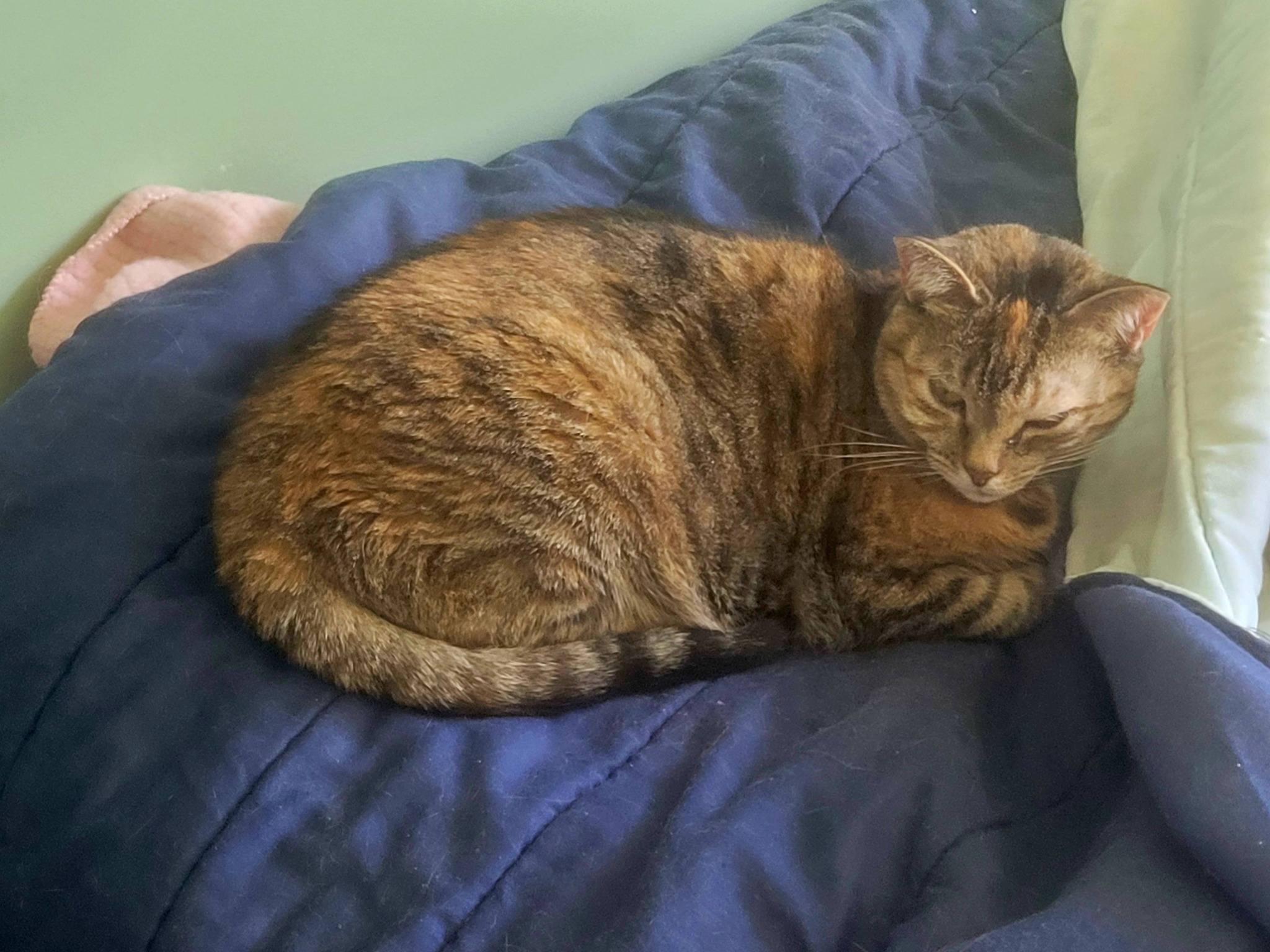
Much-needed rain has arrived, and therefore I’ve been inside all day instead of out in the yard and gardens. I thought maybe I would feel motivated to send some of my poems out into the wider world. Turns out that the motivation was a decided maybe, leaning toward lethargy. Instead, I curled up with a cat and Jeff Burt’s collection The Root Endures (Sheila-na-Gig Editions).
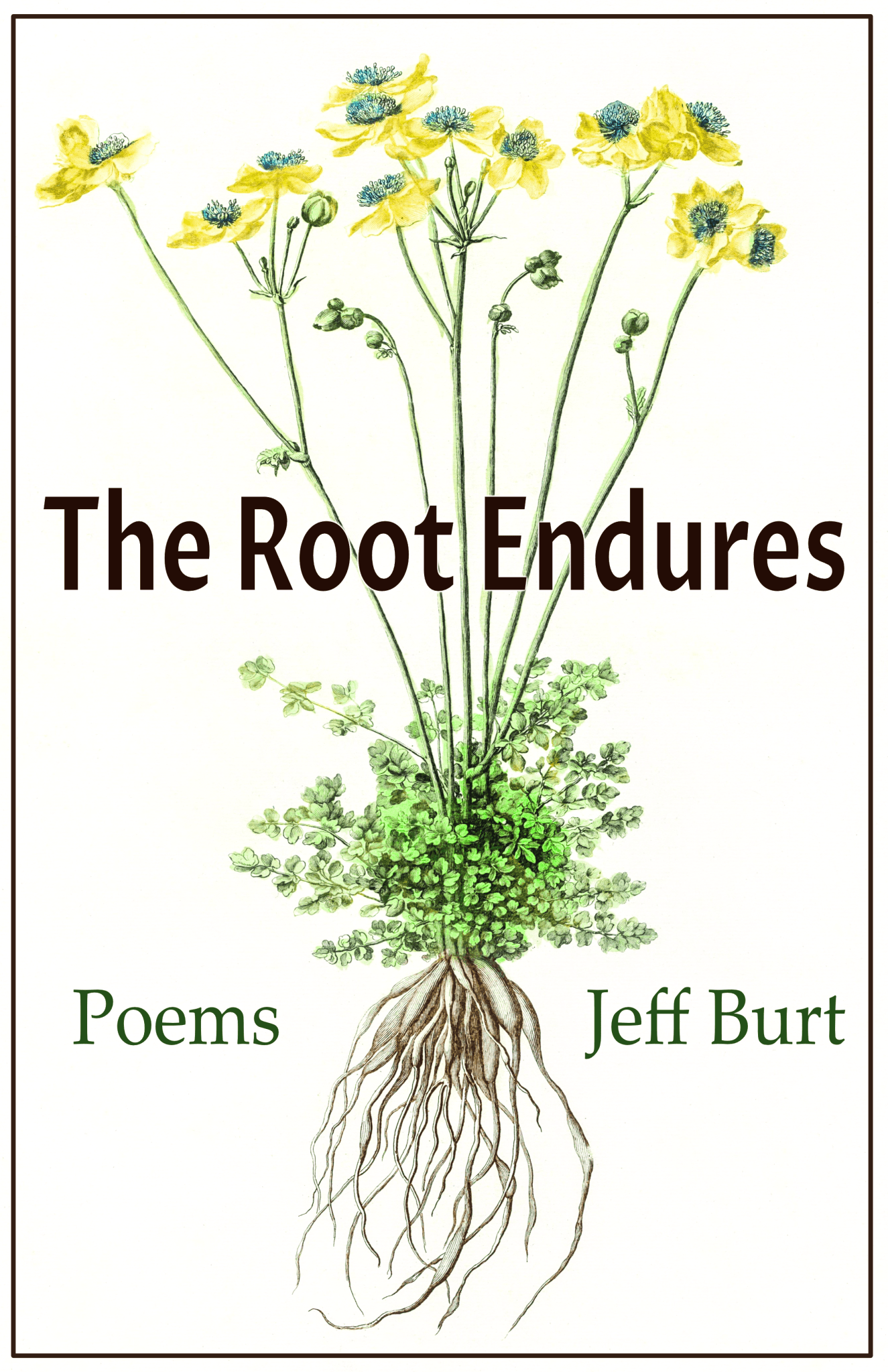
Actually, I read this book a week ago but decided to take a closer look so I could post about it, because I like it a lot. Jeff Burt’s poems contain nature-images and close observations of creatures, plants, and weather yet keep reminding the reader that there’s a decidedly human component here, an interior character who speculates about what human beings are doing here, thinking about, recalling. And how the world is constantly in flux. The rural Wisconsin of the speaker’s childhood feels vividly authentic, and I learned about lime bogs and de-tasseling corn. (I love it when I learn things from poems.) The book seems autobiographical in narrative but never becomes as specifically personal as a memoir would.
And frankly, I guess I might identify more deeply with this book than other, perhaps younger or more urban readers would. I grew up in the mid-Atlantic suburbs, but I spent all my childhood summers in the Midwestern small towns where my parents’ extended families lived. I infer that Burt is pretty much my peer, age-wise; some of his remembered details conjure up a kind of resonance I enjoy. What I’d like to learn from this collection is how to sustain a longer poem, which he does quite well. Not a strength of mine, though I’ve attempted it once or twice with some success. A poem that has numerous short stanzas and travels several pages needs to keep my attention, whether I’m reading it or writing it. Burt’s title poem (the last poem in the book) does this, as does the poem “As If Copper Wire Sang the Unleashing of Time” and “Into the Standing Grain.” Maybe studying writers like Jeff Burt and others can teach me how to write better medium-long poems when a longer poem seems necessary to whatever I’m trying to express. I don’t think I’m interested in writing really long poems–think A. R. Ammons, C. K. Williams, Robert Lowell–but I’d like to explore length a little more.
Whenever I read poetry, if I enjoy the work, I try to learn what the poet is doing that makes me like it. Sometimes it’s the perspective on a topic that surprises me, sometimes it’s the way the poet handles language or forms. Some writers have memorable phrasing or startling imagery, and some poets lift a lot of emotional weight with incredibly spare, condensed, or common words. Which is kind of amazing. Writers like Rebecca Elson, Martha Silano, and Tracy K. Smith create art out of physics and astronomy so that science enhances expression in new ways, or at any rate ways that are new to me. Tyehimba Jess’ Olio rocked my world with the possibilities of nonce forms, shape poems, historical narratives, and the ongoing tragedies oppression and racism have perpetrated.
I’ve always loved pondering and thinking (as a child, I was often accused of daydreaming but it isn’t the same), and poetry moves me into that happy space. Being curled up with a cat doesn’t hurt, either.
 ann e michael