The knot of contrariety

~
Sometimes, human beings feel contrary: irritable, grumpy, stubborn. It does not matter that we may be well-versed in rational critical thinking, or aware that a Zen approach can offer balance, or that an understanding of the psyche, or studies of consciousness, or even immersion in some sort of spiritual practice might help us to clear whatever baggage happens at this moment to burden us.
We’re just cranky, and for the moment, we feel justified in our contrariety. Here’s Walt Whitman:
I too knitted the old knot of contrariety,
Blabb’d, blush’d, resented, lied, stole, grudg’d,
Had guile, anger, lust, hot wishes I dared not speak,
Was wayward, vain, greedy, shallow, sly, cowardly, malignant;
The wolf, the snake, the hog, not wanting in me,
The cheating look, the frivolous word, the adulterous wish, not wanting,
Refusals, hates, postponements, meanness, laziness, none of these wanting…

~

What appeals to me in the passage above is not so much Whitman’s confession–any of us might admit to others our foibles and our sins–but the extravagant and beautiful mode of his expression: lists, near-synonyms, expansions on meanings, metaphors following the verbs, nouns, and adjectives, “none of these wanting.”
128-2848_IMG

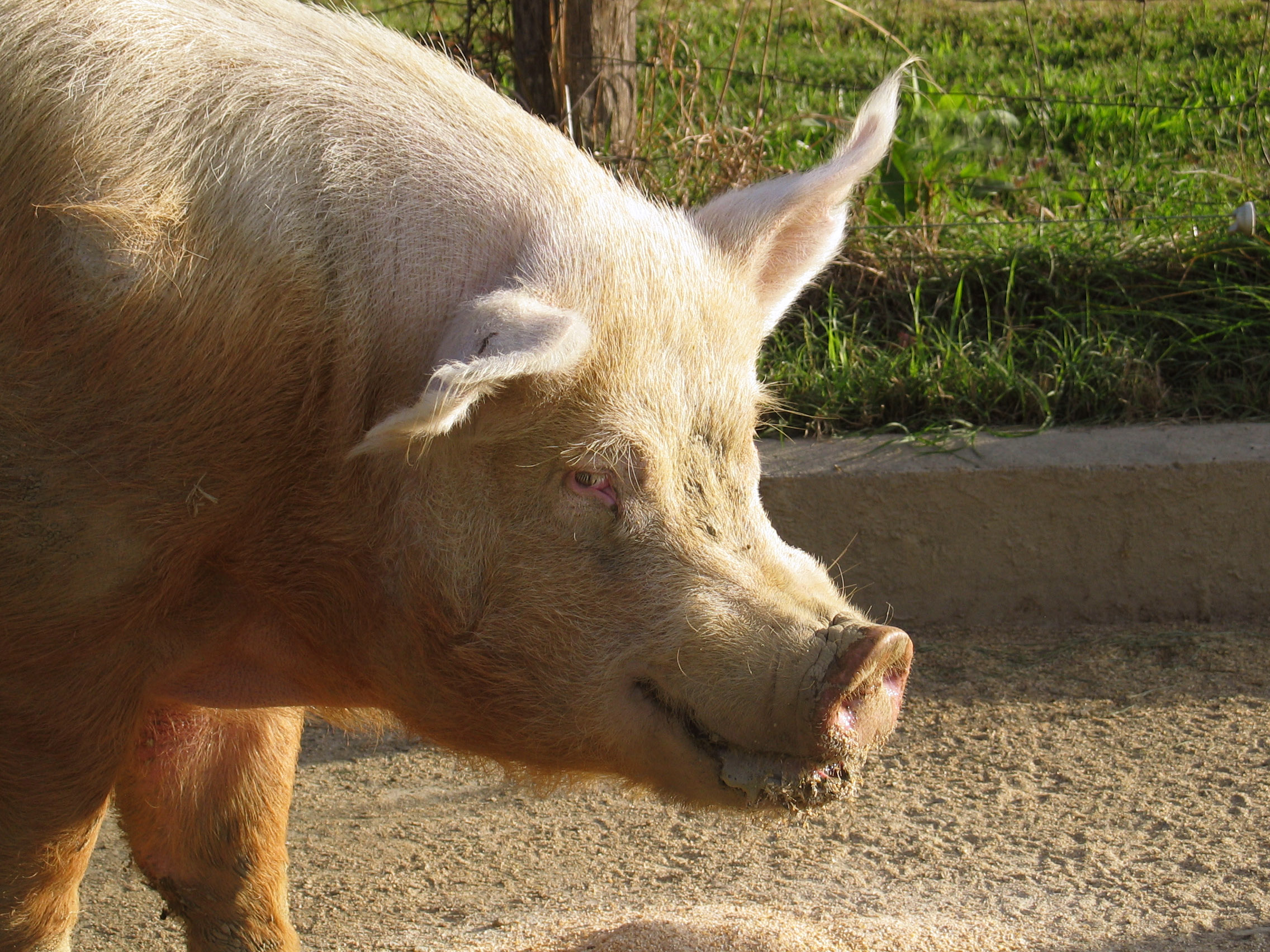
Hog… [His name is not Walt]

What appeals to me, really, is the way these lines make the litany of our petty evils so beautiful to behold. Perhaps that indicates that the aesthetics of a poem move the purpose beyond mere description and into the realm of art. I will be reading more about this in the coming week as I make my way through the book Feeling Beauty: The Neuroscience of Aesthetic Experience by G. Gabrielle Starr.

~

Meanwhile, I am threading my way through the thorny knottiness of everyday life, trying to shed my contrariety as I proceed.
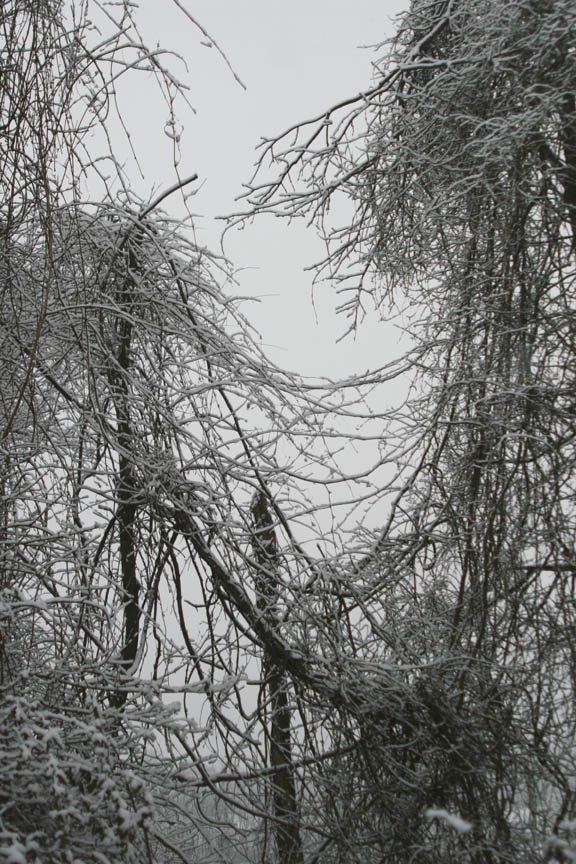
Knotted vines

Knotted vines

English major argument redux

Yet more weighing-in on why one might wish to choose to major in English as an undergrad, this time from Mark Edmundson:

http://chronicle.com/article/The-Ideal-English-Major/140553/?cid=cr&utm_source=cr&utm_medium=en

Edmundson writes:

Real reading is reincarnation. There is no other way to put it. It is being born again into a higher form of consciousness than we ourselves possess. When we walk the streets of Manhattan with Walt Whitman or contemplate our hopes for eternity with Emily Dickinson, we are reborn into more ample and generous minds.

(He even quotes Heidegger!)

This does not mean all English/literature/humanities folks think alike. In fact, the beauty of it is, we all think differently.

I celebrate myself…

April is National Poetry Month in the USA, and I begin the month with Walt Whitman’s famous phrase and will attempt to duplicate the joyous urgency of his call to celebration. That means I am going to try to post just a little more frequently in April.

Poetry month began this year with a wonderful act of creative largesse on the part of a friend who sent me a poem…dedicated to me. Receiving a gift like this one is humbling; and it has been quite a long time since anyone’s written a piece for me. David Dunn, to whom my collection Water-Rites is dedicated, wrote a few poems for me or inspired (indirectly or directly) by our friendship or my family and surroundings. But he died over a decade ago, and since then I suppose I have had to learn to celebrate myself.

Not that this is a bad thing–celebrating the self–but for some of us it presents certain cultural or psychological obstacles. In this, Whitman has been an important teacher for me. As a great observer, loafer, lover of the world and all its beings, he was able to include himself among the beloved. My background, Protestant, agrarian, modest, surrounded by the biblical entreaty to remain always humble before God, combined with a natural shyness, means that I have had trouble admitting of self-celebration in any form and under any circumstances. I don’t take praise comfortably. The left hand shouldn’t know what the right hand is doing.

However, Whitman seems contented in his skin and in his world and follows a different parable as model: he does not hide his light under a bushel.

Walt Whitman in mid-life

Walt Whitman in mid-life

Furthermore, his passion admits of compassion and of aesthetic appreciation for all of the “Kosmos.” Each breath, scent, texture, color, hue, person, idea, object, sentient or non-, living or inert or dead long-past or recently, religious or scientific or imagined comes to life in language through line, syntax, lists, descriptions, words. I think there is a hint of zen-like acceptance in Whitman’s most lasting poetry, the vulnerable willingness to accept all that we experience and to do so non-judgmentally.

Thank you, Beejay, for the poem. I feel inspired anew. And as I celebrate all poets and the valuable, irreplaceable, gorgeous, ancient art of poetry this month, I shall endeavor to embark upon the celebration of myself (davening to ol’ Walt with humble pleasure). Therefore, a reminder:

My book Water-Rites is still in print, and Brick Road Poetry Press sells it (as does Amazon.com, where poetry-lovers can purchase the book in e-book form for Kindle). Dawn Leas reviews it at Poets Quarterly this month. Click for the link here!

May April be full of revelations in the form of poems for you.  water-rites by Ann E Michael

Still more on ambition

My experience with college students and their wildly varying achievements, coupled with my long-time interests in temperament and neurology, led me to rejoice in the extensive sources listed in Paul Tough’s book How Children Succeed. Angela Lee Duckworth’s studies on grit, persistence, interest, diligence, and ambition are particularly relevant to my job–she’s at University of Pennsylvania, and the site for her research is here.

Ambition implies a goal; as used in the studies Tough cites, that goal is the desire or drive to be the best. Persistence is what gets us to the goal–sometimes–or at least keeps us plodding in the general direction. Diligence is what we feel we owe to the work or to whomever assigned the work; i.e., careful attention to the job and the completion of each task. Interest means we can focus without becoming distracted by other ideas, novelties, events, or tasks. And grit is composed of all of these traits but includes a crucial element: the ability to carry on after failure or loss–the determination to surmount obstacles, evade them, or compromise; or even to fail to do so, then dust off and carry on anyway.

I administered the long version of Duckworth’s questionnaire to myself and the sense I get is that the results seem fairly accurate. I’ve asked family members and colleagues to take the survey; the results jive with our intuitive “measures” of these traits among ourselves. It came as no surprise to me that I scored below the median in ambition; but when I mentioned that outcome to a colleague, she expressed surprise. She said I am “ambitious” about my poetry, noting the time I devote to reflection, revision, trying to get the poem “right.” But is that ambition or something else?

So the spectre of ambition in poetry appears again (see my previous posts here & here). Having just breezed through David Orr’s delightful if somewhat flawed book Beautiful and Pointless–a Guide to Modern Poetry, ambition in relation to poetry screams out “Do not ignore!” And the coincidence of having the “grit” research to mull over and connect with the idea of ambition and the arts. Language being flexible within context as it is, I will stay with the Duckworth definition of ambition (and my low-ish score) and state I am not an ambitious person. Nor am I an ambitious poet, but I am ambitious about my poems. I want the poems I write to be as beautifully stated as they can be; I want them to communicate as well as possible on as many levels as I can achieve; and I want them to be relevant or revelatory to as many potential readers as possible. I want the poems to exert upon their readers the desire, even the need, to pause and reflect upon necessary things. Those are ambitious aims, and I cannot claim I ever achieve them in my work. But I try.

The poets whose work is great do achieve these things–and more–in their ambitious poems.

An ambitious poet is something else again. Walt Whitman claimed himself a “loafer,” and he may not have been ambitious as a person–but he was certainly an ambitious poet. Orr positions Robert Lowell among the ambitious poets; I’d say Edna St. Vincent Millay qualifies. These writers, who composed ambitious poems, were also ambitious poets. My personality does not support this from of ambition; hence my lower score on the ambition scale reflects my personal trait, not my attitude toward my work. Duckworth’s scale isn’t meant to measure the latter.

It’s been an intriguing exercise to explore interpretations and to revisit poetry and ambition. Now,  I wonder where Emily Dickinson, or Federico Lorca or Muriel Rukeyser would score in terms of ambition. Meanwhile, I am ready to go back to my own work. Plodding away. (Yes, I score above the median in persistence…)

Walt Whitman in mid-life

Walt Whitman in mid-life

Creative reading

“There is then creative reading as well as creative writing. When the mind is braced by labor and invention, the page of whatever book we read becomes luminous with manifold allusion.” —Ralph Waldo Emerson

~

There’s a difference between simple literacy and genuine reading; that difference is partly discovery, partly imagination, partly hard work, and largely enthusiasm.

“To have great poets, there must be great audiences too,” said Walt Whitman.

Yes, I know I have covered this ground in previous posts. What interests me, though, is the way working on my writing has made me a more active and imaginative reader than I once was. Which may seem an odd thing for a lifelong bookworm to say, but as Stephen King has observed, “If you don’t have time to read, you don’t have the time (or the tools) to write.” The implication here suggests these skills–or crafts, or tools, or processes–are conspecific. Conspecific is a science term meaning belonging to the same species, and I think it’s an apt word to describe what I am trying to say here. We can have stories without writing, but we cannot have writing without context, whether it is grocery lists or epic narratives; in the literate world, our texts provide us with practically boundless context if we use our imaginations to proceed beyond our physical, past, or immediate experiences into hitherto unknown worlds. When writing imaginatively, we have to engage with what we’ve learned through reading. The writer must be a reader.

Perhaps there are other forms of reading: listening, observation. But we are basically still within the taxa of story. My latest reading material is Brain Boyd’s immense and intriguing volume On the Origin of Stories. This book and Bachelard’s The Poetics of Reverie are producing quite an intellectual and creative mash-up in my mind and firing up some slower synapses that tend to lead to writing of one kind or another. I think there will be poems…sprung from luminous manifold allusions…because these authors have forced my mind into working while I explore the depths of their invention.

O, let us labor over our books with joy! For one never knows what will result.

Multi-booking

Ah, the pile of books at my bedside. And the ones on my desk at work. And the one I left by the living room sofa.

When I was a younger bookworm, I was resolute about reading, or devouring, one book at a time—often one book at a sitting, in those less-busy days. I cannot indulge myself in that sort of approach to reading anymore, however; I have learned to multi-book.

Some books lend themselves to multi-booking more than others. I do not think I could re-read The Brothers Karamazov while reading other texts. In fact, novels are the one form of reading that I still try to read with my former one-book-at-a-time method. Various forms of non-fiction, though, are terrific for book meshing. It’s amazing how sometimes a synthesis occurs in my mind while reading multiple, randomly-unrelated texts: a book on typography, a philosophy book, a brief treatise on tree-pruning, the biography of a writer or artist.

I can also read poetry collections severally and simultaneously. Diversity of style or subject matter doesn’t matter much; I read poems more or less individually, anyway, and then go back and re-read for a sense of the collection as a whole. The first read is one I can pick and choose from to get a sense of the style, craft, strategies, and tone of the poems. The second read I may approach more wholly, to get a sense of the poet. But first, I like to read the poems.

Something I can do while reading other poets’ work, as I would in a literary journal.

The diversity, the styles, the differing contexts…the books, the poems, the subjects seem to begin a discourse with one another that is often inspirational. Taking a walk after reading both Nabokov’s Lectures on Literature and a few chapters of an entomology textbook resulted in my poem “Luminaries.”

Might I be interested in hearing a conversation between Whitman and Heaney? Sappho and Gregory Orr? Lorca and Kim Addonizio? Reading poetry puts them in touch with one another through their work and my imagination.

Sometimes, I still feel dismayed at how rarely I get the chance to curl up in a hammock or chair and allow myself the opportunity to plow through a book uninterrupted, undistracted. I have learned to adapt to other reading strategies, however, and have therefore never managed to stop gorging on books.

Which is all to the good.

Close of Day

(I cropped this photo, but it is otherwise straight from the camera–a little Canon OneShot that’s about 8 years old.)

I found myself thinking about the phrase “the close of day.” Te lucis ante terminum, goes a 7th-C. Latin hymn; but I am more inclined to recall Whitman’s “When I Heard at the Close of the Day,” which says:

“When I heard at the close of the day how my name had been receiv’d with plaudits in the capitol, still it was not a happy night for me which follow’d…”

No, what brought happiness to our much-plaudited bard was not abstract fame and accolade (claims he) but another day, a day “when I rose at dawn from the bed of perfect health, refresh’d, singing, inhaling the ripe breath of autumn…”

…a day of anticipation for the visit of his dear friend and lover. A day of happy anticipation, followed by a night of joy. The close of the day closes this sweet and loving poem (written to a man, who “lay sleeping by me under the same cover in the cool night,/In the stillness, in the autumn moonbeams”).

The Latin hymn invokes Jesus to watch over us as the day closes, and (to me) connotes death as a closing that may occur in the night, just as the bugle call “Taps” has come to signify a death as well as a close of the day’s activities. A childhood bedtime prayer:

Now I lay me down to sleep
I pray the Lord my soul to keep.
If I should die before I wake,
I pray the Lord my soul to take.

That prayer frightened me a little when I was a child. Like so many people, I feared the night. Yet “close of the day” in Whitman’s poem is a gentle, loving, anticipatory thing, something we need not fear. When I see a sunset like the one above, my sense is more of awe than fear. The day is shutting down, perhaps, but there is no foreboding in the vivid sky, and the moon may be rising or setting and the stars begin to glimmer. Fear is something we name, something we develop in ourselves.

Perhaps we can also develop, in ourselves, a loving anticipation. For the close of day, in particular.