Breathe

2024 closed with “thundersnow” in my neck of the woods, a weather phenomenon that I find rather thrilling in its strangeness. And the year commenced with the conflagrations in California, not to mention everything else that goes on daily in the cosmos. Oh, the difficulties of life in interesting times.
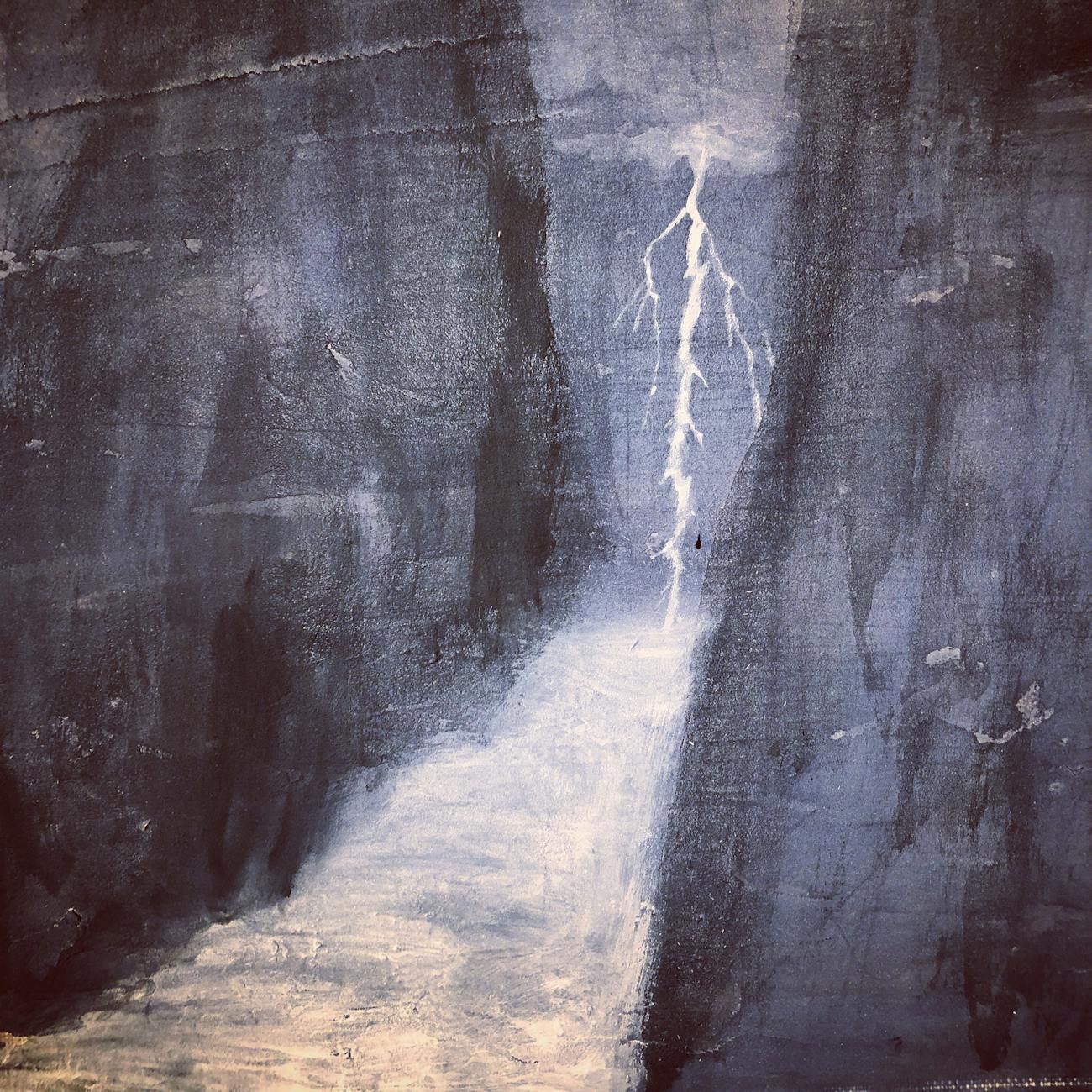
Photo by Sabian Symbols on Pexels.com

It so happens that I had made plans, and purchased plane tickets, to visit my son in Los Angeles during the week that AWP is holding its annual conference there, in March–that is, assuming the situation in Los Angeles County doesn’t get even worse and assuming his apartment building survives the fires; it hasn’t been easy to keep myself from doom-scrolling and watching updated fire maps. I remind myself that there is not a thing I can do beyond sending money to charities and such, perhaps, and waiting for the winds to change, and that making myself stressed will actually do harm. But I am not one of those Pollyanna types (now termed a “toxic positivity” person, I have recently learned). I’m aware that the world can be hard, and that we may suffer. So, as my yoga and tai chi instructors would tell me:

Breathe.

There’s no point in trying to decide whether this start to the year is auspicious or inauspicious, though if I’m going to go with signs and auguries, I might choose to follow the Chinese year and move my year’s start to January 29, Year of the Wood Snake–and get all this awful stuff (including January 20th) packed into LAST year.

As I noted in my year-end post, a year’s end–or beginning–is arbitrary.

~

As for writing-related resolutions, I make them all the time, not just at the beginning of the year. But in that one respect, the first dozen days of January are going surprisingly well. I’ve been spending more time on revising older–sometimes much older–work, and I have been drafting some new poems. I even submitted just a few things to lit journals and have been making minor progress in the monumental task of culling and organizing my writing files.

Best of all, I enrolled in an online poetry workshop with Anita Skeen through the Friends of Theodore Roethke Foundation, which starts this week. And I registered for an art class in February, so my plans to focus more on my creative work post-retirement are proceeding more or less apace. We balance fear and misery with art.

~

Cloud sketch in acrylics

Sweltering

I do not much care for air conditioning, and I believe it is bad for the environment; yet I admit I’m grateful for it lately, as I reside in one of the many regions of the USA that’s been enduring dangerously high temperatures for more than a week straight. I feel lucky that we’re not struggling with the heat wave–that we can shut up the windows and turn on the AC. We’re also in an earlier-than-usual drought situation though the air feels muggy and humidity has been as high as 98%.

My garden needs water every day; I generally water in the evenings because that is when the garden is in shade. The barn swallows swoop around me as I make sure the tomato and cucumber plants’ roots are getting a deep soaking. While I water, I watch for insects–fireflies, moths, dragonflies. And for bats, which have returned but aren’t as numerous as they once were. It’s pleasant for me that there are fewer mosquitoes and gnats, but I’m concerned about a drop in the number of junebugs and moths, and even (yes) mosquitoes. The heat and drought have taken a toll on all kinds of wildlife.

This morning, a pair of finches dive-bombed a squirrel that was up in the pear tree, chasing it far into the hedgerow. It may have been after the unripe pears, but squirrels also sometimes eat songbird eggs or chicks, especially when the squirrels are nursing kits or when there’s a lack of other food. The deer are so thirsty and desperate for greens that they’ve eaten every last hosta in my landscape, including the ones right up at the house foundation. They are consuming plants they have overlooked before, but I can’t blame them. Since it has been so miserable outside, I haven’t picked black raspberries this year; I’m sure the deer are happy about that. But I do wish they’d eat the poison ivy, wintercreeper, oriental bittersweet, and honeysuckle vines…that would make my landscaping tasks easier!

I’ve kept a garden journal for 30 years. If you have a garden, you don’t need to be an environmental scientist to recognize that the climate is undergoing changes. This is not a political statement but a fact. Everything right now is stressed–including the gardener! The stress enters into my consciousness and, I suppose, into my creative life. My poem drafts of the past week have been a bit on the bleak side.

Here’s a draft of one of the 7-line poems I was working on last week. Suits the weather, I guess.

~


Sweltering

A description accurate for the days past solstice
when even the wind lies sweating in a hammock
unable to rise for a brief turn around the block.
Blackbirds slow their trills, robins shelter in shade,
all the tasks we should tend to we leave undone.
Hours of lethargy seep into skin and set up house,
keeping us damp, achy, sunburned with the blues.

~


Restorative

I often start a post with a mini-weather report; I guess that’s one way I prepare myself to write, centering myself in the environment I inhabit. Our region received much-needed rain this weekend, but I was out of town–and the weather in Chicago was glorious: cloudless, crisp, mild, a light breeze. Odd, though, how weather conditions can evoke strong memories for me. The amazing clarity of the sky and air reminded me vividly of September 11, 2001, and the two days following it when we had a run of glorious weather and a mood of intense disturbance all around us…and no plane traffic at all. It took a few moments for that recall to settle in, and a few minutes more to let the memory go so I could enjoy the present moment.

~

I was in the Chicago area–Highland Park– for the book launch of The Red Queen Hypothesis. Many thanks to my publisher, Julie Dotson, and the welcoming and supportive group of poets and audience; the reading went well, and we sold some books (always a satisfying thing). I met quite a few interesting people and learned a bit about the city of Highland Park, its relatively long history, its parks, architecture, the storied Ravinia Festival, and how the city’s been coping since the July 4 tragedy last year. Travel always offers perspective. In this case, travel offered community as well: a lively community of people who support the literary arts.

~

I even got to be recorded, with Jennifer Dotson as the interviewer–a first for me. Here’s the link:

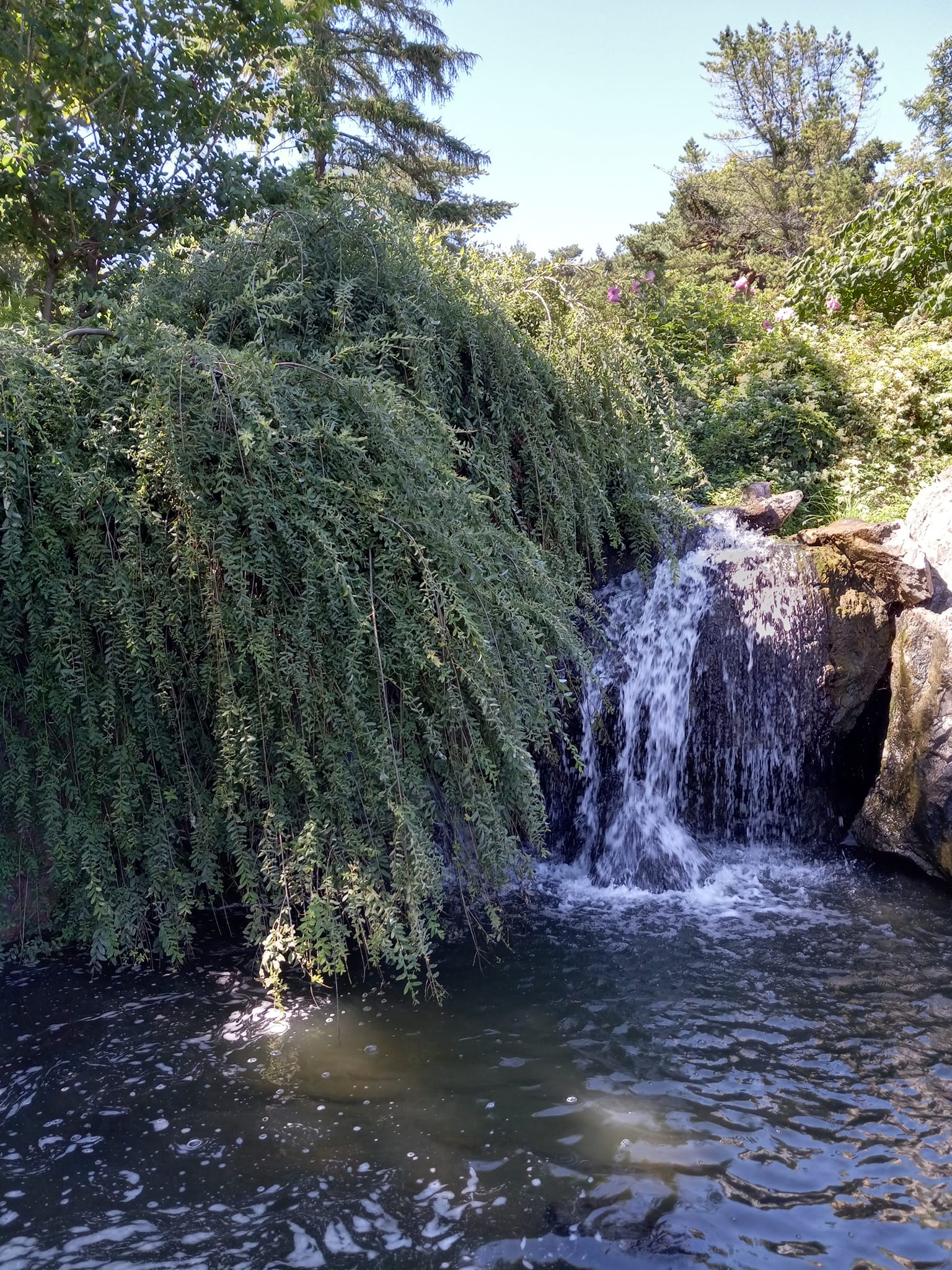
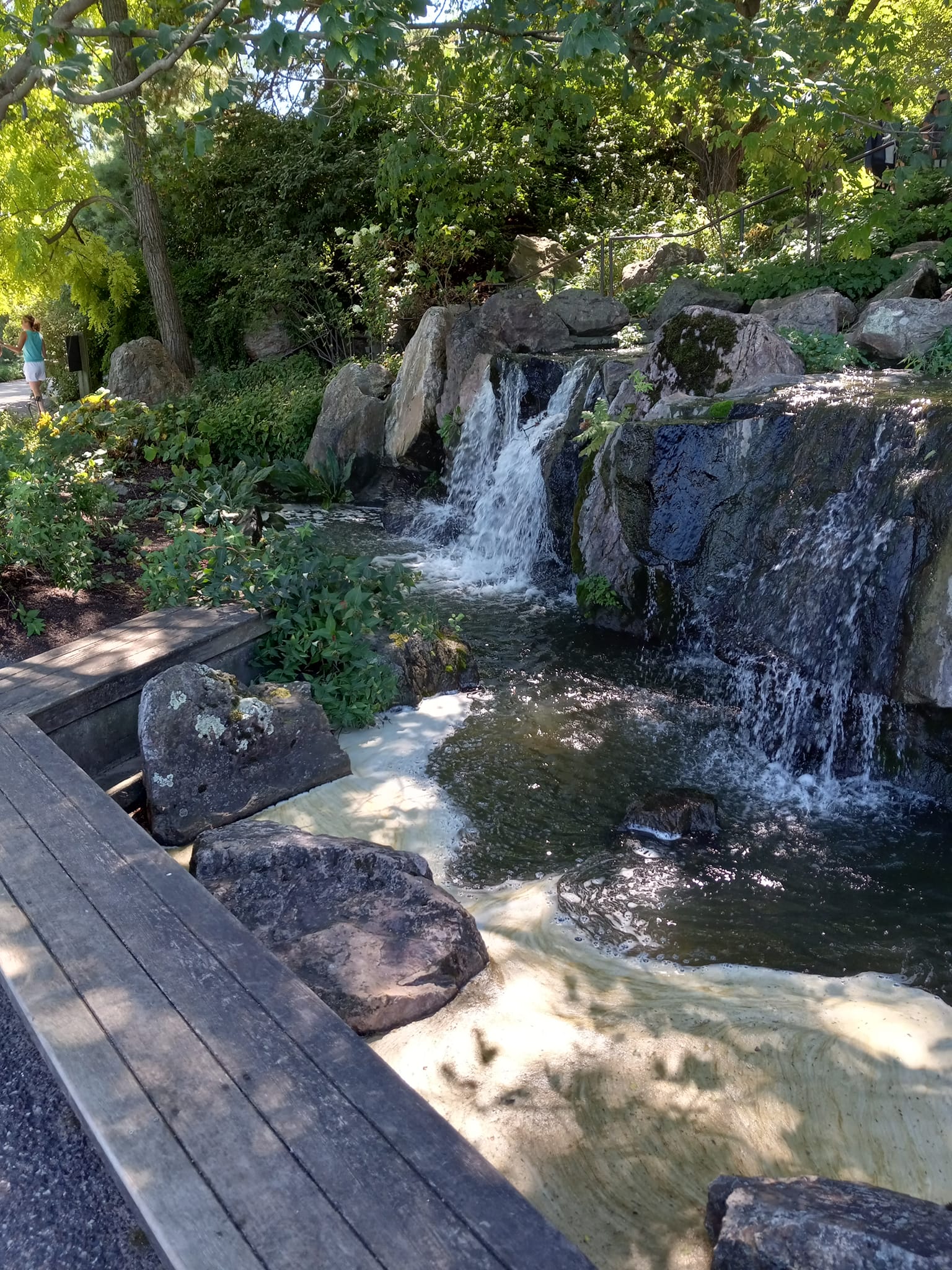
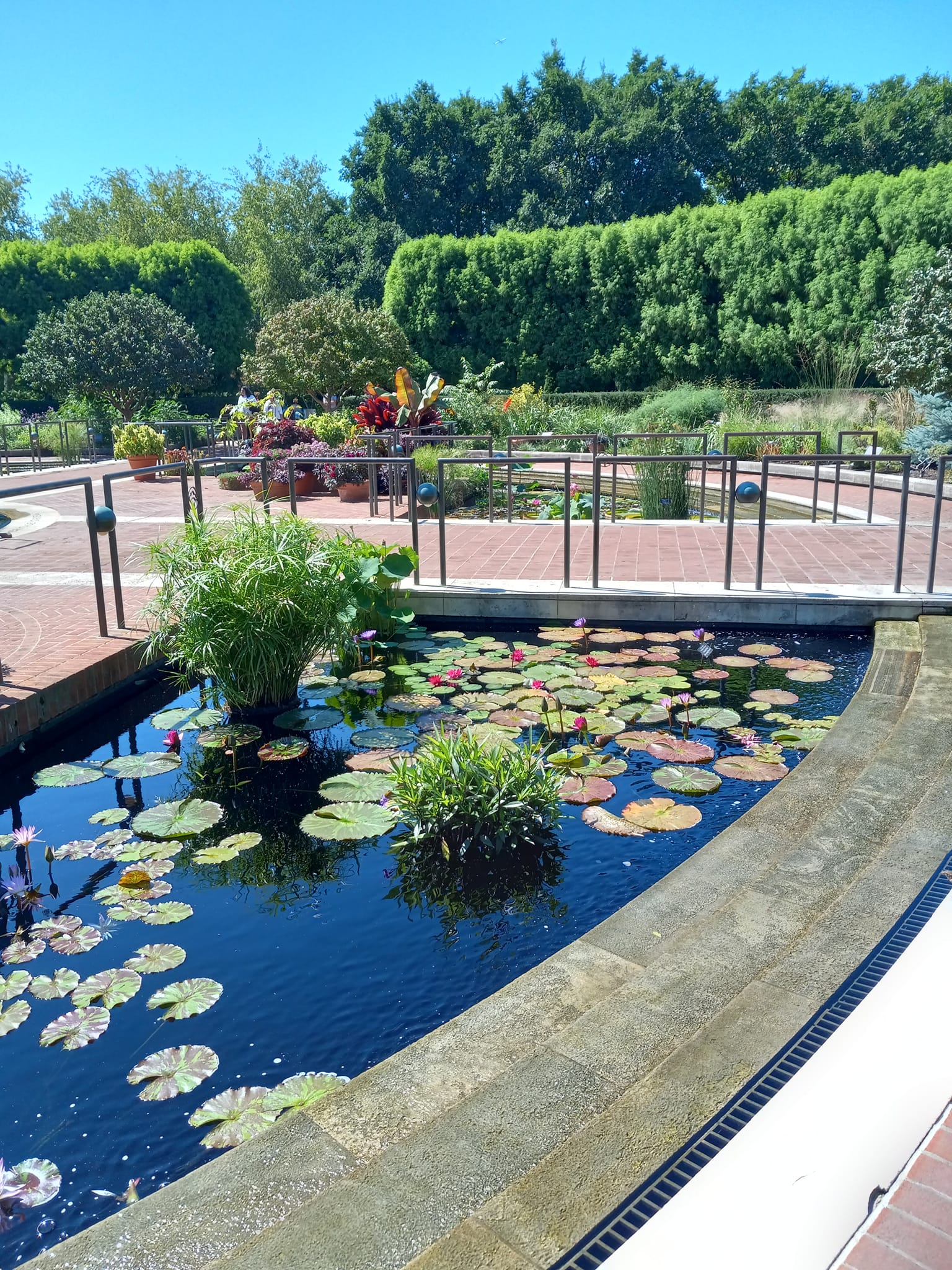
My generous poet-host, Julie Isaacson, knew from my writing and my biography that I would enjoy a walk around the Chicago Botanic Gardens–and she was so right! The gardens offered just the respite I needed after airplane travel. We hadn’t the time to stroll all 280+ acres, but the chance to walk amid trees and beside water in the middle of an urban expanse was genuinely restorative.

Now I am pulling weeds and pruning for the approaching autumn, activities that allow me to settle into myself internally and which sometimes result in poem drafts. Please wish me luck on both endeavors!

Information from poems

I tried to attend a poetry event on Saturday afternoon, but the weather was against me.

The rain came accompanied by lightning strikes, high winds, falling branches, flash-flooded roads, sleet, and a little hail, all in the space of two and a half hours. I left home only to turn around after three miles. The highway was blocked with traffic piled up due to various “storm-related events” (said the weather sites). Actually, I was grateful for the storm, since our region has been unusually dry and even warm for April–my trees, shrubs, meadow, and perennials needed rain. And upon my return, I got back to reading books of poetry. This past week these included collections by Marilyn Chin, Elizabeth Metzger, Grant Clauser, Jennifer Franklin, and Natalie Diaz. Some wonderful work there.

Through these books of poems, I also gleaned lots of interesting information. That’s something many people who claim not to like poetry don’t understand: you can learn about so many things through poetry! Poems contain fascinating facts, intriguing perspectives, tons of social and cultural observations, vocabulary and terms I would not have known about otherwise…poems have been the impetus for me to learn more about astronomy, theology, historical events and people, the geography and topography of the earth and its oceans, the life cycles of insects and plants, how metal shops operate, how to catch fish or tie a fly, what it is like to “live with a disability,” how the process of dying has differed from era to era and place to place, what it is like to reside in a war zone, the traditions of people whose backgrounds differ from my own, and other so-called “non-fictional” information.

Facts, in other words. Poems may inhere in the emotional or intellectual realm in many ways, but they also can–and often do–inform. They contain facts as well as multitudes. If people did not get so hung up on trying to decode a secret meaning behind everything they encounter that appears to be a poem, they might be surprised at how much they could learn from such (usually) brief texts. Yes, it might help to look up a word or a reference or two. That can get a reader started on a whole trail of interesting and valuable knowledge, widening the worldview, changing the perspective.

It may even lead a person to recognize that facts can change depending on point of view. Contemporary science acknowledges this, but most human beings haven’t accepted it yet. Anyway, this points to one reason poetry has often been considered unconventional, subversive, even dangerous or radical: Poems can challenge the status quo of what is accepted, received, unquestioned in society’s knowledge base. Terrifying the authorities by means of information.

Go for it. Read a book of poems.

~

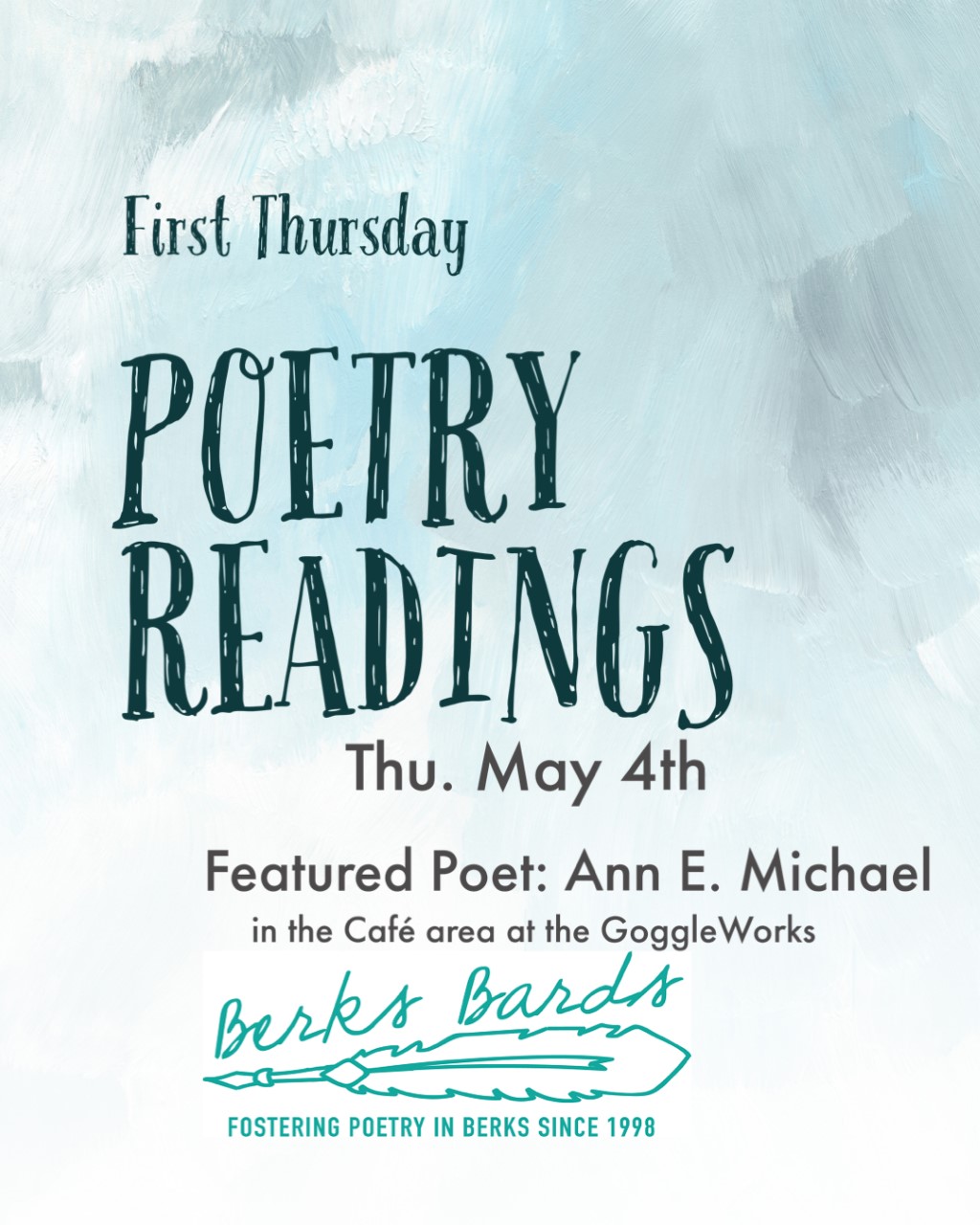
Coming up in May, I’ll be featured once again at GoggleWorks in Reading PA, 6 pm on May 4th…it has been awhile since I was there (2012), and I look forward to it!

Randomness & poems

The past weeks unloaded upon the blogger a host of responsibilities and reasons for reflection: reams of student essays to read and grade, piles of snow and the resultant delays and work closure leading to backlogs, and such usual complaints. In addition, the dropping-of-everything while attending to the death of our no-longer-resident nonagenarian, not to mention the bureaucratic heaps of forms and notifications that follow a passing.

I’m writing poems. It seems to be what I need to do at present, despite the state of my household environment and the backlog at work.Untitled-writer

~

The blizzard put my gardening on hold, though I remembered to purchase some seeds and thus can get to the tomato-starting process within a week or so. Before the snow came, I did get outside to prune and deadhead a bit while the weather was unseasonably warm. A little at a time. Such things are sustaining to me, emotionally.

And watching the birdfeeders has been soothing and delightful. Today a small nuthatch joined the party. My youngest cat spends large segments of his day crouched by the window, as fascinated as I am (but for different reasons, I suppose).

scoot window

~

I am thinking of a friend-in-poetry who has need of special care and financial assistance while going through and recuperating from some extremely painful, delicate, dangerous and potentially-disabling surgery-&-rehab. She will need more than the initial $4K this GoFundMe portal suggests, so if any of my readers feel inclined toward a random act of (financial) kindness: Jessamyn’s Medical Fundraiser. Thanks.

~

Addendum: Yes, I’m sticking to my determination to read more poetry. And it is helping. Most recently, re-reading early Li-Young Lee, Mark Doty’s Deep Lane, Dave Bonta’s Ice Mountain: An Elegy, and a really wonderful new collection by Kim Roberts: The Scientific Method.


Hail and Heidegger

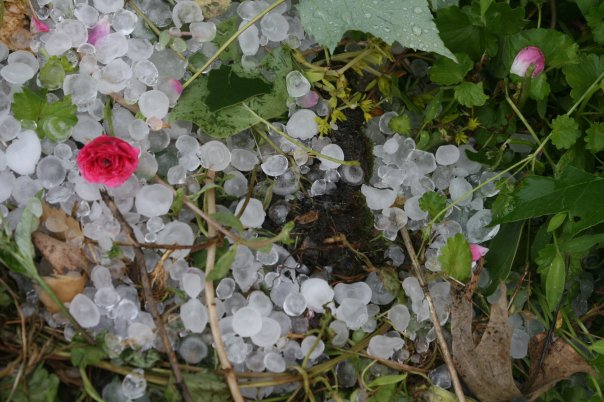
hail and roses

Another freakish, brief summer storm swept through–this time bringing wind, fog, downpours, and hail. Not a gardener’s favorite weather system under any circumstances. Some years ago, a June 9 hailstorm literally decimated (reduced by 10%…though I think it was more like 25%) my gardens and produced the mammatus cloudforms that show up on my “About” page. Yesterday’s hailstorm was–thankfully–not as damaging. Most of the plants will recover fairly rapidly, I think.

~

Meanwhile, I’m trying to educate myself a bit more on the history of phenomenology as it relates to poetry, art, and poetics by reading a bit of Martin Heidegger. This is a backwards chronology, but I’m not feeling ready to take up Husserl yet. Heidegger’s also problematic because of his early embrace of the Nazi party (he resigned early, too, in 1938, but never made a full repudiation). I understand that great thinkers can nonetheless be very flawed human beings. Michael Wheeler’s thorough essay in the Stanford Encyclopedia of Philosophy touches on some of the contradictions and covers Heidegger’s major work. But I am reading Hofstadter’s translation of “Poetry, Language, Thought” and six other shorter essays, such as “What Are Poets For?” and “The Origin of a Work of Art.” Actually, it is hard to consider the first text as an essay. It’s more like a poem in aphorisms. An excerpt:

~

When through a rent in the rain-clouded
sky a ray of sun suddenly glides
over the gloom of the meadows .  .  .  .

We never come to thoughts. They come
to us.

That is the proper hour of discourse.

Discourse cheers us to companionable
reflection. Such reflection neither
parades polemical opinions nor does it
tolerate complaisant agreement. The sail
of thinking keeps trimmed hard to the
wind of the matter.

From such companionship a few perhaps
may rise to be journeymen in the
craft of thinking. So that one of them,
unforeseen, may become a master.

~

Almost Confucian, no?

~

Later in his life, Heidegger moved on from his earlier philosophizing on the ontology of being (he pointed out the need to define “exist” as a premise in any such inquiry) and began to suggest that art exists within the materials/tools of the artist as well as within the artist’s being and abilities, all in a perhaps simultaneous collection of conditions. Wheeler says, “poiesis is to be understood as a process of gathering together and fashioning natural materials in such a way that the human project in which they figure is in a deep harmony with, indeed reveals—or as Heidegger sometimes says when discussing poiesis, brings forth—the essence of those materials and any natural environment in which they are set.”

Heidegger writes, for example, that “a true cabinetmaker…makes himself answer and respond above all to the different kinds of wood and to the shapes slumbering within wood—to wood as it enters into man’s dwelling with all the hidden riches of its essence. In fact, this relatedness to wood is what maintains the whole craft. Without that relatedness, the craft will never be anything but empty busywork…” Wheeler calls this manifestation of the art within the materials (which the artist must understand in order to use her talents and tools to bring forth) a “process of revealing.” Kin, I suppose, to the words often attributed to Michelangelo: I saw the angel in the marble and carved until I set him free.

~

Art, gardens, weather, poetry, the craft of thinking…all processes of revealing and transformation. “We never come to thoughts. They come to us.”ann e. michael hail foot

Not a dry spell

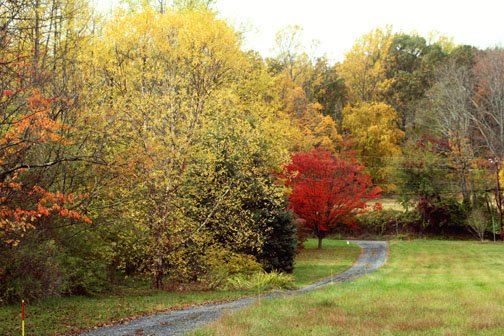
October arrived in a remarkably ordinary way, considering how inconsistent the weather in my valley has been during the past year. There were a few clear days of brilliant sky, some heavy breezes with leaves beginning to drift into the lawn, a couple of glorious autumn days–mild and crisp–followed by a spate of rain and humid air (and toadstools and mushrooms cropping up everywhere), a further yellowing and reddening of foliage, and then, chilly rain.

This is “normal” weather for our area in early- to mid-October. Although the heavy skies and damp chill are not always welcomed by residents, including me, the gardener in me feels relieved. We need the rain and the coming dormancy. The birds relish the late, large insects that frequent gutters and fields, ponds and puddles, providing proteins for a trip south or for winter ahead. Seeds need the watering-in and the cooling-down. Trees need reminders to store their nutrients deep inside when the cold air really sets in.

And pretty soon, I will have bulbs to plant. I want the soil to be moist enough to dig up and the ground temperature cool enough to keep the daffodils still and quiet for several months.

Some years, I write prolifically in autumn; it’s as though the change in season effects a kind of transition within me, and creativity abounds. Other years, not so much. I do notice that when I spend a good deal of time out in the garden, I write more. This fall has not been that kind of season. I have been busy with writing tasks that do not exercise the philosophical or metaphysical side of myself–though I have been writing, most of the work has been reviews, proposals, pedagogy.  I will be posting links to the reviews and essays on the sidebar to the right, adding to the list…

Should fortune–and the Muse–smile upon me, there may be a few new links to poems, as well, in the coming weeks. In November, I’ll be giving a few readings locally. In January, I’ll be teaching Introduction to Poetry again, and I’m eager to try new texts for my students.

Perhaps the post-equinox period will have a creative harvest after all.