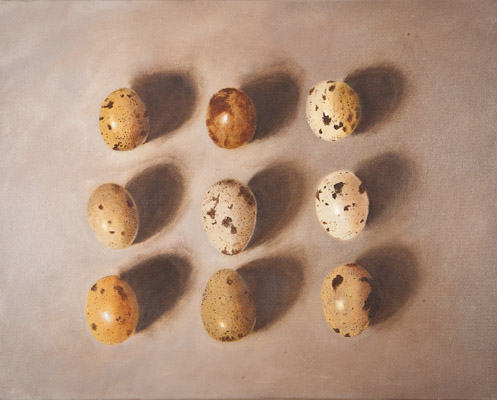
To endure

I have been contemplating the word endure, particularly in relation to my continuing curiosity about consciousness and in relation to physical enduring when the body is in pain.

Reading an excerpt from Husserl (the first proponent of transcendental phenomenology) that–admittedly, taken out of context–places consciousness in relation to time, I realize endure implies the concept of time itself even though time doesn’t make an appearance in its etymology (see below). Husserl writes:

Every temporal object has a duration…but in the type that is duration we have a distinction between the expanding, flowing duration and the momentary durations.

He suggests that there are “filling-in” types of duration, or time-phases, that arise to create “a continuous consciousness of unity whose correlate is an unbroken unity,” giving us the impression of sensuous unity in time. I wonder if our sensations of  physical pain operate in the synapses of the brain in somewhat the same way: momentary (acute), and filling in over time or flowing (chronic).

When we suffer, we call upon endurance to sustain ourselves. The verb form connotes the negative more commonly, such as to endure oppression, abuse, harassment, pain, humiliation. It is an active verb.

etymology: late 14c., “to undergo or suffer” (especially without breaking); also “to continue in existence,” from Old French endurer (12c.) “make hard, harden; bear, tolerate; keep up, maintain,” from Latin indurare “make hard,” in Late Latin “harden (the heart) against,” from in- (see in- (2)) + durare “to harden,” from durus “hard,” from PIE *dru-ro-, from root *deru- “be firm, solid, steadfast”

Nonetheless, strength is also implied, a resilient firmness that people tend to value. What is the current perspective on being steadfast? Is it to harden (become stubborn and inflexible) or to be solid? Don’t we admire the person who has endured much and yet, one way or another, lived life as it presented itself however hard the circumstances? And are those positive or negative traits, as our culture views them? Customs endure. Prejudices endure. When we call someone a “hard person,” it is seldom a compliment. Yet being steadfast is generally considered a virtue.

It’s interesting to note that the adjective form of endure has a more positive connotation–

enduring (adj.) Look up enduring at Dictionary.com

“lasting,” 1530s, present participle adjective from endure.

An enduring work of art; an enduring love. Something that defies time by lasting through those temporary durations and through the fillings-in. We human beings wonder whether our consciousness, what many have called our souls, are enduring in the sense of expanding over time and past the demise of our corporeal selves. But great literature, great music, great art suggests there are many ways to endure.

In the New Year, my hope is to become attentive to what endures; to extend compassion and love more widely and more deeply; to read good books and take in good works of art; to be good at what I do reasonably well, tending to myself and to others with as much grace as I can muster. Some years challenge us more than other years. Let us choose to endure.

Love is all you need


Perspective & aesthetics

Officially autumn now–and my lawn litter consists mostly of oak leaves, though other leaves will shortly follow. The showy blossoms of late summer, such as zinnia and tithonia, have begun to fade. Even the tall, bright-yellow, wild goldenrod’s going to seed, turning the meadow into a mass of beige and fading green. Asters and chrysanthemums take their places, drawing the garden visitor’s eyes a bit closer to the ground.

We move toward yin, the earth…which is where I happened to notice that just above the sprawling petunias–still blossoming, though getting a bit peaked–an iris is in bloom, too. This particular iris would not be all that commendable a flower in late spring or early summer when most irises are efflorescing. Its stature is medium, its color a rather wan yellow, its petals unremarkable.

autumn iris

Nonetheless, it’s an iris. In autumn! Apparently, my perspective on flowers changes once the days get shorter. My aesthetic expectations evolve: any rose becomes a wonder, any iris an almost magical surprise amid the mums and ornamental kale. That’s an important observation I try to keep in mind for myself and to teach to my students: perspective alters everything.

~

There are nice hybridization developments on late-blooming or, more accurately, re-blooming irises (this link from the Brooklyn Botanic Garden offers some useful information). I transplanted my rebloomer from an older garden that a long-ago homeowner planted; so I don’t know its heritage, though it somewhat resembles the cultivar “Baby Blessed.”

In the process of trying to track down the variety, I learned a new botanical word: remontant. Remontancy is that quality in a plant that makes it capable of blooming more than once in a season or year. There’s something generous and buoyant in that word, from the French “coming up again.” If hope does not spring eternal, may it at least be remontant. And may my perspective be flexible enough to appreciate seasonal transitions and small, un-flashy irises in autumn.

~

Another sign of autumn: the gleaners in the fields.

Altercation, alliteration, & assonance

Recently, while driving to a restaurant just at rush hour, we witnessed a near-accident. The offending vehicles were blocking an intersection but had just managed to avoid collision, and the driver of one car was shouting from his rolled-down window–shouting words that it is a good thing my 90-year-old mother-in-law was too deaf to hear, I might add.

After scooting around to the shoulder and proceeding along our route, my son commented on the driver’s use of the epithet “douche canoe.” It’s one I was not familiar with. “What does that even mean?” I asked, unable to process it either literally or by metaphor; yet I grant there is something appealing about the phrase, for sound reasons (I am making a pun! I admit it!).

Not the insult variety of canoe

~

Poets tend to be enamored of the way language sounds, even those who “write for the page.” We can imagine the sounds, “see” them, as we write. Performative poems rely on sound and continue the ancient oral foundations of poetry in song and chant. Many American students encounter the Beowulf saga in high school; kenning appears on the curriculum, and it is the one aspect of the saga my students always seem to recall.

Dictionary.com says of “kenning”:

a conventional poetic phrase used for or in addition to the usual name of a person or thing, especially in Icelandic and Anglo-Saxon verse, as ‘a wave traveler’ for ‘a boat.’

Poets deepened these modifiers, using kenning to evoke allusions to well-known myths, for example, or doing tricky wordplay such as puns and alliteration…or all of the above.

Moving away from kenning and into the general field of poetic wordplay, poets and others who are facile with language can move with ease to the sarcastic, the suggestive, and the downright vile (a classic example is Catullus–here’s a link to a biography from the Poetry Foundation that includes commentary on some of his well-known insult poems). A quick Google search on Shakespearean insults yields dozens of results from the bard of Avon. One of my favorite strings of poetic invective is from King Lear: “lily-liver’d, action-taking, whoreson, glass-gazing, superserviceable, finical rogue.” Note the alliteration and the meter. Touché.

Closer to “douche canoe” in terms of era is playing the dozens, exemplified for boxing fans through the boasts and challenges of Muhammed Ali–here, crowing over a bout with Sonny Liston:

“The crowd did not dream when they laid down their money
that they would see a total eclipse of the Sonny.”

Elijah Wald has a scholarly book on the tradition of playing the dozens. These rhymes are intended to challenge, provoke, and amuse. The evolution into rap is easy to credit.

~

Despite the aural appeal of “douche canoe” with its long, repeated vowels, I doubt the phrase will enter my personal lexicon. It did remind me, however, of an alliterative insult I heard fairly frequently from my uncles when one of us kids was acting particularly balky:

“Don’t be such a horse’s hind end!”

hindend

Spaces

Ah, the traditional New Year’s blog post! 🙂 I have spent time away from the computer to tend to other things, among them, my own “space” for being less busy. Finding that space has not been easy, but it is the sort of discipline we human beings ought to practice in this Age of Information. Without a little inner space, it is far too easy to become anxious and overwhelmed.

So I think of Bachelard’s quiet exhortation to cultivate the creative or childhood space, which I contemplated in 2013 at about this time of year (in this post). And I think of Jon Kabat-Zinn and other writers–often classed as spiritual self-help authors but whose writings need not be considered spiritual at all (Kabat-Zinn, in particular, avoids using the term)–who remind us to be attentive, aware, mindful, compassionate even to ourselves, and willing to take ourselves away to inner stillness now and again.

I am particularly drawn to the notion that contemporary human beings can come to mindfulness through actions rather than through withdrawal from the body and the world. Really, we hardly have any other choice. Although I enjoy solitude more than most people do, I am ill-constituted to be a hermit or a renunciate. My temperament precludes noisy advocacy against injustice or for specific good causes; but I could certainly do more helping, more of the kind gesture, more listening, and more giving of the type that lets not my left hand know what my right hand doeth (Matt. 6:3).

There were difficulties this past year, and aggravations, and sufferings both personal and social. So be it; we can learn from failure and adversity. The best way to learn to problem-solve is by being faced with problems!

In his 2000 book about aging and dying, Ram Dass wrote: “My guru once said to a visitor complaining about her suffering, ‘I love suffering. It brings me so close to God.’” Well, that is another way of looking at things; and perspective matters. Creative thinking involves full analysis (even when the analysis seems intuitive, immediate) and often employs a total restructuring of the problem at hand–a widening or narrowing of scope, a different point of view, a new set of tools or skills for puzzle-solving, or quiet cogitation while the thinker digests the whole situation…which may be, for some folks, prayer.

Or poetry. When I am not writing poetry, I am always reading it. Other writers’ words open me to a sense of communal understanding, a sense that we are not alone, not a single one of us, who can hear or read or remember a poem or a word of love or praise. Even when those poems depict sorrow or suffering, for then we know we are not the only ones who feel troubled.

“And our problems will crumble apart, the soul
blow through like a wind, and here where we live
will all be clean again, with fresh bread on the table.”

Pablo Neruda, 100 Love Sonnets

Let the wind make space for fresh bread on your table in 2015 and always.


bread

bread

Ink art

Last weekend, I went to New York with friends to see the Ink Art exhibit at the Metropolitan Museum of Art. The art, all of which is contemporary (the oldest artist represented was born in 1953), has been installed in the museum’s extensive Asian galleries alongside ceramic, sculptural, religious, and paper works going back centuries.

The rationale behind this juxtaposition, says the museum’s site, is to point up “how China’s ancient pattern of seeking cultural renewal through the reinterpretation of past models remains a viable creative path. Although all of the artists have transformed their sources through new modes of expression, visitors will recognize thematic, aesthetic, or technical attributes in their creations that have meaningful links to China’s artistic past.” That certainly proved true for me; and I cannot decide which was more intriguing, the similarities or the differences.

The young artists in Ink Art employ age-old cultural tropes: the triptych, the scroll, woodblock printing, calligraphy, moody landscapes, ideograms, ink, and repetition. The resonance with Chinese heritage is palpably authentic and is often employed in the service of criticism, mostly criticism aimed at the destruction of cultural icons and of the environment (some of the represented artists are exiles). Mounting the exhibition in the Asian galleries meant that the visitor confronts the historical and the contemporary simultaneously.

In Yang Yongliang’s “View of Tide,” the artist uses digital photography collaging to replicate the mood of an ancient Chinese landscape scroll which, on closer inspection, reveals that the austere and mystical imagery of sea and mountains has been composed of smokestacks, highways, powerlines, and the like. I found this work powerful as commentary and shocking in the best possible way.

Being a word person as well as a visual art appreciator, I was especially drawn to the section of the exhibit called “The Written Word.” The highlight of this section is Xu Bing’s installation “Book from the Sky”. My friends and I–avid readers all–entered this room and felt shivers of recognition and joy at the concept of a room-sized, descending, ascending, wall-to-wall book. (I urge my readers to click on the link for a peek.) The information plaque notes “while the work is inspired by the form and typography of traditional Chinese woodblock publications, faithfully replicating every stylistic detail of traditional Chinese printing, not a single one of its roughly 1,200 characters—each printed with type hand-carved by the artist—is intelligible. Each of these imaginary characters conveys the appearance of legibility but remains defiantly undecipherable.” The paradox and the beauty of the concept are amazing; in addition, I find it oddly thrilling to think of the imagination and the craft and simple hard work Xu Bing put into creating meaningless calligraphic pictograms, cutting them into woodblocks, and repetitively setting up the careful lines in rows on long scrolls.

What emerges when the scrolls are installed on ceiling, walls, and floor manages to be indecipherable but not meaningless. There is in fact much opportunity for meaning in “Book from the Sky,” and for discussion and interpretation and playfulness.

One example: after reading about “Book from the Sky” and taking in the environment for awhile, my friend Mark commented, “Imagine if you were a beginner learning Chinese script, and you encountered this room. You might just spend hours in here trying to figure out whether you could read any of it…I mean, if  you hadn’t read that it was indecipherable. Or even if you had that knowledge, maybe you’d spend a long time here thinking that at least something in all this text meant something you could translate. Wouldn’t that be awfully frustrating?”

Or maybe that’s the point?

Carved type for “Book from the Sky” by Xu Bing

~~

Conceptual metaphor. Art. Thinking. Decipherability; communication. These are large ideas, and crucial ones in the scope of human community. Without art–how can we encounter such metaphors? How would we share them?

Creativity

It bothers me when people tell me they are not creative. Creativity, inborn in human beings, comes in so many forms. Just because a person does not identify as a recognizably creative person–artist, decorator, writer, teacher, etc.–that doesn’t mean he or she lacks creativity. We cannot solve problems without engaging our creativity, and most of us solve hundreds of small problems daily. We just tend not to consider those talents as “creative.”

One of my colleagues is a consummate problem-solver. Yet she constantly derides her work: “A monkey could do my job,” she claims. It would have to be one heck of a creative monkey! For years, I’ve been constantly amazed at her creative solutions to problems that students present to her…everything from advising to financial aid to family issues to roommate problems and issues that are once-in-a-career type peculiarities. She always says, “I’ll see what I can do;” 90% of the time, she finds a workable solution.

Another thing that intrigues me about her is the way she uses language. She reminds me of my grandmothers: sensible, smart women born and raised in one region and wedded to certain habits but possessing considerable grit and spunk and … creativity. Including marvelous slips of the tongue or twists on clichés. One of her most charming accidental neologisms is that instead of saying memento, she says “momento.” Educated well–with a Masters degree–she probably spells the word correctly when she writes. But I love hearing her say “momento,” because that’s one way of thinking about the word: a reminder of a moment. So apt! While the etymology of the word derives from the Latin (imperative of meminisse, to remember), the idea of recalling a moment through some sort of small souvenir strikes me as perfect.

Another creative use of language occurs when we are talking rapidly and the standard word or metaphor doesn’t come quickly to mind, so our brains substitute something else. My colleague’s creativity shows up at such times. I tend to stumble and say, “uh…um…” when that happens to me; but her mind comes up with alternatives (which occasionally make me laugh, but which always make me delighted). A recent example: during a freshman student program, there was an unexpected downpour which arrived just as the 18-year-olds were walking from breakfast in the cafeteria to a classroom building some distance away. Of course, none of them had umbrellas or rain jackets.

“Those poor kids!” said my friend. “They were all huddled in their soaked hoodies like wet mice. Like…like little wet mice, trying to get dry!”

I’d have resorted to the common phrase “drowned rats,” but little wet mice wearing soaked hoodies seems so much more vivid and elicits more sympathy. It’s also more creative–don’t  you agree?

~

“About as sharp as a sack of wet mice.” Foghorn Leghorn probably knew my grandparents….

Language & teaching

I’ll be teaching a new crop of freshman writing students tomorrow morning. A thought lingering in my mind as I prepare myself mentally for the first classroom contact with these 17- to 19-year-olds concerns language, and an ongoing argument about its uses and origins. The argument is part semiotics, part linguistics, part sociological, part neurological, part cultural, part philosophical: what is the relationship between language and the human thought process? It’s sort of a chicken-and-egg question. Bruner, Goodnow & Austin, in 1956, characterized the two main theories at that time as “mould theories” in which language is “a mould in terms of which thought categories are cast” and “cloak theories” that hypothesize language is “a cloak conforming to the customary categories of thought of its speakers.”

In other words, does the language make us who we are/how we think (culturally), or does our culture make our languages reflect the cultures in which we live?

The famous Sapir-Whorf hypothesis theorizes that we experience the things we do, and speak about them to others in our community, because our language habits incline us towards certain interpretations. It is therefore a mold theory. Whorf wrote, in 1940, that “We dissect nature along lines laid down by our native languages.” Ie, if our culture values, say, coloration, our metaphors and cliches and descriptions would be largely based on color-values. In a more recent essay by David Chandler,* the author points out that this sort of interpretation of what language is can be interpreted in so relative a fashion that every form of linguistic communication, even with in a culture, becomes a kind of translation. Chandler finds this situation “problematic.”

Problematic, perhaps. But incorrect? I’m not so sure. It seems to me that our very individualist U.S. culture offers so many personal and sub-cultural perspectives that even everyday commerce and chit-chat involve constant translation. One of the most challenging things I have to teach to my students is how to understand what their college professors want from them, which is largely demanded in terms of a vocabulary that is not necessarily academic jargon but which is connotative in ways most incoming freshmen cannot know; they have seldom or never been exposed to that perspective. It is not part of their culture.

So does that make language a cloak or a mold?

Probably–as in most things–moderation serves best. The answer is not either-or, but a bit of both, because the human brain–and human culture–is so commodious and adaptable and complex. Chandler promotes “moderate Whorfianism.” That’s another one of those rather irritating academic –isms, but what he means is: “Meaning does not reside in a text but arises in its interpretation, and interpretation is shaped by sociocultural contexts.” This theory affects my role as educator even when I am teaching the introduction to academic writing and rhetoric class rather than some higher-level analysis course. More so, in some ways, because the introductory course is where students learn to question their socio-cultural assumptions as they read and write. I have to learn their slang, their habits, their leisure activities and distractions in order to make compelling analogies that work for them. They have to learn to transition into academic and business-world conventions from their peer-oriented and narcissistic teen environments.

It is a form of translation.

It is also an opportunity for new perspectives, for my students and for me. Wish us luck!

~

*David Chandler, “The Sapir-Whorf Hypothesis” UWA 1994 (from The Act of Writing)

Ephemera

My collection Water-Rites was begun in response to a drought and a death. Interesting that the book’s release appears during an unusually wet spring here in my valley. On my morning walk through the meadow today, I saw quite a few species of dragonflies, generally a sign of a damp period in my region. Two days ago, mantis cases hatched; now there are tiny praying mantises on the patio slates, in the lawn, and among the grassy flora where we seldom mow.

The bees are out; the cabbage moths and early butterflies busy themselves with knapweed, eupatoria, penstemon, golden alexanders, honeysuckle, milkweed. The fragrance settles above the dewy grasses.

Most people are aware of honeysuckle’s scent. Few people know how lovely the aroma of milkweed blossom is. You have to time it just right–there’s no perceptible scent when the buds are furled, and the blooms are open only briefly. Almost at once, the blossoms ripen into pale knobs that will produce the familiar pods full of seeds packed cone-like into the pointed cases, silks battened tightly until autumn dries the pods and they burst.

But in early or mid-June, when the butterflies begin to arrive, those blooms are pale purple clusters of fragrance on a stem.

milkweed bloom

~

Ephemera intrigues me. Human ephemera usually is just that: brief, transitory, “lasting a day” (the Latin name for daylily, hemerocallis, comes from the same root: ἐφήμερα). Our letters, our emails, our YouTube videos and Hallmark greeting cards and shopping receipts.

Biological ephemera, however, is part and parcel of the cycle of life.

And poetry? Perhaps it’s an effort on the part of human beings to contribute to the lasting sort of ephemera.


~


milkweed in autumn Ann E. Michael


Reverie

“The image can only be studied through the image, by dreaming images as they gather in reverie.” ~Gaston Bachelard

I’m immersed in Bachelard’s The Poetics of Reverie, which has a subtitle I adore:  “Childhood, Language, and the Cosmos.” In the book’s first section, however, I felt myself a bit bogged down because the reverie of words (language) he describes deals with word gender. That works for French, and for most languages [or so I understand], but not for English.

Initially, then, I found myself wondering why I was reading the text. But I like Bachelard’s style, enthusiastic and looping and always replete with inquiry upon inquiry; and I love his dedication to and defense of poetry. Not all philosophers have been so kind to poetry.

As I was driving to work one morning, however, I found myself dwelling upon the above chapter about the reveries words can inspire. I fell into a recollection of myself as a very young child, the way I loved to peruse the dictionary. Even before I could read, the heavy tome with its onion-skin pages and glossy color plates of the flags of the world or of gemstones appealed to me as a room in which to become lost, a forest of leaves in which to cover myself or to lie upon, a river of language in which to be immersed. When I was older and a more capable reader, I browsed the examples, the multiple meanings and uses, the parts of speech and the etymologies of the words.

Ann E. Michael

Bachelard, I realized, is correct. The contemplation of words themselves leads to reverie, to thinking about thinking, to making dreamlike concatenations that chug through the consciousness and lead to imagination. His example involves contemplations and imaginings about the genders of words and how they suggest all kinds of interweavings and reactions, but noun gender need not be the motivating inspiration. For me, etymology accomplishes the same ends.

Contemporary adult life offers few chances for reverie. My commute to work is often the only time during the week when I can daydream a bit. My best opportunities for reverie are during a walk outside or while gardening, but I don’t get to do those things every day. I agree that reverie or daydream leads, very often, to poetry or to philosophical innovation or understanding; and Bachelard’s initial chapter on the rambling, amusing, aimless process of reverie makes me wish to go back to my childhood days of less responsibility and more imagination. Of course, that is impossible, but of course, that is part of what the philosopher intends (there is a later chapter on childhood reverie…I will be reading that pretty soon).

Boredom invites reverie. Who, in these busy times, with the many entertainments we carry in our pockets, is ever bored? So many of us, when bored, simply turn off the iPhone or the TV and sleep.

“It is a poor reverie which invites a nap.” ~Gaston Bachelard

My upcoming musings on this book will probably include garden reveries. Or memoir. Or etymology. Who can tell?

Next door to God

~

I’m currently reading a new Tupelo Press anthology of essays by poets, A God in the House. The essays are based on interviews with poets whose work engages with “the spiritual” or with “faith”–often in similar ways, though attained through widely varying means and experiences.

It’s lovely to savor these thoughtful commentaries on the spiritual. Many of the poets wrestle with the concept of faith, soul, or the spiritual as they try to put into words what that feels like. Poets know better than most people the limits of what we can say in words, and they push at those limits in and through their work.

And this book features some marvelous poets. Jane Hirshfield, Jericho Brown, Grace Paley, Carolyn Forché, Li-Young Lee, the incomparable Alicia Ostriker, Gregory Orr (one of my long-time favorite living poets), Annie Finch, and many others. Even if you are not interested in poetry all that much, the anthology is valuable if you are interested in the spiritual and how we obtain, understand, incorporate, question, and express it.

Can we attain transcendence? Or immanence, instead? Or are we fooling ourselves altogether?

Good questions.

~

When I was a very young child, my father, a newly-minted Presbyterian minister, was assigned to a small parish in a rural area of New York. We lived in a ranch-style manse across the driveway from the 19th-century shingle-style church. We had a large yard which bordered a large field. There was a post fence along the side of the church yard and a barbed-wire fence in back of our own yard. I liked to sit on the post fence’s wooden stretchers and pretend I was riding a horse. There were tall pine trees at the front of the church and I recall watching birds fly in and out of the trees and also in and out of the eaves of the steeple. All of those memories I now associate with church-going and whatever the spirit is. I always think of that time of my life as the days I lived next door to God.

I was raised in the culture of God-the-Father. My father, my human father, was the man behind the pulpit. He wore flowing robes and he sang beautifully, but what I liked best was watching him as he opened the enormous Bible and read from it.

Yes, I was a bibliophile from the get-go.

~

I suppose the words mattered. Certainly the verses, the language of scripture, its pacing, and the intonation of recitations, creeds, and prayer–not to mention the music–made their way into my forming mind. I learned to read by doodling on church bulletins and pretending to follow along in the hymnals as we sang “Fairest Lord Jesus” or “The Doxology.” But I do not recall ever believing, quite, that the words equaled the spirit, even though I memorized that in the beginning was the Word and the Word was God.

Now I have come around to words again. (Writers do that.) I am not in the right frame of mind to write eloquently, as the writers in A God in the House have done, about how my poetry, my practice, my beliefs entwine with the spiritual. Perhaps someday I will, inspired by the thoughts and reflections of others. It is a brave thing, to write about one’s faith–so personal. I am grateful to the editors (Illya Kaminsky & Katherine Towler) who envisioned this project and interviewed the poets; and I heartily recommend this book.