Comparisons

I keep a day-by-day garden journal, ten years at a time (the one I use is here, from Lee Valley). This record often proves useful and is an interesting way to compare how the seasons unfurl from year to year. After 30 years of record-keeping, for example, I can see that the summers here are hotter and drier than they used to be, and that winters are far less consistent. I note which plants thrive and which fail, and observe when invasive species arrive and when certain plants or animals seem to experience a die-off–or a flourishing. As I used to tell my students in composition and rhetoric classes, basic comparisons are a toe-in-the-water way to begin learning how to do full-fledged analysis. In what ways are things alike? In what ways do they differ?

Let’s look at February, surely my least-favorite month. In 1997, the month was mild, even warm; snowdrops bloomed on the 21st (in 1996, the bloom was the 23rd, in 2000, the 24th). Fast-forward: in 2023, they blossomed on February 13th, in 2024 on February 8th. Similarly for the bloom times of iris reticulata and witchhazel. Last year, however–2025–we had arctic air pushing through due to warming at the poles and other effects. The snowdrops opened late, on February 25th. This year, we’ve had a colder-than-average midwinter. Today, after yet another snowstorm, there’s an additional 5″ of snow cover over existing snow. I doubt I’ll see snowdrops for another week or so. But you never know. Galanthus are resourceful, having originated possibly in the Pyrenees or even Thracia, and they have adapted to many regions quite happily. They can even bloom under a light snow cover.

Comparing seasons from year to year has helped me to plan my garden, but it’s always a bit of a crap shoot. Earth’s varying meteorological systems mean that humans endeavoring to grow crops or plan for weather events will often be surprised. Nature is unpredictable, no matter how many analyses we project. The recent snowstorm here was, if not wildly inaccurately predicted, at least not following the most expected computer models. Which is as it should be. Artificial intelligence and algorithms are far from foolproof.

~~

What will the weather be like on March 7th? I’m planning to attend the book fair day at AWP in Baltimore that day, but always “weather permitting.” Last year in Los Angeles, I liked having the option of just attending one day of the event–sans panels and such, which overload my introvert personality. But Baltimore is a 3-hour drive from here, so weather must permit! The past five years, March 6-8 has been mild and reasonably fair; so says my garden journal, so maybe I will get there. If so, I’ll return bearing poetry collections…

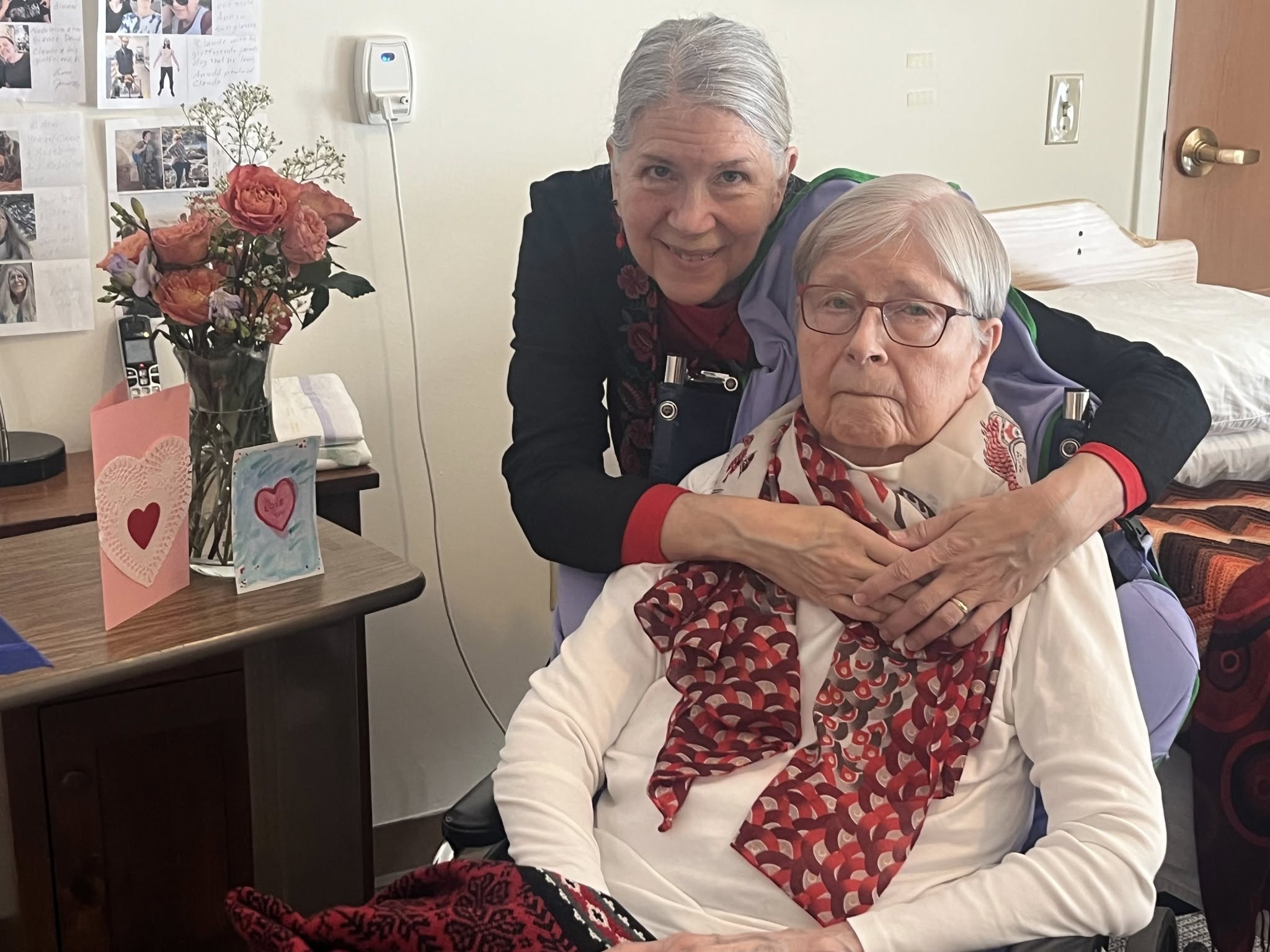
Meantime, my mother will turn 93 this week. I wish celebration were in order, but she seems to be retreating into a zoning world of her own, less familiar to us and less aware of her surroundings. Once again, comparisons: who she was for most of my life and who she is (or is not) now. She’s weathered much in her lifetime. The analysis: I don’t love her any less.
Midwinter mojo

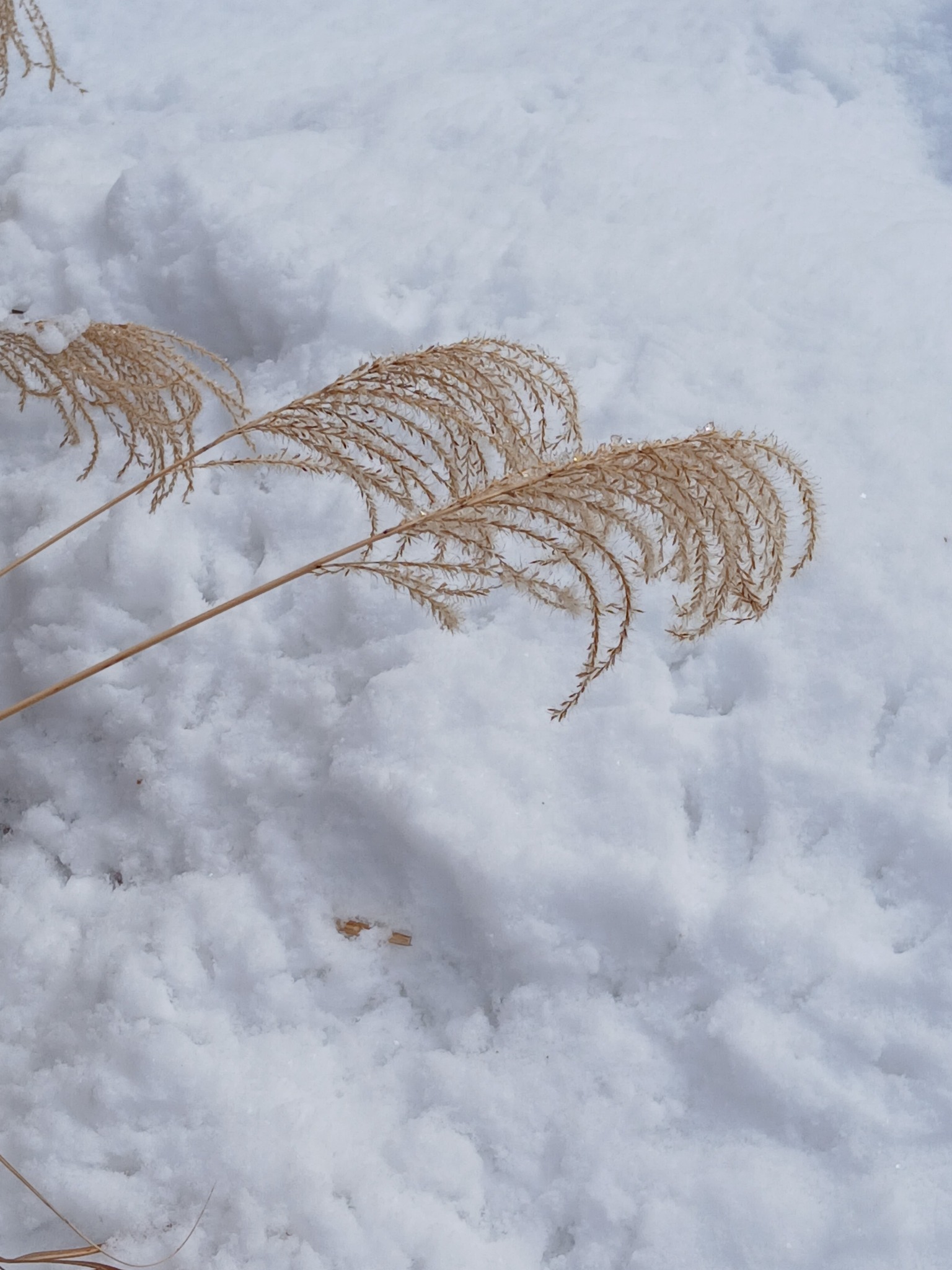
Midwinter thaw. Hints that underneath all the snow, spring awakening could eventually occur; also, a distinct likelihood that once the snow melts, the air will again get frigid because winter’s not over.

Lately, I’m trying to find enough mojo to send out some poems. My thinking is that given current circumstances, having poems in (mostly) online journals offers more possibility that someone, anyone, will read them. Poetry like most arts is communicative, so poets need readers; I treasure my readers, but they are few. I love books, but my books do not sell well. That means the poems don’t reach an audience. This blog doesn’t have a host of regular readers, either, though there are some stalwart followers for whom I am immensely grateful. Then what are a poet’s options? Small-press publication (let’s hear it for those wonderful folks!) and self-publishing can get you the physical book, but for readers you have to do a ton of self-promotion. This is a skill I have never developed and that I do not, at my age, wish to learn. Besides, I am out of the job market now and have no need for a CV full of publication credits.

But I read literary journals. My colleagues in creative writing read literary journals. Some lit journals continue to produce paper issues, bless them, but more of them post poems on various social media platforms, where casual viewers might run across a poem and–who knows?–read it! Therefore, it seems to me that’s what I ought to be doing: getting my work in magazines, large and small, local and international, professional and amateur, one poem at a time as a kind and careful editor decides my poem suits the journal. I think that in 2026, more poems reach people online than in books. Am I wrong about that? I guess I could research that question if I really want to know.

Of course I love books and will never stop reading them, poetry books and other kinds. Of course I would be thrilled to have another book in print if the manuscripts I send out ever were to find homes. However, probably my focus this year will be on the more ephemeral but wider-reaching media forms. I want to remind myself that I write because what I want to say may be valuable to someone other than myself; might strike someone as beautiful, sad, or wise; might make someone think in a different way or learn something new. Poetry has always done that for me, after all.

Now if only I can generate the mojo…

P. S. ~ If you’re interested in purchasing one of my books, Abundance/Diminishment can be found here and The Red Queen Hypothesis is here, and my chapbooks are listed on the My Books page of this blog. See? I did some self-promotion. 🙂

Tired

~

Tired


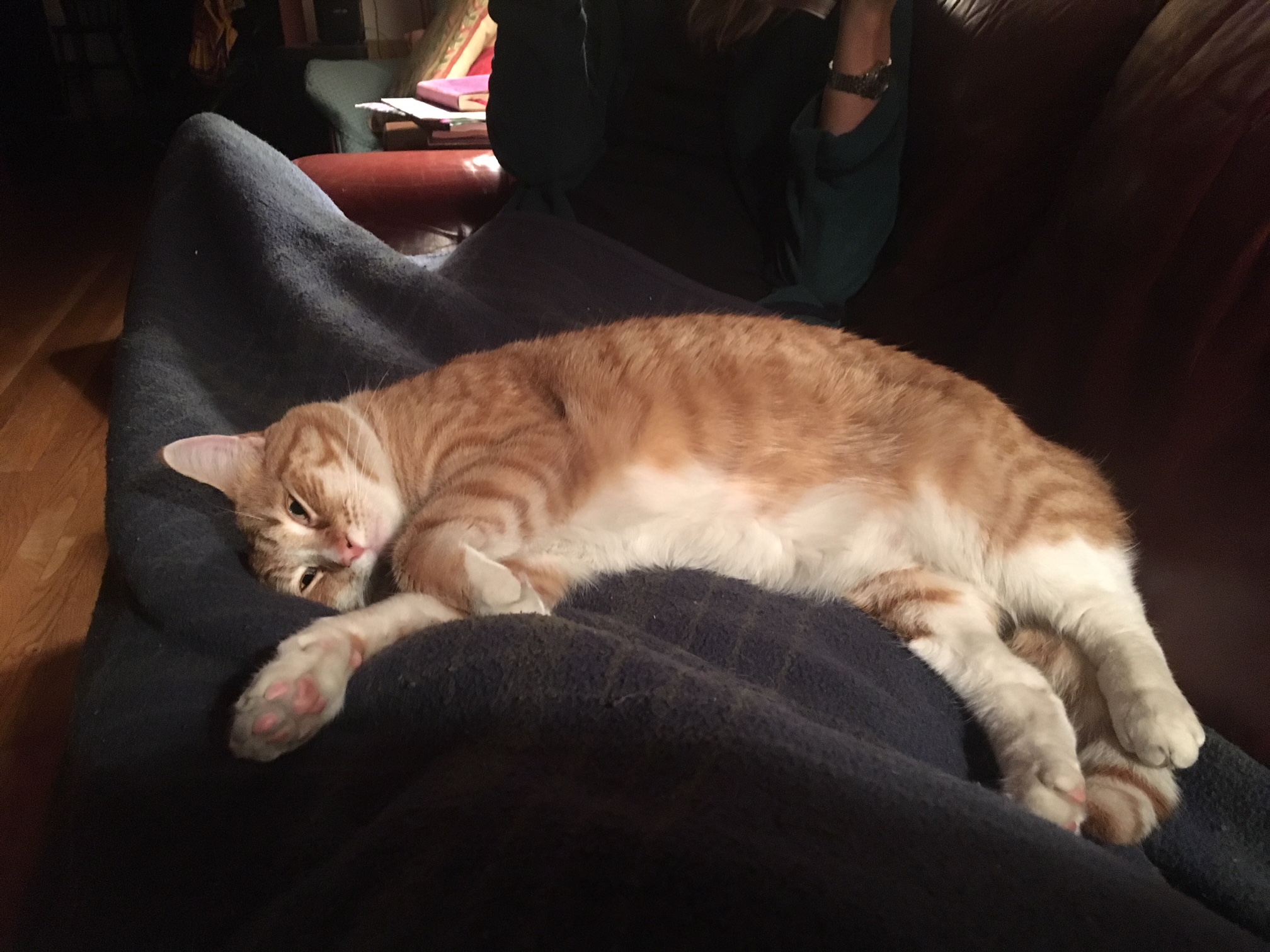
Everyone is tired today, even the cats.
They are tired of the snow even though
they are indoor cats who never venture out.

They are tired of looking through windows
at that white, reflective plain breached only
by leafless shrubs and black branches.

In the harsh sunlight even the pine trees
do not appear green. No green. No color except
for tiny red berries too small to see from here.

The tired cats watch birds who are bunched
into spheres from cold. Even the birds look
tired, colorless birds in grey and umber.

Birds that vanish into the snow’s shadows
and do not bother with the usual bird-
bagatelle around the millet and sunflower seeds.

The cats sigh and briefly stretch, spreading
their toes apart, twitching their ears
as a gust kicks loose snow into a swirl—

a kind of dust devil on the lawn,
a devil made of icy crystals. Apparently,
winter is not as tired as we are.

Come, cats. Curl next to me beside
the fireplace. We will sleep like bears,
like bears who sleep until spring.


~

Unlovely drafts

Well, I have been writing. But less about the current wintry days than I expected, because of the online poetry seminar I’m taking.

One recent prompt in Anita Skeen‘s workshop involves employing phrases from a text and using those words, or images, as a start to a poem that would not encompass or even relate to the original topic. I’ve written work that does that; but more commonly I continue the topic in some way, most notably with my long-poem/chapbook manuscript The Librarian of Pyok Dong. And what I notice is that I tend to choose “unlovely” texts, articles or essays that are historical, scientific, or academic, rather than to use the words of poets or novelists. Why that is, I can’t say for sure; it may simply be due to my deep-rooted nerdiness. But I think of poets like Martha Silano, Rebecca Elson, Muriel Ruykeyser, and others who have created amazing work, beautiful poems, from newspaper articles, scientific papers, academic texts, encyclopedias–so I feel encouraged. The result, for me, however, is often an unlovely draft.

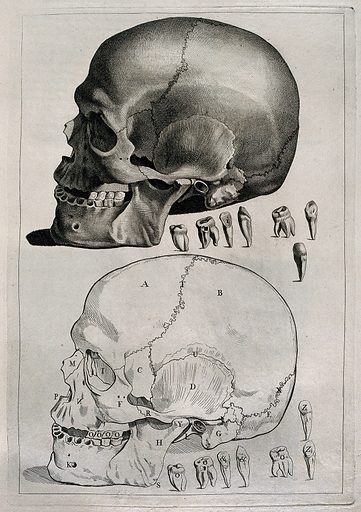
Etching by or after J. Gamelin, 1778/1779. Created 1779. Contributors: Jacques Gamelin. Work ID: h3ybfzwe.

I have recently spent some time proofreading one of my brother’s papers that addresses the origins of some of the crania in Samuel George Morton’s collection, which resides at the Penn Museum in Philadelphia and is among the controversial holdings there of sacred/religious objects and human remains. The University has committed to “repatriating” such items in its collections that belong to indigenous peoples, for example, and to returning human bones to places of origin or to “respectful interment.” The challenge with Morton’s large collection is to ascertain where, in fact, these human beings came from. [Informational page is here.] My brother has been trying to track down the people, likely young Africans, who made up one set of about 55 skulls collected in Cuba around 1839-1840.

It’s a terrible history, of course. The Middle Passage, slavery, illness, misery, abandonment even in death. And it’s an academic paper, so the language–not to dismiss the author’s writing ability, since he’s keeping to the conventional style–does not lend itself to poetry.

Basically, I’ve given myself a difficult task. Yet we learn through difficulty, do we not? Often, too, the unlovely poems are those that deal with how rotten human beings can be, or illuminate the worst of times and offer us insight and information that we had not been taught, hidden horrors, trauma, all of the above. I have written many lovely poems about lovely things. The world, however, manages to be far more complicated than beautiful, a mixed bag of joys and miseries, and it seems to me that literature and art ought to reflect that fact sometimes.

What I’m posting below is a very rough draft, just to demonstrate how I begin a difficult poem, a poem based upon historical facts that I’m learning myself. It’s a completely different process from when I write from an image or observation of my own. For example, the “Librarian” poem, which is about 15 pages long, took me a couple of years and a visit to the United States Army Heritage and Education Center (USAHEC) at Carlisle Barracks, PA! First I pull some quotes, make a lot of notes, highlight images or place names that seem most resonant. Then I develop these into what I call “jottings” and fragments, and start setting them into an initial sequence–which I often change later.

Stanzas? Line breaks? Metaphors? Meter? All of that can wait; I like to work on structuring the narrative first when I try something in this vein, and I want to find images that might speak to a reader. So it is clear to me that this poem is not one I’ll have finished before the end of the 5-meetings-long workshop. Assuming I ever do finish it. Yes, poetry is hard work.

~

José Rodríguez y Cisneros, Havana Physician, Ships 55 Human Crania
to Samuel George Morton, Anatomist (1840)


A Cuban journalist writes that by 1915
“The Vedado of my childhood was a sea rock
over which the seagulls flew”

sandy, overgrown with Caleta sea grapes
the nesting-place of rats, iguanas

but once a cemetery for paupers and bozales,
the unbaptized, slaves, the suicides

abandoned on this coast as carrion

where turkey vultures and wild dogs
fed on corpses hastily interred

el Pudridero” they called it—
the rotting place—
local people thought it cursed

for a more scientific-minded man, opportunity
to harvest skulls for anatomic pursuits.
Nameless, blameless nobodies

who were otherwise less than worthless:

the definition from a 19th century
Spanish dictionary:

bozales. A Negro recently removed
from his [native] country—
metaphorical and vernacular,
one who is foolish or idiotic…

can be applied to wild horses.”

~~

*note~

“the Vedado Interment Site…originated as a sinkhole that came to be utilized as a mass grave…[the majority] of the Vedado Group likely consisted of enslaved people born in Africa during the early 19th century, most of whom died of infectious diseases soon after arriving in Cuba.” John S. Michael