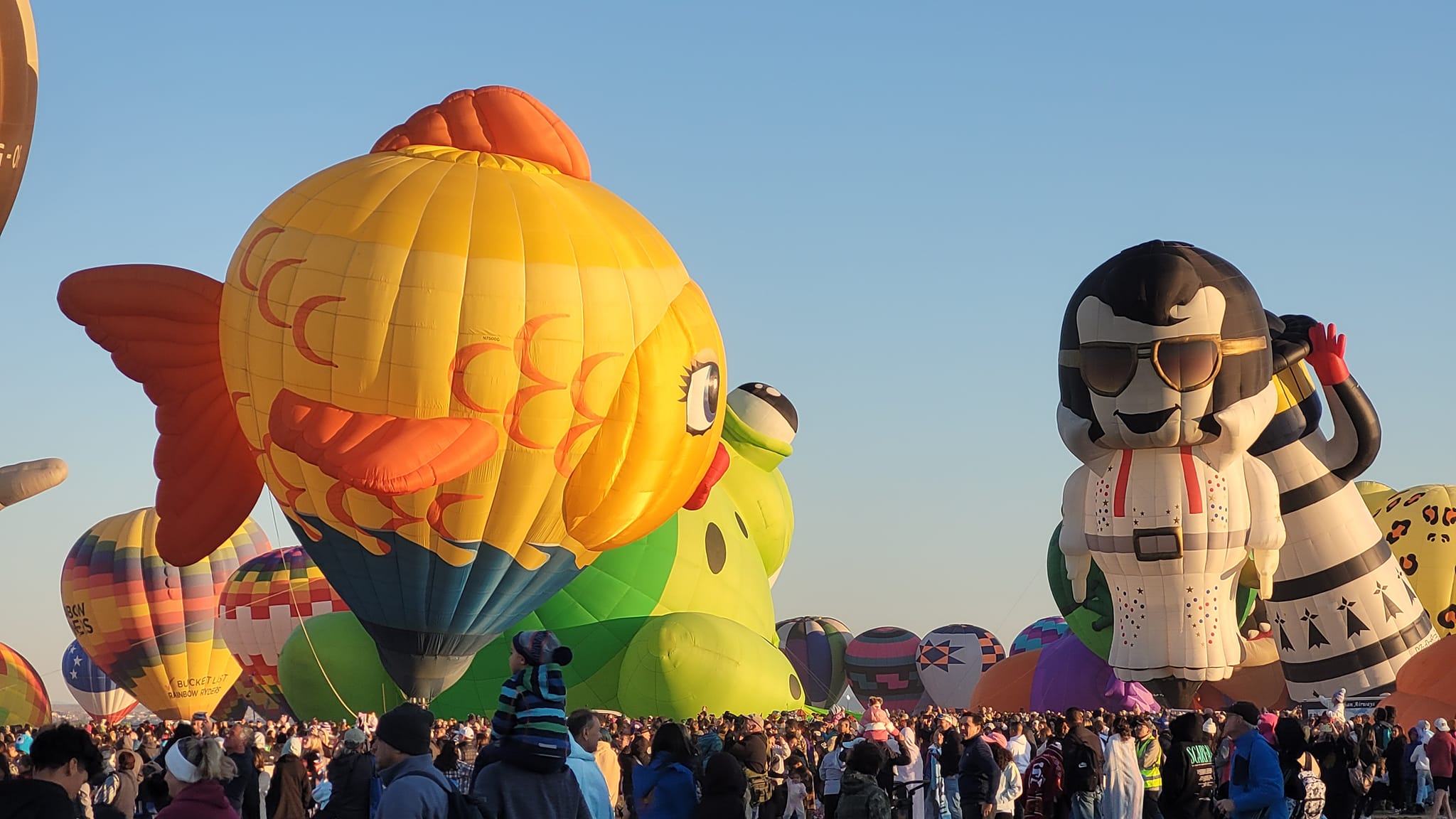
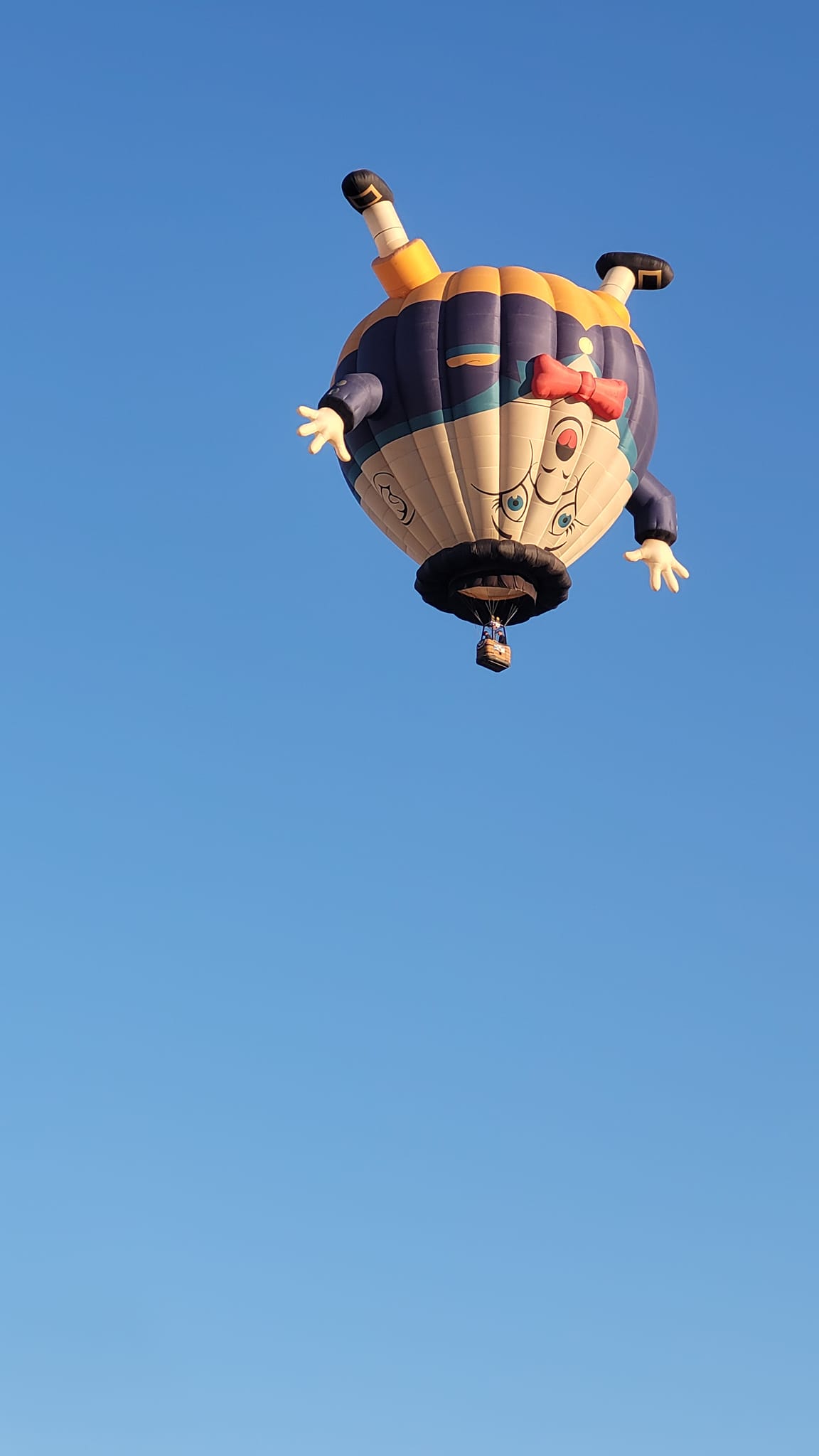
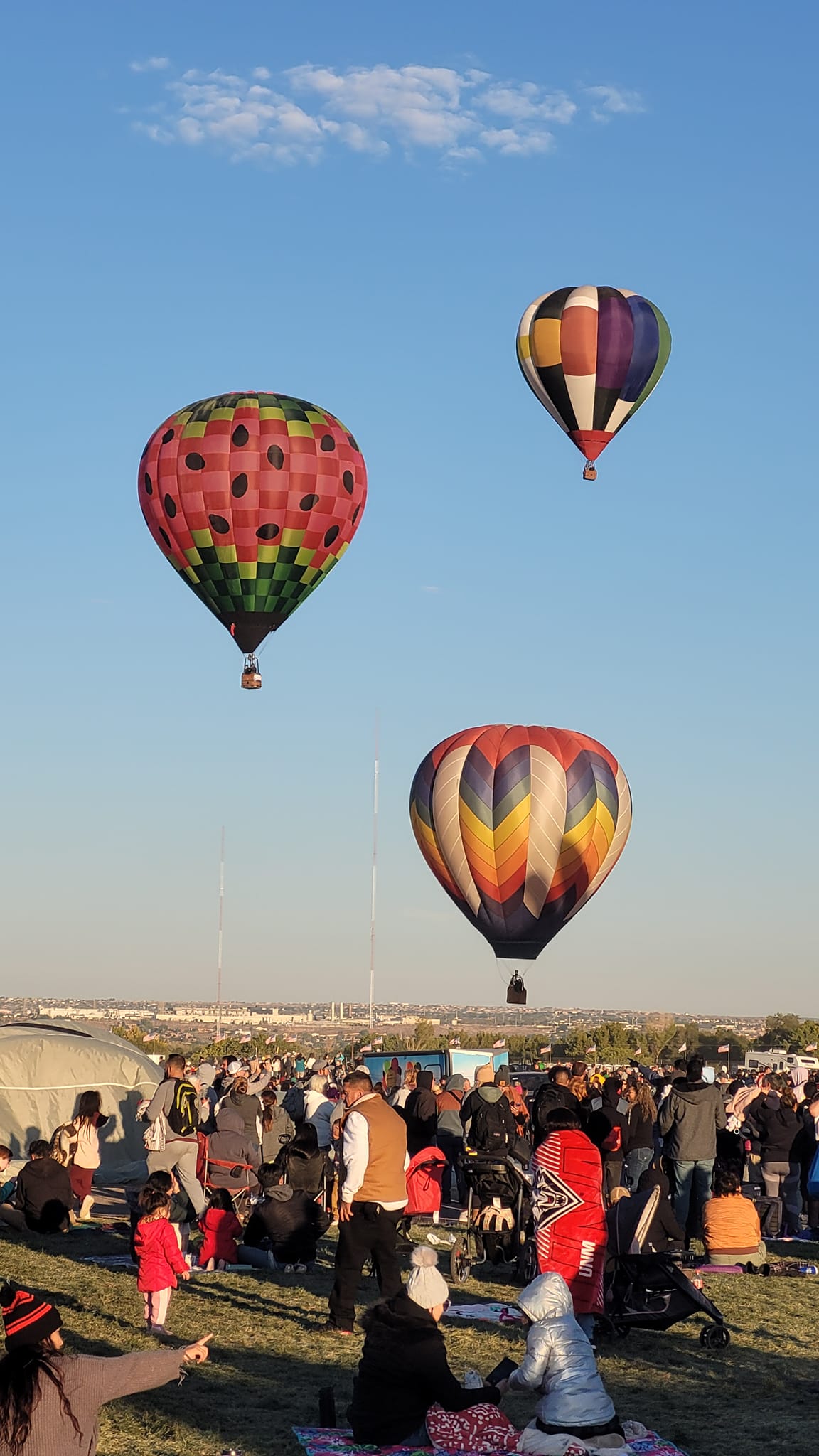
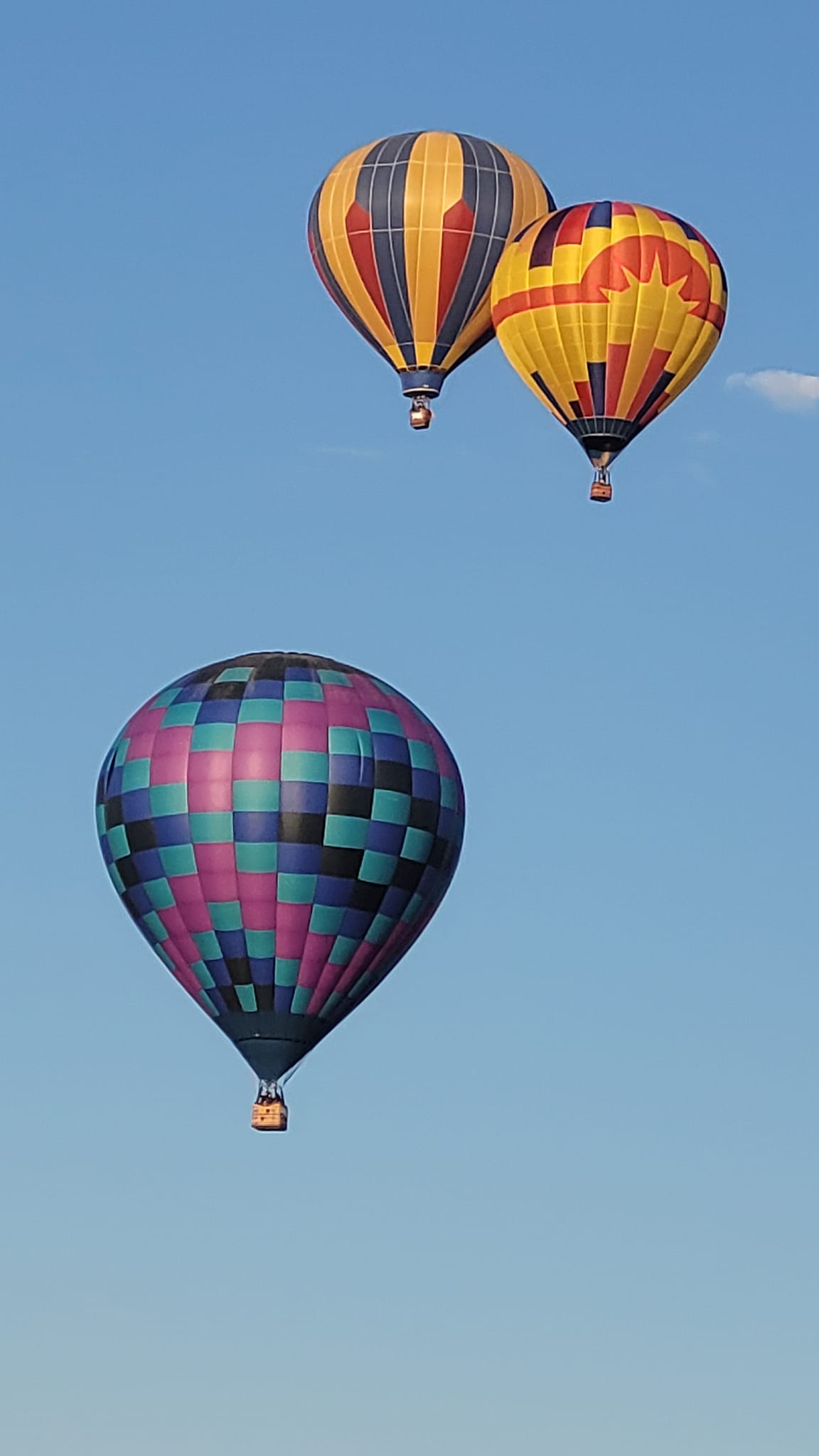
With color

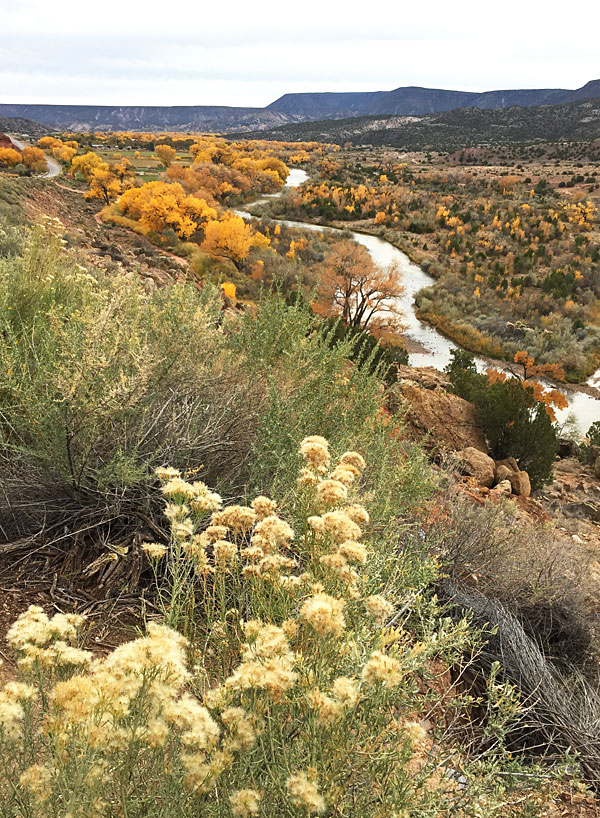
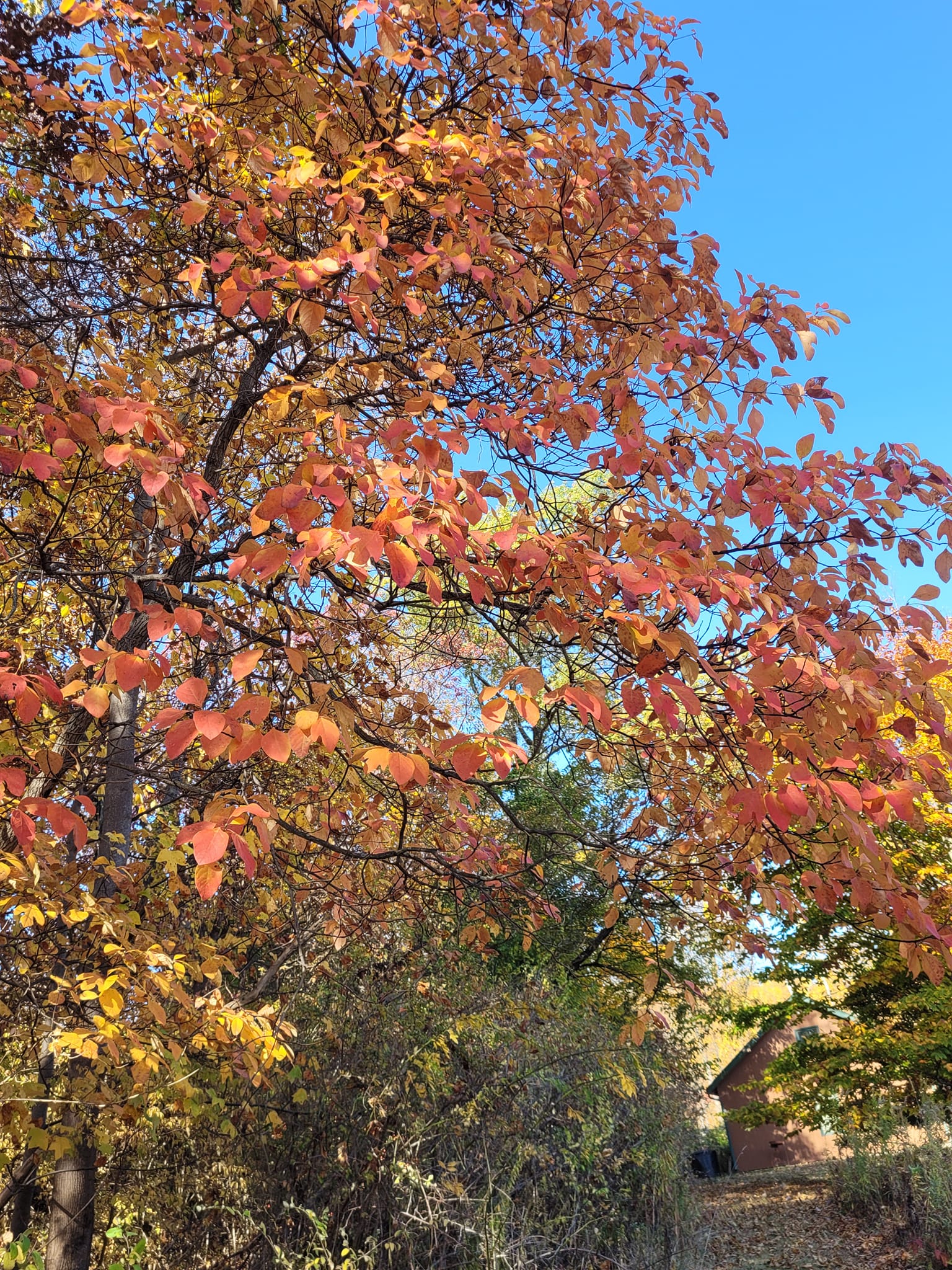
I’m taking a break from the garden and from the news cycle and indulging in a different form of work: “Making Poems, Making Books,” a 4-day workshop with poets Anita Skeen and Cindy Hunter Morgan at Ghost Ranch in Abiquiu, NM. Yes, I’ll be making my own book–a small accordion book. There are about a dozen of us in the workshop, which is centered around the idea of color. Autumn in northern New Mexico offers a range of hues somewhat different from the post-equinox colors of eastern Pennsylvania. Perhaps that will inspire me. The last time I took a workshop here was in 1993, and I learned how to draw/paint in chalk pastels. A long time ago–and yet, walking around the dusty alfalfa field in the center of the Ranch’s office and dorm buildings, I felt completely at home. As if I’d been here just last year.

This week differs from the artist residency I attended at Joya-AiR in May because I’m part of a class getting instruction in how to make a hand-made book and also participating in feedback on our writing. Nonetheless, every afternoon there’s a nice stretch of time to work on solo projects, hike, drive to some nearby sites of interest, or nap. I will admit I have been doing more napping than I had hoped. The high altitude, dry air, walking more than usual (on rocky trails) and the emotional energy it takes to learn a new skill and meet new people have conspired to creep up on me some afternoons.

That’s fine with me, though, because I’m banking many images, quotes, anecdotes, ideas, prompts–all the things memory can do.

And I am drafting some new work, so there’s that as well.

~

Enjoying the session and the people, third best thing about this trip. Being back at Ghost Ranch, second best thing, though it is perfectly wonderful. Best thing? Getting some time in the Albuquerque area to visit with my daughter and her partner. And their dog. And their cat, guinea pigs, and beehives. According to her, bees kept in hives (apiculture) are considered considered agricultural animals.

Who knew?

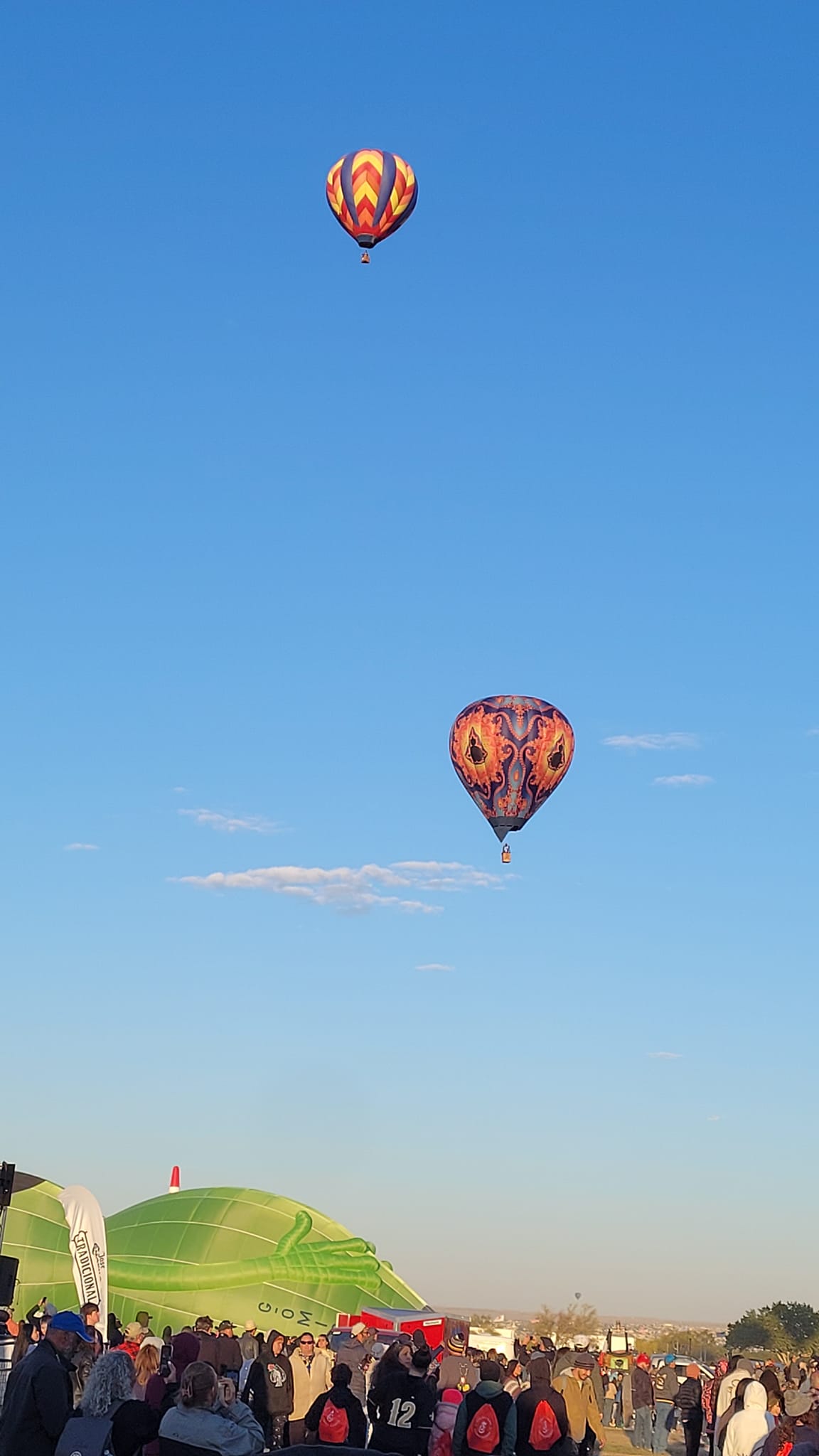
It’s time for my nap, I think. But I have wanted to post about this workshop/retreat before I get home again, just to remind myself of how grateful I am to be here, to be writing, to be seeing my child, to be–yes–escaping from the media frenzy as the presidential election looms. If that seems like something you need, as well, all I can do is send a few cheerful photos I took at the Albuquerque Balloon Fiesta.

~

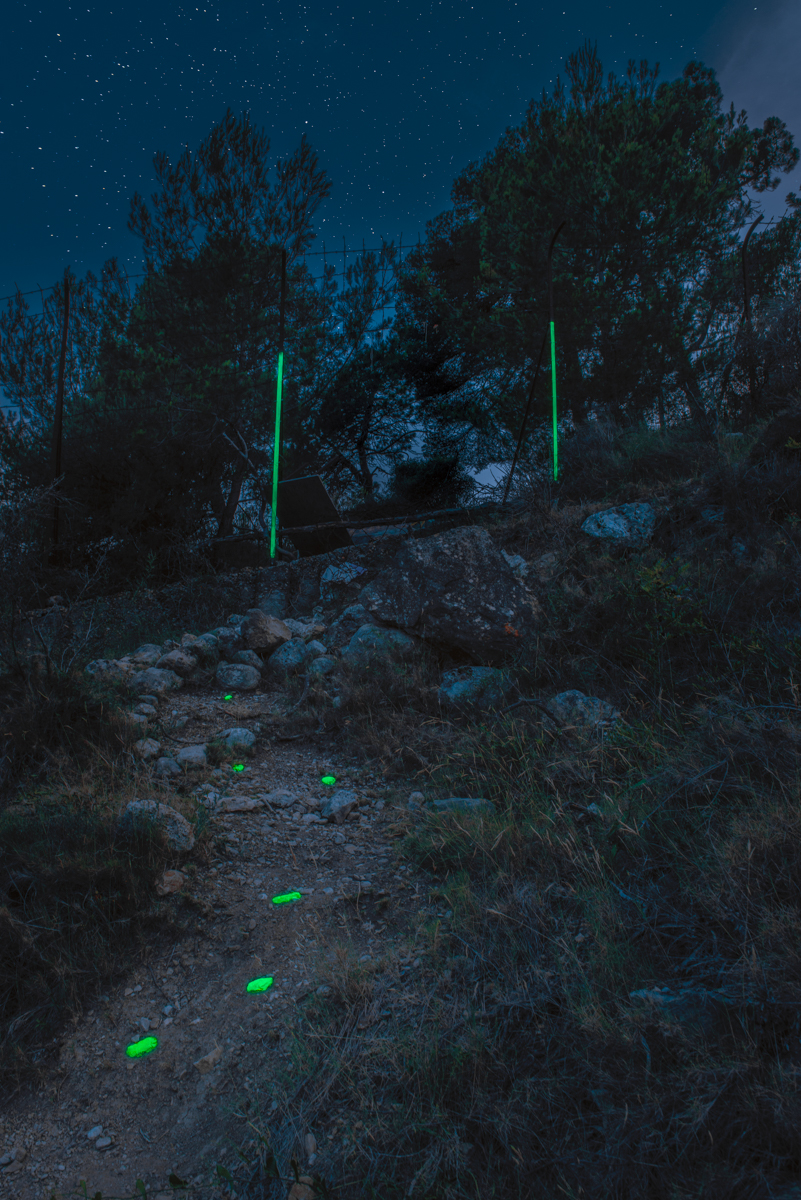
Northern stars

Northern Stars (2023) Celestino Marco Cavalli

~

A phosphorescent path
connecting Italy and France
through glowing stones
that look like stars.
A poetic and political action.

~

https://www.celestinomarcocavalli.xyz/work.html

The installation shown here was created by one of the artists I met while at Joya, Celestino Marco Cavalli. The link above will take you to a description of his project. In brief, it is a series of fluorescent-painted stones that follow a trail refugees travel on their way from the Mediterranean, through Italy, and into France. The website does not include the many photographs Celestino took during his 5-month visit there to document the conditions under which emigrants travel–the trash they leave as they abandon belongings, the graffiti and the notes to others they leave in caves and hollows, the prayers they write, the places they shelter from the sun or rain or cold weather. Do the refugees litter the mountain paths? Yes. Do they do so out of desperation? Also yes.

This installation is innovative, compassionate, and political–also problematic; as always, borders between nations are fraught with concerns about each country’s boundaries, laws, rules and regulations. These days, most immigrants taking this trail (through Italy) have come from the global south, where the climate damage wrought by industrial nations has made living in poverty even harder and fostered political unrest. And the immigrants take huge risks–with no guarantees that they won’t be deported, or preyed upon by criminals who exploit their vulnerable status.

I’ve never been a refugee, an exile, an immigrant. I have met quite a few, though–often very young people, students I encountered at the college where I worked, students from Haiti, Dominican Republic, Turkey, Syria, Lebanon, Mexico, Venezuela, Pakistan, Eritrea, Viet Nam, Kenya…and my husband’s stepmother, who arrived at Ellis Island from Austria between the wars. And a colleague who was stranded at college in the USA when the Ayatollah took power in Iran, and a fellow employee from Cambodia, who lost her entire family except for one brother to the Khmer Rouge. Whenever I hear about the politics of immigration (which is often), I think of them: how hard they work, what they sacrificed to get here, how hopeful they are, how challenging their lives have been and continue to be. And their grief.

The following is a persona poem--"A persona poem is a poem in which the poet speaks through an assumed voice" (Academy of American Poets). Celestino's Northern Stars is my "prompt."

~

Refugees

Because we must hide by day
and travel at night, darkness hinders.
The narrow stony trail offers options:
turned ankles, torn skin, or a precipice
that takes us sliding down the mountain,
an avalanche of self, death’s prospect.
No one arrives eager for exile;
we’re just trying to save ourselves,
our families, a few belongings
we used to think were precious.

The way we take may be steep—
everyone knows that metaphor—
what we never expect is how much
it is an unburdening of all
we thought was necessary,
an education in physical need.
Shoes, for instance, more critical
than underwear. Ancestors emigrated
on callused feet without watches
or water bottles. The least cut could
go septic, a child’s wail could betray us
to predators or enemies. Still true.

One by one we let things go, abandoned
in shallow caves with other people’s
remnants, plastic bags and t-shirts,
books, candlesticks, so much trash after all—
even our skins can barely hold what
we need anymore. We arrive shriven,
numb as feldspar, having walked so long.
May we have water? May we rest, with our
children in our laps, and sing the songs
our parents taught us not so long ago.

Just reading

Sunday evening, my weeding stirred up so much dust and chaff that I needed to wear a bandanna around my nose and mouth. A continuous late-summer drought. There are still tomatoes and basil, sunflowers and zinnias, but the avian migration has been going on for some weeks and the days are getting shorter. Just after equinox, three weeks without rain; at last the sky clouds over and drops a little moisture on the parched soil. Yellow leaves sift onto the lawn. Small flocks of robins rejoice in the softer top layer of dirt, pull at grubs and worms, then fly off.

~

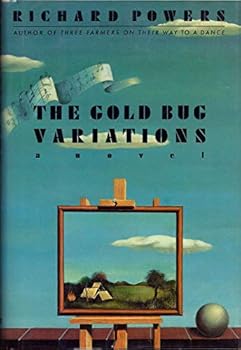
The rain’s necessary, and I’m grateful. Rainy days, however, take issue with my body–or, probably, the other way around. The need to take NSAIDs and rest offers the opportunity for just reading. This isn’t a bad thing, especially as I had Richard Powers’ novel The Gold Bug Variations to hand. It’s a tour de force of pattern, structure, code-breaking, DNA-building, relationships, love, chemistry, music, art, literature, and much more. I love the references (the narrator is a reference librarian), the minutia, history, alliteration, lists, compilations*, the whole thread of the novel’s dramatic arc, its relationship (mathematically, metaphorically, structurally) to music and the work of the gene-sequencing science. The book tells the parallel stories of couples who fall in love 25 years apart, the coincidences and randomness, the patterns that may not be patterns. I’m thoroughly wowed by an author who puts so much research into his writing and makes everything fit somehow.

Powers must have been about 33 when he completed this novel. I can’t imagine being so wise about human behavior and so informed about the sciences and music theory at that young age. Well, for one, I’m not as brilliant as he is; and two, I was raising toddlers when I was 33, which is a science unto itself and as revelatory as any book I could have been reading or writing in early mid-life.

But I digress. This book interests me on so many levels that I’ll be thinking about it for weeks. I may have to re-read it, take notes next time. I kept wanting to underline passages–it’s a library book, and marginalia is a no-no. I can imagine reading it again to the strains of the Goldberg Variations–indeed, I read a few chapters to said accompaniment this time. This is not a swift and easy read: it took me awhile to feel warmed up about the narrator, though she’s funny and smart. By the end, I loved her like a friend.

Honestly, novels seldom get me this excited or inspired. I’m glad I had a crappy day so I could justify lying around and “just reading.” As if “just reading” is not a worthwhile endeavor. The weeds can wait.

~

* re compilations: a word Powers employs often in this novel is the neologism/computer programming term “kludge.” I wasn’t familiar with it. But it’s a terrific word! https://www.etymonline.com/search?q=kludge

Crabgrass

I have been at work in the vegetable garden during the past few dry, sunny, late-summer days–it has been rather droughty here–and pulling up weeds in an effort to get an early start on putting the patch to bed for autumn. I have decided not to do any late-season sowing this year, and therefore I can pretty much tear up everything if I feel like it. Today I was thinking about my mother-in-law, who died in 2017, but who was sometimes my partner in the garden, or I in hers, when we were younger. I learned a great deal about ornamentals from her.

At her property, crabgrass was a particular scourge. I remember us weeding flower beds together while she muttered, “Crabgrass! Always crabgrass, how I hate it!” It struck me odd at the time that she pronounced it “crebgrass,” with the first “a” like a short “e”, because she said the word “crab” and similar words with an open short “a.” It was almost as though she reserved that pronunciation to express her ire at this particular weed. She liked weeding at my house partly because I had so little crabgrass. Plenty of other weeds, but not much crabgrass.

Our weeding together took place over 15 years ago, when my gardens were on the new side, maybe a decade old. Today, however, I find my vegetable patch very much colonized by digitaria sanguinalis…one of the finger grasses, a very successful weed that can produce 150,000 seeds per plant. My garden now hosts both smooth and large crabgrass; the former is much easier to pull, though it can set seed even when it is mowed to under an inch in height! Large crabgrass, when it gets going, can grow over a foot tall and have a base rosette of 10″ with a star-like (or crab-like) set of leaves and quite tenacious roots, for an annual.

While I worked (too late, I really should have gotten to the weeds long before they began to set seed), I heard my mother-in-law in my mind: “Crebgrass! How I hate it.” Well, dearest Gene, I have finally encountered the Eurasian colonizer in my own gardens. And I miss having you around to sympathize with my plight.

 Maudib | Credit: Getty Images

There’s a metaphor here, I know there is. Maybe there’s a poem in this experience, too? For the time being, pulling weeds reminds me of someone I loved–and takes my mind off of another person I love, whose dwindling and decline (her “diminishing”) stay uneasily in the background of everything I do these days.

In the between-season time, with autumn almost upon us, I want to remind myself of the joys that come along with the crabgrass. Such as the brown crickets and the morning glories and the goldenrod…and memories of people for whom I have cared a great deal.

~

báilù

白露 báilù is the section of the lunisolar calendar that refers to the two weeks before the autumnal equinox; the translation is “white dew.” Misty mornings here and there, damp grass, dew spangling the tent spider webs in the meadow, draping the grasses and goldenrod with white gauze. Brown crickets sing, but the cicadas have left off. Nuthatches return. Squirrels knock walnuts off the branches daily, so there’s a regular thump-thump sound along the treeline. My summer-loving acquaintances bemoan the cooler days and insist summer’s not over until the 21st. My fall-loving acquaintances are picking apples and celebrating the return of pumpkin-spice flavoring to their favorite beverages.

I like the in-between times, the verging of seasons, aspects of change. Change means life, even though the onset of autumn traditionally signals the dying of the year. On my walk this morning, I took photos and made a mental list of changes that are flags of the coming season: acorns on the bough; morning glory still open at noon (in Japanese literature, the morning glory is a signal of autumn’s approach); burning bush shrub going pink; pennants of yellow walnut leaves; ripe wild grapes–deep navy blue, quite sour, and full of seeds; sweet autumn clematis (terniflora) in its whirly seed state, swarming over the hedges; oak leaves, five-leaf vines, and sassafras starting to color; winterberries already red; acorn detritus on the tractor path; pin oak galls (probably thanks to the wasp Callirhytis furva) on a leaf. All of these are mid-September features in eastern PA.

If I were feeling more poetically creative, I might try writing haiku using each of these as the image word. But my current state is fretful. Pulling weeds and taking walks ease my mind a bit. Sitting down to write, not so much. However, reader, I encourage you to try the exercise.

~

Helpless

The weeding continues apace. I no longer do a clean rake-up of the gardens in autumn, because I now know that bees and other creatures overwinter in foliage debris; but it is imperative that I get the worst of the vines and perennial invasives out of the beds. We had a bit of rain recently, so I went out to claw and pull. Underneath the spreading Japanese maple, I found this:

~

At first, I thought I’d found a fungus. Upon poking, I realized it appeared to be sections of a paper wasp nest. Hmmm. It took some craning of my neck and crawling much further beneath the tree, but there it was–the remains of a paper wasp hive dangling above me. Certainly it looked unoccupied, but I crept out from under the boughs just in case.

Under the tree, and twined throughout the flowerbed, I found quite a few sumac seedlings and plenty of poison ivy vines. Sumac and poison ivy are native plants, not invasive species like loosestrife and wintercreeper, but I don’t fancy having them in my perennial gardens. More yanking will be required soon.

~

At least I am doing something that, while rather disheartening–the weeds will always come back, weeding’s as endless as housework–keeps me moving and outdoors and occupied so that my mind whirs around less. It appears I’m weeding as a coping strategy while my mother continues to spiral toward whatever is next for her. Hospice care. Death. The inevitable, with the unknown “when”.

What bothers me most about her situation is how helpless she has become. My mom endured some childhood traumas, times when she truly was helpless. She learned to find and deal with her anger, with trouble and conflict, with physical pain, but she hates feeling helpless. And over the years, her inherent pragmatism and stubbornness, as well as her patience and a little emotional counseling, have served her well. I can only recall once when I saw her feeling helpless (and only briefly). It rattled me, but I was also impressed by how quickly she regained emotional equilibrium and took a small action toward…well, toward not being helpless.

And now, she is. Helpless, I mean. She cannot speak, feed herself, walk, or even sit up unassisted in bed. The prognosis for her recovery is so-so. She may manage to regain a little self-sufficiency. Or not. After all, she’s 91 years old.

The paper wasp hive seems like an analogy to me. When it has served its purpose, for all that it sheltered its denizens so well, it rattles apart, breaks down bit by bit, no longer resembles itself. Helpless in the wake of another winter coming on.

~

My father never cared for Neil Young, didn’t like his vocal delivery. But my mom heard the Déjà Vu album over and over in our house when we were teens, and she liked it.

~

Poem-ish thing

I don’t really feel ready to write what’s on my mind today. I do appreciate the cooler weather that means I can mindlessly pull weeds from the perennial beds and the vegetable garden without sweating or sunburn. Here’s a spur-of-moment poem-ish thing to mark, for myself, the place I’m at.

~

All morning, redtails shriek overhead
pleas or threats
or just announcing their presence
they don't much care
how I interpret them.
I don't interpret them.
Listen only for brown crickets,
whirring cicadas that have begun
to wind down late in August.
My father died in an election year
77 days before he could have
cast his vote. I'm reminded of that now,
how distracted I was and how,
though the election mattered,
my father mattered more.
For most of us, what's near the heart
obscures other concerns. Look:
there is dew on the grass,
barn swallows have
already left the garden.
~

Action, observation

I got my latest manuscript more or less under control. It took eight months of wrestling, tweaking, cutting, revising; I’m still not certain it is “there,” but I’m going to start submitting it at last. The process of submitting to publishers tends to be lengthy, but just doing it keeps my mind engaged with the poems as a collection. After I send the manuscript out, and especially once it is returned to me, I feel more agile about further editing. This is assuming it won’t be picked up right away, but that isn’t a bad assumption, based upon my experience.

Furthermore, thinking about the book and where to send it keeps my mind occupied, keeps me in a place in my life where I can take action, where what I decide to do might matter a little bit. That’s a frame of mind I can use at the moment, when my mother has begun to decline rather more rapidly (and there’s not much I can do to stop a 91-year-old from dying, however long it takes). When a former student is recuperating from major accident trauma in the neurology unit of a nearby rehabilitation center. When a long-time friend has suffered a brain bleed and hip fracture–and now, dementia–and will likely live out her days in assisted living or a nursing-care institution. Not to mention the broader concerns and tragedies I hear about in the media, which affect me and those I love less (for the moment), but which have long-range consequences that few of us can avoid.

If there is little I can do to make a difference, I can still do something. We contribute to the life of the cosmos in many different ways. I try to be constructive when I can and otherwise remind myself to enjoy the things life offers. Recently an enjoyment has been the incredibly cool photographs made by my Joya colleague Johanna Rönn. Also Alison Pollack’s tiny mushroom photography posted to Instagram. The internet offers almost as much joy as it subtracts. You might enjoy these images, too.

I’m reveling in local produce, too, which has been lovely this year–good peaches, pears, apricots, though the sweet corn has been a bit disappointing. At my house, we are eating lots of cucumbers and tomatoes.

Also enjoyable? Mornings and evenings on our back porch, looking out at the woods. True, we are saddened by continuous loss of trees along the treeline, and it means work ahead in fall: chainsaws and splitting and stacking. But. In the evenings, bats and the last of the lightning bugs, tree cricket chorus and cool breezes. In the mornings, tea or coffee with the cat at our feet, finches hitting up the sunflowers and amaranth for seeds. Today, a hummingbird flew over from the buddliea and hovered not ten feet from us, weaving ever so slightly as if observing and determining what we might be.

Photo by Chris F on Pexels.com

August

August is the month of the Sealey Challenge, which basically urges those who like/love poetry to read a book of poetry each day of the month. I haven’t given myself the challenge this year, but I am posting individual poetry books on my Instagram account daily–books from my personal library, mostly–and that means that I read a few of the poems, too. Sometimes I get carried away and re-read the entire book. [@aemichaelpoet]

This is not a bad thing.

Meanwhile, August this year behaves as it usually does, weather-wise: blisteringly hot and wiltingly humid. That would be okay except that June was so hot and dry and now an early hurricane has begun its climb up the coast; for now, we are stalled in a heat dome, and by Friday we may be inundated with rain. All of this means that my tomatoes are likely to split just as they all get plump and ripe. It also means that our annual folk life festival (Goschenhoppen) is likely to be a muddy, damp affair with fewer attendees than usual. These things happen, and they happen more frequently when the planet undergoes climate change.

~

August, as most of us learned back in grade school, is named after the emperor Augustus, whose name means “venerable, noble, majestic.” [Source: my favorite, Etymology Online]. The online source notes that “In England, the name replaced native Weodmonað ‘weed month’.” Weed month is a perfect name for August, and I think I will adopt it from now on. It certainly fits the current state of my vegetable patch as the dog days keep the outdoors too miserable for heavy labor in the dirt.

At least for me, however, the laboring can be optional as long as I don’t object too strenuously to a haggard-looking garden. The people who are truly hard workers this time of year are construction and road crews, landscaping crews, farm workers, roofers, line workers, and others who have to brave the heat and humidity to make a living. Also the janitorial staff crews at schools and dorms and other older buildings that don’t have reliable–or any–air conditioning. When we are outdoors working at the festival in August, we get a taste of how challenging it is to do physical work in the heat. This is actually an educational aspect of the festival for those who participate, especially for younger people who are new to the festival. We remind them that people worked like this all the time, in summer and during snowy winters and in the rain and without electricity…with no escaping it, since they needed to work hard just to stay alive.

Perhaps unfortunately, our forebears’ grinding efforts may have led to the idea that only hard work will save us and make us morally upright human beings. Few of the early Germanic settlers here had much time to read or compose poetry, to savor novels, to learn to play an instrument. Art was acceptable to a degree, so long as it decorated otherwise-useful objects. The poetry of the Bible was acceptable, but it wasn’t studied for its beauty. A person with my sensibilities and temperament would probably have been an outlier in Goschenhoppen’s historic community. If I’d lived to be 66 in the early 1800s, I’d be considered “an old cripple,” mostly blind and bent over with arthritis and stenosis. But maybe I’d be the kind of old woman who tells stories.

On the other hand, maybe I’d be considered a witch! I guess it depends on what sort of stories one decides to tell.

At a previous year’s festival, with my daughter. Bewitching the local kids with potato candy!

Persistence & belief

I wrote a poem for my brother 25 years ago or more, when he was in his early 30s and having mysterious and frightening cardiac issues. He was working on geological and wetlands surveys for the county and feeling fairly uncertain about his career, as often occurs when one is in early mid-life. My initial drafts included a quote from a Rilke poem and some geological terminology. That poem draft, as a whole, didn’t quite “work,” however. I gnawed on it for well over a year, tweaking and revising. I showed it to Ariel Dawson, a friend (alas, now gone) whose critique and suggestions I respected. She gave me some ideas for revision and told me she thought this was a poem with real possibility. I just hadn’t quite gotten to the final possibility yet. She told me it was a poem I should believe in, keep working on.

Some years later, after a major reworking, I sent it out. Several times. No one accepted it; a couple of years later, I realized where it was in need of a change. Tried that. It felt better to me. But no one accepted it for publication. Fast-forward about 18 years, and I made yet another change in the poem. I thought maybe it was still worth submitting to journals. Nope. But, last year, reassessing some older work, I came across this poem and thought it was actually a pretty good poem, worth sending out a few more times. One might say I believed in the poem.

This post is to say: Be persistent, writers, and do believe in your work! Because Jane Edna Mohler at Schuylkill Valley Journal chose “Heart-Work” and two of my other poems for the issue that just came out in print (and I do love print journals!). [Purchase the issue by clicking here]

That poem found its way into print 25 years after I first drafted it.

Something equally as nice occurred when I received the print copy in my mailbox. Peter Krok, the long-time editor in chief at SVJ (since 1990) and a long-time colleague-in-poetry, sent along a lovely note in which he praised Jane Edna’s editorial sensibilities and then kindly said he felt that my poem “Heart-Work” was exceptional. How frequently does that happen? Not often, I can promise you–although I suspect such comments are more likely from small independent journal editors and presses. Those lovely people are involved in the arts for the love of poetry and the humanities. When they find time, they can be marvelously encouraging. Let us thank them personally and to the world!

~