Words fail, & yet–

On December 24, 2012, I posted about a school shooting. So little has changed.

Words fail. And I work in a classroom setting, as do many of my friends and colleagues, and my children’s friends and colleagues (now in their 30s and willing to be teachers–bless them!). These events are not things we can ignore by staying in our own little bubbles of “it can’t happen here.”

~

Words have failed so profoundly that I’m out in the garden instead, or indoors cleaning my bathrooms or reading books. Books–always my solace when my own words fail.

My latest good read is David Crystal‘s 2004 The Stories of English, already out of date in its last chapter–a fact I’m sure he gleefully acknowledges. I adore his love of how language evolves and find his non-prescriptivist approach refreshing and necessary if we are to keep literacy and communication alive. This book gave me so much information, enriched the knowledge I already have about our language, and made me laugh, too. Granted, it is word-geek humor…but that’s how I roll.

And I needed a few laughs this past week or so. My heart aches; I am sore afflicted for more reasons than I care to explain at present, though the headline news certainly has much to do with my mood. Crystal’s book got me thinking about the course I teach (come fall) and how I’ve already toned down the prescriptiveness in order to convince my students they can write and can be successful with written communication; that they are not “wrong,” just that their audience for written work differs, in college, from high school and from text messaging and other forms of writing. Crystal says we who teach English need to get over the concern about split infinitives and pronoun antecedent agreement and focus on clarity and genuine expression. I have no argument with him there–but many people I know would quibble and complain. And the English lexicon offers us so many options for how to say we disagree!

~

A book about words–but no, a book about human communication through the mediation of words, spoken and written, and how we got to the forms (plural!) of English we now use to express ourselves. There’s a kind of splendid optimism in Crystal’s thinking about language that somehow made me feel a little less low in spirit. Ah, yes. The solace of books.
Limbo

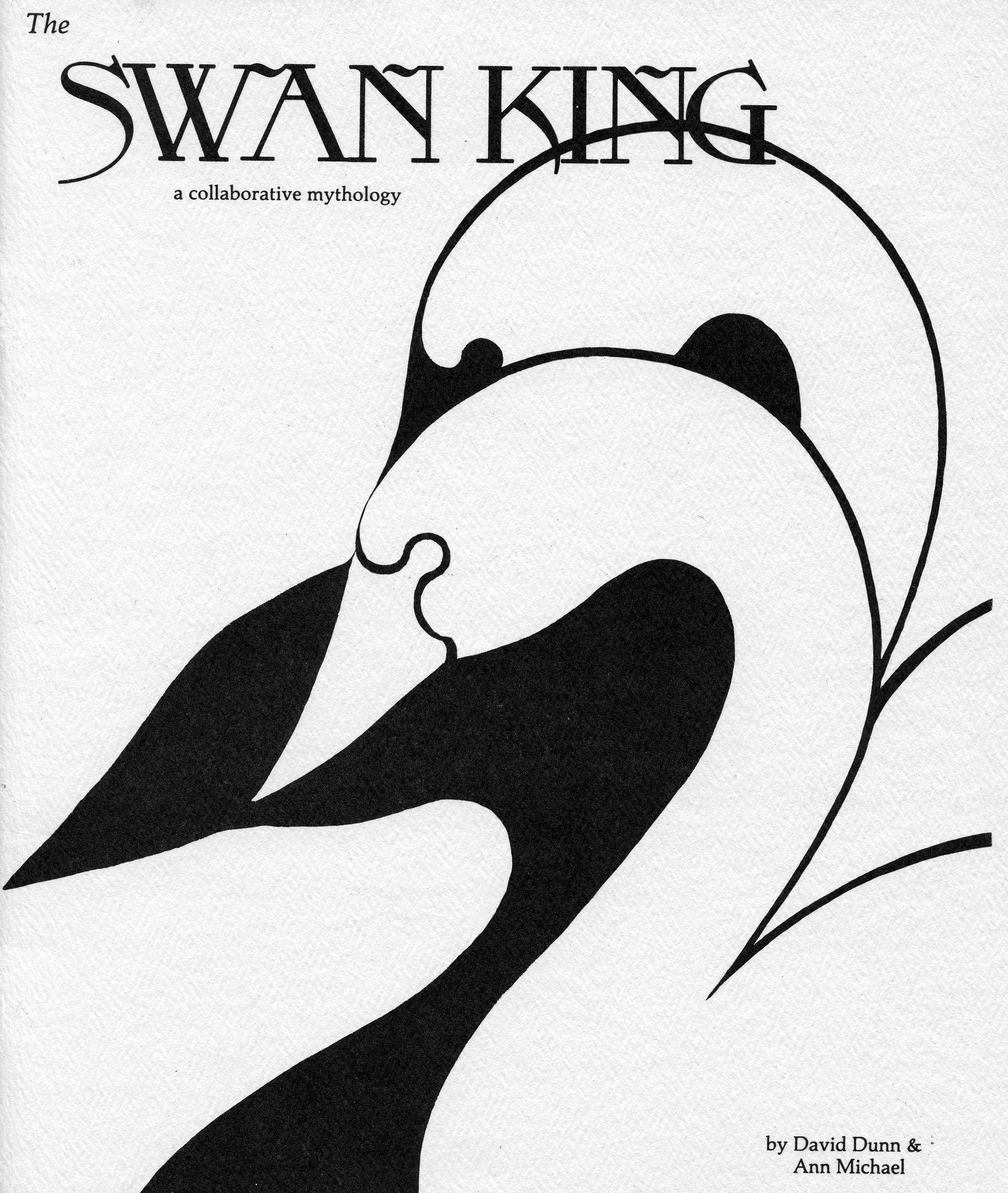
Many years back–let’s say decades–my friend David Dunn and I briefly became small press chapbook publishers. It was not an easy task at the time, and expensive; but I worked at a type shop and could get the type set for free and a discount on the printing. We dubbed our concern LiMbo bar&grill Books. It was decidedly a labor of love, but we published four chapbooks and two broadsides before packing it in. The name emerged from David’s postcards and letters to me, in which he’d sometimes begin “Greetings from the Limbo Bar & Grill.” We were poets in our early 20s, underemployed during a recession, without any network to universities or well-connected writers. It felt like limbo.

Forty years later, dear David is dead; I have had modest success as a published poet since then–not enough to move me past avocation status–and the entire globe spins in limbo as pandemic, climate crisis, war, and oligarchies combine to keep things as interesting and unsteady as ever they were. It feels like limbo.

Feels like limbo on the publication side, too. Because my poetry collection that was supposed to be in print by 2020 seems to be indefinitely on hold. Covid interfered, the contract never arrived, and I’m beginning to wonder whether my emails are ending up in the publisher’s SPAM filter. It’s not surprising that a small independent press–in most cases underfunded and understaffed–might lose track of, say, a manuscript or two during the hassles of the pandemic protocols and all that has wrought.

Or perhaps the press has decided not to publish my book after all. The oft-rejected writer who lives inside my head supposes that could be the case and mourns, assuming the worst.

Now, I’m in a quandary. I wonder whether to resubmit the manuscript elsewhere. Is that okay to do, since there hasn’t been a written contract? Clearly the book is publishable, since it was accepted in the first place. I have a much newer manuscript I’ve been re-compiling and re-ordering (and revising). Do I focus on that, instead? I don’t quite know how to proceed. Yep: limbo all over again.

~

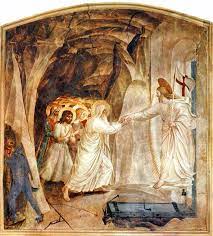
[LiMbo’s first chapbook, ca 1982; Fra Angelico’s “Christ in Limbo,” ca 1441] https://www.wikiart.org/en/fra-angelico/christ-in-limbo-1442

Important

In his recent book Singer Come from Afar, Kim Stafford suggests the difference between great poems and important poems has something to to with the occasion of their relevance. He says important poems “are utterances written as a local act of friendship or devotion, and given to a person, shared at an occasion, or performed in support of a cause.” Such a poem may later be considered a great poem, though more often would be relegated to the status of “an expendable artifact of the moment.” Framing poems as expendable artifacts does seem accurate in many regards. A page, that can be burned or shredded; an oral performance, uttered into time and lost thereafter; a digital event, that can be corrupted or invisibly archived in the “cloud”–those fragments and unfinished pieces we let languish and eventually discard. Perhaps important to us once, these poems are ephemera.

Stafford’s recent collection celebrates the local and the relevant, even the immediate, at the risk of not being lasting, whatever that may mean. Published in 2021, the book includes a selection of pandemic-related poems, many of which appeared on his Instagram feed @kimstaffordpoetry. Few of these poems are “great” in the literary sense, in my opinion, but that doesn’t mean they are not worthy of publication; this reader appreciates the urgency in the pandemic poems, the need to connect with others sharing the predicament of “social distancing.” We should not ignore the value of local, person-centered poems, narratives of the everyday. Not every human interaction requires epics, and really–the majority of contemporary poems address the small important events and metaphors that sometimes resonate with larger aims. My own work tends that way, so I’m not one to talk about greatness.

Besides, there are a couple of poems in Stafford’s book that will hold up well to literary explication, poems I have already enjoyed re-reading, such as “Chores of Inspiration” and “Do You Need Anything from the Mountain” with its lines “Bring me that skein of fire/that hangs in intimate eternity, after//the dark but before the thunder, when/the bounty of yearning in one cloud/reaches for another…”

I guess each of us has the capacity to evaluate what it is we consider important and what we consider great. I happen to like the bounty of yearning in Kim Stafford’s clouds.

~

Reading poetry

In March, I made a pledge to read more poetry than I had been. A poetry book a week, either a new one or a re-read from my stacks (because, yes, I have too many books…). And then I attended the AWP conference, which features an amazing book fair; you can guess the outcome of that.

Now that it’s National Poetry Month, I have plenty of books in which to immerse myself. I chose mostly contemporary writers this time, and the work of some poetry colleagues I have met through past conferences and social media. Here’s my by-the-bedside reading for the next month or two.

Two by Tim Seibles, because his work is such fun to read as well as thoughtful, sensual, and deep–and because he’s my age and his memory-based poems are packed with things I can relate to. I just read his 2012 book Fast Animal and have One Turn Around the Sun in the reading pile.

Eleanor Wilner’s early and uncollected, Gone to Earth. Kim Stafford’s Singer Come from Afar. Susan Rich’s new collection Gallery of Postcards and Maps. Cieve, by B. K. Fisher.

I’m browsing through the anthology Here: Poems for the Planet, edited by Elizabeth J. Coleman–a lovely selection of “ecopoetry.” I discovered a White Pine Press collection called Dreaming of Fallen Blossoms, Tune Poems of Su Dong-Po, that informed me about a type of poem I’d never heard of, the tune poems or song poems of 11th-c. China. Translated and prefaced by Yun Wang, and presented with original text on facing pages, it’s a fascinating set of poems for historical reasons but also offers really delightful poetry. I’m also awaiting the arrival of Emily Rose Cole’s Thunderhead. Emily went to high school with my son, and I am thrilled at her development as a really serious and talented poet. I can say “I knew her when…”

I’m going to sign off, post this update, and read a book. Happy National Poetry Month! Reading is the best way to acknowledge the art.

~

Revision practice

It is National Poetry Month again, and this year, in recognition of the celebration, I have started a practice to experiment with, just out of curiosity and to give myself a nudge. Many of my poetry colleagues invest a month in writing a poem a day or reading a poetry book each week or posting a poem daily on their social media platforms. It’s important to remind ourselves why we treasure and delight in poetry.

I chose a simple project that requires frequent re-imagining/re-imaging. For my starting point, I picked a poem at random from a collection of Fernando Pessoa’s work. I copied the poem, by hand, into my journal and re-read it a few times. Then I turned the page and rewrote it, “revising” it in the way I might revise a poem of my own. My plan is to repeat this process after a day or so, each time revising from the most recent version. In a short time, the poem will have moved away from being Pessoa’s piece–perhaps bearing little to no resemblance to the original…a sort of whisper-down-the-lane approach. The intention is to consciously alter image and voice in each re-imagining of the draft, though I’m not sure how well I can hew to my intentions. We shall see.

from City Lights Books.

Why I decided on Pessoa for this project, I don’t really know; but I think there’s something perfect about using one of his pieces as springboard. Because Pessoa was kind of a springboard for himself–he created several writer-selves who wrote poems and critical prose: heteronyms, he termed them. The poem I used was “by” his persona named Ricardo Reis. Adam Kirsch wrote a good introduction to Pessoa’s peculiar obsession with being a non-person in a 2017 New Yorker article. By revising something by Pessoa in my own voice and through my own images, perhaps I nurture his pursuit of dissolving the self.

It occurs to me now that the poems of several contemporary writers may have induced me to try this writing prompt, most recently Daisy Fried in The Year the City Emptied (which I highly recommend). Her collection consists of “loose translations” of Baudelaire, reimagined in Philadelphia during the covid outbreak while her husband was dying. It’s not a cheerful read–but then, neither is Baudelaire–nevertheless, the resulting poems are powerful and vividly interesting.

So, back to my little project for April: I figure this need not be a daily practice, though I have managed to get to revision three by now–so it is moving apace. The deepest challenge is not the revision, as I enjoy revising and wish I had more time and energy for it. The challenge is just that: time and energy! As the semester sidles past mid-terms into the final stretch, I get busier at work; in addition, my chronic health conditions have moved into a frustrating flare lately, leaving me fatigued and feeling as though my brain were swaddled in cottonwool and embroidery floss. The news from Ukraine drags on sadly in the background of my day-to-day. My mother’s aphasia worsens. I am dealing by plodding away, sometimes without much brilliance, at the revision challenge. Also by watching the goldfinches as they molt into their yellow plumage… and urging my tomato seedlings to flourish in their little indoor pots.

Then I pluck daffodils and set them in vases. There’s nothing like fresh flowers on the dining table to cheer a low mood. Onward to revision four…

~

daffodil photo Ann E. Michael

Home is where?

Yesterday morning, I went to a local library to attend a writing workshop on the theme of ‘home.’ In my own work, when I stop to consider themes that recur, some form of dwelling appears in image and topic. Frequently. Nests, burrows, houses, cities, places. Love, death, kinship, the natural environment, and home. My first book* used the process of housebuilding as its motivating metaphor for perfectly natural reasons (we were indeed building a house), but both before and after that group of poems, the theme of home has been a common one I have felt drawn to describe.

Even, now I think of it, the body as home: this structure of flesh and bones and blood and synapses that houses my consciousness.

My parents left their homes and families, and when I was a child we moved three or four times–not enough to feel any loss of stability but enough not to feel particularly rooted to any one place. I suppose I can say that I carry home with me, in my sense of being a conscious body in a space surrounded by an environment about which I am curious. I do not, however, feel rooted to a culture, community, or extended family who live in one region; I have no region, city, state, place, house that I claim as mine and refer to when I refer to myself. Among the ten people in the workshop yesterday, I was a bit of an outlier in that respect. Some of the participants felt split between two homes/places, others felt rooted, and still others had felt rooted but were feeling the connections break.

I found it hard to say where my home is. Maybe it’s imaginary? Portable? I used to daydream about living in an Airstream trailer. Though I’d need a second one just for books…

Airstream Corp.

~

Which brings to mind something one of the workshop attendees said about feeling at home in a library. Several of us nodded in agreement, and he added that the library–the public library–functions as a kind of matrix. I would add that’s true for one’s private library, as well, books providing a kind of collage of interests and influences and teachings that can be seen as a kind of matrix to the book-collector’s consciousness, loves, and interests. Speaking strictly for me, in this case.

The house I have inhabited for nearly 25 years now, the house my Beloved and I designed, helped to build, inhabited, raised our children in: this is as close to a ‘true home’ as I have ever had. And yet: is it my home, my rooted place, my last place, the dwelling-in I must have to feel stable and secure and surrounded by love and nature? I’m not so certain about that.

It’s beautiful here, especially in springtime. Yet as I consider friends and students and strangers who have had to pick up and leave on short notice, possibly never to return–it would be hard, but I could leave home. And, for now at least, I still have a choice to go or stay.

~~

*If you are interested in reading that first poetry collection, it is called More Than Shelter. It’s out of print, but you can contact me and I’ll send you one for $8.00 including postage. Many thanks.

Squalls

It’s still March; and yes, a few daffodils had begun to bloom–and yesterday the weather was raw and today it is frigid, and both afternoons I got stuck in snow squalls while driving. Squall: a good word, apparently Old Norse in origin and related to squeal. My students were cursing the return to cold air. I put my mittens on and endeavored to teach myself patience. We do need the cooler currents, but the worst things about overall global warming are the meteorological extremes, the cold that is so cold and the snow that is oddly early or late and deep, the hurricanes, the hailstorms and tornadoes, the flooding.

Tree frogs know how to take care of themselves. They leave the trees and go back into amphibian dormancy until the weather breaks again. The shallow burrow where a tree frog waits out a spring freeze is called a hibernaculum. Days like this one, when the winter smacks back the warmth again, a hibernaculum appeals to me.

Having just returned from three days at a writers conference [the AWP], the concept of a solo burrow to recoup my energy fits the bill. The conference–largely due to covid 19– was not as well attended as those I have been to before (& required masks and a vaccine certificate); also, the Philadelphia Convention Center is vast, so I did not feel overly worried about the virus. The event felt as overwhelming as ever, though, and hard on an introvert. I did attend with writerly buddies, and met nice folks and learned new things. I remembered the lessons of past conferences in terms of pacing myself, purchasing books in a manageable fashion, and not lugging too much stuff around: general attending-a-conference navigation. One thing I will grouse about was my own inability to use a phone app to figure out what was going on where. My phone is small, and I am inept at its tech capacities. I prefer a paper guidebook, though I suppose that’s not as environmentally friendly.

Re-entry into my routine was bumpier than it used to be. I had post-conference physical aches and fatigue, and I felt oddly rattled intellectually, as if all those marvelous and interesting poems, concepts, people, theories, books, journals, programs, and voices had jumbled themselves into my brain and not finished synthesizing. I suppose that about describes it, too…it is a LOT to try to connect and to sort through. Worth it, however.

The upshot? I need my hibernaculum to screen me from the squall. But spring will come.

Photo by Eva Elijas on Pexels.com

Relevant, possibly

~~

Of note: I’m happy to have a poem in Scoundrel Time, a journal I enjoy reading for work that’s relevant to the contemporary moment. Here it is; please read it, and read the other wonderful poems in Scoundrel Time: “A Brief History of Kyiv.”

~~

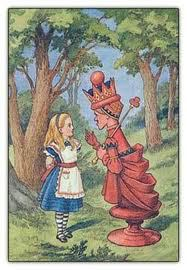
This poem also came to mind, for different though possibly related reasons. It will appear in The Red Queen Hypothesis when that book (my second full-length collection) gets into print. I was writing many poems in various forms at the time. The poem’s story is second-hand, the we a personified plural community of human beings, one repeated line taken from, you’ll recognize, A Tale of Two Cities–there’s a reason for the allusion as well.

Somehow, may all be well. Somehow, may each of us find some happiness.

~~

Variations on a Line of Dickens
			(Belarus, 1985)

It was the best of times, it was the worst
of times, when nothing seemed to go our way,
though happiness is what we wanted. First

we stood in endless queues, outside, and cursed
the lack of cheese or bread; our pals would say
it wasn’t the best of times, it was the worst.

We’d swill cheap vodka, harshening our thirst,
highlighting deprivations of each day,
when happiness was all we wanted. First

we’d press our bodies close enough to burst
the paper bag of lack. Kisses could not stay
our own best times, but it was the worst

thing to let go. Our lips still pursed,
the tastes of sex would linger and relay
that happiness is what we’d wanted; first

times were the best, solid, immersed
in flesh and heat—forget the fray—
those were the best of times, and yes, the worst.
Happiness was what we wanted first.

~~


Sir John Tenniel, of course.

That need to publish? –eh…

The hazel’s buds are about to open, first yellow of the season; red-winged blackbirds have returned; this morning, several flocks of snow geese in Vs high above me. Then, a brief but crazy-wild snow squall. Yes, it is February.

What I find myself assessing lately is “the need to publish” thing. I feel a reckoning coming on, personally, in which societal changes are implicated–and my age, as well.

Let me backtrack.

When I first started writing poetry seriously (reading, studying, crafting, workshopping), publishing was a paper-only endeavor that involved typing and retyping poems, sending them with SASE (self-addressed, stamped envelope) to various literary magazines and journals both Major and minor, and waiting for up to a year for rejection or acceptance. The acceptances were necessary if I wanted a book publisher to take my work seriously, or to have an academic institution consider me as worthy of hire, or to apply for higher-stakes literary grants and opportunities. The game, as it were, operated on those hierarchies: journal publications, chapbooks, solo collections, college stints.

I did a bit of that, though not enough, I suppose. I got my chapbooks and solo collections (see books here) and a fair number of poems in actual (and, now, virtual) print. But ambition ain’t exactly my middle name; my college work has not been tenured and doesn’t fall under the creative writing category–I run the writing center at my university, where it’s all about grammar, spelling, documentation, essay structure. I enjoy the work, but it is not poetry.

Back to poetry publication: the new assessment is about whether I care anymore.

I’m theoretically close to retirement, though academia lets us continue to our dotage if we wish. [See The Chair.] Will further publications, or higher-status publications, enhance my position at the university? No. That ship, as the saying goes, has sailed. Anyway, it was more of a daysailer than a cruise liner. And will further publications, online or in print, keep me in royalties in my retirement years? You jest, my friend! Poetry adds little to the income balance sheet.

Furthermore, the current state of literacy requires social media presence; virtual journals abound, and many of them are fantastic (seek them out! read them!). Their editors respond slightly more rapidly than lit mag editors did in the 1980s, and though there’s sometimes a submission fee, the price has not escalated much more than postage has (and is in some cases lower). But submitting to journals even online nonetheless consumes a sort of energy and time commitment that not all of us have. Or are willing to make to keep ambition going.

So. My current assessment suggests I’m past the point where it matters much where the poems appear, although I personally love poetry BOOKS and will continue to get my books in print if I can. This assessment allows me to say, “I hereby forego Submittable, etc., for the most part and will send out poems to journals if asked, and otherwise…” Hmmm. Otherwise, what?

Maybe post them here? As I did two years ago during National Poetry Month. I could do that again. Something to consider. Since I no longer have much to gain, I could at least continue my audience here.

photo: Hernán Gonzalo Pereira Palomo

Readers, if you want to weigh in on this concept, I’m all ears.

In which my dad appears

When does bereavement permit the writer to get back to the writing process? I have had quite a few conversations about this topic in the past few decades, and the answer’s pretty obviously “It depends.” I think of Donald Hall writing during Jane Kenyon’s illness and death and afterward–the stunning poems of Without. When my friend David Dunn died, I wrote immediately and often, sorrow emerging through elegies and remembrance. But I was younger then, and less experienced in the arena of bereavement.

During my mother-in-law’s two-year decline toward dying, I found myself writing about the challenges we faced–physical, emotional, communicational (that’s not a word, but I’m leaving it here all the same). Afterward, I could not/did not write. What interferes?

Why my thoughts turn this way: because, lately, my dad keeps turning up in my poem drafts.

I did not write much last year and did not submit any work.* For some reason, though I blogged and wrote long emails to friends and read many inspiring books, I did not feel particularly creative. But I wouldn’t have associated that semi-arid year with my father’s death; I figured my creative void was more about covid and an increase in chronic fatigue symptoms.

To jump start myself this year, I signed up for an online workshop (see this post). It has helped–I’ve drafted more poems in five weeks than I wrote in five months last year. But there’s been a peculiar outcome to these poems: despite widely differing prompts, source poems, and initial processes, my dad or something I connect with him appears in almost a third of the new drafts. I wonder what my subconscious is doing behind my day to day routine. Is this a response to bereavement, or a sign that I’ve accepted his death, or a reminder to self of what a huge loss it has been to me?

Not that I have a definitive answer to any of those questions. I do feel grateful for his appearance, though. He had a good sense of humor and loved to sing–nice things to have in a poem.

~

Thanks, Dad.

~

*Well, almost no work. Thanks to Marilyn Hazelton, editor of red lights tanka journal, I did submit tanka poems in 2021; and she accepted a few for this season’s edition (print only).