A good start. Possibly.

My most recent reading material is The Feeling of What Happens: Body and Emotion in the Making of Consciousness, by Antonio Damasio. Damasio is convincingly on the neurological/evolutionary trail to recognizing how consciousness operates and why we have developed it, though he allows for mysteries we do not yet and may never understand.

Damasio is clearly not a dualist who thinks the consciousness can exist separately from the body (one of his previous books is aptly titled Descartes’ Error). He doesn’t address the “soul” in The Feeling of What Happens, but argues that reason requires feeling in order to operate effectively, that feeling is a more “conscious” form of emotion, which is “unknowing” in the sense we call consciousness and is founded upon core consciousness, which is reliant upon the physical organism…a vastly complex array of cells, nerves, you name it, generally self-regulating and not by nature in particular need of a conscious mind.

So next time someone tries to explain why a situation happened and just says, “It’s complicated,” maybe you ought to accept that. Because, apparently, it’s really really really complicated!

http://www.isys.ucl.ac.be/descartes/images/Descartes.gifThat does not keep people like Damasio from trying to track down what goes on in the minds of sentient beings.

Having just read Flow, I immediately thought of what Csikszentmihalyi says about the way true flow experiences depend upon deepening levels of complexity–that’s how we keep from becoming bored by routinization of a task. Dennett suggests that consciousness consists of layers: “multiple drafts,” and Damasio calls the human brain, and the brain-body unit, a series of “systems within systems.” But there is no little self, no metaphorical or actual homunculus, at the very bottom of the system, or at the very top. There are only more and varied connections, he asserts–with profound respect and amazement at what biology has wrought.

I also thought about Csikszentmihalyi’s idea of a life project. Some years ago, I began a journal devoted to exploring my poetic project and learned that I do not really think about my writing as a project per se, at least not in the formal sense of poetics. [Here’s Dorothea Lasky harping on the whole concept of a poetic project, in a bit of refutation aimed at poetry critic David Orr.]

What I think I was doing, in fact, was trying to figure out my life project, in the way Csikszentmihalyi defines that concept. What is my life’s philosophy in terms of guiding tasks, principles, goals, projects, challenges? Is teaching part of the package? Motherhood? Gardening? Writing? Human relationships? Learning? Speaking of human consciousness, do I have a conscious path or goal?

Maybe my goal is to keep on amid the complexity and to relish it as much as possible, since it is unavoidable. And perhaps by accepting the complications, I will find my life becomes simpler. That could be a possible outcome–right?

I think of Reineke writing on Marcel Proust’s narrator and his struggle with status, jealousy, conformity, and desire. I read the Proust novel(s) when I was in my early 20s and found his narrator frustratingly neurotic but also a little too familiar, as my life experiences in many ways mirrored his. Eventually, he learns that the way to cure the pain of desire is to discipline himself to let go of desire itself; (and no, neither Proust nor his narrator were Buddhist).

And what happens when he gains this recognition is that he can write the novel. He develops flow, and a life project.

I am past 50, a good time to establish more consciously what my life project is. I know it involves relentlessly and joyously learning new things. I think it will include poetry in some way. And discipline of some kind, conscious effort. For now, those things constitute a good start.


Synthesis & coincidence

&&001“and per se and”

Ah, synthesis! The conjoining and combining of objects, ideas, theories, values and systems, arts, media, experiments, research, disciplines, metaphors, symbols, rhythms, patterns, DNA, et (“&”) cetera.

Synthesis can be planned, hypothesized, purposeful–and it can be spontaneous, unexpected, coincidental. There are times when I feel as though the overlapping and intertwining of experiences seems to have been somehow “planned by the cosmos” (or some higher power); but coincidences occur more often than we think, especially when our consciousness is primed to make connections.

I have primed my own brain, recently, to synthesize thinking about aesthetics, neuroscience, the arts, philosophy and consciousness. So it should not surprise me–though it does!–that the books I have recently been reading connect many threads of my thought, including other recent readings. For example, Martha Reineke’s Intimate Domain: Desire, Trauma, and Mimetic Theory is an exploration of family “romance” in psychoanalytic theory that draws on Freud and Girard; but because Reineke uses Girard’s early writings as her basis, she cites Merleau-Ponty and phenomenology quite often. Furthermore, mirror neurons and the place and operations of consciousness appear in her claims and explorations in this (difficult) text. Mirrors and mimesis, minds and spirits…Gabrielle Starr’s Feeling Beauty, which I’ve mentioned in recent posts, examines the art-body-mind connections in neurological domains and mentions, more than in passing, the phenomenological aspects of the experience we term “art.” Arthur Danto’s The Transfiguration of the Commonplace: A Philosophy of Art (1983, though I read it last month) also wove itself into my thinking as I read Starr’s more current book. In addition (oh, there’s always an “in addition” with synthesis), I am re-reading Csikszentmihalyi’s classic, Flow: The Psychology of Optimal Experience. The states humans experience when we work hard at challenges we enjoy, such as art-making, are deeply connected to our brains and also rooted in our bodies.

So there is a coming-together, a process not unlike chemical bonding, that all of these texts and ideas produce in my mind. This post is one outcome, I suppose. But there will be others.

~

From Carl Sandburg’s “Tentative (First Model) Definitions of Poetry” (1928): “Poetry is the achievement of the synthesis of hyacinths and biscuits.”

387236_10201085579685937_1062169370_n


Change the mind

“The only job of the poet is to destabilize and expand language. This is how poetry changes the world—not by grand ambition or the lauding of critics. It takes the plodding, unending effort of many to alter line by line, phrase by phrase, word by word the way we describe ourselves and everything around us. This is how we change perception. This is how we change the mind.”  —Jaswinder Bolina (in Poetry Foundation: “The Writing Class”  )

Words to mull over. How do we change perception? Is the change of mind correlated with a change in mind–potential alterations of the brain’s structure or synaptic system? If we destabilize language, do we necessarily alter perception?

Although the book is not an easy read, Starr’s Feeling Beauty: The Neuroscience of Aesthetic Experience offers interdisciplinary research into how the brain may be altered by powerful aesthetic experience, or at any rate, how the brain responds to these experiences in ways that lead some researchers to believe the brain can be changed by art. Not just by those who create art, but by those who encounter it.

I encountered Bolina’s essay (see link above) a week or so after I completed reading Starr’s book, and the consilience–to borrow a scientific term–seemed powerful. The ideas have not yet cohered in my own mind, but perhaps in time I will have more to say on this topic.

Meanwhile, I revel in the juicy possibilities of changing mind through art.


The knot of contrariety

~
Sometimes, human beings feel contrary: irritable, grumpy, stubborn. It does not matter that we may be well-versed in rational critical thinking, or aware that a Zen approach can offer balance, or that an understanding of the psyche, or studies of consciousness, or even immersion in some sort of spiritual practice might help us to clear whatever baggage happens at this moment to burden us.
We’re just cranky, and for the moment, we feel justified in our contrariety. Here’s Walt Whitman:
I too knitted the old knot of contrariety,
Blabb’d, blush’d, resented, lied, stole, grudg’d,
Had guile, anger, lust, hot wishes I dared not speak,
Was wayward, vain, greedy, shallow, sly, cowardly, malignant;
The wolf, the snake, the hog, not wanting in me,
The cheating look, the frivolous word, the adulterous wish, not wanting,
Refusals, hates, postponements, meanness, laziness, none of these wanting…

~

What appeals to me in the passage above is not so much Whitman’s confession–any of us might admit to others our foibles and our sins–but the extravagant and beautiful mode of his expression: lists, near-synonyms, expansions on meanings, metaphors following the verbs, nouns, and adjectives, “none of these wanting.”

128-2848_IMG

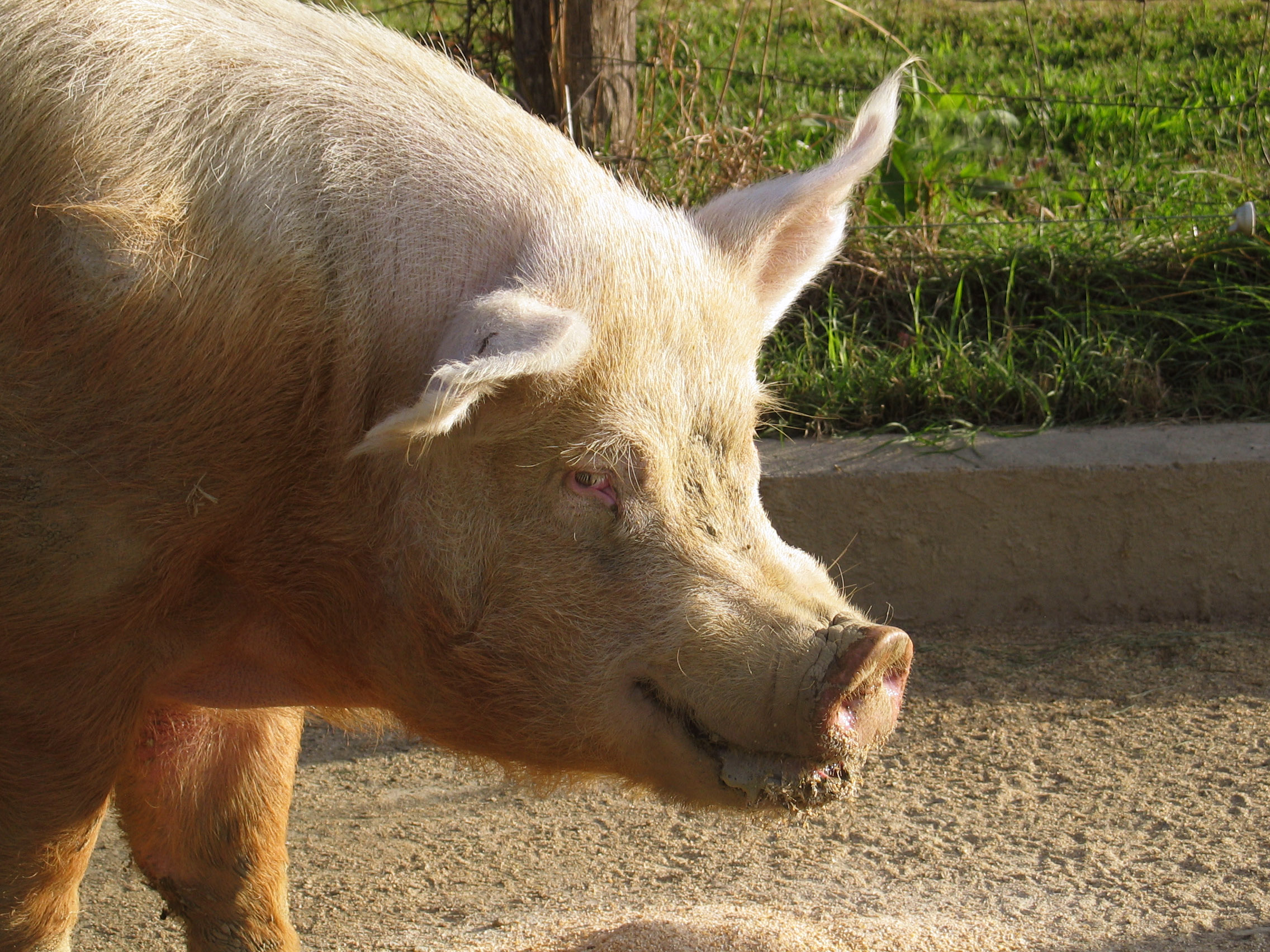
Hog… [His name is not Walt]

What appeals to me, really, is the way these lines make the litany of our petty evils so beautiful to behold. Perhaps that indicates that the aesthetics of a poem move the purpose beyond mere description and into the realm of art. I will be reading more about this in the coming week as I make my way through the book Feeling Beauty: The Neuroscience of Aesthetic Experience by G. Gabrielle Starr.

~

Meanwhile, I am threading my way through the thorny knottiness of everyday life, trying to shed my contrariety as I proceed.

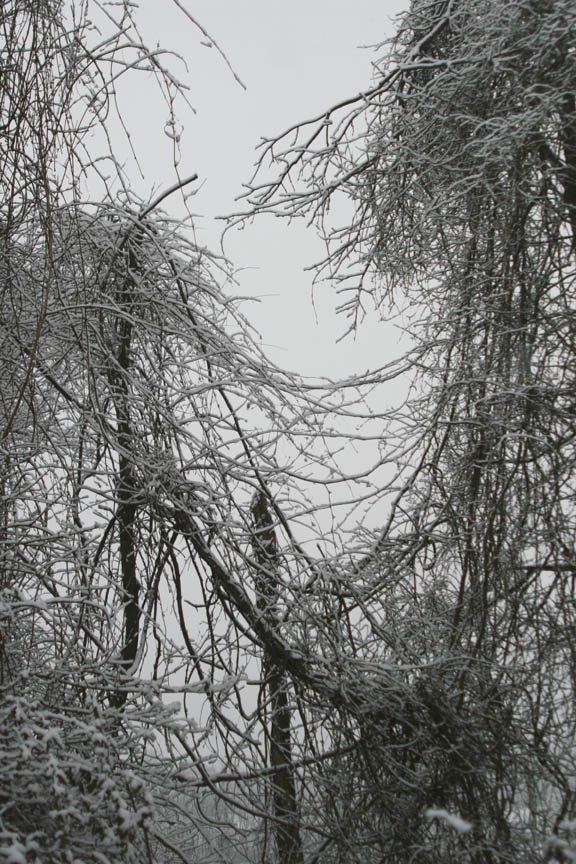
Knotted vines

Knotted vines

Dewey & education

I have taken it upon myself to read Dewey after many years’ hiatus from his remarkably clear prose and his fervent support of free, equal, and accessible education for all. The essays in his Philosophy of Education (Problems of Men) were written between 1935 and 1945 and yet in many ways are relevant to 2014: In his era, technology has led to enormous social changes, as have global conflicts; school districts are under pressure to conform to top-down management and are feeling the pinch as politicians cry for school-tax cuts; more young people than ever graduate from high school and college, only to find that jobs are not available for them; an economically-advantaged elite dis-empowers the middle- and working-classes by using class, money, and networking to subvert or gut the democratic system. What is the philosophical, patriotic pragmatist of 1940 to do? Urge people to exert themselves into action, of course.

Dewey’s passion for education and his pragmatism appeal to me even when I do not wholeheartedly agree with his premises, proposals, or–alas–his optimism. Right from the introduction of this series of essays, he sets out such sensible observations about culture, society, and government that it is hard to disagree with him; his works always begin with a straightforward clarity that is refreshing among philosophers. One of the most trenchant observations he makes, over and again, is that the education of the citizenry must change as social developments occur; education must not remain in stasis and, he insists, democracy must also be flexible and living, always moving with the current times:

“I find myself resentful and really feeling sad when, in relation to present social, economic and political problems, people point simply backward as if somewhere in the past there were a model for what we should do today…We have a great and precious heritage from the past, but to be realized, to be translated from an idea and an emotion, this tradition has to be embodied by active effort into social relations…It is because conditions of life change that the problem of maintaining a democracy becomes new, and the burden that is put upon the school, upon the educational system is not that of merely stating the ideas of the men who made this country…but of teaching what a democratic society means under existing conditions.”

My italics in the passage above are there to indicate what I feel is Dewey’s most enduringly important recognition–that social conditions change, and, to stay vital, the foundations of a society need to be resilient enough to be adapted to existing conditions. Tradition has considerable value, but a too-conservative approach to law or education or any other abstract, social construct will fail in time, Dewey says. There is “an inherent, vital and organic relation” between democracy and education that reflects democracy’s recognition of “dignity and the worth of the individual.” As a person who engages in the task of educating others, and who finds she frequently has to change the curriculum to keep up with the technology and the changing mood and environment surrounding her students, I’m glad to be reminded of that organic relationship. It’s important to me that each individual I instruct, advise, and (in turn) learn from feels that he or she embodies dignity and worthiness.

Much as I enjoy reading and thinking about philosophy, it seldom gives me a “warm feeling” the way Dewey’s well-considered, thoughtful words do. He saw the need for balance and for growth–human growth, interpersonal and social growth–which he posited could be achieved through the conscious, considered, informed actions of well-meaning people in community. Educators are, by such lights, among the foremost in the endeavor. Certainly Dewey thought they were.

larch cones by Ann E. Michael


Pruning, weeding, & poetry manuscripts

Gardening has been a dismal endeavor this past summer; I just did not devote my usual energies to the landscape, the perennials, or even to the vegetable patch. For a number of reasons I will not enumerate here, I did not even get to the weeding. I wish I could say I spent my energy on writing, revising, and submitting my poems–alas, no.

Tangle of weeds & blossoms

Tangle of weeds & blossoms

After a weekend of trying to catch up (in two days) on two months of garden neglect, I caught up on my reading a bit and found this delightful and appropriate post on Lesley Wheeler’s blog: “Restlessly pruning the overstuffed closet of a poetry manuscript.” Her analogy is to a closet and wardrobe, but the underlying concept of assessing and culling works for perennial beds and poetry manuscripts (and attics, and basements, and garages, and…)

This post appeals to me because, in addition to rallying myself to the cause of deadheading and pruning and weeding in the great outdoors, I have also been working on cleaning up two manuscripts. Wheeler asks of her work:


  • Is the book telling the most involving, interesting story I can pull off right now? Is the narrative arc complex yet clear enough to satisfy an involved reader?
  • And yet this is a collection of wayward fragments, not a wholly coherent narrative. Do the poems have some spiky independence from each other? Are they various?
  • Am I making the same moves not too often, but just often enough to keep the poems working in relationship to each other? This means reading for repeated words, ideas, stanza shapes, and other devices.
  • Who will be my readers, and how do I hope they’ll feel and think about this project?

Wise questions to ask of a book of poems; also see Jeffrey Levine’s Tupelo Press blog for his exhaustive take on the process.

Clearly, reorganizing and evaluating my collections are not the kind of work I could accomplish in two days.

In that way, weeding and pruning the gardens offers more immediate satisfaction, though it left me with some scratches, rashes, and a sore back!


Books, burning

“Every burned book or house enlightens the world; every suppressed or expunged word reverberates through the earth from side to side.” ~Ralph Waldo Emerson, “Compensation”

I have taken this quote out of context–Emerson wrote this sentence as part of his reflection on compensation: he was questioning the received doctrine of his era that evil-doers flourish on earth and the just do not, therefore Heaven is God’s compensation for the trials of being a Good human being. Emerson did not accept this doctrine out of hand and theorized that, through just laws, people could make compensatory actions operable on the earth. He recognized, too, that sometimes evil people fail to thrive and compassionate, just people manage quite well. The received wisdom was merely received, not wise. Nonetheless, I find “Compensation” essentially dualist. And it is, truly, a sermon.

In the paragraph that contains the above words, Emerson suggests that there is always compensation of some kind for any act, for good or ill, that suppression cannot be maintained–the volcano will surge eventually–that the martyr never dies in vain because from his or her action will arise, in time and through the flaws and the perfections of Nature, some form of (often surprising) compensation. Hmm. Sounds a bit similar to Karma.

~

And I am thinking, again, of books and what they offer. My students tend to consider books as information solely (I do not generally teach the kind of young person who reads novels or philosophy). This is, we have been reminded continually, the Information Age–so that approach to books seems well-founded. Then there are our other means of information-gathering, largely through technological devices. These phones and various screens are mighty distracting and designed to be so. Yes, Fahrenheit 451 was prescient. Does the book-burning in that novel begin a revolution? Not in the predicted ways.

~

More prescient writing (found, by the way, in books): Neil Postman, back in 1985, commenting on the prescience of Orwell’s 1984 and Huxley’s Brave New World in Postman’s must-read cultural criticism, Amusing Ourselves to Death. In his foreword, Postman writes

What Orwell feared were those who would ban books. What Huxley feared was that there would be no reason to ban a book, for there would be no one who wanted to read one. Orwell feared those who would deprive us of information. Huxley feared those who would give us so much that we would be reduced to passivity and egoism. Orwell feared that the truth would be concealed from us. Huxley feared the truth would be drowned in a sea of irrelevance. Orwell feared we would become a captive culture. Huxley feared we would become a trivial culture, preoccupied with some equivalent of the feelies, the orgy porgy, and the centrifugal bumblepuppy. As Huxley remarked in Brave New World Revisited, the civil libertarians and rationalists who are ever on the alert to oppose tyranny “failed to take into account man’s almost infinite appetite for distractions”. In 1984, Huxley added, people are controlled by inflicting pain. In Brave New World, they are controlled by inflicting pleasure. In short, Orwell feared that what we hate will ruin us. Huxley feared that what we love will ruin us.

~

Is there compensation for being drowned in a sea of irrelevance? What might that look like?

~

Perhaps these are a few of the reasons I often need to turn from information to poetry.burning


Poetry Readings~September

Please check out my Events Page here, especially if you are not too far from Pennsylvania’s Lehigh Valley or Berks County. I will be participating in two quite different poetry events during the second week of September.

The first event presents the culmination of a years-long project of collaboration between educators/writers/photographers Hernán Pereira, Pamela Daza, and Lucia Ramos in Iquique, Chile and Dr. Karen Jogan of Albright College in Reading, Pennsylvania. There will be a gallery of photographs in the library at Albright and a celebration of the book’s publication the evening of September 11. Arturo Prat University and Albright College have been able to sponsor this project through a competitive teaching innovation project. The book’s title: So Far..So Close/Portada y Contraportada: Contemporary Writers of Tarapaca & Pennsylvania.

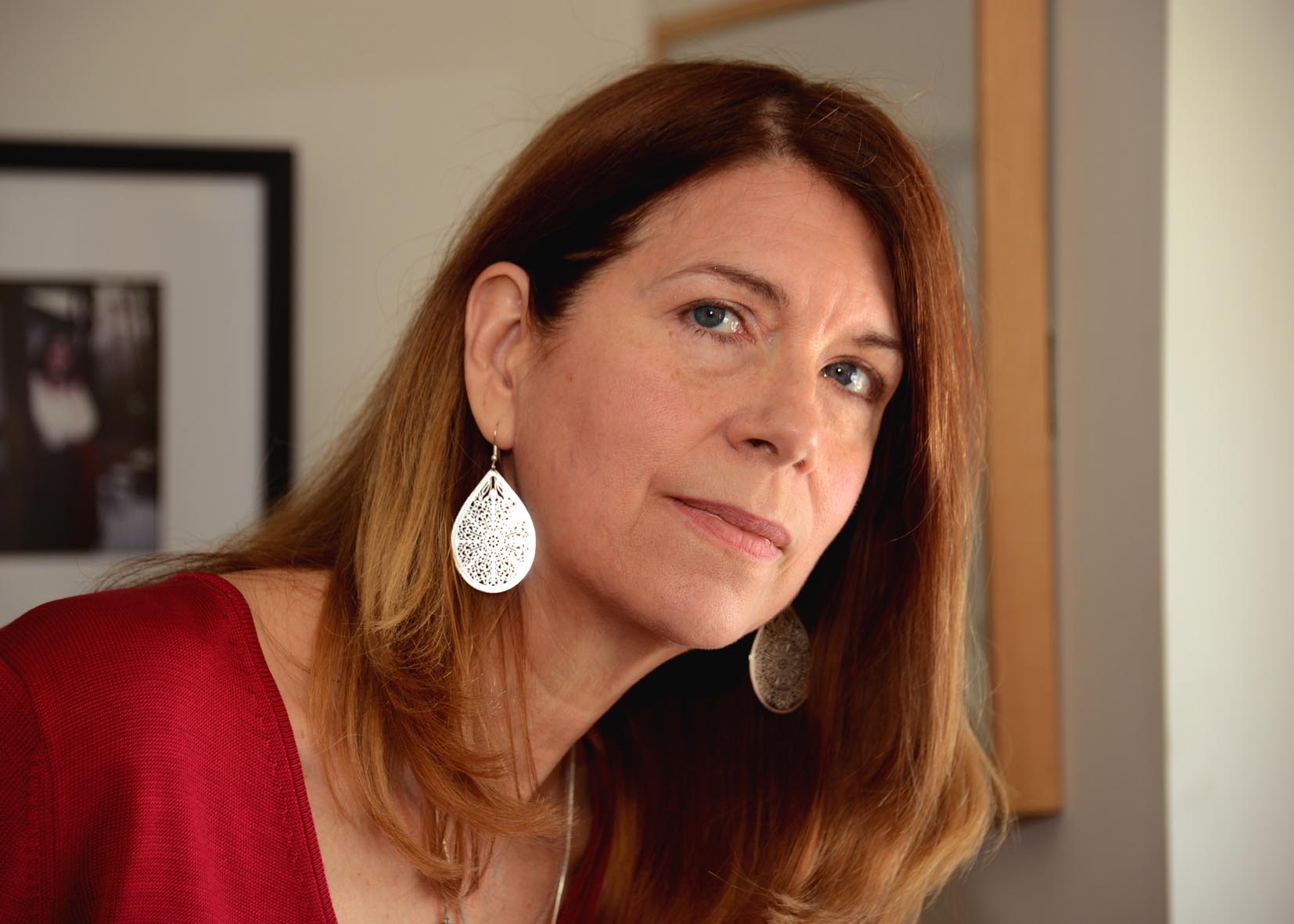
The anthology presents poets from both Chile’s Atacama Desert region (Tarapaca) and Pennsylvania’s eastern/northeastern counties. Interviews with the poets provide insightful mini-biographies and are accompanied by wonderful photographs. Here’s mine:

photo by H. Periera

photo by H. Periera

I have previewed the book, through the magic of .pdf files, and found it fascinating to read about the backgrounds of these writers, their writing processes, their creative influences.

The Pennsylvania writers include some colleagues I have known for awhile, yet the editors’/authors’ choice of inquiries and the settings of the photographs evoke aspects of these writers that inform and delight. It should be an interesting evening, and the public is invited.

~~

The second event takes place in Bethlehem, PA at Godfrey Daniels–a listening room/coffeehouse in the American Folk tradition. Dave Fry, folk troubadour extraordinaire, hosts a monthly “Dave’s Night Out” concert there at 7 pm on Sundays. Most of the time these events feature singers and musicians; but Dave branches out to storytellers and, on Sunday the 14th, to poets Daniel Notaro (author of Limn the Mask) and me.

602043_614706205212099_1317517254_n

We’ll be reading from our work and conversing with one another, with Dave, and with the audience. $10.50 at the door.


Dissent, controversy, & opinion

It may be obvious that, in this blog, the writer tends to shy away from highly controversial contemporary issues–with the possible exception of my occasional strong views on education–even though philosophical and critical arguments are part of my job and integral to my life interests. One possible explanation is that I am, as Charles Schultz memorably popularized, “wishy-washy.” (This strip is from 1952, © Charles Schultz):

Peanuts

And a little destructive criticism from 1959….

~~

Indeed, my students sometimes get annoyed with me because I do not take sides during class discussions of controversial topics. “Don’t you have an opinion?” they ask.

Why, yes, I do. It is not my job to share my opinions with students, however, as much as it is my job to make them think more than once about their own opinions. It is also my job to help them navigate the complexities of critical thought, weighing “both sides” (and pointing out that many controversies have many more than two sides), and learning that perspective can deepen understanding and sometimes even alter opinions. This approach is far from wishy-washy; it is courageous. It can be risky to analyze rationales and points of view that differ from your own, and risk takes courage.

~~

A good book that explores the courage it takes to analyze and, often, to dissent from the normative view is Cass Sunstein’s Why Societies Need Dissent. Sunstein argues that truly free societies need to permit dissenters room for expression and criticism; he provides evidence that without dissent, societies fail to thrive through change. Because growth is a change process, societies that resist change too rigidly fall apart.

This year, my class and I will be exploring Sunstein’s text in an effort to recognize the kind of thinking and evidence needed before one writes an essay. I hope they apply these ideas in their freshman Philosophy course.

I hope they apply these ideas in my course, for starters…

~~

Argument has a negative connotation in American English, so many critics substitute the word discourse. I have no problem with such a substitution: the term discourse seems to connote politeness and respect, behaviors necessary for useful dissent and analysis of alternative perspectives. The philosophical argument, whether taking place in philosophy class, conference hall, or koan, operates most productively and insightfully when predicated upon mutual respect for differences.

Dissent as discourse may not be the most natural behavior for human beings, but it is something we can demonstrate and coach in the university classroom.

With any luck, both students and teachers may be able to apply the techniques to other areas of our lives. Along that vein, here’s an easy-to-interpret Buddhist explanation from New Lotus on how to approach argument in the Buddhist way.

GFS2


Difficult writing?

Here’s Will Buckingham on writing and difficulty. Worth a read! I don’t know how to embed the blog into my post, so here’s the link.

http://willbuckingham.com/the-pleasure-and-difficulty-of-writing/

Writing can indeed be a pleasure–most of the time! There are periods of difficulty when I feel frustrated, but those periods make for puzzles and challenges; and I enjoy puzzles and challenges. They push me, force me to stretch a bit, engage with what’s not so simple or superficial, change my perspective, alter my expectations and assumptions, discover something new. I learn from these experiences. I would not want life to be easy all the time, nor would I want creative writing to be easy all the time. Although it’s pleasing to lie in a hammock on a mid day and sip a cold drink and listen to the birds and read a book…pleasure also encompasses inventive challenges. Motivation. Inspiration. Different forms of joy.

Buckingham mentions a biography of the writer and artist Tove Jansson, best known in the USA for her Moomintroll series but clearly a creative artist of the first rank. I’d put this book on my reading list, but it is at present only available in Finnish! Marina Popova at Brainpickings has posted some of Jansson’s vivid illustrations of Alice in Wonderland here.

On the pleasures of difficult reading, please see my past posts here, here, and here.