Change the mind

“The only job of the poet is to destabilize and expand language. This is how poetry changes the world—not by grand ambition or the lauding of critics. It takes the plodding, unending effort of many to alter line by line, phrase by phrase, word by word the way we describe ourselves and everything around us. This is how we change perception. This is how we change the mind.”  —Jaswinder Bolina (in Poetry Foundation: “The Writing Class”  )

Words to mull over. How do we change perception? Is the change of mind correlated with a change in mind–potential alterations of the brain’s structure or synaptic system? If we destabilize language, do we necessarily alter perception?

Although the book is not an easy read, Starr’s Feeling Beauty: The Neuroscience of Aesthetic Experience offers interdisciplinary research into how the brain may be altered by powerful aesthetic experience, or at any rate, how the brain responds to these experiences in ways that lead some researchers to believe the brain can be changed by art. Not just by those who create art, but by those who encounter it.

I encountered Bolina’s essay (see link above) a week or so after I completed reading Starr’s book, and the consilience–to borrow a scientific term–seemed powerful. The ideas have not yet cohered in my own mind, but perhaps in time I will have more to say on this topic.

Meanwhile, I revel in the juicy possibilities of changing mind through art.


The knot of contrariety

~
Sometimes, human beings feel contrary: irritable, grumpy, stubborn. It does not matter that we may be well-versed in rational critical thinking, or aware that a Zen approach can offer balance, or that an understanding of the psyche, or studies of consciousness, or even immersion in some sort of spiritual practice might help us to clear whatever baggage happens at this moment to burden us.
We’re just cranky, and for the moment, we feel justified in our contrariety. Here’s Walt Whitman:
I too knitted the old knot of contrariety,
Blabb’d, blush’d, resented, lied, stole, grudg’d,
Had guile, anger, lust, hot wishes I dared not speak,
Was wayward, vain, greedy, shallow, sly, cowardly, malignant;
The wolf, the snake, the hog, not wanting in me,
The cheating look, the frivolous word, the adulterous wish, not wanting,
Refusals, hates, postponements, meanness, laziness, none of these wanting…

~

What appeals to me in the passage above is not so much Whitman’s confession–any of us might admit to others our foibles and our sins–but the extravagant and beautiful mode of his expression: lists, near-synonyms, expansions on meanings, metaphors following the verbs, nouns, and adjectives, “none of these wanting.”

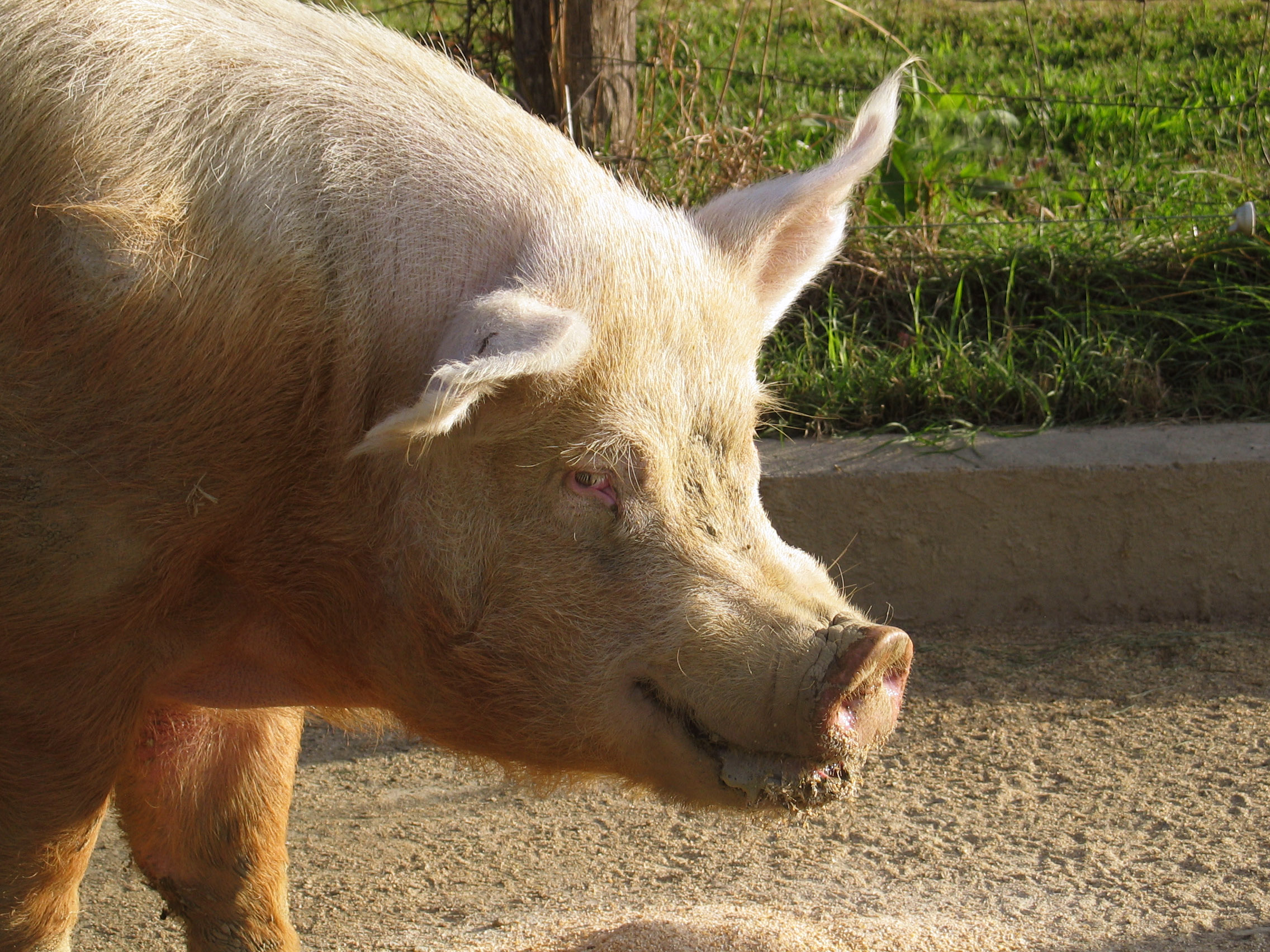
128-2848_IMG

Hog… [His name is not Walt]

What appeals to me, really, is the way these lines make the litany of our petty evils so beautiful to behold. Perhaps that indicates that the aesthetics of a poem move the purpose beyond mere description and into the realm of art. I will be reading more about this in the coming week as I make my way through the book Feeling Beauty: The Neuroscience of Aesthetic Experience by G. Gabrielle Starr.

~

Meanwhile, I am threading my way through the thorny knottiness of everyday life, trying to shed my contrariety as I proceed.

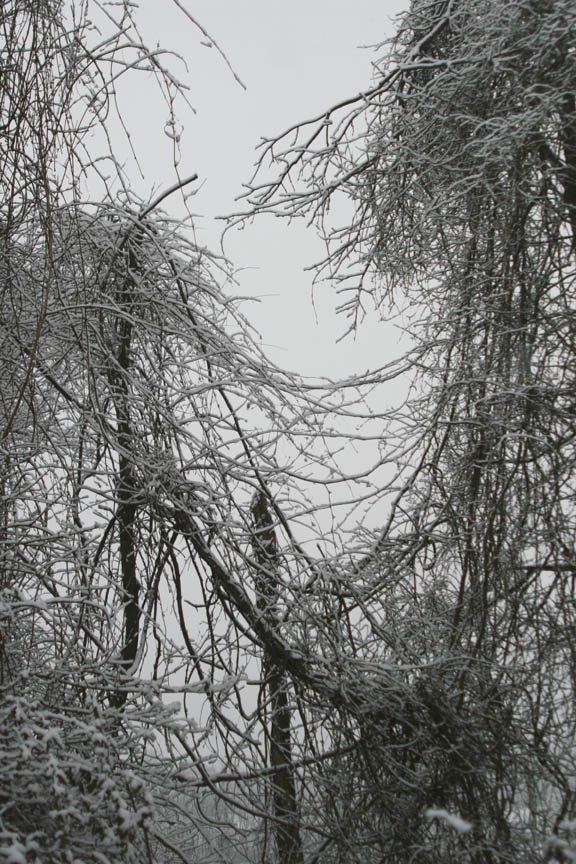
Knotted vines

Knotted vines

Dewey & education

I have taken it upon myself to read Dewey after many years’ hiatus from his remarkably clear prose and his fervent support of free, equal, and accessible education for all. The essays in his Philosophy of Education (Problems of Men) were written between 1935 and 1945 and yet in many ways are relevant to 2014: In his era, technology has led to enormous social changes, as have global conflicts; school districts are under pressure to conform to top-down management and are feeling the pinch as politicians cry for school-tax cuts; more young people than ever graduate from high school and college, only to find that jobs are not available for them; an economically-advantaged elite dis-empowers the middle- and working-classes by using class, money, and networking to subvert or gut the democratic system. What is the philosophical, patriotic pragmatist of 1940 to do? Urge people to exert themselves into action, of course.

Dewey’s passion for education and his pragmatism appeal to me even when I do not wholeheartedly agree with his premises, proposals, or–alas–his optimism. Right from the introduction of this series of essays, he sets out such sensible observations about culture, society, and government that it is hard to disagree with him; his works always begin with a straightforward clarity that is refreshing among philosophers. One of the most trenchant observations he makes, over and again, is that the education of the citizenry must change as social developments occur; education must not remain in stasis and, he insists, democracy must also be flexible and living, always moving with the current times:

“I find myself resentful and really feeling sad when, in relation to present social, economic and political problems, people point simply backward as if somewhere in the past there were a model for what we should do today…We have a great and precious heritage from the past, but to be realized, to be translated from an idea and an emotion, this tradition has to be embodied by active effort into social relations…It is because conditions of life change that the problem of maintaining a democracy becomes new, and the burden that is put upon the school, upon the educational system is not that of merely stating the ideas of the men who made this country…but of teaching what a democratic society means under existing conditions.”

My italics in the passage above are there to indicate what I feel is Dewey’s most enduringly important recognition–that social conditions change, and, to stay vital, the foundations of a society need to be resilient enough to be adapted to existing conditions. Tradition has considerable value, but a too-conservative approach to law or education or any other abstract, social construct will fail in time, Dewey says. There is “an inherent, vital and organic relation” between democracy and education that reflects democracy’s recognition of “dignity and the worth of the individual.” As a person who engages in the task of educating others, and who finds she frequently has to change the curriculum to keep up with the technology and the changing mood and environment surrounding her students, I’m glad to be reminded of that organic relationship. It’s important to me that each individual I instruct, advise, and (in turn) learn from feels that he or she embodies dignity and worthiness.

Much as I enjoy reading and thinking about philosophy, it seldom gives me a “warm feeling” the way Dewey’s well-considered, thoughtful words do. He saw the need for balance and for growth–human growth, interpersonal and social growth–which he posited could be achieved through the conscious, considered, informed actions of well-meaning people in community. Educators are, by such lights, among the foremost in the endeavor. Certainly Dewey thought they were.

larch cones by Ann E. Michael


Pruning, weeding, & poetry manuscripts

Gardening has been a dismal endeavor this past summer; I just did not devote my usual energies to the landscape, the perennials, or even to the vegetable patch. For a number of reasons I will not enumerate here, I did not even get to the weeding. I wish I could say I spent my energy on writing, revising, and submitting my poems–alas, no.

Tangle of weeds & blossoms

Tangle of weeds & blossoms

After a weekend of trying to catch up (in two days) on two months of garden neglect, I caught up on my reading a bit and found this delightful and appropriate post on Lesley Wheeler’s blog: “Restlessly pruning the overstuffed closet of a poetry manuscript.” Her analogy is to a closet and wardrobe, but the underlying concept of assessing and culling works for perennial beds and poetry manuscripts (and attics, and basements, and garages, and…)

This post appeals to me because, in addition to rallying myself to the cause of deadheading and pruning and weeding in the great outdoors, I have also been working on cleaning up two manuscripts. Wheeler asks of her work:


  • Is the book telling the most involving, interesting story I can pull off right now? Is the narrative arc complex yet clear enough to satisfy an involved reader?
  • And yet this is a collection of wayward fragments, not a wholly coherent narrative. Do the poems have some spiky independence from each other? Are they various?
  • Am I making the same moves not too often, but just often enough to keep the poems working in relationship to each other? This means reading for repeated words, ideas, stanza shapes, and other devices.
  • Who will be my readers, and how do I hope they’ll feel and think about this project?

Wise questions to ask of a book of poems; also see Jeffrey Levine’s Tupelo Press blog for his exhaustive take on the process.

Clearly, reorganizing and evaluating my collections are not the kind of work I could accomplish in two days.

In that way, weeding and pruning the gardens offers more immediate satisfaction, though it left me with some scratches, rashes, and a sore back!


Books, burning

“Every burned book or house enlightens the world; every suppressed or expunged word reverberates through the earth from side to side.” ~Ralph Waldo Emerson, “Compensation”

I have taken this quote out of context–Emerson wrote this sentence as part of his reflection on compensation: he was questioning the received doctrine of his era that evil-doers flourish on earth and the just do not, therefore Heaven is God’s compensation for the trials of being a Good human being. Emerson did not accept this doctrine out of hand and theorized that, through just laws, people could make compensatory actions operable on the earth. He recognized, too, that sometimes evil people fail to thrive and compassionate, just people manage quite well. The received wisdom was merely received, not wise. Nonetheless, I find “Compensation” essentially dualist. And it is, truly, a sermon.

In the paragraph that contains the above words, Emerson suggests that there is always compensation of some kind for any act, for good or ill, that suppression cannot be maintained–the volcano will surge eventually–that the martyr never dies in vain because from his or her action will arise, in time and through the flaws and the perfections of Nature, some form of (often surprising) compensation. Hmm. Sounds a bit similar to Karma.

~

And I am thinking, again, of books and what they offer. My students tend to consider books as information solely (I do not generally teach the kind of young person who reads novels or philosophy). This is, we have been reminded continually, the Information Age–so that approach to books seems well-founded. Then there are our other means of information-gathering, largely through technological devices. These phones and various screens are mighty distracting and designed to be so. Yes, Fahrenheit 451 was prescient. Does the book-burning in that novel begin a revolution? Not in the predicted ways.

~

More prescient writing (found, by the way, in books): Neil Postman, back in 1985, commenting on the prescience of Orwell’s 1984 and Huxley’s Brave New World in Postman’s must-read cultural criticism, Amusing Ourselves to Death. In his foreword, Postman writes

What Orwell feared were those who would ban books. What Huxley feared was that there would be no reason to ban a book, for there would be no one who wanted to read one. Orwell feared those who would deprive us of information. Huxley feared those who would give us so much that we would be reduced to passivity and egoism. Orwell feared that the truth would be concealed from us. Huxley feared the truth would be drowned in a sea of irrelevance. Orwell feared we would become a captive culture. Huxley feared we would become a trivial culture, preoccupied with some equivalent of the feelies, the orgy porgy, and the centrifugal bumblepuppy. As Huxley remarked in Brave New World Revisited, the civil libertarians and rationalists who are ever on the alert to oppose tyranny “failed to take into account man’s almost infinite appetite for distractions”. In 1984, Huxley added, people are controlled by inflicting pain. In Brave New World, they are controlled by inflicting pleasure. In short, Orwell feared that what we hate will ruin us. Huxley feared that what we love will ruin us.

~

Is there compensation for being drowned in a sea of irrelevance? What might that look like?

~

Perhaps these are a few of the reasons I often need to turn from information to poetry.burning


Poetry Readings~September

Please check out my Events Page here, especially if you are not too far from Pennsylvania’s Lehigh Valley or Berks County. I will be participating in two quite different poetry events during the second week of September.

The first event presents the culmination of a years-long project of collaboration between educators/writers/photographers Hernán Pereira, Pamela Daza, and Lucia Ramos in Iquique, Chile and Dr. Karen Jogan of Albright College in Reading, Pennsylvania. There will be a gallery of photographs in the library at Albright and a celebration of the book’s publication the evening of September 11. Arturo Prat University and Albright College have been able to sponsor this project through a competitive teaching innovation project. The book’s title: So Far..So Close/Portada y Contraportada: Contemporary Writers of Tarapaca & Pennsylvania.

The anthology presents poets from both Chile’s Atacama Desert region (Tarapaca) and Pennsylvania’s eastern/northeastern counties. Interviews with the poets provide insightful mini-biographies and are accompanied by wonderful photographs. Here’s mine:

photo by H. Periera

photo by H. Periera

I have previewed the book, through the magic of .pdf files, and found it fascinating to read about the backgrounds of these writers, their writing processes, their creative influences.

The Pennsylvania writers include some colleagues I have known for awhile, yet the editors’/authors’ choice of inquiries and the settings of the photographs evoke aspects of these writers that inform and delight. It should be an interesting evening, and the public is invited.

~~

The second event takes place in Bethlehem, PA at Godfrey Daniels–a listening room/coffeehouse in the American Folk tradition. Dave Fry, folk troubadour extraordinaire, hosts a monthly “Dave’s Night Out” concert there at 7 pm on Sundays. Most of the time these events feature singers and musicians; but Dave branches out to storytellers and, on Sunday the 14th, to poets Daniel Notaro (author of Limn the Mask) and me.

602043_614706205212099_1317517254_n

We’ll be reading from our work and conversing with one another, with Dave, and with the audience. $10.50 at the door.


Dissent, controversy, & opinion

It may be obvious that, in this blog, the writer tends to shy away from highly controversial contemporary issues–with the possible exception of my occasional strong views on education–even though philosophical and critical arguments are part of my job and integral to my life interests. One possible explanation is that I am, as Charles Schultz memorably popularized, “wishy-washy.” (This strip is from 1952, © Charles Schultz):

Peanuts

And a little destructive criticism from 1959….

~~

Indeed, my students sometimes get annoyed with me because I do not take sides during class discussions of controversial topics. “Don’t you have an opinion?” they ask.

Why, yes, I do. It is not my job to share my opinions with students, however, as much as it is my job to make them think more than once about their own opinions. It is also my job to help them navigate the complexities of critical thought, weighing “both sides” (and pointing out that many controversies have many more than two sides), and learning that perspective can deepen understanding and sometimes even alter opinions. This approach is far from wishy-washy; it is courageous. It can be risky to analyze rationales and points of view that differ from your own, and risk takes courage.

~~

A good book that explores the courage it takes to analyze and, often, to dissent from the normative view is Cass Sunstein’s Why Societies Need Dissent. Sunstein argues that truly free societies need to permit dissenters room for expression and criticism; he provides evidence that without dissent, societies fail to thrive through change. Because growth is a change process, societies that resist change too rigidly fall apart.

This year, my class and I will be exploring Sunstein’s text in an effort to recognize the kind of thinking and evidence needed before one writes an essay. I hope they apply these ideas in their freshman Philosophy course.

I hope they apply these ideas in my course, for starters…

~~

Argument has a negative connotation in American English, so many critics substitute the word discourse. I have no problem with such a substitution: the term discourse seems to connote politeness and respect, behaviors necessary for useful dissent and analysis of alternative perspectives. The philosophical argument, whether taking place in philosophy class, conference hall, or koan, operates most productively and insightfully when predicated upon mutual respect for differences.

Dissent as discourse may not be the most natural behavior for human beings, but it is something we can demonstrate and coach in the university classroom.

With any luck, both students and teachers may be able to apply the techniques to other areas of our lives. Along that vein, here’s an easy-to-interpret Buddhist explanation from New Lotus on how to approach argument in the Buddhist way.

GFS2


Difficult writing?

Here’s Will Buckingham on writing and difficulty. Worth a read! I don’t know how to embed the blog into my post, so here’s the link.

http://willbuckingham.com/the-pleasure-and-difficulty-of-writing/

Writing can indeed be a pleasure–most of the time! There are periods of difficulty when I feel frustrated, but those periods make for puzzles and challenges; and I enjoy puzzles and challenges. They push me, force me to stretch a bit, engage with what’s not so simple or superficial, change my perspective, alter my expectations and assumptions, discover something new. I learn from these experiences. I would not want life to be easy all the time, nor would I want creative writing to be easy all the time. Although it’s pleasing to lie in a hammock on a mid day and sip a cold drink and listen to the birds and read a book…pleasure also encompasses inventive challenges. Motivation. Inspiration. Different forms of joy.

Buckingham mentions a biography of the writer and artist Tove Jansson, best known in the USA for her Moomintroll series but clearly a creative artist of the first rank. I’d put this book on my reading list, but it is at present only available in Finnish! Marina Popova at Brainpickings has posted some of Jansson’s vivid illustrations of Alice in Wonderland here.

On the pleasures of difficult reading, please see my past posts here, here, and here.

Maximally bent & broken

bent and broken

bent and broken

The linguist/scholar David Crystal writes that “Poetic language is the domain where linguistic rules are maximally bent and broken.”

The context here (in his book The Stories of English) is an explanation of how historians of language accomplish their sleuthing; Crystal notes carefully the differences between written and spoken versions of the same language, not to mention dialects and artistic expression and diversified diction based upon the intended audience, and uncertainty as to region, origin, and date of the manuscripts and texts under scrutiny. He cautions readers not to take linguistic theories and received stories about language evolution too readily; the story is a multitude of stories, examinable from a variety of disciplines and perspectives. Much of the story is ephemeral, being oral/aural and carried on in dialects. A fascinating puzzle, really, full of lacunae and contradictions…and a reminder that when I am in my teaching role, I should remain mindful that Standard English is something of a misnomer. A living language, as Crystal demonstrates, operates on many levels and evolves concurrently with social, economic, religious, and technological trends.

I fervently agree that poetry offers language new routes of expression, a place to expand, warp, and break rules while managing all the same to convey information. The information may be conveyed in surprising ways, though, non-standard ways: neologisms, compound words, old words used in a new fashion, or as a different part of speech. Poetry is a major arena for this sort of experimentation, though not the only one. Further, I am inclined to follow a non-prescriptivist approach to writing  even though my job at the college is to impart the basic rules of Standard English, a task which (alas) tends to involve judging things as less-than-correct or “in need of improvement” for the sake of clarity and general comprehensibility.

Should I therefore be more tolerant of non-standard use of the apostrophe? I’m not quite ready for that, because the resulting texts are still so frequently confusing. The point of good writing is, most often, to convey information–though that could be argued–

~

Crystal points out that much stereotyping of speech patterns and much arbitrary standardizing (to the degree possible) has been due to our creative writers, and compounded by writers’ love-hate relationships with printers (and, later, editors) who rely upon codification. A widely-literate audience benefits from generalized written standards, he notes–but there’s no need to become “Grammar Nazis” despite human beings’ natural inclination to be conservative and, let’s face it, contentious. He takes a sociological all-embracing stance about English, welcoming changes.

Having read this text, I am of the opinion that ours is another of those linguistically-transformative periods of messy additions and alterations thanks, largely, to technologies and the sciences but also to media and particularly social media. [viz, meme. What an adaptable coinage!] As long as I have been teaching, I have reiterated to my students that I am giving them a code, a tool, Standard Written English; the way they speak or write is not wrong or incorrect. It is simply not clear and standardized enough for academic work. Get the right tool for the job!

~

Crystal lauds Samuel Johnson for his zeal for language and languages and dialects, even as Johnson sought to “stabilize the disorder” of English in the 18th C. The author goes on to insert his view that prescriptive, “correct” approaches to the language “prevented the next ten generations from appreciating the richness of their language’s expressive capabilities, and inculcated an inferiority complex about everyday usage which crushed the linguistic confidence of millions” (not to mention enforced class distinctions even further). I need to remember this balance between clarity and variety. I admit I have been a not infrequent eye-roller at the “sloppy, slangy, abbreviated” English of television, tabloids, Twitter, texting, and my students’ lingo. It is refreshing to think of these annoyances as potentially enriching–rather than degrading–to the language I love to read, speak, and write.

When I read poems, I know there are writers who employ archaic words, dialect words, slang words, colloquial syntax, interrupted syntax, irregular capitalization and punctuation, neologisms, invented compound word-phrases, curses, technology terms, scientific jargon, Latin, Spanish, Spanglish, Chinese, obscure place names, alternate spellings (orthography)…and on and on. Some are looking back; others look ahead. Some are encapsulating the moment–now–in the framework of a verse. They bend and break the language in startling, haunting, beautiful, memorable ways. This they can do because a living language allows them to.

Mere philosophical speculation

I have been reading more of Daniel Dennett. One of his earlier books, Brainstorms, consists of essays and talks and thus, being available to read in short bursts, has served as my intellectual entertainment in between the busy social events of this particular June.

I liked three of his essays better than the others. The first one in the book describes, explains, and argues for “intentional systems;” the author also does a fairly good job of asserting that philosophers and psychologists ought to study computer models of intelligence as a means of leaning more about human intelligence. He does not make lots of mechanistic claims, however–he does not suggest human beings are mere soft machines, and he gives a good argument in Chapter 11 as to why we cannot make a computer that feels pain. But he does separate, by degrees, the differences between basic consciousness states and consciousness that exhibits intentionality, and he separates basic consciousness from simple instinct–something that confuses many people when they are posed difficult questions about non-human animal “minds”.

His essay “How to Change Your Mind” offers terrific, logical insights about human “feelings,” “intuitions,” and opinions. Dennett shifts the perspective on the psychological question of why it is so difficult for human beings to “change their minds” and to give genuinely rational (or mechanistic) reasons for doing so.

The book’s final chapter, “Where Am I?” is available as a PDF at this link, and here Dennett offers a much more entertaining and readable philosophical thought experiment on personhood (and consciousness/mind) than Derek Parfit posits in his book Reasons and Persons. Those readers who are interested in how a thought experiment can argue for the existence of a person-as-consciousness-state without embodiment-in-carbon-based-materiality, without the usually-required religious or spiritual crutch, but also without the dense counterarguments of Parfit’s approach, may wish to check out this chapter.

Granted, I understand that many people feel thought experiments are a monumental waste of time, tantamount to navel-gazing; others feel sure that teleportation out of fleshly bodies is the stuff of science fiction (emphasis on the fiction). But as our inventions permit us to test out theories that once were “mere philosophical speculation,” all kinds of surprises may await us. Quantum physics was an imagined idea, for example, that scientists have been able to revise and explore in a more machine-based way…Thomas Kuhn’s The Structure of Scientific Revolutions does, often, operate historically as he envisioned the process. The recent excitement over teleportation of coded data provides an example of mechanical testing of theories (here is a good basic article on the experiment for the layperson, with graphics and a Star Trek image, and here is the scientist-written article).

All of which is fascinating, yet none of which decreases my enjoyment of a run of perfect June summer days. Incarnate, I attempt meditation. There is honeysuckle on the breeze. Insects whir and buzz around me; sun warms my left shoulder. Time for consciousness. Time to be here, among the things of this world.


IMG_0787