In advance of my reading this weekend, Jennifer Dotson of Highland Park Poetry asked a few questions and created the flyer below. I especially like the last question and have more to say about it below.
~
The graffiti on the NJ and NY Palisades sent a thrill through my childish mind and body. I first recall seeing words spray-painted on the cliffs when I was under age five and barely cognizant of letter forms. The view puzzled and frightened me, partly because of the heights (I was acrophobic from a very early age) and partly because I had no idea what those huge, high-up letters signified. When I got to kindergarten and began deciphering letters, the graffiti confused me because it contained signs that weren’t in the alphabet I was learning at school: Ω, Φ, the scary-looking Ψ; θ, Δ, and Σ, which resembled a capital E but clearly wasn’t. Once I could read and still could not understand them, I asked my father what those letters were and why they were up there on the rocks. They reminded me of the ☧ embroidered on some of the altar cloths in church, but I didn’t know what that stood for, either.
Frat boys from the colleges painted their Greek symbols on the rocks long before spray paint was invented, my dad said, possibly as part of hazing rituals. By the time I was a child, the 50s-era “greasers” had begun announcing their love for Nancy or Tina through daring feats of rock and bridge painting; then the graffiti era came into full swing after the mid-sixties, and the process got colorful–the Greek symbols vanished, replaced by “tags.” All of which just reinforces the importance of words in the world.
I will never climb up high to write or declaim my own words, as heights continue to terrify me. But I continue to push ideas, words, arguments, pleas, elegies, and gratitude into the world. Writing is the only way I know how to do that. It’ll have to be enough.
Highland Park Poetry press has set up a book launch/poetry reading for The Red Queen Hypothesis (and me) with poet Rene Parks and an open mic to follow. This event takes place Saturday, September 9th at 5 pm, at Madame ZuZu’s, 1876 First Street, Highland Park IL. Here’s a link, and here’s another link. It’s a ways to travel from eastern Pennsylvania but a good reason for yours truly to visit a new place, meet new people–including the book’s publisher–and listen to other poets.
Too often, perhaps, I stay around the home front, indulge in my introversion by gardening and reading, and shy away from promoting my work. Lately, it’s been months since I did any submitting. There was my participation in the annual Goschenhoppen Festival, then a short but lovely week in North Carolina, camping and seeing friends. Now, the veggie season is starting to wind down–tomato sauce simmers on the burner–and I will have fewer excuses for why I am not sending out poems.
But my travel for the year is not quite done. In September there’s one more trip away from PA, and after that we can settle into autumn. I have writing plans, so once we return, I need to create a schedule that is flexible enough I can stick to it but framed clearly enough that it feels necessary and not difficult to integrate into my days and weeks. Every one of my writer friends knows how challenging that can be. Wish me luck. There’s a chapbook that’s been languishing in my desk area for quite a long time, but to which I’ve recently returned; there’s a ream of poems under 21 lines that might make up a collection, too. Then there’s the next manuscript, rather grief-heavy at present, that I need to re-think and revise.
Oh, and all those poem drafts I have not looked at in awhile…
Then there will be the next round of promotion, not just for RQH but for a collection for which I just signed a publishing contract! That book may be released as soon as April or May of 2024. We shall see. After the drawn-out publication wait for this last book, I will not be holding my breath. Still–it’s heartening news on the poetry front.
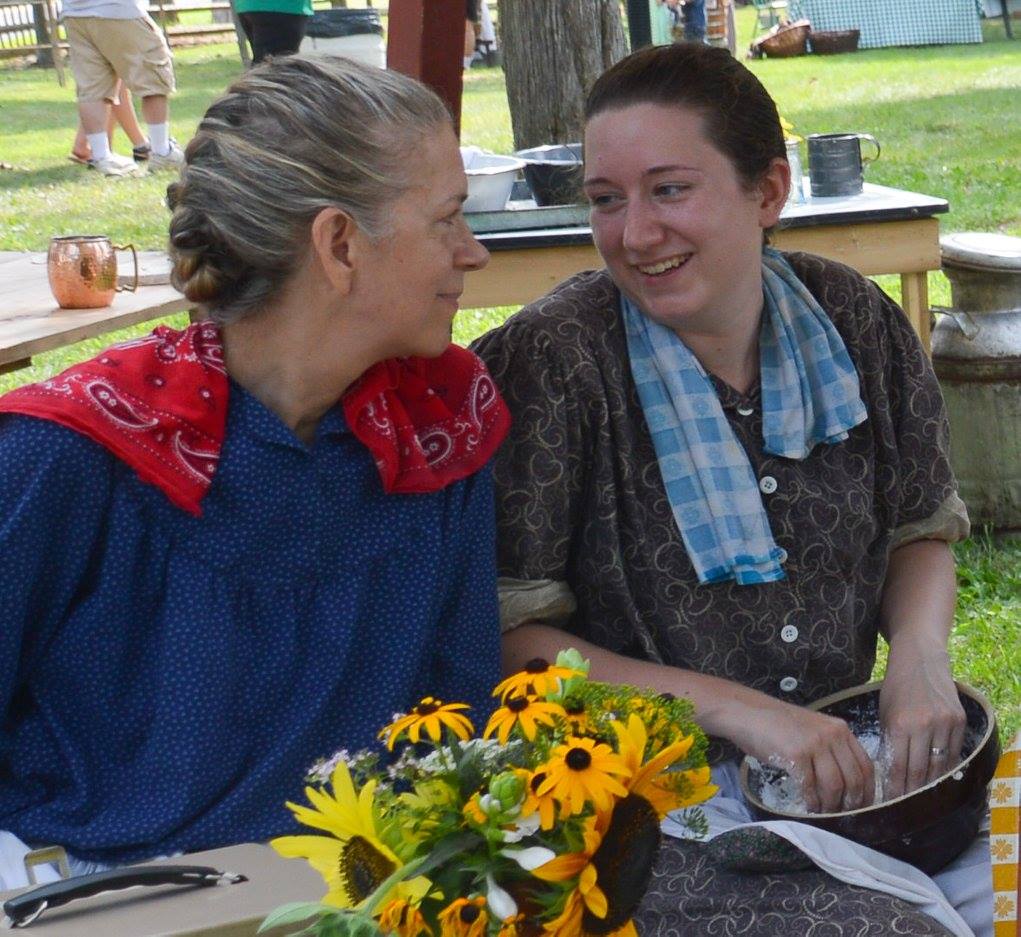
The annual Goschenhoppen Folk Life Festival happens this week–Friday and Saturday–and for the first time ever, neither of our now-grown children can participate. Nonetheless, my husband and I will be at our respective craft demonstrations, showing visitors how people a century or two ago solved the requirements of living in the region before there were highways, diesel shipping lanes, power grids, electric appliances, and cars–but after Europeans displaced indigenous people and started sawing down the forests. We had a taste of pre-power grid life ourselves early this week when a fast-moving storm made us lose electricity for 24 hours.
Visitors to the festival often marvel that they “never knew that’s how it was done.” They buy pickles or jam in a jar in the supermarket and figure it’s all made in a factory somewhere (which is true, today); meat comes packaged, and who thinks about how rope is made, or flour, or candles? One part of the festival demonstration includes butchering. I won’t post a photo (though there is one here), since some people get uncomfortable about it, but if you eat meat it might be worth remembering where it originated. In the late 1990s, I wrote the following poem about it. I may as well post it today! But the image I am adding is instead a nostalgic one of my daughter and me at the potato candy stand in 2016.
~
Hog Butchering Demonstration, or Deconstructing Breakfast

Cleaving bone and muscle
beneath tough hide,
the man with the knife starts his
slow disassembly,
describes cuts of meat,
holds out intestines, uncoiled:
“used for sausage casings”—
removes the bladder
to rinse and inflate—
children’s game, an old-time balloon.

The carcass resembles nothing
the audience usually sees
whose meat arrives in cellophane
processed—slices, nuggets.
The children, especially,
have never watched the studious
and useful taking-apart
of a body, never witnessed
anything dead
but the flattened,
nearly unrecognizable bodies
of road-killed opossums.

No comparison, this 600-pound hog,
hooked and dangling, its interior
opened with jigsaw precision.
The man with the knife
is a revelation.
They stare fascinated
at the butcher’s truth
carving an exact history of
their breakfast bacon.

~
My second full-length poetry collection is finally available. Whew! It took a good bit of patience, some frustration, and considerable persistence to get here, but I believed that this was a manuscript worth plugging away on. And thank you to Highland Park Poetry and to judge Cynthia Gallaher for choosing RQH as a prizewinner.
Persistence doesn’t always pay off, but when it does, we tend to focus on how important it is to keep on keeping on. However, I’m not sure I wholly believe in the process of sticking-to-it no matter what; there are times when you do need to let go of an unattainable goal or the pursuit of a not-terrific idea, and just–well, fail. I have let go of quite a few goals, plans, and previous manuscripts when I honestly evaluated my feelings about them and their possibilities for becoming realized. It’s okay to fail. You learn more from failure than from success. I have gained quite an education that way myself.
But I wanted this book to get into print. I like the poems in it. I like the things I learned as I played with meter and form and (mostly slant) rhyme. It was fun to find a range of topics that managed, one way or another, to work together. Mostly, I wanted an audience, to find out whether readers find it thought-provoking or entertaining or interesting. Also, I was starting to sense that it was getting in the way of my next manuscript. Yes, of course I have the next manuscript…
Do I wish the book had come out four or five years ago? Yes. My first collection, Water-Rites, came out way back in 2012; RQH was supposed to have followed more rapidly on that book’s appearance. Am I glad it has appeared at last? Also yes, very glad!
I am grateful to so many people for this book. And I will be grateful to anyone who buys it, reads it, and doesn’t find it a complete waste of time. Meanwhile, I’m working on getting some readings lined up. I know I will appear at the book launch September 9, 2023 in Highland Park, IL! I’d love to read at other venues, so if you know of one let me know.
And if you have a manuscript you really believe in–keep trying.
Wednesday evening I participated in a lovely (if under-attended) event at a local listening room, Godfrey Daniels Coffeehouse. The venue’s been in existence nearly half a century and hosts many a folk, blues, and folk-rock band/singer-songwriter, as well as the occasional puppet show, jam, open mike, children’s event, and poetry reading. Quite a storied place. Dave Fry, one of the co-founders, offers a monthly “Dave’s Night Out” during which he invites songsters, singers, lyricists, musicians, and poets to take the small stage and present their work as well as discuss their working process–with Dave himself and with the audience. It’s a wonderful opportunity to exchange creative and artistic ideas in public. The poets were me, Danielle Notaro, and Cleveland Wall. Dave’s take on the evening is here.
On the way home, my beloved and I had a discussion about artistry and “being an artist.” As he is from an artisan/craftsman background, he does not think of himself as an artist. The term seems a bit “elevated” to him. And while he is a creative problem solver–crucial to being an artist–I see why he does not consider himself an artist.
Some of that thinking is simply semantic, however, a perception based on someone else’s definition of an artist. Beloved asked me, “Do dancers or musicians consider themselves artists? Do you consider yourself an artist?” Good question, and the answer’s probably individual (i.e., it depends).
I mean–do I consider myself a poet? A writer? Let alone an artist. I immediately thought of a Substack post by my friend, journalist (journalists are writers!) Peter Moore, in which he publishes an excerpt from his post-college diary. Brave man.
“On the ferry from France to Folkestone I floated on a rising tide of words words words: “I must enter into the intense feeling I had while riding the Tube this morning,” I wrote, “that I honestly feel like a writer, that it was just a matter of time and effort before I am recognized as one. I hope and trust that this is prophetic.”
Yeah, I remember feeling those particular 22-year-old feels and the questioning that accompanies them. I am certain that similar enquiries appear in my old journals, though I may have been more cynical and less trusting than Peter was. He closes this post by saying: “Meanwhile, all those blank pages were screaming at me. Fill them with what, aside from intense living?
“Pretensions to artistry!”
~
Which is not to say that poets and writers and dancers and songwriters are not artists. It’s just that some of these folks think of themselves as artists, and others think of themselves as artisans, or craftspeople, or creative innovators, or…name it what you will. Poetry is a form of creative expression, and if you (dear reader) categorize that as art, then it is. If my poet colleagues think of themselves as artists, I respect that and will not argue. Perspectives, right? Not the same as pretensions, although I will admit that in my opinion, there are some people who write poems, and other things, a bit pretentiously. I have been guilty of the same, especially when I was young and getting the practice underway. Pretentiousness may even be a kind of motivation. We learn humility as we practice our missteps.
Contemporary Western society casts a great deal of gravitas and status on the word “artist.” So to answer my spouse, I replied that well…I do consider myself a writer and a poet, but I seldom think of myself as an artist. However, if you think poets are artists, I am an artist. Because I do indeed think of myself as a poet. I cannot get away from that urgent need to observe, imagine, interpret, restate, turn into metaphor, reflect, create into form, and otherwise do the making (Poiesis) of word play.
I tried to attend a poetry event on Saturday afternoon, but the weather was against me.
The rain came accompanied by lightning strikes, high winds, falling branches, flash-flooded roads, sleet, and a little hail, all in the space of two and a half hours. I left home only to turn around after three miles. The highway was blocked with traffic piled up due to various “storm-related events” (said the weather sites). Actually, I was grateful for the storm, since our region has been unusually dry and even warm for April–my trees, shrubs, meadow, and perennials needed rain. And upon my return, I got back to reading books of poetry. This past week these included collections by Marilyn Chin, Elizabeth Metzger, Grant Clauser, Jennifer Franklin, and Natalie Diaz. Some wonderful work there.
Through these books of poems, I also gleaned lots of interesting information. That’s something many people who claim not to like poetry don’t understand: you can learn about so many things through poetry! Poems contain fascinating facts, intriguing perspectives, tons of social and cultural observations, vocabulary and terms I would not have known about otherwise…poems have been the impetus for me to learn more about astronomy, theology, historical events and people, the geography and topography of the earth and its oceans, the life cycles of insects and plants, how metal shops operate, how to catch fish or tie a fly, what it is like to “live with a disability,” how the process of dying has differed from era to era and place to place, what it is like to reside in a war zone, the traditions of people whose backgrounds differ from my own, and other so-called “non-fictional” information.
Facts, in other words. Poems may inhere in the emotional or intellectual realm in many ways, but they also can–and often do–inform. They contain facts as well as multitudes. If people did not get so hung up on trying to decode a secret meaning behind everything they encounter that appears to be a poem, they might be surprised at how much they could learn from such (usually) brief texts. Yes, it might help to look up a word or a reference or two. That can get a reader started on a whole trail of interesting and valuable knowledge, widening the worldview, changing the perspective.
It may even lead a person to recognize that facts can change depending on point of view. Contemporary science acknowledges this, but most human beings haven’t accepted it yet. Anyway, this points to one reason poetry has often been considered unconventional, subversive, even dangerous or radical: Poems can challenge the status quo of what is accepted, received, unquestioned in society’s knowledge base. Terrifying the authorities by means of information.
Go for it. Read a book of poems.
~
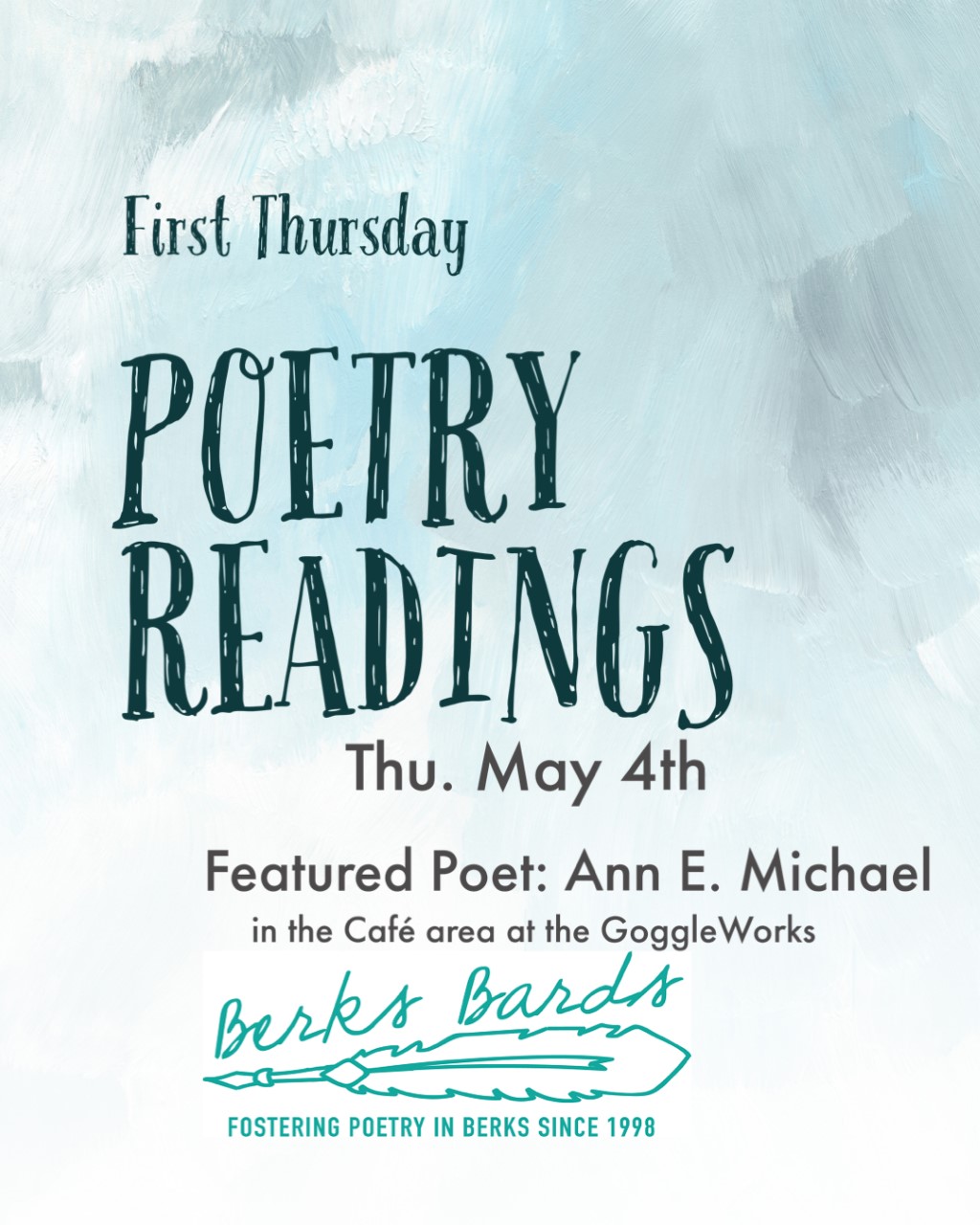
Coming up in May, I’ll be featured once again at GoggleWorks in Reading PA, 6 pm on May 4th…it has been awhile since I was there (2012), and I look forward to it!
Adrian Owles. That was her anagrammed alias. She used that name for things like electric and phone company bills when her real name set off “overdue payment” notices, resulting in her inability to get services. She did, in her youth, have a conniver’s sense of how to skive and get away with it. To some degree. She learned the skills from her father, a brilliant alcoholic from a once-wealthy family. From her mother, she learned poetry and an idealistic, romantic outlook on life…but also that she should be independent and never rely on men to take care of her or keep their promises.
Well, maybe she learned that last part from her father. Her parents never divorced, but her father was an absentee dad. That’s the picture she supplied to me. I suspect it was true, but I know only a tiny part of her story. Ariel Dawson, my poetry mentor, was a year younger than I but so well-read, aware of the “poetry scene,” reading craft essays and books before I knew such things existed–and taking reasoned issue with some of the writers, too, in ways it never would have occurred to me to do. Question such recognized authority? I would not have dared.
What is a mentor? A kind of teacher or model of behavior? Ariel’s behavior was far from conventional, which did appeal to me. We hitchhiked from Michigan to NYC and back. We stayed up almost until dawn and drank wine and talked about poetry. We ganged up on the poor man teaching a creative writing class at our college by questioning his pronouncements and asking about poets and poetry he had not specialized in. We sneaked into bars without paying the cover charge or having our IDs checked (Michigan had a liquor law that permitted 18-year-olds to drink, but Ariel was only 17). I kept wondering quietly to myself: Is this how poets behave? Is unconventionality necessary to the craft?
Well, yes and no. A certain aspect of the unconventional probably helps writers of any kind, but risky antics are not required. An individual perspective on heartbreak or trauma can be useful. Some of Ariel’s stories made me fear for her, feel heartbreak for her; if I never knew how factually true they were, I sensed a fundamental truth in what she told me. One example is her “love affair” when she was 13. She believed she was having an affair with a man in his early 30s who was from Pittsburgh, which she thought was an eastern seaboard town (so much for Detroit’s 1970s educational system as far as American geography goes). He disappeared one day, and she set off by herself to find him in Pittsburgh, where the police eventually located her. They sent her home to her mother. Now I look at this story as grooming by a pederast, but at the time she considered it oddly romantic of her. What makes trauma, if the victim doesn’t feel traumatized? If she can imagine the experience into something naive and…sort of like love?
Ariel’s poems appeared mostly in the early 1980s in print magazines; she taught creative writing at a couple of universities, but eventually her love of dreams and the mythic led her to pursue Jungian scholarship. Last I heard, she was working as an analyst in New York state. Perhaps unfortunately, she remains best known for a letter she wrote to the Writer’s Chronicle/AWP Newsletter in which she took a stance against New Formalism. She always did love a controversy.
My book Strange Ladies is dedicated to her memory. For a whole bunch of reasons and for a number of Ariel stories I can’t even begin to relate here. But most of all, because she urged me to write. And to revise. And to read as many poets and as many craft books as I possibly could. And never stop learning, and keep on writing. She got me to give poetry readings aloud to an audience. She kept me laughing. She was wild and lovely, and I am sorry she is no longer among us.
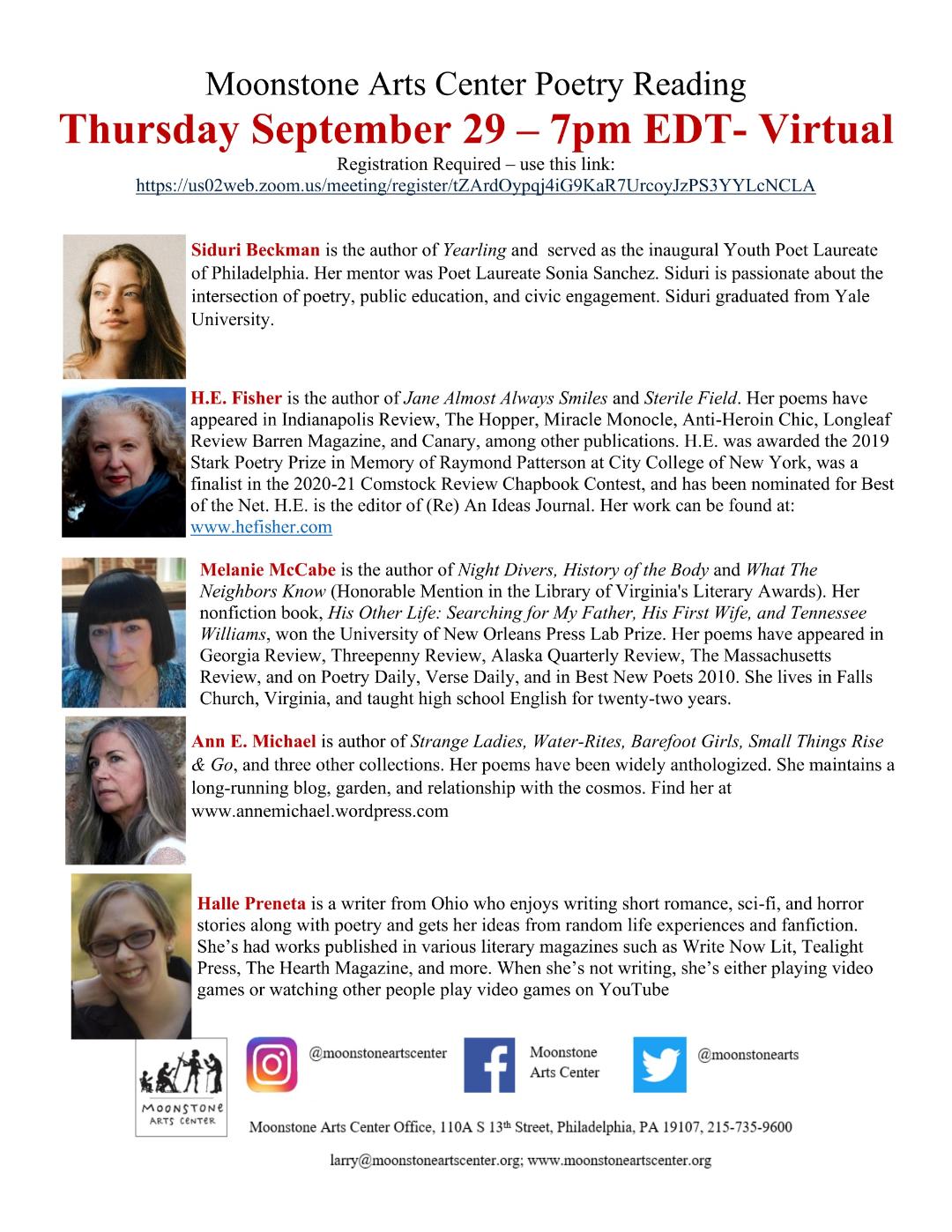
Meanwhile, here is the link to register for an upcoming Zoom reading by some strange ladies, including yours truly:
It’s still March; and yes, a few daffodils had begun to bloom–and yesterday the weather was raw and today it is frigid, and both afternoons I got stuck in snow squalls while driving. Squall: a good word, apparently Old Norse in origin and related to squeal. My students were cursing the return to cold air. I put my mittens on and endeavored to teach myself patience. We do need the cooler currents, but the worst things about overall global warming are the meteorological extremes, the cold that is so cold and the snow that is oddly early or late and deep, the hurricanes, the hailstorms and tornadoes, the flooding.
Tree frogs know how to take care of themselves. They leave the trees and go back into amphibian dormancy until the weather breaks again. The shallow burrow where a tree frog waits out a spring freeze is called a hibernaculum. Days like this one, when the winter smacks back the warmth again, a hibernaculum appeals to me.
Having just returned from three days at a writers conference [the AWP], the concept of a solo burrow to recoup my energy fits the bill. The conference–largely due to covid 19– was not as well attended as those I have been to before (& required masks and a vaccine certificate); also, the Philadelphia Convention Center is vast, so I did not feel overly worried about the virus. The event felt as overwhelming as ever, though, and hard on an introvert. I did attend with writerly buddies, and met nice folks and learned new things. I remembered the lessons of past conferences in terms of pacing myself, purchasing books in a manageable fashion, and not lugging too much stuff around: general attending-a-conference navigation. One thing I will grouse about was my own inability to use a phone app to figure out what was going on where. My phone is small, and I am inept at its tech capacities. I prefer a paper guidebook, though I suppose that’s not as environmentally friendly.
Re-entry into my routine was bumpier than it used to be. I had post-conference physical aches and fatigue, and I felt oddly rattled intellectually, as if all those marvelous and interesting poems, concepts, people, theories, books, journals, programs, and voices had jumbled themselves into my brain and not finished synthesizing. I suppose that about describes it, too…it is a LOT to try to connect and to sort through. Worth it, however.
The upshot? I need my hibernaculum to screen me from the squall. But spring will come.
It’s been a long time since I attended a convention, concert, or any large event. Thanks to covid, longer than usual. This year, I’m braving the Association of Writers & Writing Programs’ annual conference–in person, next week–since it’s being held near me, in Philadelphia, this time. Never one for large crowds or rooms full of strangers, given my natural inclination to internalize or curl up in a corner with a book, I have nevertheless attended AWP in the past and have found it supplies me with creative energy in the form of writers I need to read, intellectual ideas I want to explore, and reasons to keep writing.
~
The conference provides a good place to meet up with fellow writers I know mostly “virtually” via social media or email, and to see folks who live far from me; it also features well-known writers in readings, panels, and conversation–always an excellent experience. I’ve blogged about past conferences (if you’re interested, type “AWP” in the Search form on this page, and a bunch of posts will come up). Attendees do not have to be academics or involved in creative writing programs to attend. I’m excited!
Meanwhile, the month of March does its typical lunge and feint, volt, and passe arriere as it heads toward springtime…I never know what to expect, weather-wise. Today: mild and almost 70 F. I’m hoping we get a string of 50-degree days that permit some garden preparation. But then again, that’s always what I hope for in March.
New in the outdoor garden this week: the first bumblebees have emerged. There’s one in this photo, amid the iris reticulata–
bumblebee, just left of center; iris reticulata
~
My tomato seeds have sprouted in their little seed-starting pots by the sunny window. Gardeners must be optimists. I guess I learned that from my dad.
Of note: I’m happy to have a poem in Scoundrel Time, a journal I enjoy reading for work that’s relevant to the contemporary moment. Here it is; please read it, and read the other wonderful poems in Scoundrel Time: “A Brief History of Kyiv.”
~~
This poem also came to mind, for different though possibly related reasons. It will appear in The Red Queen Hypothesis when that book (my second full-length collection) gets into print. I was writing many poems in various forms at the time. The poem’s story is second-hand, the we a personified plural community of human beings, one repeated line taken from, you’ll recognize, A Tale of Two Cities–there’s a reason for the allusion as well.
Somehow, may all be well. Somehow, may each of us find some happiness.
~~
Variations on a Line of Dickens
			(Belarus, 1985)

It was the best of times, it was the worst
of times, when nothing seemed to go our way,
though happiness is what we wanted. First

we stood in endless queues, outside, and cursed
the lack of cheese or bread; our pals would say
it wasn’t the best of times, it was the worst.

We’d swill cheap vodka, harshening our thirst,
highlighting deprivations of each day,
when happiness was all we wanted. First

we’d press our bodies close enough to burst
the paper bag of lack. Kisses could not stay
our own best times, but it was the worst

thing to let go. Our lips still pursed,
the tastes of sex would linger and relay
that happiness is what we’d wanted; first

times were the best, solid, immersed
in flesh and heat—forget the fray—
those were the best of times, and yes, the worst.
Happiness was what we wanted first.

~~





 ann e michael