Agency

It’s a bad idea to get into gardening if one happens to be someone who requires complete control of things. Nature’s behavior, it turns out, manages seldom to be controllable by human beings. One reason I enjoy gardening is the chance to keep trying a new approach, a new variety, a new method; if I cannot control the environment, I may at least find an adaptation that works for awhile.

This year, it’s a short-season, baseball-sized melon I’m experimenting with, and potatoes grown in a bag, and hard beans in addition to haricorts vert, and a different set of heirloom tomatoes. The method I developed some years ago to deal with insect-borne and moisture-spread viruses on zucchini no longer works for me, alas. Next year I will try something else–because I do love grilled zucchini.

~
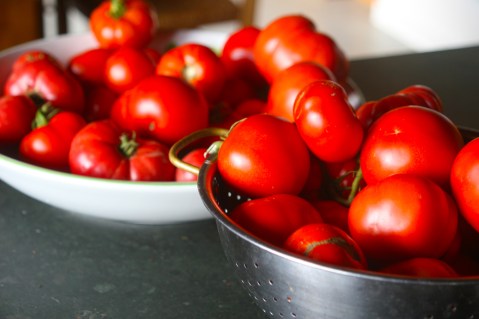
IMG_1753

Bounty

There’s a difference between control and agency, and I’ve been pondering this since the illness and recent death of a long-time friend and fellow writer. Agency, as it has come to be used in psycho-social circles, means having the freedom and the ability to make decisions. It’s not quite the same as controlling–it hasn’t the same aims behind it. Also, agency implies responsibility. Controlling people are more apt to place blame, whereas a person with agency makes choices and accepts the responsibility of those choices.

That’s the sort of person Bill was: gentle, quirky, humorous, exceptionally smart, persistent, and devoted to the people he loved and the causes for which he advocated. He decided what mattered to him, chose the sort of life he wanted to live, and took responsibility for those decisions even when other people might have wanted him to do otherwise. He made, and kept alive, connections and relationships. He worked on being a better self and a better citizen of the world.

When it became clear that two weeks of hospital treatment had made no difference in his illness, he chose to go home under hospice care. I wrote to a fellow member of our writers group that I was a little bit in shock but also unsurprised at his decision. She said that yes, Bill has always believed in agency.

~

Agency is one of those terms, like mindfulness and intentionality, that can be overused by pop psychology and self-help best-sellers until it is nothing but a cliché.  The etymology tells us much, however:

agency (n.)

1650s, “active operation;” 1670s, “a mode of exerting power or producing effect,” from Medieval Latin agentia, abstract noun from Latin agentem (nominative agens) “effective, powerful,” present participle of agere “to set in motion, drive forward; to do, perform,” figuratively “incite to action; keep in movement” (from PIE root *ag- “to drive, draw out or forth, move”).  [Thanks to Etymology Online]


That would be my friend and critic Bill, drawing forth and setting in motion; effective, powerful, someone who could do and incite to action, and make wise and purposeful choices in his life.
Topophilia

In a past post, from 2013, I mentioned some neologisms describing feelings about place.

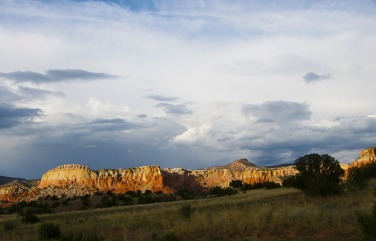
dusk GR

Toponesia suggests nostalgia but adds to it a sense of loss for what has been erased, eroded, or developed to the point it is no longer familiar. When you return to your old neighborhood, for example, and discover that your house no longer exists and there’s a mall there instead, or discover that your old school has become a condominium. Many of us know this feeling: memory conflicting with current reality.

A sweeter emotion–if you can call these emotions (they may indicate self-reflection and consciousness as much as emotion)–is that of topophilia. An article by Hakon Heimer in Environmental Health Perspectives says

The term topophilia was coined by the geographer Yi-Fu Tuan of the University of Wisconsin and is defined as the affective bond with one’s environment—a person’s mental, emotional, and cognitive ties to a place.

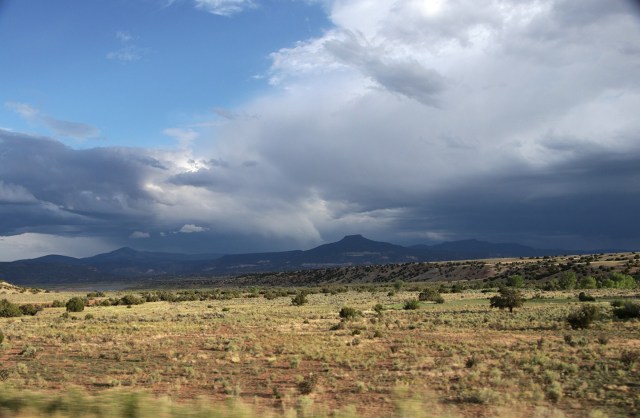
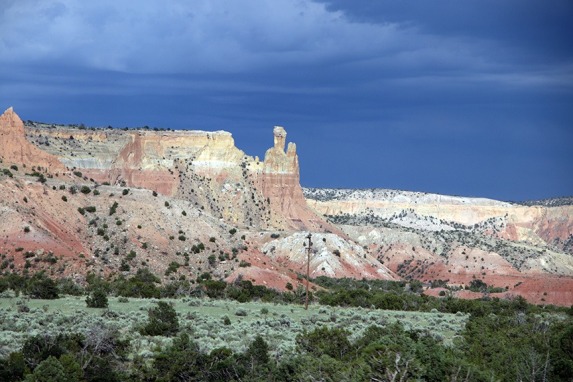
This feeling arose in me recently on a trip to New Mexico. The place in mind and heart is Ghost Ranch, which most people associate with the artist Georgia O’Keeffe–her house and studio are there (and are now a museum). But my association began before I knew of O’Keeffe; I was eleven years old, and the ranch was journey’s end of a long family road trip west.

GR19

Chimney Rock, Ghost Ranch, Abiquiu, MN


The summer days I spent there somehow lodged inside me with a sense of place–and space–that felt secure and comforting, despite the strangeness of the high desert environment to a child whose summers generally featured fireflies, long grass, cornfields, and leafy suburban streets. Ghost Ranch embraced me with its mesas curving around the flat, open scrubby meadow where the corral block houses sat. Chimney Rock watched over me. Pedernal loomed mysteriously in the deep, blue-purple distance. I still cannot explain why the place felt, and still feels, like a second home to me. If I believed in the existence of past lives, I would say I had lived there before. Topophilia.

pedernal storm


Not a perfectionist

My late mother-in-law, may her memory be for a blessing, spent much of her last decades gardening. I learned a great deal about flower gardens from her, and we discussed cultivars and shade-loving plants and pest control with the sort of enthusiasm that avid gardeners well know. She enjoyed landscaping her place with colors and textures, carefully tracing expected bloom times as well as plant heights and spreads so that the beds produced an ever-changing canvas to delight the eye.

hail and roses

Hail: One of Nature’s curveballs

Except: Nature is always throwing curve balls. My mother-in-law’s gardens were beautiful, but she always eyed them critically. It is true that most gardeners notice what isn’t thriving, where the weeds are, or what has not grown out or bloomed as hoped. That comes with the territory. But the process of gardening is so much more enjoyable, even soothing, when one is not a perfectionist.

Not being a perfectionist myself, I find that time in the garden acts as a meditative oasis. It is part mindless physical labor, part problem-solving, part mindful awareness of the environment. This year, I’m making it even easier by planting fewer vegetables and fruits and more blooms to attract pollinators; I’ve a smaller variety of produce but am experimenting with some new (to me) seeds–a melon from the Caucasus, a few heirloom tomatoes, black beans as well as green ones.

I learn as I go–as I cull and thin, inspect insect damage, note responses to growing conditions. It occurs to me that this activity bears a resemblance to the writing process, particularly when putting together a collection for a chapbook or longer manuscript. In that undertaking, I’m also not a perfectionist; and I should not be quite so quick to gainsay the need for the perfectionist attitude when creating one’s art (as long as it does not lead to fruitless caviling).

But I’m just not constitutionally ordered towards that sort of purist idealism. The best I can do with my poems is similar to the best I can do with my gardens: devote mindful attentiveness to the “product” and try not to worry about eventual outcomes.

“Write a little each day, without hope, without despair.”  —Isak Dinesen [Karen Blixen]

See what grows.

IMG_1547

By July–who knows?


Trees

The catalpas are blooming, really putting on a show this year–huge crowns full of white blossoms. I suppose the climate this year contributed to this show somehow, but my research says catalpa speciosa is drought resistant and requires little water compared to other tree species.

casp8062

catalpa in bloom

Eastern Pennsylvania has not had drought lately, and two wet springs in a row have meant burgeoning iris pseudacoris and particularly floriferous honeysuckle vines in my yard. The river birch seems happy with its feet all wet; the firs–though in a slightly less waterlogged area of the yard–are, by contrast, miserable.

~

I’ve been thinking about trees because I’m reading Peter Wohlleben’s 2016 book The Hidden Life of Trees. The text reads like a friendly forester inviting readers to learn what he loves about trees and their encounters with us, with the environment (soil, air, sun, water, pollutants, pests, fungi), and with one another. I have to say I remain somewhat skeptical about the scientific veracity of his source material, but I do enjoy his warm enthusiasm for his subjects and his reminders that we humans don’t know even the smallest fraction of what goes on in the planet’s interconnected and unplumbed depths.

Although some critics object to what they see as too much anthropomorphism in Wohllebehn’s book, his use of the analogy of the human and the tree “bodies” makes his information about how trees and forests work easy to grasp.

For science nerds, there are other texts. The Hidden Life of Trees is meant to make the less scientifically-inclined reader more aware of his or her environment, to convince the average human being to consider plant life more consciously.

~

I take many photos of trees; and they appear in my poems pretty regularly, not as main characters but in supporting roles–not symbolic, but actual. Wohllebehn’s book may influence my work somehow…possible inspiration? But then, the trees themselves, especially the oldest ones, are inspiration enough.

sycamore

This 200-year-old sycamore resides at Bartram’s Garden in Philadelphia


Repetition

Repetition, the foundation of rote teaching and memorization, is a style of learning at which I have never been particularly successful.

Nonetheless, repetition has been useful in my learning process. Close observation reveals small differences in repeated events and refrains of all kinds; what I learn through repeated experience is that each time I see or do “the same thing,” I notice something new. Repetition permits me to analyze, and that is how I learn best.

Here’s an example.

~

Plants, particularly flowering plants, fascinate me. Every year, I find myself heading out to the yard, my camera in hand, to take photographs as the flowers unfold and the insects arrive to pollinate them. Every year. Yet a closeup of a bumblebee in a redbud blossom from 2005 looks pretty much the same as a bumblebee in a redbud blossom in 2019. Or a monarch on a tithonia–one year similar to the next. Why bother? What urges me out when the dogwoods bloom to record yet another photograph of flowering dogwood? How redundant. How unnecessary.

Yet I have learned much, gleaned much, from the process of noticing the buds and blossoms and insects as the days lengthen and then shorten again; the cycle of life a repetition. Each routine event of spring seems new to me after the winter’s rest.

~

The only types of poems I have managed to have some recall for are poems with refrains, and some song lyrics (also with refrains). The ones I have memorized are the ones I have heard and sung along with most often, such as the calls and responses of church rituals and hymns, the record albums I listened to over and over when I was a teenager. Each time I listened, I felt something new happen inside me. It’s the same with my walks in the garden and the woods and hedgerows and the meadow: each year the same, each year new. That kind of teaching, while repetitive, is far removed from rote.


The takeaway

ampersand

so, I did what I set out to do: I exercised the necessary discipline to draft a poem a day during National Poetry Month, and I pushed against my “comfort zone” by publicly posting those drafts as they came to me. Usually I do not share my initial drafts with anyone other than fellow writers in my writer’s group or a few poets with whom I correspond. This was an interesting experiment on the personal level, therefore, a sort of forced extroversion as well as effort in productivity. I now have 30 new drafts to reflect upon, revise, or ignore.

It has been years since I came up with that much work in four weeks’ time. For the last decade or so, my average has been closer to six or seven poems a month. And I would not have posted any of them as they “hatched.” I would have waited until I spent some time with them and figured out how best to say what they seemed to want to say.

That’s not an unwise approach in general; I see nothing wrong with letting poems stew awhile. And quite a few would have ended up in the “dead poems” folder. Nevertheless, trying something innovative tends to prove valuable. The takeaway is that I am glad I finally managed the NaPoWriMo challenge. A few of the poem drafts you may have read here stand a chance of evolving into better poems. Maybe some will end up in a collection (years down the road). That result feels good.

The takeaway is also the realization that I no longer worry about how others judge my poems, the way I did when I was starting out and discouraged about having my stuff rejected by magazines. Not because there’s less at stake–indeed, I feel as invested in my writing as I ever was. The difference comes with the kind of investment, the ambition to write something meaningful or beautiful, and not viewing the poems as results waiting to be determined as valuable by someone more authoritative.

I’m 60 years old and well-educated in poetic craft, style, purpose, analysis. I’ve been writing poetry for over four decades. At this point in my life, that’s authority enough.

~

Self in the World

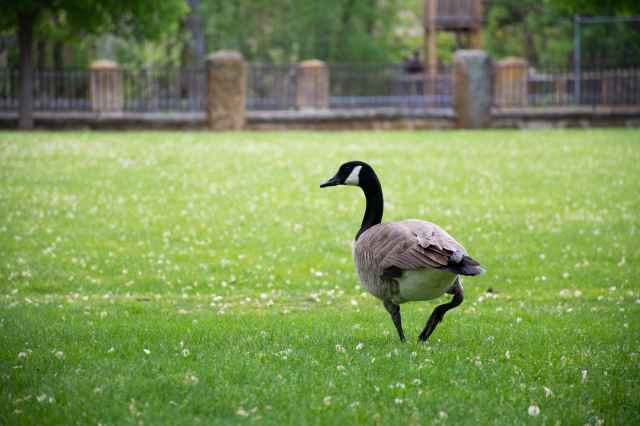
Goose stands sentry in the dew-strewn meadow.
Blackbird browses dry grasses woven along embankment,
emerges, slim stems clenched in its beak.

Under the footbridge, polliwogs gather,
backing into its shade–hawk overhead,
bluejay screaming territory! the crows respond–

Sun halos the water-strider’s shadow,
making a cluster of coronas on submerged stone
where wood frogs squeak and leap into stream current

surrounded by bedstraw, henbit, dandelion,
Amur honeysuckle, garlic mustard, stiltgrass,
invaders all. Except the frogs, who found the stream–

itself new to the landscape, gouged here in the 70s.
What do I notice, then? That some of the living adapt?
What do I make of myself in this world?

~

canadian goose on grass field

Photo by Brett Sayles on Pexels.com

~

Finally, to close the month of April, here is a lovely tribute to Mary Oliver by her friend and fellow poet, Lisa Starr.

Thank you for reading, and for the support of readers and poets this month.

April blossoms

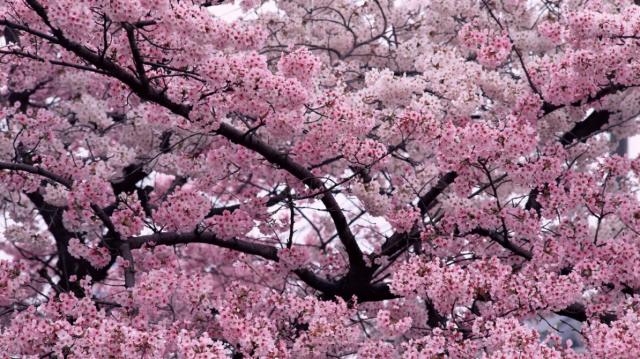
Easter and Passover are late in April this year, which rather complicates the semester breaks of the university; the weather remains unsettled, and at present (6:30 pm, Eastern Time), I look out my north-facing window at bright evening light, lengthening shadows, and the narcissus and shadblow trees in bloom.

I have some visiting to do and may not be posting for a day or so–but will manage to do so if I can; and I will endeavor to at least compose one (I can at best promise one) poem per day even if I don’t get to this blog to post it.

[Note: This is more a reminder to myself than to my readers, who I’m sure have more  significant things to do than to keep track of whether I am holding to my discipline for National Poetry Month.]

IMG_6022

Aesthetic Potential

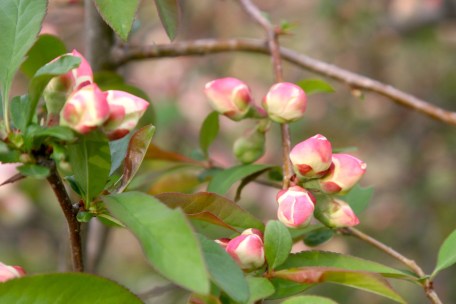
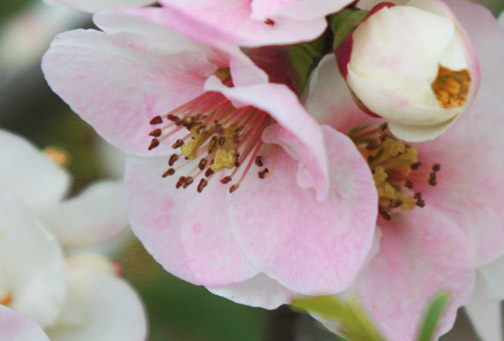
In her yard stood a large quince
which was her favorite flower, she said
though she admitted the bushes
ill-shaped and far too thorny,
the blossoms, though early, unscented
and often sparse or inward-facing,
simple in form, not good for cutting.
The fruits sour, useful only in jelly
which she never bothers putting up
anymore, the branches susceptible to rust.
It looks both forlorn and nasty all winter.
I like its tenacity, she told me, but also
its tenderness. For no other shrub
bears buds with such multi-colored
promise, that might open into anything—
sweet, complex, showy. Though it
doesn’t deliver, April’s bees indulge.

photo by Ann E. Michael

Patience

Okay, day … six? Thanks to Marilyn Hazelton, my tanka expert and today’s muse, for engaging with the idea of patience and suggesting a book that gave me this quote by Rodin (long a favorite sculptor of mine):

~

“Patience is also a form of action” –-Auguste Rodin

Clay. Thumb and fingers pressed.
Coolness and warmth awaiting form
or formulation–chemistry binding
components under heat’s influence.
Here, the potter attends the kiln,
biding her time. Or the craftsmen
check and check again as barley
ferments, as bronze hardens, careful.
The woman holds inside herself
for nine months the evolving child
and every moment is one of multiplying,
expending energy during the wait
which may result in either life
or death. Even the Zen place of repose
requires breath: action, inhalation,
oxygenation, illumination. Notice:
this morning, the plum trees blossomed.

~

DSC100109879


Anticipation

February’s coming to a close, and the forecast indicates a chance of snow soon–but the gardener feels stirrings of approaching spring.

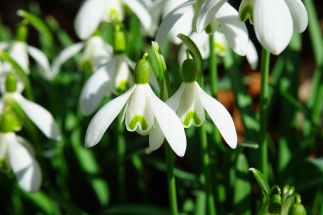
Time to buy seeds, order supplies, plan the garden. Time to mow the meadow before the ground-nesting birds get started on their spring dwellings. Last night the temperatures went well below freezing, but the winterhazel has bloomed. Snowdrops push up from leaf litter: a glimmer of white petals still held close to the stem. Waiting for a string of warm days to open up for the early pollinators.

flowers plant spring macro

Photo by Pixabay on Pexels.com 

Indeed, the days lengthen at last. Next week marks Spring Break for my college, and with a little more flexible time available, I hope to pin down my garden plans. Each year, I try to incorporate something innovative in the small patch of (mostly) vegetables. This year, I’m tempted to try short-season artichokes.

Thinking about the garden energizes me, gets my creative side jumping. It’s partly the anticipation–will this plant emerge, grow, thrive, fruit? Will voles and insects and viruses attack it? Will the weather cooperate? For example, I’m glad I did not plant potatoes last year–the weather was too wet. Should I take a chance on potatoes this year? (Oh, those tender new spuds lifted from the warm soil in August…)

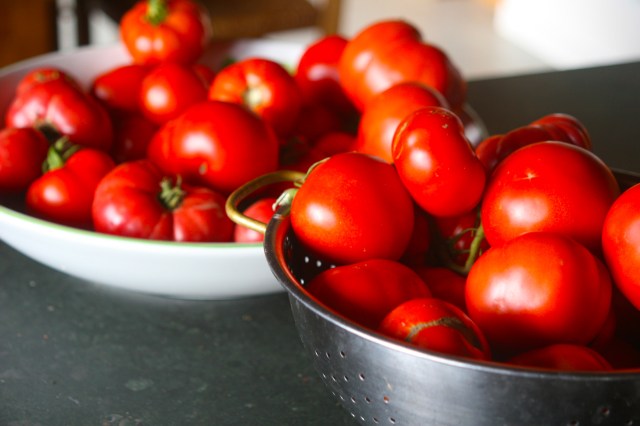
And tomatoes! So many varieties from which to choose.

IMG_1753

Bounty (our own, in 2015)


Anticipation feels different from expectation, though the two are related. For me, at least, the connotation of the first is more open-ended. Anything can happen, though let’s hope what happens is good. Expectation seems more results-oriented. I am not a results-oriented gardener; I like surprises, I appreciate the education I get even from failures.

Come to think of it, I could describe myself that way as a writer or poet, too: not results-oriented, more intrigued by the things I learn when I work at the writing.

Even when the results do not pan out, even when I finally must give up on a poem that is not working, I learn a great deal about where and why a particular approach fails. This is why writing requires practice, patience, and time to analyze and reflect on what those “results” tell the writer.

Do what works, then push the envelope.

Hmmmm…artichokes in Pennsylvania….

artichoke beautiful bloom blooming

artichoke in bloom : Pexels.com


Observations

My brother, whose avocation is science historian and whose papers I often proofread, has acquainted me with the 18th-c. comparative anatomist Johann Friedrich Blumenbach. As often occurs when one becomes attuned to new knowledge or focus, I suddenly seem to find Blumenbach’s name or theories “everywhere.” Mostly in books, of course, but also in a natural history museum where I came face to face with a trilobite that bore his name. I have also been reading Andrea Wulf’s book on Alexander Humboldt, The Invention of Nature; Blumenbach was one of Humboldt’s professors and influencers.

calymene blumenbachii

Wulf’s book begins as a biography of Humboldt but closes with several chapters on others who were inspired by his work; she makes the claim that Humboldt’s ideas about the deep connectedness of everything on earth laid groundwork for environmentalists and the discipline of ecology. Indeed, Darwin, Thoreau, Marsh, Muir, and many others found his texts revelatory and transformative. His writing is supposedly poetic and emotional–he did not think the earth and its denizens deserved less than awe and appreciation. Even though his books are packed with measurements, comparisons, careful botanical descriptions, and minute observations of practically everything he encountered, he allows space for admiring the view. Or, so Wulf’s book says. Now, I suppose I shall have to do a bit of reading Humboldt!

~

Along these lines, the lines of the natural world’s connectedness and relationships–ourselves among these, despite our frequent destruction of them–I find myself thinking of the recent death of poet Mary Oliver. I so admire the work and the woman, or what little I knew of her from a few appearances and through friends who studied with her. My social media feed has been alive with tributes, postings of her poems, and some critique about her standing as an American poet, as if that would matter to her (I doubt it would).

I can just make note that her poems have encouraged me to continue to write about nature, even when I’ve been told nature poets are unfashionable, uninteresting, or unnecessary. Her work taught me how to observe closely, like Aristotle at the tidal pools or Haeckel peering at radiolaria. First notice, listen; then describe, then try to obtain more information, and all the while percolate what experience has created within the observer herself. Maybe nothing earth-shattering comes of the process, but sometimes  there’s a poem…

Here’s one of Oliver’s early poems (from Twelve Moons, 1979), one readers are less likely to find in all of the tributes to her but which offers a sense of how well-observed–for all their ‘simplicity’–her poems are.

Buck Moon–from the Field Guide to Insects

Eighty-eight thousand six-hundred different species

in North America. In the trees, the grasses

around us. Maybe more, maybe

several million on each acre of earth. This one

as well as any other. Where you are standing

at dusk. Where the moon

appears to be climbing the eastern sky. Where the wind

seems to be traveling through the trees, and the frogs

are content in their black ponds or else

why do they sing? Where you feel

a power that is not yours but flows

into you like a river. Where you lie down and breathe

the sweet honey of the grass and count

the stars; where you fall asleep listening

to the simple chords repeated, repeated.

Where, resting, you feel

the perfection, the rising, the happiness

of their dark wings.


Her poems are not metaphysical by any means, but Oliver is avowedly spiritual, which is not a fashionable thing. I am not spiritual, but I have always respected that in her. May she rest in the perfection and the happiness of those dark wings.