Drought

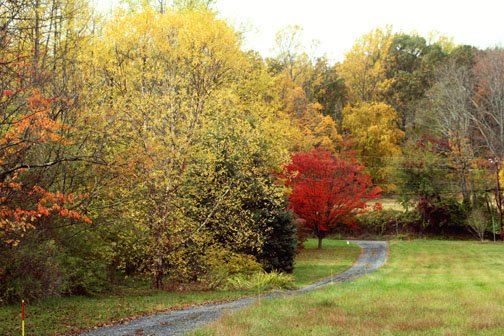
I hate droughts. I’m a gardener who lives in a temperate region that, on average, receives about 1,150 mm of precipitation annually (45″). Here we are, in the middle of springtime, blooms on the dogwoods and azaleas, peonies beginning to bust out; and I haven’t heard the welcome noise of rain on the roof for over 5 weeks. Generally, May brings this region 2-4 inches of rain. I miss it, and so do the birds and the deer and the insects and the salamanders and toads…and the few remaining farmers.

I water my vegetable garden daily, but I cannot water the whole lawn, the perennial beds, the hedgerows where the larger trees grow. So the grass becomes crisp. And I worry that a strong wind, or a sudden downpour (please?!), might topple a weak-wooded tree that’s been gasping for nourishment.

Drought is also so metaphorical. It signifies lack. A lack of ideas, a creative drying-up, a kind of writer’s block where words harden into obstacles–those things are droughts of a kind that stop thinkers into stasis. If you don’t move, you end up mired.

Not too distant a stretch from the concrete phenomenon of drought to the existential phenomenon of an artistic or emotional “dry period.”

There are several ways to contend with droughts; some require large-scale changes in industry, agriculture, population centers. On the smaller scale, I practice a version of xeriscaping; after years of experimentation, I have learned which plants hold up best under extremes of dry periods or deer depredation. I am alert as to which seedlings are hardiest, which plants can contain themselves in a sort of dormancy until the rain comes. That means I have to let go of my desire to grow certain species and cultivars no matter how envious I am of the way they flourish in someone else’s garden.

And it’s the same with a droughty period in my creativity. Certain things I let go of; I work instead with what struggles along in the mud cracks, what creeps under the brickwork or waits for the next real rainfall. There’s often surprising beauty in those hardy emotions and ideas that stay around when the going gets tough, the things that manage to find shade or that–like cacti–prefer a drier clime.

Being adaptable is important if one wants to make art, to write poems, to compose. Because life isn’t always going to offer ideal circumstances for the creative or aesthetic effort.

~

I hate droughts not only because they hurt my plantings but because they signal a potential disaster in terms of global climate change, and because thousands of people die for lack of that essential element–water. I recognize, though, that suffering sometimes motivates human beings to make changes, to create new approaches…even to make art.

Life is complicated. We evolve through change.

Meanwhile–let it rain!
Quiet earthiness

The beloved life partner of a long-time friend was interred in a green burial today, a glorious May morning full of flowers (she loved gardening…); and I find myself with little to say.

It’s been that way for the past two weeks. Not exactly writer’s block, as I have in fact drafted several poems, but an extreme sense of turning-inward. My nature is reflective–I’ve always fallen into the introvert category (INFP for those who are familiar with the Myers-Briggs assessment)–but my job requires pretty constant interaction with other people, students and colleagues for the most part, and quite a bit of listening and talking. I enjoy my job and find it rewarding; but the stressful weeks just before exams, when term papers are due, can be challenging for a person whose inclination is to read books and putter in the dirt.

I planted seeds in the earth, and picked flowers. And then placed flowers on a coffin woven of reeds which was lowered into the earth.

Returning home the quiet overcame me. I’ve been reading poetry today instead of the Sunday New York Times.

Also, I’ve been reading books on “good death” and “mindful dying,” and the guidance of some sensitive and experienced authors seems appropriate and grounded.

But grief is hard. It’s probably one reason we invented philosophy, religion, and poetry.

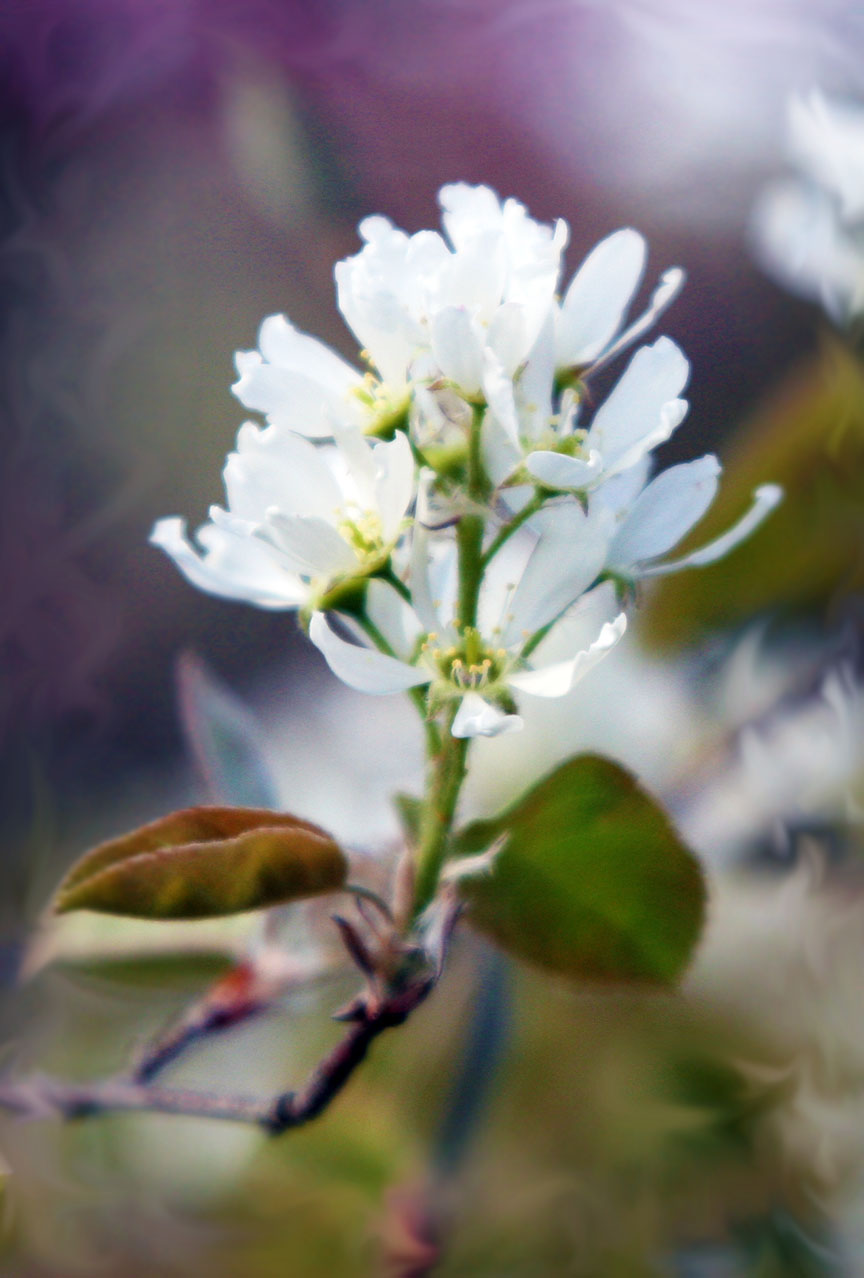
Shadblow, also known as serviceberry.

Shadblow, also known as serviceberry.

One of my go-to anthologies for sorrow is Pinsky’s The Handbook of Heartbreak, which I’ve mentioned in a previous post. In addition, I opened Christian Wiman’s book Every Riven Thing at random and came upon his poem “From a Window“–

Incurable and unbelieving
in any truth but the truth of grieving…


The poem comforted me (and I read other poems today, by other poets, that also comforted me). This one ends with the following stanzas:


Of course that old tree stood
exactly as it had and would


(but why should it seem fuller now?)
and though a man’s mind might endow


even a tree with some excess
of life to which a man seems witness,


that life is not the life of men.
And that is where the joy came in.


~
The joy comes in, somehow, through the quiet and the dirt and the trees.

Dogs & lions

By chance, I encountered the poem “Thorn Leaves in March” by W.S. Merwin (1956, Poetry magazine) a day ago and felt levels of resonance such as poems can evoke. The powerfully “clear expression of mixed feelings”–thank you again, W.H. Auden–converges with seasonal details in this early Merwin piece and merges, completely by happenstance, with events in my current life.

Walking out in the late March midnight
With the old blind bitch on her bedtime errand
Of ease stumbling beside me, I saw

At the hill’s edge, by the blue flooding
Of the arc lamps, and the moon’s suffused presence…

My elderly dog stumbles beside me on these late-winter nights; I do not think she will see another full-blooming spring. Resonance.

alicelamb

Rescue of an orphaned lamb.

“As a white lamb the month’s entrance had been…” Well, that has certainly been true of this year’s weather. And the lamb allusion makes me think not just of the old saying about March but about my daughter, who is spending this month’s last two weeks working among ewes on a farm in Scotland as lambing season progresses.

Merwin’s speaker refutes the aphorism; his March comes in like a lamb because it is white, and goes out in white, as well:

…as a lamb, I could see now, it would go,
Breathless, into its own ghostliness,
Taking with it more than its tepid moon.

The lion, he claims, is “The beast of gold, and sought as an answer,/Whose pure sign no solution is.” No lion in this quiet, late-winter/cusp-of-spring snowfall–the light is silvery, the budding leaves of the thorn trees translucent and cold. The speaker stands beneath the “sinking moon” and wonders, questions, listening for something he knows he will not hear.

The old dog, domestic companion (neither lion nor lamb), completes her mission; the man lets go of metaphysical thoughts; the earth inexorably turns toward summer–despite the snow.

I’ll keep this poem in mind as the next snowstorm heads my way on the equinox.


Hawks & fragments

When I take the commuter bus into New York City and back, I prefer daytime trips because I can count hawks.

I’m not a birdwatcher; but I have noticed, over many years of traveling the route (Interstate 78 Pennsylvania through New Jersey), that the highway offers good predatory-bird landscapes. The bus has large windows and elevates the passengers above the usual traffic lanes, so even though I’m traveling 70 miles an hour, I have a panoramic view through eastern Pennsylvania and north-central New Jersey, where there are scrims of woodlots behind the noise barriers, scrubby undergrowth on medians and embankments, a few cornfields, many high-density housing communities, railroads, creeks, and small county park lands.

I seldom get a close enough look to identify a bird positively; yet from my motor-vehicle perch I can tell a buteo from a harrier or an accipter. The fairly small kestrel is difficult to note, being about pigeon-sized (and pigeons are legion in NJ &NY) but I’ve identified them by their flight pattern. The buteos are most common around here, and from a bus I can’t usually discern a broad-wing from a redtail. But I see them roosting at dusk, or perched, or soaring over the fields and the strip mall parking lots. Twice, I have even spotted a great horned owl in trees along the route.

There are important raptor flyways along this path and into the region just west of where I live: Hawk Mountain is a big birding attraction along the Appalachian Trail. I have counted as many as 18 raptors along an 80-mile stretch of road. The commute takes just under two hours; I am probably the only person on the bus who spends most of her time looking out the windows at what is, admittedly, a rather uninspiring and predictable landscape.

redtail

See below for a link to raptor id at Hawk Mountain

~

51YVrgMy9sL._.jpg

Hawks have been very much on my mind because I recently read Helen Macdonald’s quite wonderful memoir, H Is for Hawk, which I highly recommend.

~

Here are a few fragments of notes I wrote in my journal while I traveled home last Sunday.

what could be a hawk. but isn’t–

paper wasp nests     squirrel dreys (nests of food for hawks!)     leaf clumps      plastic bags[tangled in boughs]

big crows. until they fly.          traffic cameras. the particular angle of them, perched (as it were) above streetlamps.

without binoculars, and in motion. not birdwatching. I scan for raptors.

frozen swamp–The Meadowlands–

snow. out of which phragmite grasses emerge, brown, russet brown. color of redtail feathers.

cranes/high tension wires. canadian geese–also in snow, feeder creeks & streams frozen, Hudson frozen, Delaware frozen.

raptor count NJ 10, PA 4. Four in 16 miles, Pennsylvania.

And yes, I composed a couple of poems during the trip.

But only one of the poems featured hawks.

~ Link to a great page for Eastern US raptor identification

Barnacles, finches’ beaks, art

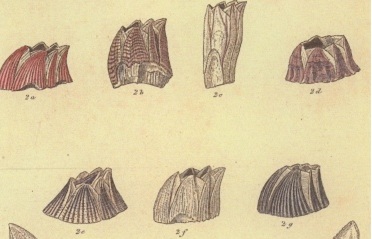
Cirripedia, the barnacles, occupied Mr. Charles Darwin for many years, even though his extensive studies of the class are not what he’s famous for (except among cirripedists). The average layperson knows Darwin as the man who came up with the theory of evolution–though that is not strictly what he did, and none of his books bear that title. After the publication of On the Origin of Species and The Descent of Man, and the subsequent and ongoing controversies that followed, pretty much everything in the world could be–and has been–examined “under an evolutionary lens.”

The original “lens” involved finch beaks, pigeon-breeding, and early geology studies. It was fueled also by taxonomy, anatomy, and barnacles, by a member of the landed gentry who stayed at  home, more or less, for 45 years after his five-year journey on the Beagle. A scholar, an “armchair naturalist” by today’s standards; a genius.

finch beaksMany people who interpreted what evolution suggested went off the deep end one way or another, which is what happens with ground-breaking ideas. Both critics and supporters re-interpreted and often misinterpreted Darwin and the implications of his work, as well, all of which means he accomplished something truly significant. Why not, therefore, examine fundamental human traits to see whether evolutionary currents can be discerned? Certainly Darwin and a few of his contemporaries speculated that altruism might have an evolutionary basis, a concept that was taken up, debated, and temporarily dismissed in the 1960s-70s; recent neurobiological and genetic studies have brought the possibility of a biological basis for kindness back into discussion (see also Damasio).

There is also the question of art (and aesthetics, though taste seems more likely to be social than biological–but who knows?), which brings me to Denis Dutton’s delightful book The Art Instinct: Beauty, Pleasure, and Human Evolution.

Rather than summarize my responses to his thought-provoking and rather convincing arguments, I’m posting some quotes. These are ideas I find juicy to consider; perhaps other readers will feel similarly.

~

Wondrous aesthetic experiences are possible in the absence of a sense of larger community: the response of an individual to a beautiful landscape, for instance, …or to a recording of the Goldberg Variations heard in solitude. If the arts were intrinsically social in the way that social-cohesion theory claims, people…would prefer standing in a crowd to see a painting in a museum, rather than standing alone.

Because of sexual selection, the arts retain an incorrigible sense of being made by one individual person for another…the motives of art, as even Darwin knew, are ancient and complicated–directed toward a community perhaps, but also created to captivate an audience of one.

~

The artist…probes the content of human emotional life with an eye toward articulating, or making clear, a unique emotion, an individual feeling.

Can you imagine taking [a] pill to save the expense of concert tickets, or even the time spent in listening to a recording of the piece? The answer is very likely to be no, and the reason tells us something about the nature of artistic expression. It is not just the emotion as bare feeling we want from art, it is the individual artistic expression of emotion–how emotions are revealed in the art, through technique, structure, balance, and the blending of sounds….Yes, we want feeling from art, but not as an end for which the art is a means: with art, the means is the end itself.      [italics mine]

~

Extending Darwin’s original suggestion, I believe this intense interest in art as emotional expression derives from wanting to see through art into another human personality: it springs from desire for knowledge of another person….talking about art is an indirect way of talking about the inner lives of other people.

~

All of the above excerpts are from Denis Dutton, The Art Instinct, 2009.

http://taxo4254.wikispaces.com/file/view/darwins_barnacles.jpg/274764236/409x262/darwins_barnacles.jpg

wikispaces.com/file/view/darwins_barnacles.jpg

Winterberries & solstice-tide

Wintry hours ahead

Wintry hours ahead: Happy solstice!

Familiarity & awe

The region I live in is not known for dramatic landscapes–no big sky, no ragged peaks or ocean shoreline, no palms, grand flora, impressive architecture. Nonetheless, there are days such as this one when my familiar commute fairly glows with beauty. In the long slant of mid-autumn morning sun, the half-harvested soybean fields shimmer under frost: beige never looked so glorious. Even the big agricultural gleaner glimmers with ice crystals. The sky’s washed with upswept cirrus clouds, and backlit dogwood leaves cling like maroon pennants to silhouetted branches.

Perhaps my aesthetic appreciation of the view is due to a neural release of dopamine responding to images processed through my eyes’ rods and cones; that understanding, if true, in no way lessens my awe.

As I head toward the campus building, the clamorous urgency of wild geese momentarily catches me by surprise. Welcome.

Fallen

Another fallen bird. This time a mourning dove.

~

Meanwhile, at night I sometimes still can hear the shirring of wings as flocks head south. And the owls converse.

Mourning dove, October 2014

Mourning dove, October 2014

October focus

69082_1682385823790_1949308_n~

October. I’ve put my vegetable garden to bed, deadheaded and pruned the perennials. The leaves are yellow and red and orange and brown, and the white pines are dropping their old needles. Quieter days, quieter nights: fewer insects, amphibians, and birds making their noises.

Well–there are the danged woodpeckers

I expect to keep this blog less frequently this month, or to make the posts shorter, because I am taking part in what is for me a new endeavor: an online poetry workshop. I am taking a month-long class with Daisy Fried through Providence’s Fine Arts Center, 24 Pearl Street.

Daisy Fried lives in Philadelphia, 24 Pearl St. is in Rhode Island, and my fellow workshop participant-peers live in NH, MA, IN, MC, ME, NY, VA, NJ, VT, CA, AL and IL. Oh, the amazing connectivity of the world-wide web!

I’m somewhat tech-savvy but only to a limited degree, and reading online is still cumbersome for me. Nonetheless, I am curious to see how the virtual critique will work, given that we are not face-to-face as we comment, enthuse, and suggest. Interpretation takes on multiple meanings in an environment such as this one. And whether I can keep on top of the comments and reading! That’s another type of challenge during the academic year for me.

I feel thrilled to be back in the position of student, though. I’m the sort of person who might stay in school perpetually if I could manage it. Even autodidacts sometimes enjoy the camaraderie of peers.

If you are interested in the process, and how it goes for me…I shall eventually report back on these “pages”!


Pruning, weeding, & poetry manuscripts

Gardening has been a dismal endeavor this past summer; I just did not devote my usual energies to the landscape, the perennials, or even to the vegetable patch. For a number of reasons I will not enumerate here, I did not even get to the weeding. I wish I could say I spent my energy on writing, revising, and submitting my poems–alas, no.

Tangle of weeds & blossoms

Tangle of weeds & blossoms

After a weekend of trying to catch up (in two days) on two months of garden neglect, I caught up on my reading a bit and found this delightful and appropriate post on Lesley Wheeler’s blog: “Restlessly pruning the overstuffed closet of a poetry manuscript.” Her analogy is to a closet and wardrobe, but the underlying concept of assessing and culling works for perennial beds and poetry manuscripts (and attics, and basements, and garages, and…)

This post appeals to me because, in addition to rallying myself to the cause of deadheading and pruning and weeding in the great outdoors, I have also been working on cleaning up two manuscripts. Wheeler asks of her work:


  • Is the book telling the most involving, interesting story I can pull off right now? Is the narrative arc complex yet clear enough to satisfy an involved reader?
  • And yet this is a collection of wayward fragments, not a wholly coherent narrative. Do the poems have some spiky independence from each other? Are they various?
  • Am I making the same moves not too often, but just often enough to keep the poems working in relationship to each other? This means reading for repeated words, ideas, stanza shapes, and other devices.
  • Who will be my readers, and how do I hope they’ll feel and think about this project?

Wise questions to ask of a book of poems; also see Jeffrey Levine’s Tupelo Press blog for his exhaustive take on the process.

Clearly, reorganizing and evaluating my collections are not the kind of work I could accomplish in two days.

In that way, weeding and pruning the gardens offers more immediate satisfaction, though it left me with some scratches, rashes, and a sore back!