Useful avoidance

Trapped inside with the air conditioner on for over a week, I sat by my bookshelves going through the poetry books in my library. I’m re-reading, assessing which books I truly want to keep because I turn to them often or learn something each time I read them, which books I keep for sentimental reasons (maybe I know the author personally), which ones to keep because they are signed copies, which ones are long out of print and I would never be able to replace them. Some of them remind me strongly of places or eras in my life: I bought this one in a small bookshop in Grand Rapids MI, or this one at Barnes & Noble when it was just one store on a NYC street corner, or these at the storied and much-mourned Gotham Book Mart or St. Mark’s Bookshop. What are good reasons to keep books when I really have to downsize? It’s not an easy task, and the first of many in the process of getting rid of stuff so my kids won’t be stuck doing it. Besides, I enjoy re-reading these books. My children are not as enthusiastic about poetry as I am, so it makes sense that someone who loves the works on the shelves be the one who makes such decisions. It feels good to be surrounded by the words of wonderful writers when the outdoors is brutally hot and humid, and every joint in my body aches.

Surrounding myself with other people’s books also acted as one more way of avoiding my own creative work. Sometimes, though, waiting around and doing nothing on a project ends up bringing clarification or new ideas. It can prove useful. I have been stalled on my in-progress manuscript, so a month or so back I asked someone to take a look at it–and then I got caught up in doing other things. Like getting cataract surgery and having covid, and then it was gardening in full swing under sweltering weather, and then the bookshelves… I wasn’t exactly procrastinating, but neither was I actively working on, or even thinking about, the collection.

Acquired when I was much younger, and cool bookshops abounded.

And one night recently–during a much-needed rainstorm–I got a brainstorm! I realized I was trying to pack too many topics into what really should be a manuscript more closely focused on how people who love one another vary in their relationships to old age and death, and on how the contemporary social and medical aspects of the aging process pull us in uncomfortable directions, often distancing us from those relationships. So yes, there should be family poems, hospice poems, biblically-influenced poems, and dealing-with-everyday observation poems. Also some poems of hope and love, poems reminding me (and readers) of the need for compassion in all dealings. But the draft had 92 poems in it, far too many; and some were there just because I like them or they’d been published in a good journal. Which are actually not good enough reasons to include a poem in a collection, according to most of the editors I know.

I am back to thinking about the manuscript and digging up potatoes–a nice crop this year–instead of culling the poetry books because, thank goodness, the heat wave’s subsided a bit. But in the process of this non-routine summer I have allowed numerous weeds to flourish and set seed; all the more work for NEXT year’s gardening, but it’s been too hot to deal with said interlopers. I like to believe the weeds and I are reaching a sort of understanding, but it is not really a compromise. All the concessions have been on my part. [Note: weeding a personal library is less physically taxing but not really any easier.]

Sweltering

I do not much care for air conditioning, and I believe it is bad for the environment; yet I admit I’m grateful for it lately, as I reside in one of the many regions of the USA that’s been enduring dangerously high temperatures for more than a week straight. I feel lucky that we’re not struggling with the heat wave–that we can shut up the windows and turn on the AC. We’re also in an earlier-than-usual drought situation though the air feels muggy and humidity has been as high as 98%.

My garden needs water every day; I generally water in the evenings because that is when the garden is in shade. The barn swallows swoop around me as I make sure the tomato and cucumber plants’ roots are getting a deep soaking. While I water, I watch for insects–fireflies, moths, dragonflies. And for bats, which have returned but aren’t as numerous as they once were. It’s pleasant for me that there are fewer mosquitoes and gnats, but I’m concerned about a drop in the number of junebugs and moths, and even (yes) mosquitoes. The heat and drought have taken a toll on all kinds of wildlife.

This morning, a pair of finches dive-bombed a squirrel that was up in the pear tree, chasing it far into the hedgerow. It may have been after the unripe pears, but squirrels also sometimes eat songbird eggs or chicks, especially when the squirrels are nursing kits or when there’s a lack of other food. The deer are so thirsty and desperate for greens that they’ve eaten every last hosta in my landscape, including the ones right up at the house foundation. They are consuming plants they have overlooked before, but I can’t blame them. Since it has been so miserable outside, I haven’t picked black raspberries this year; I’m sure the deer are happy about that. But I do wish they’d eat the poison ivy, wintercreeper, oriental bittersweet, and honeysuckle vines…that would make my landscaping tasks easier!

I’ve kept a garden journal for 30 years. If you have a garden, you don’t need to be an environmental scientist to recognize that the climate is undergoing changes. This is not a political statement but a fact. Everything right now is stressed–including the gardener! The stress enters into my consciousness and, I suppose, into my creative life. My poem drafts of the past week have been a bit on the bleak side.

Here’s a draft of one of the 7-line poems I was working on last week. Suits the weather, I guess.

~


Sweltering

A description accurate for the days past solstice
when even the wind lies sweating in a hammock
unable to rise for a brief turn around the block.
Blackbirds slow their trills, robins shelter in shade,
all the tasks we should tend to we leave undone.
Hours of lethargy seep into skin and set up house,
keeping us damp, achy, sunburned with the blues.

~


Back to the garden

Late spring weather, mild and pleasant; lettuce and spinach ready and quite tasty, strawberries, asparagus–all the early harvest, with mulberries ripening on the trees and tomatoes starting to blossom. I have weeding to do, and it’s a task I don’t mind when the weather cooperates. Later on in summer, when the days get humid, hot, and blazing–then I am no fan of weeding. But on perfect days in early June, weeding is one of those mindless puttering tasks I can attend to while half-daydreaming.

I’m thinking about task-oriented work and creative work as opposed to wage-based work thanks to Jenny Odell’s second book, Saving Time: Discovering a Life beyond the Clock. Weeding’s one of those forms of work one does when it is necessary–the time it takes, and the best time to do it, don’t conform to clock schedules but to environmental ‘schedules,’ which vary. Too rainy? I don’t weed. After the soil has dried a bit and the weeds are sprouting like crazy? Time to weed. Too dry and hot? Not time to weed. Yet if I were a wage-paid groundskeeper and my boss said, “Get weeding today, $14 an hour, don’t waste your time,” I would have to weed, to look busy, to keep busy. Even though it might be a poor time to accomplish that particular task.

I’m no longer on the clock, at least in terms of wage-earning, but that socially-ingrained urge to keep busy and accomplish things and meet deadlines? That’s hard to move away from. Ill with covid, I kept complaining to myself that I wasn’t accomplishing anything. By which I guess I meant housekeeping, gardening, laundry, cooking, submitting work to journals, making plans for summer events, visiting my mother, taking walks, going to the gym…but really, it’s rather strange to think of such things as accomplishments. They’re not even work, per se, just tasks. They don’t have time constraints; doing them only becomes necessary when I run out of clean clothes, or need to eat or harvest spinach before it bolts.

Odell later addresses the sort of care-giving work that can’t really be broken into wage-based tasks, though industries do try that. Nurturing children, caring for livestock, being a teacher, social worker, farmer, artist: sure, some people do wage-work for these jobs, but hourly accountability doesn’t suit such work well, tends to distort the varying needs of the moment and the fallow or less-busy times that are just as crucial to accomplishing “good work” as the more rushed times are.

An artist needs down time. So does a Certified Nursing Assistant. So do farmers and teachers. And parents!

…and gardeners. We have all winter to do less and plan more, and then we have to respond to the weather and the circumstances around us as the circumstances require. Warming trends from climate change, floods or droughts, invasive beetles, viruses, weeds. What cannot be changed must be adapted to; didn’t we learn that from Darwin? If I have a job, as far as the garden goes, it is learning to balance things so that my effects on the earth are sustainable, harming the earth’s balance as little as possible–providing for pollinators and birds and amphibians, and also for my family.

It’s a difficult task and not clock-measurable, but more rewarding than most jobs are.

~

Because I like this song, and Mitchell’s lines about being billion-year-old carbon and getting ourselves back to the garden, here she is:

~

Jewel

Joya’s curator/founder Simon Beckman requests an artist’s statement from the residents, and mine is below. Compared to many of the resident artist statements, mine seems quite brief–artists often have complex conceptual ideas to describe and rely more on images, so their statements (words!) are often lengthier. I’m a writer, but I’m a poet; concise use of words ought to be my metier.

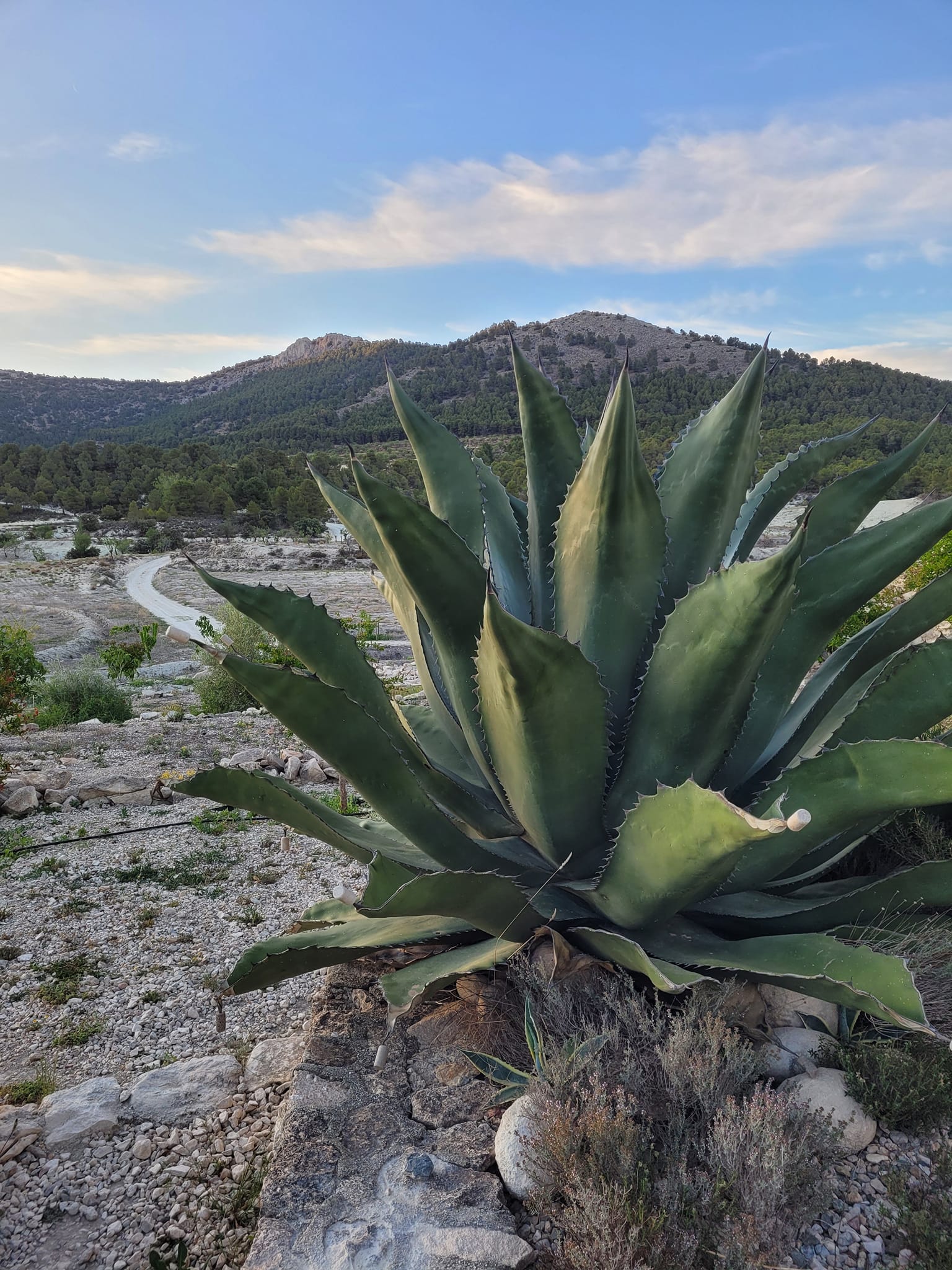
La jolla, and la joya, mean “the jewel” but also–especially the latter spelling–refer (geologically) to a bowl-like valley. The description is both physically and metaphorically apt, and provides context for the poem below my statement.

~~

In wild places, some part of me that’s not domestic surfaces. I experience a rise in my level of awareness regarding my surroundings, an apprehension in the etymological sense of “a seizing upon, laying hold of; understanding” (Etymology Online). In canyons, caverns, riverbeds, forests—yes, in the desert, too—I respond wholly differently from the way I encounter unfamiliar human-made spaces. While at Joya-AiR, I encountered both: new environments that I’m integrating into my inner ecology. New forms of art. That process of integration, an exciting one, will continue long after my residency here has ended.

It has been such a pleasure to interact with artists whose mediums vary from my own. I was the only poet in this group, and the opportunities I’ve had to learn more about the visual arts have been amazing and useful. My first loves were sketching and painting, and although my longtime practice has been writing, imagery has ever been vital to my creative work. I thank them for their generosity of spirit. What artists can offer to one another is an aspect of themselves through their perspectives as well as their mediums and works. This kind of giving and exchange strikes me as quite personal and enriching. It is something we can do for the world, too.

The extensive work that Simon and Donna have been doing here to make the place both welcoming and ecologically sustainable impresses me and confirms my conviction that with creativity, open minds, and persistence, humans can manage to live more cooperatively with the planet and damage it less—even, perhaps, help it to heal itself.

I will keep the images of Cortijada Los Gázquez with me for a long time.

~~

Jewel

…implies what is small, exquisite, bright.
At even higher altitudes, glassy glacial pools
shine at the caldera’s ridges.
Here, the hills’ aridity offers nothing
but shallow canyons where once
a river coursed, twisting around a cavity
anchored by holm oak and Aleppo pines.
The pinsapos sway in late afternoon,
their cones studded with hardy seeds.

Almond and olive trees dot pale clay soil.
No desert is ever gentle—what survives
must be temperamentally suited to the climate—
but what’s cradled in these ancient mountains
seems gentler than most. Night’s stars,
exquisite. Evenings of ruby, amber, amethyst.
Days that define bright. And when rain descends,
however briefly: everything gleams.


[Cortijada Los Gázquez, Vélez Blanco, Spain]


Many amazements

Subscribe to continue reading

Subscribe to get access to the rest of this post and other subscriber-only content.

What are we doing here?

What is a self-directed, multi-disciplinary, eco/environmental artists’ residency? Why are we here? Or, since I can only truly speak for myself, why did I choose to participate in this experience, off the grid in the only true desert in Europe, with people I had never met? Several of my friends have been asking me these questions. I couldn’t really answer in advance because I had no data! I chose to come here partly to get some time alone, partly to visit the land where Lorca lived, and partly because everything would seem new to me.

Not everything seems new to me, as it turns out. Which is also something I expected. For example, my college experiences, both undergrad and graduate, were largely self-directed and multi-disciplinary; what’s changed is that now art disciplines include things like 3-D imaging, computer videos, podcasts, software-as-medium, and the like. Even blogging (here I am, composing creative work for humans to read through a computer screen). For example number two, the artists here are not so different from artists I have met in many circumstances and places over the years: they are curious, intelligent, creative, willing to take risks, and often quite mindful. Another example of things not so new is that, having spent a bit of time in the Albuquerque NM region recently, the lay of the land here and its exceptional flora, fauna, and aridity are not completely alien to my sensibilities.

I’m seeing a number of ideas about xeriscaping, creating fire-breaks, and about stopping erosion and saving water–such as environmental water systems that include basins, ponds, and plants as filters–in process or already in use here at the cortijo. We watered seedlings using water from an in-progress swimming pool near a small natural pond (one of only a very few up in this region) where the natterjack toads were croaking contentedly. The orchard is not producing much, as the trees are still small; but in a few years the farm should be able to get much of its fruit on site.

I’ve learned about the environmental history of this region, too, and how it has changed as the ecological ravages of humans have both worsened it and tried to revive it over centuries. In the Neolithic era, there was more rain. Bison roamed here, and people set up hunting camps in caves. Millenniums later, the Moors settled in the 11th c, built fortresses and small castles up in the hills. The close of the 15th century signaled the rise of noblemen, haciendas, bustling towns and small farms (cortijos)…and major deforestation. During the 19th c, the imperial government instituted a plan to reforest areas of what is now the park, and the economy grew, with more small farmholders; then the economy and population shrank in the 1950s and 60s when the climate became harder to deal with and infrastructure available elsewhere (electricity, paved roads, etc.) hadn’t gotten up to the mountains. People left for the cities. There are many abandoned houses/farm structures here.

Joya-Air explores and promotes sustainability, through mindful conservation and technology that uses fewer resources, along with creativity: art and ecology. The organization is “an advocacy association for ecosystem restoration / rural culture and residency for international contemporary artists and writers.” Simon Beckman is the curator/founder.

People volunteer at and attend or participate in these sorts of residencies and experiences for a host of reasons. For me, it’s a chance to switch perspective, view things from a place far from home, compose poems in a quiet space meant for just that–creative thinking and reflection. To inhabit, however briefly, a place intended to coexist with the flora and fauna, to find out what “off the grid” is like. And to learn new things, all of which contribute to the art of poetry.

Close of the cruelest month

Full moon began the week as April reaches its closing days–when the redbuds and ornamental cherries are at their peak and the apple trees bloom. Soon the lilacs will open, and oak catkins will send chartreuse pollen all over the deck. Then there will be peonies and irises. I love the first weeks of May but this year will be missing some of those days. I’ll be traveling.

Because I have to prepare for my trip, attend a friend’s memorial, and prep the garden for my absence, this is my last post for National Poetry Month. I’ve chosen a poem from my book Water-Rites, a quiet poem that has always felt near to my heart. Maybe because I romanticize childhood, who knows. At any rate, I hope your poetry month was beautiful and that you continue to read and enjoy poetry. Thanks for reading mine this month.

~

On Having Lost the Confidence of Birds

Once, I was very small,
prone to long silences
and spells of aimless drifting
in the world's embrace,
staring at ants in their
grainy colonies, patterns
of activity, the slender
waists and legs,
frantic antennae waving
at me so I seemed,
for an hour, large.
Once, I could skip and sing
until dinner time, but chose
to lie front down among
dandelions, decided to watch
the skip and sing of bees,
their several kinds inducing me
to wonder about categories--
What Will or Will Not Sting--
and marvel at the dark swift birds
that lived in the martin house
and found bees edible.
In those long days I was
no threat, a quiet object
natural in the grass and breathing
at the meadow's pace.
I had not lost, yet,
the birds' confidence
nor learned how not to trust
my own body
in the world's embrace.
~

Headlines

Headlines. They make us so worried, so anxious, so scared. That was true when I was a child, in 1968; it’s true today. The poem below, which appears in Abundance/Diminishment, is one I wrote eight years ago. It remains relevant. And it is an April poem.

~

At a Birdfeeder

Woodpecker works at sunflower seeds
intent on his hunger
deaf to blackbirds’ territorial ambitions,
wooing robins, chickadee’s agitated perch & dip
at feeder’s edge.
Woodpecker makes of his head
a bright gimlet, his claws anchored on an eyebolt.

I watch a redwing drift
on the last morning breeze of April,
a spider’s line trimming the porch rail.
Woodpecker revels in the easy meal
we’ve provided, doesn’t know
about the sack of seed in our garage,
the price of bulk feed, acres of sunflowers
blooming in Iowa, Kansas, Mexico
chaff at the processing plants
allusions to van Gogh, pollen-packed bees
in their yellow jodhpurs.

That’s human knowledge: mine,
yet I’d rather dwell on turkey calls
vibrating the nearby woods, the labor
of wild cherry petals landing on dew,
grass, and feeder where the woodpecker—
still famished—writes the morning news
in bold headlines amid hickories,
that being all the news that matters
in this moment.

~

Equinoctal

Torrents. We had rain in torrents, and it went on for days from February into March and then on…and on. Constant alerts on the cell phones: “Flash flooding.” Doldrums set in. In an effort to accomplish anything at all, I even started to sort through and organize my attic.

Talk about desperation!

The attic project isn’t finished–the weather turned mild and clear two days ago, so I ran to the garden to get to work out there–but it turned out to be a more rewarding task than I expected. I started by tackling the Christmas stuff, then the books (SO many books), children’s toys (the kids are in their 30s and there are no grandchildren), and moved on to paper correspondence. Letters! Postal mail. Epistles. Why I have saved so much of my correspondence from 1975 to the present, I cannot explain. Maybe that’s a thing that people who love words just naturally do, the same reason I have kept so many books. I certainly don’t need all of it; but that was part of the task, sorting what I want to keep and agreeing to recycle the rest. I also found odd ephemera, such as photocopied posters for long-ago poetry readings, broadsides of poems, xerox-zines from the early 1980s, and ancient mixtapes on cassette.

~

There’s some sorrow with this project. So many of my former correspondents have died. I find my grandmother’s looping script, my dad’s distinctive handwriting, my dear friend David Dunn’s nearly-illegible scrawl. Reminders of times past. Maybe that is why we keep ephemera: to remember what we thought, at the time, was important.

Maybe it is, maybe it isn’t, by the time we reach our later decades–if we’re fortunate enough to reach them.

I keep gardens for different reasons. Not to remember the past but to see what the present can bring.

~speaking of the present~

My new book can now be ordered from the publisher, if you find Amazon problematic (and there are good reasons for that). The link is here.

Wet lion weather

Early March, but February’s doldrums appear to be hanging on with clouds and heavy rain in our weather (though it has been fairly mild) and my mood as well. If March comes in like a lion, it is this year a very damp panthera leo. Crocuses, yes; iris reticulata, yes; winter jasmine, yes; hellbore, yes. And the robins are chirping like mad every evening as dusk arrives–and it does arrive later each day.

I should feel merrier. There are some poetry-related things coming up this month, an informal reading at our friends’ house, a bit of recognition perhaps, a visit from a beloved before the month closes, and maybe even the new book. In addition, I have managed to collect and organize the first draft of yet another collection. (Don’t hold your breath–this one will be a long time coming.) My physiology has been annoyed by the rain and humidity, however, which keeps me out of the perennial beds where the winter weeds are having a party in the chilly mud. There’ll be hell to pay for this later if I can’t get out there pretty soon. But it would not be the first time–which is why I know there will be hell to pay!

I did take advantage of the many rainy, achy days by reading an amazing novel by (Nobel Prize winner) Olga Tokarczuk, The Books of Jacob. Dare I call something a masterwork? This marvelous historical novel is over 900 pages long, beautifully rendered in English by Jennifer Croft, and based upon 18th-c Polish history and the idiosyncratic Frankist religious movement. I’ve been thinking about it for days–reflecting on words, names, letters, philosophy, and even metaphysics. Several times I found myself setting the book down in admiration, wondering how on earth Tokarczuk manages to keep the thread of her numerous narratives together so beautifully.

When a book gives me that kind of joy and evokes so much wonder, I feel that being a writer might actually be a worthwhile occupation. And if the rain keeps up, I’ll be at the library looking for her other books soon.