Generosity

It is a well-documented fact that writers can be dismissive, hypercritical, and downright insulting when it comes to the work of their peers and predecessors. Juvenal, Samuel Johnson, Oscar Wilde, Dorothy Sayers and her nemesis Edmund Wilson, Dorothy Parker, John Logan…the list is long and spans centuries. Some of the critiques are valid, in their way; many are wickedly funny, which doesn’t remedy the unkindness of the barbs. Most writers who have been writing and presenting or publishing their work for awhile will have encountered some less-than-generous “feedback” from other writers. Given human nature, such responses are probably inevitable.

In the mediated circle of the voluntary critique group such as may be found among MFA programs or community writers’ groups, the group or mentor often establishes protocols for sharing work–methods of responding to creative efforts that avoid too-harsh criticism, ad hominem attacks, or dismissive/discouraging comments. Once your writing is out in the world in whatever public form (print, slam performance, live reading, video, online, etc), however, the best advice is sometimes “don’t read the comments.”

Many agendas may drive the urge to bash particular writers or their works, among these envy, attention, pride, status, self-preservation, righteous indignation, or a sense that one needs to scramble to make space for oneself in an already small environment (“the literary world”). Even, dare I say, ignorance. I could speculate on reasons for unkindness until the proverbial cows come dawdling home, but I suppose it can be attributed to a kind of social Darwinism. People can be mean-spirited when threatened. Though exactly how the writing of poetry poses a threat to other poets remains a mystery to me.

Maybe I am a Pollyanna (entirely possible), but although I can recall some incidents and critiques that have stung me, there have been far more instances of generosity from fellow writers. While contemplating writing this post I sat back and decided to count how many fellow writers have extended courtesy, respect, useful advice, helpful criticism, networking and publication leads, encouragement, and the sense that I’ve “been seen”–acknowledgment as a writer–and I found the list was long. I considered listing names, but there are so many…and I was afraid I’d inadvertently overlook someone. I consider this an excellent “problem” to have.

Granted, some stings have been…memorable. However, I’ve been writing and publishing poetry and related prose since the early 1980s, so there have been many years during which I’ve had the joy of connecting with other writers in generous ways. Writing is both a large community and a small one, depending upon where I am in my own life: local at times, semi-isolated other times, and then–thanks to social media platforms, with which I have love/hate relationships–national and international!

As I get ready to pull back a bit from my work in the realm of higher education, I hope that the lessons I have learned about being generous to my students, gently encouraging while pointing out areas to keep working on, will stay with me. My feeling about poetry is that there’s certainly room for more of it in a world which can be harsh, and that acknowledging other humans’ urge to express their awe, fear, grief, passion, love, anger, and perspective won’t actually harm many of us.

Thus, to all of the fellow writers and artists living and dead who have been generous to me: Bounteous gratitude. I’ll keep trying to pay it forward.

Artistry, art

Wednesday evening I participated in a lovely (if under-attended) event at a local listening room, Godfrey Daniels Coffeehouse. The venue’s been in existence nearly half a century and hosts many a folk, blues, and folk-rock band/singer-songwriter, as well as the occasional puppet show, jam, open mike, children’s event, and poetry reading. Quite a storied place. Dave Fry, one of the co-founders, offers a monthly “Dave’s Night Out” during which he invites songsters, singers, lyricists, musicians, and poets to take the small stage and present their work as well as discuss their working process–with Dave himself and with the audience. It’s a wonderful opportunity to exchange creative and artistic ideas in public. The poets were me, Danielle Notaro, and Cleveland Wall. Dave’s take on the evening is here.

On the way home, my beloved and I had a discussion about artistry and “being an artist.” As he is from an artisan/craftsman background, he does not think of himself as an artist. The term seems a bit “elevated” to him. And while he is a creative problem solver–crucial to being an artist–I see why he does not consider himself an artist.

Some of that thinking is simply semantic, however, a perception based on someone else’s definition of an artist. Beloved asked me, “Do dancers or musicians consider themselves artists? Do you consider yourself an artist?” Good question, and the answer’s probably individual (i.e., it depends).

I mean–do I consider myself a poet? A writer? Let alone an artist. I immediately thought of a Substack post by my friend, journalist (journalists are writers!) Peter Moore, in which he publishes an excerpt from his post-college diary. Brave man.

“On the ferry from France to Folkestone I floated on a rising tide of words words words: “I must enter into the intense feeling I had while riding the Tube this morning,” I wrote, “that I honestly feel like a writer, that it was just a matter of time and effort before I am recognized as one. I hope and trust that this is prophetic.”

https://petermoore.substack.com/p/r2e-excerpt-46-the-rising-tide-of

Yeah, I remember feeling those particular 22-year-old feels and the questioning that accompanies them. I am certain that similar enquiries appear in my old journals, though I may have been more cynical and less trusting than Peter was. He closes this post by saying: “Meanwhile, all those blank pages were screaming at me. Fill them with what, aside from intense living?

“Pretensions to artistry!”

~

Which is not to say that poets and writers and dancers and songwriters are not artists. It’s just that some of these folks think of themselves as artists, and others think of themselves as artisans, or craftspeople, or creative innovators, or…name it what you will. Poetry is a form of creative expression, and if you (dear reader) categorize that as art, then it is. If my poet colleagues think of themselves as artists, I respect that and will not argue. Perspectives, right? Not the same as pretensions, although I will admit that in my opinion, there are some people who write poems, and other things, a bit pretentiously. I have been guilty of the same, especially when I was young and getting the practice underway. Pretentiousness may even be a kind of motivation. We learn humility as we practice our missteps.

Contemporary Western society casts a great deal of gravitas and status on the word “artist.” So to answer my spouse, I replied that well…I do consider myself a writer and a poet, but I seldom think of myself as an artist. However, if you think poets are artists, I am an artist. Because I do indeed think of myself as a poet. I cannot get away from that urgent need to observe, imagine, interpret, restate, turn into metaphor, reflect, create into form, and otherwise do the making (Poiesis) of word play.

Information from poems

I tried to attend a poetry event on Saturday afternoon, but the weather was against me.

The rain came accompanied by lightning strikes, high winds, falling branches, flash-flooded roads, sleet, and a little hail, all in the space of two and a half hours. I left home only to turn around after three miles. The highway was blocked with traffic piled up due to various “storm-related events” (said the weather sites). Actually, I was grateful for the storm, since our region has been unusually dry and even warm for April–my trees, shrubs, meadow, and perennials needed rain. And upon my return, I got back to reading books of poetry. This past week these included collections by Marilyn Chin, Elizabeth Metzger, Grant Clauser, Jennifer Franklin, and Natalie Diaz. Some wonderful work there.

Through these books of poems, I also gleaned lots of interesting information. That’s something many people who claim not to like poetry don’t understand: you can learn about so many things through poetry! Poems contain fascinating facts, intriguing perspectives, tons of social and cultural observations, vocabulary and terms I would not have known about otherwise…poems have been the impetus for me to learn more about astronomy, theology, historical events and people, the geography and topography of the earth and its oceans, the life cycles of insects and plants, how metal shops operate, how to catch fish or tie a fly, what it is like to “live with a disability,” how the process of dying has differed from era to era and place to place, what it is like to reside in a war zone, the traditions of people whose backgrounds differ from my own, and other so-called “non-fictional” information.

Facts, in other words. Poems may inhere in the emotional or intellectual realm in many ways, but they also can–and often do–inform. They contain facts as well as multitudes. If people did not get so hung up on trying to decode a secret meaning behind everything they encounter that appears to be a poem, they might be surprised at how much they could learn from such (usually) brief texts. Yes, it might help to look up a word or a reference or two. That can get a reader started on a whole trail of interesting and valuable knowledge, widening the worldview, changing the perspective.

It may even lead a person to recognize that facts can change depending on point of view. Contemporary science acknowledges this, but most human beings haven’t accepted it yet. Anyway, this points to one reason poetry has often been considered unconventional, subversive, even dangerous or radical: Poems can challenge the status quo of what is accepted, received, unquestioned in society’s knowledge base. Terrifying the authorities by means of information.

Go for it. Read a book of poems.

~

Coming up in May, I’ll be featured once again at GoggleWorks in Reading PA, 6 pm on May 4th…it has been awhile since I was there (2012), and I look forward to it!

Life-shifts

This week marks one of those “big birthdays”–my mother turns 90. The birthday feels bittersweet; for, in many ways, I have been in the process of “losing” my mother since her diagnosis of vascular dementia in 2017.

Or is it that she is losing? Losing cognition, a sense of time, the words to say…anything at all. She has not yet lost a sense of emotional self, though I know that if her body doesn’t give out first, that will eventually occur. I’ve been through this before, with my mother-in-law. Helping people navigate dementia is a challenging task.

Therefore, as I celebrate her birthday, I also celebrate the goodness of the people (nurses, CNAs) who assist her daily at her skilled-nursing apartment, the social worker who visits with her and brings her mail, the acquaintances who smile and greet her even though they know there cannot be conversation (of any meaningful sort). The doctors and nurse practitioners who find ways to communicate with her about how she feels physically. It cannot be easy, even with someone as even-tempered and pleasant as my mother continues to be.

A funny thing about my mom. When she was my age, we used to tease her and my dad about “getting old.” She’d toss our teasing aside by insisting, “You’re not old ’til you’re 90!” Even with a few health issues, she and my father continued to be curious about the world and the people in it, traveling, going to parties, trying new things (cross-country skiing, Thai cuisine, activities with grandchildren). About 8 years ago, when my dad was ill with cancer and meningitis and going in and out of the ICU, Mom said she felt old. We retorted, “But Mom! You’re not old ’til you’re 90!”

Now she really is 90. Bless her good kind heart. ❤

~

February 26th is just another day, another year–and at this point, my mother has very little sense of time. It is likely that my mother’s life-shifts are in the past, and the next shift (there’s no escaping it) will be death; but who can tell? My mother’s ninetieth feels like a huge shift in my life as her daughter, as an adult, as a mother to grown people, and as a writer in the world. Why this is so, I can’t say. It’s certainly something I’ll be reflecting on often in the coming years, and the reflections emerge in my writing. As I work on revising the poems I’ve drafted in the past 5 years, the topics of aging, mortality, aphasia, and memory keep showing up. Things I can consider myself fortunate, perhaps, to be preoccupied with, rather than being forced into confronting a natural disaster (Pakistan, Turkey, Syria, and others) or war (Ukraine, Syria, and other regions).

Here’s part of a poem I’ve been wrestling with lately.

                       ... --I would untangle
my mother's mind if I could be let access to its
recesses, but those stay hidden like the life in hedge
and meadow, in the woody undergrowth,
unknowns twisted together, impenetrable.
...

How fortunate for me that my mother is not far away, is well-housed and safely cared-for, and has had a long, creative, fruitful life to celebrate this weekend. Nonetheless, the grief inheres. The hardest shift? I miss the person she has been all my life until recently. And yet: here she is. Herself, more impenetrable than ever. And loved.

~

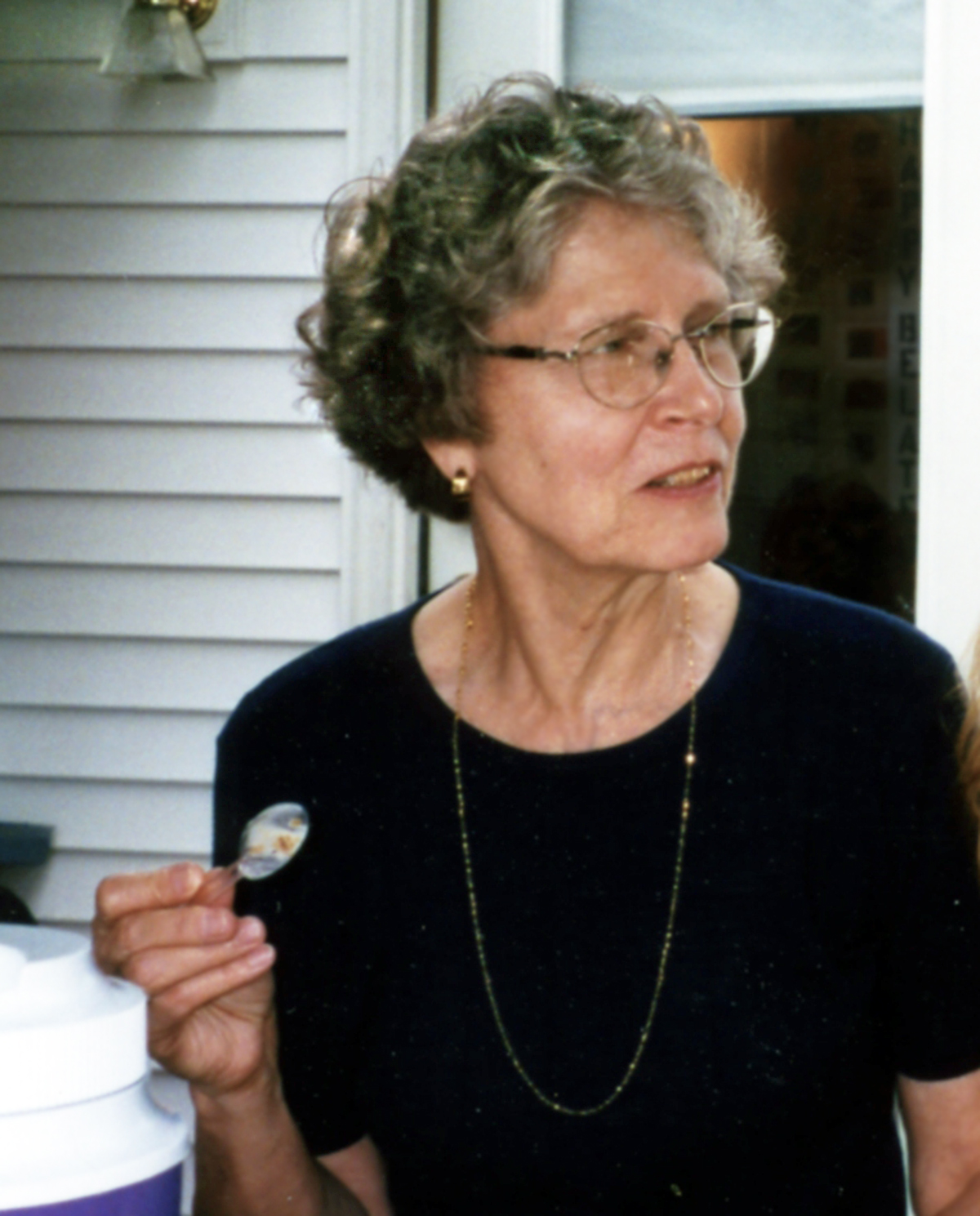
Mom at about my current age–ca. 1998 or ’99.

Alone not lonely

Recent read: Party of One: A Loner’s Manifesto by Anneli Rufus, a book that I would have found enlightening if it had only been around when I was 18 years old. But many things were as yet unwritten 45 years ago, and even if this book had been–I might not have discovered it. Rufus celebrates social loners, decrying the myth that people who prefer time by themselves to socializing are by nature dangerous and threatening. That knowledge would have been a great relief to me when I was young; but I eventually learned on my own that the “loner myth” is, indeed, a mistaken idea perpetrated by too many so-called experts in our society. Through my lifelong bookworm habit, I learned a great deal about people who chose to be alone, chose small circles of friends, or chose to keep friendships going by letter rather than through visits.

All of which options seemed perfectly reasonable to me. I like people and deeply need my friends and family, but I’ve always found a different form of comfort in–and need for–being by myself. I joined Girl Scouts mostly because my two best friends were Scouts, but I was the kid who dawdled on hikes, slowing down to look at the plants and mosses, and I pretended to be asleep when camping so that others would stop chatting to me. When I found my old Girl Scout sash some years back, it was festooned with badges earned for loner-type skills: literature, sewing, whittling, embroidery, and other crafts or pursuits I could accomplish on my own. Selling cookies? Nah. I managed to be the worst cookie salesperson in the troop for several years running.

In high school, I joined the marching band. It was required duty for every student in the concert band, where I played flute. My sister protested against that requirement and succeeded in getting out of marching band, but the self-advocacy did not seem worth it to me-at-15. Besides, band provided me with a few close friends and some sense of high-school camaraderie which, as a sensitive nerd who was never much for teams or competition, gave me a veneer of normalcy in a very team-oriented time and place. I was not a rebellious loner but a stealth loner.

Despite often feeling a bit like an outlier among my peers, I had no burning need to belong or be accepted, and that need (and lack of acceptance) in a person is what leads to “pseudo-loners” (Rufus’ term). Those are the people most likely to get angry, resentful, hostile, or suicidal, she claims: the ones who want to fit in but are ostracized or blocked. The rest of us just want to be left alone when it suits us. It’s not the same thing.

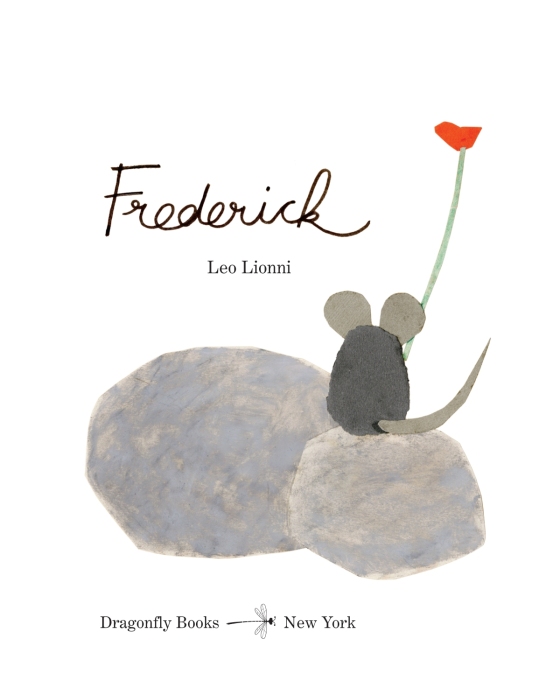
Loner, introvert, eccentric, moody, artistic, creative, sensitive, weird–at my age, I don’t need a manifesto. Experience demonstrates a person can be friendly and funny and easily-tired and sometimes withdrawn and able to speak in public and irritated by too much noise or novelty and can dance at parties and laugh too loudly and a thousand other things that are contradictory and not simple to pin down. (And capable of polysyndeton!) But if you know a child who is content being by themselves and who may feel pressured by well-intentioned adults, I recommend Leo Lionni‘s Caldecott-winning book Frederick. It is a story I loved as a child, and now I realize why. The quiet mouse who is off on his own while his busy community harvests food for winter proves valuable to his mouse-society by offering them poems and stories that ease their discomfort when they are cold and hungry.

In some ways, that has been my lifelong dream.

Why so strange?

This collection did not begin as a collection. If anything, it originated in the poems that stuck out as not belonging anywhere, poems not quite abandoned (in fact, most of them had been published in journals over the decades) but not fitting in with my other work. Which is in itself an odd statement to make, since my “style” has ever been inconsistent; I try many styles and forms when composing poems: short, long, free verse, rhyming, metrical, prose poems, telegraphic, chatty, narrative, lyric, abstract, broken, experimental, et cetera. So what do I mean when I say these poems did not fit?

From the time I began writing poetry “seriously” (with authorial and craft intent), I developed themes, tropes, and images that I have never stopped employing; but sometimes one topic or lyric current would bob to the surface and occupy my thought-flow for days, weeks, or months on end. When that occurs, I may get a collection out of it. Sometimes several collections create a sort of arc or, in some cases, a thread of resonance that results in a longer collection. Or maybe there are stylistic choices that recur, and those poems seem connected.

Then there are those impulses that just show up for one poem and vanish for a long while. Persona poems. Feminist poems. Political poems. Rants. Love poems. Dreamy poems. Surreal pieces. And so on.

For Strange Ladies, I realized that during the past 45 years I’ve written enough oddly interesting straggler poems about/in the voices of/relating to female “characters” of a mythopoetic variety that they might form a coven. Or at very least, a neighborhood. The strangeness of these women comes from their position as outsiders, exiles, shamans, rebels, goddesses, myths, heroines. A chapbook manuscript materialized, and what surprises me most about this collection is that the poems I ended up choosing date all the way back to some of the first poems I ever got into print. At that time (circa 1981), indie-lit mags were photocopied, stapled affairs often using collages of copyright-free art for graphics. My nostalgia about that era led me to go for a retro look on the cover. And yes, I wrote one of these poems in 1979 while living in New York City…but others are as recent as 2019. A span of 40 years, and yet they seem to belong together in their differences.

Here’s what one of Moonstone Press’ anonymous poetry editorial committee members had to say:

“This chapbook is like a chorus of distinct personae over time and myth and family–Hagar, Icarus’s sister, the mother, the grandmother, the daughter, each poem a character sketch, engaging, memorable. I loved lines like: ‘Women shoulder everything’ and ‘gliding brought more joy/ than soaring.’ The poem ‘Witch’ is so tight and mysterious, like a dream. In ‘Heron Heroine,’ I loved this: ‘and she who balances stands often on one leg, /as what’s precarious for others grounds her, toes clawed deep/in mud.’ Themes such as sailing, water, bones are carried through in a nice variety of forms that never got boring or repetitive. The diction is so interesting, nice use of natural terms and details, words like ‘bittern,’ ’tilth’ and ‘binnacle.’ I think my favorite might be ‘I am a Cloud,’ with its powerful ending, ‘Attached to nothing, I dance the wind.’ I vote yes, enthusiastically.”

~

I hope other readers will find this little collection of poems as rewarding, and I’m thrilled to have it out in the world. Link to purchase: https://moonstone-arts-center.square.site/product/michael-ann-e-strange-ladies/370

Words fail, & yet–

On December 24, 2012, I posted about a school shooting. So little has changed.

Words fail. And I work in a classroom setting, as do many of my friends and colleagues, and my children’s friends and colleagues (now in their 30s and willing to be teachers–bless them!). These events are not things we can ignore by staying in our own little bubbles of “it can’t happen here.”

~

Words have failed so profoundly that I’m out in the garden instead, or indoors cleaning my bathrooms or reading books. Books–always my solace when my own words fail.

My latest good read is David Crystal‘s 2004 The Stories of English, already out of date in its last chapter–a fact I’m sure he gleefully acknowledges. I adore his love of how language evolves and find his non-prescriptivist approach refreshing and necessary if we are to keep literacy and communication alive. This book gave me so much information, enriched the knowledge I already have about our language, and made me laugh, too. Granted, it is word-geek humor…but that’s how I roll.

And I needed a few laughs this past week or so. My heart aches; I am sore afflicted for more reasons than I care to explain at present, though the headline news certainly has much to do with my mood. Crystal’s book got me thinking about the course I teach (come fall) and how I’ve already toned down the prescriptiveness in order to convince my students they can write and can be successful with written communication; that they are not “wrong,” just that their audience for written work differs, in college, from high school and from text messaging and other forms of writing. Crystal says we who teach English need to get over the concern about split infinitives and pronoun antecedent agreement and focus on clarity and genuine expression. I have no argument with him there–but many people I know would quibble and complain. And the English lexicon offers us so many options for how to say we disagree!

~

A book about words–but no, a book about human communication through the mediation of words, spoken and written, and how we got to the forms (plural!) of English we now use to express ourselves. There’s a kind of splendid optimism in Crystal’s thinking about language that somehow made me feel a little less low in spirit. Ah, yes. The solace of books.

Shy

When I was in elementary school, my teachers described me as “shy.” A few of them commented that I was “creative” and “smart.” It’s strange how these adjectives for character traits came to shape how I perceived and pegged myself, and I suppose I’m not alone in this. I considered creativity to be something positive and smartness a little daunting, but I felt ambivalence around the term shy. In the 1960s, shyness could be an admired trait among girls because it meant we were not disruptive. But I didn’t think that was all so wonderful, when the children I admired were often loud and funny. While teachers might have appreciated shyness in a pupil, children tended to think me nerdy or, worse, standoffish and snobby. Shy was not much of a compliment.

shy (adj.) late Old English sceoh “timid, easily startled, shrinking from contact with others,” from Proto-Germanic *skeukh(w)az “afraid” (source also of Middle Low German schüwe, Dutch schuw, German scheu “shy;” Old High German sciuhen, German scheuchen “to scare away”).

Online Etymology Dictionary

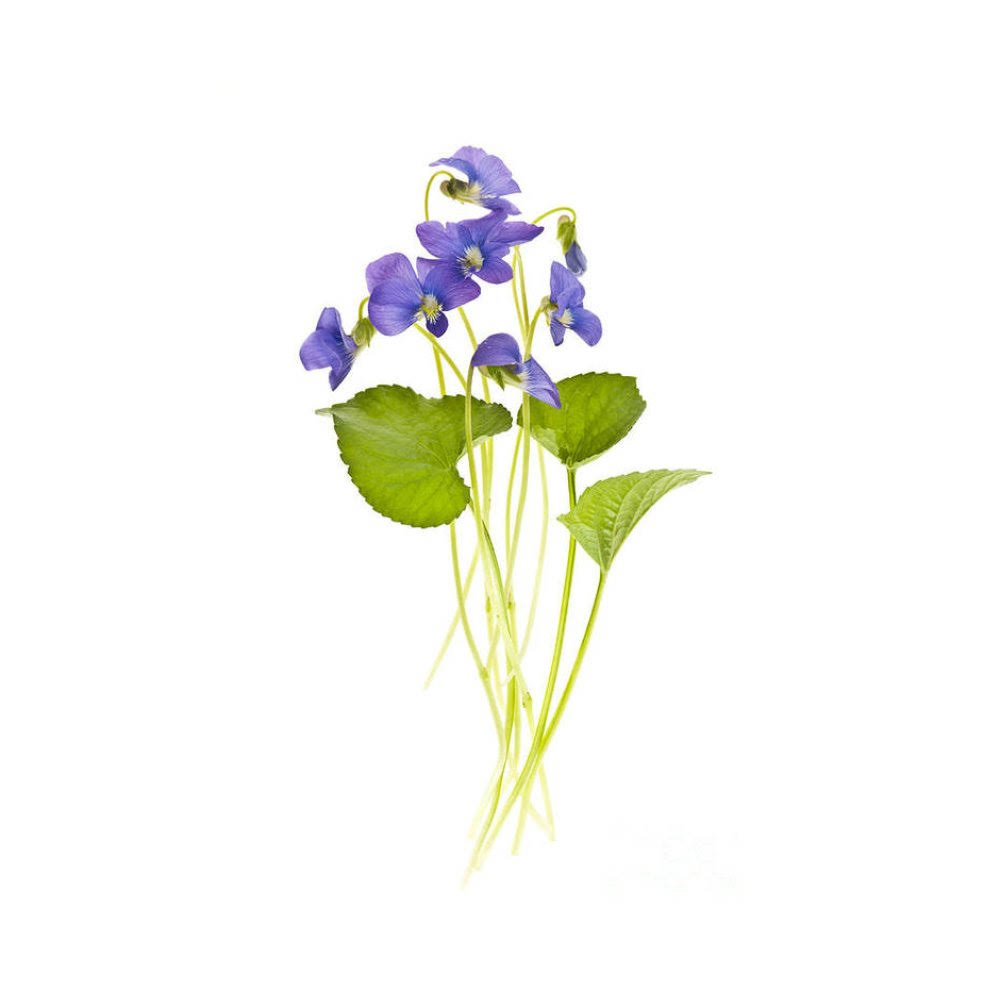
Hence the metaphor of the shrinking violet, the wallflower. I was fond of plants, but I did not necessarily want to be one. The introverted, reflective young person is seldom socially popular in the USA, and my budding self-confidence took a hit in the public school environment. Was I really timid and easily frightened–or was I just dreamy, bookish, unconventionally funny, skinny, tall, bespectacled, and not particularly socially adept?

Elena Elisseeva, Spring Violets @ fineartamerica.com

One trait I developed as a shy child was a capacity to listen to others. I wanted to hear their stories, their points of view, their silly songs, their big ideas. What I regret is that later on, when I gained some self-confidence and began telling my own tales or dispersing acquired knowledge and advice, I lost some of my listening ability. It took hard work and practice on my part to feel secure when speaking to groups, and I started with the hardest practice: reading my own poetry aloud to other people. Eventually the shyness wore off, for the most part.

Then I had to get the listening back. Raising children was a tough balance between saying and listening. I fault myself for not listening quite enough. As an instructor, I found it difficult to listen to a group of students: too much cacophony, too many distractions, hard to gauge where the conversation was headed. I’ve always felt more comfortable with one-to-one tutoring, which makes listening so much easier. As this semester has wrapped, I find I am already dwelling on the fall. What did covid-protocol instruction teach me? Mostly that the listening is even more important than I thought. The students still feel freaked out; overwhelmed by, more than excited about, their futures. I can’t blame them and want to make room for their stories…not to shy away from them, especially if any of them are feeling “timid, easily startled, shrinking from contact with others.”

Few words


red barn     long shadows
rust-colored hawk descends
and vanishes


~

moon above
neighborhood children
sun above hills


~

the day before traveling I am already traveling


Getting through somehow

My mother has vascular dementia, which renders her more and more aphasic, though in her case–so far–her “emotional tone” (as philosopher Arne Naess calls it) has remained intact. I visited my mother on a recent occasion when I wasn’t feeling my best and had had a week of less-than-good health. It was not a matter of duty. The time I spend with my mother is beautiful. But it had been a tough week. Let’s leave it at that.

We sat in her apartment in the assisted-living wing and arranged the flowers I’d brought. Then we spent 20 minutes in a kind of conversation, to which I’ve become accustomed, during which she tries to convey information about something she needs to have done. In this case, after much of the usual (really, rather humorous at times) confusion, I deciphered that she wanted some sweaters taken to the dry cleaner.

Such minutia. And yet, so difficult to get across, across that divide of language and cognition. The incredible concentration and effort it takes her just to dial a phone number to call her ailing sister. To tell the nurse aide that she needs more yogurt. Anything.

Then she surprised me. She pointed to my forehead and then to her own. “This,” she said. “Is wrong. For you. What?”

Was she reading a crease in my brow? I told her I had not been feeling great. She wanted to know, so I told her details, the way one tells one’s mother. Even though I am never sure quite how much gets through.

“Lie down. Take off the peaks.” By which she meant shoes. Why not comply? We both took off our shoes and spent the visit relaxing. We even indulged in a glass of wine because she loves to offer wine to her guests. Never mind it was 11 am. My mother has lost that rigid cognitive sense of time that the rest of us spend our lives obsessing over. There’s something valuable in that loss, though it is a loss.

She’s still teaching me things. Other ways to live with loss (my dad, her “normal” brain, mobility, words…).

~~

The next evening, she called me. She wanted to know how I was feeling. I’m 63 years old and my mother is 88, and she’s still worried about me.

I’m feeling loved.


Love is all you need