Small, refreshing

Another day. One that the calendar claims occurs in 2026, although at times I disregard the calendar–another human-made thing, and I find so many human-made things destructive and frustrating. It’s not as though a “new” year puts away what has happened the previous 365 days the way I can put away the holiday decor. Which I haven’t actually done as yet. Anyway, we’re still in the first week of January, and Twelfth Night has barely arrived, so if I do want to acknowledge the calendar I can excuse my lack of clearing-away. But I can’t clear away the losses of the past year, and I don’t want to. I want to remember my friends for as long as I can.

It’s true that wintry walks offer quiet splendor (sometimes) and a chance to reflect, but mostly winter affords the chance to stay inside, curled up with a book or browsing through garden catalogs. Theoretically, it’s a good time to revise and submit my work; often, however, I don’t get to that process because winter is also a low-energy time for me. I powered through a fibromyalgia flare two days after New Year’s Eve because loved ones were visiting, but there’s a bit of fallout as a result–worth it, though; and I’m chuffed about taking poetry workshops later in the month. Meanwhile, reading books! I got a Samuel Hazo collection from my local library, I’m reading Wendell Berry and Richard McCann, and Ada Limón’s You Are Here is on my to-read pile. I’ve also felt inspired by the start-of-a-new-year blog posts Dave Bonta has curated on his Poetry Blog Digest. Many writers and books there I want to check out, and many writers and poets feeling some of the same things I’ve been feeling about the past year and what to make of the years ahead.

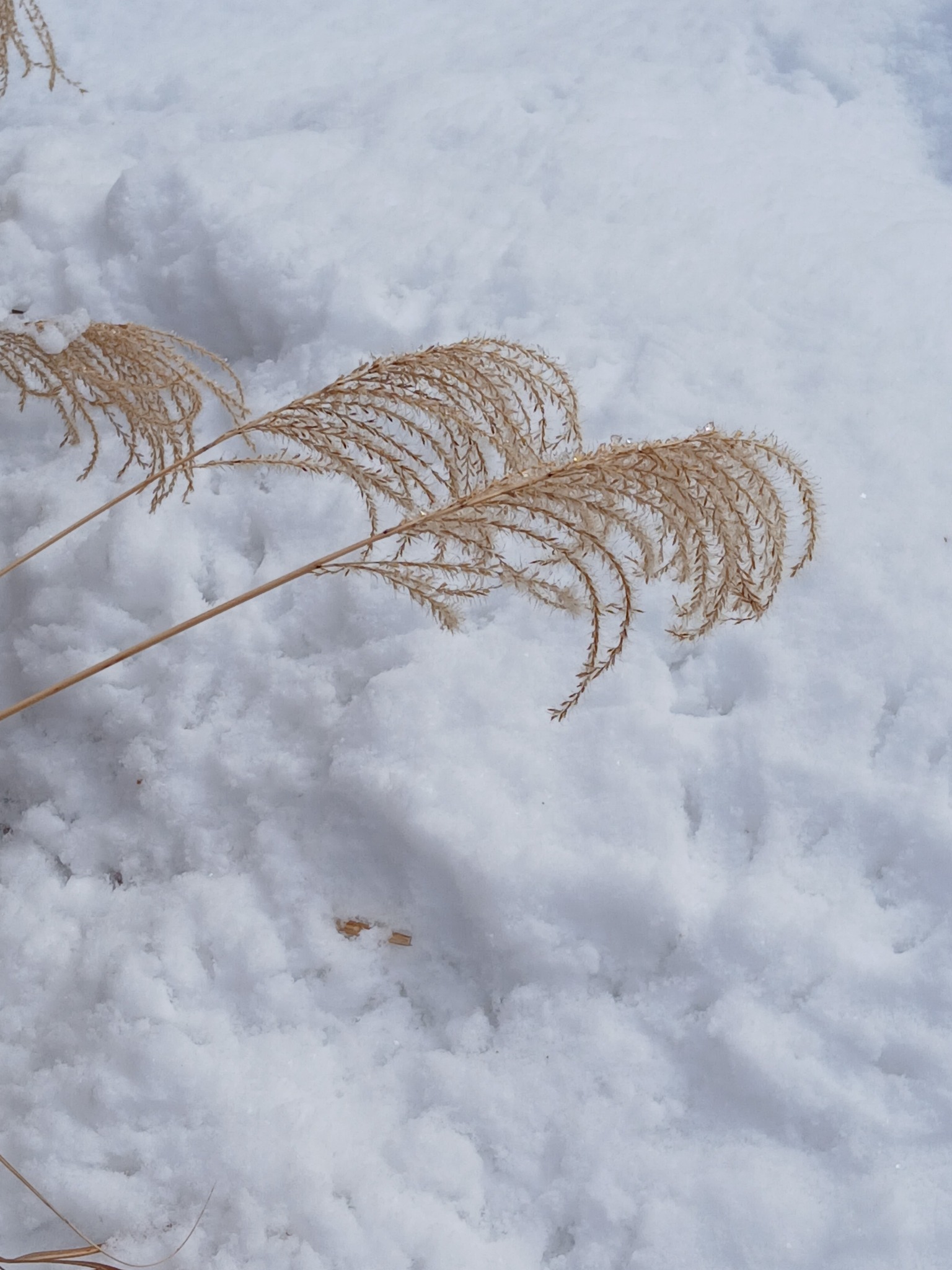
So to recharge, as it were, I’ll do small, refreshing things this January: take photos, doodle with watercolors, read books, tromp about in boots, meet pals for morning coffee, draft poems, play with images, as per Johan Huizinga–“To call poetry, as Paul Valery has done, a playing with words and language is no metaphor: it is the precise and literal truth…What poetic language does with images is to play with them.”

Last messages

End of another year. This one included some truly joyful times that will stay with me for quite awhile. But in that almost-inevitable reflection that arrives with the winter solstice, I find myself recalling dear ones whose lives closed in the past 12 months. I used to have physical reminders of friends and family, the last card or letter they wrote, something to put into a file or drawer or keepsake box and take out from time to time; a photograph or two, or maybe a recording of their voice on tape. Now that human communication has mostly migrated to the digital, to the “cloud,” those tangibles are much less common. But the messages persist.

A few weeks back, I migrated to a newer cellphone and, in the process, moved a year’s worth of text conversations to the new device (I’m not sure how I did that). All the old messages popped up, including three from dear people who are now deceased. Quite a different form of “ghosting.” I’ve kept in an online folder many email messages from my most frequent correspondent and long-time friend, who died February 1st, but I can’t quite bring myself to look at them yet. And it isn’t quite the same experience as opening and unfolding old letters.

I can’t bring myself to delete the messages from my phone, however. I suppose at some point that will occur, perhaps in another upgrade. Letters are ephemeral, too; all it takes is flood or fire. We have to rely on our minds, our memories, when it comes to recalling loved ones. Maybe that is what elegy is for, I don’t know.

~

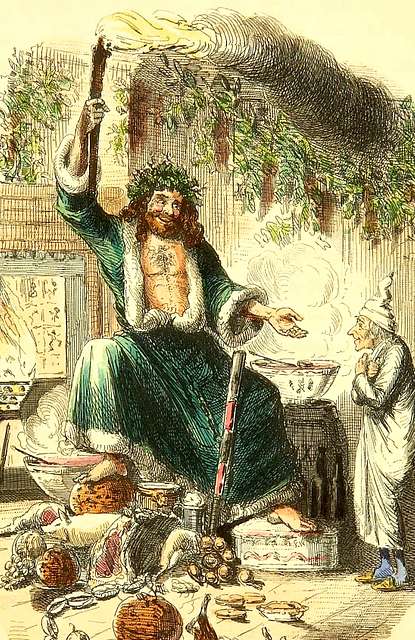
As for the present–the Spirit of Christmas Present* ?–some of my Best Beloveds will be gathering here and there with me soon. Once the holiday hubbub dies down and the lonelier, cold January days arrive, I have poetry workshops to look forward to. They’ll be online, which suits my schedule in winter. Last year, I enrolled in two such workshops and found they spurred me to get a good deal of writing done, so I figured I might try repeating the process. Anita Skeen is doing another series for The Friends of Roethke Foundation with readings, prompts, and discussion on “writing toward wisdom.” In Dickens’ era, I’d be considered old enough to be wise (though most of us, Dickens certainly included, know better about age inevitably bringing wisdom). But the operating word for Skeen in this case is “toward.” It will be interesting to see where she takes her workshop participants in the new year.

* John Leech illustration

Systems

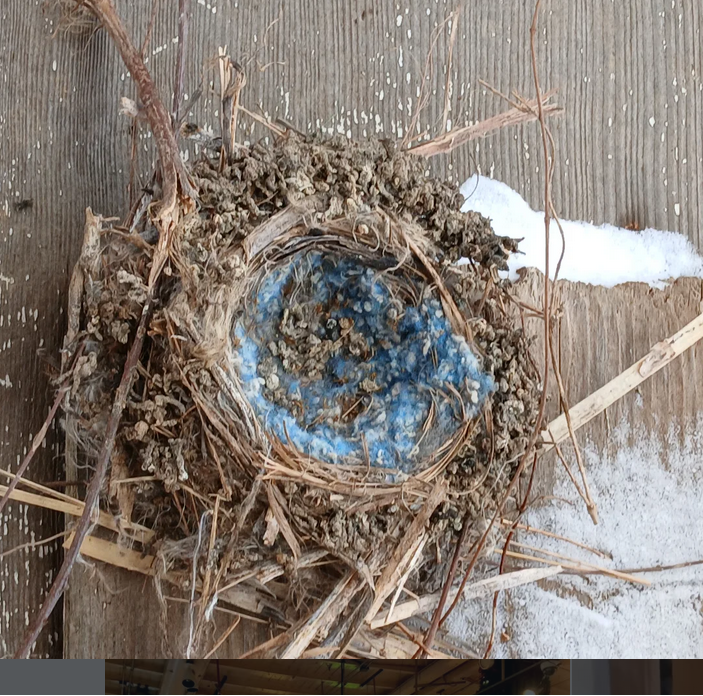
[I am aware that human hair isn’t good nesting material]

Late autumn reveals
oriole’s purse-like nest
constructed of my daughter’s hair.
Breeze touches
what I cannot.
(November 2010)


~

I found this tanka-like poem, written when my daughter was away at college, among some old computer-based file folders I’ve been organizing. It’s one of many old poems of mine I’ve ‘rediscovered’ in the process of trying to keep my poetry systematized. Before I left my job at the university, I imagined that I would manage to organize and update my creative work files during the first year of retirement and keep everything in reasonable order once I had established a system. As if.

It’s not as though I haven’t made progress, made some brave efforts in the direction of archive and revision, culling and filing my drafts and “finished” poems (efforts that are both electronic and paper-based). The fact remains, however, that I do not possess the kind of mind that solves the keeping-track aspects of life very systematically; and, as writing remains a significant part of my life, it suffers from the same inefficiency. I admire artistically-minded people who can keep track of their work using logistically-useful methods that work for them. I’ve read their tips, their essays, talked to them about their systems, tried emulating them. Sometimes parts of their methods are helpful to me, but I lack something. Rigor? Ambition? Energy? The desire to spend the time required?

I keep writing, but I also keep falling behind at staying organized. And then there is the issue of technology constantly updating, so that a method I used in, say, 2015 is not available anymore…unless I invent a bunch of work-arounds. (My long-standing backup method is PAPER, and I still employ it, but I hate file cabinets and folders and don’t use them.) As for spreadsheets? I avoided learning to set them up during my entire career in academia because our department had a brilliantly capable office assistant who did that stuff for us, bless her heart.

All of which means that now and then I cannot locate a draft, a poem I want to revise or to send to a friend, or consider putting into a manuscript. Frustrating. And when I bought a new laptop, I had to decide what files to move from my old desktop; how far back do I want to go? Those poems from 1987, for example–eons ago, as far as computer system lifespans. Yes, I have hard copy from dot-matrix printers. Files originally in AppleWorks and Claris, files that lived on 3.5″ floppy disks. Copies I typed out on various typewriters through the years! Although I’m complaining about it, I realize that in some ways it’s really cool that my poems have undergone so many iterations in terms of tech. It means I have been around awhile and confirms the reasons I think of myself as a writer…and not as an efficiency expert.

~

P. S. I continue to write my drafts with a pen.

Source material

Creative writers are often asked where they get their ideas from. In my own case, the answer to that varies a great deal. Sometimes ideas arise from personal experience, of course, but one’s life offers only so much material if you are a relatively staid person like me. Topics for poems can arise from recent headlines or from histories, written or oral; from conversations overheard in a grocery line; from stories other people tell me; from folk tales; from science books; from dreams; from works of art, and numerous other sources. It’s this wide array of possibilities that make the concept of the creative-writing prompt so popular. A quick Google search for “creative writing prompts” offered well over 20+ pages of entries, in several languages.

Photo by Pixabay on Pexels.com

I have written pieces based upon prompts, especially when in a workshop or class, or when I feel rather tapped out of my own imaginative source material. I’m especially fond of writing that stems from viewing or experiencing a work of art–sculpture, painting, musical composition, dance, installation art (ekphrastic poems). Generally speaking, though, that’s not from whence my poems originate.

I can’t really say why I feel an urge to put down in writing specific reflections about something that’s caught my attention–or even what sort of experience evokes my response. Maybe I feel intrigued by an image, a detail, or an ambiguity–a question arises in my mind that I tussle with for awhile. Then, I may compose a draft and let it sit. Two days. Two years. Longer. Lately I’ve been revising some old poems and have realized I no longer recall what their incipience was. Which can be a good thing, because I am no longer wedded to the “reason” I wrote them and can instead consider whether they can be crafted into decent poems.

I am also working on a manuscript that I let sit for at least six years. An idea got into my mind after reading Robert Burton’s 17th-century book on depression, The Anatomy of Melancholy, quite some time ago (2017, perhaps?). I took a stab at writing what seemed to be evolving into a historical fiction story, which is not my usual approach (I have zero practice at plot and dialogue). Then, I stopped. As one does. But the topic lodged in me somewhere, I suppose, and early this year I returned to it. What if, I wondered, the draft could be restructured into a series of prose poems? There might be a sort of hybrid novella-poem in the earlier draft.

That’s more or less what I’m developing, at least for now, and we’ll see what if anything emerges. It’s keeping me interested, which I like, and the experiment feels fresh compared with “writing what I know,” or writing “how” I know. Because yes, of course we ought to write what we know; but we also know about human beings, and we have imaginations, and anything is possible.

By Robert Burton – Burton’s Anatomy of Melancholy, 1628, in the British Library, Public Domain, https://commons.wikimedia.org/w/index.php?curid=84390857

Magnificent

Qesra Îshaq Paşa or Ishak Pasha Palace, Ağrı Province, Turkey, Ottoman Empire, 17th c.

For a recent poem draft, I looked up the etymology of the word “magnificent” even though I was fairly sure I knew it. Like many words, its meaning has altered a bit over the centuries, but in this case less so than most: from the old French, from Latin, the root words for “great” and “make,” it formerly referred to great-mindedness, courage, nobility [per the Online Etymology Dictionary] and later gained the additional meaning of splendor or costliness; “Meaning ‘greatness of appearance or character, grandeur, glory’ in English is from late 14c.,” whereas later uses of the word carry connotations of architecture, expensive taste, grand works of a more human variety.

The draft I was working on was about Melville and whales, but of course thanks to stopping to look something up, I went down a research rabbit hole and ended up deciding that the magnificence whales possess would be more of the greatness of appearance sort and perhaps was not quite the way I want to describe whales. But the word did put me in mind of some of the monumental temples, mosaics, palaces, castles, and sculptures I saw in Turkey last month. Many of those are “magnificent,” but they act as reminders of how fleeting human magnificence is, in comparison to whales. Whales evolved into their modern form about 4 million years ago, long before humans were modern humans, let alone building palaces or temples to please the gods, intimidate their enemies or their subjects, or glorify and deify their kings.

The photo below is of the temple and perhaps the tomb of Antiochus I of Commagene (because archaeologists have so far discovered no actual tomb, the existence of said tomb is speculative, though the site is considered to be a hierothesion). The top of the hill is not natural but is a gravel tumulus. Human-made. Gravel hauled up the mountain to increase the size of the mountain and deter potential grave-robbers. Who else would do that work but slaves?

I know the theme’s been written into poetry before, but in these times it seems to bear repeating. Here’s an early draft I’ve been working on, in loose blank verse, in which I invoke a famous poet whose poem on the theme has lasted a mere two centuries. But that’s longer than many an empire has endured.

~

Hierothesion (Nemrut Dağ)

Tomb or temple, likely both, one king’s
angling for a pantheon he’d crafted
on his own, as kings will do when empire
hardens in their veins. They turn to stone.
Minions, memorize my name! (like
Ozymandias, as Shelley can attest).

Tourists scale the tumulus and find,
at sunrise, eagles, lions, and Apollo,
gods of brokenness, unhumbled despite
centuries of disregard. Extinct.

We know him not. And what has made us pause
speaks not of his glory but of our dismay:
how much purely human work, slaves’ toil and toll,
it took, interring him this way, high up
and rubble-laid, to raise him above all.

Where are those workers’ bones? We walk on them.
This we know without a temple or a tomb.


Walking

Numerous so-called health and fitness articles continually pop up on my screen, and many of them not only tout the benefits of walking but claim to know how many minutes or miles of walking (or rate of speed and such) are necessary to ward off dementia, keep your heart healthy, your bones in shape, your muscles well-conditioned, your circulatory system moving, your lungs going, or to extend your life. Oh, and relieve stress. And while you are at it you can get a device for your wrist or an app on your cellphone to monitor your pace, steps, heartbeat, etc.

But not everyone can walk. Too many of us forget that, take it for granted–especially “content” developers online angling for clicks. And, while I do like walking, I don’t particularly relish being told how I should go about it. I agree that it would probably be good for me to walk at a brisk pace for an hour every day, and some days I am inclined to do just that. There are other days I want to hike up a hill, or take a pokey amble around my meadow, or wander through a nearby park, or climb Nemrut Dağ just as dawn breaks. Or curl up on the sofa and read a book. I appreciate routine, but not invariable routine.

Autumn happens to be a time of year I like a slow stroll or hike; save the brisk walks for cooler, lousier weather. Now that most of the leaves have fallen, I can spy bird nests and paper-wasp nests (there’s one of those in our tamarack tree; last year, there was one in the Japanese maple). Milkweed puffs are swirling in somewhat chilly air, red berries decorate shrubs and trees. Red-tailed hawks and black buzzards wheel overhead. No reason to churn through the scenery at a rapid pace.

A. R. Ammons wrote an essay titled “A Poem Is a Walk,” in which he describes the physical act of taking a stroll “with” a poem, rhythm, breathing, the stride; he says both a walk and a poem are useless–though you might want to read the essay before agreeing or disagreeing on the uselessness, since his essay is almost a phenomenological argument (and we have to decide what is meant by “useless”). [Note: The essay is paywalled behind University of Arizona’s site, and–oddly–the one legible free version I found is here, from the Università degli Studi di Milano! Well worth reading, though, and in English.]

I think better when I walk slowly and steadily, with pauses to look around. That’s when images come to mind, metaphors, descriptions, sensations, ideas. Sometimes, it is a kind of haiku-walking, generally undirected. I don’t plan to reflect on anything or come up with prompts for poems. And I don’t do it to improve my life expectancy.

I just like to walk. And maybe, a walk is a poem.

Adventure and ibises

At my daughter’s suggestion, we ended up in Mesopotamia: central to eastern Turkey, fertile crescent, Euphrates and Tigris, vaguely following the borders of Syria, Iran, and Armenia up toward the Caucasus to Kars. It was, indeed, quite an adventure. We were booked on a tour following a section of the storied Silk Road through Wild Frontiers, a British company, and spent 11 days in Turkey. It was informative, beautiful, marvelous–a fabulous way to spend over a week with someone I love who lives about 2,000 miles away from me. Our expert tour leader Timuçin Şahin (Tim) is a history enthusiast and sustainable-agriculture proponent who loves his native land and–despite its current repressive government–is not shy about noting its failings, complexities, and fraught past; he says a truthful narrative is the sanest way to accept the past and learn from it rather than repeat it. Though Türkiye doesn’t seem to be heading that way at the moment, and if anything, some of the processes that have led to Erdoğan’s consolidation of governmental power sound frighteningly familiar to this US citizen.

Which brings up another point about our trip: we were the only two Americans. The other ten tour participants were British, mostly pensioners. After a few days, when we felt comfortable with one another, one person admitted that “we were all a bit apprehensive about having Americans on the tour.” Apparently the perception is that more of us in the US support the current administration than is actually the case. So it was up to me and my daughter to correct some stereotypes and present as informed, kind, curious, reasonably well-educated world citizens. I hope we succeeded.

A larger-than-life bald ibis statue and yours truly at the bird sanctuary.

As I’ve no desire to chronologically report the entire trip, and honestly cannot do it justice, I am using my back-at-home time to reflect not on “highlights” (though there definitely were some) or inspiration–though there was that, too–but on some of the quieter surprises that enrich an experience like this one. For example, the Bald Iris enthusiast and savior we met in Birecik along the banks of the Euphrates. This man, whose name I didn’t write down, alas, has been operating a sanctuary for these birds for almost 40 years. The migratory kelaynak was once seen in huge flocks throughout Egypt and much of the Middle East and was considered sacred in some cultures. They went extinct in Egypt quite long ago and have been declining rapidly in the 20th century due to pesticides, climate change, environmental habitat destruction, sport hunting, etc. There are a few non-migrating colonies of Northern bald ibis in Morocco. Yes, it’s a funny-looking bird, but beautiful in its way. The ones we saw in Birecik are theoretically migratory but mostly reside in the colony, because whenever they are let out to migrate, they end up dead (found through tracking devices). The cheerful, enthusiastically hopeful ibis savior who photographs, tags, puts up nest boxes, and corrals the birds so they don’t fly off in winter is a veritable encyclopedia about these avians. He has put together a small museum, informational pamphlets, gift shop, and fund-raising platform in Birecik. There are decent human beings in the world who recognize the value of non-human creatures. This guy is an inspiration.

My readers may wonder whether I found poetry inspiration on this trip; the answer is, dunno yet. Probably, once I settle down and reflect, mull stuff over, consolidate my notes and my photos, and get over my intense jet lag. There was certainly no time for writing during the tour, as the itinerary was packed with cool things to learn, see, do, visit, hike up, float on (there were boat rides), and eat. I’d never been on a tour before. I liked this one, and because I had no knowledge of Turkey’s culture, language, economic situation, transportation options, etc, I was truly grateful for our tour guide’s expertise and enthusiasm.

Adventuring

The weather here has been hot and somewhat humid, though it continues to be dry–much drier than autumns used to be. Drought extending past August into October is becoming a more usual thing, according to my garden journal. One plant that thrives this time of year is tithonia (Mexican sunflower), and it attracts monarch butterflies like crazy. These are the monarchs that go adventuring: the super-generation of these insects that makes the 3,000-mile trip to Mexico. Here’s a brief blog from the Xerxes Society that has some quick facts. The monarchs I see in my garden may, if they are lucky enough to survive the trip, live up to 9 months, which is well past the life span of spring and early summer generations.

They are not even returning to a place they know or have ever been. Human science has never yet determined how monarch butterflies of the last summer generation find their way to Mexico. They just go adventuring, floating on air currents, supping on flowers as they travel.

I’m about to go adventuring, as well, traveling further east than I’ve ever been, in the company of one of my favorite persons in the world–my daughter. She and I had long talked about taking a mother-daughter trip together once I retired, and sooner is better than later! She found an environmentally-conscious adventure tour business that offers some really intriguing historical/archeological/environmental hike-and-bus options. We’ll find out whether the company is worth recommending & I’ll report back here, meanwhile keeping our destination unrevealed for now. A little mystery is fun.

While I am taking this trip for reasons beyond writing inspiration, I can’t help hoping it will act as a prompt and opportunity for drafting new poems. I’ve been working on new drafts, and revising older ones; but I have to admit that for awhile my creative mojo has been a bit off. Yes, this happens to any so-called “creative” occasionally, but it never feels terrific. One prefers the juicy, challenging urgency of creative flow. Wish me luck (and traveling mercies).

Points of view

I ran across something online that made me shudder–and it wasn’t politics or global tragedies but something sillier and more personal. Apparently there was a trend a decade ago of adults reading their adolescent diaries, aloud, in public (see “Mortified”). Ugh. The few times I have been tempted to read any of my old diaries or journals, I’ve stopped after a few sentences. Shuddering. This is less likely to happen with journal entries I wrote in my 30s or later; at least I hear my younger adult self in those words. But hearing the adolescent me, or the young woman of college age? No, thank you. I embarrass too easily.

Yet I found I was thinking today of this passage of Proust’s, which he gives to the character of the artist Elstir:

“There is no man,” he began, “however wise, who has not at some period of his youth said things, or lived a life, the memory of which is so unpleasant to him that he would gladly expunge it. And yet he ought not entirely to regret it, because he cannot be certain that he has indeed become a wise man–so far as it is possible for any of us to be wise–unless he has passed through all the fatuous and unwholesome incarnations by which that ultimate stage must be preceded…We do not receive wisdom, we discover it for ourselves, after a journey through a wilderness no one else can make for us, which no one can spare us, for our wisdom is the point of view from which we come at last to regard the world.”

There’s some comfort in that. I would not call myself wise, but I’m definitely wiser than I was at 15 or 21. I suppose I’m still sometimes “fatuous and unwholesome” (whatever Elstir meant by that), awkward in society, and mistaken in some of my intuitions. But I have discovered myself for myself, with all the pain, sorrow, embarrassment, and joys that such discovery requires, and have developed my own point of view. In addition, I’ve learned that each person holds their own point of view. We don’t all think alike or in concert and may never fully understand one another. That makes the world contentious, yes. And interesting.

Reading Old Diaries

When I wrote about the city
it was as though I knew
I didn’t belong there,
would not thrive—as though
I wouldn’t stay long
and so pressed each line
on page urgently, camera
shutter clicks, each image
framed in fractioned seconds
as people jaywalked and
side-walked, as pigeons
or sparrows alighted to peck
at civilization’s least crumbs,
as young men lovely and
unattainable grew ill, as city
failed to succor any of us,
as my ambition floundered.
Years back. So that what
I recall is what I photographed
or wrote, however inconsistent.
Naively urbane, the city
my youth inhabits lies brittle
in the pages. The past undoes
itself at last. Or I do.

~~
I'm embarrassed to note that I've forgotten where this poem was published. My files are elsewhere at the moment. I'll update if I remember... *It appeared in Loch Raven Review!

Writing act

Lately, I’ve been experimenting again with prose poems and with very short poems that are not quite tanka or haiku, but not much longer. Six to ten lines. Short lines. Then, the online journal Six Sentences got me intrigued about experimenting with that idea as a prompt–long sentences, short sentences, a mix of both–but only six sentences. I like playing around with words. I enjoy writing almost as much as I enjoy reading, and it’s fun to enjoy what I am doing these days, when so much else seems unenjoyable, sad, fraught, scary (another mass shooting, of children, today).

The garden offers comforts, too. Now we are in the harvest-and-rip-up phase as August nears its close. Lots of tomatoes, still a few green beans, plenty of butternut squash and sweet peppers and basil. It looks as though I will harvest a lot of hot peppers, too; although I only have one plant, it is robust and full of spicy peppers that will get hotter as they ripen. And the summer flowers, those glorious annuals, are lovely this year. We even have more butterflies than usual!

So many people have written about gardens, I sometimes find myself wondering what value there is in it, what could be political or artistic in a garden poem, what could make such a poem dangerous or antisocial. Why it is deemed necessary to yank NEA grants from poets, for example. What is it about the act of writing that makes us outliers? Can it be because any description or observation takes a perspective, possibly personal, possibly outside the norm, potentially widening another person’s viewpoint? And is that dangerous? (Perhaps.) Because a plant or animal or place name might evoke an event or person or symbolize something that might rock the boat–a sunflower for Ukraine, a bald eagle for the USA? Could that be risky? And might the interpretation be incorrect, but the writer assumed guilty of…whatever? (There is nothing new in any of this.)

Here’s a draft of a prose poem that came of my reflecting on such questions.

~~

The Act of Writing

only occurs when pen in hand meets paper, or the act is mere mechanics, pressing typewriter keys and imprinting page, or is virtual, encoded onto disk, on cloud encrypted, ephemeral, the act one of persona, a mood or dream, some moment observed, imagined, a recollection, a heart-stab, a shattered vase, anchors dragged along ocean floor, a plea, promise, letters never sent, a life of pain, a sworn compassion, or love that cannot otherwise be expressed, an argument for understanding. The act of writing rallies, rages, sets forth accusation or denial, sues for mercy, brays at nothing, pointlessly puts forth what’s known but long ignored, unacknowledged, unaccepted, an act political by proxy, being the kind of behavior those in power seek to suppress, who make the act of writing into reams of tedious fine print outlawing every fervent danger that clings to the very act of writing which is the practice of free and conflicted expression even when the reader sees only a description of deep scarlet bougainvillea arching over a poet’s unmarked grave in a landscape of olives and oleander.

~