Altered perspectives

One of the arguments Arthur W. Frank makes in his book The Wounded Storyteller–and in his subsequent books about “illness narrative”–is that there’s a compelling ethics for medical diagnosticians and caregivers involved in just listening to the other person’s story. The difficulty emerges when the storyteller cannot put his or her story into words or lacks enough objective distance from the illness to narrate the kind of story that others are expecting.

When people’s circumstances push into the chaos realm, they’re in the midst, overwhelmed; few of them can construct a cogent and concise narrative. In their pain, in their grief, everything seems equal–no beginning, no end, all middle.

The listener expects: a beginning. a middle. an end.

The listener expects: chronology. a goal. a desired outcome.

If the listener’s job means determining a course of healing, the listener requires history, onset, comparisons. Truly good diagnosticians therefore need more than sleuthing skills, experience, and education. They need to listen well in the midst of the storyteller’s chaos; Frank calls this listening with.

That often means taking a deep breath and endeavoring to change perspective.

~

[Which, by the way, is excellent practice for poets.]

Tibet-Mountains-Everest-Kailas-Tibet-tours-Tibet-travel-Tibet-trekking-Tibet-hiking-3-of-8-1024x676

Himalayas: view from a high lake plateau (Snow Lion tours)

natural_fractals_tibet

Himalayas from satellite: a fractal view

~
We cannot climb into an airplane and get an overview of a human being’s situation. Nor can we get into another person’s thought processes to determine what’s going on. Listening without rushing the person, without offering advice, without finishing the sentences with what we expect to hear–that’s a hard task.

In a previous post, I tried to replicate what it was I could hear when someone I cared for experienced cognitive damage.

It was very, very difficult to listen. For me, heart-breaking because of my previous understanding of who the person was. It was only in her final days that I started to realize I’d needed to change in my relationship with her in order to get some idea of what she wanted to say. And it was too late, really.

~

As another Best Beloved is now experiencing significant cognitive changes, I want to do better. I need to acknowledge the chaos narrative, the interruptions, the lacunae in the person’s story. It’s important that I develop a new perspective on what a conversation entails, too; my expectations surrounding a conversation no longer hold, and both of us will get frustrated if we stick to former habits.

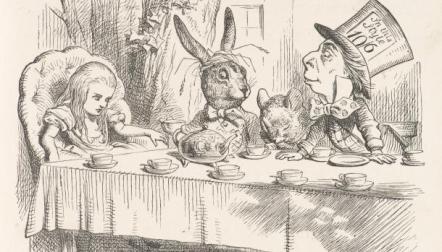
If sometimes a visit feels a bit like the Mad Hatter’s tea party, so be it. There’s a story in that, after all, thanks to Charles Lutwidge Dodgson.

mad hatter tea party tenniel

Tenniel’s sketch for Alice’s Adventures in Wonderland

And, just as an aerial view of the Himalayas alters the perspective of what the mountains are and how they appear, an altered perspective of a loved one keeps the person, as a human being still in the world (no matter how changed), in view. True, perhaps with changed patterns and unexpected gaps that we who love them may grieve the loss of. The conversations may be interrupted and chaotic, or full of long pauses and grasping for words and concepts. It is just a different kind of human communication.

Not what I expect, but what I am given. I’m trying to listen with, before it is too late.

Listen better

Arthur W. Frank’s The Wounded Storyteller, which I’m currently reading, deals with medical ethics, personal narrative, illness, and the community (all of us, really) who may need care, give care, and/or who realize there is a socio-emotional impact when friends, coworkers, and family members become ill and thus require care. A sociologist by training, Frank examines illness stories as testimonies that point to a social ethic and asks all of us both to tell more when we experience pain and to listen better when others are telling us about their experiences of illness.

“Tell me about your despair, yours, and I will tell you mine.”

Mary Oliver, from “Wild Geese

At first this idea sounds unpleasant–one thinks of the stereotype of tedious conversations among the elderly about various surgeries and too-intimate revelations about prostates, livers, stomachs, and bowels (my dad calls these monologues “organ recitals”). That response–evasion, withdrawal, revulsion–is exactly what Frank seeks to change.

But then I consider the way I have heard stories of illness experience from hospice patients. How varied they can be. Some fragmented, some specific, some pious, some stoic, some anxious. And some that are beautiful. These stories aren’t just for (about) the person who has undergone the suffering. They are also for me, the listener. “When any person recovers his voice,” says Frank, “many people begin to speak through that story.”

He later writes:

One of our most difficult duties as human beings is to listen to the voices of those who suffer. The voices of the ill are easy to ignore, because these voices are often faltering in tone and mixed in message, particularly in their spoken form before some editor has rendered them fit for reading by the healthy. These voices bespeak conditions of embodiment that most of us would rather forget our own vulnerability to. Listening is hard, but it is a fundamental moral act…in listening for the other, we listen for ourselves. The moment of witness in the story crystallizes a mutuality of need, when each is for the other.

He would like to see an ethics among medical people and caregivers that dictates not just a compassion for the lot of the ill person but a perspective that the person, as a person, is not diminished by the fact of illness–not made into data, case study, or even into patient or client, any of which reduces the person to a body containing disease or disability. He argues for a full embodiment of pain in narrative as well as in physiology, for only with and through storytelling can we begin to experience the perspective of the other.

I am not very far into the book yet, but I’m finding the concepts relevant to my current life circumstances. I know how deeply I treasure a good listener. So working on listening better, myself, offers more people the chance to recover their voices, to speak through story.

Not a perfectionist

My late mother-in-law, may her memory be for a blessing, spent much of her last decades gardening. I learned a great deal about flower gardens from her, and we discussed cultivars and shade-loving plants and pest control with the sort of enthusiasm that avid gardeners well know. She enjoyed landscaping her place with colors and textures, carefully tracing expected bloom times as well as plant heights and spreads so that the beds produced an ever-changing canvas to delight the eye.

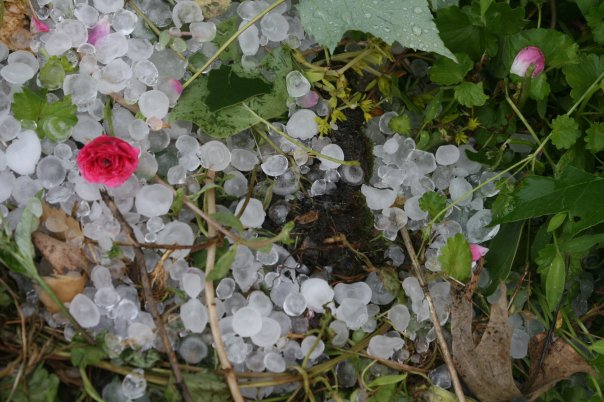
hail and roses

Hail: One of Nature’s curveballs

Except: Nature is always throwing curve balls. My mother-in-law’s gardens were beautiful, but she always eyed them critically. It is true that most gardeners notice what isn’t thriving, where the weeds are, or what has not grown out or bloomed as hoped. That comes with the territory. But the process of gardening is so much more enjoyable, even soothing, when one is not a perfectionist.

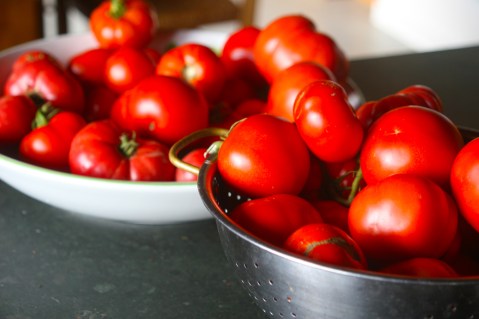
Not being a perfectionist myself, I find that time in the garden acts as a meditative oasis. It is part mindless physical labor, part problem-solving, part mindful awareness of the environment. This year, I’m making it even easier by planting fewer vegetables and fruits and more blooms to attract pollinators; I’ve a smaller variety of produce but am experimenting with some new (to me) seeds–a melon from the Caucasus, a few heirloom tomatoes, black beans as well as green ones.

I learn as I go–as I cull and thin, inspect insect damage, note responses to growing conditions. It occurs to me that this activity bears a resemblance to the writing process, particularly when putting together a collection for a chapbook or longer manuscript. In that undertaking, I’m also not a perfectionist; and I should not be quite so quick to gainsay the need for the perfectionist attitude when creating one’s art (as long as it does not lead to fruitless caviling).

But I’m just not constitutionally ordered towards that sort of purist idealism. The best I can do with my poems is similar to the best I can do with my gardens: devote mindful attentiveness to the “product” and try not to worry about eventual outcomes.

“Write a little each day, without hope, without despair.”  —Isak Dinesen [Karen Blixen]

See what grows.

IMG_1547

By July–who knows?


Repetition

Repetition, the foundation of rote teaching and memorization, is a style of learning at which I have never been particularly successful.

Nonetheless, repetition has been useful in my learning process. Close observation reveals small differences in repeated events and refrains of all kinds; what I learn through repeated experience is that each time I see or do “the same thing,” I notice something new. Repetition permits me to analyze, and that is how I learn best.

Here’s an example.

~

Plants, particularly flowering plants, fascinate me. Every year, I find myself heading out to the yard, my camera in hand, to take photographs as the flowers unfold and the insects arrive to pollinate them. Every year. Yet a closeup of a bumblebee in a redbud blossom from 2005 looks pretty much the same as a bumblebee in a redbud blossom in 2019. Or a monarch on a tithonia–one year similar to the next. Why bother? What urges me out when the dogwoods bloom to record yet another photograph of flowering dogwood? How redundant. How unnecessary.

Yet I have learned much, gleaned much, from the process of noticing the buds and blossoms and insects as the days lengthen and then shorten again; the cycle of life a repetition. Each routine event of spring seems new to me after the winter’s rest.

~

The only types of poems I have managed to have some recall for are poems with refrains, and some song lyrics (also with refrains). The ones I have memorized are the ones I have heard and sung along with most often, such as the calls and responses of church rituals and hymns, the record albums I listened to over and over when I was a teenager. Each time I listened, I felt something new happen inside me. It’s the same with my walks in the garden and the woods and hedgerows and the meadow: each year the same, each year new. That kind of teaching, while repetitive, is far removed from rote.


The takeaway

ampersand

so, I did what I set out to do: I exercised the necessary discipline to draft a poem a day during National Poetry Month, and I pushed against my “comfort zone” by publicly posting those drafts as they came to me. Usually I do not share my initial drafts with anyone other than fellow writers in my writer’s group or a few poets with whom I correspond. This was an interesting experiment on the personal level, therefore, a sort of forced extroversion as well as effort in productivity. I now have 30 new drafts to reflect upon, revise, or ignore.

It has been years since I came up with that much work in four weeks’ time. For the last decade or so, my average has been closer to six or seven poems a month. And I would not have posted any of them as they “hatched.” I would have waited until I spent some time with them and figured out how best to say what they seemed to want to say.

That’s not an unwise approach in general; I see nothing wrong with letting poems stew awhile. And quite a few would have ended up in the “dead poems” folder. Nevertheless, trying something innovative tends to prove valuable. The takeaway is that I am glad I finally managed the NaPoWriMo challenge. A few of the poem drafts you may have read here stand a chance of evolving into better poems. Maybe some will end up in a collection (years down the road). That result feels good.

The takeaway is also the realization that I no longer worry about how others judge my poems, the way I did when I was starting out and discouraged about having my stuff rejected by magazines. Not because there’s less at stake–indeed, I feel as invested in my writing as I ever was. The difference comes with the kind of investment, the ambition to write something meaningful or beautiful, and not viewing the poems as results waiting to be determined as valuable by someone more authoritative.

I’m 60 years old and well-educated in poetic craft, style, purpose, analysis. I’ve been writing poetry for over four decades. At this point in my life, that’s authority enough.

~

Self in the World

Goose stands sentry in the dew-strewn meadow.
Blackbird browses dry grasses woven along embankment,
emerges, slim stems clenched in its beak.

Under the footbridge, polliwogs gather,
backing into its shade–hawk overhead,
bluejay screaming territory! the crows respond–

Sun halos the water-strider’s shadow,
making a cluster of coronas on submerged stone
where wood frogs squeak and leap into stream current

surrounded by bedstraw, henbit, dandelion,
Amur honeysuckle, garlic mustard, stiltgrass,
invaders all. Except the frogs, who found the stream–

itself new to the landscape, gouged here in the 70s.
What do I notice, then? That some of the living adapt?
What do I make of myself in this world?

~

canadian goose on grass field

Photo by Brett Sayles on Pexels.com

~

Finally, to close the month of April, here is a lovely tribute to Mary Oliver by her friend and fellow poet, Lisa Starr.

Thank you for reading, and for the support of readers and poets this month.

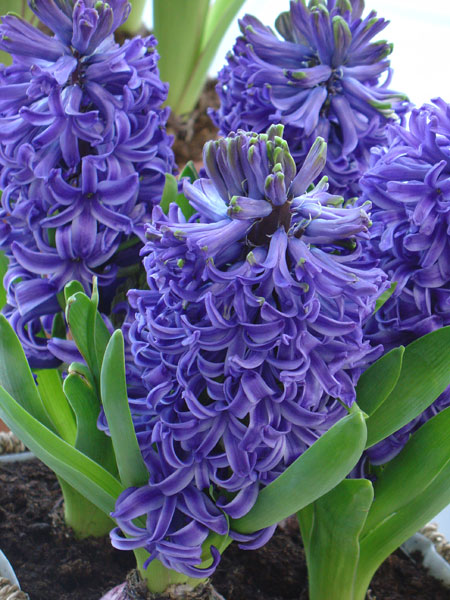
Hyacinths & biscuits redux

hyacinth burpeeI wrote about synthesis in this post of 2017 while reading a series of complex books. Now I am thinking of how poems involve synthesis. Today’s rather quirky draft seems to have emerged from life experiences. Academics–you know who you are–will understand the irony. I’ll leave it at that.

~

This is the 29th day of my composing a poem a day for National Poetry Month! Tomorrow–perhaps a recap of the experience. Or maybe just a long exhalation.

~
Peer Review

In The Journal of Complete Sentences,
there are, as per Table 1.
And under review, a wide range of
studies that. Research may show,
for example. Admittedly,
gaps. Or the tapering off.
Speaking apparatus offers one method
demonstrating correlation of,
and relationship with.
These abstract concepts in no way
refute previous empirical
results that strongly imply.
Indeed, studies employing fMRI
techniques to track neurotransmissions
offer qualitative.
The many degrees of distance.
Past case studies. Analysis.
As Appendix D suggests.
No closer to an understanding.

~


Normal

I was speaking with a friend about this poem over coffee this morning. I drafted it at 7 am, alone on my porch, under a cloudless sky but with a chilly wind blowing. This friend’s a person who happens to be all too well aware that the expectations instilled in us (by parents? by society? by the media? who can say?) concerning what a normal life entails are…let us say, less than accurate–and possibly harmfully untrue.

Also? She endures. We endure.
~

Argument against Living a Normal Life

First, we don’t know what it means, or if we do,
the meaning’s subjective; whereas the phrase implies
an average or agreed-upon measure beside which
every other life is measured–and second, each of us
comes up short by those standards, so it’s statistically
impossible to determine a mean. Then there remains
the case that this ideal is no ideal, as every life
contains elements of grief and injury. So how to average
out whose portions are the greater and whose the lesser,
since pain cannot be measured except through comparison
with previous subjective experiences and the spectrum
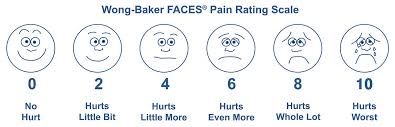
from 1 to 10 or happy face to weepy face varies from
person to person? That is not a rhetorical question,
my friend. Do the research, read about the Buddha, ask
a thousand doctors. Normal life: it’s one of those tricks
we play on ourselves. Take the adjective away and live
what you have in this particular moment. Work your way
into your suffering and your anger because they are
unavoidable. Walk your dog. Take up oil painting. Travel
to France. Watch a flock of starlings cluster and abate
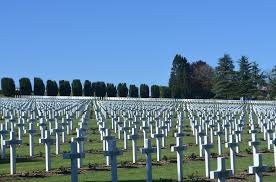
over the Cimetière de Verdun in autumn. What ever were
you thinking when you said you wanted only to live
a normal life?
~

images

Cimetière de Verdun. No starlings.

~

index

wongbaker.org

How-to

What prompts a poem, really? Probably differs from writer to writer to such a degree that discussing inspiration can be an intriguing discourse among fellow poets but not a method to instruct anyone “how to.” A poem, or any work of art, can be interpreted or reconstructed through analysis, but simply following someone else’s instructions is unlikely to lead to meaningful results.

Among my Best Beloveds are a few people who are excellent how-to writers. They can write about how to build a boat, debug a software program, light a face for photographic portraits, construct a Windsor chair, use a beading pattern to make a bracelet. This sort of work is surprisingly challenging to write well–think of how many times you’ve been frustrated by a poorly-written manual for one of your digital or mechanical devices. Good, clear, concise how-to writing requires intelligence, accuracy, awareness of the reader’s skill level, critical analysis, and a clarity of style the unpracticed writer lacks. And by unpracticed writer, I mean most of us!

After 25 days of writing poetry drafts, I cannot suggest to anyone how to write a poem. Perhaps someone with more experience in the process (such as Luisa Igloria) can weigh in on how to write a poem (she teaches creative writing, after all, at Old Dominion). At the end of this month, I will resort back to my usual process of intermittent drafts; though it’s possible that this month of discipline will stick–maybe I will be more productive for awhile. Mostly what I will need to do is to REVISE! Because with 30 drafts to work on, I can stay busy tweaking and reworking (and giving up, occasionally) on poems for months to come.

~
Lilacs

Because I had early morning errands,
because I had to change my route,
because creek’s tributaries are still swollen,
the brief commute
took an ambit unexpected
through small towns, over the rutted bridge,
delayed by schoolbus signal flashers, waiting
for foot-dragging kids.
Pollen drifted on the windshield
because it’s that time of year,
because two days of rain and spells of warmth
have settled here.
Because I decided not to worry,
because no one would mind if I were late,
because I opened the car window, I saw lilacs blooming
beside the cemetery gate.
~


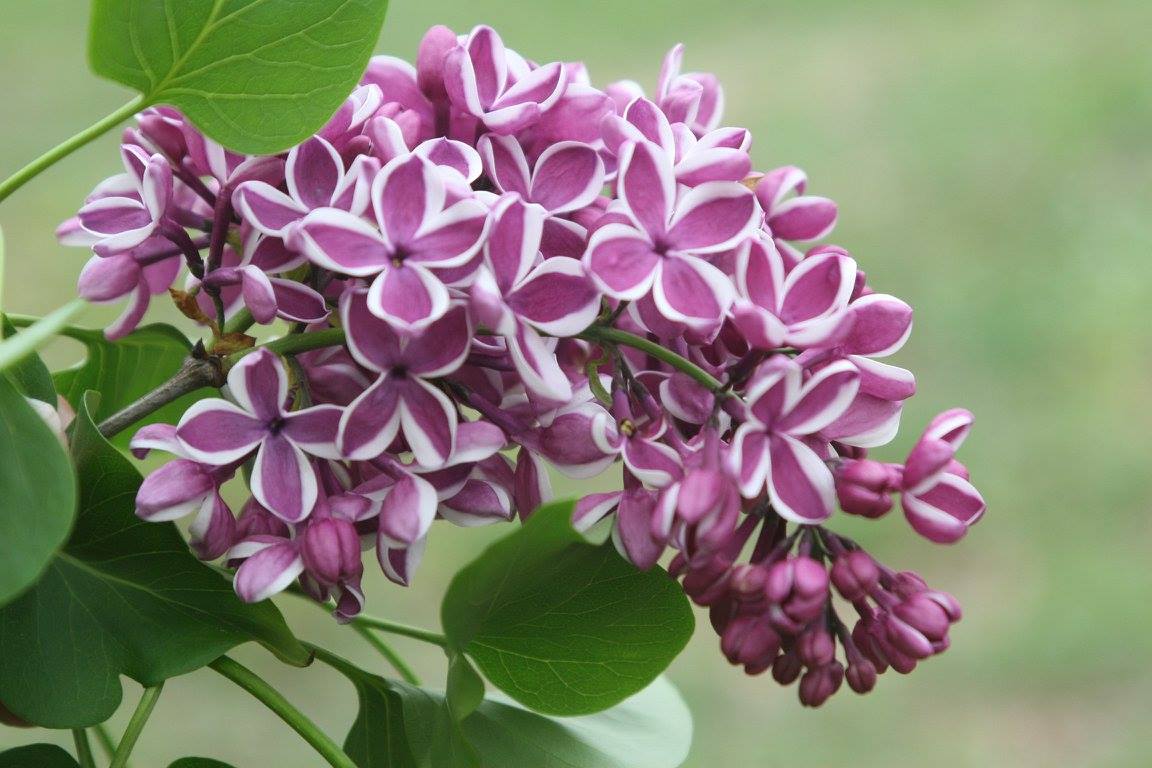
lilac


Punctuation

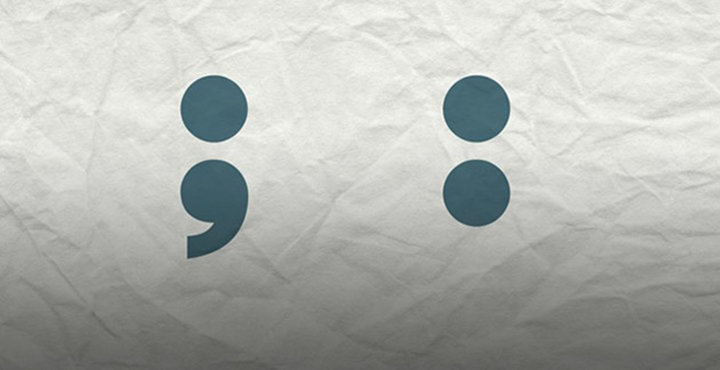
Semicolons-and-Colons-2_720x370…or lack thereof!

One thing I notice about my draft poems is that I often ignore punctuation. Sometimes that lack remains in the final draft, if I think that the ambiguously run-on approach works for the poem or that line breaks alone serve the purpose; but more often, punctuation is something I work into the revision process. Billy Collins tells an anecdote attributed to Oscar Wilde about proofreading a poem, and how he spent all morning deciding to remove a comma, and then spent the afternoon deciding to put it back in.

I do not devote quite that much time to commas. I do think that punctuation matters as an aspect of poetic craft and can convey more than we realize. The draft below, if I decide it is salvageable, will probably require some punctuation.

~
Down Will Come Cradle

She rocked you to soothing in her
warm young arms
do not forget how young she was
you so new
to the world you felt safe unquestioning
but look back
from yourself as you are now and
think of her
embracing your small body with her fears
and with love
she barely understood herself saying to you
what she’d heard
from her mother until she could confirm
in herself
secure against her novice worries as she
rocked you both
warm and soft and young in the
darkened room
where you now attend to her no longer
young neither
you nor she young but the mutual
comforting
continues the lifetime of strain and slack
you so new
to the process of soothing her how
easily
you rock beside her holding her hands in
your warm hands

~

Idea or memory

Revising a draft, for me, means returning to the poem from several perspectives. I might change the speaker from first person to second or third person, or change the poem so that there is not a clear speaker at all–no longer “lyric.” I may alter specifics, such as place names or seasonal references. Or fictionalize with invented crises, persons, time periods, or events. Take on a persona, for example. Add or delete dialogue. These are interpretive and point-of-view considerations: How can I broaden the poem’s reach?

I might then revise for stanza patterns. Or find a vague meter going on in the piece which I will decide is worth pursuing, if it will enhance the poem; sometimes it does not work that way.  If an image intrigues me, or puzzles or frustrates me, I’ll devote some revision effort to that. Play with alliteration or assonance, rhyme or off-rhyme, line lengths. Those are craft considerations, mostly.

When I work on a draft, my approach is that craft should hone perspective, and should be a silent partner in the poem. Early drafts, if promising, possess something inherently interesting. Otherwise, there’s nothing to work on or work with–the poem never really happens. Maybe all it manages to be is an idea, or a memory.

~

Sarasota

During the recession
laid off and without
even an old car
I lived in Sarasota
red tide gulf waters
slew of small fishes
dead on the beaches
where I went shell
hunting for lack of
other purpose.

Lizards on my walls
everything that mattered
blotted in moist air
novels and notebooks
drew mildew my hair
haywire the boy I loved
brown eyes & panic
sea at sunset gulls
and palmettos.

Once weekly I’d bike
to Unemployment
and wait in line to prove
I couldn’t get a job
but that I’d tried
& after my humbling
before government
agencies I’d stop at a
coffee shop on Fruitville
Road and order two
eggs over easy home fries
brown toast coffee &
blueberry pie.

There was something
so filling about that
meal I still think of it
silky blueberries in my
mouth the tip I left
the blond waitress who
kept my coffee cup full
and always called me
Darlin’.

~

blueberry-pie-horiz-a-180011